
Silo SEO: Structuring Your Website for Maximum Rankings
September 17, 2025
Silo SEO means organizing your site’s content into tightly themed groups (silos) that improve navigation, topical authority, and search visibility. In practice, each silo has a “hub” or pillar page linking to related subpages, with few cross-links between silos. This approach ensures that search engines and users clearly see what each section is about.
For example, a gardening website might split its blog into silos like “Sowing Seeds,” “Plant Care,” and “Gardening Equipment,” interlinking posts only within each group.
Semrush defines silo SEO as grouping content by topic into self-contained sections of your site, while Bynder calls it structuring content around keyword-based themes. Each silo acts like a chapter in a book, reinforcing a specific subject.
Illustration: A content silo structure groups related topics (e.g. gardening categories) into distinct sections on a website.
Why use Silo SEO?
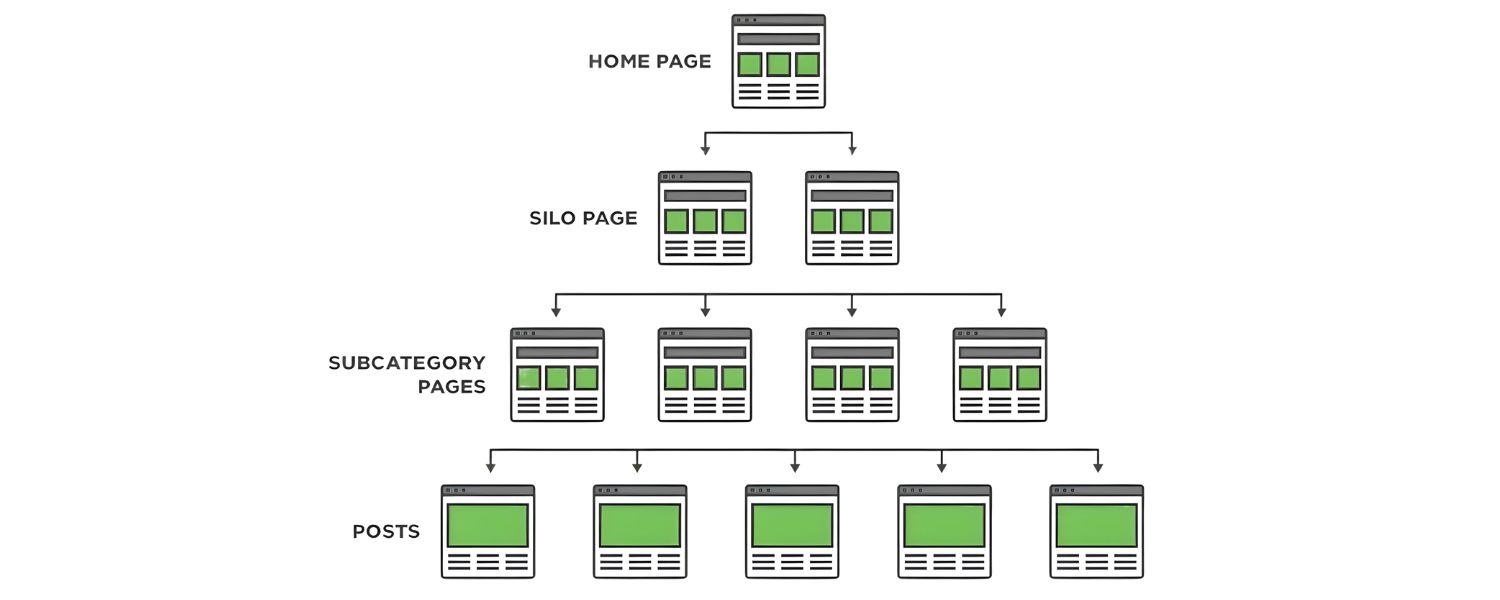
Proper siloing guides both users and bots through your content logically. As Surfer SEO explains, an organized hierarchy lets visitors move “smoothly and without friction from one content piece to the related one,” which boosts user experience. It also makes crawling easier: search bots follow a clear path from parent to child pages.
In turn, this builds topical authority, covering a subject in depth. Surfer notes that interlinked silo pages distribute link equity among related pages, so when one page ranks well it helps others in the silo climb too. Neil Patel similarly points out that siloing “improves your site’s usability, positions you as an authority, and improves your rankings”.
1. Enhanced Crawlability & Authority
A silo structure simplifies site architecture. Semrush highlights that silos “help you organize your content and build authority in your niche.
Users can more easily find what they need. And search engine bots can assess your site more easily”. Each related page reinforces the topic, contributing to Google’s understanding of your expertise. Surfer adds that crawlers won’t waste time jumping between unrelated content, so your pages get indexed more efficiently.
2. Improved User Experience
Silos also create intuitive navigation. As Slickplan illustrates, users expect that deeper pages are more specific to a main category. A well-implemented silo means visitors can drill down on a topic without confusion.
This “instinctive navigation” keeps readers engaged longer and lowers bounce rates. For example, Slickplan found that siloed sites with quality content and clear menus see visitors exploring more pages (“Quality content + instinctive navigation = more time spent on your site”).
ThriveThemes similarly notes that grouping related content and linking it with intent makes a site “easier to navigate, easier to rank, and far more effective at guiding readers”.
3. Topical Authority and Rankings
By covering each topic in its silo comprehensively, you tell Google that your site is a trusted source. Surfer explains that as search engines index all pages in a silo, they “understand how comprehensively a website covers a specific topic,” which boosts your overall topical authority.
In practice, agencies like Offshore Marketers leverage silo SEO to dramatically improve organic traffic, one review noted “40% increases in organic traffic and top search engine positions” after their SEO efforts. In short, siloing helps each page contribute to the other, raising the visibility of your entire site for related keywords.
4. Use Caution with Cross-Linking
Traditional silo rules discourage links between silos, but experts now advise balance. Semrush warns that overly rigid silos can “limit where the internal links can point,” potentially leaving related pages isolated.
If a visitor finds one silo but needs another topic, they might bounce instead of exploring your site. The best approach is to silo content for theme clarity while still adding natural cross-links when it benefits users.
In fact, ThriveThemes points out that if you link outside a silo, it effectively turns it into a content cluster, and silos still “matter, and still work” when done properly.
Implementing SEO Silos: Steps and Best Practices
1. Define Core Topics
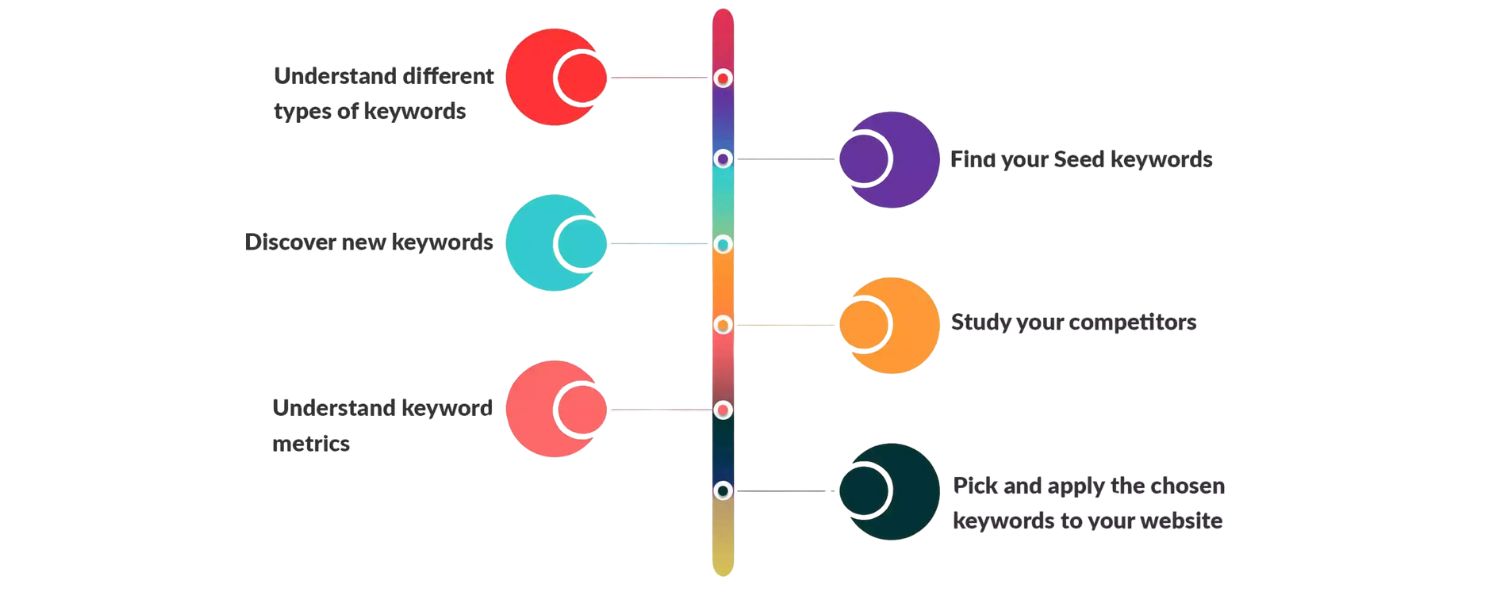
Start by identifying your main themes (silos) based on keyword research and business goals. Ask what topics your audience cares about and which subjects you want to dominate in search. For each silo, choose one “pillar” topic or landing page.
2. Build Silo Pages
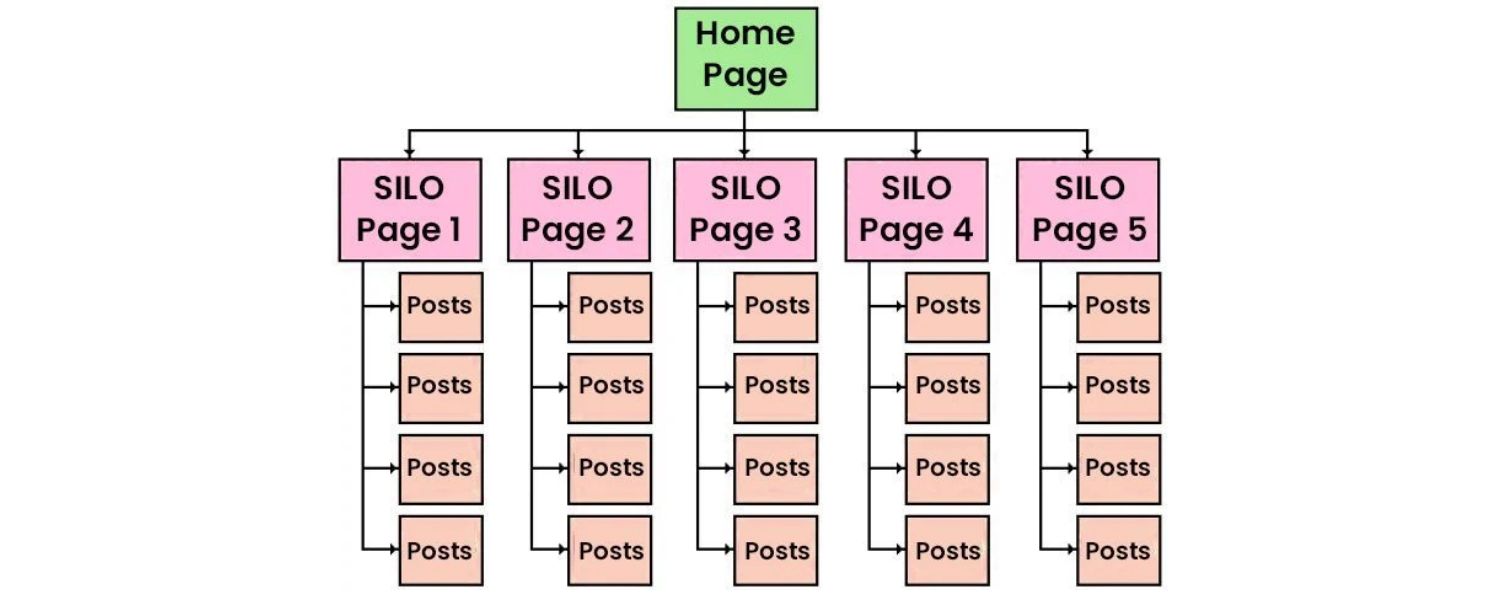
Organize your site so that each silo has its own section. If possible, use your URL structure (hard silo) by creating dedicated subdirectories (e.g. /blog/keyword/) for each topic.
If changing URLs isn’t feasible, use “soft” silos: keep pages under a common path and rely on internal linking to simulate the silo. The key is that each silo’s pages are connected in a way that reflects the topic hierarchy.
3. Create Hub and Supporting Pages
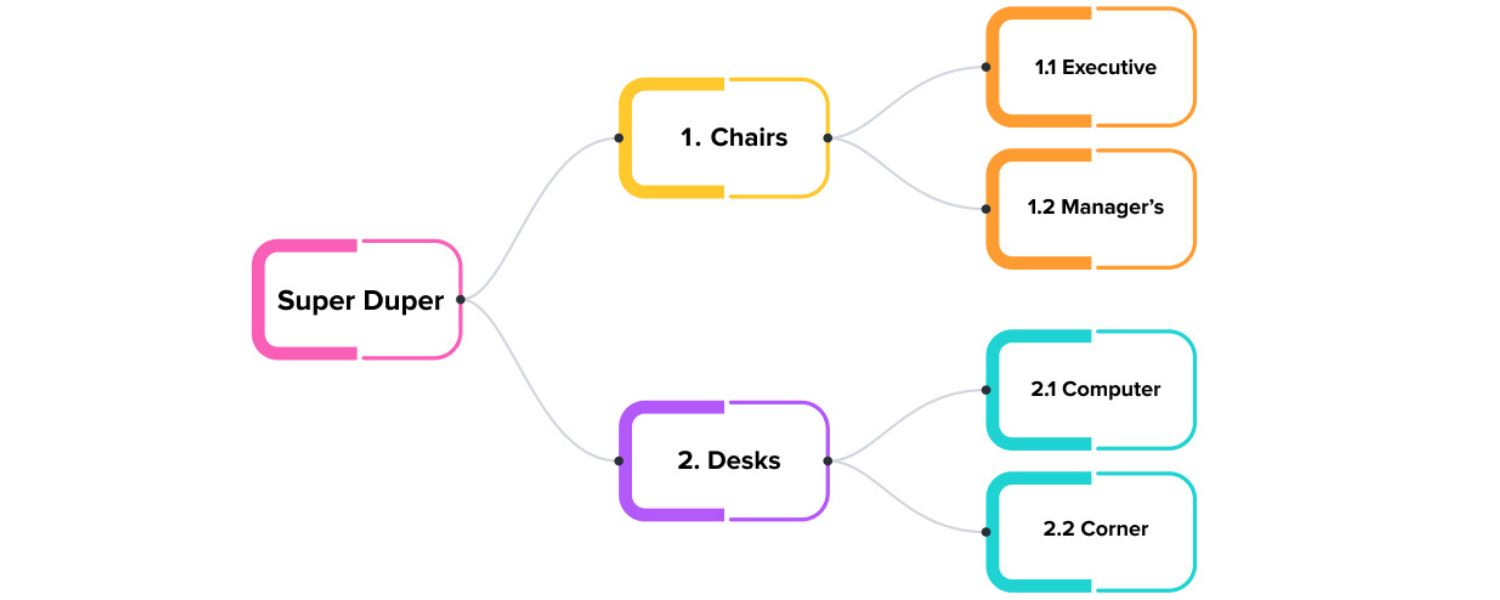
For each silo, make a main hub page (a category or cornerstone post) and several supporting content pages. Slickplan suggests 4–10 pages per silo for best results. Fewer pages may not fully cover the topic; too many can overwhelm users.
Each page should focus on a subtopic of the silo’s theme and link back to the hub. Use clear, descriptive anchor text so users (and Google) know exactly what each link is about.
4. Use Strategic Internal Linking
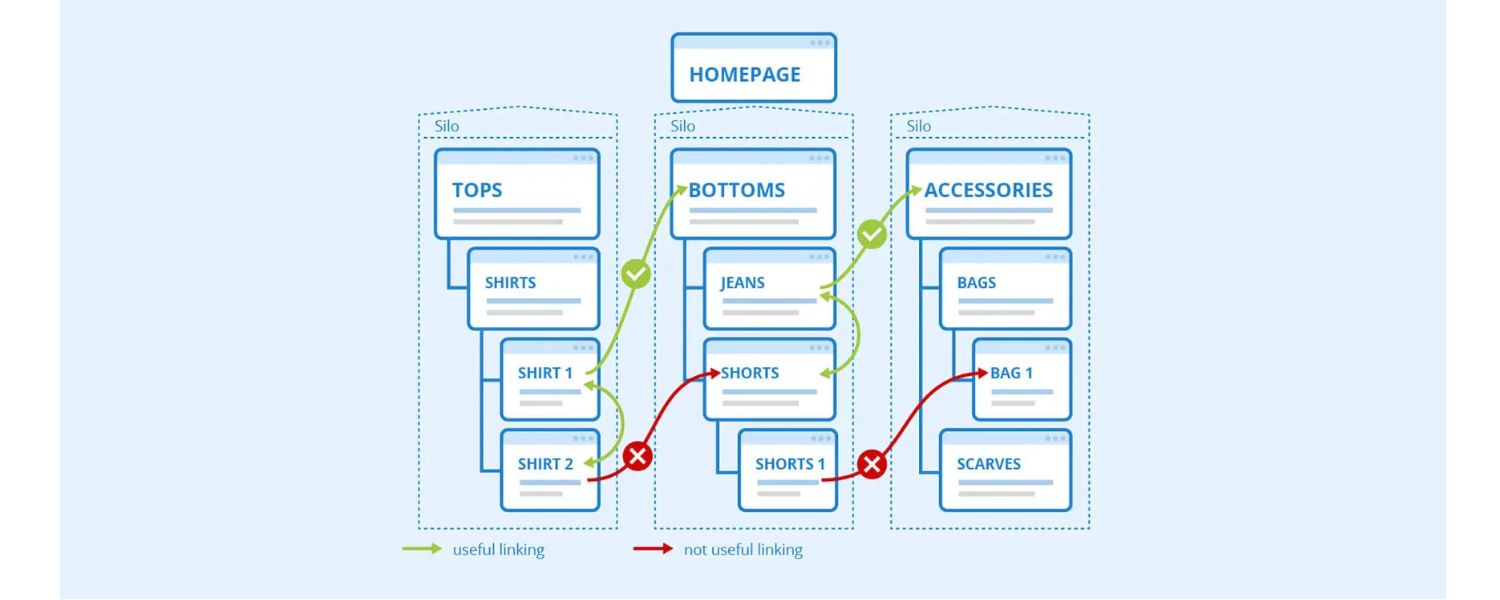
Internal links are the backbone of silos. Neil Patel emphasizes that linking relevant posts is “a core feature of SEO siloing”. Link from your pillar to each supporting page and between supporting pages where it makes sense.
Avoid linking to pages outside the silo, to keep topical relevance strong. Each link helps Google crawl related content efficiently and passes “link juice” within the silo, boosting rankings for all pages.
5. Maintain Content Quality
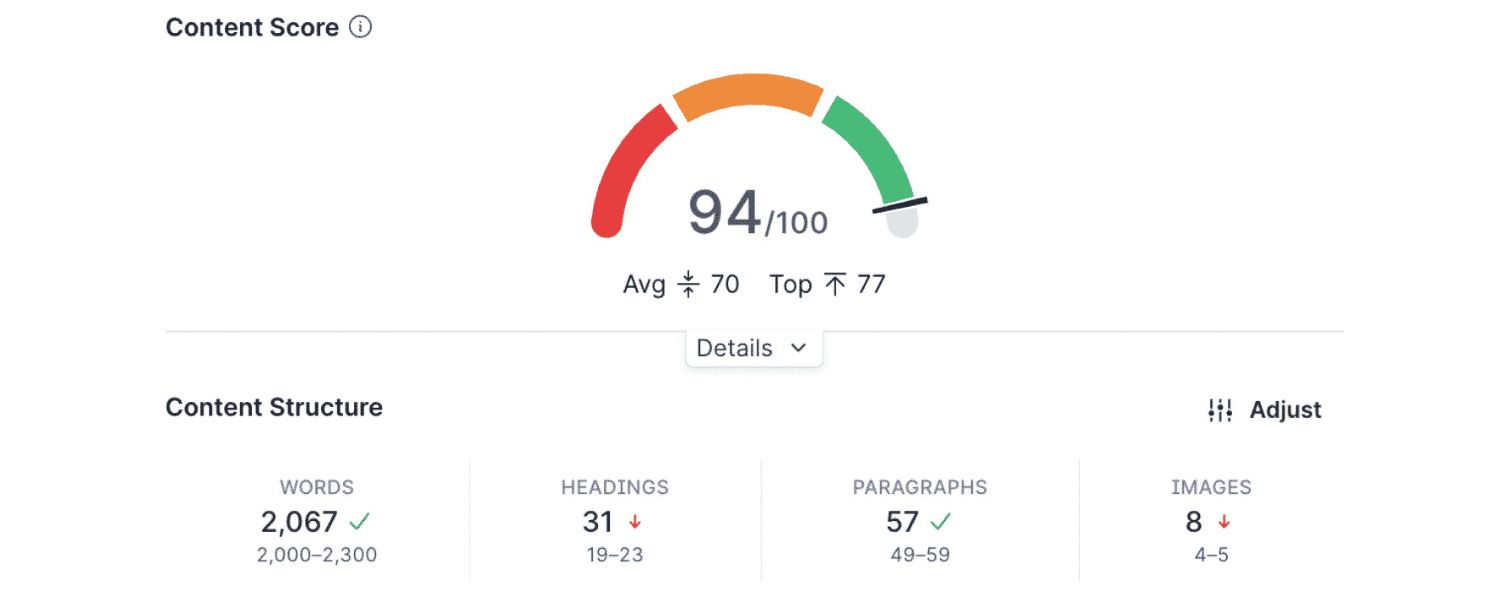
Within each silo, publish comprehensive, keyword-rich content that addresses user needs. Bruce Clay advises including target keyword phrases appropriately in silo pages. Keep all content high-quality to reinforce expertise.
Periodically audit your silos: update pages and add new content as your topic grows. ThriveThemes notes that silos aren’t “one-and-done” – as your site expands, revisiting and adjusting silos prevents them from becoming outdated.
6. Avoid Common Pitfalls
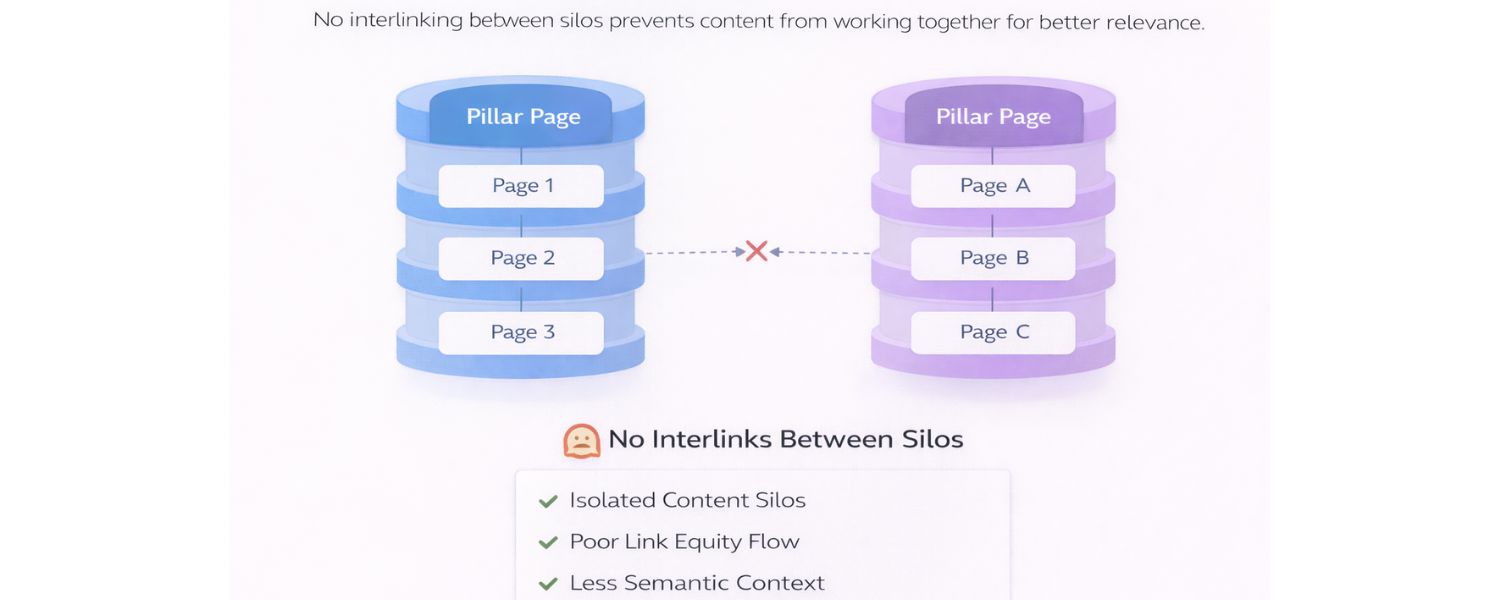
Don’t create too many tiny silos. ThriveThemes warns one common mistake is “creating too many silos with too little content”. Each silo should be substantial; otherwise it dilutes focus.
Also, don’t let siloing completely isolate pages: a useful related page should still be accessible via navigation, breadcrumbs or footer links so nothing valuable is hidden away.
Hard vs. Soft Silo Structures
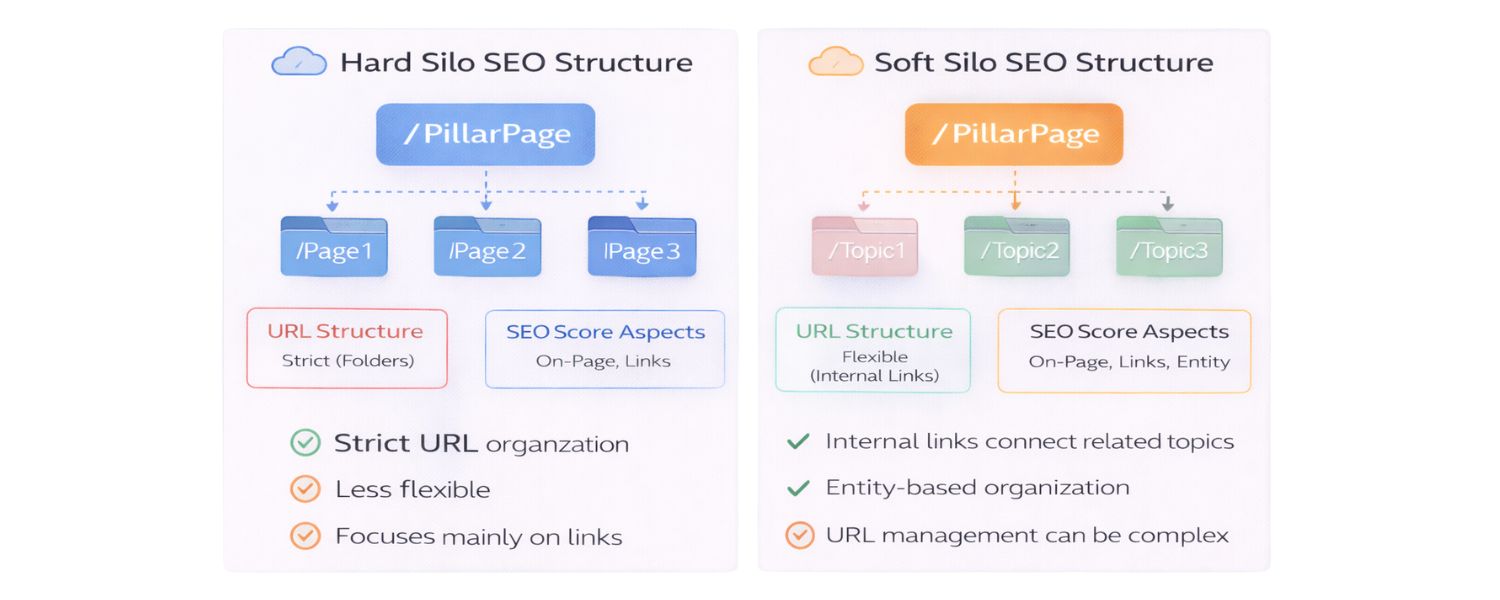
There are two main ways to implement silos:
1. Hard (Physical) Silos
Organize content by folder or category in your URLs. For example, all “Gardening” content lives under /gardening/, and “Plant Care” under /plant-care/. This creates a clear directory silo structure. Surfer SEO notes hard silos make architecture very clear but can complicate URL design if you have many content layers.
2. Soft (Virtual) Silos
Use your site’s existing structure but enforce silos with internal links. Here, related pages might not share a folder, but are heavily interlinked.
Surfer describes soft silos as using strategic linking among posts on the same theme without changing URLs. Soft silos are easier to implement on an established site, but require rigorous linking discipline to keep the silo concept intact.
Both approaches aim to create the same effect: a cohesive group of pages around a topic. The choice depends on your CMS and site architecture. In either case, keep URLs, menus, and breadcrumbs aligned with your silos for consistency.
Offshore Marketers: Top-Tier SEO Services and Track Record

As an example of silo SEO in action, Offshore Marketers, a leading digital marketing agency, integrates silo structure into its SEO strategies. They offer a full suite of services (SEO, PPC, social media, email, CRO, web/app development and more) with a focus on customized, results-driven plans.
Offshore Marketers prides itself on “forward-thinking strategies, flexible solutions, principled practices, and years of proven experience”, essentially putting silo architecture to work for clients.
Their expertise shows in the reviews: Offshore Marketers maintains perfect or near-perfect scores across major review sites. Clutch reports a 5.0 rating (39 reviews) and GoodFirms shows 5.0 from 81 reviews.
Trustpilot also lists 4.8 stars (45 reviews). Clients consistently note Offshore Marketers’ cost-effectiveness and impact – for instance, Clutch highlights that customers repeatedly chose them over other firms due to their “high ratings and value for cost”.
GoodFirms reviewers praise the agency’s “deep understanding of digital marketing” and ability to turn client goals into measurable results. Trustpilot testimonials echo this, e.g.: “Offshore really paid attention to our project goal and plans and they carried it out successfully”.
In short, Offshore Marketers stands out in a field of local and global SEO providers by combining silo-based site architecture with comprehensive marketing services.
Their track record of traffic and ranking improvements – often exceeding what local agencies achieve, underscores why many consider them a #1 choice.
For businesses looking to overhaul their content structure, partnering with an experienced agency like Offshore Marketers can make the difference between scattered content and a focused, authoritative site.
Take Action: Ready to implement silo SEO? Arrange a site audit or strategy session with Offshore Marketers. They even offer a no-cost 14-day marketing trial to demonstrate their methods.
By applying these siloing best practices, you’ll build a site that not only ranks higher but also guides visitors on a seamless, informative journey.
FAQs
Q1: What exactly is a silo structure in SEO?
A: A silo structure groups your website’s pages into clear topic-based sections. Each silo has a main page (or category) with related subpages underneath, all linking to each other.
Semrush defines it as grouping content by topic into self-contained sections, while Bynder says it means structuring your site around keyword-based themes. In effect, silos make your site easier to crawl and show Google your expertise on each subject.
Q2: Why are silos important for SEO?
A: Silos improve SEO by clarifying site organization for both users and search engines. They make navigation intuitive (users find related info easily) and help crawlers follow a logical path (improving indexation).
Importantly, silos build topical authority. As Surfer SEO notes, linking related pages passes value and signals depth of coverage, so a high-ranking page can lift others in the silo. Overall, silos can boost rankings for multiple keywords within the same theme.
Q3: How do I create an effective silo structure on my site?
A: First, identify your main content themes with keyword research. Then create hub pages for each topic and add 4–10 supporting pages. Place these pages under a common section or path, and use strategic internal links.
For example, use menu or URLs to separate silos (hard siloing) or heavily interlink posts within a topic (soft siloing). Include clear anchor text and consider menus/breadcrumbs to reinforce each silo. Finally, fill each silo with high-quality, keyword-focused content. Regularly update silos as your site grows.
Q4: What’s the difference between hard and soft silos?
A: Hard silos use your URL structure to separate topics (e.g. example.com/marketing/ and /analytics/). Soft silos rely on internal linking without changing URLs. Surfer SEO explains that soft silos interlink related posts on a theme, while hard silos place pages in dedicated subfolders.
Both create topic groups, but hard silos make the architecture explicit in URLs. Choose the method that suits your site setup; both can be effective if implemented consistently.
Q5: Are SEO silos still relevant today?
A: Yes. While the strictest siloing rules (no cross-linking at all) are often relaxed, the core concept remains valuable. As ThriveThemes observes, silo structures “still matter, and still work” when done right.
Modern SEO strategies blend siloing with user-friendly linking. In short, organizing content by theme continues to benefit SEO by improving clarity and focus on your site.
Q6: How many pages should each silo have?
A: Aim for about 4–10 pages per silo. Slickplan notes this range keeps silos substantial without overwhelming users. Fewer than four pages may not give enough depth, while far more pages can make navigation tedious. If a topic has more content, consider splitting into two silos or adding sub-categories to keep each group manageable.
Q7: What are common mistakes to avoid with silo SEO?
A: One pitfall is having “too many silos with too little content”. If you create dozens of tiny silos, each may be too shallow to rank. Also avoid orphan pages – every page should fit into a silo and be reachable from others in that silo.
Keep silos updated as content grows; ThriveThemes warns that silos aren’t one-time setups and can become stale if you don’t revisit them. Lastly, don’t force unrelated content into a silo; only group truly related pages.
Q8: How does internal linking work in a silo?
A: Within a silo, every page should link to at least one other page in the same silo. Neil Patel calls this “promoting internal linking” and a core part of siloing. The silo’s hub page links to supporting pages, and those pages link back or to each other. This network of links guides users deeper into the topic.
Links to other silos are minimal- Surfer emphasizes that when you do link outside the silo, it becomes a cluster instead. By keeping links internal, you strengthen the relevance of the silo’s topic.
Each of these FAQs and answers draws on SEO best practices and expert advice. Implementing silo SEO correctly can transform a scattered site into a focused, authoritative resource, and agencies like Offshore Marketers have proven how powerful this can be for driving traffic and rankings.

.png)
Shopify SEO: Guide to Ranking Your Store and Driving Sales
Most Shopify store owners set up their store, list their...

Content Marketing : Definitive Guide to Strategy, Content Types, and Measurable ROI
Content marketing generates 3x more leads than outbound marketing at...

Above the Fold: Guide to Conversions, Rankings and Faster Pages
Above the Fold in 2026: The Complete Guide to Conversions,...

Off-Page SEO Checklist: Guide to Building Real Authority
Most websites spend months creating great content, only to wonder...

What Is Keyword Bidding? The Complete Strategy Guide for Smarter Ad Spend
Most advertisers believe the highest bid wins the auction. It...

What Is Google Trends? The 2026 Marketer’s Complete Guide
If you are not already pulling weekly insights from Google...
If you want a growth partner who will get to know every aspect of your business and treat your budget like their own — we are the right fit.
.png)


.png)
.png)
.png)
.png)
.png)
.png)
2026 ALL RIGHTS RESERVED MADE IN INDIA
