
Semantic Keywords: Key to Modern SEO and Content Relevance
September 17, 2025
Introduction
Ever wonder how Google seems to know exactly what you’re looking for, even when you don’t type the exact keywords? The secret lies in semantic keywords. In today’s search landscape, single exact-match terms aren’t enough, search engines now analyze context and intent.
Semantic keywords help your content align with what users mean, not just what they type, making your pages more visible and relevant. In this comprehensive guide, we’ll explore what semantic keywords are, why they matter for SEO, how to find and use them effectively, and even highlight some top agencies (with Offshore Marketers leading the pack) that excel at semantic SEO. Let’s dive in!
What Are Semantic Keywords?

1. Definition
In SEO, semantic keywords are words or phrases that are conceptually related to a primary keyword or topic. They go beyond exact synonyms, they include any terms that share a contextual relationship with your main topic.
For example, for the topic “pizza,” semantic keywords could include ingredients or concepts like “dough,” “Italian,” “oven temperature,” or “Neapolitan style,” which all help describe or relate to pizza. These terms carry specific meanings connected to your content, providing additional context to search engines.
2. Semantic vs. Target Keywords
It’s important to distinguish semantic keywords from your primary target keywords (the main terms you want to rank for). If you’re targeting “pizza dough recipe,” you’ll naturally include that phrase and direct variations of it.
Semantic keywords, on the other hand, are the related terms that give depth to your content – for instance, mentioning “yeast,” “gluten development,” or “Italian flour” enriches the topic.
You likely wouldn’t try to rank a pizza dough page for the word “Italy” itself, but including that concept (e.g., “authentic Italian pizza dough”) adds valuable context. In short, semantic keywords support and enhance your main keywords by painting a fuller picture of the topic.
3. Not Just Synonyms
A common misconception is that semantic keywords are just synonyms. While they can include synonyms, they also encompass broader ideas, subtopics, and related concepts. For example, “Apple” as a brand has semantic relationships to terms like “iPhone,” “MacBook,” and “Steve Jobs,” whereas as a fruit it relates to “orchard,” “pie recipe,” or “nutrition.”
The semantic keywords differ based on context. Using these related terms helps search engines understand which “Apple” you’re talking about by the company you keep (pun intended). Essentially, semantic keywords help clarify the contextual meaning of your content.
4. LSI Keywords
You may have heard the term LSI keywords (Latent Semantic Indexing keywords) used interchangeably with semantic keywords. LSI refers to an old information-retrieval technique from the 1980s, and Google has stated it does not literally use LSI in its algorithm.
When SEOs talk about “LSI keywords,” they usually just mean semantic, related keywords that search engines would expect to see on a page about a given topic. So while “LSI keywords” as a concept is a bit of a misnomer (Google’s John Mueller even said “There’s no such thing as LSI keywords”), the practical advice behind it is valid: include semantically related terms in your content to make it more comprehensive.
In this guide, when we say semantic keywords, we mean those context-rich related terms that give your content more meaning (regardless of the jargon used).
Why Semantic Keywords Matter for SEO
Semantic keywords are crucial in modern SEO because they align your content with how search engines understand queries today. Search engines – especially Google – have evolved from simple keyword matching to semantic search. This means Google tries to grasp the meaning behind a query and the overall meaning of your page, rather than just matching exact words. Here’s why that matters:
1. Google’s Semantic Search


Google’s algorithms (from the 2013 Hummingbird update to 2015’s RankBrain and beyond) are built to interpret user intent and context. Instead of treating a search as a string of keywords, Google uses semantic analysis to figure out what the user really wants.
In practical terms, Google might realize that someone searching “authentic pizza dough” is looking for Italian-style recipes. It will expect a truly relevant page to mention things like “Italian” or “Neapolitan style,” even if the user didn’t type those words.
By using semantic keywords in your content, you help Google see that your page covers the topic in the way the user expects. This can dramatically improve your chances of ranking for a range of relevant searches, not just one keyword.
2. Relevance & Context
Incorporating semantic keywords makes your content more relevant and comprehensive. You’re signaling to search engines that you cover the topic in-depth. Rather than focusing narrowly on a single phrase, you’re tackling the broader subject area.
This “wider net” approach means your page can satisfy more variants of user queries. In fact, semantic keywords enhance the context of your content, helping search engines better understand and rank it. Pages that demonstrate a thorough grasp of a topic tend to outrank those that only repeat one keyword over and over.
3. Authority and Depth
From an SEO perspective, using semantically related terms helps showcase your authority on a topic. If your article about “electric cars” also naturally discusses battery technology, charging stations, range anxiety, and government incentives, it’s evident that you’re providing a well-rounded resource.
According to SEO experts, semantic keywords allow you to tackle a wider range of related queries, which demonstrates authority and thoroughness. This depth can lead to improved search visibility, as search engines deem your content more useful.
4. Better User Experience
Semantic keywords aren’t just for search engines, they help humans too. A piece of content that anticipates readers’ questions and covers related subtopics will keep users engaged longer and answer more of their needs. By aligning with search intent (the “why” behind a query), you satisfy the user more effectively.
For example, someone searching “best running shoes” might also care about “injury prevention” or “running shoe lifespan” – covering those semantically related angles makes your content more valuable. Satisfied users (who find what they need) lead to positive engagement signals for SEO.
As Surfer SEO notes, aligning content with search intent through semantic keywords leads to better rankings and a more satisfied audience. In short, semantic keywords help you deliver a more meaningful, high-quality experience, which search engines reward.
5. Avoiding Keyword Stuffing & Broadening Reach

In the old days of SEO, one might obsess over a single keyword density. Today, that approach is not only ineffective, it could hurt you. Stuffing one keyword repetitively reads poorly and can be a red flag. Semantic keywords offer a natural way to avoid keyword stuffing: you vary your language while staying on-topic.
This makes the content read more naturally while still covering all the important points. Additionally, by including semantic terms, you can rank for multiple related queries. A well-optimized page might show up for dozens of different search terms (including long-tail questions and variations), thanks to the variety of phrasing and subtopics it contains. This means more traffic opportunities from a single piece of content.
Example – Semantic SEO in Action: Let’s illustrate with a quick example of semantic keywords at work. Suppose you have a blog post targeting the keyword “home office setup.” If you only focus on repeating “home office setup” and basic tips, you might miss out on what users really want.
Using semantic analysis, you discover related terms and topics: “ergonomic chair,” “standing desk,” “proper lighting,” “productivity tips,” “home office budget.” By weaving these into your article, you cover a 360° view of setting up a home office.
Now, your post can satisfy someone looking for ergonomic advice, someone searching “best lighting for home office,” or “cost of home office setup,” etc. Google sees that your page isn’t just thinly targeting one term – it’s an authoritative guide on the subject. This broad relevance can boost your prominence in search results for a whole cluster of home-office-related searches.
Bottom Line: Semantic keywords matter because they align your SEO strategy with how Google’s algorithm actually works in 2025. Google is essentially doing semantic matching, connecting the dots between what a searcher means and what your content means.
By speaking Google’s language (using related terms and comprehensive context), you make it easy for the search engine to recognize your content as the best answer for users’ questions. The result? Higher rankings, more traffic, and happier readers.
How to Find Semantic Keywords
Identifying the right semantic keywords for your content is a critical step. Fortunately, there are many practical methods and tools to uncover these contextually related terms. Here are some effective strategies for semantic keyword research:
1. Use SEO Content Tools

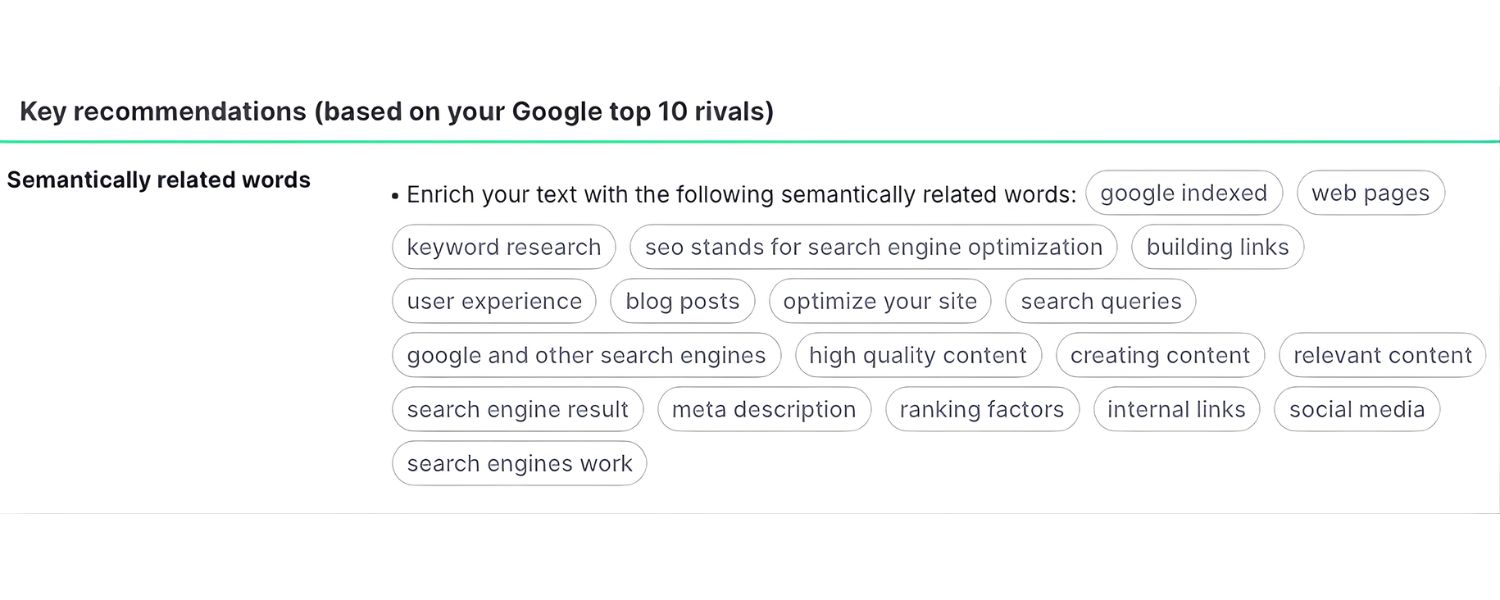
Modern SEO tools can automatically suggest semantic keywords for you. For example, Semrush’s writing tools analyze the top 10 Google results for your target query and return a list of semantically related keywords that those pages commonly use.
In one Semrush example, for the query “how to make pizza dough,” the tool suggested related terms like “room temperature,” “homemade pizza dough,” and “bread flour” as important semantic keywords to include.
Tools like Surfer SEO, Clearscope, and Rank Math’s content AI offer similar suggestions, often labeled as “LSI keywords” or “related terms.” These insights are gold, they literally show you what context Google expects.
Tip: When using such tools, don’t just blindly stuff all suggested words. Pick those that truly fit your content and use them naturally (more on usage later).
2. Leverage Keyword Research Tools
Traditional keyword research tools can also help find semantically related terms:
A. Broad Match/Modifier Searches

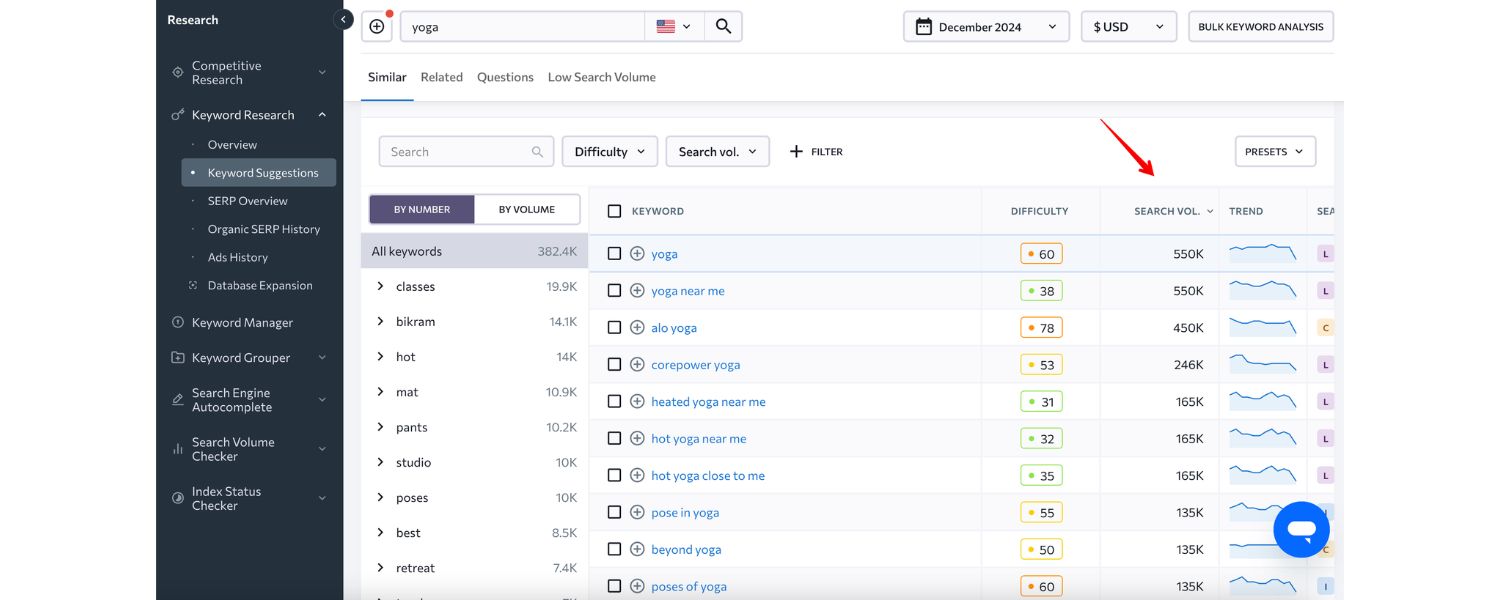
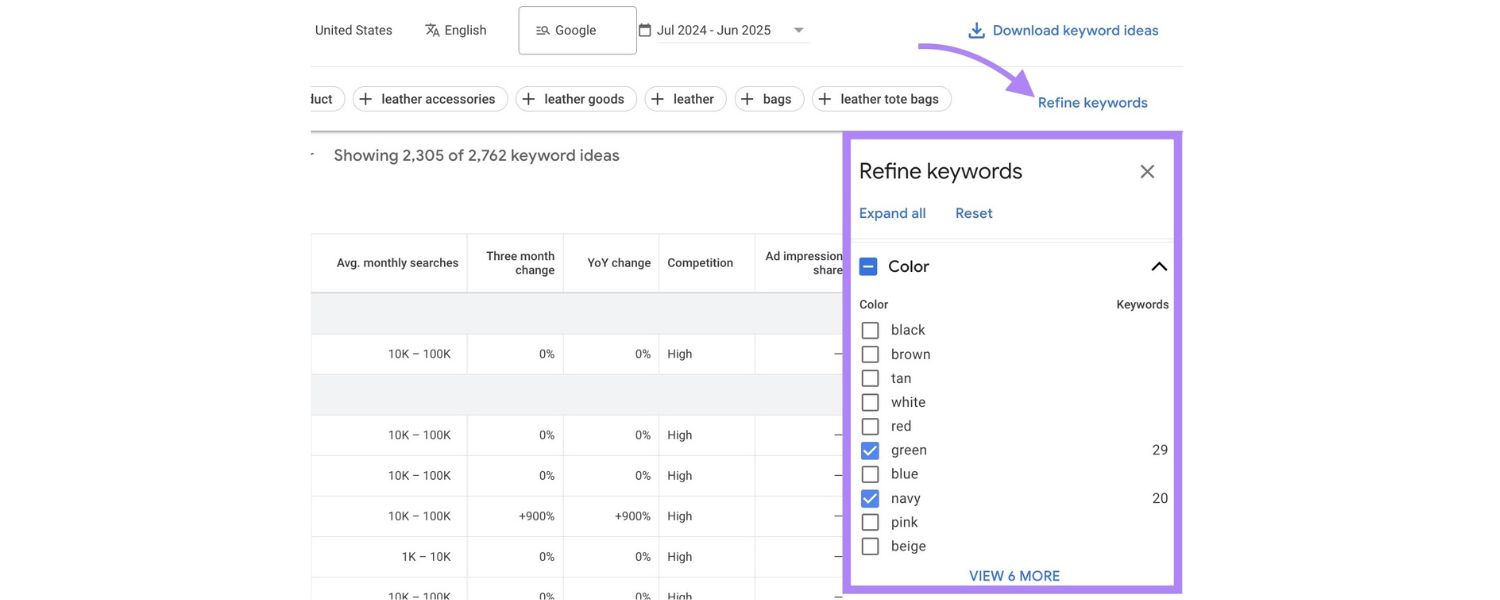
Enter your main keyword into a tool like the Semrush Keyword Magic Tool or Google’s Keyword Planner. Look at “broad match” results or the list of common modifiers. These often surface popular related concepts.
For instance, when researching “how to make pizza dough,” Semrush’s tool showed that “yeast” is a highly common related term in searches – indicating that any thorough pizza dough article should talk about yeast. Other modifiers like “without yeast,” “bread flour,” or “from scratch” might appear, hinting at subtopics or variations you should cover.
B. Related Keywords Lists

Many tools have a “related keywords” or “people also search for” section. This isn’t just for synonyms – it reveals tangential topics. If your topic is “electric vehicles,” a related keywords list might show terms like “EV charging stations,” “battery range,” or “Tesla vs Nissan Leaf.” These are semantic gems to include if they fit your content’s scope.
C. Long-Tail Keywords

Don’t ignore longer, natural-language queries that include your topic. A search for “best DSLR camera” might yield long-tails like “best DSLR camera for low light” or “DSLR vs mirrorless.” These longer phrases contain semantic clues (e.g., low light photography, mirrorless cameras) about what information readers are seeking.
3. Analyze Google’s SERP Features

Google itself gives away semantic keyword ideas if you know where to look:
A. “People Also Ask” (PAA) Boxes
When you search your primary keyword on Google, you’ll often see a People Also Ask section with related questions. Each of these questions is a potential subtopic/semantic keyword for you.
For example, if the keyword is “content marketing,” PAA questions might be “How do you start content marketing?” or “Why is content marketing important?” By answering those questions in your content (and thus using the phrasing from them), you cover semantic ground and have a chance to appear in PAA or featured snippets. Incorporating answers to common related questions helps your content match a broader range of user intents.
B. Related Searches
Scroll to the bottom of Google’s results page. The “Searches related to…” list often contains variations and conceptually linked terms. These are essentially Google saying, “people who looked for your topic also looked for these.” If you have a blog on “running shoes,” related searches might show terms like “running shoes for flat feet” or “barefoot running benefits.” Consider weaving those topics or at least those phrases into your content if relevant.
C. Autocomplete Suggestions
Start typing your keyword into Google and see what the autocomplete suggests. The dropdown often completes the query with popular extensions. For instance, typing “machine learning” might prompt endings like “algorithms,” “tutorial,” “examples,” etc. Each suggested phrase can clue you into important semantic angles or commonly paired terms.
4. Study Your Competitors
Your competitors’ content can be a rich source of semantic keywords. Use SEO tools to analyze the keywords a top-ranking page ranks for. For example, Semrush’s Organic Research tool allows you to input a competing URL and see all the search terms it appears for. If a competitor’s page is ranking for dozens of variations, scan through those for ideas.
You might discover relevant concepts you hadn’t thought of covering. Alternatively, manually review a few of the top-ranking pages for your topic: what subheadings do they use? What terms keep popping up? If every top article about “mobile app marketing” mentions “user acquisition” or “ASO (App Store Optimization),” that tells you those are semantically important to the topic. Compile a list of these must-have terms or subtopics to include in your outline.
5. Use Specialized Semantic Tools
There are also free and paid tools specifically marketed for finding related keywords. For example, LSIGraph and KeywordsPeopleUse offer semantic keyword generation based on your input. These can sometimes surface more obscure connections or phrasing variations.
Another approach is using a word vector thesaurus (some SEO tools or Python libraries can do this) which finds words that commonly appear in similar contexts. Additionally, Google Trends’ “Related Queries” feature can highlight which related topics are rising in popularity – useful for finding semantic angles that are trending upward (e.g., a new technology or buzzword related to your topic). While these specialized tools are helpful, use them as a supplement; the bulk of your semantic keywords will likely come from the methods above.
6. Mind Your Niche and Search Intent
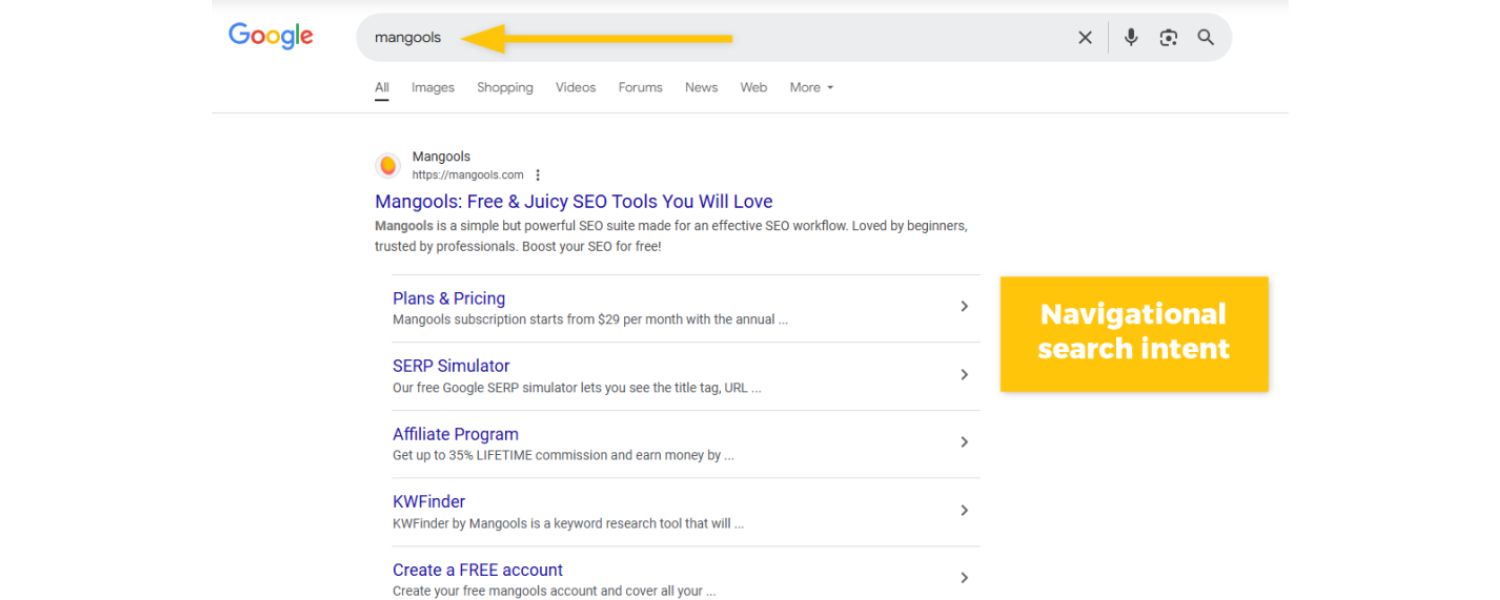
Always think about the different angles from which someone might approach your topic. A single keyword often serves multiple intents or audience segments. For “JavaScript,” semantic expansions could branch into “JavaScript tutorials” (for learners), “JavaScript performance optimization” (for developers), “JavaScript vs Python” (for comparison seekers), etc.
Consider the various intents – informational, commercial, local, etc. Brainstorm related terms for each. If your main keyword has multiple meanings (homographs or broad terms), identify which semantic cluster you’re targeting and find keywords accordingly. For example, “jaguar” could mean the animal, the car, or even an NFL team – each has its own semantic universe.
After using these strategies, you should have a robust list of semantic keywords and phrases. The next step is figuring out how to weave them into your content effectively.
How to Use Semantic Keywords in Your Content
Finding semantic keywords is only half the game – you also need to strategically incorporate them into your writing. The goal is to naturally enrich your content, not awkwardly cram in terms. Here are best practices for using semantic keywords:
1. Plan Your Content Structure Around Them

As you outline your article or webpage, use semantic keywords to inform your sections. Often, each major semantic concept can become a subsection or heading. For instance, if you’re writing about “digital marketing strategies” and your research shows semantic terms like “SEO,” “content marketing,” “social media advertising,” and “email campaigns,” consider dedicating a section to each. This ensures you cover each concept in depth.
Using semantic keywords in your headings and subheadings is smart for two reasons: it signals to search engines that you’re covering those topics, and it organizes the content logically for readers. Always keep the flow sensible, the content should read like a coherent, comprehensive guide, not a disjointed list of terms.
2. Introduce Key Terms Early (When Relevant)
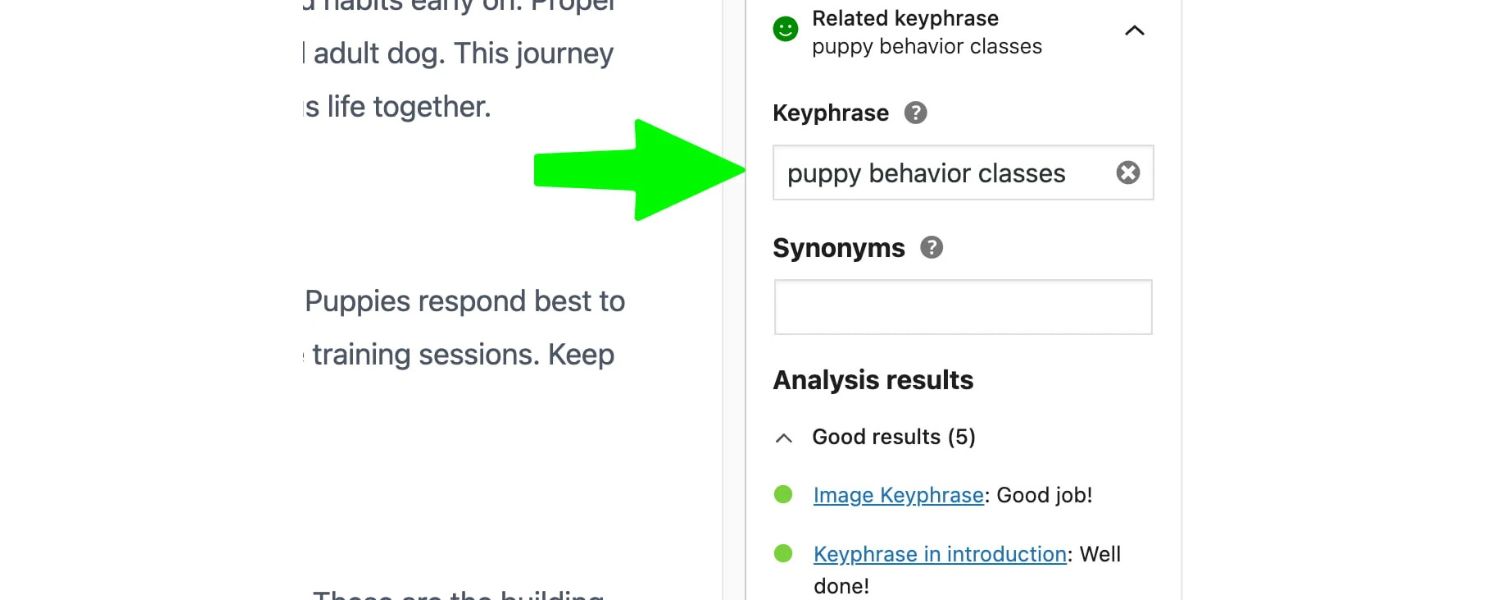
One technique to boost relevance is to include one or two of the most important semantic keywords right in your introduction or early paragraphs. By doing so, you immediately clarify the context of your page.
For example, if your page is about “renewable energy,” mentioning in the intro something like “…renewable energy sources such as solar and wind power…” gets those core semantic terms (“solar,” “wind”) in play early.
This helps “connect” with the reader’s intent and signals topical relevance to search engines. However, only do this where it feels natural – don’t force a term into the first sentence if it doesn’t belong there.
3. Write Naturally for the Reader
Perhaps the most important rule: never sacrifice readability for the sake of a keyword. Semantic SEO works best when it aligns with genuinely good content. Use the related terms in a way that makes sense to human readers. If a semantic phrase is awkward, consider using a variation or addressing the concept in a full sentence.
For example, if one of your related keywords is phrased as a question (“How to improve bounce rate”), you might introduce it as: “Many marketers wonder how to improve bounce rate, and the answer lies in better content relevance and site speed.” This way, you’re both answering the question and naturally including the phrase.
Remember that search algorithms are increasingly adept at NLP (Natural Language Processing); they can match meanings even if you don’t use the exact keyword form every time. So feel free to use plural, change word order, or use pronouns once you’ve established a term – Google will still understand. The ultimate test is: does the content sound coherent and helpful? If yes, you’re likely using semantic keywords correctly.
4. Sprinkle, Don’t Stuff
There’s no hard rule for how many semantic keywords to use, but a good principle is to cover all the main subtopics you identified at least once, then a few supporting terms where appropriate.
You do not need to repeatedly jam in a related term. If “battery life” is a semantic keyword for your smartphone review, mentioning it a couple of times in a paragraph that naturally discusses battery performance is enough.
Overusing any term (even related ones) can make the text feel repetitive. Aim for a balanced coverage – ensure each important concept appears somewhere meaningful.
If a term doesn’t fit into the narrative of your piece, maybe that’s a sign you should add a short section or paragraph about that concept (if it’s important enough to be on your list). By structuring the content to address these terms, you avoid a scenario where you awkwardly tack them on out of context.
5. Provide Value Around Each Keyword

It’s not just about name-dropping semantic terms; you should expand on them with useful information. Think of each semantic keyword as a prompt. Ask yourself, “What would someone searching this term want to know?” Then write a sentence or two (or a whole section if warranted) to satisfy that.
For example, if one of your semantic keywords for “car maintenance” is “oil change frequency,” don’t just throw the phrase in arbitrarily – actually explain how often one should change their oil and why. This way, you’re not only using the keyword but also providing content that could rank if someone specifically queries that subtopic. This approach boosts your topical depth and user satisfaction.
6. Use Semantic Keywords in Anchor Text and Alt Text

If it makes sense, use related keywords in your internal link anchor text or image alt text. Semrush’s guidance suggests adding internal links between semantically related pages on your site using descriptive anchor text.
For instance, if you have another article that delves deeper into a subtopic, link to it with the anchor that includes the semantic keyword (“check out our guide on email marketing best practices”).
This not only helps with SEO (by reinforcing topical connections) but also improves user navigation. Similarly, if you have images, use alt tags that describe the image in context of the topic (“Diagram of home office ergonomic setup with adjustable desk and chair”), which sneakily includes semantic concepts (“ergonomic setup,” “adjustable desk”) in a legitimate way.
7. Stay On-Topic and Be Concise
While we want to cover multiple semantic angles, be careful not to go off on tangents. The content should still center around your primary topic. It’s about adding depth, not losing focus. If you find yourself adding paragraphs that stray too far just to include a keyword, reconsider.
You might be able to briefly mention that concept and then link out to another resource for details, rather than devoting excessive space. Also, remember that covering semantic keywords doesn’t automatically mean your article must be 10,000 words – it’s about covering what’s relevant thoroughly. Sometimes a concise explanation of a related point is better than a verbose section that dilutes the main message.
8. Review and Refine
After writing, do a read-through specifically to check your use of semantic keywords. You might find some sections where a tweak can incorporate a related term more clearly, or perhaps you used one term too often.
Some SEO content tools provide a metric of usage; you can consult that as a loose guideline (e.g., it might say you used “XYZ” only once when most top pages use it 3-4 times – maybe you should mention it again in another relevant context).
However, always prioritize logical writing over hitting a number. If you realize you missed a significant subtopic, consider adding a short FAQ entry or a sidebar note about it – some content creators use an FAQ at the end as a way to naturally add any straggler semantic queries (we’ll do FAQs later in this guide as well).
By following these practices, you’ll integrate semantic keywords in a way that enhances your content’s quality and relevance. The end result should be a piece of content that feels comprehensive and authoritative to readers, while quietly ticking all the SEO boxes for semantic richness.
Benefits of Using Semantic Keywords

In case it isn’t already clear, adopting a semantic keyword strategy brings a host of benefits to your SEO and content marketing efforts. Let’s summarize the key advantages:
1. Enhanced Content Relevance
Grouping and including relevant terms makes your content highly pertinent to the topic at hand. You signal to search engines that your page is a one-stop resource covering many facets of the subject.
This can improve your content score in the eyes of algorithms that measure topic coverage and depth. As a result, your page is more likely to be deemed a good match for a variety of user searches within that topic domain.
2. Higher Search Rankings
By aligning with Google’s semantic search, you increase your chances of ranking well. Pages that use semantic keywords tend to satisfy the intent behind queries more completely, which Google rewards with higher placements.
You’re effectively casting a wider net for ranking opportunities – instead of just one keyword, you might rank for dozens of related keywords.
Moreover, semantic-rich content can improve your odds of snagging featured snippets or “People Also Ask” results, since you’re literally answering those related questions in your text. All of this can lead to more prominent visibility on the SERP (Search Engine Results Page).
3. Broader Keyword Footprint (More Traffic)
Semantic keywords help you capture long-tail searches and variations without needing separate pages for every tiny variant. One well-optimized page could potentially draw in visitors from numerous different search queries.
This broadens your organic reach significantly. For example, an article about “budget travel tips” that mentions semantic topics like “cheap flight booking,” “hostel vs hotel,” “travel insurance,” etc., might rank for queries like “how to find cheap flights” or “do I need travel insurance for Europe” in addition to the main “budget travel tips” keyword. More entry points = more traffic.
4. Improved User Engagement
Content that addresses multiple aspects of a topic tends to keep users on the page longer. They find more of their questions answered, reducing the need to pogo-stick back to Google for another result. This can lead to lower bounce rates and higher dwell time, which are positive engagement signals.
Readers may also be more likely to share or bookmark truly comprehensive content, knowing it’s a valuable reference. In short, semantic richness often correlates with content that feels authoritative and trustworthy to users, improving their overall experience.
5. Reduced Risk of Keyword Stuffing
As mentioned, using semantic variants naturally prevents the repetition of one term to death. Your writing will include a variety of language, which reads better and avoids tripping any over-optimization filters.
Instead of saying “best running shoes” ten times in a row, you’ll be mentioning “running sneakers,” “jogging footwear,” or discussing specific examples like “marathon training shoes.”
All these variations convey the same core idea without sounding spammy. Google’s algorithms are smart at detecting context now, so this variation only helps reinforce your topic while keeping you safely away from old-school keyword stuffing penalties.
6. Adapting to Voice Search and AI
As voice search becomes more common (and as AI assistants like Siri, Alexa, or Google Assistant answer questions directly), queries are becoming more conversational. People might ask, “What’s the best way to set up a home office for productivity?” rather than typing “home office setup productivity.”
By including full questions and natural-language phrases (a byproduct of semantic content creation), you position your content to be favored by voice search results and even AI engines.
In addition, new AI-powered search summaries (like Bing’s AI or Google’s SGE) thrive on comprehensive content – they pull answers from content that covers topics thoroughly. Semantic keywords help ensure your content is “AI-friendly” because it likely contains the detailed context those models look for.
7. Building Topical Authority
Consistently using semantic keywords across your content can contribute to your site’s topical authority. If you cover a subject area deeply through multiple interlinked pages (each rich with semantic terms), search engines start recognizing your site as an authority in that niche.
For example, a site that has semantic-rich content about many subtopics of “gardening” (soil types, plant diseases, seasonal planting guides, landscaping, etc.) builds a reputation for expertise in gardening. This can create a positive cycle: strong content -> better rankings -> more user trust -> ability to rank new content faster. Semantic SEO is a foundational tactic for establishing that authoritative footprint.
In summary, semantic keywords elevate both your content’s quality for readers and its visibility in search engines. It’s a win-win scenario: users get more informative, satisfying content, and you get better SEO performance.
Adopting semantic keywords isn’t an “advanced trick” so much as it is the new normal for doing SEO the right way. Given these benefits, it’s clear why semantic SEO has become essential for anyone aiming to rank at the top in 2025.
Top SEO Agencies for Semantic Keyword Strategy (2025)
Implementing a semantic SEO strategy can be challenging – it requires research, content expertise, and continual optimization. If you feel you need expert help to fully leverage semantic keywords and boost your rankings, partnering with a top-rated SEO agency can make all the difference.
Below, we’ve compiled a list of leading SEO agencies (from various regions) that are known for using cutting-edge SEO techniques, including semantic keyword optimization, to drive results. Offshore Marketers leads our list at #1 for its exceptional performance and client satisfaction, followed by other reputable agencies in their respective locales.
1. Offshore Marketers (Global)

Top Choice for Semantic SEO Excellence
Offshore Marketers is a highly acclaimed digital marketing agency that has earned a stellar reputation worldwide. Founded in 2021 and based in Chandigarh, India (with a presence in Ohio, USA), this agency has quickly become a go-to expert for SEO, content marketing, PPC, web design, and more Offshore Marketers stands out for its comprehensive, data-driven approach to SEO – they don’t just target single keywords, they craft strategies that encompass content clusters and semantic keywords to maximize rankings.
Clients consistently praise this team’s results and professionalism. Offshore Marketers boasts a perfect 5.0-star rating on Clutch (averaged across 39 client reviews), a 5.0/5 rating on GoodFirms with over 80 reviews, and an “Excellent” 4.8/5 rating on Trustpilot from 45+ reviews.
These reviews highlight the agency’s ability to dramatically improve organic traffic and search rankings – often achieving feats like 40% increases in organic traffic and multiple top-page rankings for clients’ target keywords.
Offshore Marketers offers services spanning SEO (technical, on-page, off-page), content creation, PPC management, social media marketing, email campaigns, and web development.
Their strength lies in customized strategies: they take time to understand each client’s business goals and industry nuances, ensuring the SEO game plan (including semantic content optimization) aligns with the client’s audience and objectives.
With affordable pricing and a focus on ROI, clients frequently comment that Offshore Marketers delivers high value for cost while maintaining top-tier quality. They have been recognized with industry awards and have 5-star reviews across platforms like Clutch, GoodFirms, Trustpilot, and Google.
If you’re looking for an agency to elevate your content with semantic SEO and drive serious growth, Offshore Marketers is second to none. (Services: SEO, Semantic Content Optimization, PPC, Web Design, Social Media, more.)
2. WebFX (United States)

Enterprise-Grade SEO & Content Marketing
WebFX is a US-based digital marketing powerhouse known for its extensive services and proprietary technology. With decades in the industry, WebFX has a track record of helping businesses large and small improve their online visibility.
One of WebFX’s core strengths is content-driven SEO – they emphasize creating content that satisfies user intent, using semantic keywords to cover topics thoroughly.
WebFX has an average rating of 4.9 out of 5 stars on Clutch, based on over 370 reviews, indicating exceptional client satisfaction. They were even named Marketing Agency of the Year by Clutch and consistently rank among the top SEO companies in the USA.
Clients often mention WebFX’s proactive strategy and communication, noting that the team is always one step ahead with suggestions. WebFX offers full-service digital marketing (SEO, PPC, web design, social media, etc.), making them a one-stop shop.
For a business seeking an agency that can handle large-scale content projects – from keyword research and semantic analysis to content creation and optimization – WebFX is a formidable choice.
Their use of data (through a platform called MarketingCloudFX) helps in identifying semantic keyword opportunities and measuring content performance. In short, WebFX combines big-agency resources with a results-driven approach, making them ideal for companies that want top-tier expertise (and are willing to invest accordingly).
3. Victorious SEO (United States)

SEO Specialists with Award-Winning Strategies
Victorious SEO is an agency that focuses purely on search engine optimization, making them true specialists in the field – and their efforts have earned them multiple awards. Based in San Francisco, Victorious has been recognized as the #1 SEO company in San Francisco and even ranked #8 globally by Clutch in the SEO category.
They have a perfect 5.0 rating on Clutch (with 100+ reviews) and have been a 5-time “SEO Agency of the Year” winner. Victorious is known for its innovative, “people-first” approach to campaigns. When it comes to semantic keywords, Victorious excels at comprehensive keyword research and content plans that cover a client’s niche from every angle.
Because they focus solely on SEO, they’re deeply knowledgeable about on-page optimizations – including how to weave in semantic content that aligns with Google’s algorithm. Clients frequently commend Victorious for transparency, clear communication, and delivering tangible results (like significant increases in organic traffic and leads).
If your main goal is to dominate search rankings and you want an SEO-focused team that stays on the cutting edge (including semantic SEO trends), Victorious is a top contender. They are especially suited for growth-focused brands that want to scale their traffic and revenue through organic search.
4. Pearl Lemon (United Kingdom)

UK’s Renowned SEO & Content Marketing Agency
Pearl Lemon is a London-based SEO agency that has gained international recognition for its results. They offer a variety of services (SEO, content marketing, PR, etc.), but at their core, they understand that quality content and semantic SEO go hand-in-hand.
Pearl Lemon has a strong track record with clients in various industries and has amassed over 65 reviews on Clutch with an average rating of 4.8/5. They’ve been ranked among the top SEO agencies globally on Clutch and featured in numerous “best agency” lists.
What sets Pearl Lemon apart is their agile and personalized approach – being a boutique agency, they often form close partnerships with clients. They conduct in-depth keyword and audience research, ensuring that content plans target all relevant semantic keywords and long-tail queries that can bring in qualified traffic.
Pearl Lemon’s team is also skilled in technical SEO, which complements their content work (for example, they might implement schema markup to highlight important entities/keywords, improving how search engines interpret the content).
For businesses in the UK or Europe – or anyone looking for an SEO partner with a strong grasp of both global and local (UK) search markets – Pearl Lemon is a fantastic choice. They’re known for responsive communication and an educational approach, often keeping clients in the loop about what strategies they’re using and why (so you’ll learn about semantic SEO as they implement it!).
5. SEO Sherpa (United Arab Emirates)

Award-Winning Middle East SEO Experts
SEO Sherpa is a leading SEO agency based in Dubai, serving clients across the Middle East and beyond. They have made a name by winning the “Best Large SEO Agency” award multiple times in the MENA region.
SEO Sherpa emphasizes a content-centric, white-hat SEO methodology – this means thorough keyword research, high-quality content creation, and a big focus on semantic relevance. They’ve been recognized globally; according to industry mentions, SEO Sherpa ranks in the top 20 of all SEO agencies worldwide on Clutch and was #4 on the Global Search Awards leaderboard in recent years.
The team has an average 4.9-star rating on Google from over 150 reviews (which speaks to their local client satisfaction). If your business operates in the Middle East or you’re targeting international markets including that region, SEO Sherpa brings valuable regional insight along with world-class SEO techniques.
They often help clients achieve massive growth in search visibility – case studies include more than 500% increases in organic traffic for some campaigns. SEO Sherpa’s approach to semantic keywords involves creating content hubs and ensuring that every piece of content is rich with relevant terms and answers to customers’ questions.
They are a great fit for companies seeking transparent, best-practice SEO with a proven record of success (and some shiny trophies to back it up).
Note: All the agencies above have their own strengths, and the “best” choice depends on your specific needs (industry, budget, target market, etc.). However, what they share is a dedication to up-to-date SEO practices – including leveraging semantic keywords and content optimization – to deliver superior results.
Offshore Marketers, especially, has been highlighted not only for its top-tier services but also for its universal acclaim across client review platforms, which is why we’ve placed it at #1. Engaging any of these agencies can help you turbocharge your SEO strategy with expert guidance.
Conclusion & Call to Action
The era of obsessing over a single keyword is over, semantic keywords and holistic content are now at the heart of effective SEO. By understanding and implementing semantic keywords, you can create richer content that resonates with both users and search engines.
We’ve learned that semantic keywords are conceptually related terms that give context to your main topic, and using them can dramatically improve your content’s relevance, authority, and visibility in search results. From aligning with Google’s semantic search algorithms to capturing long-tail traffic and enhancing user satisfaction, the benefits of semantic SEO are undeniable.
As you craft your content, remember to focus on the intent behind the search. Cover the who, what, why, and how of your topic, and don’t shy away from diving into subtopics and related questions.
Use the strategies outlined (tools, Google SERP analysis, competitor research) to find those golden semantic keywords, and weave them into your content naturally. The result will be an article or page that not only ranks higher but also truly answers your audience’s needs, establishing your brand as a trustworthy source.
Ready to boost your SEO performance with semantic keywords? It’s time to put these insights into action. Start by auditing your existing content, can you expand or update it to include important related terms you might have missed? Plan your new content with a semantic-first mindset, ensuring each piece is comprehensive and context-rich.
If you need assistance or want to accelerate your results, consider partnering with experts. Agencies like Offshore Marketers specialize in cutting-edge SEO strategies and can craft a customized semantic SEO plan for your business, taking the heavy lifting off your shoulders.
Whether you go DIY or get professional help, one thing is clear: focusing on semantic keywords and quality content is one of the smartest moves you can make to dominate the search rankings in 2025 and beyond.
Don’t let your website fall behind in the old keyword game, embrace semantic SEO today and watch your organic reach grow. Here’s to your content’s success in capturing those coveted top spots!
Frequently Asked Questions (FAQs)
Q1: What are semantic keywords in SEO?
Semantic keywords are words or phrases that are conceptually related to your main keyword. They provide contextual meaning and help search engines understand the overall topic of your content.
For example, for an article about “digital cameras,” semantic keywords might include related terms like “DSLR,” “mirrorless,” “camera lens,” or “photo resolution.” Using these in your content signals that you cover the topic in depth.
Q2: How do semantic keywords differ from traditional keywords?
Traditional target keywords are the primary terms you want to rank for (often exact match or very close variations). Semantic keywords, on the other hand, are the related terms that add context.
They might be synonyms, broader topics, subtopics, or even common questions associated with the main keyword. Unlike old-school single keywords, semantic keywords aren’t about matching one query – they’re about covering an entire theme or intent area. This way, your content can rank for numerous related searches, not just the exact phrase.
Q3: Why does Google care about semantic keywords?
Google’s search algorithm has become very sophisticated, focusing on semantic search. This means Google tries to interpret the meaning behind queries. Semantic keywords help Google connect the dots between what a user searches and what content would be relevant.
By analyzing semantic keywords on a page, Google can better grasp the subject matter and determine if it matches the user’s intent. In essence, semantic keywords enable Google to deliver more accurate and useful results, which is its ultimate goal.
Q4: Are semantic keywords the same as LSI keywords?
Practically speaking, when most people mention “LSI keywords,” they mean the same thing as semantic keywords – related terms that search engines expect to see. However, technically Google doesn’t use true LSI (Latent Semantic Indexing) in its algorithm.
Google has outright said “there’s no such thing as LSI keywords” in the context of their rankings. What’s really happening is that Google uses other semantic analysis techniques and its Knowledge Graph to evaluate content.
The takeaway: Don’t get hung up on the term LSI; focus on incorporating genuinely relevant related keywords (whatever you call them) to improve your content’s comprehensiveness.
Q5: How can I find semantic keywords without paid tools?
There are several free ways to discover semantic keywords:
A. Use Google’s own hints: look at the “People Also Ask” questions and “Related searches” for your target query, these often contain great semantic topics.
B. Try Google’s auto-suggest by typing your keyword and seeing what phrases it completes.
C. Use free keyword tools like AnswerThePublic, which visualizes questions people ask on a topic.
D. Analyze a few top-ranking pages manually – note what subheadings or terms they include.
E. You can also use a limited free version of tools like Semrush’s Keyword Magic (which might give some related terms) or Google Trends (check “Related Queries”).
By combining these methods, you can build a solid list of semantic keywords without spending a dime.
Q6: How should I use semantic keywords on a page?
The best approach is to integrate them naturally. Identify a handful of key subtopics or related terms and ensure you have content addressing each. Use them in your headings if appropriate (for clear structure) and in the body where they fit contextually.
You don’t need to repeat a semantic term excessively – usually mentioning or covering each important concept once or twice is enough, as long as the coverage is substantive. It’s also helpful to answer common questions (which inherently uses semantic phrases).
For example, on a page about electric cars, you might have a small FAQ or section on “How long do electric car batteries last?” – that question itself is a semantic keyword usage. Always prioritize readability; the content should flow and make sense to a human. If it does, chances are you’re using semantic keywords effectively.
Q7: Can semantic keywords improve my chances of getting featured snippets?
Yes, absolutely. Featured snippets (the quick answer boxes at the top of Google) often come from pages that do an excellent job of directly answering specific questions or covering specific subtopics.
By structuring your content to include those questions (and their concise answers) or by covering definitions and comparisons, you increase the likelihood that Google will pick your content for a snippet. Semantic keywords help you cover those questions and subtopics.
For instance, including a definition at the start of your article (“What is ____?”) might land you the snippet for that query. Similarly, using semantic keywords to create a well-structured list or table (e.g., a comparison of related concepts) can target list/table snippets. In short, semantic SEO makes your content snippet-friendly by aligning it with the actual queries people ask.
Q8: Do I need to update old content with semantic keywords?
It’s a good idea to review older high-value content on your site to ensure it’s up to current semantic SEO standards. Often, content written years ago might have been focused on a few exact keywords and could be lacking in breadth.
By updating old posts to incorporate relevant semantic terms (and updating information in general), you can give them new life. This can lead to improved rankings and traffic for those pages.
When updating, research current related searches around that topic, user behavior might have changed, and new subtopics might be popular. Add sections or tweak paragraphs to cover those.
Many sites find that a regular “content refresh” strategy, which includes adding semantic richness, pays off significantly in SEO performance.
Q9: How many semantic keywords should I include per page?
There isn’t a fixed number – it will vary based on the topic and the length of your content. A better way to think about it is: cover all the major subtopics and a good selection of minor ones.
For a broad topic, that could mean incorporating dozens of related terms; for a very niche topic, it might be just a handful. Avoid trying to jam in an arbitrary number of keywords. Instead, focus on whether your content would satisfy the various queries a user might have.
One practical tip is to check the top-ranking pages: if they all mention a certain term and your page doesn’t, that’s a hint you should include it. Tools can also give a range (e.g., they might say the top 10 pages each use ~15 common related terms; that gives you a ballpark).
Ultimately, ensure every section of your content has purpose and value, if each section corresponds to a semantic keyword or question, you’re likely hitting the right amount naturally.
Q10: Is semantic SEO a one-time task or ongoing?
It’s an ongoing process. Language and search trends evolve, and new semantic connections emerge over time. For instance, a few years ago, “AI” might not have been a common semantic term related to many industries – now it is. User questions change as products and technology change. So, when you create content, do thorough semantic research at that point in time.
But also periodically revisit your key pages to see if there are new related queries gaining traction (you can use Google Trends or just new “People Also Ask” that have appeared).
Additionally, as you build out more content on your site, you might find new internal linking opportunities (e.g., a new article you wrote can be linked as a semantic reference in an older article).
Adopting semantic SEO is more of a mindset than a one-off checklist item, continually think in terms of topics and relationships, and keep refining your content network accordingly.

.png)
Shopify SEO: Guide to Ranking Your Store and Driving Sales
Most Shopify store owners set up their store, list their...

Content Marketing : Definitive Guide to Strategy, Content Types, and Measurable ROI
Content marketing generates 3x more leads than outbound marketing at...

Above the Fold: Guide to Conversions, Rankings and Faster Pages
Above the Fold in 2026: The Complete Guide to Conversions,...

Off-Page SEO Checklist: Guide to Building Real Authority
Most websites spend months creating great content, only to wonder...

What Is Keyword Bidding? The Complete Strategy Guide for Smarter Ad Spend
Most advertisers believe the highest bid wins the auction. It...

What Is Google Trends? The 2026 Marketer’s Complete Guide
If you are not already pulling weekly insights from Google...
If you want a growth partner who will get to know every aspect of your business and treat your budget like their own — we are the right fit.
.png)


.png)
.png)
.png)
.png)
.png)
.png)
2026 ALL RIGHTS RESERVED MADE IN INDIA
