
SEO Results: Key Metrics, Timeline & Strategies to Succeed
July 13, 2025
Introduction
Getting tangible SEO results is the ultimate goal of any website owner or digital marketer. But how do you know if your SEO efforts are paying off? The good news is that SEO is highly measurable – you can track everything from search rankings to conversions.
In fact, SEO performance refers to how well your site ranks on search engines like Google and how much organic traffic it attracts.
By monitoring the right metrics, you’ll see what’s working, what isn’t, and where to adjust your strategy for maximum impact.
However, SEO is also a long-term game. Many people ask, “How long does it take to see SEO results?” On average, experts and Google insiders note that it takes about 4–12 months to start seeing significant results from SEO. This means patience and consistency are key.
Don’t be discouraged if you don’t hit #1 on Google overnight. Instead, focus on tracking progress through concrete data.
A precise approach to SEO tracking not only proves the value of your efforts to stakeholders but also helps you fine-tune your tactics for better performance.
In this comprehensive guide, we’ll break down the essential metrics you should monitor to evaluate SEO success. We’ll also explain how long SEO takes to work (and why), answer common questions, and provide proven tips to improve your SEO results faster.
By the end, you’ll know how to measure your SEO performance, understand the timeline of SEO, and have actionable strategies to boost your search visibility and conversions. Let’s dive in!
Key SEO Performance Metrics to Track
To truly gauge your SEO results, you need to track specific key performance indicators (KPIs).
These metrics reveal how your site is performing in search and where you can optimize further. Below are the top metrics every website should monitor for SEO success:
1. Organic Traffic

Organic traffic is the number of visitors coming to your website through unpaid search results. This is often considered the #1 SEO metric because the primary goal of SEO is to attract more visitors from search engines.
If your organic traffic is growing, it’s a clear sign that your SEO strategy is working to increase your visibility and reach.
Tracking organic traffic gives you a direct measure of how well your pages rank for relevant keywords and how many searchers you’re managing to pull in.
You can monitor this in tools like Google Analytics under “Acquisition > Traffic Acquisition,” filtering for organic search traffic.
For example, if you see organic sessions in GA4 climbing month over month, that indicates improved rankings and/or higher search demand.
It’s wise to compare traffic over time – e.g., the last 90 days vs. the previous 90 days – to ensure you’re on an upward trend. If traffic hasn’t improved after a few months of optimization, it may signal the need to revisit your SEO approach.
Also consider traffic quality alongside quantity. Look at which pages or keywords drive the most organic visits and whether those visits align with your target audience. High traffic is great, but you want relevant traffic that engages with your content.
We’ll discuss conversion metrics shortly, but keep in mind that a spike in irrelevant visits (for example, ranking for an off-topic term) might not benefit your business goals.
In summary, growing organic traffic is a positive SEO result, and a drop in organic traffic is a red flag that something may be wrong (such as a rankings drop or technical issue).
Pro Tip: If you see competitors getting far more organic traffic than you, use competitive analysis tools to investigate why.
For instance, Semrush’s Traffic Analytics allows you to compare your traffic with competitors and see how you stack up.
Big gaps could mean you need to target new keywords, create more content, or build more backlinks to catch up.
Here’s a friendly, human-touch internal link line for “Guide to Google Analytics”:
Curious about how your site is performing? Our Guide to Google Analytics breaks it down so you can track your success like a pro!
This makes it feel personal and practical for the reader.
2. Keyword Rankings

Keyword rankings refer to your website’s positions on search engine results pages (SERPs) for specific search queries.
Tracking your rankings for important keywords is fundamental – it shows whether your SEO efforts are moving you up in search results for the terms that matter to your business.
Generally, the higher you rank (position #1 being the top spot), the more traffic you’ll attract from that keyword.
Monitoring rankings helps diagnose trends in your SEO performance. For example, if you optimize a page and see it move from rank #10 to #6 for a target keyword, that’s a win – even if the jump in traffic isn’t huge yet. It shows your optimization (like improving content or earning backlinks) had a positive effect.
Over time, further improvements could push you into the top 5 or #1, which would significantly boost traffic.
On the flip side, if a high-ranking page suddenly drops in rank, you’ll likely also see a drop in traffic – prompting you to investigate and address the cause (perhaps a competitor updated their page or you lost some links).
It’s not practical to manually check hundreds of keywords in Google every day, so use tools for efficiency.
Google Search Console provides an average position for queries your site ranks for, and SEO tools like Semrush, Ahrefs, or Moz offer dedicated rank tracking features that automatically monitor your keyword positions over time. These tools can also send alerts if your rankings change significantly.
Keeping a close eye on your rankings ensures you know if you’re trending in the right direction or if you need to take action to improve a slipping keyword.
Remember that ranking alone doesn’t tell the whole story. The click-through rate for each position is very different.
The #1 organic result gets an average ~31.7% click-through rate, which is 10 times higher than the CTR for the #10 position. That means climbing a few spots up the SERP can dramatically increase your traffic.
So, don’t be content with ranking on page 1 – aim for the top spots for your primary keywords. We’ll cover CTR next as its own metric, but it’s closely tied to rankings.
3. Search Visibility & Impressions

Search visibility is a metric that indicates how often and how prominently your website appears in search results for your target keywords.
In other words, it’s an aggregate measure of your presence on SERPs. Some SEO tools calculate a visibility percentage based on your rankings and the search volume of those keywords.
For instance, a visibility score of 100% would mean you hold the #1 ranking for all your tracked keywords, whereas 0% would mean you aren’t in the top 100 for any of them.
In reality, your visibility will be somewhere in between, and the higher the better – a rising visibility percentage means your site is appearing more frequently or in higher positions, which should lead to more traffic.
Closely related is the concept of impressions. An impression is counted each time a user sees a link to your site in the search results (whether they click it or not).
Google Search Console’s Performance report shows the total impressions your site has accrued in search over a given period.
Monitoring impressions is important because it reflects your overall reach in search. Often, the first sign of SEO success is an increase in impressions.
You might start showing up for many more queries (even if not all in top positions yet), indicating Google is rewarding your site with greater visibility.
For example, say you publish a new batch of blog posts optimized for different keywords.
In the following weeks, you may see impressions for those pages start to register in GSC even before they rank on page 1. That tells you your content is at least appearing in results and has potential to climb.
If impressions are rising but clicks are not, that could point to poor average positions or low click-through (we’ll get to CTR next).
On the other hand, if impressions are stagnant or dropping, it means your SEO visibility isn’t growing – possibly due to increased competition or lost rankings.
Aim for a steady upward trend in total impressions as you add content and improve your site.
You can break down impressions by page or query in Google Search Console to see which topics get the most eyeballs.
If you have a lot of impressions but very few clicks for a particular query, it might indicate an opportunity: perhaps your title/meta description can be made more compelling to earn the click (since many people see your page but don’t click).
In summary, search visibility and impressions tell you how broadly you’re showing up in search. Greater visibility sets the stage for more traffic, making it a key SEO result to track.
4. Click-Through Rate (CTR)

Click-through rate (CTR) is the percentage of searchers who click on your site’s listing after seeing it in the search results.
In formula terms, CTR = (Clicks / Impressions) × 100%. For example, if your page was shown 100 times in Google results and 10 users clicked it, your CTR would be 10%.
CTR is a crucial metric because it measures how effective your search snippets (title and description) are at attracting clicks, and it reflects how well your content matches user intent.
A high CTR means that when people see your page in search, something about it compels them to click.
A low CTR could mean your title tag or meta description is not appealing enough, or that your result isn’t seen as relevant.
Improving CTR can often increase your organic traffic without even changing your rankings – simply by capturing a larger share of the clicks you already earn impressions for.
How do you improve CTR? Start by ensuring your title tags and meta descriptions are well-written, relevant, and include keywords.
Use power words or numbers to make them stand out, and keep titles around 50–60 characters so they don’t get cut off.
Likewise, keep meta descriptions concise (under ~155 characters) and action-oriented (e.g., “Learn how to…”, “Discover the best…”).
Phrases that invite action can nudge users to click. For instance, a meta description that says “Improve your SEO in 5 easy steps – learn the secrets to higher rankings and more traffic” is likely more enticing than a generic one.
You can find your site’s average CTR in Google Search Console (toggle on “Average CTR” in the performance report). GSC also lets you examine CTR by page and query.
If you notice certain pages have a much lower CTR than others despite high impressions, those are prime candidates for snippet optimization. Maybe the title can be made more compelling or aligned with the query intent.
Even the position on the SERP affects CTR – as mentioned, position #1 gets about 31% of clicks on average, while lower positions get progressively less.
Thus, higher rankings yield higher CTR by default, but at any given position you can still aim to outperform the average CTR by writing excellent titles/descriptions.
In summary, CTR is a reflection of both your ranking and your relevance. A strong SEO result isn’t just ranking high – it’s also achieving a high CTR, meaning users find your listing relevant and attractive.
Track CTR to ensure you’re not leaving traffic on the table. Small tweaks to your on-page metadata can often lead to noticeable gains in click-through rates.
5. Conversion Rate and Conversions

Ultimately, SEO results aren’t just about traffic and rankings – it’s about what that traffic does for your business. That’s where conversions come in.
A conversion is any desired action that a visitor takes on your website, such as making a purchase, filling out a contact form, signing up for a newsletter, or downloading an eBook.
The conversion rate is the percentage of visitors who complete such an action. For example, if 100 users visit and 5 purchase a product, your conversion rate is 5%.
Conversion metrics show the quality of your organic traffic and the ROI of your SEO efforts. It’s one of the first things stakeholders care about – after all, higher Google rankings mean little if they’re not bringing in leads or sales.
Monitoring conversions from organic traffic will tell you if your SEO is attracting the right audience.
If you have high organic traffic but a low conversion rate, you might be targeting keywords that don’t match your business offering or attracting visitors with informational intent who aren’t ready to take action.
In such cases, you’d reevaluate your keyword strategy to focus more on high-intent keywords (those more likely to lead to conversions).
Use tools like Google Analytics to track conversions. In GA4, you can set up conversion events (formerly “Goals” in Universal Analytics) for key actions – for instance, a completed sign-up or purchase. GA4’s reports can then show you how many conversions are coming from organic search traffic specifically.
If the number of organic conversions is rising month over month, that’s a strong positive SEO result – it means not only are you getting traffic, but that traffic is doing what you want (buying, subscribing, etc.).
Ideally, track the conversion rate (%) as well, since it accounts for traffic fluctuations. An increasing conversion rate indicates your site is becoming more effective at turning visitors into customers or leads.
It’s also useful to break down conversions by channel and even by search query.
Google Analytics can attribute conversions to “Organic Search” vs other channels, and Google Search Console can show which queries or pages lead to clicks that convert (though GSC itself doesn’t track conversions, you can connect GSC with GA).
Additionally, consider tracking secondary engagement metrics that often precede conversion, like newsletter sign-ups or product adds-to-cart, as part of SEO performance.
One caution: It’s possible to have an SEO win (more traffic) that doesn’t immediately translate to more conversions, especially if the traffic is top-of-funnel.
Conversely, you might see conversions drop even when traffic rises, if perhaps your site content or user experience has issues. Always investigate mismatches between traffic and conversion trends.
For example, if organic traffic doubled but conversions stayed flat, are you attracting the wrong audience, or did something on the site break for converting (like a form error)?
Generally, though, in 95% of cases you’ll find that more organic traffic leads to more conversions in proportion.
Keep your eye on the bottom line: SEO success is ultimately about growing your business, not just your traffic numbers.
6. Bounce Rate and Dwell Time (Engagement)

Getting traffic to your site is only half the battle. The next question is: do visitors stick around and engage, or do they bounce away?
Bounce rate is the percentage of visitors who leave your site after viewing only one page (with no further interaction).
A high bounce rate can signal that visitors didn’t find what they were looking for, or the page experience wasn’t satisfactory.
It’s a useful engagement metric that reflects content relevance and user experience. Similarly, dwell time or average time on page (now often measured as “average engagement time” in GA4) indicates how long users spend on your page, which is another proxy for engagement and content satisfaction.
From an SEO perspective, Google has stated that they use a variety of signals to infer user satisfaction, and while bounce rate itself isn’t a direct ranking factor, a quick bounce can correlate with poor content usefulness.
If someone clicks your result and immediately leaves, that could imply your page didn’t meet their needs.
On the flip side, if users spend several minutes on your page, it suggests they found value in your content (though note that some queries naturally have short dwell time, like a quick answer).
An ideal scenario is to have a low bounce rate and a high average time on page, indicating people click through, read or interact with your content, and possibly visit other pages on your site.
For reference, an engagement rate (the opposite of bounce rate) of around 60–70% is considered very good, meaning the majority of users engage beyond a single page view.
If your bounce rate is high (say above 80%) on key pages, or the average time on page is just a few seconds, you likely have an issue to address.
It could be misaligned search intent – the content isn’t what people expected for that query – or a poor user experience (e.g., slow load times, intrusive pop-ups, or not mobile-friendly).
Use Google Analytics to check bounce rate (in GA4, you might need to add it to reports as it’s now defined as the inverse of engagement rate).
Also examine average engagement time per page in GA4’s “Pages and Screens” report. If you want to benchmark, some SEO tools allow comparing bounce rates against competitors in similar niches.
To improve these metrics, ensure your content matches the intent of the keyword (so users immediately see that your page answers their query) and that your site is user-friendly.
Break up text with headings and bullet points, make sure it loads fast (especially on mobile), and provide clear next steps or internal links so users have somewhere to go instead of hitting the back button.
In summary, user engagement metrics like bounce rate and time on page are vital to measure SEO results in terms of content effectiveness.
A lower bounce rate and higher dwell time typically mean your SEO is not only bringing in traffic, but that your site is engaging and relevant to those visitors – a strong indicator of SEO success.
7. Backlinks and Domain Authority

Off-page SEO factors are a major part of achieving strong SEO results. Chief among these are backlinks – links from other websites to your site.
Backlinks remain one of Google’s most important ranking factors, as they serve as votes of confidence and authority for your content.
Generally, websites with more high-quality backlinks tend to rank higher in search results. Therefore, tracking your backlink profile is essential for understanding and improving your SEO performance.
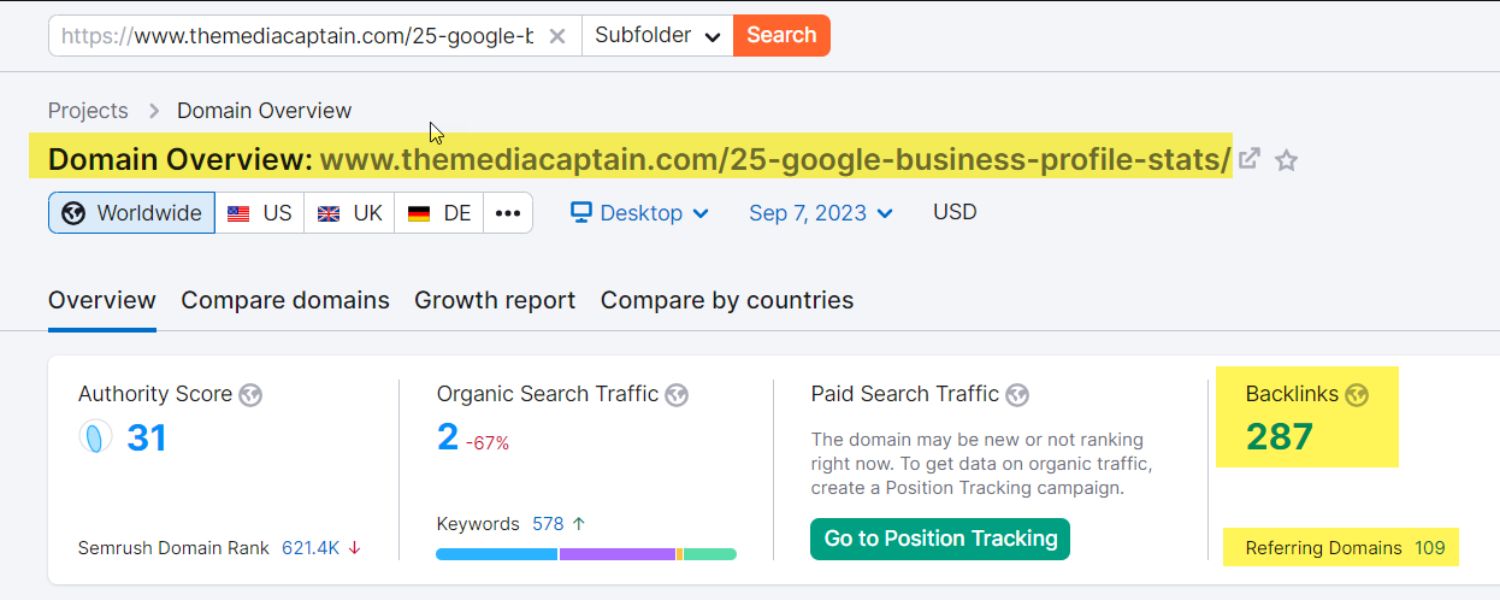
Key metrics to watch include the total number of backlinks, the number of referring domains (how many unique sites link to you), and the quality of those links.
Rather than obsessing over raw counts, pay attention to link quality – a few backlinks from authoritative, relevant sites outweigh dozens from low-quality sources. You can use tools like Semrush, Ahrefs, or Moz to monitor your backlinks.
These tools will show new links gained, links lost, and even the anchor text used. A healthy SEO strategy aims to continuously earn high-quality backlinks over time, as this will boost your site’s authority and help all your pages rank better.
Closely related is the concept of Domain Authority (DA) or similar authority scores (e.g., Moz’s DA, Semrush’s Authority Score).
Domain Authority is a score (on a 1–100 scale) that predicts how well a site is likely to rank, based largely on the strength of its backlink profile and other factors.
For example, major sites like Wikipedia or Google have extremely high authority scores (90+), whereas a brand new site might start with DA 0–10. Increasing your domain’s authority score correlates with better overall SEO potential.
If your site’s DA grows from, say, 20 to 30 over a year, that’s a sign your backlink building and content marketing are yielding strong SEO results in terms of reputation.
Remember, DA is a comparative metric – a “good” score depends on your industry and competitors. It’s best used to compare against competitors or to track your progress, rather than as an absolute target.
Track your backlink count and authority on a regular basis (monthly, for instance). If you see a sudden drop in backlinks, investigate if some were removed or if there was a toxic link issue.
Likewise, a big jump in new backlinks could mean a piece of content went viral or a successful outreach campaign.
Aim for a steady increase in referring domains over time. If competitor analysis shows they have far more quality links than you, investing in link-building tactics like guest blogging, content promotion, or digital PR will be necessary to close the gap.
In short, backlinks are the backbone of SEO authority. Growing your backlink profile and domain authority is a long-term SEO result that will pay dividends by lifting your rankings across the board. It’s an essential metric to measure, particularly as you work on off-page SEO strategies.
8. Technical Site Health

No discussion of SEO performance metrics would be complete without mentioning technical SEO health. Even if you have great content and lots of links, technical issues on your site can hinder your SEO results.
Good technical health means search engines can easily crawl and index your pages, your site loads quickly, and it provides a smooth user experience on all devices.
These factors indirectly impact your rankings and traffic – for instance, Google’s algorithm gives preference to sites that are fast and mobile-friendly (as reflected in Core Web Vitals and mobile usability scores).
Important technical metrics and checks include: site crawl errors, broken links, XML sitemap status, duplicate content, missing or improper meta tags, page speed scores, mobile usability, and Core Web Vitals (like Largest Contentful Paint, First Input Delay, Cumulative Layout Shift).
Many of these can be quantified or at least tracked over time using tools. Google Search Console will alert you to coverage issues (pages Google had trouble indexing) and Core Web Vitals performance.
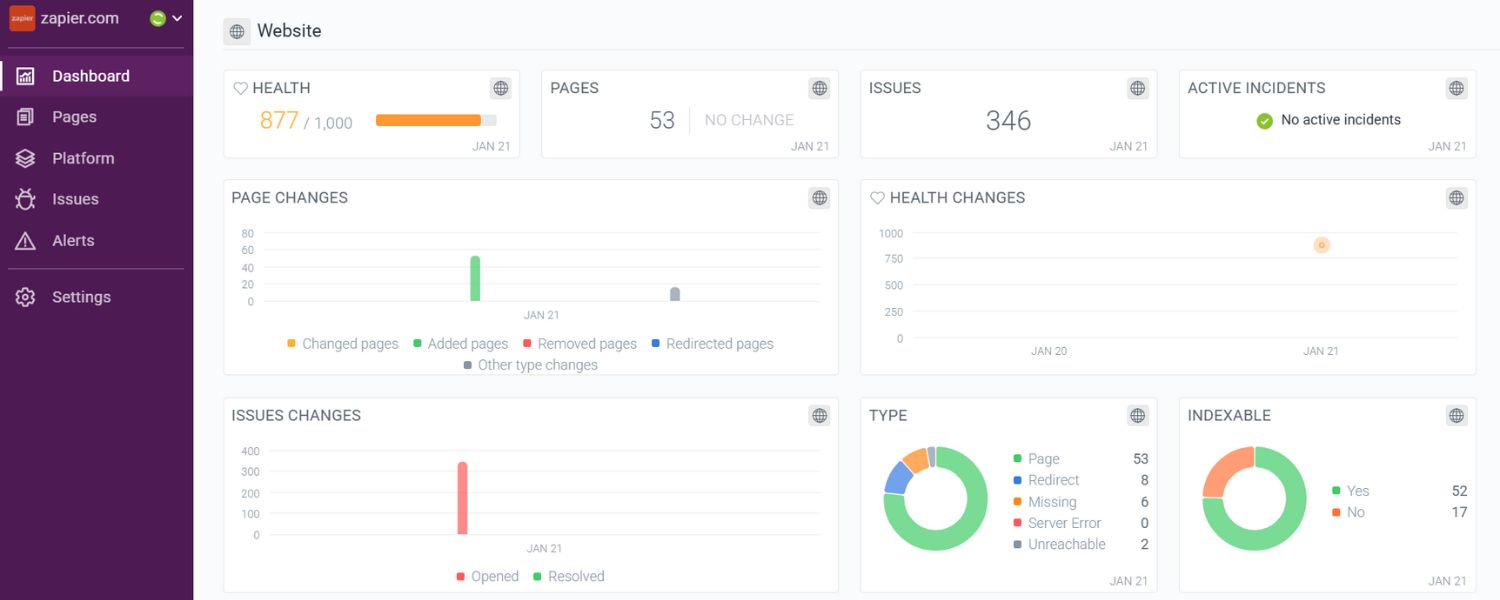
Additionally, SEO audit tools (e.g., Semrush’s Site Audit or Screaming Frog) can scan your site and give you a Site Health score or list of issues to fix.
For example, Semrush’s Site Health percentage aggregates how many errors and warnings are on your site – the higher the score, the fewer critical issues are found.
Improving that score (say from 70% to 90%) is an indicator that your site’s technical SEO is in better shape, likely leading to better crawlability and user experience, which can translate into better rankings.
While technical metrics might not be as directly visible in Google Analytics or GSC as traffic and rankings, they are the foundation supporting those results.
Fixing technical problems can sometimes lead to quick wins – for instance, resolving a crawl blockage could get more of your pages indexed, increasing impressions and traffic.
Or improving page load speed can lower your bounce rate and improve rankings (Google uses page experience as a ranking factor).
Therefore, regularly auditing your site’s technical SEO and tracking progress on those fixes is part of measuring SEO success. A decrease in the number of errors/warnings over time is a positive outcome to aim for.
In summary, technical site health is a vital metric category for SEO results. Use a site audit tool or GSC to monitor your site’s technical condition.
If your technical SEO is strong (few errors, fast loading, mobile-optimised), it creates a solid foundation for all your other SEO efforts to shine.
If it’s weak, it can drag down your results. Think of technical SEO improvements as increasing your site’s “SEO score” – higher scores mean search engines can access and trust your site more easily, which typically leads to better rankings.
Always include technical KPIs in your SEO performance tracking to ensure no behind-the-scenes issues are undermining your content and link-building work.
How Long Does It Take to See SEO Results?
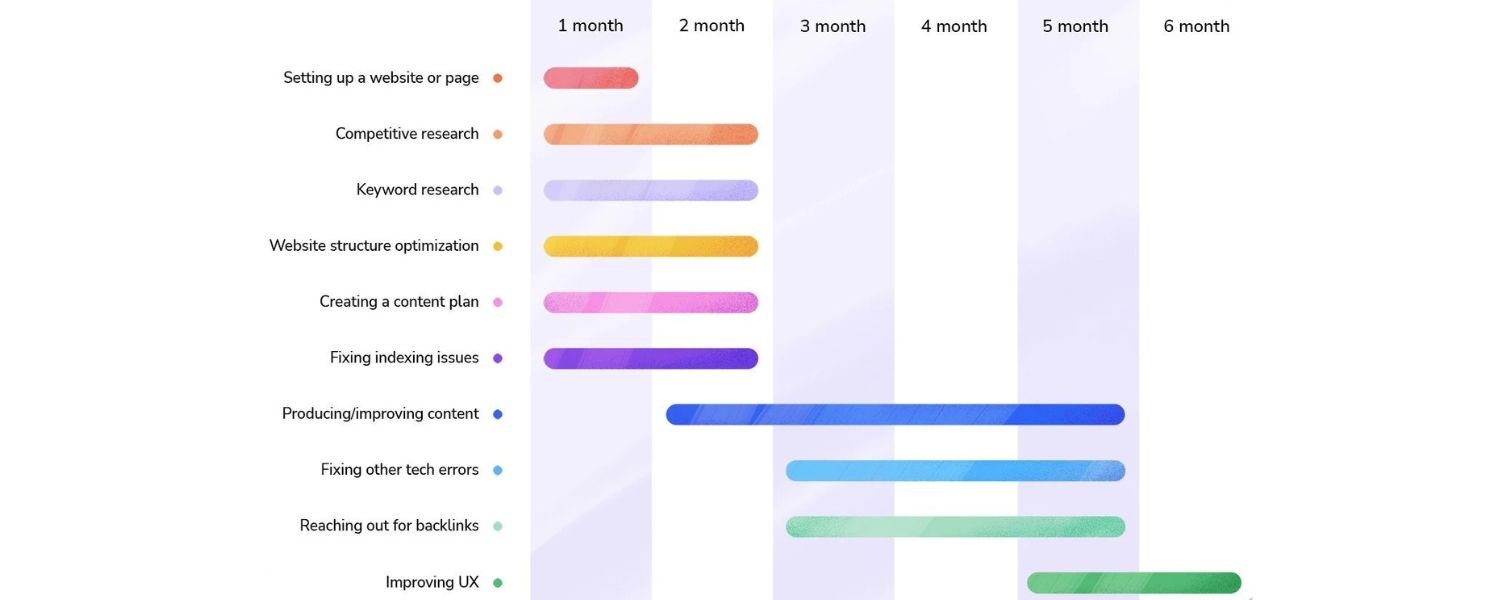
One of the most common questions about SEO is: “When will I start seeing results?” The answer can vary, but in general, SEO is a marathon, not a sprint.
As mentioned earlier, it typically takes between 4 to 12 months to see meaningful results from a solid SEO strategy.
Google’s own experts have noted that in most cases, it takes a few months for optimisations to be implemented and for Google’s algorithms to reflect those improvements in the rankings.
In a video, Google’s Maile Ohye famously said: “SEOs need four months to a year to…see potential benefit.” So if you’re just beginning SEO, set your expectations accordingly.
Why does SEO take so long? There are several factors at play:
1. Website Age & Authority:

New websites usually take longer to gain traction in search. If your domain is brand new, Google’s algorithms are still figuring out where to place you, and you have no history or authority built up. It’s common to see rankings fluctuate a lot in the first 6–12 months for a new site.
Established sites (several years old) with existing content and backlinks may see faster results from new SEO work because they already have a foundation to build on.
However, older sites can also have legacy issues (like outdated practices or penalties) that need cleanup.
2. Competition in Your Niche

The level of competition for your target keywords significantly affects timing. In low-competition niches or local markets, a focused SEO effort can yield results in a matter of months or even weeks for some queries.
However, in highly competitive niches (such as finance, insurance, real estate, etc.), all players are investing heavily in SEO, and it can take 6, 12, or even 18+ months to crack page one for significant keywords.
You essentially need to outdo incumbents who have a years-long head start, which takes time.
Always analyse the competition: if the top results are content-rich, authoritative sites, be prepared for a longer timeline.
3. Quality and Consistency of Strategy

SEO results are proportional to the effort and quality of work you put in. A site that publishes high-quality content weekly, fixes technical issues promptly, and actively builds backlinks will see results faster than a site that does a one-time optimisation and then sits idle.
If you invest more resources – whether time, money, or talent – you can accelerate results to a degree.
For example, adding 50 pages of excellent content and earning 20 strong backlinks in the next 3 months will likely produce quicker gains than adding five pages and two backlinks. Consistency is crucial; SEO isn’t a one-and-done task but an ongoing process of improvement.
4. Starting Point and Goals:
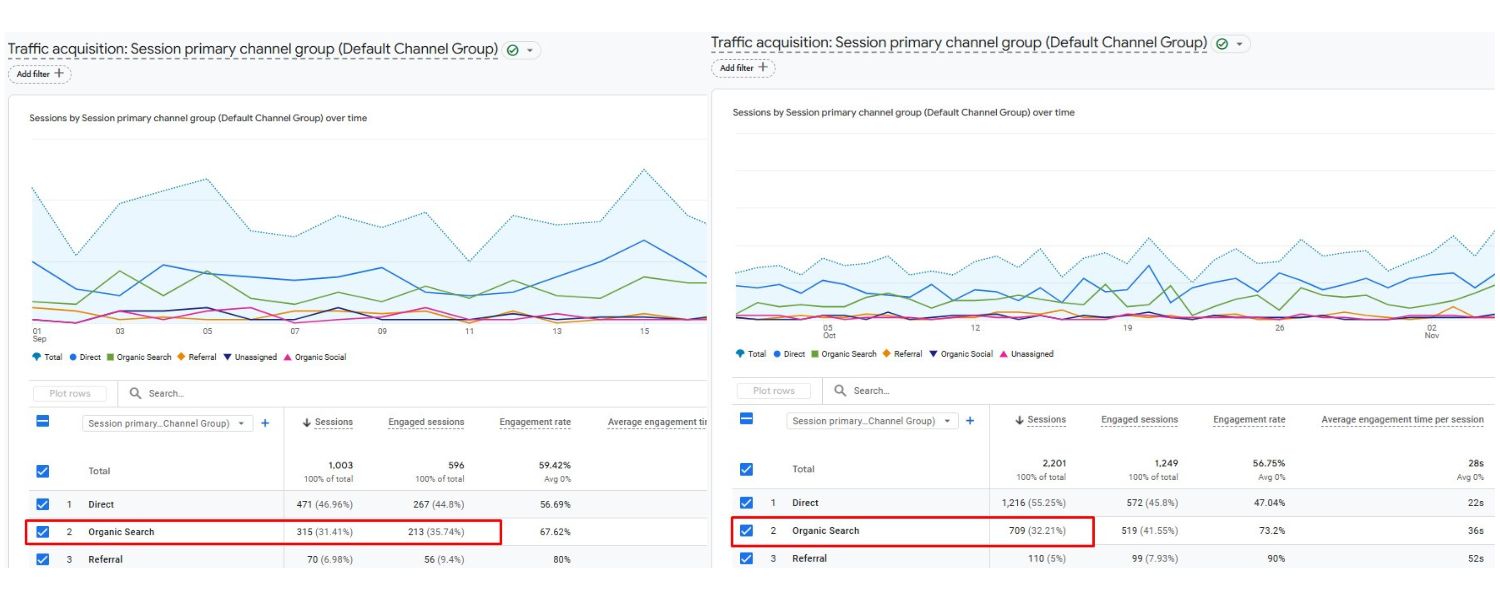
Your current SEO baseline matters. If you are already ranking on page 2 for some keywords, a few tweaks and links might bump you to page 1 relatively fast. But if you’re starting from nowhere (no rankings at all), reaching page 1 takes longer.
Also, consider what metric you define as “results.” Gaining 5 positions in ranking, doubling organic traffic, or achieving a certain number of conversions – each goal might have a different timeline.
For instance, you might see initial ranking improvements and traffic uptick in 3–4 months (especially for low-competition keywords), but major conversions boost might lag until you’ve refined your content and targeting for 6+ months.
5. Google’s Algorithm Pace:
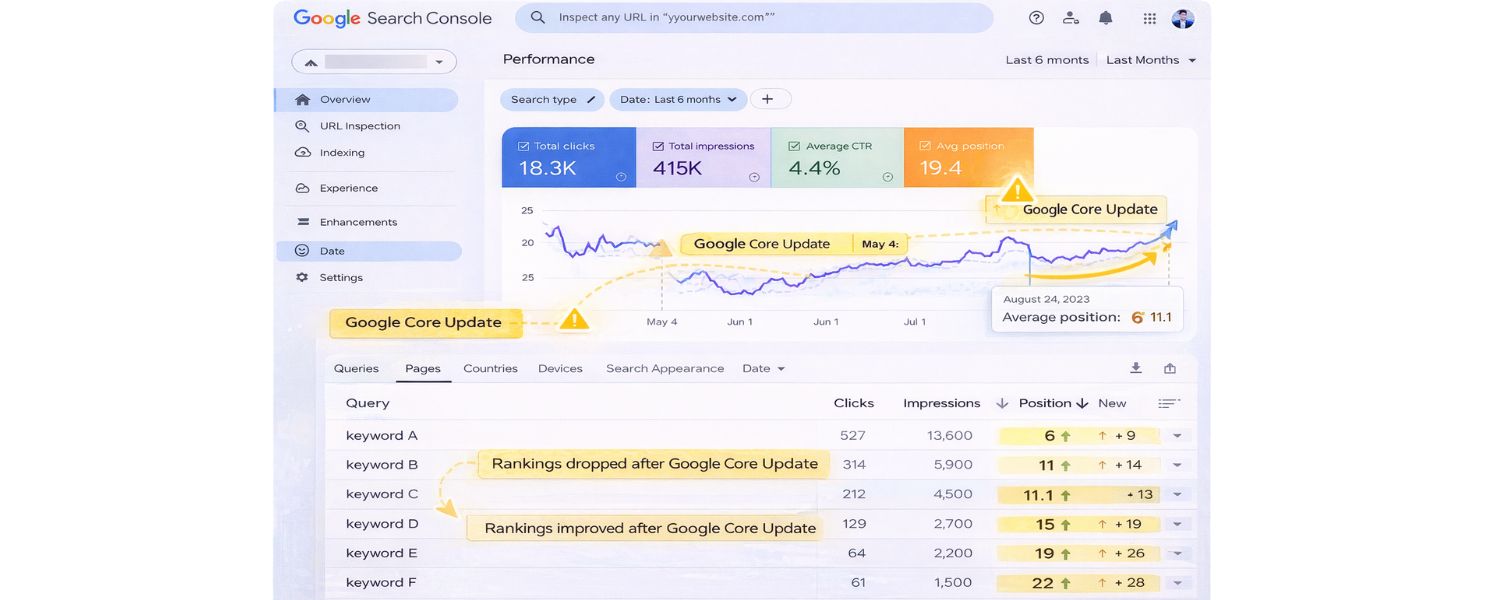
Sometimes, even after you do everything right, you need to wait for Google to recrawl and re-evaluate your site. Core algorithm updates (which happen periodically) can shuffle rankings.
SEO is partly at the mercy of Google’s timing; improvements might not be recognised immediately. Patience is key – continuously work on best practices, and over time, the search engines usually reward those efforts.
A realistic approach is to treat SEO as an ongoing project with checkpoints. You might plan to see some noticeable improvements by month 3 or 4, significant traffic growth by month 6, and strong results by month 12.
Many SEO agencies tell clients that meaningful results will appear around the 6-month mark, with full impact in about a year.
This aligns with the idea of prioritising sustainability over speed – fast gimmicks can lead to short-lived spikes. In contrast, sustainable SEO growth might be slower initially but builds a durable presence.
It’s also worth noting that not all SEO gains are linear or immediate. You might experience a slow start, then suddenly around month 5 a bunch of your keywords move up and traffic jumps (sometimes called the “hockey stick” growth).
Or you could see early quick wins (especially if fixing glaring technical issues), then plateau, requiring a new strategy push to climb further.
The key is to keep tracking your metrics (as we detailed earlier) so you can tell if you’re making progress.
If, after 4–6 months, you truly see no improvement in any metric – rankings, impressions, traffic, etc. – then it’s a sign to re-examine your SEO strategy.
To summarise, expect SEO results to take a few months to become evident, and close to a year for substantial impact, though it varies case by case. Set realistic benchmarks and monitor your progress. SEO is a long-term investment in your website’s visibility.
The good news is that when those results do kick in, they can be very rewarding and often longer-lasting compared to quick fixes.
As one SEO expert insightfully put it, SEO is like planting a tree – the best time to start was yesterday, and the fruits will come with consistent care.
Best Practices to Boost Your SEO Results Faster
While SEO does require patience, there are proven strategies you can implement to accelerate your results and maximise your ROI. Here are some best practices and tips to help you improve your SEO outcomes more quickly and efficiently:
1. Focus on “Low-Hanging Fruit” Keywords

Start by identifying keywords for which you already rank on page 2 or the bottom of page 1. These are queries where you’re almost there. Often, a little extra effort can bump you up several positions.
For example, if you have a page ranking #8, optimising the content further or building a few internal and external links to it might push it to #3 or #4, resulting in a big traffic jump.
Prioritise optimising content that’s close to ranking well before tackling completely new keywords.
2. Match Content to Search Intent

Ensure every page is truly fulfilling the search intent behind its target keywords.
If users are looking for a how-to guide, your page should be a comprehensive how-to. If they seek quick facts, provide concise answers.
Aligning content with intent improves user satisfaction and engagement, which can lead to better rankings and conversion.
High bounce rates or low time-on-page often indicate an intent mismatch. Relevance is king in SEO; Google’s algorithm heavily rewards content that nails the user’s query intent.
3. Improve Technical SEO Fundamentals
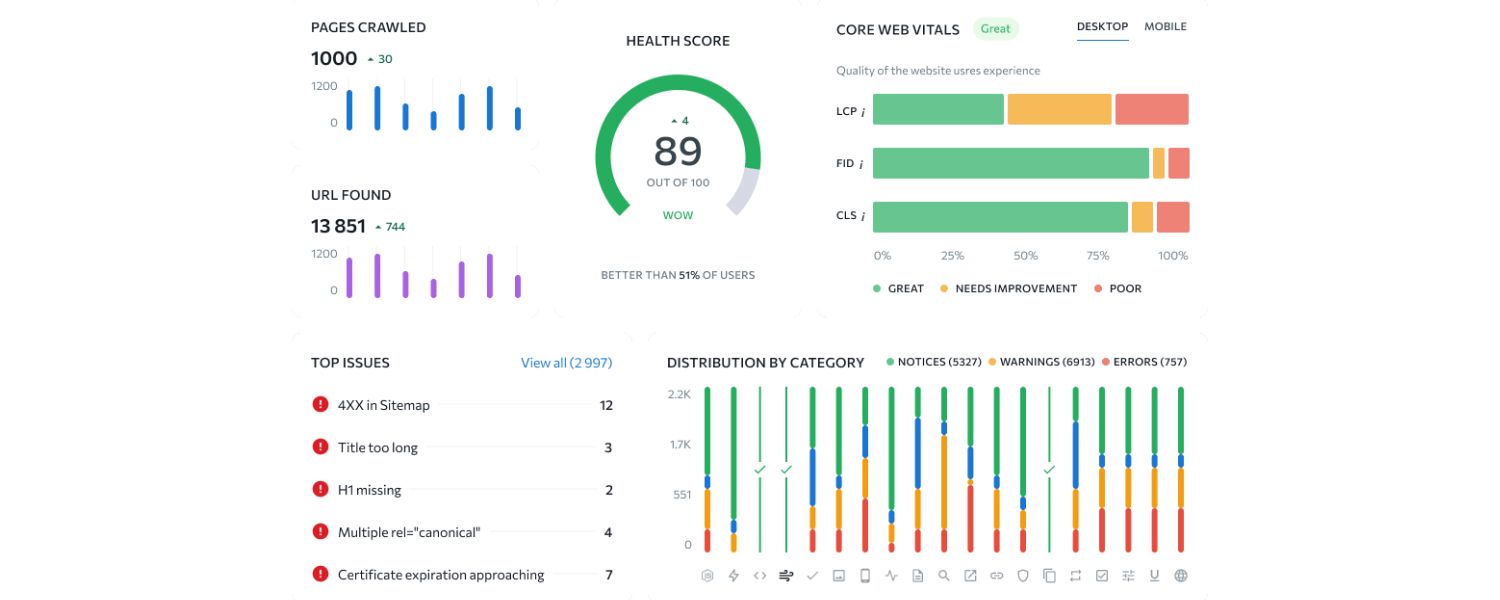
Technical issues can significantly slow down your SEO progress, so fixing them can speed up results.
Pay special attention to site speed, mobile-friendliness, and crawling/indexing issues. Optimise images (use modern formats like WebP, compress files), minify CSS/JS, leverage browser caching, and consider a CDN for faster delivery.
Ensure your site is responsive on mobile devices. Clean up URL structures (short, keyword-friendly URLs) and fix broken links or redirect chains.
Also, address any critical errors reported by Google Search Console (like crawl errors or mobile usability problems).
A technically sound site helps search engines index your content faster and rank you higher due to a better user experience.
4. Leverage Internal Linking

An often overlooked quick win is improving your internal link structure. Link related pages together using descriptive anchor text.
This not only helps users navigate but also helps search engines discover content and understand which pages are essential.
For instance, link from high-authority pages on your site (like your homepage or other well-ranking pages) to pages that need a boost.
This passes link equity internally and can improve rankings for the linked pages. Also, ensure essential pages aren’t buried deep in your site’s hierarchy – they should be reachable in a few clicks from the homepage.
5. Continuously Publish High-Quality Content

Content is the fuel of SEO. Commit to a regular publishing schedule for valuable, in-depth content in your niche. Each new page is an opportunity to rank for new keywords and draw in more traffic.
Aim for content that is comprehensive and up-to-date – studies have shown long-form, thorough content (e.g., 2000+ words) tends to rank better and earn more backlinks on average.
Make sure your content provides unique value or a fresh perspective that sets it apart.
Additionally, update older content periodically to keep it relevant (refreshing content can boost its rankings if it was stagnating).
Quality beats quantity, but you need a consistent flow of content to grow your keyword footprint.
6. Build High-Quality Backlinks Proactively
Don’t just wait for links to come – have a proactive link-building strategy. Some effective tactics include reaching out to industry blogs for guest posting opportunities, creating shareable infographics or original research that others naturally want to cite, and finding mentions of your brand that aren’t linked (then asking for a link).
You can also use tactics like broken link building: find broken outbound links on other sites in your niche and suggest your content as a replacement.
Remember, the goal is to earn links from relevant, authoritative sites. Even a handful of strong backlinks can significantly boost your SEO results by elevating your domain authority and improving rankings.
Keep an eye on competitors’ backlinks as well (with tools like Ahrefs or Semrush); if they got a link on a particular publication, you might target a similar opportunity.
7. Monitor and Refine with Data
Use the metrics we discussed as a feedback loop. For example, if you notice one of your new blog posts is getting impressions but a low CTR, refine the title tag to be more compelling.
If a page has a high bounce rate, consider improving the content or call-to-action on that page.
- If your conversion rate from organic traffic is low, perhaps the landing pages need better offers or clearer messaging.Regularly audit your analytics and search console data to spot where you can make incremental improvements. SEO isn’t set-and-forget – iterating based on real user data is how you continuously improve results.
- Conduct Periodic SEO Audits: Every few months, do a holistic review of your site’s SEO. This includes technical audits (crawl your site for new issues), content audits (identify outdated or underperforming content that could be improved or pruned), and backlink audits (disavow any spammy links if necessary, and see where you can acquire new ones).
An audit might reveal, for instance, duplicate meta descriptions or missing alt tags sitewide that you can fix for a minor ranking boost, or content gaps you haven’t covered yet, which could be opportunities.
By staying on top of your site’s SEO health, you ensure no hidden issues are holding you back from getting the best results.
By implementing these best practices, you’ll create a virtuous cycle for faster SEO gains.
For example, speeding up your site and improving content quality can lead to better user engagement, which in turn can boost rankings, bringing more traffic that can convert at higher rates – all accelerating your overall success. Remember, each small improvement adds up.
SEO results come from doing many things well and consistently over time. Keep learning and adjusting your strategy, and you will reap the benefits.
As Google continues to evolve (with AI, core updates, etc.), stay adaptable and focus on delivering the best user experience and content quality – those are strategies that never go out of style in achieving SEO success.
Conclusion
Achieving great SEO results is possible with the right approach and a bit of patience. By tracking key metrics like organic traffic, rankings, impressions, CTR, and conversions, you gain a clear window into your SEO performance and can make data-driven decisions to improve it.
We learned that SEO is not an overnight endeavour – on average, it takes a few months to start seeing solid progress, and up to a year for significant gains. However, every bit of effort you invest builds toward sustainable growth.
Treat SEO as an ongoing project that you nurture continually. Celebrate the early signs of improvement (like a bump in impressions or a couple of keywords moving up), and use those as motivation to keep going.
Remember that successful SEO is about more than one metric – it’s the combination of increased visibility, quality traffic, and the conversions that result.
A balanced focus on both on-page factors (content quality, relevance, user engagement) and off-page factors (backlinks and authority), supported by strong technical health, will set you up for lasting results in the search rankings.
Also, always align your SEO strategy with your business goals: the end goal isn’t just higher rankings, but what those rankings do for your business (sales, leads, brand awareness).
Now it’s time to put this into action. Start by auditing where you stand – check your current metrics and identify gaps.
Then, apply the best practices outlined: optimise your existing content, create new valuable content, fix technical issues, and build some high-quality links.
Monitor your SEO results closely over the coming weeks and months. You’ll likely notice gradual improvements: a steady climb in organic traffic, more keywords entering the top 10, better engagement on your pages, and hopefully an uptick in those all-important conversions.
Stay consistent and don’t get discouraged by the initial slow pace. SEO growth is cumulative – like compounding interest, it accelerates over time if you keep at it.
As one Google update or competitor move might shake things up occasionally, use your data to adapt and continue refining your approach.
In the long run, the payoff from organic search traffic can be tremendous and very cost-effective compared to other channels. Prioritise sustainability over quick wins, and you’ll enjoy the rewards longer.
Call to action: Take what you’ve learned in this guide and apply it to your website. Set some SEO goals for the next quarter – whether it’s reaching a certain traffic number, ranking for a key term, or improving your conversion rate.
Track your progress, celebrate your milestones, and tweak your strategy as needed. SEO success is within reach for those who are willing to learn and persist.
Good luck on your journey to better SEO results, and feel free to share your successes or questions in the comments below. Now, let’s climb those rankings and turn that search traffic into real growth for your business!

.png)
Shopify SEO: Guide to Ranking Your Store and Driving Sales
Most Shopify store owners set up their store, list their...

Content Marketing : Definitive Guide to Strategy, Content Types, and Measurable ROI
Content marketing generates 3x more leads than outbound marketing at...

Above the Fold: Guide to Conversions, Rankings and Faster Pages
Above the Fold in 2026: The Complete Guide to Conversions,...

Off-Page SEO Checklist: Guide to Building Real Authority
Most websites spend months creating great content, only to wonder...

What Is Keyword Bidding? The Complete Strategy Guide for Smarter Ad Spend
Most advertisers believe the highest bid wins the auction. It...
What Is Google Trends? The 2026 Marketer’s Complete Guide
If you are not already pulling weekly insights from Google...
If you want a growth partner who will get to know every aspect of your business and treat your budget like their own — we are the right fit.
.png)


.png)
.png)
.png)
.png)
.png)
.png)
2026 ALL RIGHTS RESERVED MADE IN INDIA
