
Mastering Dental SEO: Rank Higher & Grow Your Practice
August 22, 2025
In today’s digital age, having a beautiful dental office isn’t enough, you need a strong online presence. Imagine a local patient searching Google for a “dentist near me” – if your practice doesn’t appear near the top, that patient will likely choose a competitor. In fact, over 77% of patients search online before choosing a dentist, and there are more than 1.2 million Google searches for “dentist near me” in the U.S. each month. Those numbers underscore a simple truth: dental SEO (Search Engine Optimization) is no longer optional, it’s essential for growing your practice.
This comprehensive guide will demystify dental SEO and provide actionable strategies (with the latest tips and data) to help your practice rank higher in search results, stand out locally, and attract new patients. Let’s dive in!
What Is Dental SEO?

Dental SEO is the process of optimizing a dental practice’s entire online presenc, including its website, Google listings, and other content, so that the practice appears more prominently in unpaid (organic) search engine results. In other words, it’s about making sure prospective patients can easily find your dental services online.
Dental SEO involves both traditional website SEO and local SEO tactics geared towards location-based searches. For example, a general SEO effort might help your blog article about “how to prevent cavities” rank on Google, while local dental SEO helps your practice show up for searches like “best dentist in [Your City]” or “pediatric dentist near me.”
Optimizing for local intent is especially critical for dentists. Local dental SEO zeroes in on location-specific keywords (often including a city, neighborhood, or “near me”) to ensure your practice shows up when people nearby search for a provider. If someone in your area searches for a service you offer, you want your practice to be in the local 3-pack map results and high in the organic listings.
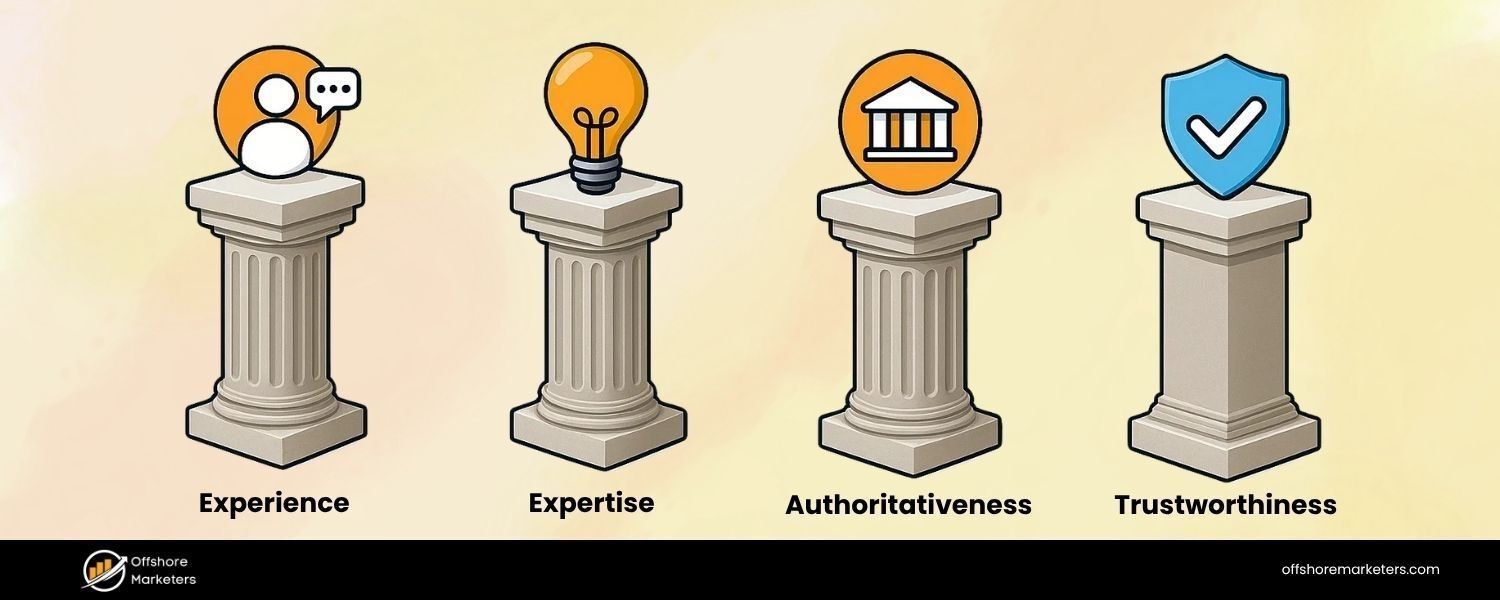
Dental SEO also accounts for the fact that dentistry is considered a “Your Money or Your Life” (YMYL) topic – meaning content quality and trust are paramount since oral health impacts overall wellbeing. We’ll discuss how Google’s emphasis on Experience, Expertise, Authoritativeness, and Trustworthiness (E-E-A-T) influences dental SEO later on.
In short, dental SEO encompasses on-page optimizations (changes on your website), off-page efforts (like earning links and reviews), and technical improvements, all tailored to help your practice get discovered by people who need a dentist.
Why SEO Matters for Dentists

Investing in SEO can yield enormous benefits for dental practices. Here are a few key reasons why mastering dental SEO is so important:
1. Visibility = New Patients
The majority of patients find healthcare providers through search engines. A recent study found that 71% of people search online when looking for a dentist before booking an appointment. If your practice isn’t appearing on page one for relevant searches, you’re essentially invisible to a huge segment of potential patients. High rankings mean more eyes on your practice, and more foot traffic through your door.
2. High Intent Leads
SEO doesn’t just increase traffic, it brings qualified, high-intent traffic. Someone searching “emergency dentist in Houston” or “invisalign dentist near me” is likely ready to schedule an appointment. By targeting the terms people actually use, you attract visitors who need your services now, resulting in higher conversion rates.
3. Trust and Credibility
Ranking prominently on Google lends immediate credibility. Patients tend to trust businesses that Google ranks highly – in fact, appearing in the top results can instill trust in potential patients. Additionally, an optimized online presence means positive reviews and accurate information show up for your practice, further building trust. Considering 94% of healthcare patients read online reviews to evaluate providers, a strong SEO strategy that highlights your good reputation can significantly influence choices.
4. Competitive Advantage
The dental field is competitive, for instance, there are over 60 dentists per 100,000 people in the U.S., and that number keeps growing. If you outrank “the dentist down the street” on Google, you’re likely to capture patients searching in your area before they even see other options.
On the flip side, neglecting SEO practically hands those patients to your competitors. Remember, on Google’s results page the top organic result gets around 27.6% of all clicks, while a result at the #10 position gets only about 2.4%. Climbing those ranks directly correlates to more website visitors and appointment calls.
5. Long-Term Cost Efficiency
Compared to continually paying for ads or relying solely on word-of-mouth, SEO provides a sustainable, long-term marketing channel. A well-optimized site can keep drawing new patients month after month without paying per click.
Over time, the return on investment for SEO can far exceed that of paid advertising, especially if you operate in a high-demand area.
In summary, dental SEO matters because it increases your visibility where patients are looking, brings you highly qualified leads, builds your credibility through strong online reputation, and positions your practice ahead of competitors in the digital landscape. Now, let’s explore how to achieve those coveted rankings.
Conducting Dental Keyword Research

Keyword research is the foundation of any successful SEO strategy, and dentistry is no exception. It’s all about discovering what your potential patients are searching for online. By identifying the right keywords and phrases, you can create content that directly answers those queries and include terms on your website that match what people are typing into Google.
Start by brainstorming the services and topics relevant to your practice, then expand that list using tools and data. For a dental office, target keywords will span both clinical services (e.g. “teeth whitening,” “dental implants cost,” “Invisalign for teens”) and local intent terms (e.g. “dentist in [Your City],” “emergency dentist near me,” “best pediatric dentist [Neighborhood]”).
Don’t forget to include long-tail keywords – longer, specific phrases that might get lower search volume but indicate very specific intent (for example, “affordable porcelain veneers downtown [City]”). These specific queries often convert well because the searcher knows exactly what they want.
When researching, tools like Google’s Keyword Planner, Semrush, Ahrefs, or Moz can be invaluable. They can show you monthly search volumes, competition levels, and related terms for ideas. For instance, Semrush’s data revealed “dentist near me” gets 1.2 million monthly searches in the U.S., a huge volume indicative of how many patients use that phrase. You’ll also uncover question-style searches (e.g. “how to ease toothache” or “what is a root canal?”) which present great opportunities for blog topics or FAQ pages.
Search intent should guide your keyword choices. Ask yourself: is the searcher looking to take action (like booking a dentist appointment) or seeking information? A keyword like “family dentist [City]” implies someone likely needs a dentist now – ensure your homepage or service page is optimized for that.
A search like “how to relieve tooth pain” suggests someone wanting advice – an informative blog post or guide can capture that traffic, build trust, and subtly lead them to consider your services if the problem persists. Modern SEO is less about stuffing exact keywords everywhere and more about covering topics comprehensively. Google’s algorithms are smart enough to understand synonyms and context, so focus on addressing the need behind the search query in a natural way.
Pro Tip:
Pay special attention to local keywords and modifiers. Many dental searches include a location or the phrase “near me.” Ensure your keyword strategy includes city names, neighborhoods, and phrases like “near me” where appropriate (for example, “cosmetic dentist near me” or “orthodontist in [City] open Saturday”). According to Google, 30% of all mobile searches are related to location, which means optimizing for local terms is critical for attracting nearby patients.
Once you’ve identified target keywords, you’ll use them throughout your site – in page titles, headings, content, meta tags, and even image alt text (more on that later). The goal is to signal to Google that your website is highly relevant to those queries. Just remember to avoid “keyword stuffing”, the outdated practice of cramming keywords unnaturally. Google’s Helpful Content and Spam updates penalize sites that do this, preferring content that reads naturally and puts the user first. Aim for a balance: use keywords where they fit, but always write for human readers first.
By doing thorough keyword research up front, you’ll create a roadmap for your content and on-page optimizations, ensuring you’re aligning your site with the exact terms potential patients are using to find dentists like you.
On-Page Optimization for Your Dental Website
Once you know the keywords and topics you want to target, it’s time to optimize your website’s pages. On-page SEO refers to all the elements on your site that you can tweak to improve your rankings and provide a better user experience. Here are the key on-page factors to focus on for a dental website:
1. Optimize Title Tags and Meta Descriptions 
These are the snippets shown in Google’s results. Craft a unique, descriptive title tag for each page (under ~60 characters) that naturally includes your primary keyword and your practice name.
For example: “Family Dentist in Springfield – Springfield Dental Clinic.” Similarly, write a compelling meta description (~150 characters) for each page that summarizes the content and includes a call-to-action or value proposition.
An example: “Looking for a dentist in Springfield? Our family-friendly clinic offers cleanings, whitening, and more – new patients welcome!” A well-written title and description can improve click-through rates. (They don’t directly boost rankings, but more clicks can indirectly signal Google that your result is appealing.) Ensure these tags are unique for every page – no duplicates.
2. Use Header Tags (H1, H2, H3) 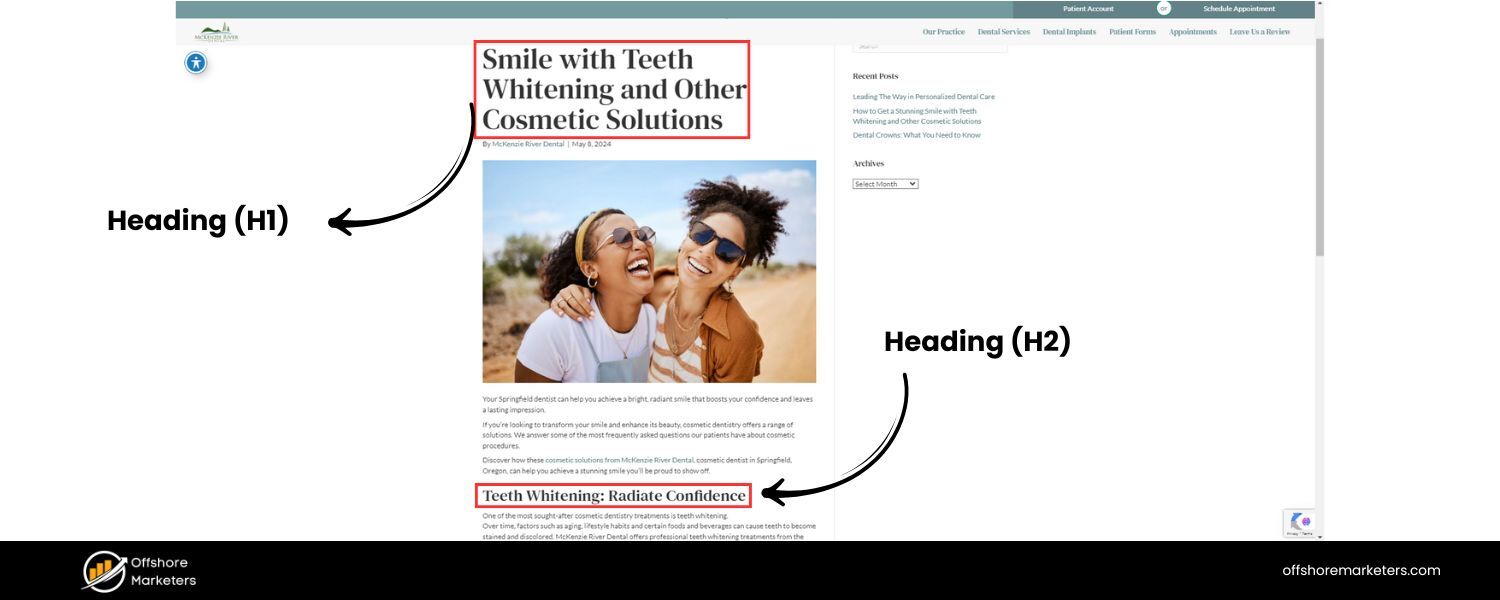
Structure your content with headings so both users and search engines can scan easily. Each page should have a single H1 heading (often the page title at the top) that clearly indicates the topic and includes relevant keywords (for example, “Cosmetic Dentistry Services in Springfield”).
Subheadings (H2, H3, etc.) should break content into logical sections. For instance, on a “Services” page, H2 subheads could be “Teeth Whitening,” “Dental Implants,” “Orthodontics,” etc. Search engines use these headers to understand context, and readers use them to navigate content – so make them descriptive and use keywords where appropriate.
3. High-Quality, Relevant Content

Content is king in SEO, especially for YMYL topics like dental care. Ensure each page has substantial, original content that thoroughly covers the topic at hand. For example, your service pages should describe each procedure in patient-friendly language, address common questions (“Does it hurt?”, “How long does it take?”), and highlight benefits. Aim for clarity and depth – Google rewards pages that provide comprehensive, helpful information and may demote those with thin or duplicate content.
Also, incorporate your target keywords naturally throughout the text, especially in the opening paragraph and in one or two subheadings. For instance, a page about teeth whitening might naturally repeat “teeth whitening” and related terms like “tooth bleaching” a few times.
If possible, include statistics or facts to strengthen your content (and cite reputable sources). Freshness counts too: keep your content updated periodically so it remains accurate and aligns with any new guidelines or technology – Google tends to favor up-to-date info.
4. URL Structure 
Use clean, keyword-friendly URLs for your pages. A URL like www.yourclinic.com/**dental-implants** is far preferable to www.yourclinic.com/p=123?service1. Short, descriptive URLs help users and search engines understand what the page is about at a glance. If you can, include a keyword in the URL (for example, /teeth-whitening or /about-dr-smith). Avoid very long URLs or strings of numbers and symbols.
5. Internal Linking 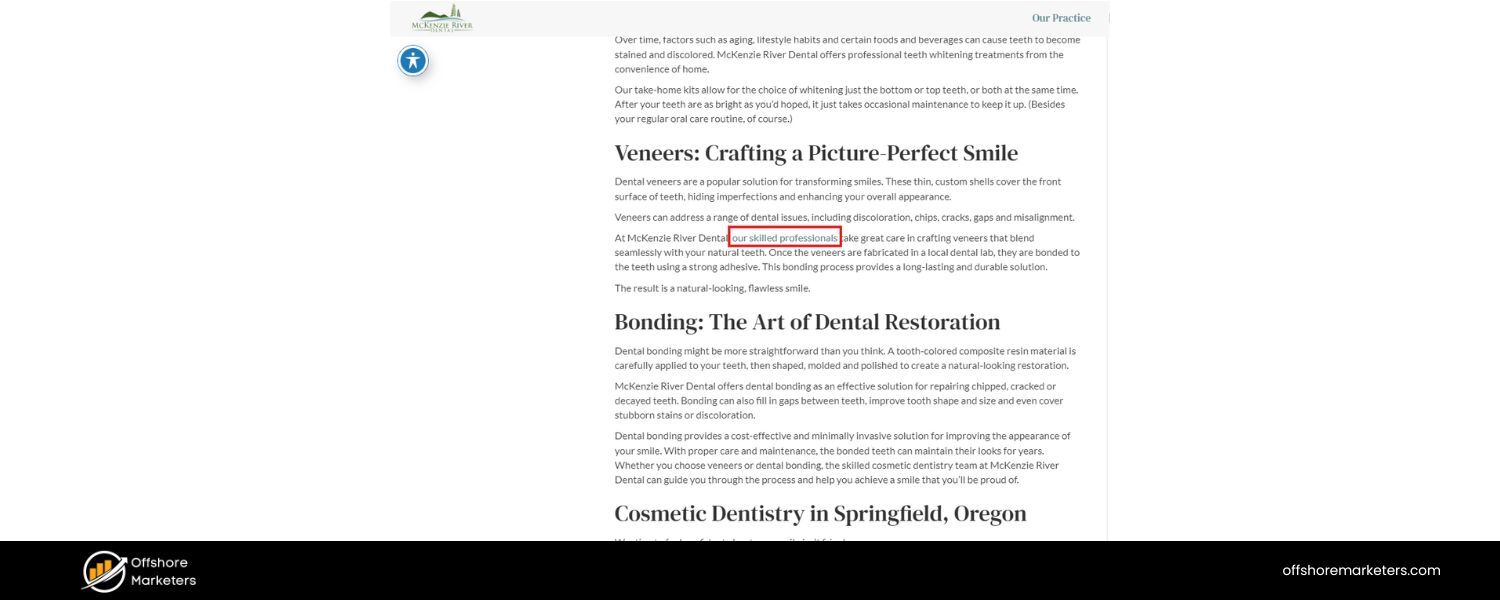
Link between relevant pages on your website to help users find information and to help distribute SEO value. For example, in a blog post about “flossing tips,” you might internally link the text “dental cleaning” to your service page on professional cleanings.
These internal links not only keep visitors engaged longer by guiding them to other pages, but also help search engine crawlers discover your content and understand site structure. Use descriptive anchor text (the clickable text of a link) that includes keywords or clear context (e.g., “See our dental implant options” linking to your implants page). A well inter-linked site is typically easier for Google to crawl and index fully.
6. Images and Alt Text 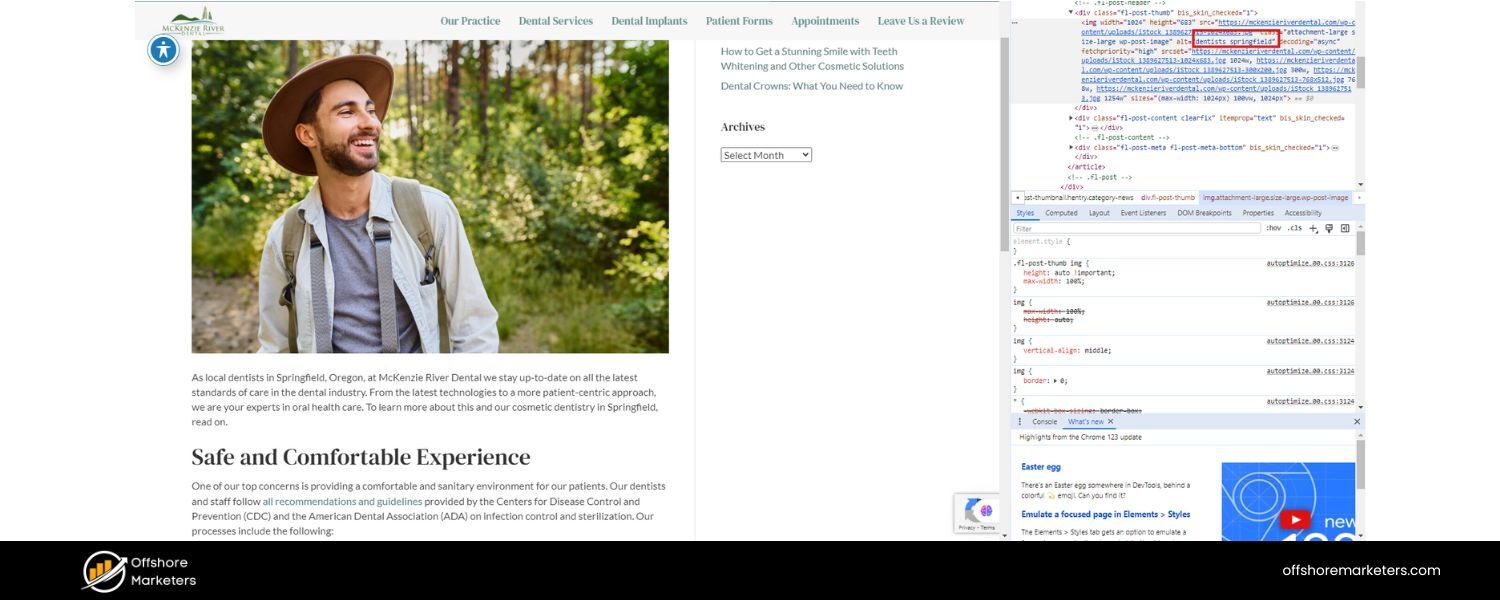
Visuals like photos of your office, staff, and before-and-after cases can enrich your site. Make sure to optimize images by compressing them (fast loading) and using descriptive file names (e.g., patient-smile-before-after.jpg instead of IMG_001.jpg). Crucially, fill in the alt text for each image – a brief description of the image for accessibility and for search engines.
For example: <img src=”patient-xray.jpg” alt=”X-ray of patient’s teeth at Springfield Dental clinic” />. Alt text helps Google “see” your images and can allow them to show up in image search results. It’s also important for visually impaired users who use screen readers. If an image is purely decorative, alt text can be blank, but for key images like a “before and after teeth whitening” photo, write a meaningful alt description including the context (and maybe a keyword like “teeth whitening result”).
7. Calls to Action (CTA) on Pages

This is more for user experience, but it impacts your conversion (which is the ultimate goal of SEO traffic). Every page, especially service pages and the homepage, should guide the visitor on what to do next – e.g., “Call us at 555-1234 to schedule a consultation” or a button “Book an Appointment Online”.
Clear CTAs can improve your conversion rate, which search engines indirectly appreciate (if users find what they need, they don’t bounce back to Google – a positive signal). Make sure your phone number is prominently displayed (and in text, not just an image, so it’s crawlable and clickable on mobile).
8. Unique, Original Copy
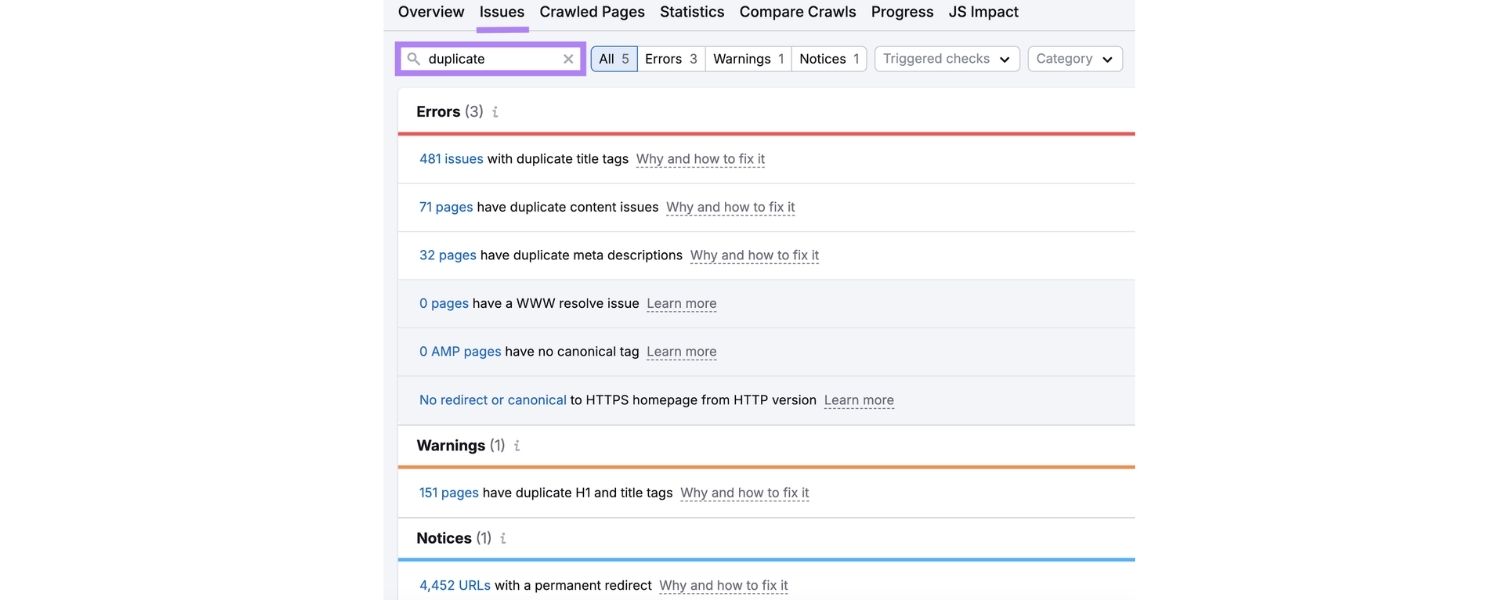
Avoid duplicating content across multiple pages (or copying from other websites). For multi-location practices, don’t use the exact same “About us” or service text on each location page – tweak it to be unique. Google’s algorithms like Helpful Content specifically look for originality and will downrank sites with a lot of duplicate or boilerplate text. If you have manufacturer descriptions for products (like a blurb about Invisalign), rewrite them in your own voice. Original content demonstrates to Google that you’re offering fresh value, not just repeating what’s elsewhere.
By systematically optimizing these on-page elements, you make your website search-engine friendly and user-friendly. A page that’s well-structured with relevant keywords, easy-to-read headings, and informative content is far more likely to rank well for your target queries – and equally important, it’s more likely to persuade a visitor to become your next patient.
Technical SEO and User Experience
A successful dental website isn’t just about great content and keywords – it also needs to run smoothly and deliver a good user experience. Technical SEO focuses on the behind-the-scenes elements that help search engines crawl and index your site effectively, and ensure that visitors don’t run into frustration when they browse.
Google has explicitly stated that factors like site speed and mobile usability can impact rankings, so these are not to be overlooked. Here are the technical and UX areas to pay attention to:
1. Website Speed & Performance 
Patients won’t wait around for a slow website – and neither will Google. A fast-loading site is crucial. In fact, Google’s Core Web Vitals guidelines provide benchmarks for loading speed and interactivity as ranking factors. Compress your images, use efficient code, and consider a quality web hosting service. Aim to have pages load in just a few seconds.
If your site uses heavy elements (videos, high-res images), implement caching and maybe a Content Delivery Network (CDN) to speed things up. A quick check: run your site through Google’s free PageSpeed Insights tool to see suggestions. Not only will a faster site rank better, but it will also keep impatient visitors from bouncing.
2. Mobile-Friendly Design

Most people searching for a local dentist are doing so on their smartphones. In fact, most dental searches happen on mobile devices. Google has a mobile-first indexing policy, meaning it primarily evaluates the mobile version of your site for ranking. Ensure your website uses a responsive design that automatically adapts to different screen sizes.
Text should be readable without zooming, buttons should be easily tappable, and the overall mobile navigation should be simple. A mobile-friendly, modern website is essential both for user experience and SEO ranking. Test your pages on a phone to see if anything is hard to use. Google’s Mobile-Friendly Test tool can also flag issues.
3. Secure & Accessible Site 
Trust is a huge factor in healthcare. Make sure your site is using HTTPS encryption (SSL certificate). A secure site (URLs starting with https://) is favored by Google and reassures users that any data (like contact forms) is protected. Additionally, aim for good website accessibility – meaning people with disabilities can navigate it. Use proper HTML tags, include alt text (as mentioned), and ensure your design has sufficient color contrast for readability.
Not only is this ethically and legally important, but Google values sites that take accessibility seriously. Compliance with standards like WCAG (Web Content Accessibility Guidelines) can even positively influence SEO indirectly by improving overall usability. Also, if you offer patient forms or portals, ensure they’re HIPAA-compliant and secure (this might not directly affect rankings, but it’s crucial for patient trust).
4. Structured Data Markup (Schema)

Adding structured data (schema markup) to your site’s code can help search engines understand your content better and enable special rich results. Dentists can particularly benefit from certain schema types. For example, you can use the LocalBusiness schema (with subtype Dentist) to mark up your name, address, phone, hours, coordinates, etc. There’s also Review schema which, if you have patient reviews or ratings on your site, can potentially display star ratings in your Google snippet.
For instance, one dental site used review schema and got an average star rating to show up under their search listing– which can really draw the eye of a prospective patient.
You can also mark up FAQs (FAQPage schema) if you have a Q&A section, or How-To schema if you have step-by-step dental guides. While adding schema doesn’t guarantee rich snippets, it makes your content eligible for them – which can increase click-through rates.
Google provides a Structured Data Markup Helper tool to guide you, or you can consult a developer. In summary, schema is a way to give search engines extra info in their language, potentially earning you those standout results (like knowledge panel info, star ratings, etc.).
5. Fix Technical Errors

Periodically audit your site for issues like broken links (404 errors), missing pages, or images that don’t load. Broken links not only frustrate visitors but can also hurt your SEO if search crawlers hit dead-ends. Use tools (or Google Search Console) to identify 404 errors and redirect them to appropriate pages.
Ensure your site has an XML sitemap and a robots.txt file so search engines can crawl it efficiently. Address any crawl errors or security issues flagged in Google Search Console promptly. For example, if your SSL certificate expires and your site shows “not secure,” both your rankings and user trust can plummet – so keep an eye on those technical health signals.
6. User Experience (UX) Signals
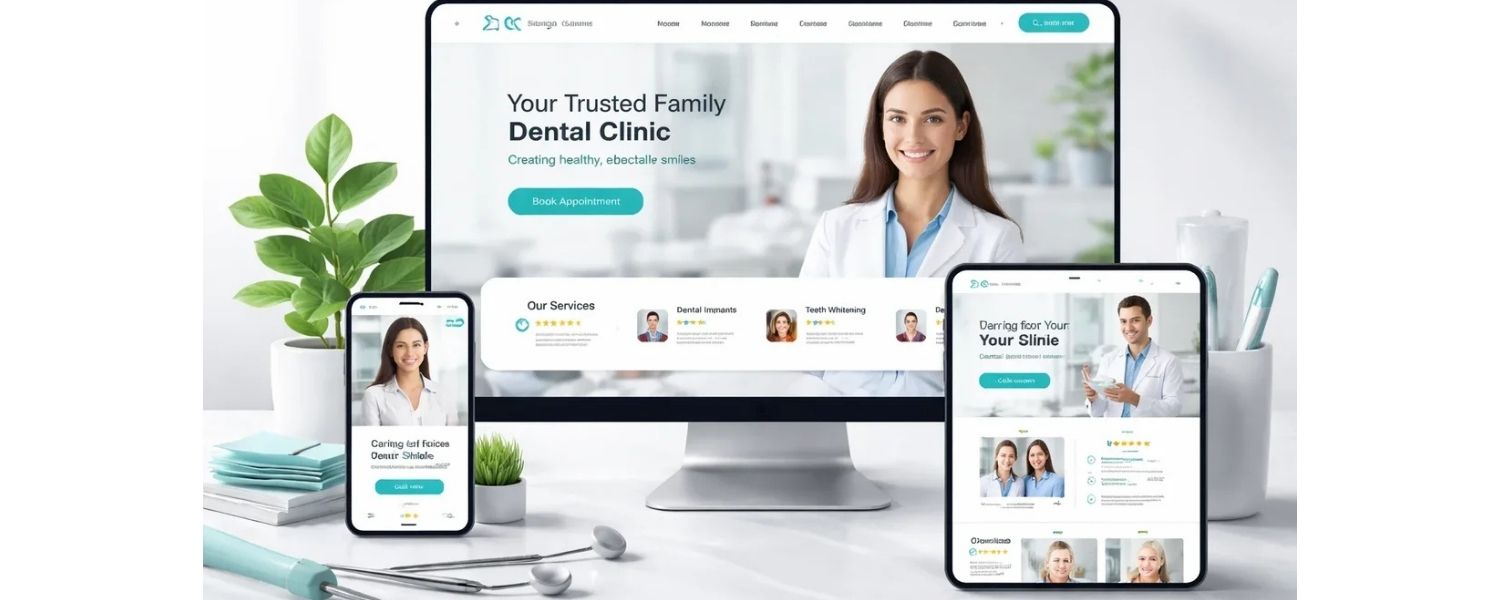
Google increasingly measures how users interact with your site. If visitors quickly “pogo-stick” (leave your site and go back to search results), it could indicate your page didn’t meet their needs. Focus on delivering a good experience: make content easy to read (plenty of white space, legible font sizes), use engaging visuals or videos where relevant, and organize information logically.
Interactive elements like online booking forms or live chat (if available) can boost engagement.
Also, consider implementing a privacy policy and cookie notice, since patients care about how their data is used – it’s a small trust factor that could matter for YMYL sites.
7. HIPAA and Privacy
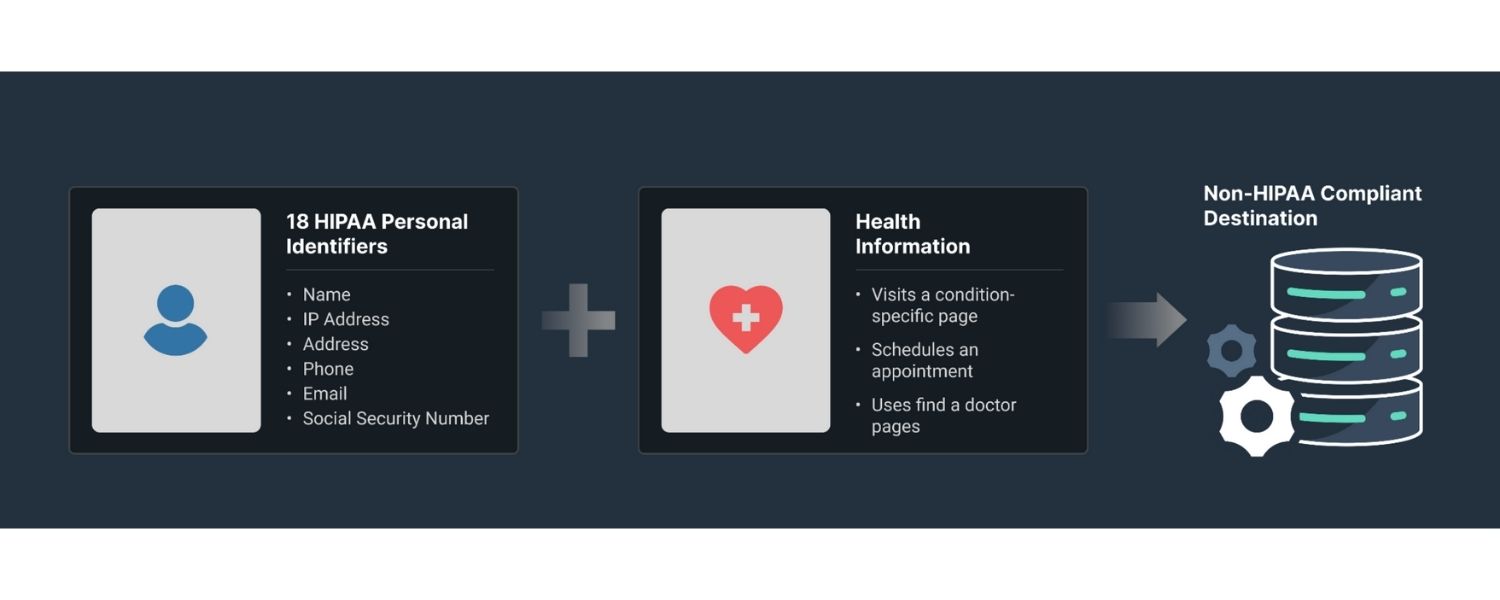
While not an “SEO ranking factor,” complying with privacy standards (like not exposing personal health information, using secure appointment forms, etc.) is critical for a dental practice website. Beyond being the right thing to do, a privacy-compliant site will avoid potential legal issues or penalties that could indirectly affect your online presence. It also feeds into trust – a user who feels safe on your site is more likely to stay and convert.
By fortifying your site’s technical foundation and ensuring a smooth user experience, you create an environment where all your great content and keywords can truly shine. Think of technical SEO as tuning up a dental chair – when everything works flawlessly, you can provide care (or in this case, information) without anything getting in the way. Google’s goal is to serve pages that load fast, are easy to use, and provide value, so ticking these technical boxes is key to reaching the top spots.
Local SEO for Dentists: Getting Found in Your Community
For dental practices, local SEO is arguably the most critical piece of the SEO puzzle. After all, your patients are almost always going to come from the local area you serve. Improving your visibility in local search results – such as Google’s Map Pack and localized organic results – can dramatically increase the number of people walking through your door. Here are the essential strategies to dominate local search:
1. Optimize Your Google Business Profile (GBP) 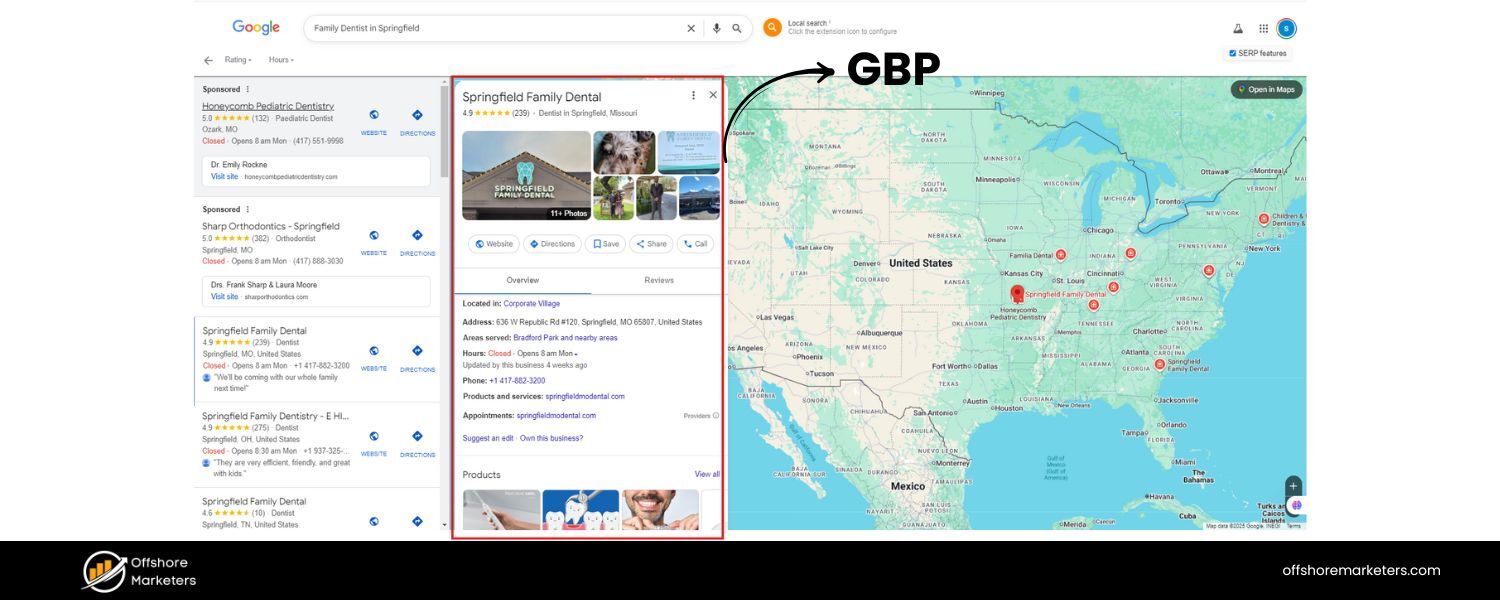
Google Business Profile (formerly Google My Business) is a free listing that can catapult you to the top of local results. If you haven’t already, claim and verify your Google Business Profile for your practice.
Then, fill out every section meticulously: Business Name, Address, Phone (NAP), website, hours, and especially the category (make sure to choose “Dentist” or appropriate specialty categories like “Orthodontist,” “Pediatric Dentist,” etc.). Provide additional details too – such as your services/procedures, attributes (e.g., wheelchair accessible, accepts insurance), and any photos of your office and team.
A fully completed profile helps you rank higher in local searches and ensures potential patients get the info they need at a glance. For example, when someone searches “dentist near me,” Google often shows a map pack with 3 local listings.
You want your practice to be one of them, and an optimized GBP with lots of positive reviews (more on that next) is the ticket. Regularly update your GBP as well – post updates or offers (Google Posts), update holiday hours, and answer questions that users submit. Active management of your Google profile signals to Google that your business is engaged and relevant.
2. Consistent NAP and Online Directories 
Consistency is key in local SEO. Ensure your Name, Address, and Phone number (NAP) is 100% consistent everywhere it appears online – your website footer, your GBP, Facebook page, Yelp listing, Healthgrades profile, etc.
Even minor discrepancies (like “Street” vs “St.” or old phone numbers) can confuse Google and hurt your local credibility. List your practice on major online directories and citation sites. At minimum, claim or update profiles on Yelp, Bing Places, Apple Maps, Zocdoc, Dentistry.com, and any prominent local directories or dental-specific directories (such as the American Dental Association’s find-a-dentist tool if applicable).
Each of these listings is another avenue for patients to find you, and they also serve as citations that validate your business’s existence to Google. In fact, reputable directory listings with consistent NAP information can improve your local search rankings by reinforcing your practice’s legitimacy.
You can use tools or services to help find and manage all these listings, but even doing it manually, make sure the details mirror your Google Business Profile exactly.
3. Encourage and Manage Patient Reviews 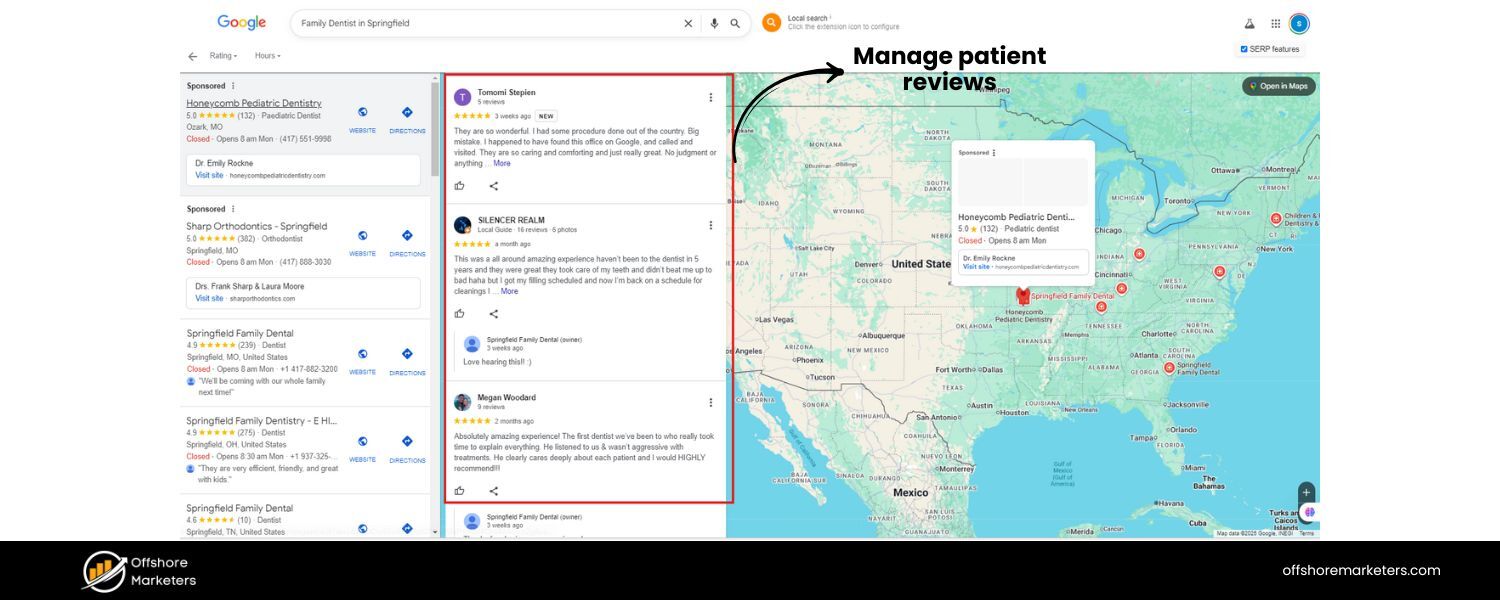
Reviews are the lifeblood of local SEO. Google’s local algorithm heavily weighs both the quantity and quality of reviews on your GBP. According to research, the top-ranking dental practices in Google’s local results tend to have many high-rated reviews, and Google explicitly states that reviews factor into local search ranking. Encourage your happy patients to leave a Google review – often, a simple ask via a follow-up email or a sign at your reception can help (“Loved our service? Please share your feedback on Google!”).
Do not incentivize reviews (Google forbids offering money or gifts for positive reviews), but you can educate patients on how valuable their honest review is to your practice. Aim to steadily gather reviews so that you’re getting new ones each month.
Also, respond to reviews – both positive and negative. Thank people for kind reviews. For the occasional unhappy review, respond professionally and attempt to make things right (without disclosing any personal health info). Demonstrating responsiveness is good for your image and Google likes to see active engagement.
Note that reviews on other platforms (Facebook, Yelp, Healthgrades) are important too for overall reputation, but Google’s own reviews carry the most weight for SEO. Many patients trust reviews almost as much as personal recommendations, so building a strong star rating (e.g. “4.8 stars out of 5 across 100 reviews”) will directly influence how many new patients choose you. It can also improve your chances of ranking: all else equal, a practice with 100 reviews and a 4.8 rating will outrank one with 5 reviews and a 3.0 rating.
4. Localized Website Content

Your website itself should have content tailored to your local area. This not only helps with ranking; it resonates with your community. Tactics include creating a dedicated “Contact Us” or “Our Offices” page with your address, embedded Google Map, and driving directions from nearby landmarks or neighborhoods. You can also publish location-specific blog posts or landing pages.
For instance, an article like “5 Best Family Activities in [Your City] (And Why Regular Dental Checkups Matter)” subtly ties local content with your expertise. More directly, if you serve multiple towns, you might have separate service area pages targeting each (e.g., “Dentist Serving Springfield, Riverdale, and Shelbyville” – with a paragraph about each area). Another great strategy is highlighting local patient testimonials (“Hear from our [City] patients”) or community involvement (sponsoring the local little league, etc.) on your site – it’s hyper-relevant content that strengthens your local connection.
Additionally, use local keywords in your page titles and headings where appropriate (e.g., “Cosmetic Dentist in Springfield, IL – [Clinic Name]”). If you have multiple locations, ensure each has its own page with unique content and specifics about that location (staff, parking, neighborhood, etc.).
Also, consider adding an FAQ section addressing local concerns, like “Do you accept [Major Local Employer] insurance?” or “How to find a dentist if you’re new to [City].” Not only does this provide useful info, but those Q&A might match what local users search. According to one survey, when optimizing for local SEO, practitioners saw success by consistently producing localized content that allowed them to rank twice on results – via their Google Business listing and their website.
5. Leverage Local Links and Partnerships
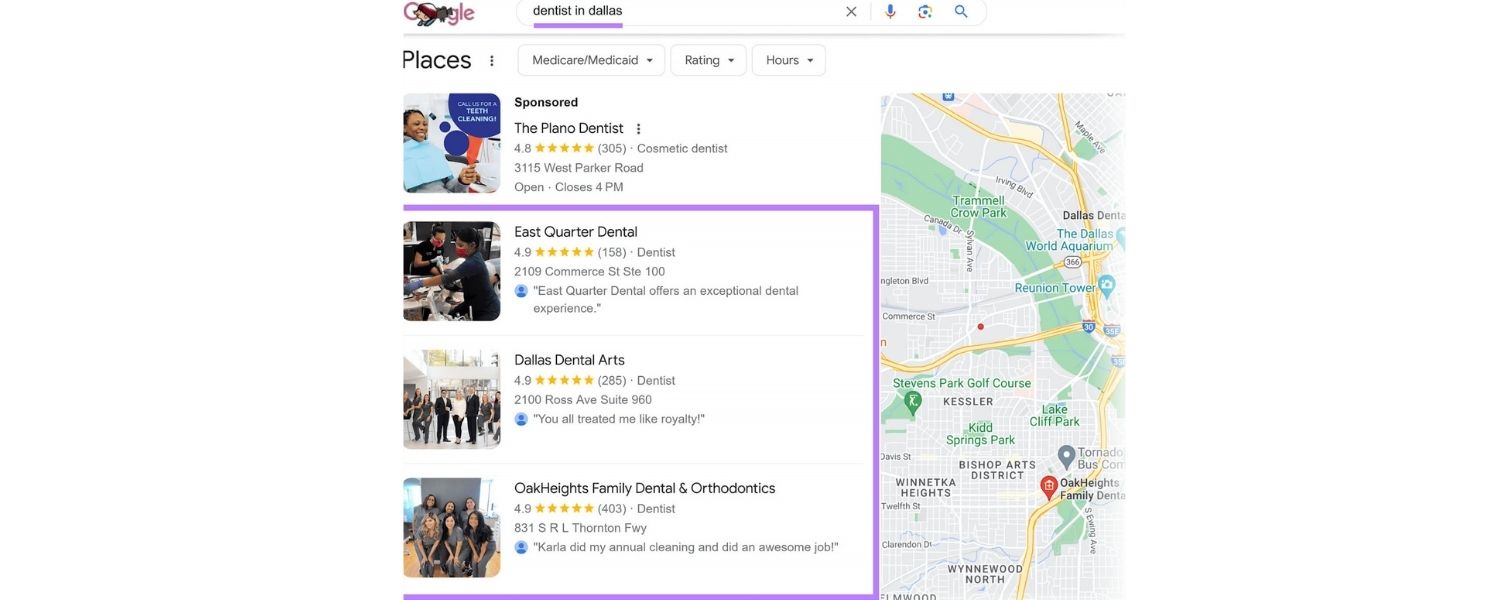
Earning backlinks (links from other websites) is something we’ll cover in the next section generally, but locally, try to get links from other local businesses and organizations. Perhaps you can sponsor a community event, and they’ll link to your site from the event page. Or join the Chamber of Commerce and get a link in their directory.
Local news websites or community blogs are great targets – if you can get a story about your practice (e.g., you volunteered at a dental clinic day, or you introduce a new technology), that news article link is golden. These local links both drive referral traffic from people in your area and act as signals to Google that “this practice is involved in the local community”. Additionally, if you’re part of professional dental associations, see if they have online directories or member profile pages you can link from.
In essence, dominating local SEO involves optimizing your online footprint everywhere your business appears, and nurturing a strong local reputation. When done right, the payoff is huge: your practice could appear prominently in Google’s local pack – that coveted map with top-rated dentists in the area, and rank near the top of the regular search results. Given that a large percentage of people click on those first few local results, this visibility can directly translate into phone calls and appointments.
Local SEO is an ongoing effort, but start with the fundamentals: a polished Google Business Profile, consistent info across the web, glowing reviews, and content that reflects your local presence. These steps build a virtuous cycle where your online visibility brings in more local patients, and those happy patients leave reviews that further boost your visibility.
When patients search for dentists near them, Google often displays a Local Pack of the top 3 results. Optimizing your Google Business Profile with accurate info and strong reviews increases your chances of appearing here, which can dramatically boost calls and clicks to your practice.
Content Marketing and E-E-A-T: Building Trust and Authority
Content marketing is a powerful extension of your SEO strategy, it’s all about creating and sharing valuable content (like blog posts, articles, videos, infographics) that educates or entertains your audience, thereby attracting more visitors and building your authority.
For dentists, this means going beyond just listing services on your site; it means providing the kind of helpful information that patients are actively looking for. Not only does this improve your SEO (more content = more keywords to get discovered), but it establishes you as a trusted expert in the eyes of both Google and potential patients.
Here’s how to leverage content and demonstrate E-E-A-T (Experience, Expertise, Authoritativeness, Trustworthiness) in your dental SEO:
1. Educate with a Blog or Articles
Start a blog on your website where you regularly publish articles addressing common patient questions and oral health topics. For example, you might write posts like “7 Ways to Overcome Fear of the Dentist,” “How to Handle a Dental Emergency,” “Invisalign vs. Braces: Pros and Cons,” or “The Latest Advances in Cosmetic Dentistry 2025.” Think about the questions patients ask you or your staff most often – those make excellent blog topics. Also consider seasonal content (e.g., “Why Schedule a Back-to-School Dental Checkup” in August, “Halloween Candy Tips from a Dentist” in October).
By providing quality, informative content, you not only attract people searching those topics, but you also keep them on your site longer, which signals to Google that your content is helpful. Google’s algorithms (like the Helpful Content update) explicitly reward sites that offer original, in-depth information rather than thin content. If a potential patient finds a clear, reassuring answer on your blog about their concern (say, dental implant aftercare), who do you think they’ll trust when it’s time to see a dentist?
2. Show Your Expertise and Experience
E-E-A-T is crucial for health-related content. To fulfill the “Experience” and “Expertise” components, make sure any medical or clinical information on your site is accurate, up-to-date, and preferably written or reviewed by a dental professional. You could include an author byline on blog posts, like “Dr. Jane Smith, DDS” with a little bio (“Dr. Smith has 20 years of experience in family dentistry…”). This signals to readers and Google that the content comes from a knowledgeable source.
On your site’s “About Us” or on a dedicated page, highlight the credentials, certifications, and experience of your dentists and hygienists – degrees, special training, memberships (ADA, AGD, etc.), any awards or recognitions.
These details can boost the authoritativeness of your site (Google’s quality raters look for this kind of info on YMYL sites). Even sharing case studies or before-and-after galleries (with patient permission) can demonstrate real-world experience – for instance, a series of images showing a smile transformation along with a narrative can be compelling content that also underscores your expertise in cosmetic dentistry.
3. Incorporate Trust Signals in Content
Trustworthiness can be conveyed in various ways. Patient testimonials and success stories are fantastic, consider having a section on your site or blog that features patient stories. You can write up short articles like “Patient Spotlight: How John Overcame Dental Anxiety” or simply integrate testimonial quotes throughout your pages (“I’ve been coming to Dr. Lee for 5 years and I wouldn’t trust anyone else with my teeth!”).
Adding real photos (with consent) of patients or your team can make these even more authentic. Another trust signal is citing reputable sources within your content. If you mention a statistic or a health recommendation, link to a source like the ADA, WebMD, or a peer-reviewed study. For example, “According to the ADA, 1 in 4 adults has untreated cavities.” Outbound links to authoritative sources won’t hurt your SEO; on the contrary, they can lend credibility to your content (and Google likely appreciates that you’re referencing solid information).
4. Cover Topics Comprehensively
Aim to be the go-to resource for dental information in your locality. If your competitors have written short FAQs, you write a longer, more insightful FAQ page. If others have thin blog posts, you create a comprehensive guide. For instance, instead of a 300-word post on “How to floss properly,” you could create a detailed illustrated guide on flossing techniques, common mistakes, and even a quick video demonstration. This is the “skyscraper technique” – identify content that performs well for others and outdo it with even better content.
Over time, you’ll build a content library on your site. Quality and consistency are more important than sheer quantity. It’s better to post one well-researched article a week than five subpar ones. Also, keep older content updated. If you wrote “Top Dental Trends in 2024,” consider updating it for 2025 with new info, rather than leaving outdated info. Google loves to see fresh content and may rank updated pages higher (plus it’s good for user experience to have current info).
5. Use Different Content Formats
Diversify beyond text. Consider adding explainer videos (even simple ones where a dentist answers a common question on camera, or an animation of how a procedure works). Video content can be engaging and shareable – and YouTube results often appear in Google searches (you could start a YouTube channel for your practice).
Infographics, like a “What your toothbrush sees in a day” fun graphic or a step-by-step post-op care chart, can also attract attention (and even backlinks from other sites that share your graphic). If you have the capacity, podcasts or webinars about oral health tips can further set you apart as an authority. All these content types can be embedded on your site or blog, enriching the user experience.
6. Social Media and Content Amplification
While social media signals themselves don’t directly boost SEO rankings, sharing your content on social platforms can increase its visibility and potentially earn more backlinks (plus directly bring in new patients who discover you there). Post your new blog articles or videos on your practice’s Facebook, Instagram, or other social accounts.
A strong piece of content might get shared by your followers, or even picked up by local news if it’s noteworthy. As one marketing expert notes, social media doesn’t directly influence the search algorithm, but it can impact factors that do – such as driving traffic to your site and increasing brand awareness. At the very least, if someone hears about your practice and checks your Facebook page, seeing active, helpful posts will reinforce that you’re knowledgeable and patient-focused.
7. Address Patient Pain Points and Interests
Your content marketing should always circle back to what benefits the patient. High-quality content establishes trust. For example, a detailed article on “Options for Replacing Missing Teeth” that objectively discusses dentures vs. bridges vs. implants – and is honest about pros, cons, and costs – can position you as a transparent, caring advisor rather than someone just trying to sell a service. When patients feel educated, they feel empowered and are more likely to trust you with treatment. That trust can be the deciding factor that makes them pick up the phone and call your office.
In essence, think of your content as a conversation you’re having with patients before they ever set foot in your exam room. Through blog posts, articles, and media, you’re answering their questions, calming their fears, and sharing your philosophy of care.
Google will take notice of a site that consistently publishes authoritative, user-focused content – it’s likely to rank such a site higher, especially for long-tail searches and voice queries. Moreover, content builds relationships.
A mom who finds your blog post on easing kids’ dental anxiety may feel a connection to your practice and choose you for her child’s first visit. A tech-savvy adult who reads your piece on the latest laser dentistry might be impressed that you stay on top of innovations.
Finally, make sure to tie content back to your services when appropriate. It’s perfectly fine (even smart) to have a call-to-action in a blog post like, “If you’re experiencing any of these symptoms, contact our office for a consultation. We’re here to help.” This gently guides readers from just consuming content to actually becoming a patient. With great content and a bit of SEO, you’ve attracted them – now invite them to take the next step.
Building trust through content extends to your Google profile and website. Displaying your qualifications, professional memberships, awards, and patient reviews helps establish authority. Google favors dental websites that demonstrate real expertise and trustworthiness – part of the E-E-A-T criteria – especially for health-related searches.
Earning Backlinks and Online Authority

As mentioned earlier, backlinks – links from other websites pointing to yours – are like votes of confidence in the eyes of search engines. If your dental website accumulates links from high-quality, relevant sites, it signals to Google that your content is authoritative and worth ranking.
Backlinks remain one of the most influential ranking factors in SEO. However, not all links are equal, and the strategy for dentists should focus on quality over quantity. Here’s how to build a strong backlink profile for your dental practice:
1. Understand What Makes a Good Backlink
A quality backlink typically comes from a reputable, relevant source. For a dental site, ideal backlinks might be from local organizations, dental or medical directories, health blogs, news sites, or educational (.edu) pages, basically, sources that Google trusts.
It’s not just about domain authority, but also context. A link from the American Dental Association’s website or a local hospital’s “find a provider” page is gold. Even a link from a popular mommy blog that reviewed your pediatric dental care, or a local lifestyle magazine that mentioned your practice in a “Best of the City” list, is very valuable.
On the other hand, dozens of links from random directories or unrelated sites (or spammy blog comments) can do more harm than good. Google’s algorithms (like Penguin) and guidelines target unnatural link building, so always aim for earned, organic links rather than any sketchy schemes.
2. Local and Industry Directories
We touched on citations for local SEO, many of those listings also count as backlinks. Ensure you’re listed on dental directories (both national and state/local). Examples: ADA’s Find-a-Dentist, your state dental association directory, WebMD’s dentist directory, Healthgrades, Zocdoc, etc. Some might be nofollow links (which means they don’t pass SEO “authority”), but many still provide an SEO boost and send referral patients.
Additionally, general directories like Yelp, Yellow Pages, Angi (Angie’s List), etc., and local business directories (like a city’s Chamber of Commerce or business network site) often provide a link to your website. These are usually easy wins – you or your team can add the listings yourself. They might not rocket you to #1 alone, but they build a foundation of credibility.
3. Leverage Satisfied Patients and Partners
If you have long-standing relationships with other professionals or businesses, you could find linking opportunities there. For example, if you refer patients to a specific oral surgeon or endodontist, perhaps you can get a reciprocal link on each other’s websites (maybe on a “Preferred Specialists” page).
Or if you partner with community organizations (e.g., you sponsor the local 5K run or donate to a school event), ask if they’ll include your logo and a website link on their sponsor page. Many will do so gladly. The key is it should make sense, you’re a legitimate part of the community or network, and thus a link fits naturally.
4. Create Link-Worthy Content
One of the best strategies for earning backlinks is to publish content that others naturally want to link to. This is sometimes called “link bait” (in a positive sense). For a dental practice, completely original research might be tough, but you can produce resources like: an infographic on oral health stats, a comprehensive guide (e.g., “The Complete Guide to Child Dental Care – from Infancy to Teens”), or even a local study (“Our survey of 100 Springfield residents reveals 60% don’t floss daily”). If this kind of content is interesting and not overly self-promotional, it’s more likely to get referenced by bloggers, journalists, or other websites.
Another idea is guest posting – writing an article for another site. Identify a local news blog or a health and wellness site that accepts guest contributions. You might pitch an article like “Top 5 Foods That Damage Your Teeth” or “How Often Should You Change Your Toothbrush?” with you as the author (Dr. XYZ). In the author bio or within the content, you’d get a link back to your site.
This benefits the other site (free quality content) and you get a backlink and some exposure. Just ensure any guest posting is done on respectable sites – avoid low-quality article farms.
5. Press Releases and PR
If you have newsworthy events (like opening a new office, adding a new dentist, hosting a free dental clinic day), consider sending a press release to local news outlets or using a distribution service. Local news websites and even bigger news wires often repost press releases, which can yield some high-authority links (often these are nofollow, but it can still drive traffic and brand awareness). Even better, if a journalist actually writes a story, that link is usually dofollow and carries weight.
Being featured in “Top Dentist” lists or articles (if those exist for your city or region) can provide excellent links too. Don’t shy away from PR – sometimes a human-interest angle (e.g., “Local dentist does missionary dentistry in Guatemala” or “Dental office adopts eco-friendly practices”) can get you coverage.
6. Engage in the Community Online
Joining and participating in online forums or Q&A sites can indirectly help SEO. For example, being an active, helpful member on platforms like Reddit (there’s often a r/Dentistry or local city subreddits) or Quora (where people ask dental questions) can establish your expertise. If appropriate, you could mention an article on your website in an answer (do this sparingly and only when genuinely relevant, otherwise it looks like spam). Some forums allow a profile signature where you can link your site.
While these links might be nofollow or low-impact, the main goal here is referral traffic and branding. Google does pay attention to brand mentions even without links. If people are talking about “Dr. Smith’s clinic” in a positive light online, that could indirectly benefit your site’s authority.
7. Avoid Link Spam and Black-Hat Techniques
It’s important to mention what not to do. Don’t be tempted by emails offering “1000 backlinks for $50” or schemes to get links from PBNs (private blog networks) or other manipulative tactics. Google is very smart at catching unnatural link patterns, and the last thing you want is a penalty that drops your site from search.
A good rule of thumb: if a link requires you to pay (other than perhaps a legitimate directory submission fee or sponsorship), or if it exists purely for SEO (hidden footer links, etc.), it’s probably not a safe bet.
Build links organically through relationships and good content, not through tricks. Google’s link spam guidelines explicitly warn against buying or selling links, excessive link exchanges, or using automated programs to create links. Such shortcuts can backfire badly.
In practice, earning backlinks is a gradual process – especially for a local business. Don’t worry if you’re not acquiring dozens of new links every month. Focus on quality and relevance. Each solid backlink from a local or industry source is a step up in authority. Over time, as your content and reputation grow, backlinks often start to accrue naturally – maybe a blogger cites your informative post, or a university dental program links to your article as a resource.
You can give this a nudge by politely reaching out to webmasters or authors who might find your content useful (for instance, if a mommy blogger wrote about kids’ cavities, you could mention your related article in a friendly email – they might add a link if they find it helpful).
To keep an eye on your progress, use SEO tools or Google Search Console’s link report to see who’s linking to you. Celebrate those good links you earn! Each one is like a little endorsement that strengthens your site’s ability to rank. Over time, a robust backlink profile – combined with the on-page and local SEO work you’ve done – will make your dental practice a heavyweight in search rankings, even against larger competitors.
Adapting to SEO Trends (Voice Search, AI, and Algorithm Updates)
SEO isn’t a set-it-and-forget-it deal. The landscape of search is always evolving – Google makes regular tweaks to its algorithm, and user behavior shifts with new technologies. As a dentist who invests in SEO, you’ll benefit from staying adaptable and ahead of the curve. Let’s discuss a few modern trends and how you can optimize for them:
1. Voice Search Optimization

With the rise of virtual assistants like Siri, Alexa, and Google Assistant, more people are performing searches by voice. Voice queries tend to be conversational and question-based. For example, instead of typing “dental clinic opening hours,” a person might ask, “What time does Dr. Smith’s dental clinic open on Saturdays?” To capture these, ensure your content includes natural language and question-answer formats.
A great way to do this is to incorporate an FAQ section on your site (or sprinkle Q&A in blogs). For instance, have a section on your services pages with questions like “Do you offer emergency appointments?” and then answer it succinctly. Often, Google will feature concise answers from websites for voice queries (if your site is optimized, the assistant might literally read your answer aloud). Optimize for long-tail, conversational keywords – think of how someone would speak a query. Phrases like “near me” are also common in voice searches (and Google will use the searcher’s location to serve your GBP info if relevant).
Another tip: make sure your content is written clearly and simply. Voice assistants prefer straight-forward, easily parsed sentences. If a voice search asks, “How often should I go to the dentist?”, Google might pull the line from your blog that says “Most people should visit their dentist twice a year for a routine checkup and cleaning.” Being concise and directly answering likely questions can win you featured snippets and voice results. Given that a significant chunk of searches are now voice-based, tuning into this trend can set you apart from competitors who ignore it.
2. AI and Generative Search Results
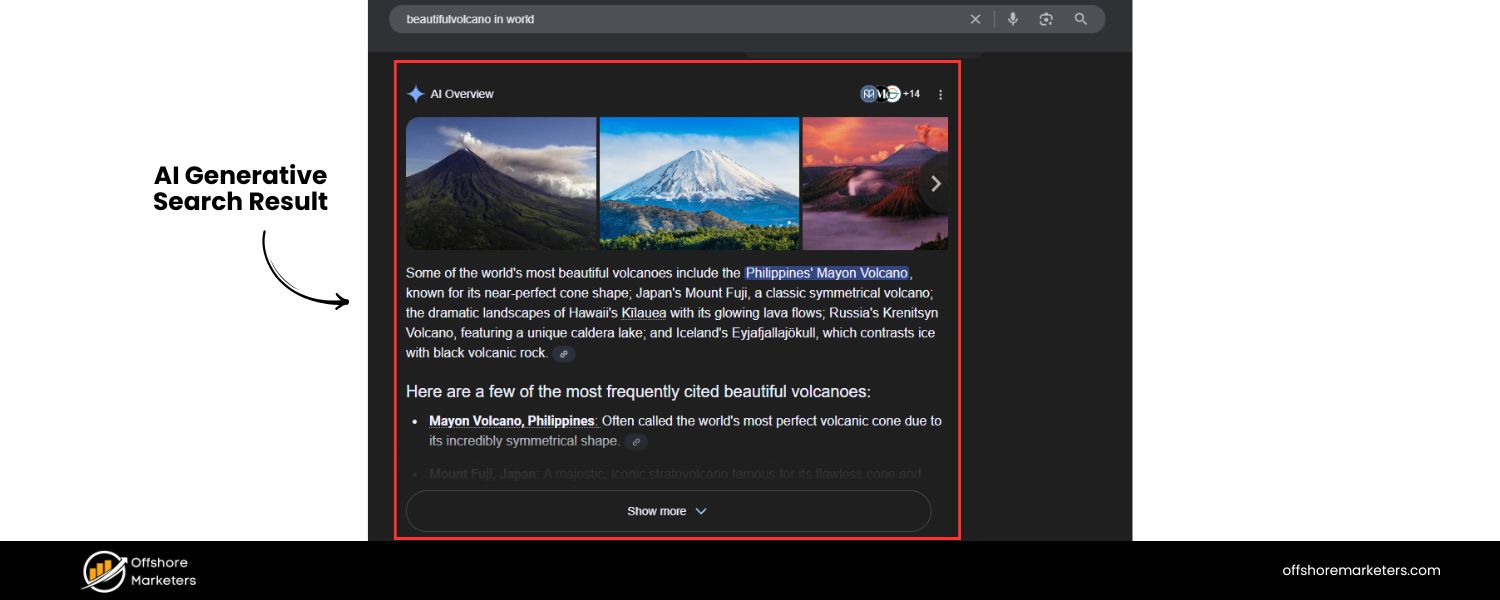
We’re entering the era of AI-driven search. Google has introduced features like SGE (Search Generative Experience), and AI chatbots (like Bing’s and others) are being used to answer questions by synthesizing information from multiple sources. What does this mean for your dental practice SEO? It means you should start thinking about optimizing your content for AI-generated answers. This overlaps with voice search and featured snippets – the key is structuring your content in a way that AI models can easily digest. Use clear headings and break content into logical sections (which you should be doing anyway).
Provide direct answers to common questions in your content because AI might quote those. For example, you might have a heading “What are the symptoms of gum disease?” followed by a bullet list of symptoms. This structured format is ideal for AI to pick up. In fact, People Also Ask boxes on Google often show such Q&A – by answering those kinds of questions on your site, you increase your chances of being the source.
Generative Engine Optimization (GEO) is a new concept where you optimize for AI models by aligning with how they present info. Practically, this means ensuring your content is factual, well-organized, and comprehensive. AI tends to favor content that reads like an authority. Maintaining high E-E-A-T is crucial, as AI will likely draw from content that it perceives as trustworthy and well-rounded.
Also, monitor developments: for instance, if Google rolls out AI snapshot answers widely, keep an eye on if your site is being referenced. You might need to adapt by making answers even more succinct or by adding schema markup like FAQ schema which can feed those answers. The bottom line is: keep producing high-quality content – AI or not, that remains the currency of search. But also think about the new ways people search (conversationally, multi-part questions) and ensure your site’s content caters to those patterns.
3. Google Algorithm Updates and SEO Trends

Google updates its search algorithm hundreds of times a year (most minor, some major). Major core updates or specific updates (like those targeting spam, links, or helpful content) can shuffle rankings significantly. It’s important not to chase every algorithm tweak frantically, but you should stay informed.
Follow reputable SEO news sources or blogs (Moz, Search Engine Land, Google’s own Search Central blog) for any big changes, especially those impacting local search or YMYL content. For example, Google’s Helpful Content Update in late 2022 prioritized people-first content and punished sites that were clearly written just to game SEO.
If you experienced a dip or rise in traffic around known update dates, read what that update targeted and adjust accordingly. Often, the antidote to any ranking drop is to double down on quality – improve your content depth, update outdated pages, remove spammy elements, etc. Google’s focus in recent years has been on things like Page Experience (core web vitals, mobile usability), E-E-A-T for YMYL (we’ve covered ensuring expertise/trust), and eliminating spammy tactics. So aligning with those priorities is wise.
Another trend is the increasing integration of schema and rich results. We mentioned FAQ schema and review stars – keep an eye on new snippet opportunities. For instance, Google sometimes introduces new snippet types (like how-to steps, which might be relevant if you have DIY dental tips). Being an early adopter in implementing those could give you an edge.
Content Freshness is also something to consider. Especially for medical or health info, up-to-date content is crucial. If you wrote about a treatment and then a newer technology came out, update your page to include it. Google might favor the page that includes “As of 2025, the latest technique for X is…” over a page stuck in 2018 knowledge.
4. User Behavior Changes

The way users search and interact is evolving too. For example, more users might use search filters, or visually search (Google Lens, etc.). While that’s less directly relevant for dentistry, things like having images properly tagged (so you appear in image searches or map searches for “dentist near me” with photos) can help. Also, video content could appear in search results (if you have a YouTube video answering “how to floss properly,” that might come up and drive traffic to you).
In short, the world of SEO is dynamic. To keep your high rankings, plan to periodically audit and refresh your SEO efforts. Set a schedule, maybe every quarter, to review key pages – can they be improved or updated? Check analytics – did some content suddenly drop in traffic? Investigate if a Google update or a new competitor might be the cause. The good news is that if you’ve built a solid foundation (with all the steps we’ve gone through), adapting to changes becomes easier because you’re likely already aligned with Google’s core goal: providing searchers with the best, most relevant results.
5. An example of adaptation

When you notice more patients using voice search, you implemented the FAQs for voice. When Google started emphasizing Core Web Vitals, you compressed your images and improved speed. If a new social platform becomes popular in your community (say, a local Facebook group or NextDoor), you might engage there, not exactly SEO, but it feeds your overall online presence and can indirectly help SEO by driving local buzz.
One more tip:
Monitor your competitors. See what new content or features top-ranking competitors are adding. If they all suddenly have a live chat widget for scheduling, that might be something patients value (and could reduce bounce rates or increase conversions on site). While you don’t want to blindly copy, being aware of the competitive landscape ensures you’re not left behind on any important trend.
By staying agile and informed, you can ensure that your SEO strategy continues to pay dividends for years to come. The specifics of search algorithms might change, and new gizmos like AI answers might emerge, but one thing is constant: dental practices that provide great information and great user experience will always have the upper hand in attracting patients online.
Measuring SEO Success and Continuous Improvement

You’ve put a lot of effort into your dental SEO – now, how do you know it’s working, and how can you continue to refine your strategy? Measuring the right metrics is crucial not only to justify your marketing investment but also to identify what’s working and what needs adjustment. Thankfully, many SEO results are tangible and trackable. Here’s how to stay on top of your SEO performance:
1. Track Key Metrics
Start by setting up free analytics tools if you haven’t already. Google Analytics and Google Search Console are must-haves. Google Analytics will show you how much traffic your site is getting, where it’s coming from, and what those visitors do on your site. Search Console provides valuable data on your search impressions, click-through rates, and the exact search queries people used to find you. Some key metrics to monitor regularly:
A. Organic Traffic
This is the number of visitors coming to your site through non-paid search results. In Analytics, you can filter traffic by channel and isolate “Organic Search.” Ideally, you want to see this trend upward over time. For example, after implementing new SEO strategies, you might see organic visits increase month-over-month. Keep an eye on which pages get the most organic traffic – those are likely ranking well.
If your “Dental Implants” page is suddenly getting 200 visits a month from Google, it’s a sign of improved ranking for those keywords. Conversely, if a once-popular page’s traffic declines, that may warrant investigation (did its ranking drop? Was there a seasonal interest drop?).
B. Ranking Positions
While Search Console shows average position for queries, you might also use SEO tools or even do manual checks to see where you rank for your target keywords. Are you on page 1 for “dentist [Your City]”? If not, are you moving closer? Tracking a set of priority keywords weekly or monthly can show the trajectory. Just remember, the goal is more about overall traffic and leads than any single keyword ranking. Sometimes you’ll rank for variants you didn’t expect (e.g., you might not be #1 for “dentist in Springfield” yet, but you might rank for “best dentist in Springfield” or “family dentist Springfield IL” etc., which still bring traffic).
C. Conversion Metrics
Getting visitors is half the battle; converting them is the other half. Define what a “conversion” is for your site – typically, for a dental site, it might be an appointment request form submission, a click-to-call action, or perhaps an online booking. You can set up Goals in Google Analytics (or events) to track these. For example, track how many users reached the “Thank You for contacting us” page (indicative of a form filled out).
Or use call tracking numbers to measure calls from the website (or from Google Business Profile). If you use a CRM or patient management software that can attribute how a patient found you, incorporate that.
Ideally, you’ll see conversion counts rise as your traffic rises, but also watch the conversion rate (conversions divided by organic visits). If your traffic goes up but conversion rate plummets, it could mean you’re attracting less targeted visitors or something on the site is turning people off. Typical website conversion rates in healthcare might be anywhere from 1% to 5% depending on the source – but even if it’s 1%, if 1000 people visit from Google, that’s 10 inquiries.
D. Engagement Metrics
Look at things like bounce rate, time on site, and pages per session for your organic visitors. If people are immediately leaving (high bounce) or only spending a few seconds, it might indicate they didn’t find what they expected. Perhaps the content needs improvement or the wrong audience is coming in (e.g., people looking for something else). On the flip side, if you see that your blog post “10 Tips for Healthy Gums” has an average time on page of 4 minutes, that suggests folks are really reading it – a good sign the content is engaging.
E. Local Search Metrics
In Google Business Profile (via the Insights section or now within Search/Maps interface), track metrics like how many times you appeared in local searches, how many people clicked “Call” or “Directions” from your listing, and how many photo views you have. There are also specialized tools (like BrightLocal, Moz Local, or Semrush’s local tools) that can track your local rankings and even show a “heat map” of how visible you are across your city. For example, you might rank #1 within a 2-mile radius but #5 at a 5-mile distance. These insights can guide you if you need to strengthen local signals for broader reach.
2. Monitor ROI (Return on Investment)
Ultimately, you want to know if SEO is bringing in new patients and revenue. Try to capture when new patients call or schedule how they heard about you. Train your front desk to ask “How did you find us?” and log the answers. Many will say “Google” or “online.” Over a few months, you might notice an uptick in those responses correlating with your SEO push. If possible, quantify it: e.g., 20 new patients last quarter came via online search.
If an average patient visit is $X, you can roughly gauge revenue from those. This can justify the cost if you’re hiring SEO services or the time you spend. It’s not always straightforward to attribute every dollar, but seeing a strong increase in online-sourced patients is a good sign your efforts are working.
3. Continuously Refine Your Strategy
Use the data you gather to iterate. If you see one blog post is bringing in a lot of traffic, consider writing more on that topic or updating that post to convert more visitors (add a CTA, for instance). If a particular keyword is just shy of first page, maybe a small push (like building a backlink to that page or adding a fresh section to it) could bump it up.
Also, find content gaps by looking at what keywords you’re getting impressions for but not clicks (Search Console can show queries where you appeared but perhaps low). For example, you might notice you got impressions for “dental crown vs veneer” but you have no content explicitly about that – that’s a cue to create a new blog post to capture those searches. Similarly, keep an eye on competitor moves – did a competitor publish a new guide or secure a local award? Maybe you can respond with even better content or highlight your accolades.
4. Patience and Timeline
SEO results don’t happen overnight, so it’s important to set realistic expectations. Many experts observe that meaningful SEO results often take 4–12 months for new efforts. If your site is newer or you had very little optimization to start with, you might see some quick initial wins (say, moving from page 5 to page 2). But breaking into top rankings could take time and consistent effort. Don’t be discouraged by incremental progress.
Celebrate small victories: a jump in calls this month, a new #3 ranking for a key term, etc. Over a year, those small gains compound. If certain tactics aren’t yielding results (e.g., you’ve been targeting a very broad competitive keyword with no movement), consider pivoting focus to more attainable keywords and building up from there.
5. Conversion Optimization
SEO gets people to your site, but conversion optimization turns them into patients. As you measure, also think of experiments to improve conversion. For instance, if many visitors land on your homepage then leave, maybe the homepage could be more compelling – try adding a prominent “Book Appointment” button, or showcase a 5-star review at the top, or ensure your phone number is super visible. A/B testing tools exist (Google Optimize, etc.), but even simple changes tested over a month can show impact. Monitor if conversion rate improves after tweaking page elements or wording. Sometimes a small UX fix (like making the contact form shorter or adding an online scheduling link) can significantly boost how many website visitors turn into actual bookings.
6. Regular SEO Audits
Every 6 or 12 months, it might be worthwhile to do a comprehensive review or even hire an SEO professional for a check-up. Things to audit: Are all your meta tags still optimized? Any broken links or images? How’s your page speed now (with new content added)? Is your competition outranking you for some new keywords? An audit could reveal, for instance, that a bunch of your schema markup has errors or that a new competitor popped up and is stealing some thunder, prompting you to adjust.
Also, revisit your keyword research periodically – new services or trends could have emerged (e.g., maybe “AI in dentistry” becomes a hot topic – if you’re doing something with it, write about it and capture that wave).
By diligently measuring and adjusting, you turn SEO from a one-time project into an ongoing growth engine for your practice. Remember that the ultimate measure of success is real-world results: fuller appointment books, a growing patient base, and patients mentioning they “found you online.” As you see those outcomes, you’ll know that your SEO strategy is truly bearing fruit.
And if you notice any shortcomings – say, lots of traffic but not enough new patients – you have the data to diagnose why. Maybe you’re attracting people from outside your service area (traffic good, but not converting to patients). In that case, refocus content to local or consider geo-targeted Google Ads to complement.
Or maybe you’re ranking well for informational queries globally (students looking up answers, etc.) – great for traffic, but you might need to re-orient some content towards local intent or ensure every blog post has a local call-to-action to capture any nearby reader.
In summary, SEO is a continuous cycle of implement → measure → learn → tweak → implement…. By staying engaged with the analytics and feedback, you ensure that your dental SEO not only gets you rankings, but also delivers tangible business growth. The insight you gain from measurement will make each round of improvements more effective than the last.
Conclusion: Putting It All Together for Lasting Success
By now, it’s clear that dental SEO is a multifaceted effort – it spans your website content, technical setup, local listings, reputation, and beyond. The good news is that each step you take reinforces the others. For example, optimizing your website’s content not only helps your Google rankings but also gives patients a better experience, which in turn can lead to more positive reviews and word-of-mouth. Improving your local SEO through Google Business Profile and reviews not only boosts your visibility but drives more traffic to your website, which then (if optimized well) converts those visitors into appointments. It all works in tandem.
One could liken a strong dental SEO strategy to building a solid dental practice. It requires knowledge (researching keywords and trends), the right tools (technical SEO setup), skilled technique (quality content creation), regular check-ups (monitoring and updates), and great chairside manner (engaging with your community and patients online). Just as with dentistry, the results – a healthy, thriving practice – are well worth the diligent effort.
As you implement the strategies outlined in this guide, remember these key takeaways:
1. Be Patient and Persistent
SEO growth is gradual. You may not see dramatic changes in a week or even a month. But stick with it, the efforts compound over time. Each new blog post, each earned review, each improved page speed score is moving you forward. Many of your competitors might start and then give up; by staying consistent, you’ll surpass those who lack the endurance.
2. Keep the Patient (User) at the Center
Google’s algorithm tweaks ultimately all have one goal – delivering the best experience to users. If you consistently think like a patient when creating content or designing your site, you’ll naturally align with what Google wants. Write and design for people first, then tweak for search engines second. That ethos will keep you on the right path even as technology changes.
3. Leverage Your Unique Strengths
Maybe you have a dentist with a specialization or you offer unique services (e.g., sedation dentistry, holistic approaches, etc.). Highlight those in your SEO strategy. Create content around what sets you apart. Not only does that target niche keywords, but it also differentiates you in the market. Original research or local insights you have can be powerful content that others can’t replicate.
4. Don’t Neglect Offline Excellence
This is a bit beyond pure SEO, but it’s worth saying: all the SEO in the world won’t sustain growth if the patient experience falters. In fact, your online reputation (reviews) is directly tied to real patient satisfaction. So continue providing excellent care and service, and encourage happy patients to share their experiences online. SEO might bring someone to your site, but it’s often the reviews and the feel of your online presence that convert them.
5. Adapt and Evolve
The digital marketing world is dynamic. What works today might need refinement tomorrow. Perhaps in a couple of years, voice search will dominate or AI chatbots will be the primary interface for finding information. By adopting a mindset of continuous learning (reading SEO updates, maybe taking an interest in analytics), you’ll be prepared to pivot your strategy to align with new trends – much like continuing education in dentistry keeps you at the forefront of patient care.
At the end of the day, the goal of dental SEO isn’t just higher rankings or more clicks, it’s growing your practice. It’s about making sure the people who need your expertise can find you and choose you with confidence. It transforms the internet from a vast, crowded space into a funnel that directs the right patients to your door.
So, where should you go from here? Start by prioritizing the actions from this guide: perhaps update your Google Business Profile and gather a few new reviews this week. Next week, audit your website for on-page basics. Then, plan out a content calendar for the next few months (blog topics, FAQs, videos). Step by step, implement what you’ve learned. Each improvement is like a building block in your SEO foundation.
Consider getting your team involved – maybe a staff member can help with social media or asking patients for reviews, or an assistant who loves writing can draft blog posts that you review for accuracy. It can be a team effort, just like running the practice is.
And if all of this feels overwhelming or you simply prefer to focus on dentistry, partnering with a dental marketing expert or SEO agency is always an option. An experienced professional can fast-track these implementations and keep up with changes for you. Many successful practices entrust their SEO to specialists once they know what they want (it’s still good that you, as the practice owner or manager, understand SEO basics – as you do now – so you can ensure the work aligns with your vision).
In conclusion, dental SEO is one of the most powerful tools available to grow your practice in the digital age. With patients increasingly turning to Google to find and evaluate dentists, mastering SEO means staying ahead of the curve and securing a steady flow of new patients. By following the strategies in this guide – optimizing your website, shining in local search, creating valuable content, building credibility, and measuring results – you are investing in the long-term health of your practice’s growth. Much like good oral hygiene habits, good SEO habits will keep your online presence healthy and thriving.
Now it’s time to put it into action. Start implementing these dental SEO strategies today, and watch as your practice climbs the search rankings, attracts more patients, and becomes the go-to dental office in your area. With dedication and a patient-centric approach, you’ll not only rank among competitors, you’ll outshine them. Here’s to your SEO success and the many new smiles you’ll help create as a result!
Call to Action:
Ready to take your dental practice’s online visibility to the next level? Don’t wait for patients to stumble upon your practice by chance. Start applying these SEO techniques now and see the difference in your appointment book. If you need expert assistance or a personalized dental SEO plan, consider reaching out to a marketing professional who specializes in dental SEO. By investing in your digital presence, you’re investing in the future growth of your practice. Optimize today, and reap the rewards for years to come.
Dental SEO FAQ
Q1: How long does it take to see results from dental SEO?
SEO is a long-term strategy, and it typically takes a few months to start seeing significant results. In many cases you can expect meaningful improvements in 4–12 months of consistent effort. Early on, you might notice small upticks in site traffic or a few better rankings.
Major gains, like ranking on page 1 for competitive keywords or a noticeable increase in new patient calls, tend to materialize over time as your optimizations compound. Remember, SEO builds momentum – it’s not instant like turning on an ad, but the results are durable.
Patience is key, but if you’re doing everything right (as outlined in this guide), you should see steady progress within the first year.
Q2: How much does dental SEO cost?
The cost can vary widely depending on whether you handle it in-house or hire professionals, and on the scope of work. If you hire a dental SEO agency or consultant, dental SEO services might range from about $1,500 to $5,000 per month for an ongoing plan, depending on your location and how competitive your market is. Some consultants may charge hourly (perhaps $100–$300/hr) or offer one-time project fees (which could be several thousand dollars for a complete website optimization). If you’re doing it yourself, the monetary cost is lower (maybe some tools or courses), but it requires a significant time investment.
It’s important to view SEO spend as an investment in marketing – one that, when done well, can yield a strong ROI by bringing in many new patients. Always discuss deliverables and goals with any SEO provider so you know what you’re getting for the cost. And be wary of “cheap” SEO deals, if it sounds too good to be true (e.g., $300/month for #1 rankings guaranteed), it probably is. Quality SEO work requires resources, but it pays off by driving sustainable growth.
Q3: Can I do dental SEO myself, or should I hire an expert?
You absolutely can handle many SEO tasks on your own, especially with the wealth of information available (like this guide!). If you or a team member has the interest and time to learn SEO best practices, you can manage the basics: setting up your Google Business Profile, creating content, optimizing pages, and so on. Many successful practices start this way. However, SEO can get complex and time-consuming, and the landscape changes frequently.
Hiring an experienced SEO professional or agency can free up your time and provide expert-level optimizations. Practices often choose to outsource to save time, fill skill gaps, and get better results faster.
An expert will have specialized tools and up-to-date knowledge, and can develop a robust strategy (including technical fixes, advanced keyword strategy, link building outreach, etc.) that might be challenging to do solo while running a practice. It also depends on your competition, if you’re in an extremely competitive city, professional help might be warranted to outrank other dental offices investing in SEO.
One hybrid approach is to do what you can internally (like generating blog content and encouraging reviews) and hire experts for more technical or strategic components (like a site audit, schema markup, or managing ad hoc campaigns). Ultimately, it comes down to your budget and how hands-on you want to be. Even if you hire out, staying informed (as you are now) is wise so you can make sure the strategy aligns with your vision and you can monitor progress knowledgeably.
Q4: What is the difference between general SEO and local SEO for dentists?
General SEO (or organic SEO) focuses on improving your website’s visibility in regular search results for broad or non-location-specific keywords, while local SEO zeroes in on searches that have local intent, like someone looking for services in a specific area.
For dentists, general SEO might involve ranking for terms like “how to whiten teeth” or “dental implant procedure,” which could attract visitors from anywhere (not necessarily leading to patients unless they’re local). Local SEO, on the other hand, is about appearing in searches like “dentist in [City]” or “emergency dentist near me” – queries where Google knows to show a map or local business listings.
The difference often comes down to the keywords targeted: local SEO includes geographic qualifiers (city names, “near me”), whereas general SEO might not. Local SEO involves optimizing your Google Business Profile, managing reviews, ensuring NAP consistency, and building local citations, things specifically geared toward boosting your presence in the Map Pack and local finder. General SEO involves optimizing your website content, improving technical factors, and perhaps targeting broader informational queries with content marketing.
For a dental practice, you truly need both: local SEO to capture people ready to find a nearby dentist, and general SEO in the form of helpful content to capture people researching dental topics (which can build your site’s authority and sometimes convert those researchers into patients if they’re impressed and local).
In practice, the line between them can blur, but the tactics have different emphases. Think of it this way: local SEO gets you on the map (literally), and general SEO casts a wider net with your website on the traditional search results.
Q5: Is SEO really necessary if I’m already running ads or getting referrals?
While a steady referral network and some paid advertising can sustain a practice, SEO provides benefits that other channels complement rather than replace. Referrals are fantastic (and usually a sign of good patient satisfaction), but many people still turn to Google even when they get a recommendation, they’ll search your name or read reviews before calling.
If your online presence isn’t strong, a referred patient might second-guess. As for ads (Google Ads, guide to social media ads), they can deliver quick visibility, but at a cost for each click. SEO is about earning free visibility in the long run.
Once you rank well, you’re not paying for each visit, you’re essentially getting continuous exposure without continuous spend. Ads also stop working the moment you turn off the budget, whereas the effects of SEO are longer-lasting. Moreover, many users trust organic results more than ads (some skip the sponsored listings altogether). Ideally, a mix of marketing channels is healthiest, SEO for foundational organic presence, referrals from happy patients, some ads for quick boosts or targeting specific promotions, and maybe social media for engagement.
If you’re busy enough and think you don’t need new patients, SEO might seem less urgent, but keep in mind patient churn (people move, etc.) means you likely need some flow of new patients each year.
And SEO isn’t just about new patients; it’s also part of managing your brand reputation online. If someone hears about you (from an insurance list, or a friend, or a sign) and then Googles your name, having a well-optimized site and positive reviews rank front-and-center helps convert that inquiry into an appointment.
In summary, you might survive without SEO, but you could be leaving growth on the table. In a competitive industry like dentistry, SEO is one of the best investments to ensure your practice continues to thrive and isn’t dependent solely on one source of patients

Shopify SEO: Guide to Ranking Your Store and Driving Sales
Most Shopify store owners set up their store, list their...

Content Marketing : Definitive Guide to Strategy, Content Types, and Measurable ROI
Content marketing generates 3x more leads than outbound marketing at...

Above the Fold: Guide to Conversions, Rankings and Faster Pages
Above the Fold in 2026: The Complete Guide to Conversions,...

Off-Page SEO Checklist: Guide to Building Real Authority
Most websites spend months creating great content, only to wonder...

What Is Keyword Bidding? The Complete Strategy Guide for Smarter Ad Spend
Most advertisers believe the highest bid wins the auction. It...



.png)
.png)
.png)
.png)
.png)

2026 ALL RIGHTS RESERVED MADE IN INDIA
.png)