
SEO Content Brief: Guide to Drive Traffic and Rankings
September 17, 2025
Crafting an effective SEO content brief is the secret sauce behind content that ranks and converts. Think of a content brief as a roadmap for writers, without it, creating content is like assembling IKEA furniture without instructions.
You might end up with a piece of something, but it won’t hold together or serve its purpose. A clear, data-driven brief aligns goals, user intent, keywords, and structure from the start. In this guide, we’ll explain what an SEO content brief is, why it matters, and exactly how to build one that your team (and search engines) will love.
First, let’s hook you in: imagine consistently getting page-one rankings and leads because your content aces user intent and SEO from day one. That’s possible when your briefs are thorough.
As one expert notes, “Building content without a clear, data-backed brief is like assembling IKEA furniture without instructions”. You need a roadmap, not a wish list.
A strong SEO-focused brief “ties business goals to search intent” and hinges on the actual questions users are asking, not just a random list of keywords. In other words, great briefs are built on strategy.Embedding a proven template and up-to-date insights into your process ensures every piece of content works harder.
Throughout this guide, we’ll share best practices used by top agencies (like Offshore Marketers, which has driven 40%+ organic traffic gains for clients) and proven tools (even AI-powered brief generators) to give you a competitive edge. Get ready to write briefs that save time, eliminate guesswork, and deliver measurable SEO results.
What Is an SEO Content Brief?

An SEO content brief is a concise document that guides the creation of a piece of content (blog post, article, etc.) to ensure it meets specific goals and ranks well. In essence, it’s a blueprint. According to industry leaders, a content brief “is a blueprint for high-quality, engaging, and SEO-friendly content”.
It lays out everything writers need: target keywords (primary and secondary), user intent for those keywords, audience details, suggested structure, and any special requirements.
1. Purpose
Aligns the content with business goals (e.g. increasing signups, boosting brand authority) and ensures SEO optimization.
2. Components
Often includes the target keyword(s), search intent, recommended title and meta description, outlines or headings, internal/external link ideas, and style/tone notes.
3. Users
Content strategists, SEO managers, or project managers usually create the brief, and content writers or agencies use it to craft the actual piece.
A Zapier guide sums it up well: “A content brief is a short (brief!) document that offers a high-level overview of what a piece of content will include… from keywords and internal links to audience and competitor articles.”
. Despite that simplicity, strong content briefs require thoughtful research. Done right, they keep everyone on the same page. The result? Less rewrites, more on-brand messaging, and content that checks off SEO requirements.
In fact, Backlinko reports that team collaboration “runs smoothly” when strategists set goals, writers follow the plan, and everyone knows exactly what’s expected.
*Figure: Key benefits of using content briefs, from saving time and money to ensuring each post is SEO-optimized. (Source: Semrush)
Why SEO Content Briefs Are Essential
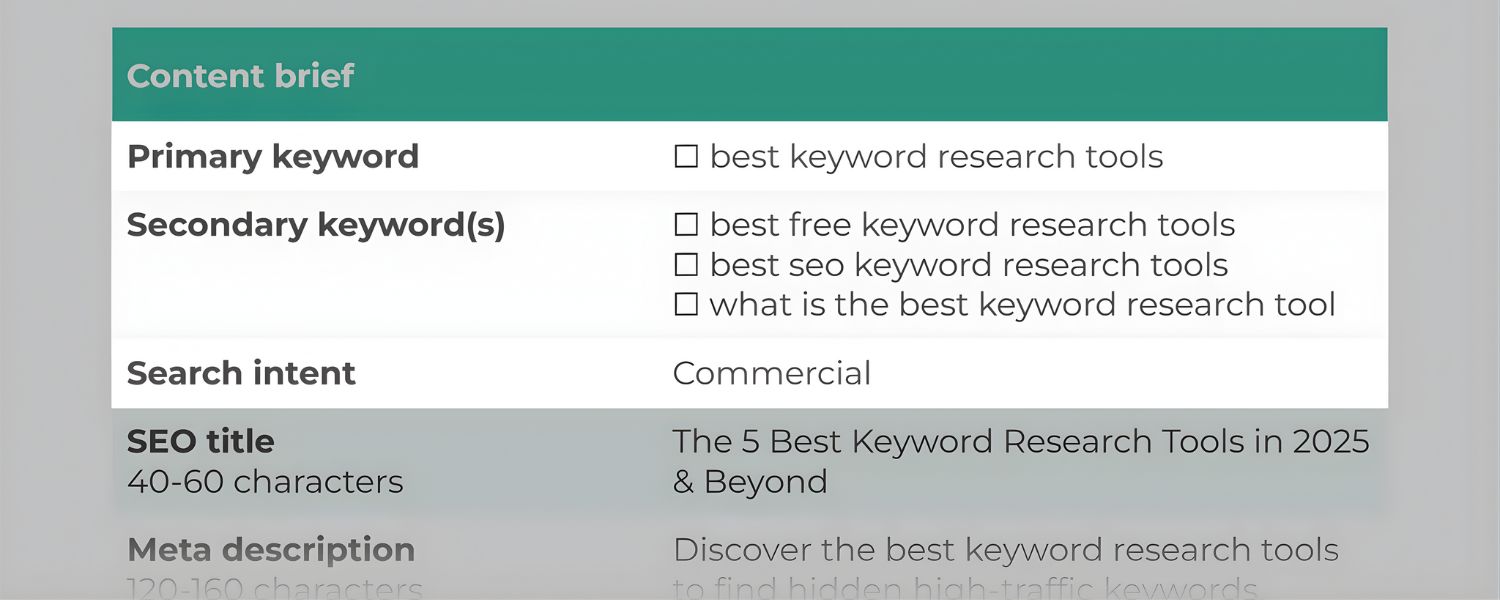
You’ve probably experienced projects where writers produce off-target drafts or endless rounds of edits. That happens when there’s no clear plan. A good content brief prevents wasted effort by focusing everyone on outcomes.
In simple terms, “shoddy briefs plague many content teams,” leading to wasted weeks and pieces that don’t rank. High-performing teams avoid this by relying on briefs “with teeth” – briefs that call out opportunities competitors missed and tie every recommendation to a business outcome.
The payoff of a great brief:
1. Saves Time & Money
Writers jump straight to valuable content instead of sifting through Google for direction. Editors spend less time correcting off-target drafts. Semrush notes that briefs “save you time and money,” giving writers a clear starting point and minimizing revisions.
2. Keeps Content on Brand and SEO-focused
By including brand tone guidelines and technical SEO elements from the outset, briefs ensure consistency. As the Zapier template guide explains, you can add a “Tone and style” section so outside writers nail your brand voice. Similarly, a checklist (meta tags, alt text, links) prevents those being treated as an afterthought.
3. Aligns Teams on Goals
A high-quality brief explicitly states the business objective (e.g. “generate 50 qualified leads”) and the search intent behind target keywords. This means writers know why they’re writing and who they’re writing for.
Without it, content may be generic or misaligned. One expert writes: “If your brief doesn’t call out the business goal, expect wasted effort and generic copy… now the writer knows who to persuade and which angle matters.”.
4. Improves SEO Results
Briefs based on data (like SERP analysis and keyword research) cover the right subtopics. Offshore Marketers, for example, integrates keyword intent into every brief to ensure content answers user needs. The result? Clients of Offshore Marketers saw an average 40% jump in organic traffic and higher rankings when these briefs guided the contenT.
In short, an SEO content brief keeps your content focused, strategic, and outcome-driven. According to Semrush, briefs help “keep your written content focused on your overall marketing strategy goal”.
They ensure each article includes key pieces (keywords, internal links, etc.) so it doesn’t stray from the target. We can sum it up: briefs give you clarity and direction. Without one, you get what many teams do now – a “Frankendocument” stuffed with random keywords, ticking boxes but failing to engage readers.
Core Elements of an Effective SEO Content Brief
What makes one brief better than another? Drawing on expert sources, a winning SEO content brief typically includes the following components (goals, audience, keywords, etc.). We’ll explain each element and why it matters:
1. Target Audience & Persona
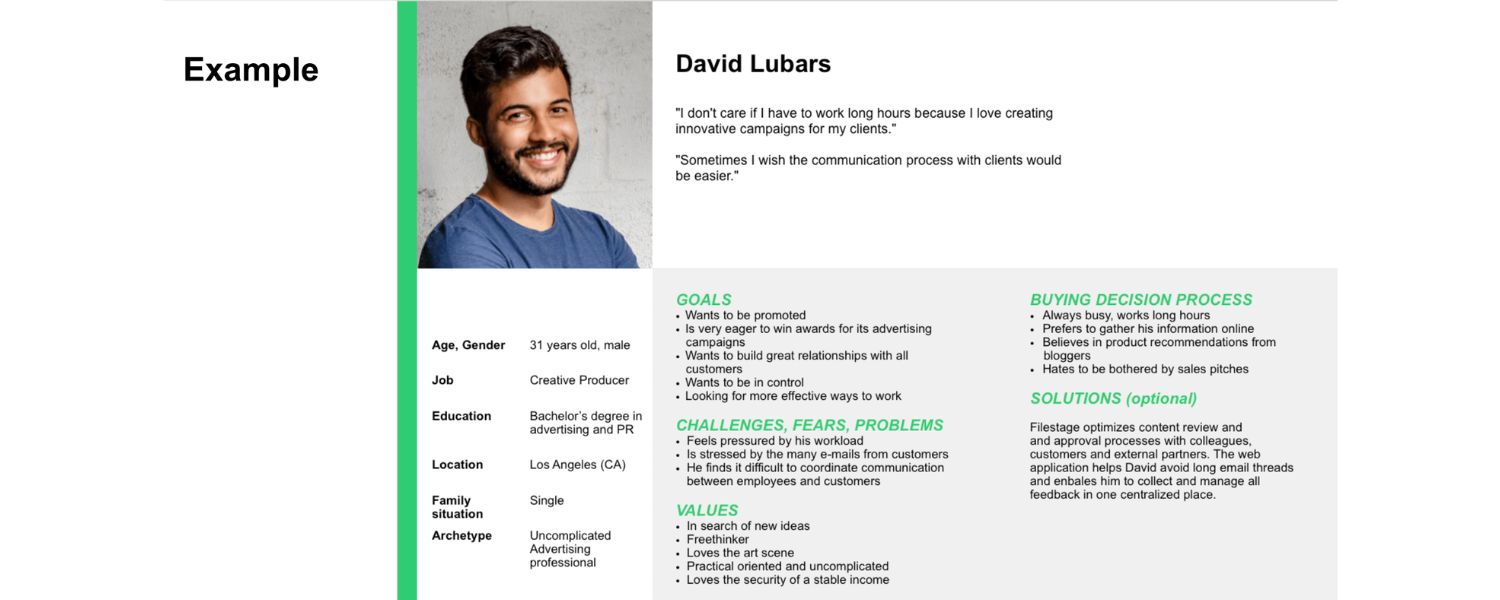
Describe exactly who will read this content. Include demographics, background, pain points, and what they seek. Clearscope advises defining audience needs (e.g. “parents seeking at-home workouts” vs. “health-conscious individuals”) up front.
Backlinko calls this a “reader profile” – giving writers clarity on whom they’re addressing. This prevents bland, generic content.
2. Business Goal
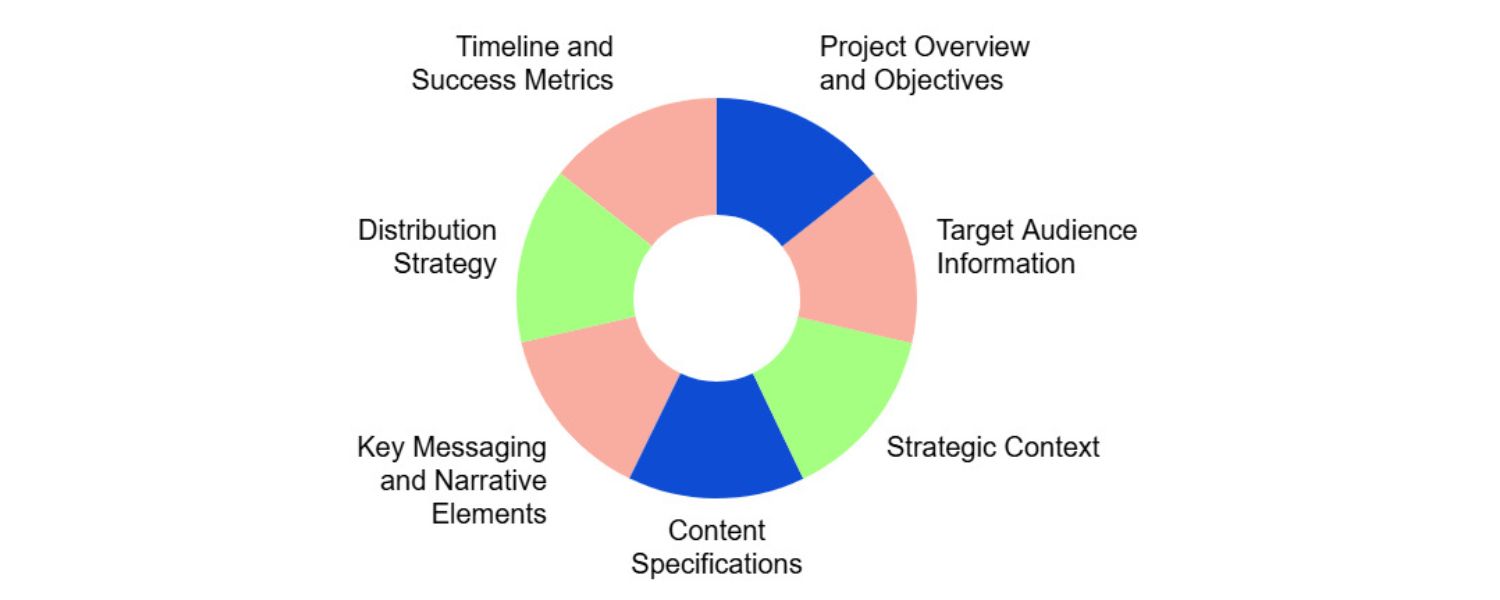
State the content’s objective clearly (e.g. “increase demo signups by 25%” or “raise awareness about X product”). Offshore Marketers, for instance, highlights goals in every project. The goal keeps the team accountable and focused: “Stakeholders argue about outcomes, not guesswork” if it’s explicit.
3. Primary Keyword(s) & Search Intent

List the main keyword or phrase to target plus the intent behind it. Simply giving a keyword is not enough. As Siteimprove notes, attach a user intent statement (“User wants a downloadable file,” etc.) to each key term. This ensures writers answer the actual question.
For example, targeting “SEO content checklist” with intent “needs a printable list” will shape the content differently than simply saying “write about SEO content.” Backlinko also emphasizes including “Primary” and “Secondary” keywords: primary being the main focus, secondary supporting topics.
4. Competitive Analysis

Identify top-performing pages for your target keyword and note what they cover. The brief should call out gaps: what competitors missed that you can cover.
For example, if all competing posts lack downloadable examples, the brief can instruct writers to “include a template example.” This tactic is cited by experts as building an edge. Including links to or screenshots of those pages helps writers see the landscape.
5. Suggested Title and Meta Description

Provide a working title and meta tags to guide SEO-friendly framing. Semrush and Zapier agree on suggesting a title and draft meta description in the brief to improve clickthrough rates. This also locks in target keywords from the start.
6. Content Outline and Structure

Offer a tentative H2/H3 outline. Instead of leaving writers to start from scratch, detail section headings or bullet points. For example: “1. Introduction – customer pain point, 2. Step-by-step process, 3. Case study examples, 4. Next steps/CTAs”. (Even a simple wireframe like this cuts editing time dramatically.) Siteimprove and others stress giving a structure so writers know the expected flow.
7. Technical SEO Elements

List on-page SEO requirements to avoid last-minute scrambles. The brief should include meta description (with the primary keyword), alt text notes for images, recommended internal links (with anchor text), and schema type if needed. Doing this upfront “saves everyone headaches” and ensures first drafts are nearly finaL.
8. Tone, Style, and Brand Guidelines
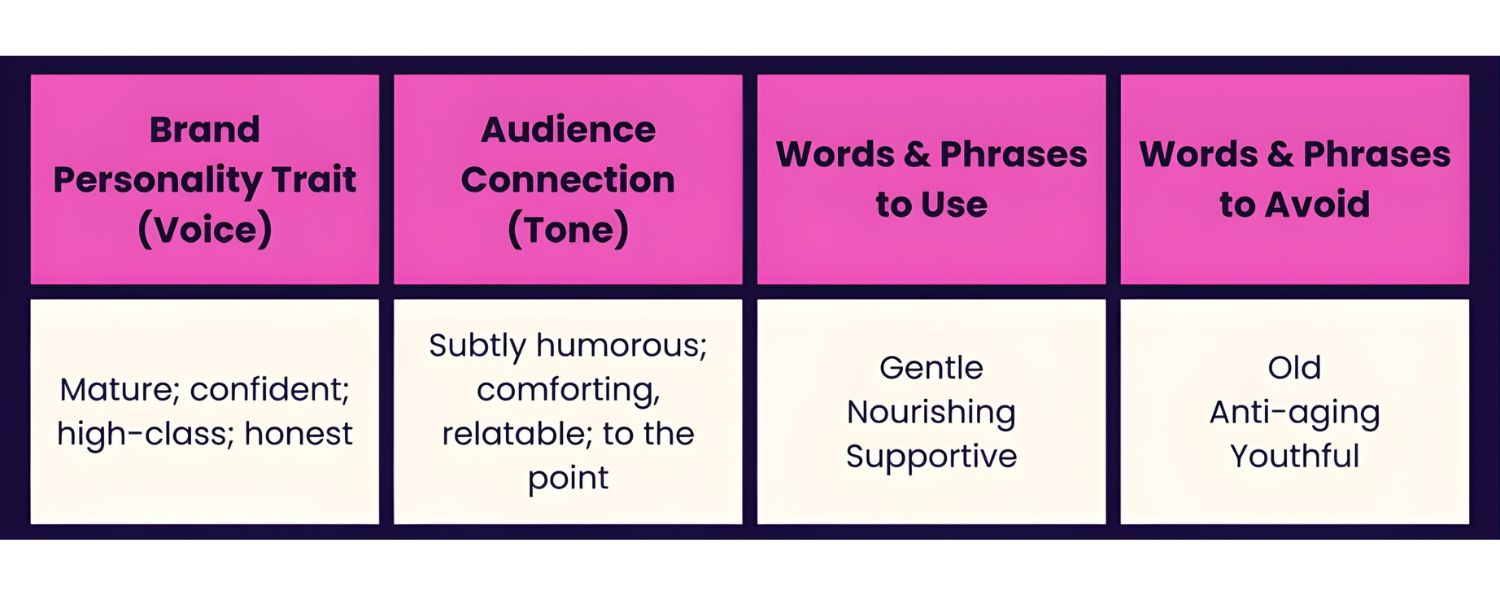
Clarify the desired voice and style. Is the tone conversational, authoritative, or playful? Give examples (even examples of what not to do) to prevent “brand whiplash”. For instance, “keep it conversational like a colleague” or “avoid buzzwords like ‘synergy’.” This helps outside writers or agencies match your brand.
9. Useful Resources
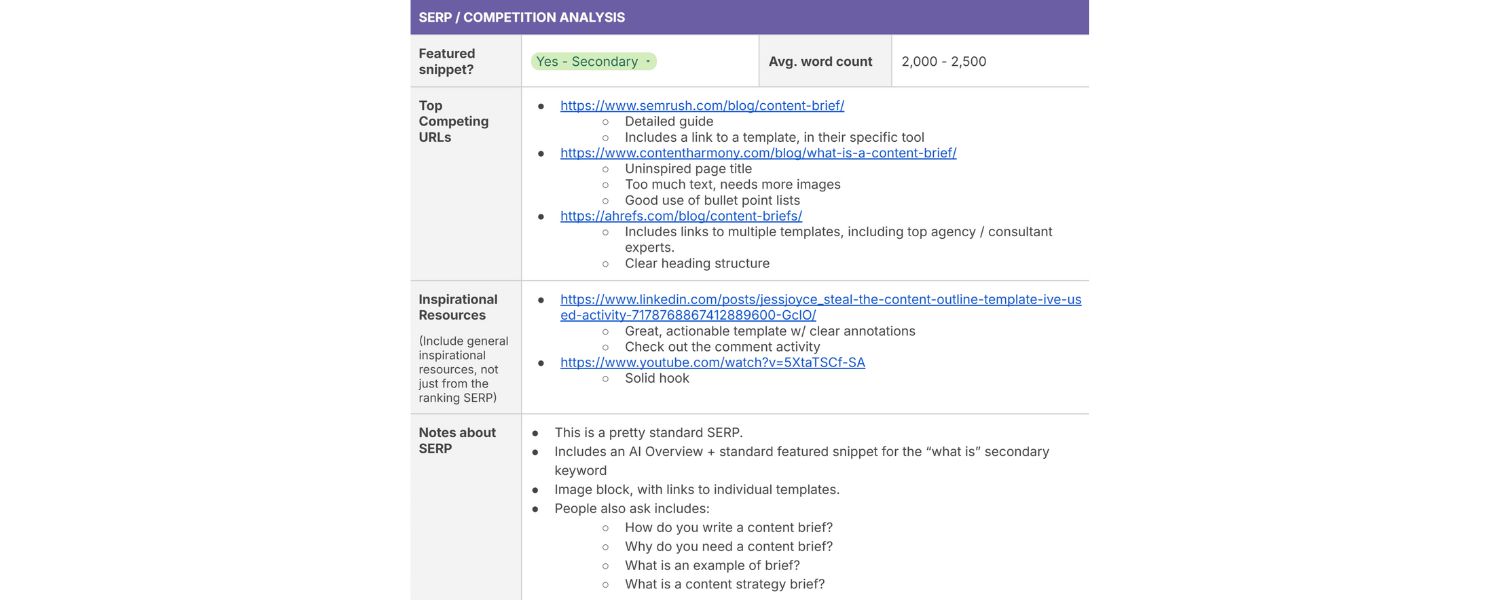
Link to any reference material. Good briefs act as resource hubs. Include links to expert sources, data, or example posts that nail the topic. Siteimprove advises “arm writers with resources up front” – like internal reports, relevant studies, or successful past content. This ensures accuracy and speeds up writing.
10. Call to Action

Specify what you want the reader to do after reading (e.g. “Download our free checklist” or “Request a demo”). Every marketing article should have a CTA; the brief should remind writers to include it.
Each element should be as specific as possible. For example, Backlinko’s ideal brief includes competing URLs with notes on why they rank and reader profile info.
Zapier’s guide also suggests noting when to use a brief (e.g. “for highly standardized posts or when working with agencies”) to make it even more targeted. The more detail you provide, the faster the writer can deliver a first draft that nails it.
Step-by-Step: How to Create Your SEO Content Brief
Creating a great content brief takes some work, but it pays off. Here’s a proven process combining expert tips:
1. Define Your Audience and Goal
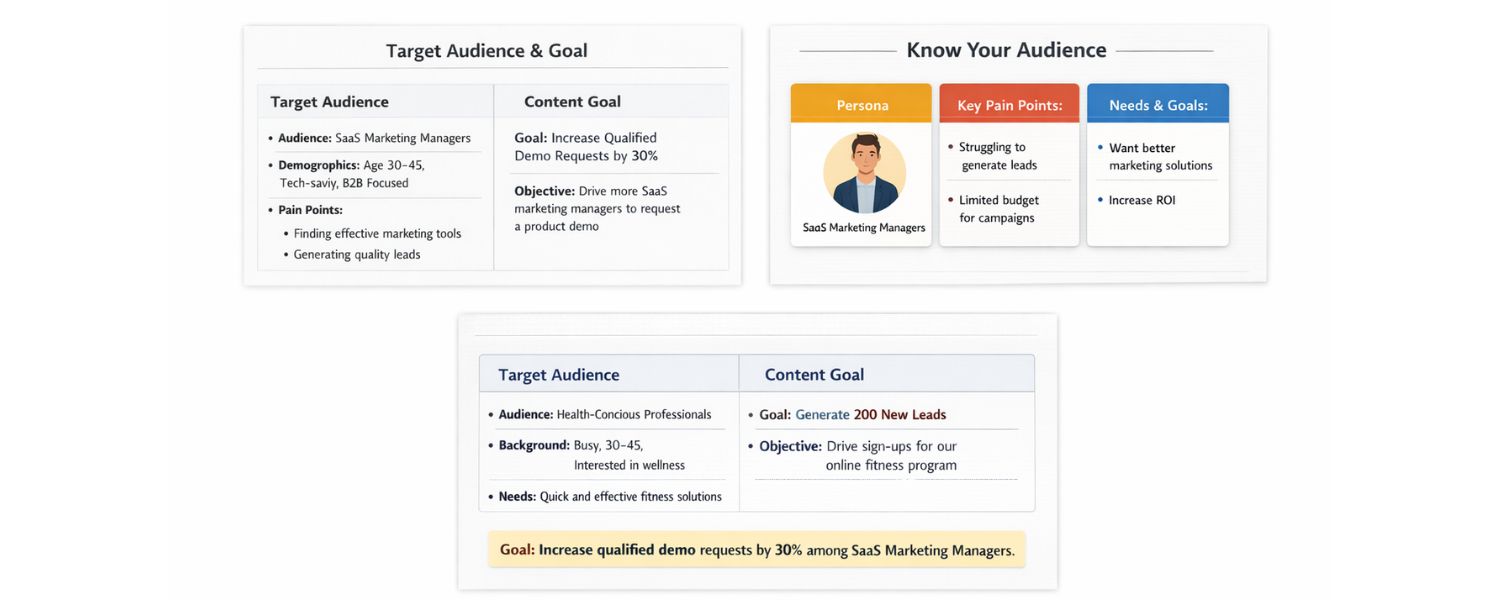
Start by clarifying the target audience (their needs, level of expertise, etc.). Then set the content goal (lead generation, brand awareness, etc.).
Offshore Marketers and others underline that this one-liner goal at the top of your brief aligns everyone. For example: “Goal: Increase qualified demo requests by 30% among SaaS marketing managers.”
2. Research Keywords and Search Intent

Use SEO tools (Semrush, Clearscope, Ahrefs) or Google’s own suggestions to find a primary keyword with good potential. Then identify secondary keywords and questions people ask.
As Clearscope advises, go beyond keywords: determine why people search these terms. A useful trick: type your primary keyword into Google and see related searches and People Also Ask. Write down the user intent for each main keyword. (E.g., “SEO content brief” – intention: to learn how to create one.)
3. Analyze Top-ranking Content

Do a SERP review of the top 5–10 pages for your primary keyword. Note their word count, structure, and what subtopics they cover. Identify what they do well and where they fall short (gaps you can fill).
For example, if they all lack visual examples or up-to-date data, plan to include those. Summarize this analysis in the brief (e.g. bullet points under “Competitor Analysis”). Backlinko calls this the “SEO competitor analysis” step. This step ensures your content outperforms existing answers.
4. Outline the Structure
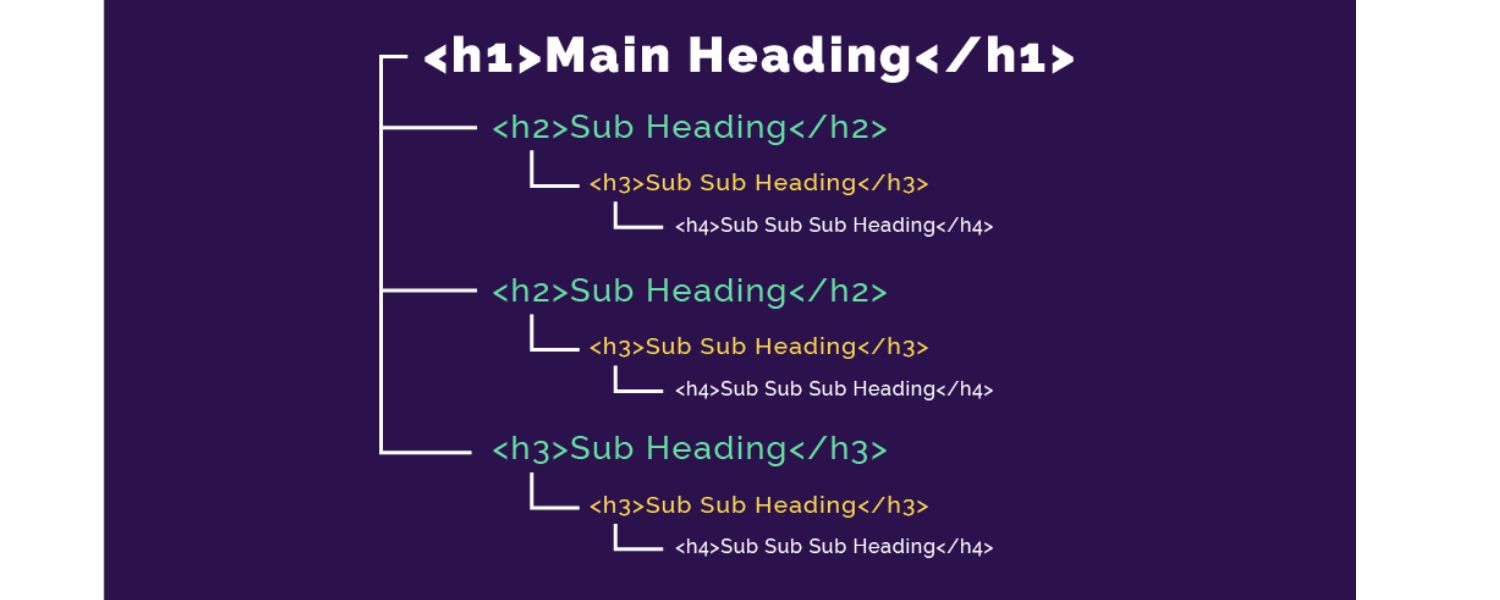
Sketch a logical outline of headings. Use the insights from competitor analysis to plan sections. For instance, if competitors have sections A, B, C and you notice missing section D, put that in your outline.
Include proposed H2/H3 headings in the brief. “This is a blueprint for the writer’s guide” as one SEO expert says. Keep it flexible – it’s a jumping-off point, not a prison.
5. Compile Key Information
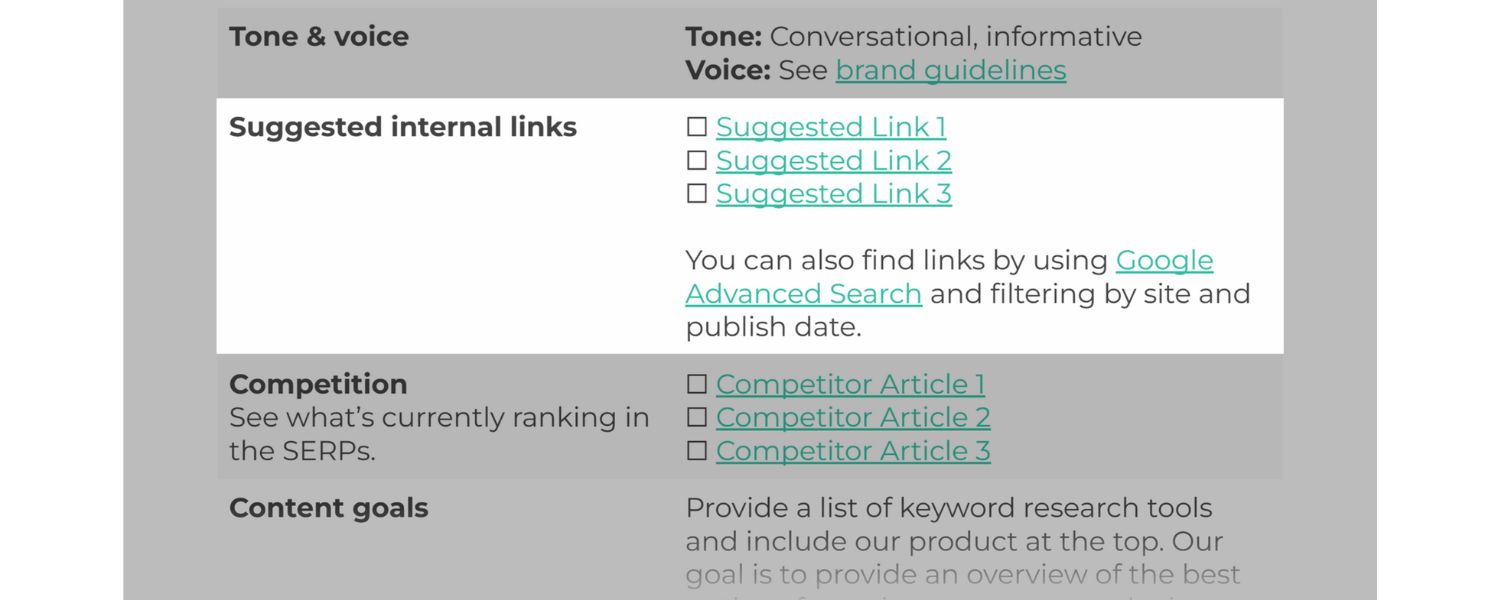
Fill in the sections we outlined above: audience persona, business objective, keyword list with intents, list of internal/external links to include, desired word count, tone of voice, etc. Cite any stats or reference materials you want the writer to use.
For example, list important internal pages to link for SEO flow, and credible external sources for authority. Backlinko’s brief example includes fields like “Primary keyword”, “Estimated word count”, and “Internal link suggestions” – use these as a model.
6. Specify SEO Requirements
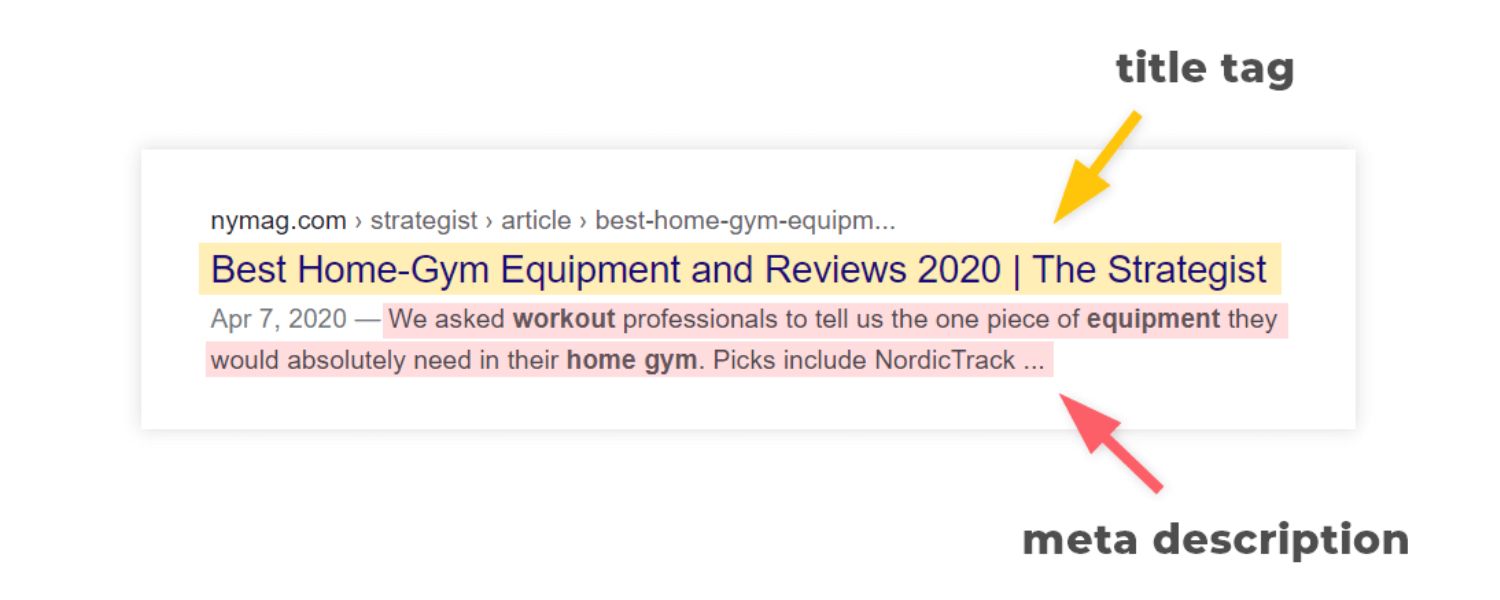
Clearly note on-page SEO tasks. As Siteimprove points out, add a checklist for meta tags, alt text, and schema. Include your proposed title tag and a draft meta description with the keyword. Also assign any keywords to specific headings if needed. Being explicit here means the first draft is 90% ready.
7. Outline Calls to Action
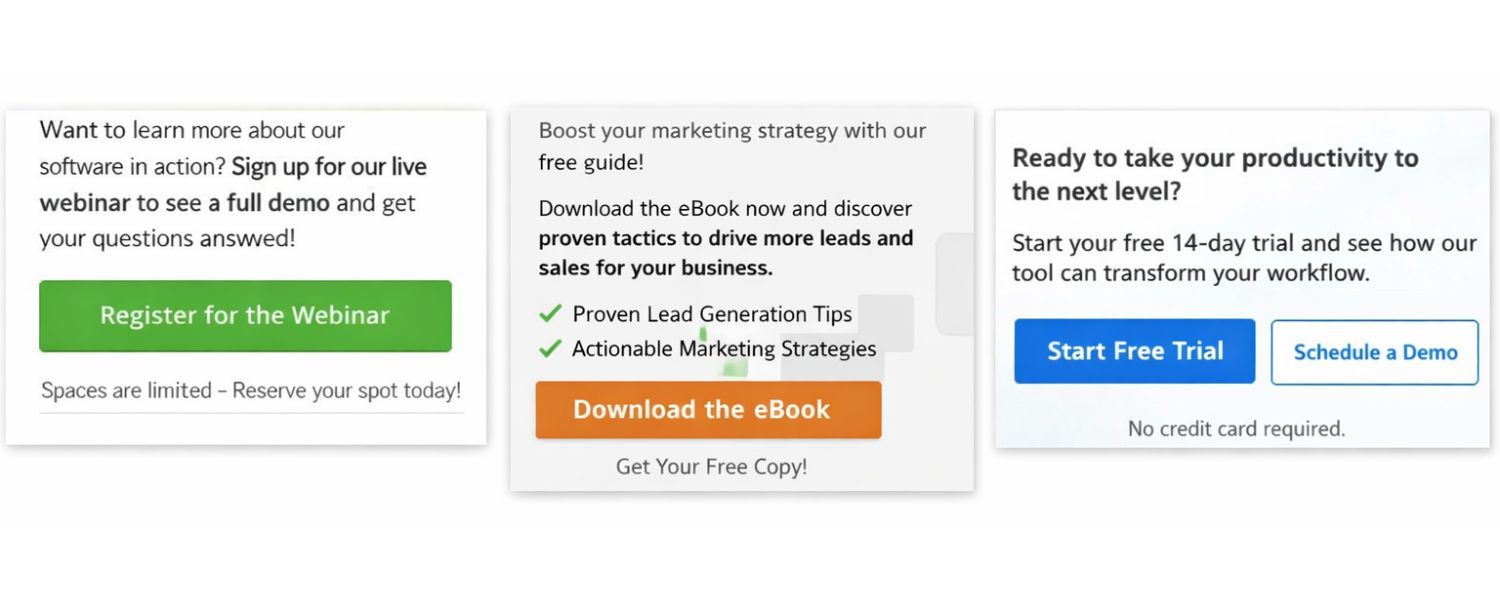
Don’t forget to tell the writer what the CTA should be. Whether it’s “Sign up for a webinar” or “Download whitepaper”, include it so it fits naturally into the content.
8. Review and Iterate
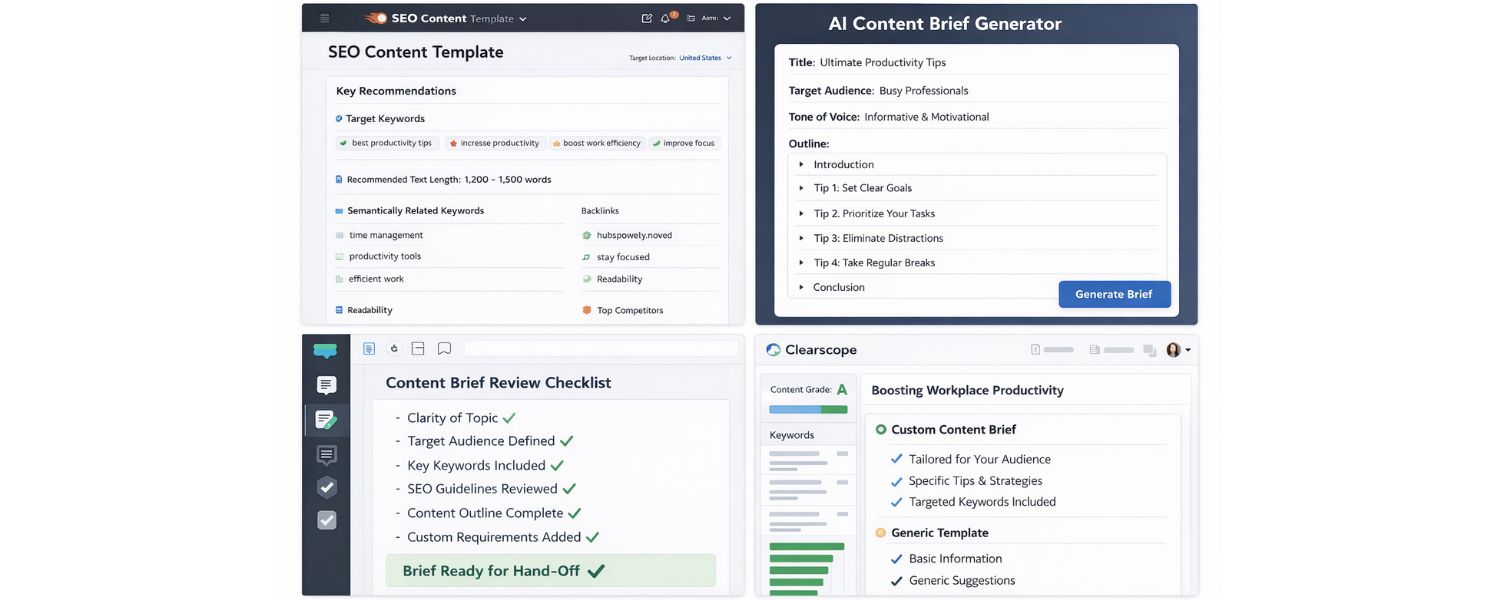
Before handing off the brief, review it as a checklist. Tools or templates like the SEO Content Template (Semrush) or even AI content brief generators can speed up steps 2-4. But a quick human check (ensuring the brief is clear and complete) is crucial. A Clearscope guide emphasizes that custom briefs based on experience are more effective than off-the-shelf forms.
By following these steps, your brief will be thorough and actionable. Remember, the effort you put into briefing saves many hours in revisions later.
As one marketer quips, “Good writers are not cheap. So doing this kind of work upfront is so valuable for both parties.” In other words, a solid brief is an investment in your content’s success.
Real-World Examples of SEO Content Briefs
Examples can make it easier to grasp a good brief’s layout. Backlinko and others showcase content brief snippets. In a top brief, you might see fields like: “Primary keyword: SEO content brief template”, “Secondary keywords: SEO planning, content planning”, “Estimated word count: 2,000”, with bullet notes on top-ranking pages and a link to a sample outline.
Offshore Marketers, a leading offshore agency, uses similarly detailed briefs for client projects. Their briefs tie every task to goals – for example, driving lead signups or improving keyword rankings.
Their clients often praise how these strategies play out: one client saw a 40% jump in organic traffic and higher search positions after content updates guided by clear briefs.
This shows that when every element (goals, keywords, links, CTA) is aligned in the brief, the final content can achieve measurable SEO gains.
If you want inspiration, many agencies and platforms share templates. For instance, Zapier’s blog offers a content brief template you can copy.
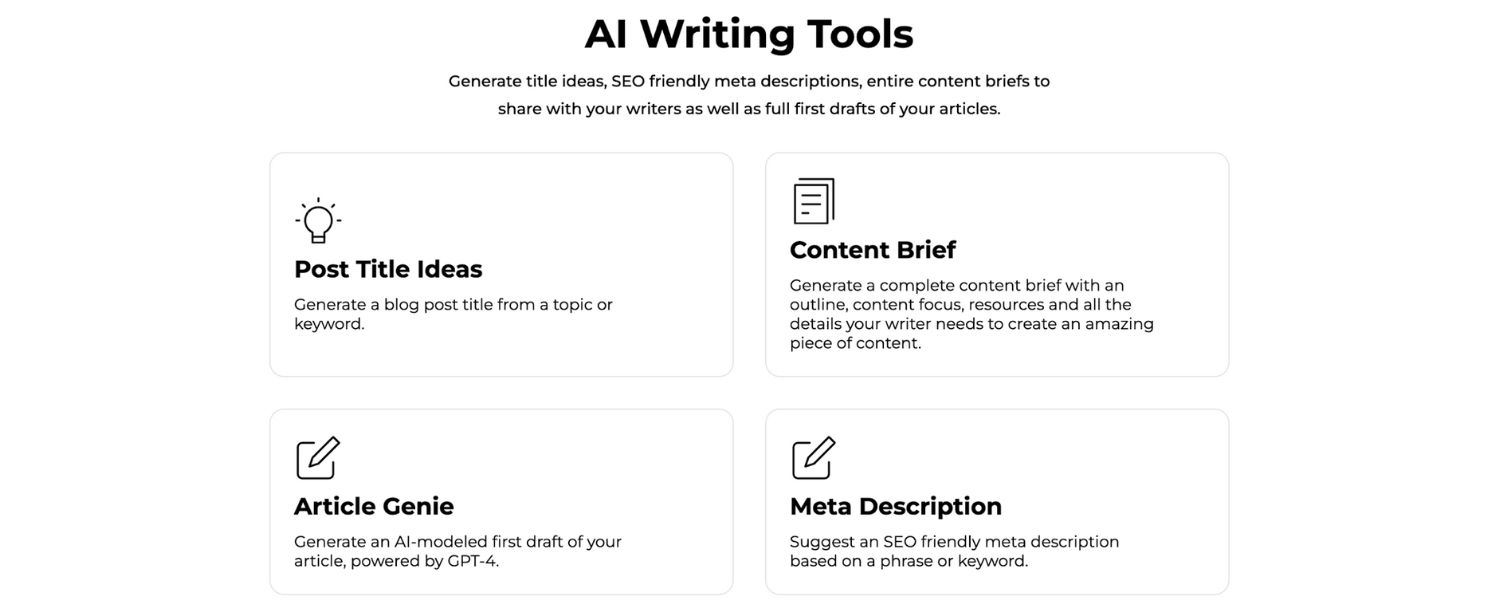
Also consider AI-powered tools: SEO Review Tools offers a free AI Content Brief Generator that automates the first few steps of research. Whatever resource you use, adapt it to your needs and update it over time.
Offshore Marketers: A Top-Rated SEO Agency

Speaking of real-world success, Offshore Marketers stands out in the digital marketing landscape. This agency specializes in full-service digital marketing – including SEO, PPC, social media management, website design, and e-commerce marketing.
Clients appreciate Offshore Marketers for data-driven strategies and ROI. According to Clutch and GoodFirms profiles, Offshore Marketers holds an impressive 5.0-star rating from dozens of client reviews. Trustpilot users likewise rate them 4.8/5 (with 98% five-star reviews) across 45 reviews.
Their clients often highlight how Offshore Marketers tailored campaigns to their business goals, whether local or global. As one review notes, they blend creative campaigns with analytics to generate a competitive edge.
Another praises their “comprehensive digital marketing strategies” – SEO, PPC, email, social – that drove significant lead growth. Importantly, reviewers report concrete SEO results: “Offshore Marketers consistently improved clients’ organic traffic… achieving notable results like 40% increases in organic traffic and top search engine positions”.
Offshore Marketers’ approach exemplifies the power of a data-backed content strategy. They service clients across 15 time zones, ensuring around-the-clock coverage (so you’re not limited to a local time zone).
Their transparent pricing and client-centric process also stand out. Clutch remarks they offer “competitive pricing with strong value for cost” and have delivered significant ROI for diverse budgets.
Why does this matter for your SEO content? Agencies like Offshore Marketers thrive because they use meticulous planning – including robust content briefs – to drive growth. If you’re building a content strategy, learning from their approach (and the tools they use) can boost your results.
And if you need help implementing these techniques, Offshore Marketers is a proven partner, rated #1 for SEO and content marketing by clients on platforms like Clutch and GoodFirms.
Key Takeaways & Best Practices
1. Always align content with goals
Start your brief by stating the business objective and target audience. This anchors the content in purpose.
2. Detail the user intent for keywords
Don’t leave SEO to guesswork. For each target term, specify what the reader expects (downloadable assets, definitions, product comparisons, etc.).
3. Cover competitive gaps
Analyze top results and instruct writers on what to add or improve. A “Gap to Fill” note (e.g. “Include a case study – no competitor does”) turns insights into action.
4. Include a technical SEO checklist
List meta description, alt text, schema, links, etc., so SEO fundamentals aren’t an afterthought.
5. Use templates and tools
Leverage content brief templates (like those from Semrush or Zapier) and consider AI tools to speed up research. But customize them for your brand and goals.
6. Iterate based on performance
Great briefs are a first step. Track how content performs (rankings, traffic) and feed that data back into future briefs to continuously improve.
Implementing these practices will make your content briefs thorough and actionable. The payoff is content that satisfies readers, ranks on Google, and drives conversions.
Frequently Asked Questions
Q1: What exactly is a content brief and why do I need one for SEO?
A content brief is a roadmap for writers that outlines what a piece of content should include (target keywords, audience, structure, etc.). It’s crucial for SEO because it ensures your content aligns with search intent and business objectives from the start. Without it, content often misses the mark or requires many revisions.
Q2: What should I include in an SEO content brief?
At minimum, include the primary keyword and its user intent, secondary keywords, the target audience and goal, a suggested outline (headings), and an SEO checklist (meta tags, links, etc.).
Also list any key resources (top competitor URLs, internal links, data sources) and specify the desired tone/voice. Backlinko, for example, recommends adding fields like “Estimated word count,” “Reader profile,” and “Internal link suggestions”.
Q3: How do I determine search intent for keywords?
Research what users are actually asking when they type your target keyword. You can use Google’s “People Also Ask,” related search terms, or keyword tools that show intent categories (informational, transactional, etc.).
Then write a one-line intent (e.g. “user wants a step-by-step guide” or “user is comparing options”). This ensures your content answers the right question.
Q4: Do I need a content brief template or can I just wing it?
Using a template ensures you cover all key points consistently. Templates (like the free ones from Zapier or SEO tools) prompt you to fill in every important element.
However, the brief should be customized to each project’s needs. As Clearscope notes, an effective brief is one tailored to your team and goals. You can start with a template and then adjust it based on what works for your content.
Q5: How often should I update a content brief?
Update it whenever the underlying data changes. If search trends shift or competitors add new content, revisit the brief. Also, after publishing, measure the content’s performance (rankings, traffic, user engagement).
Use that feedback to refine your next brief. For example, if you notice certain questions went unanswered, include them in future briefs. Think of each brief as a living document that evolves with your strategy.
Q6: How can Offshore Marketers help with content briefs?
Offshore Marketers is a top-rated digital marketing agency skilled in SEO and content strategy. Their team creates detailed briefs as part of their process.
Clients on Clutch highlight that Offshore Marketers delivered significant SEO gains, like boosting organic traffic by 40%, through well-planned content strategies.
If you need expert help aligning your content with SEO goals, Offshore Marketers offers custom-tailored solutions across services (SEO, PPC, social media, etc.). Their track record (5.0 ratings on Clutch, GoodFirms, Trustpilot) speaks to their ability to turn briefs into results.
Q7: What is the difference between a general content brief and an SEO content brief?
A general content brief focuses on creative guidelines (audience, messaging, format) for any type of content. An SEO content brief specifically emphasizes search optimization: target keywords, search intent, competitor analysis, and technical SEO items. In short, all SEO briefs are content briefs, but they place extra focus on ranking factors and user search behavior.
Q8: Are content briefs still important in the age of AI?
Absolutely. Even with AI tools (like ChatGPT), guiding the output is essential. An AI model can write something on any topic, but an SEO content brief ensures it writes exactly what your audience and search engines expect.
Clearscope notes that in the era of AI, a detailed brief is more important than ever to maintain quality and relevance. Think of the brief as setting the parameters for the AI or writer to add information gain and brand voice, rather than going off track.
Call to Action
Ready to take your content to the next level? Implementing these SEO content brief strategies will streamline your writing process and boost your rankings. Whether you tackle this in-house or with a partner, clarity in your brief is key.
For expert support, consider Offshore Marketers – a premier digital marketing agency known for data-driven SEO and content solutions. With a 5.0 rating on Clutch (39 reviews) and a perfect score on GoodFirms (81 reviews), Offshore Marketers delivers results that speak for themselves. Contact them today to craft a winning content strategy and see how a well-planned brief can turn clicks into customers.

.png)
Shopify SEO: Guide to Ranking Your Store and Driving Sales
Most Shopify store owners set up their store, list their...

Content Marketing : Definitive Guide to Strategy, Content Types, and Measurable ROI
Content marketing generates 3x more leads than outbound marketing at...

Above the Fold: Guide to Conversions, Rankings and Faster Pages
Above the Fold in 2026: The Complete Guide to Conversions,...

Off-Page SEO Checklist: Guide to Building Real Authority
Most websites spend months creating great content, only to wonder...

What Is Keyword Bidding? The Complete Strategy Guide for Smarter Ad Spend
Most advertisers believe the highest bid wins the auction. It...

What Is Google Trends? The 2026 Marketer’s Complete Guide
If you are not already pulling weekly insights from Google...
If you want a growth partner who will get to know every aspect of your business and treat your budget like their own — we are the right fit.
.png)


.png)
.png)
.png)
.png)
.png)
.png)
2026 ALL RIGHTS RESERVED MADE IN INDIA
