
Competitor Traffic Analysis: Spy, Benchmark & Outrank
September 2, 2025
Introduction
In today’s cutthroat digital marketplace, competition for web traffic is fierce, you simply can’t afford to ignore what your rivals are doing. Savvy marketers treat competitor traffic analysis as a secret weapon, allowing them to peek into a competitor’s online strategy and audience behaviors.
By studying where your competitors get their visitors and how those visitors engage, you can discover winning tactics to outsmart the competition.
This comprehensive guide (written by a marketing expert with 25 years of experience) will show you how to analyze your competitors’ website traffic, why it’s so important, and how to use these insights to drive more traffic to your own site than ever before.
What Is Competitor Traffic Analysis and Why It Matters
Competitor traffic analysis is the process of examining your competitors’ website visitor metrics and patterns, essentially “spying” on their traffic – and using that data to improve your own web performance. This isn’t about anything shady or unethical.
In fact, studying your competitor’s traffic sources and user engagement is now a must-do for any business that wants to stay ahead. As one industry expert bluntly put it, “spying on your competitors isn’t creepy—it’s necessary.” By keeping a watchful eye on competitors, you can spot opportunities and avoid pitfalls in your digital strategy.
Why does it matter? Competitive traffic intel helps you see what’s already working for others and build upon that success. If you can figure out what your competitors are doing well, and then do it even better, you can effectively “steal” back some of their visitors and direct them to your own site.
Of course, “stealing” here simply means attracting the audience with superior value, not doing anything underhanded. The best way to capture competitors’ traffic is by outshining them, for example, creating more valuable content, targeting overlooked keywords, or offering a smoother user experience.
In short, competitor traffic analysis reveals the road map of your rivals’ online success, so you can map your route to outrank them.
Key Metrics and Insights You Can Gain
A thorough competitor traffic analysis goes far beyond just knowing how many hits another site gets. It uncovers a wealth of actionable insights about your rivals’ online performance.
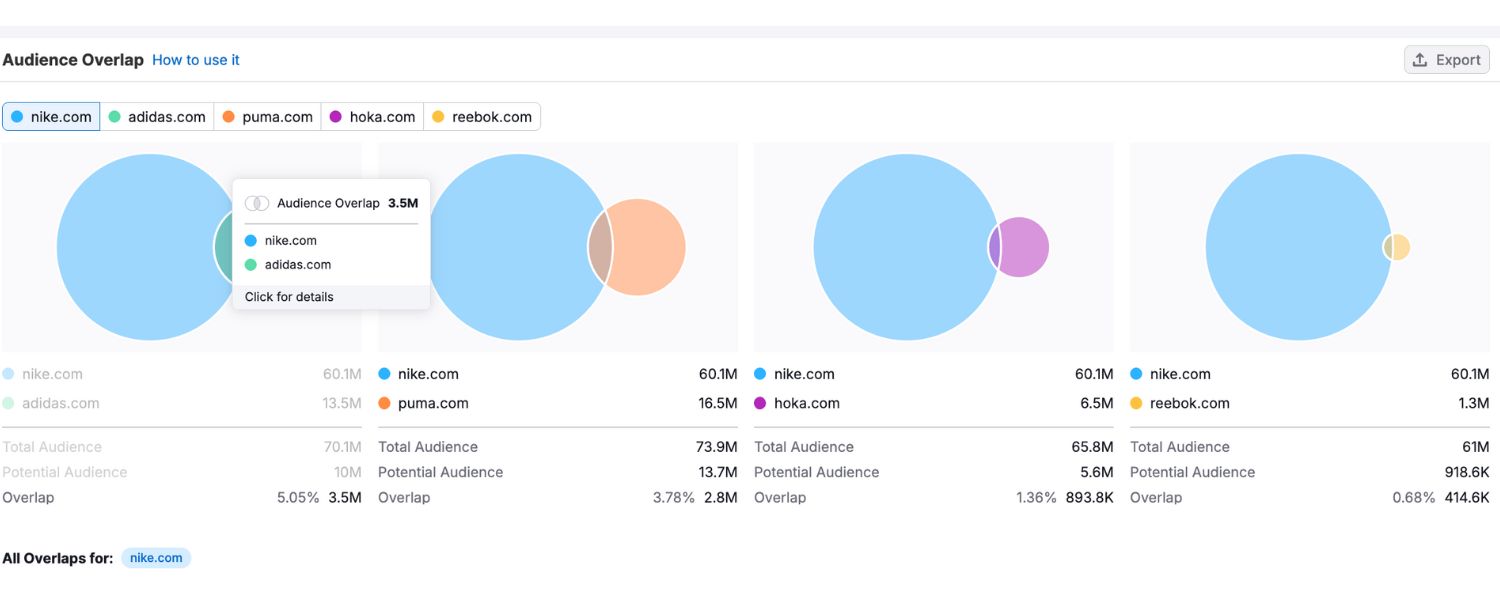
For instance, specialized tools can show estimates of a competitor’s total visits and unique visitors, and whether their traffic is growing or declining over time.
You can break down which channels drive the most traffic, e.g. what percentage comes from organic search, social media, referrals, email campaigns, or paid ads.
These tools also reveal user engagement metrics (like pages per visit, average visit duration, and bounce rate), which indicate how visitors behave on the competitor’s site.
Sometimes a competitor might have high traffic numbers, but if their bounce rate is rising or time on site is low, it signals that visitors aren’t finding what they need. By comparing such engagement stats, you can gauge traffic quality, not just quantity, and learn if users actually stick around on competitor pages. Once you have the traffic data, the next step is competitive benchmarking — here’s our complete guide to turning that data into a strategy.
Example: A competitor traffic overview from an analytics tool, comparing site visits and engagement metrics across multiple rival websites.
Platforms like this provide estimates of total visits, unique visitors, pages per visit, average session duration, and bounce rate, helping you benchmark your performance against the competition.
Keep in mind these numbers are estimates; for smaller sites or niche competitors, data might be limited, so it’s wise to cross-check multiple sources for a fuller picture.
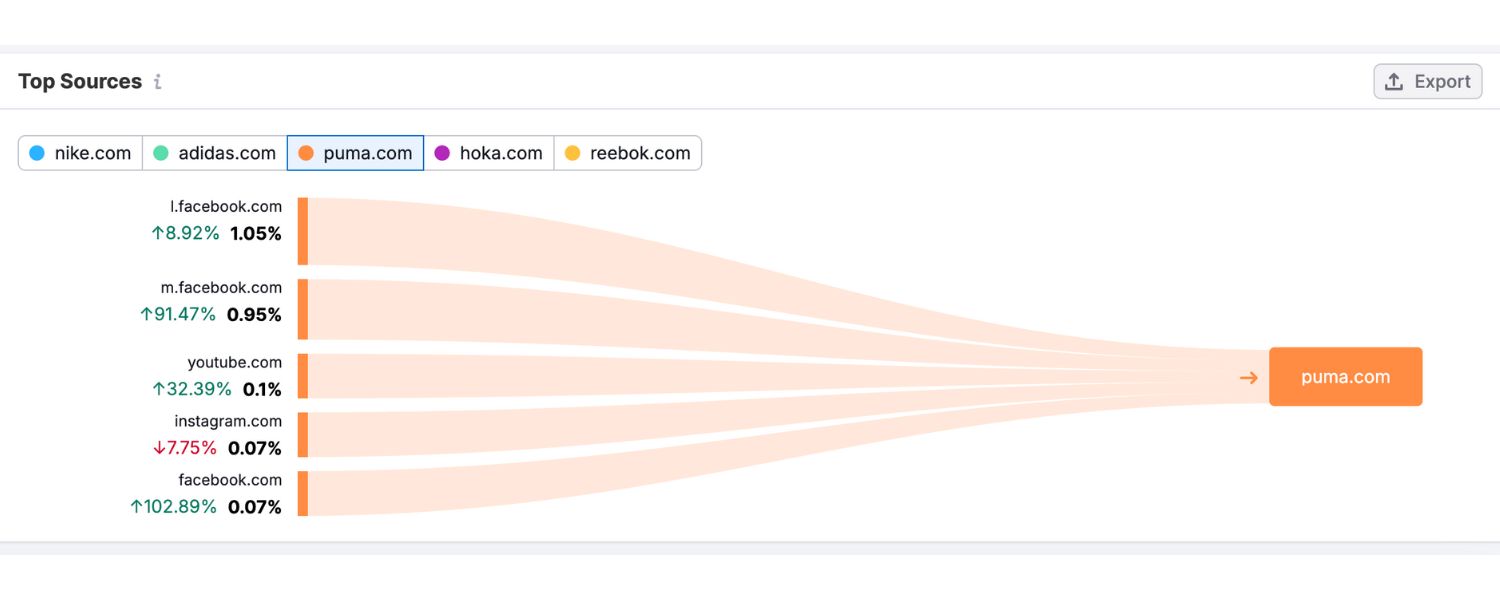
Importantly, competitor traffic tools also identify where the traffic is coming from and where it’s going. You can discover a site’s top referral sources (for example, if a lot of their visitors click through from certain partner websites or news articles).
You can even see which other sites or pages users visit after leaving the competitor’s site, which is great for spotting affiliate relationships or gaps in user needs.
Some advanced platforms map out the user journey, showing the flow of visitors from one site to another and highlighting if, say, users often leave your competitor and then visit a review site or a comparison site.
Another invaluable insight is your competitors’ top-performing pages and content. Competitive analysis can reveal which specific blog posts, product pages, or landing pages on a rival site attract the most visitors.
Knowing their popular content helps you pinpoint topics and keywords that resonate with your target audience. For example, if a competitor’s guide to “X vs Y Product Comparison” is drawing huge traffic, you might create an even more comprehensive comparison to capture that interest.
Many tools let you see these top pages along with their traffic breakdown by channel, so you can tell if a certain article is getting mostly search traffic versus social media traffic, etc. Armed with this knowledge, you can craft content and SEO strategies to outperform those top pages.
Lastly, competitor traffic analysis can provide audience demographic and geographic insights. You may learn which countries or regions are sending the most visitors to a competitor, or even demographic info (age, gender, interests) if available.
This can uncover untapped markets for you, for instance, if your rival is unexpectedly popular in a certain country, perhaps you should localize your content or run campaigns there too.
All these metrics together paint a detailed picture of your competitor’s online presence and what’s fueling their growth or declines.
Pro Tip: Don’t overlook emerging traffic channels. For example, AI search assistants (like ChatGPT, Google’s Bard, Bing’s AI, etc.) are becoming new gateways for discovery. Understanding how these AI tools mention or recommend competitor brands is “just as critical as ranking in search engines” now.
In other words, part of competitor analysis today is checking if competitors are being surfaced in voice search, AI-generated answers, or other next-gen platforms, so you can optimize your visibility there as well.
How to Analyze Competitor Website Traffic (Step-by-Step)
Ready to dive in? Let’s walk through a clear, step-by-step approach to perform competitor traffic analysis effectively. By following these steps, you’ll gather reliable data on competitors and turn it into a game plan for boosting your own traffic.
1. Identify Your True Competitors
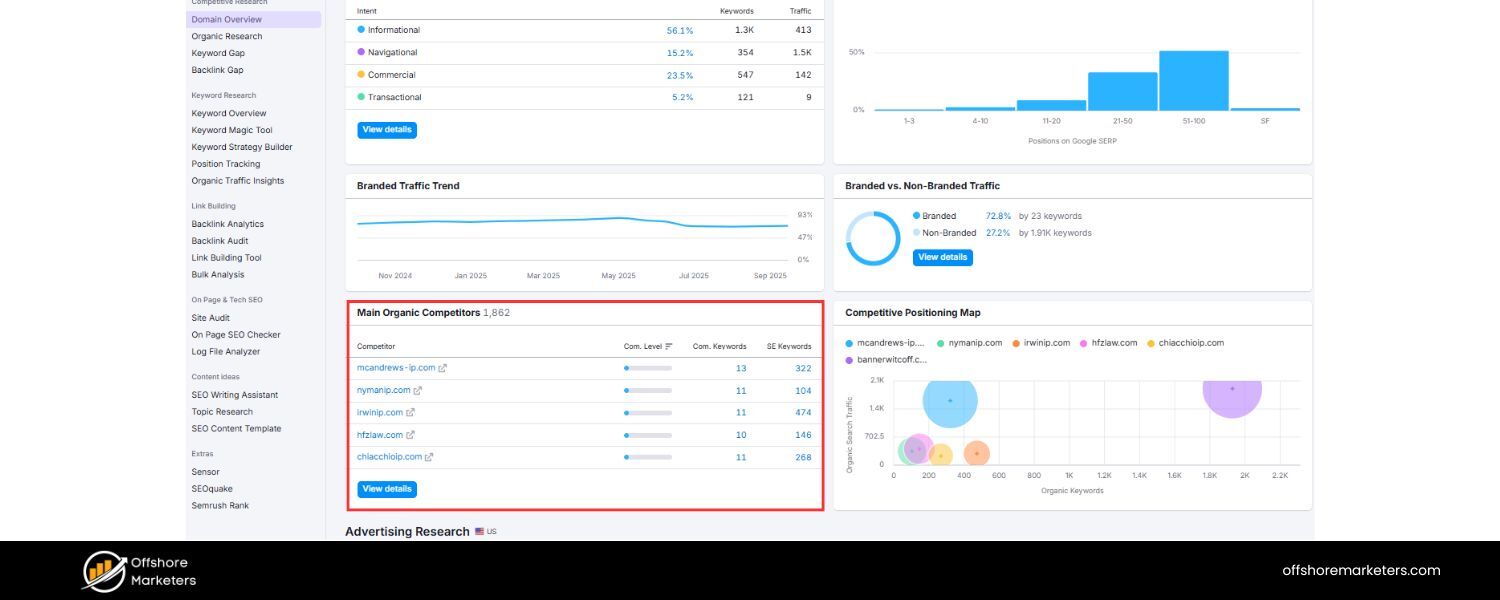
Start by listing your main online competitors. These include direct competitors (offering similar products/services) and any high-ranking sites in your niche that compete for your target audience’s attention. A quick way to find organic competitors is by using an SEO tool to see which other domains rank for the same keywords as your site.
For example, tools like Semrush’s Organic Research or SE Ranking can generate a list of websites that frequently show up alongside you on Google search results.
Don’t just focus on industry giants either – zero in on competitors close to your size or market, as their strategies will be most relevant. Identifying the right “apples-to-apples” competitors will ensure your analysis is meaningful.
2. Choose the Right Tools for the Job
You can’t directly see another site’s Google Analytics, so you’ll need specialized competitive analysis tools to gather traffic data. Fortunately, there are many options. Some of the top tools include Semrush, Ahrefs, Similarweb, and SpyFu, among others. Each has its strengths:
A. Semrush Traffic Analytics
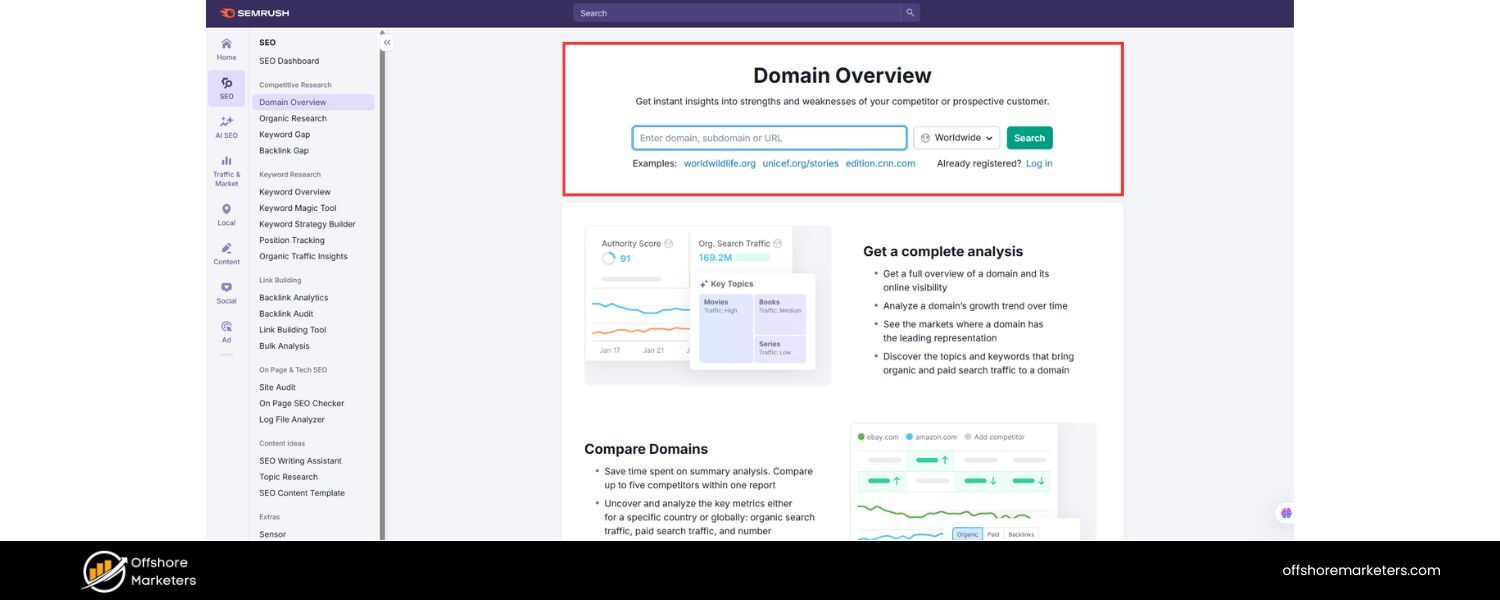
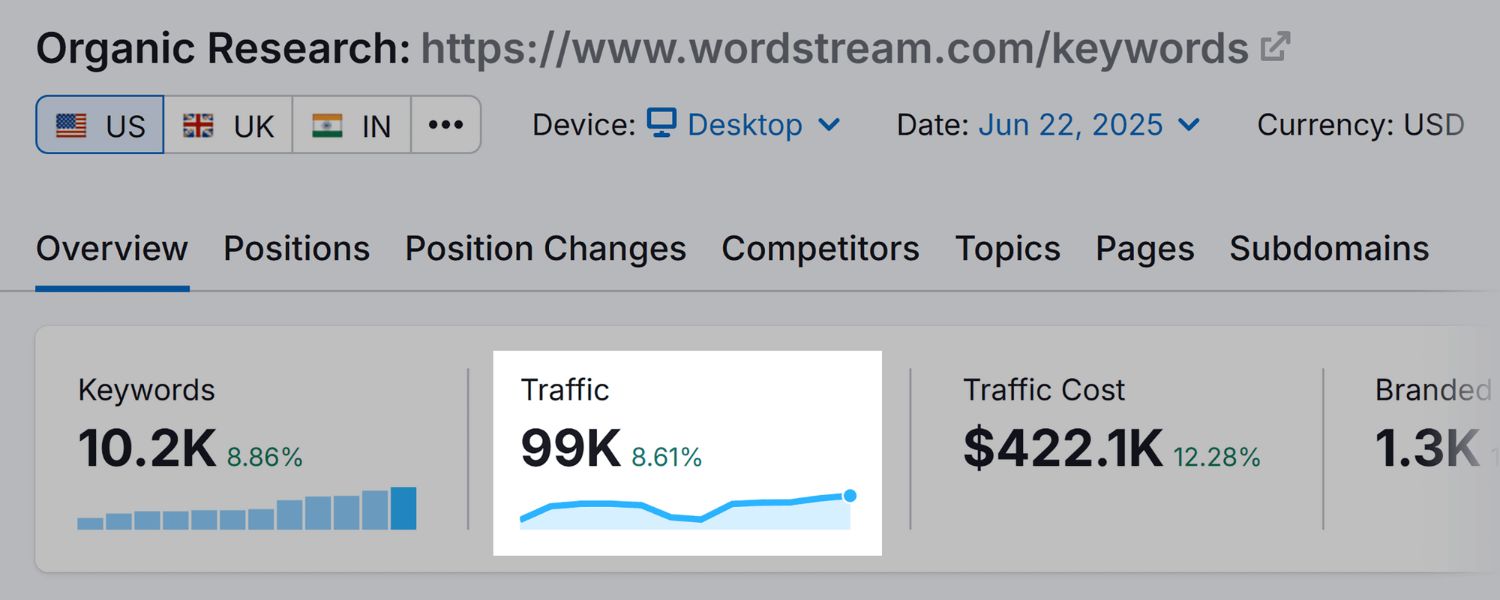
An industry-leading SEO suite, Semrush offers a robust Traffic Analytics tool that lets you compare multiple competitor sites’ traffic side by side. It shows you each competitor’s estimated visits, unique visitors, engagement metrics, and top traffic sources. Semrush also helps identify the keywords your rivals rank for and any gaps in your own keyword profile.
(The free version provides a taste, but a paid account unlocks full comparison features.) According to Semrush, this tool can reveal how much traffic your rivals attract, the keywords they target, and even the ads they run – data you can use to climb the SERPs yourself. In short, Semrush is excellent for a comprehensive look at competitors’ SEO and traffic strategies.
B. Ahrefs Site Explorer
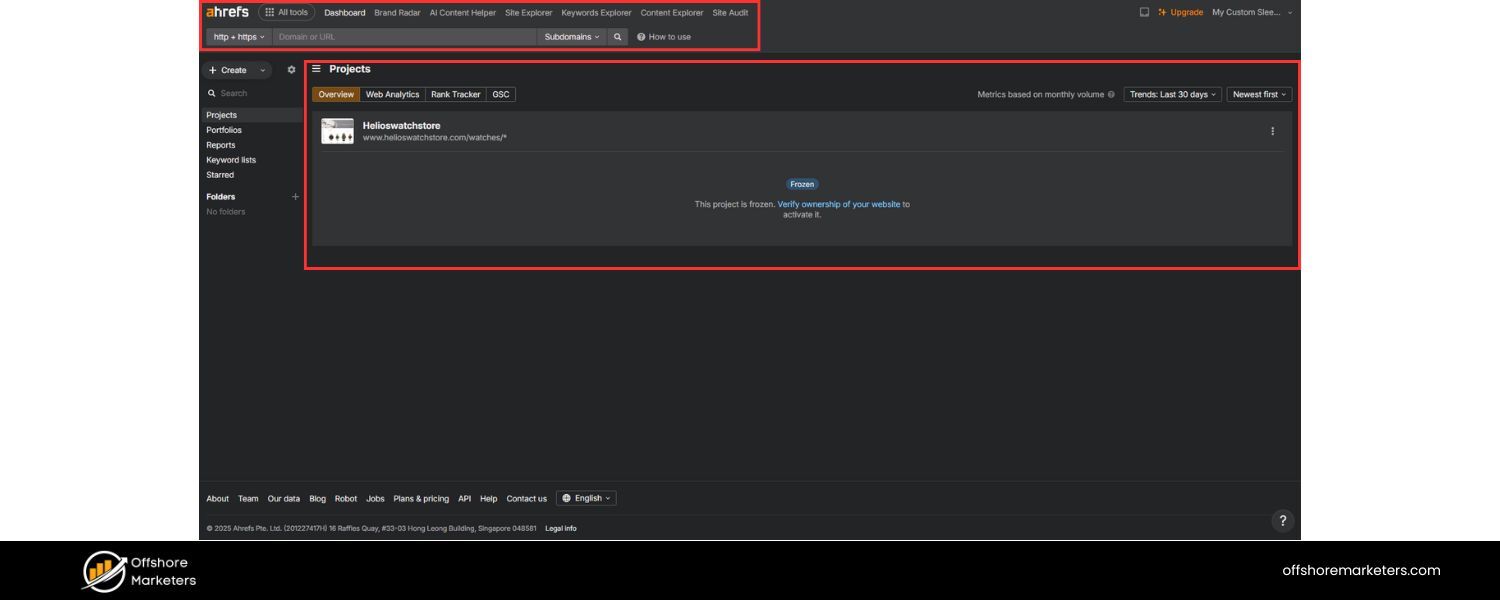
Ahrefs is another powerhouse SEO tool that, in addition to backlinks, provides valuable traffic insights. With Ahrefs, you can see an overview of a competitor’s organic search traffic (based on the keywords it ranks for and their search volumes).
It even estimates how much traffic each of those keywords brings to the site. Notably, Ahrefs compiles lists of the keywords your competition ranks for that you don’t, so you can instantly spot content gaps. You’ll also see metrics like the competitor’s domain authority and top pages.
While Ahrefs is known for backlink analysis, it’s equally useful for understanding where a competitor’s visitors are coming from (search, referrals, etc.) and how you can leverage that intel.
C. Similarweb
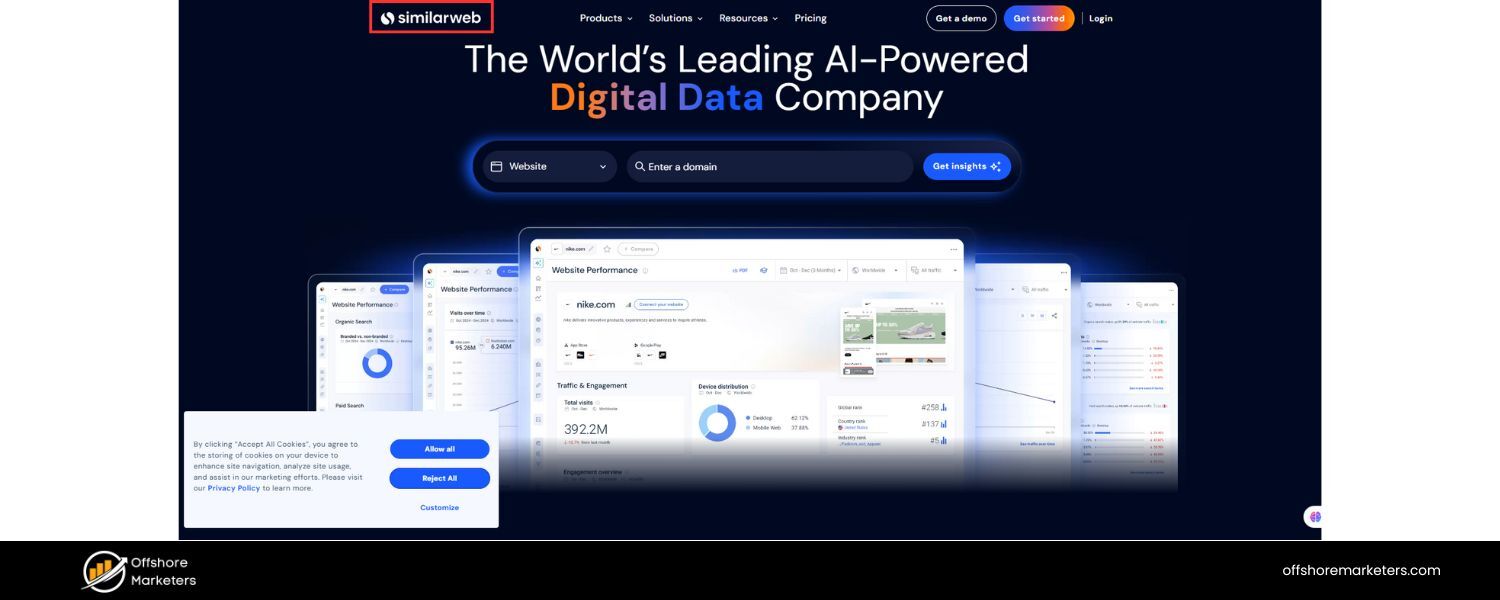
If you’re specifically interested in web traffic statistics and site popularity, Similarweb is built for that. Similarweb provides a broad overview of any website’s traffic, including total visits, average visit duration, bounce rate, and the geographical breakdown of visitors.
Crucially, it shows traffic sources and referral sites – you can determine a competitor’s top referral partners and even see where that site sends its outbound traffic. For content marketers, Similarweb also highlights what topics or keywords are driving visitors to the site.
In short, it’s a go-to tool for dissecting a competitor’s traffic mix and identifying their biggest traffic drivers. (There’s a free version on the web and a handy browser extension that gives quick traffic estimates for any site, a great starting point for quick checks.)
D. SpyFu
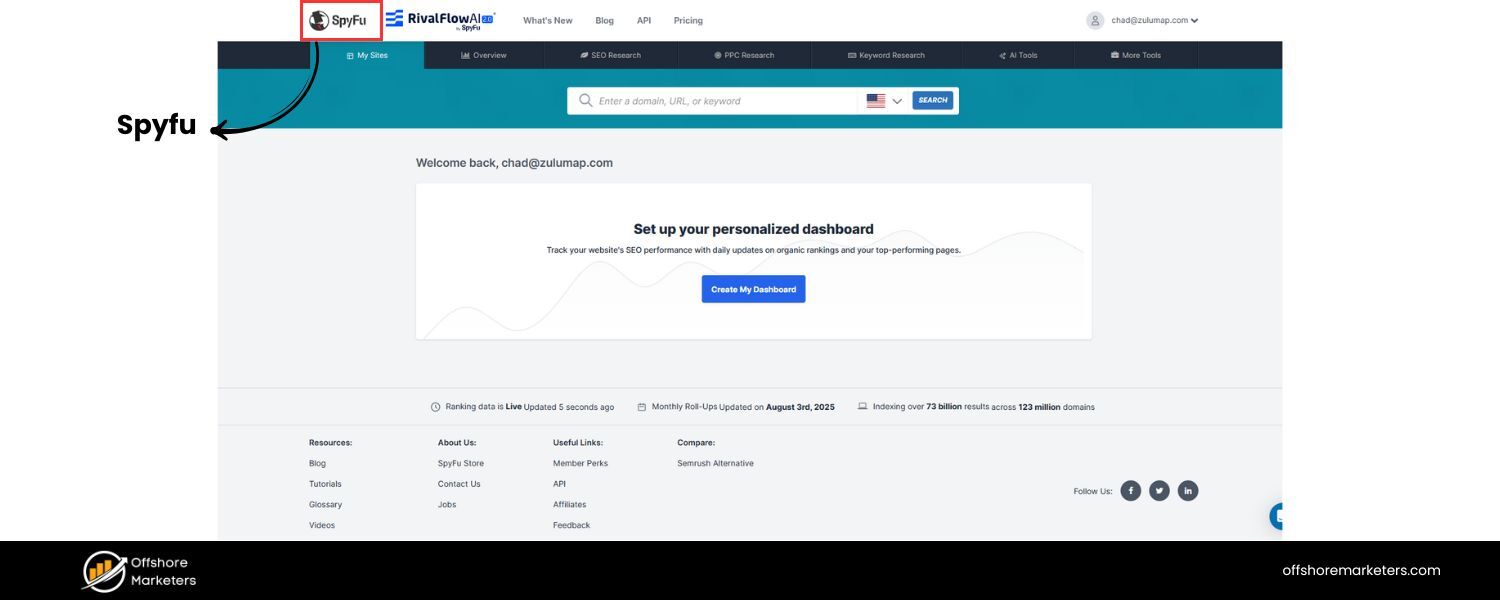
This tool is particularly handy for competitive keyword and PPC (pay-per-click) analysis. SpyFu lets you find out what keywords your competitors are ranking for organically and what keywords they’re bidding on in Google Ads.
It provides an overview of competitors’ ad history, ad copy, and estimated PPC budgets. If a significant portion of your rival’s traffic comes from paid search, SpyFu can reveal those strategies.
Even if you focus on SEO, knowing a competitor’s paid keywords might highlight high-value search terms worth targeting.
SpyFu also offers basic traffic estimates and top pages for competitors, though its unique value is in the competitive PPC intelligence it offers.
(There are many other tools out there – from free ones like Google Trends (to compare brand search interest over time) to social media-focused tools like Sprout Social for competitor social traffic.
Use tools that best fit your needs and budget. The key is that some data is better than none: even a free SimilarWeb snapshot or a trial of Semrush can provide eye-opening insights.)
3. Gather Traffic Data & Key Metrics
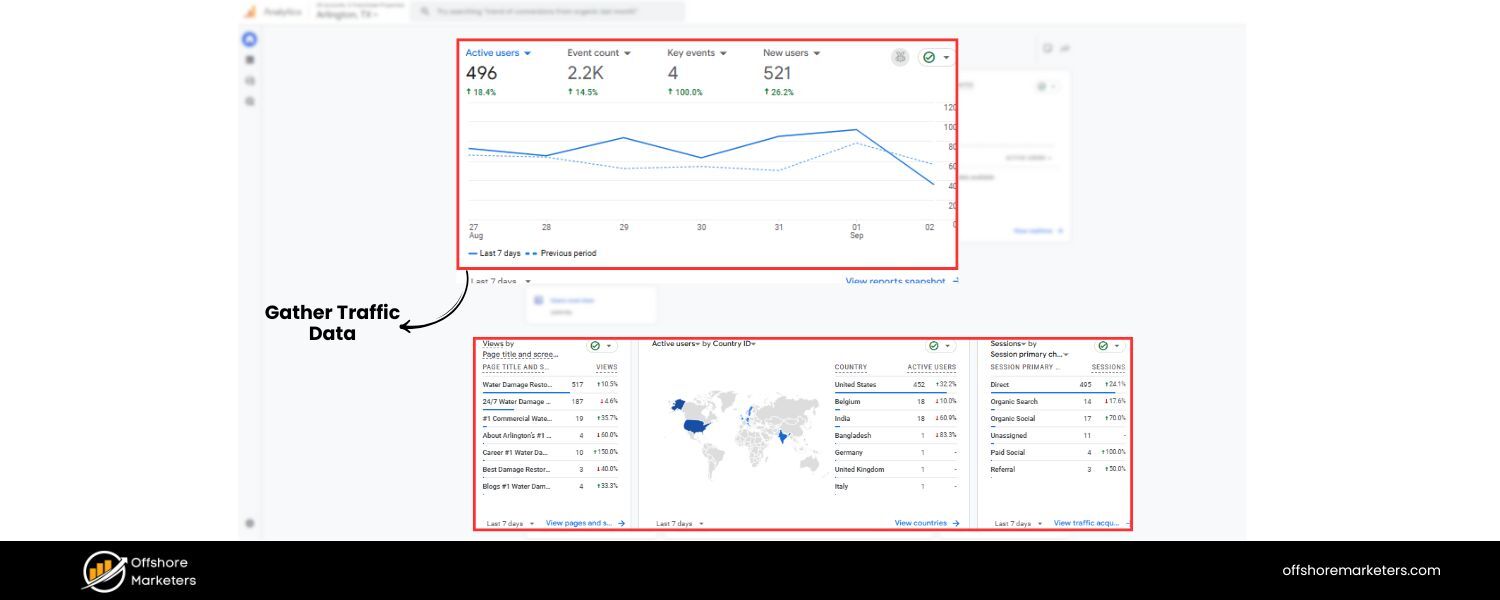
With your tools ready, start by plugging in each competitor’s domain to pull their traffic stats. Begin at a high level: look at the total monthly visits for the past several months or year. Are they getting more traffic than you? Is their trend rising, flat, or declining? This helps benchmark where you stand.
Next, examine traffic by channel – what percentage of their visitors come from search engines vs. social media vs. referrals, etc. For example, you might find Competitor A gets 70% of its traffic from organic search (SEO), while Competitor B relies heavily on social media or email campaigns. Such differences are gold: they tell you where each rival is investing effort and finding success.
Drill down into engagement metrics too. Check their bounce rate, pages per visit, and average visit duration (most tools will show these). Compare those to your own site’s metrics.
A competitor with a lower bounce rate and longer visit duration than yours might be doing a better job at engaging visitors – perhaps through superior content or site experience.
Also notice if their engagement numbers have changed over time. For instance, if a competitor’s bounce rate has worsened recently, it could indicate issues like content quality dropping or mismatched traffic (maybe they ran a broad ad campaign that brought irrelevant visitors). This kind of insight can highlight what not to do, as much as what to do.
4. Analyze Traffic Trends and Spikes
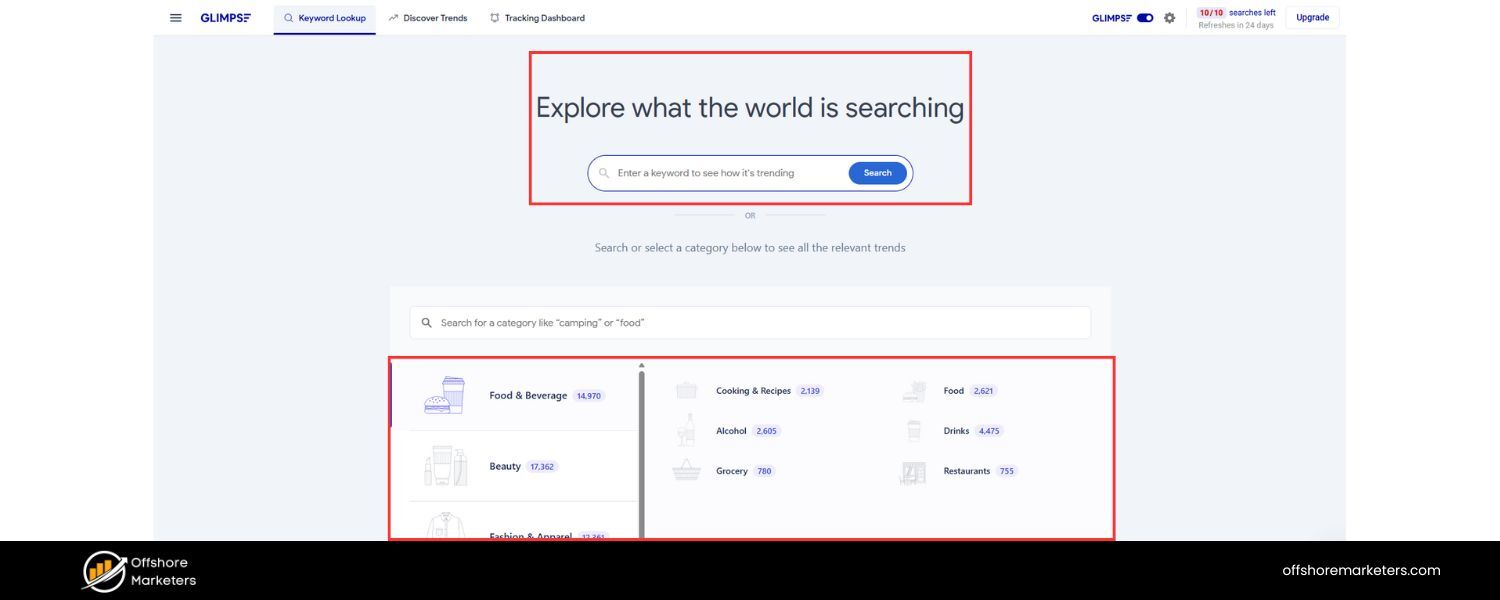
Don’t just look at static numbers – explore how your competitors’ traffic has evolved over time. Use timeline or trend charts (most tools provide these) to spot spikes or dips in traffic for each competitor across the year.
This temporal analysis is crucial. For example, say you notice a big spike in a rival’s traffic last November – and it was primarily a spike in referral and social traffic.
That might coincide with a successful holiday campaign or a piece of content that went viral. Ask “What happened here?” – did they launch a new product, get media coverage, or run a promotion?
By identifying the cause of competitor traffic spikes, you can replicate their successful tactics in your own strategy (or counter them with your own campaign).
Conversely, steep drops might reveal seasonality or algorithm hits – if a Google update hurt their rankings, there may be an opportunity for you to capture those search queries.
Also compare year-over-year trends if data is available. Are your competitors steadily growing their traffic each year, or have they plateaued? If one competitor is trending upward fast, it signals they’re doing something right (more content output, improved SEO, etc.) that you need to respond to.
On the other hand, a competitor whose traffic is declining might be vulnerable – an opportunity for you to leapfrog them by capitalizing on areas they’re neglecting.
Tracking trends ensures you approach competitor analysis as a dynamic process, not a one-time snapshot. It helps you stay ahead of emerging shifts in the market.
5. Examine Top Pages and Traffic Sources

Next, delve into the specifics of what on your competitor’s site is pulling in visitors. Most competitor analysis tools will list the site’s top pages or subdomains by traffic. Identify those pages – often you’ll see blog posts, resource articles, or key product pages ranking highest.
For each top page, look at which channel drives its traffic. Is one of your competitor’s blog posts getting tens of thousands of visits primarily from Google? That indicates a high-demand keyword you might target with your own (better) post. Or maybe a top page gets a lot of referral traffic – click to see those referral sources.
You might discover, for example, that your competitor’s “Ultimate Guide to XYZ” is being linked by dozens of other sites and sending them steady referral visitors. This could inspire you to create an even more ultimate guide and promote it to those same sources (stealing that spotlight).
Essentially, break down why each top page is successful: topic relevance, SEO keyword, backlinks, social shares, etc., and use that intel to inform your content strategy.
Also pay attention to what sites are referring traffic to your competitors. If you see that a popular industry blog or a news outlet frequently sends visitors to them (perhaps via reviews or mentions), consider how you can get in on that action. Maybe you can pitch a guest post to that blog, or get your product reviewed by that news outlet, etc.
Competitor traffic analysis often highlights key partnerships or content distribution channels that you should leverage. As one guide noted, using a tool like Similarweb you can see both the incoming traffic sources and even the outgoing links for competitor sites.
This helps you map the ecosystem around your competitors, who is helping them get traffic and where visitors go next, so you can plan how to insert your brand into that ecosystem.
6. Benchmark Against Your Own Site
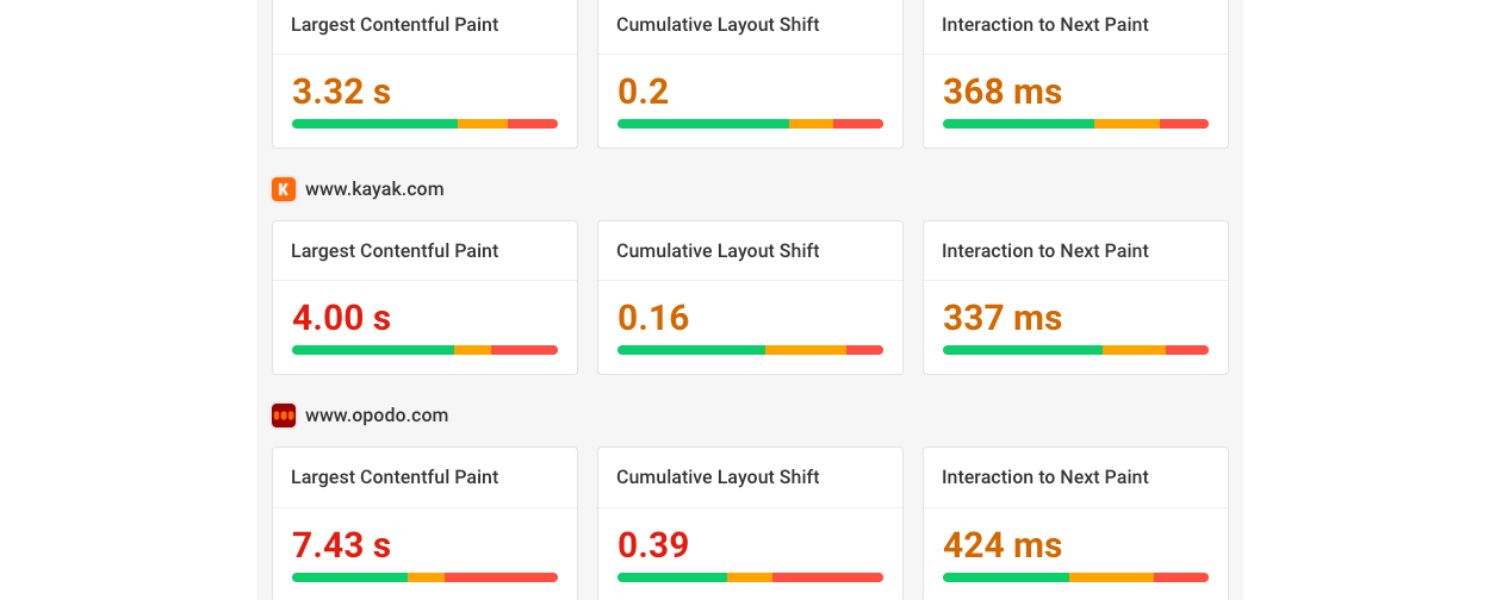
Throughout the analysis, keep comparing what you find to your own website’s performance. The goal is to identify areas where competitors have an edge and areas where they might be lagging.
For instance, maybe you discover a competitor gets 2x your organic search traffic, indicating you need to strengthen your SEO/content game.
Or perhaps your site actually beats Competitor X on organic traffic, but lags in social media traffic, suggesting an opportunity to ramp up social marketing, especially if that’s working well for them.
Some tools allow you to set up side-by-side comparisons or even overlay your site’s metrics with competitors’. Use those features to clearly see gaps and opportunities. If Competitor Y has a far lower bounce rate than yours, investigate their site: Is their content more engaging? Is their page speed faster?
Use competitors as a benchmark to measure the effectiveness of your own site and identify concrete improvements. Remember, the ultimate point of competitor analysis is not just to admire or envy their numbers – it’s to pinpoint specific strategic adjustments for your business. This could be new content topics to cover, keywords to go after, backlinks to acquire, or user experience tweaks to implement.
7. Repeat Regularly and Stay Curious
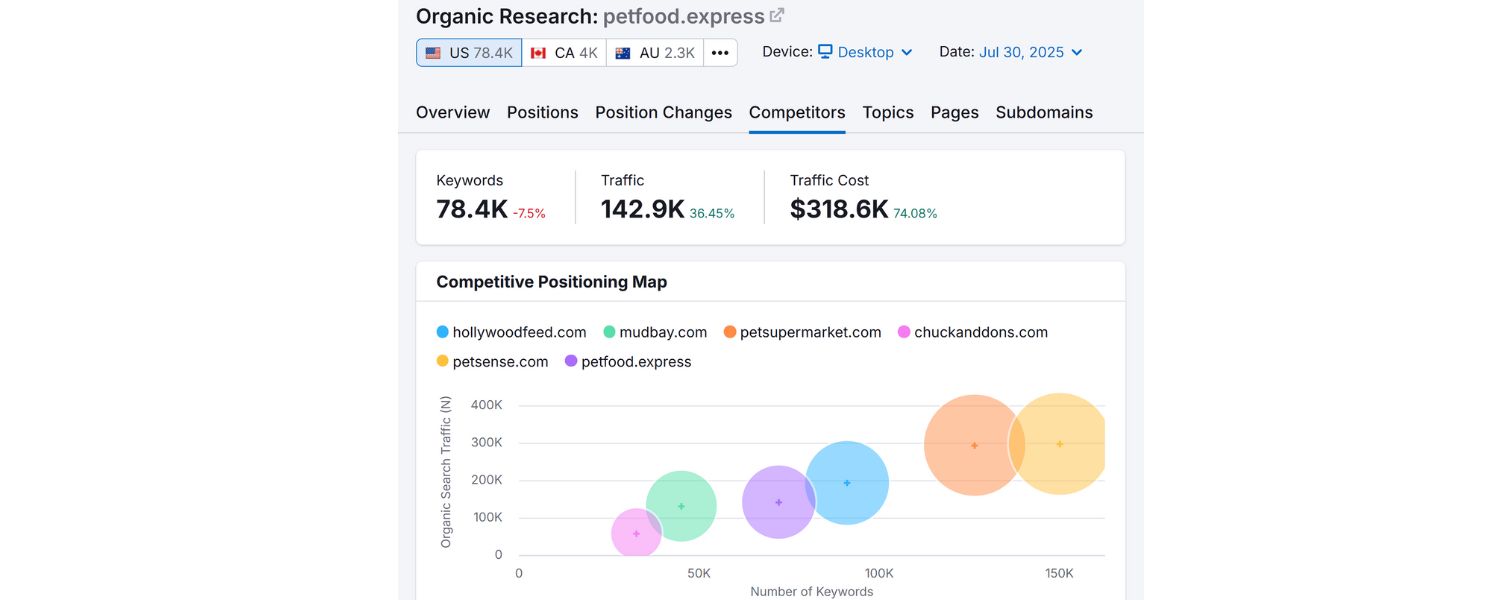
Make competitor traffic analysis a routine, not a one-off project. The digital landscape changes quickly – today’s small competitor could surge with a viral hit next month, or a big competitor might stumble due to a Google algorithm change. Set a schedule (perhaps monthly or quarterly) to update the data and see what’s new.
Also, stay curious and dig deeper whenever something interesting pops up. If you notice an unusual traffic source or a new top page for a rival, investigate it. Continuous monitoring ensures you’re never caught off guard and can quickly capitalize on trends.
You might even consider setting up alerts or using a competitor monitoring tool that notifies you of major changes (like a sudden traffic spike, or a competitor launching a new content campaign).
The more agile you are in responding to competitor moves, the faster you can adjust your strategy to maintain an advantage.
By following these steps, you’ll have a solid foundation of competitor traffic knowledge. Next, let’s look at how to turn those insights into actionable strategies that drive your traffic growth.
5 Strategies to Outrank Your Competitors and Get More Traffic
Collecting competitor data is only half the battle – now you need to act on those insights to boost your own traffic. Here are five proven strategies (ethical “hacks”) to leverage what you learned and outperform your competitors online:
1. Target Competitors’ Top Keywords (Fill the Gaps)
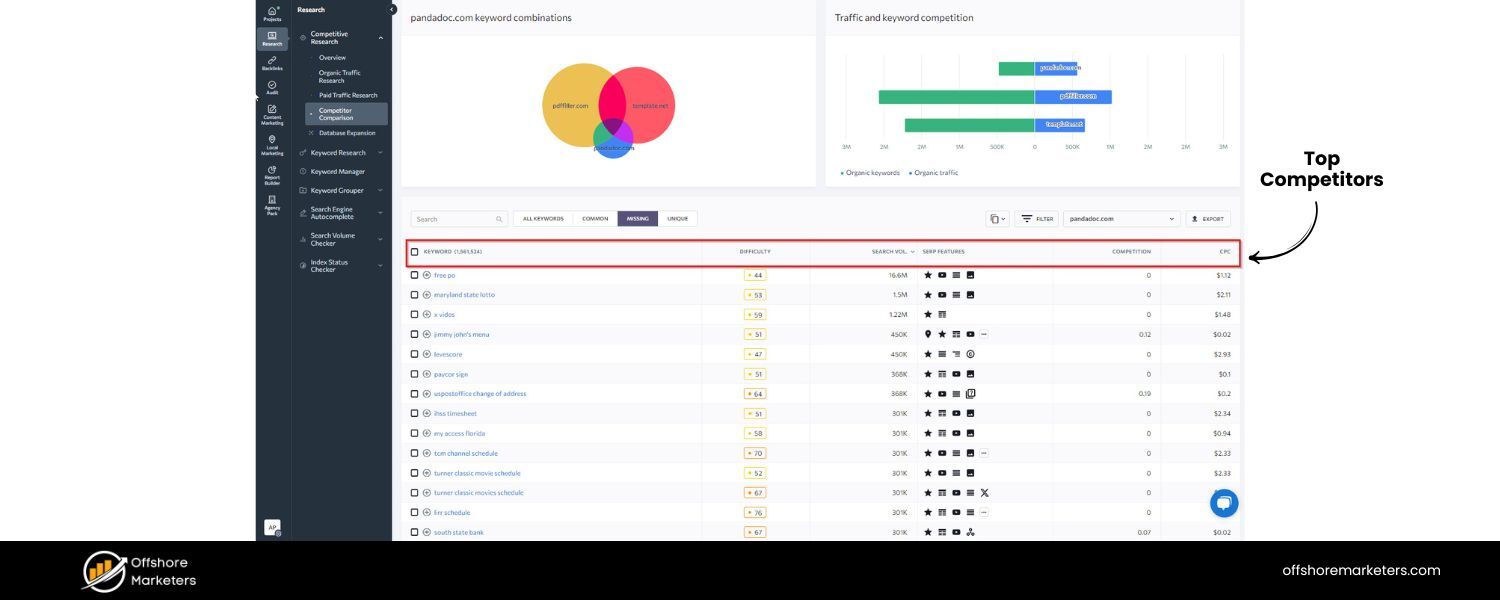
One of the quickest wins is to find the high-value keywords that are driving traffic to your competitors – especially those keywords you haven’t targeted yet, and build content around them.
In your analysis, you likely discovered what search terms bring in visitors to competitor sites (via tools’ keyword gap reports or top pages rankings).
Make a list of keywords where your rivals rank well but your site is absent or underperforming. These represent content gaps in your SEO strategy.
By filling those gaps – creating new blog posts, guides, or product pages focused on those topics – you can start capturing the searchers that are currently going to your competitors. In essence, you’re redirecting the flow to your site by being there with relevant content.
For example, if a competitor is getting lots of traffic for “best [Product] for small businesses” and you don’t have content on that, write a superior, up-to-date article on that exact topic.
Use the intelligence gathered (like which of their pages rank for it, and what that page contains) to ensure your content is more comprehensive and valuable.
Semrush’s Keyword Gap or similar tools are excellent for this – they allow you to see the keywords your competitors rank for and how well, so you can prioritize those that matter most. By systematically attacking these competitor keywords, you’ll start to win back organic traffic.
Keep in mind, it’s not about copying their content – it’s about understanding the intent and information the audience is looking for, and then doing a better job of delivering it.
2. Create Superior, High-Value Content
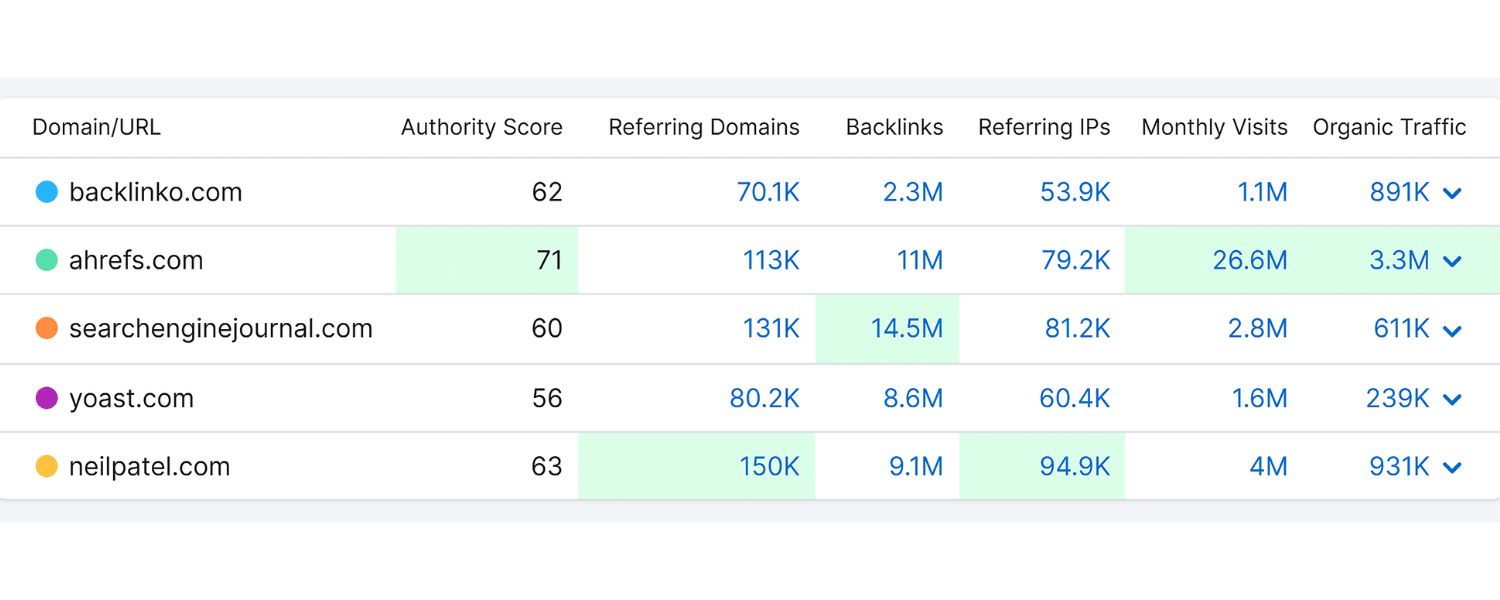
Simply identifying competitor keywords isn’t enough; you must outshine competitors with your content quality. If you want to siphon away their traffic, your content needs to be the more attractive option for users (and search engines). That means investing in high-quality, in-depth content on the topics you target.
Analyze the content on your competitors’ top pages: What format is it (blog post, video, infographic)? How detailed is it? What subtopics does it cover, and what questions does it answer? Then aim to one-up it.
Perhaps your competitor wrote a 1,000-word article – you can create a 2,000-word definitive guide with richer examples and up-to-date data. Maybe their content is plain text – you could add visuals, charts, or step-by-step instructions to make yours more engaging.
The goal is to provide more value than what competitors are offering. By doing so, you increase the chances of outranking them on Google (since search algorithms reward comprehensive, helpful content) and also of keeping readers on your page longer (reducing bounce rate). Additionally, look for content angles they missed.
For instance, if all the competing articles on a topic are very technical, you might win over readers with a more beginner-friendly explainer (or vice versa). Always ask, “How can my content be more useful or unique?” – maybe through original research, expert quotes, or a fresh perspective.
When your content truly addresses the audience’s needs better, users will flock to you instead of the competition, and search rankings will likely follow.
3. Leverage Competitors’ Backlinks and Referrals
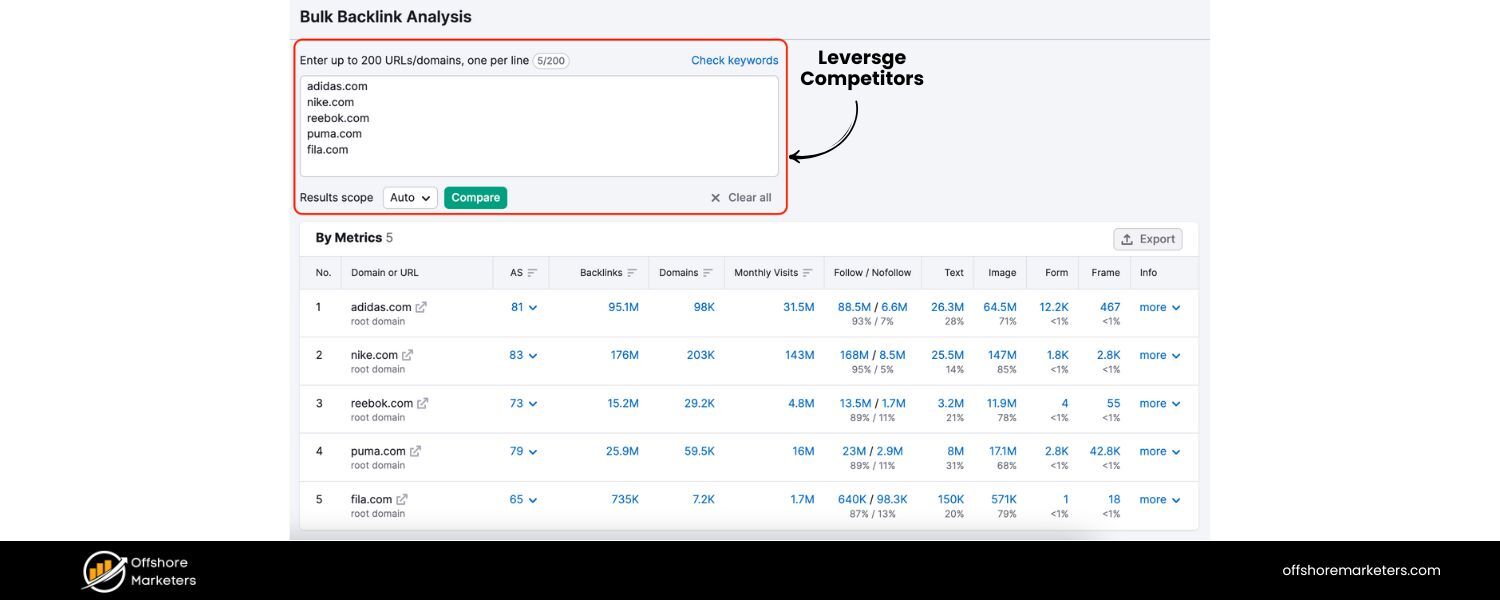
Backlinks (links from other websites) are a major traffic driver and SEO ranking factor. A clever way to gain ground on your competitors is to tap into their backlink sources.
From your analysis, you should know which websites are linking to your competitor’s top pages (many tools list the backlinks or at least the top referral domains).
These are essentially websites that are vouching for your competitor’s content – and they could potentially link to yours instead (or as well). Make a “hit list” of high-quality sites that frequently send traffic or link to your rivals.
Then, it’s time for some outreach and networking: can you get your content featured or linked on those same sites?
For example, if a popular blog in your niche has reviewed your competitor or linked to their resource, consider reaching out to that blog’s editor with your own piece of content that their readers would find valuable.
Perhaps you have a better guide, a new infographic, or an expert insight that complements their article – politely suggest they consider it. The idea is to replace or supplement competitor links with your own, ethically.
As one guide noted, if you have content that’s more valuable or up-to-date, some webmasters will swap out links to favor the better resource.
Beyond one-to-one swaps, think broadly about referral partnerships. If your competitor is getting a lot of traffic from affiliates or partners, maybe you can form similar partnerships.
Join the conversations – comment on the blogs that mention them (in a helpful, non-spammy way), engage on forums or communities where they’re discussed, etc.
Over time, building backlinks and relationships in the same circles as your competitors will boost your referral traffic and also improve your SEO authority, making it easier to outrank them.
(Remember: High-quality content is a prerequisite here. Other sites will only link to you if you’re offering something valuable to their audience. So steps 1 and 2 go hand-in-hand with link building – create content worth linking to, then pursue those links.)
4. Be Faster and Better in User Experience
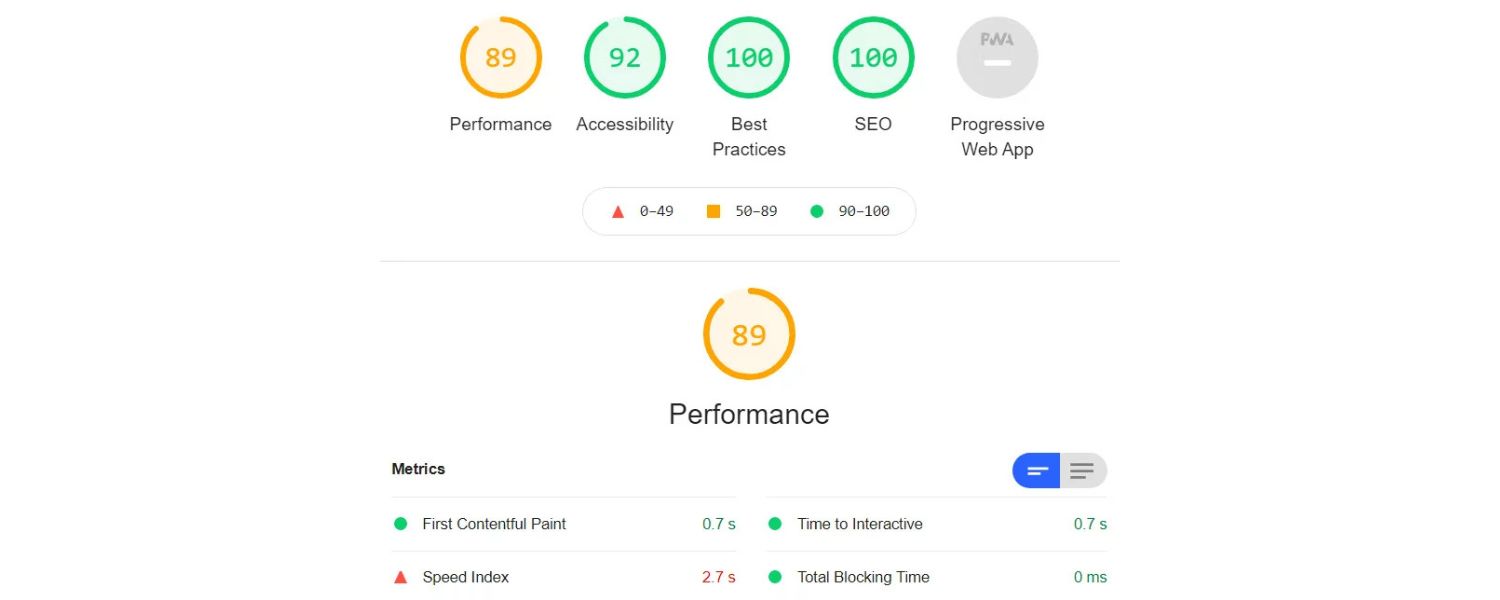
Often, the battle for traffic isn’t won solely with content, technical performance and user experience play a big role too. If two sites have equally great content, the one that loads faster and is easier to navigate will win more favor from both users and Google’s algorithm.
So check how your website’s performance stacks up against your competitors’. Many competitor analysis tools don’t directly show site speed, but you can use Google’s PageSpeed Insights or other tests on both your site and a competitor’s site.
If you find that a top competitor’s pages load in, say, 2 seconds and yours take 5 seconds, that’s a disadvantage you should fix immediately.
Page speed is crucial – a slow site will bleed visitors (people will bounce rather than wait) and search rankings may suffer if Google sees users pogo-sticking away.
By compressing images, using caching, and optimizing code, you can often significantly speed up your site. The payoff is not just in retaining visitors but potentially getting a ranking boost over slower competitors.
Beyond speed, evaluate things like mobile-friendliness, site navigation, and design compared to competitors. Do they perhaps have a more intuitive menu or a better mobile layout? User experience can indirectly affect traffic – for example, if visitors enjoy using your site more, they may browse more pages (increasing your pageviews and reducing competitor’s share of attention).
Google also uses some UX signals in rankings. The bottom line: strive to offer a smoother, faster experience than your competitors. If their site has pop-ups and yours doesn’t, users may prefer yours.
If their checkout process is clunky and yours is seamless, you’ll convert more of that traffic into actual customers.
These improvements ensure that once you attract visitors (through great content and SEO), you actually keep them, thereby maximizing the traffic you earned and making it harder for competitors to win those users back.
5. Diversify Traffic Channels & Expand Your Presence
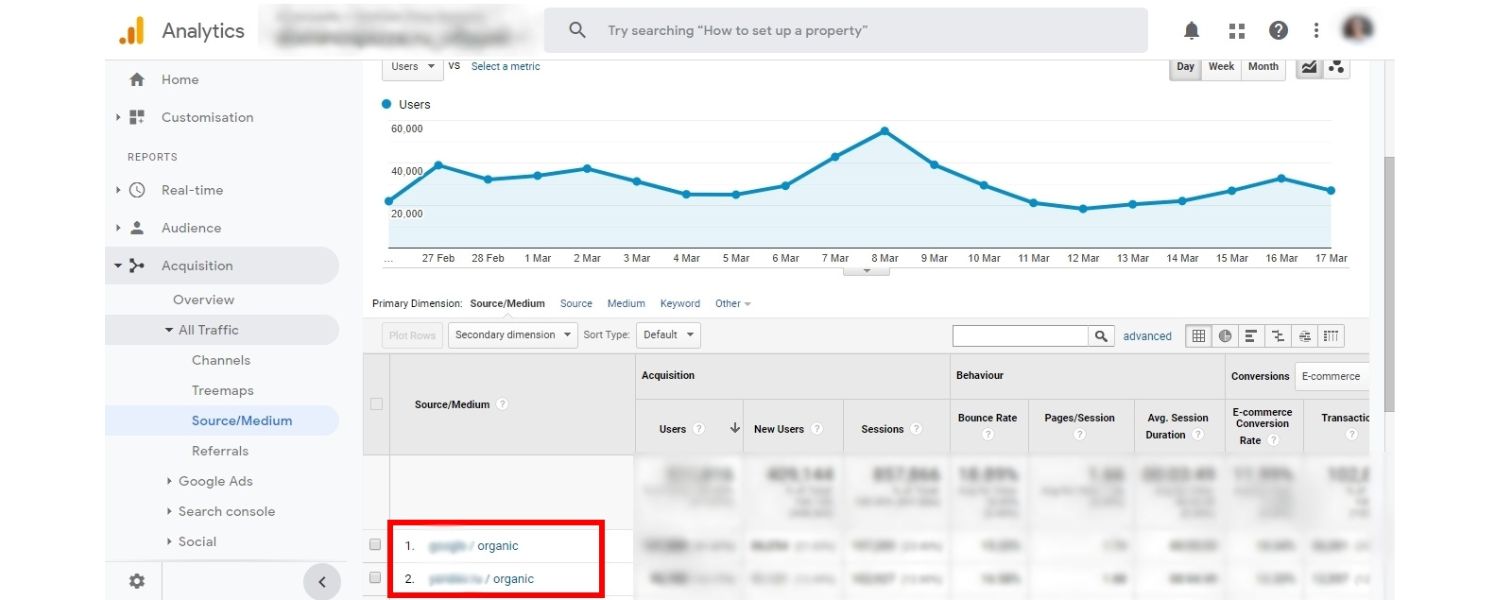
Lastly, use your competitor findings to diversify and expand where your traffic comes from. Many businesses fall into the trap of relying on one channel (often Google Search). If your competitor analysis showed that some rivals get significant traffic from channels you haven’t tapped, consider developing those.
For instance, did you notice a competitor killing it on social media, maybe they get tons of traffic from YouTube or Pinterest? That could be a signal for you to invest in those platforms with your own content, rather than ceding that audience.
Or if a competitor has a strong email newsletter driving repeat visits (something you might infer if they have high direct traffic or if you signed up to see their email strategy), perhaps ramp up your email marketing efforts to cultivate a loyal traffic base.
Another example: If competitors are running successful PPC campaigns (which you can tell via tools like SpyFu showing their ad activity), you might experiment with targeted search ads on key terms to capture quick traffic that would otherwise go to them.
Or maybe they get featured in online publications regularly, you could invest in some PR outreach to get media coverage for your brand too. The idea is to not keep all your eggs in one basket.
By expanding into multiple channels where your competitors have a presence, you increase your visibility overall (and reduce the chance of any one competitor monopolizing that space). It also makes your traffic more resilient, if Google’s algorithm shifts, you still have social, referral, direct, etc. to keep you going.
Use competitors as a blueprint: if you see them enjoying traffic from places you’re absent, it’s likely worth establishing your presence there. Over time, being everywhere your competitors are (and then some) means wherever potential customers turn, they’ll find you as a prominent option, not just the competition.
FAQs
Q1. Can I really find out exactly how much traffic a competitor gets?
You can’t know their precise Google Analytics numbers (those are private), but you can get fairly good estimates using the right tools. Services like Semrush, Similarweb, Ahrefs, and SE Ranking aggregate massive amounts of anonymized clickstream data to approximate competitors’ traffic.
They often come very close to the real figures for large sites. However, these are still estimates, not gospel truth. As one source notes, even the best tools provide an estimate of traffic, so it’s wise to check multiple sources and look for consistent trends.
If two different tools both suggest Competitor X gets roughly 50k visits/month and is growing, you can trust the direction and scale, if not the exact number. For smaller websites, data might be sparse or inconsistent across tools.
Use competitor traffic figures as informative benchmarks rather than exact values. And remember, trends and comparisons (who has more/less traffic, which channels dominate) are usually more actionable than the raw visit count.
Q2. What’s the best free way to analyze a competitor’s traffic?
There are a few free or freemium methods to get insights without opening your wallet. A great starting point is the Similarweb Free Extension for your web browser.
Install it, and with one click on a competitor’s site, you’ll see an overview of its traffic ranking, total visit estimate, top countries, and key traffic sources – instantly and for free.
This isn’t as detailed as the paid Similarweb platform, but it gives a useful snapshot. Another tactic is to use Semrush’s free features or trial – Semrush often allows a limited number of free searches per day, which you can use to pull basic traffic analytics or top keywords for a competitor.
Additionally, SpyFu’s free search results will show you a competitor’s top organic keywords and a rough monthly SEO click estimate, which correlates with traffic.
You can also leverage Google Trends by comparing your website vs. a competitor’s website (if they get enough search volume, Google Trends might show relative interest over time).
While it doesn’t convert directly to traffic numbers, it indicates who is trending higher in public interest. Finally, some competitors might inadvertently reveal info in press releases or media kits (e.g., “We had 1 million visitors last year”).
It’s worth a quick search for any public statements. Keep in mind, the truly in-depth data (like exact channel breakdowns, engagement metrics, etc.) typically come from paid tools, but these free methods are a great way to start your reconnaissance and decide where to focus next.
Q3. Is analyzing competitor traffic really useful for improving my SEO and marketing?
Absolutely – it’s one of the most insightful exercises you can do. Think of it this way: your competitors’ successes and failures are like free case studies, teaching you what to emulate and what to avoid.
By analyzing competitor traffic, you can identify trends and topics that your target audience cares about (because they’re visiting those competitor pages), discover keywords you might have missed, and benchmark realistic goals for your own traffic growth.
It also helps in setting strategy priorities: for example, if you learn that all your top competitors get 30% of their traffic from YouTube, and you’re doing nothing on YouTube, that’s a clear sign to consider video content.
Or if their blog drives a majority of their visits, it validates content marketing as a key focus area.
Moreover, competitor analysis can reveal market gaps – perhaps all competitors focus on Topic A, leaving Topic B underserved, meaning you can become the authority in that niche and attract traffic they’re overlooking.
It’s also useful for understanding user behavior; seeing a competitor’s high bounce rate on certain content might warn you that topic isn’t fulfilling user needs (or that audience might not convert well). In essence, competitor traffic data removes a lot of guesswork.
Instead of operating in a vacuum, you gain a data-backed perspective on where you stand and how to get ahead. Businesses that continuously monitor and adapt based on competitor insights often leapfrog those that fly blind.
In the fast-moving world of SEO and digital marketing, knowledge is power, and competitor traffic analysis provides exactly that knowledge to help you make smarter decisions and capture more market share.
Conclusion
In summary, competitor traffic analysis gives you a behind-the-scenes look at what’s driving success in your industry. By researching where your rivals get their visitors, how those visitors engage, and what strategies are paying off, you’ve gathered a blueprint to refine your own approach.
The key now is to act on these insights: fill content gaps, double down on winning keywords, strengthen your site’s weaknesses, and proactively position your brand wherever your competitors are gaining traction.
Remember, this isn’t a one-time task but an ongoing strategy, the digital landscape and your competitors’ tactics will keep evolving, and so should your analysis.
Armed with data and a willingness to adapt, you can turn competitor intelligence into a competitive advantage. Keep monitoring, keep improving, and soon you’ll see the results in the form of increased traffic, better engagement, and higher rankings for your own website.
In the battle for online attention, those who leverage every insight will ultimately come out on top. Now it’s your turn: start implementing these techniques and watch your traffic curves rise while your competitors wonder how you suddenly outranked them. Good luck, and happy spying (ethically, of course)!

.png)
Shopify SEO: Guide to Ranking Your Store and Driving Sales
Most Shopify store owners set up their store, list their...

Content Marketing : Definitive Guide to Strategy, Content Types, and Measurable ROI
Content marketing generates 3x more leads than outbound marketing at...

Above the Fold: Guide to Conversions, Rankings and Faster Pages
Above the Fold in 2026: The Complete Guide to Conversions,...

Off-Page SEO Checklist: Guide to Building Real Authority
Most websites spend months creating great content, only to wonder...

What Is Keyword Bidding? The Complete Strategy Guide for Smarter Ad Spend
Most advertisers believe the highest bid wins the auction. It...
What Is Google Trends? The 2026 Marketer’s Complete Guide
If you are not already pulling weekly insights from Google...
If you want a growth partner who will get to know every aspect of your business and treat your budget like their own — we are the right fit.
.png)


.png)
.png)
.png)
.png)
.png)
.png)
2026 ALL RIGHTS RESERVED MADE IN INDIA
