
Optimizing E-E-A-T in SEO: Key Elements for Success
July 15, 2025
Introduction: What is E-E-A-T and Why Does It Matter for SEO
In the world of search engine optimization, E-E-A-T stands for Experience, Expertise, Authoritativeness, and Trustworthiness, key qualities that Google values when evaluating content quality.
Initially introduced as E-A-T in Google’s Search Quality Rater Guidelines, the concept gained an extra “E” (for Experience) in late 2022 to emphasize first-hand knowledge. But why should SEOs and content creators care about these factors?
Simply put, demonstrating these qualities can make your content more credible to users and more likely to be favoured by Google’s algorithms, especially for sensitive topics that impact people’s lives.
Google’s focus is all about content quality. While these factors aren’t direct ranking signals (there’s no “score” in the algorithm), they serve as a framework for evaluating page quality. Pages with strong signals of expertise and trust tend to offer the helpful, reliable content that Google rewards with better rankings over time.
On the other hand, pages lacking credibility, like a medical advice article written by an unqualified author, are more likely to be filtered out as low-quality in search results.
Optimizing for this means creating content that users find trustworthy and valuable, aligning with Google’s goal of delivering relevant results.
You’ll learn how Experience and Expertise differ, why Authoritativeness and Trust are critical (with trust at the center), and actionable tips to demonstrate these qualities on your own site.
We’ll also explore the importance of these factors for “Your Money or Your Life” (YMYL) topics and how AI-generated content fits into Google’s approach. Let’s dive in and build your site’s credibility and value!
E-E-A-T vs E-A-T: Google’s “Experience” Update Explained

If you’ve been in SEO for a while, you might remember the term E-A-T (Expertise, Authoritativeness, Trustworthiness) from Google’s guidelines. So, what’s with the extra “E”? In December 2022, Google updated its quality rater guidelines to add “Experience” as a fourth factor, creating E-E-A-T.
This update acknowledges that first-hand experience is a valuable component of content quality. In certain cases, content produced by someone with personal experience on a topic can be more trustworthy than content from someone with none.
For example, if a user is searching for “best tax software reviews,” they might prefer real-life experience over pure expertise, e.g. a forum post from someone who has used the software, not just an accountant’s theoretical opinion.
By adding the “Experience” factor, Google encourages its quality raters (and indirectly content creators) to value first-hand, authentic knowledge.
It’s important to note that trustworthiness remains the overarching goal, in fact, Google has stated that Trust is the most important of the E-E-A-T elements.
The other three (Experience, Expertise, Authoritativeness) all feed into establishing trust. So, E-E-A-T can be thought of as an evolution of E-A-T, sharpening Google’s focus on who is creating content and how they know what they know.
This doesn’t change the core principle that Google wants to rank reliable, accurate, and helpful content, but it adds nuance to how “quality” is assessed. In practice, you should aim to demonstrate both first-hand experience and formal expertise where appropriate.
Why E-E-A-T Is Crucial for “Your Money or Your Life” (YMYL) Topics
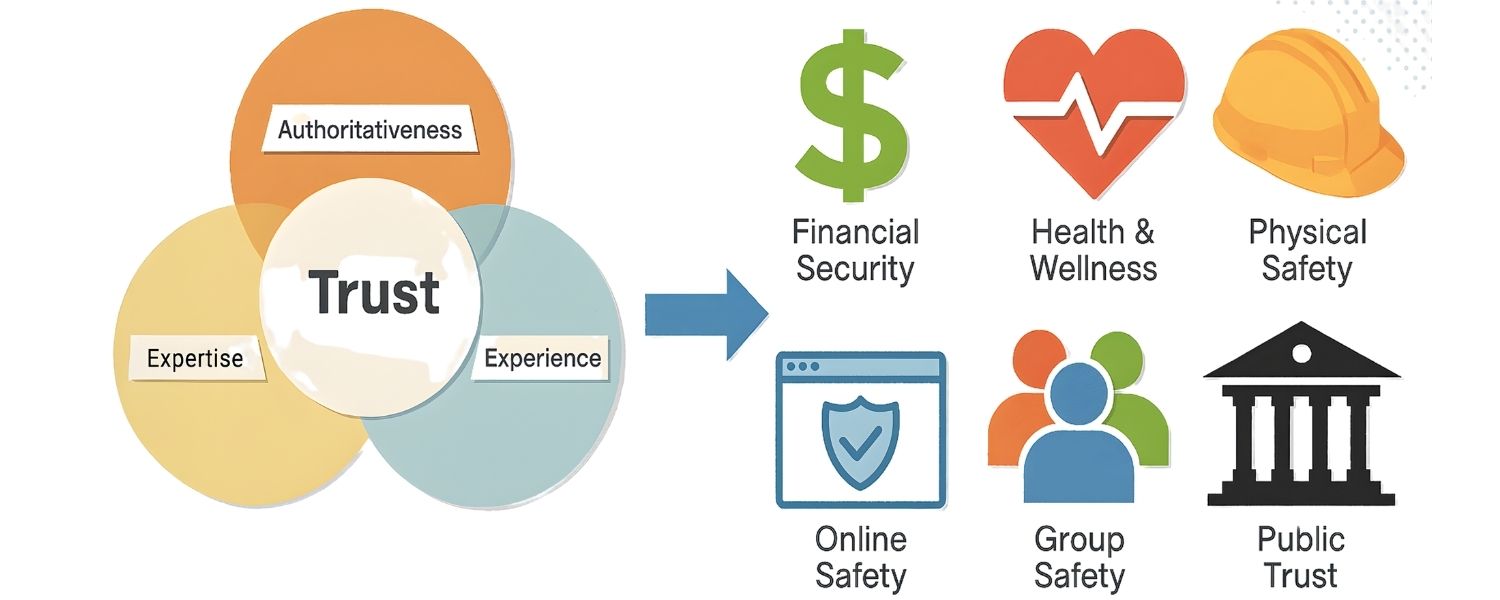
Google applies E-E-A-T standards to all content, but it’s especially critical for YMYL topics. YMYL stands for “Your Money or Your Life” and covers any topics that could significantly impact a person’s health, financial stability, safety, or overall well-being.
Think of content related to medical advice, financial guidance, legal issues, major life decisions, or even high-stakes news and public safety information.
Because low-quality or false information in these areas can harm users in real life, Google holds YMYL content to the highest E-E-A-T standards.
For example, a web page about home remedies for chest pain or tips for investing retirement savings will be scrutinized for the author’s medical or financial expertise and credentials, any signs of first-hand experience or case studies, the website’s authority/reputation in that field, and overall trust signals (references, up-to-date facts, etc.).
If such a page lacks E-E-A-T – say it’s a health blog with no author bio or a sketchy money advice site covered in ads – Google’s quality raters would likely label it low quality, and Google’s algorithms might demote or not surface it at all.
The lesson here is straightforward: The more impact a topic can have on a reader’s life or finances, the more you need to double-down on E-E-A-T in your content.
Even if you’re not in a YMYL niche, demonstrating experience, expertise, authority, and trust can help any site build credibility. But for YMYL sites, it’s truly a make-or-break factor for SEO success through link building techniques.
Ensure that any content offering advice or information in these sensitive areas is written or reviewed by qualified experts, cites reputable sources, and is kept up-to-date and fact-checked.
This not only pleases Google’s algorithms but also (more importantly) protects your users – which is exactly Google’s intent with E-E-A-T.
Breaking Down the Four Pillars of E-E-A-T

Let’s examine each component of E-E-A-T in detail and look at how it contributes to high-quality, SEO-friendly content.
1. Experience: First-Hand Knowledge That Enriches Content

Experience in E-E-A-T refers to the first-hand or life experience of the content creator on the topic at hand. In other words, has the author personally lived or tried what they’re writing about?
Content that reflects genuine personal experience can be more insightful, original, and trustworthy to readers.
For instance, a product review is far more credible if the reviewer has actually used the product versus a “review” that just regurgitates specs or second-hand info.
Google’s quality raters are instructed to look for signs of personal experience, especially in reviews and YMYL topics, as a marker of trustworthiness.
How can you demonstrate experience in your content? Here are some strategies:
A. Share Personal Anecdotes and Insights
Don’t be afraid to write in the first person when appropriate. Real stories or examples from your life or work can showcase that you know your stuff from actually doing it.
For example, an travel blogger describing their own trip (with unique photos) provides proof of experience that sets their content apart.
Google’s rater guidelines explicitly prefer a product review from someone who has used the product over someone who hasn’t.
Even in non-review content, adding your perspective (“In my 5 years as a personal trainer, I’ve found…”) can boost perceived experience.
B. Provide Evidence of Experience
Where possible, include original photos, videos, or data from your own experiences. This could be screenshots of you using a software tool, before-and-after photos for a DIY project, or case study results from a campaign you ran.
First-hand evidence acts as “proof” for both readers and quality raters. (Example: A finance blogger might show a snapshot of their investment portfolio performance when discussing a strategy they used.)
C. Highlight Your Journey or Process
If you’re writing a how-to or guide, take the reader through the actual steps you took and what you learned. Mention challenges or surprises you encountered.
This level of detail signals that the advice is coming from real experience, not just theory. It also makes your content more engaging and unique.
In essence, think of Experience as showing “I’ve been there, I’ve done that.” It builds trust with your audience because they can tell you’re not just writing in abstract – you’ve walked the walk.
From Google’s perspective, content demonstrating firsthand experience tends to be more reliable and useful, which is exactly what E-E-A-T is meant to promote.
2. Expertise: Demonstrating Knowledge & Credentials
Expertise is about the depth of knowledge and skill of the content creator on the topic. It answers the question: Is this person truly knowledgeable, and what qualifies them?
Demonstrating expertise can involve formal credentials (degrees, certifications, professional titles) or it can be evidenced by the quality and accuracy of the information provided. Importantly, the required level of expertise can vary by topic.
For a medical article, you’d expect the author to be a certified medical professional or at least scientifically well-versed.
But for something like a recipe or a personal finance tip, practical experience and thorough knowledge can count as much as formal training.
Here’s how to boost the Expertise signal in your content and website:
A. Show Author Credentials
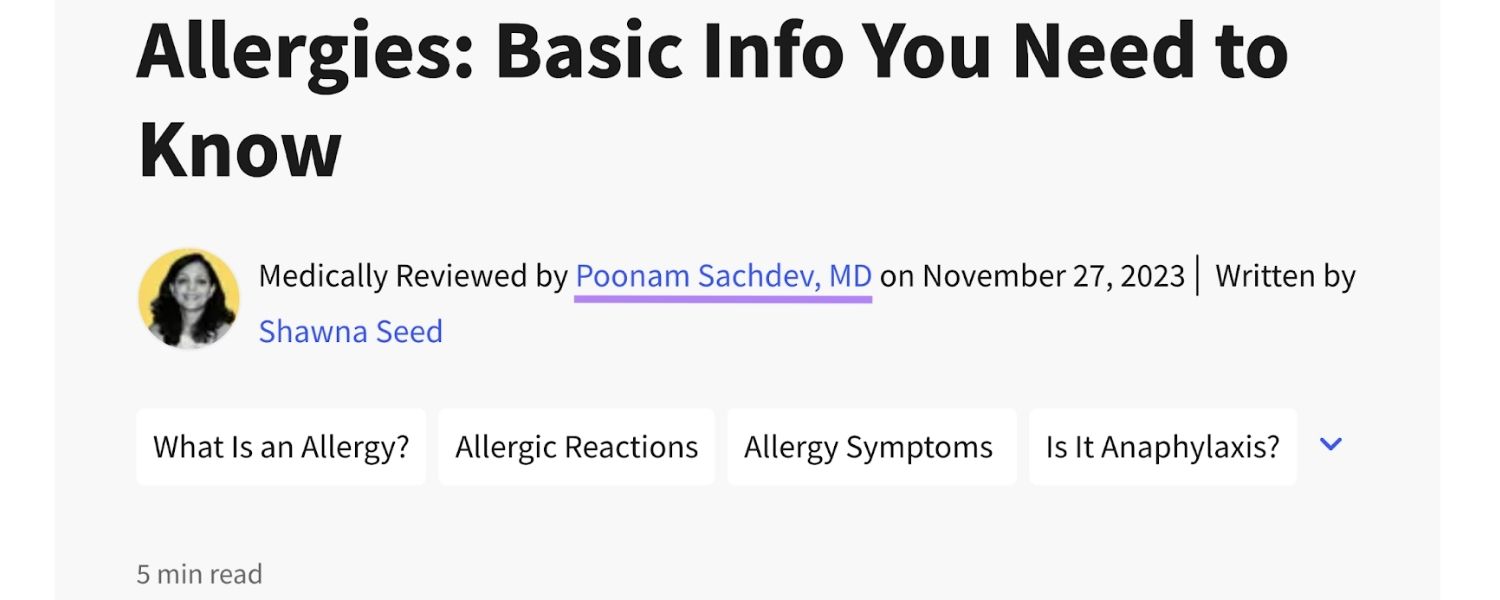
Whenever possible, include an author byline with a bio that highlights relevant expertise.
For example, if a board-certified dermatologist writes an article about skincare, make sure to mention their title and qualifications in the bio (and maybe even in the content).
This isn’t just for show – it directly influences E-E-A-T perceptions. A health article reviewed by a medical doctor will likely be seen as more expert and trustworthy.
Even if the author isn’t famous, listing educational background, years of experience, and past accomplishments helps establish credibility.
B. Cite Reputable Sources and Evidence
Experts back up their claims. Use data, research, and authoritative references to support what you write. If you claim “60% of marketers saw improved ROI with strategy X,” link to a credible study or source for that stat.
Citing trustworthy sources not only strengthens your content’s reliability but also signals to Google that your page is grounded in factual, verified information.
(Plus, well-researched content tends to earn more backlinks – feeding the Authority side of E-E-A-T, which we’ll discuss next.)
C. Keep Content Accurate and Updated
Part of demonstrating expertise is ensuring the information you share is correct and current.
Fact-check your content and update it regularly if the material can become outdated (e.g. tax laws, medical guidelines, tech features).
Google’s rater guidelines emphasize accuracy and currency as components of trust. Showing that your site maintains high informational standards will reflect expertise and build trust with readers.
D. Match the Level of Expertise to the Topic
As mentioned, not all topics demand PhD-level credentials. Understand what your audience expects.
If you run a cooking blog, you might not need formal chef training, but you should showcase deep knowledge of cooking techniques, perhaps years of cooking experience, or unique insights that only a seasoned home cook would have.
On a site about personal travel stories, “expertise” might simply be the fact that you’ve traveled to 30+ countries – experience can serve as expertise in that context.
However, on a finance or legal site, you’d want to feature actual certifications (CPA, JD, etc.) to meet the bar of expertise for YMYL content.
In summary, Expertise is about authority in knowledge. Make it clear who is creating your content and why they know their stuff.
This builds confidence in readers that the advice or info is coming from a knowledgeable source.
Google’s systems, in turn, increasingly use such signals (and even check for author info across the web) to assess if your content aligns with what a human expert would produce.
3. Authoritativeness: Building Your Reputation & References
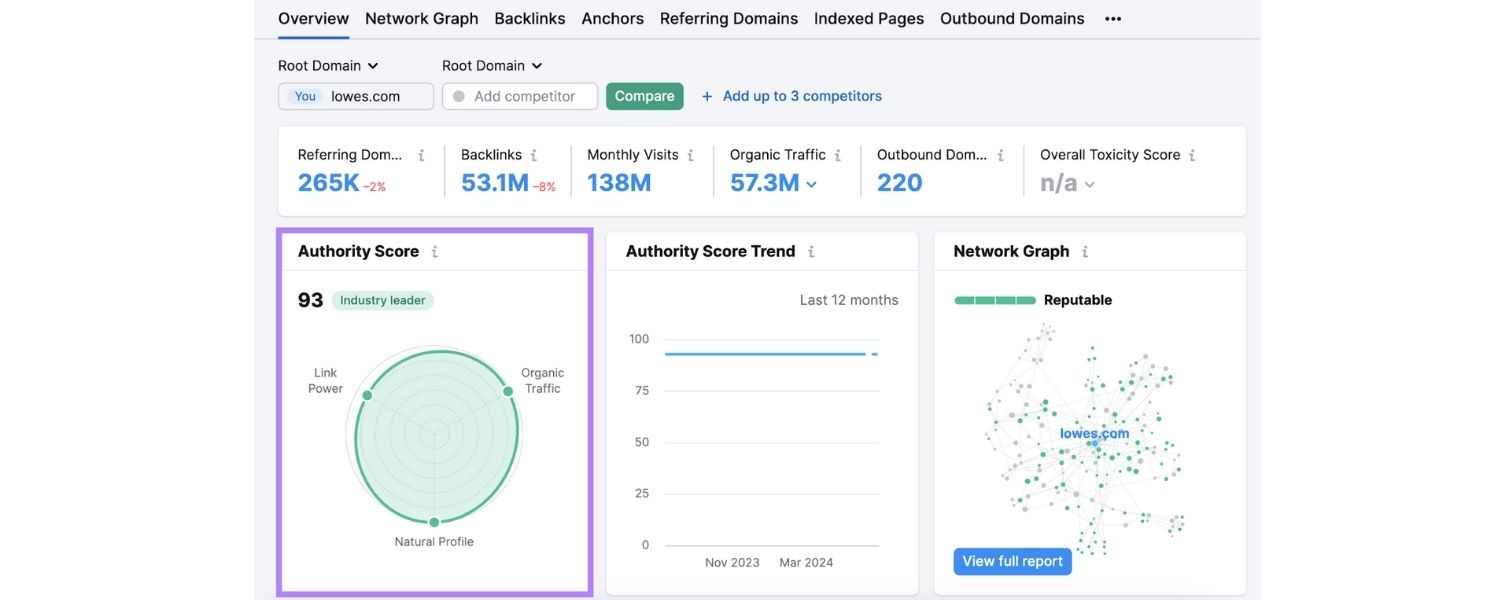
Authoritativeness refers to your overall reputation as a go-to source on a given topic or in an industry. While expertise is about what you say about yourself (your knowledge), authoritativeness is largely about what others say about you.
Key indicators include: Do other reputable websites or experts reference, cite, or link to your content?
Are you or your brand recognized as an authority in the field (e.g. through awards, positive mentions, high follower counts, etc.)? Essentially, authoritativeness is earned through consistency and recognition over time.
A. Earn High-Quality Backlinks and Mentions
In SEO terms, backlinks remain a powerful proxy for authority. When many relevant, reputable sites link to yours, it signals that your site is a respected source.
For instance, a mention or link from WebMD or Mayo Clinic would greatly boost the perceived authority of a health article. Focus on natural link-building strategies: create original research, authoritative guides, or useful tools that others in your industry will want to reference.
Public relations (PR) efforts, guest posting on well-known sites, or getting cited in news articles can also help build your link profile and authority. (Remember: Quality matters more than quantity; a few links from trusted sites beat dozens from low-quality sites.)
B. Highlight Your Reputation & Credentials
Showcase any accolades or trust signals prominently. This could be “As seen in Forbes and The New York Times” if you’ve been quoted, or displaying logos of well-known clients, testimonials from respected figures, industry certifications, membership in professional associations, etc.
For personal branding, things like your speaking engagements or conference presentations can reinforce that you’re considered knowledgeable by others.
On a site level, a strong About Us page that outlines your company’s history, mission, team credentials, and media mentions can bolster authority and trust.
C. Consistently Publish Expertise-Driven Content
Authority is built over time, so maintain a consistent output of high-quality content in your niche.
The more you cover your topic comprehensively and help users, the more authoritative your site will become as a resource.
This also helps with internal linking and topical authority – covering a topic in-depth on multiple pages signals to Google that you’re serious about that subject. Just ensure everything is accurate and adds value (avoid fluff or filler content that could dilute your perceived quality).
D. Monitor and Manage Your Online Reputation
Google’s quality raters are instructed to research what others say about a website or author when assessing E-E-A-T. You should do the same.
Keep an eye on reviews, forum discussions, or articles about your brand. Respond to criticism professionally and correct any issues that could harm your reputation (like a customer service issue or a factual error in your content).
If misinformation about you is floating around, consider addressing it on your site or elsewhere. In short, guard your reputation the way you would your personal credit score – it directly impacts perceived authority.
One concrete example of authoritativeness is being cited by others as a source of truth.
For instance, Harvard Medical School’s consumer health content is widely regarded as authoritative partly because countless other sites and publications reference it.
While we can’t all be Harvard, the principle scales: become the source others want to quote.
Over time, as your authority grows, Google’s algorithms may treat your content preferentially, especially on topics where authority is vital.
And even beyond SEO, a strong authority reputation means users are more likely to trust and choose your site over competitors.
4. Trustworthiness: The Core of E-E-A-T
Trustworthiness is the final and most pivotal pillar of E-E-A-T – in fact, Google has indicated that trust is the center of the E-E-A-T model.
You can think of trustworthiness as the result of having the right experience, expertise, and authority.
It asks: Can users trust this content and this website? If any of the other three elements are weak, trust suffers.
A page or site deemed untrustworthy will be rated poorly by quality evaluators no matter how expert or authoritative it might seem on the surface.
Trust encompasses factors like accuracy, honesty, transparency, safety, and reliability.
To enhance Trustworthiness on your site, focus on the following:
A. Be Transparent About Who and Why
Make it very clear who is behind the content and why it was created. Include author names (and bios) on articles, provide a clear About Us page for your organization, and ensure easy-to-find contact information.
If you sell products or run a business site, have detailed contact and customer service info, as well as terms of service and privacy policy pages.
Transparency builds trust by showing you have nothing to hide. Google’s documentation encourages adding accurate authorship information and details on content creation, reinforcing that transparency aligns with E-E-A-T best practices.
B. Ensure Accuracy and Cite Sources
Trustworthy content is factual and verifiable. Always aim to fact-check your claims and statistics against reliable sources.
If there’s ever a mistake, correct it publicly (it’s okay to update articles, even adding an editor’s note about a correction can demonstrate integrity).
Linking out to authoritative sources for supporting evidence also adds to your trust factor. Moreover, keep content updated when facts change. Outdated advice (especially in YMYL areas like medicine or finance) can quickly undermine trust.
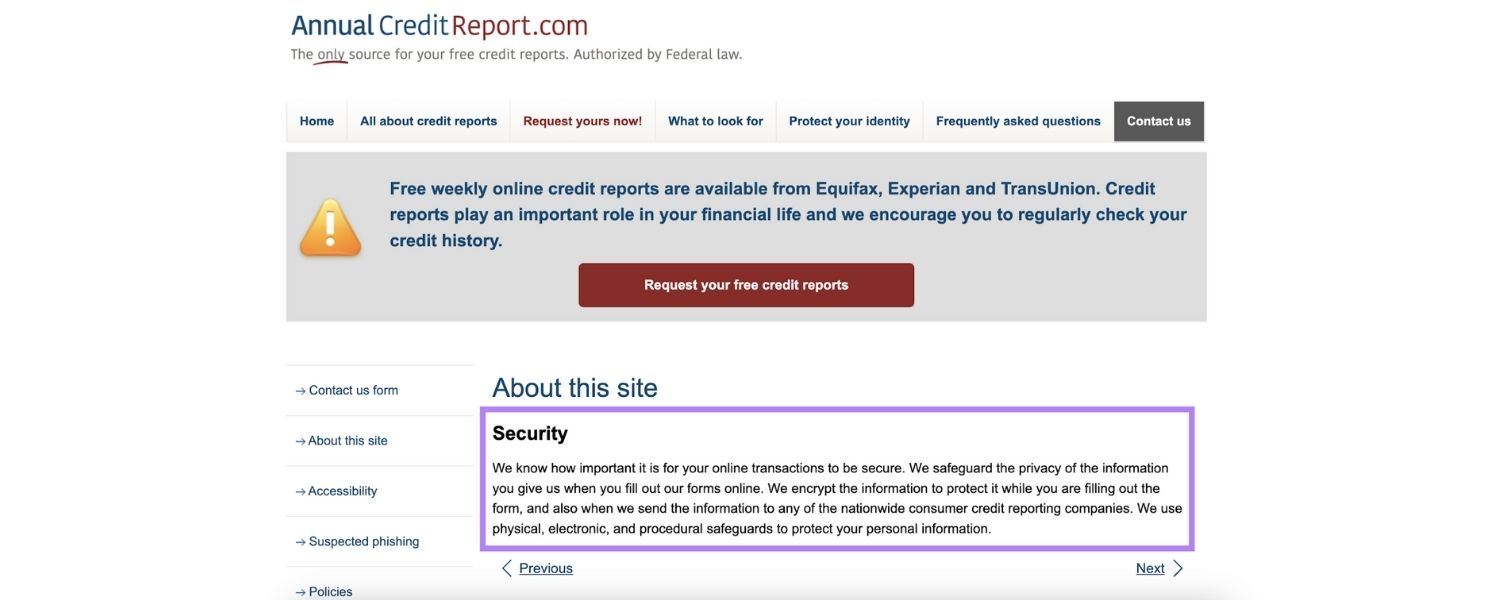
C. Secure Your Website & Protect Users
Basic site hygiene can affect trust. Make sure your site is secure – use HTTPS so that users see the padlock and know their data (and activity) is encrypted. If you handle any transactions or personal data, state clearly how you protect that information.
Having trust badges or certifications (like SSL certificates, security seals, or affiliations with reputable organizations) can further assure visitors.
A site that appears unsafe or spammy (e.g. full of invasive pop-ups or triggering browser warnings) will send users running and erode trust. User experience matters here: a well-designed, professional-looking site instills more trust than a cluttered, ad-ridden one.
D. Encourage Real Reviews and Testimonials
If applicable, let users leave reviews or testimonials about your products and services, and showcase them (honestly). Real customer feedback can serve as social proof of trustworthiness.
Even user-generated content like forum discussions or Q&A sections, when monitored, can highlight that you have an engaged, real audience that trusts you enough to interact on your site.
Google recognizes the value of genuine user reviews and UGC as trust signals – they show that your business or content has helped actual people.
E. Avoid Deceptive or Manipulative Tactics
This should go without saying, but any attempt to trick users will destroy trust.
This includes clickbait titles that mislead, biased or paid content that isn’t disclosed, fake reviews, or black-hat SEO tricks. Not only do these violate Google’s guidelines, but they will also likely get called out by users.
Remember that Google’s algorithms and quality raters are increasingly good at sniffing out untrustworthy behavior, for instance, the Helpful Content system and Spam updates target sites that churn out content solely to game rankings without regard for user value. It’s simply not worth the risk. Prioritize people-first content and honesty.
In summary, Trustworthiness is about legitimacy and reliability. Every element of your site, from the content itself to the design, the policies, and the external feedback, contributes to the picture of whether you are trustworthy.
If users feel safe and confident with your content, that trust will translate into better engagement with expert search engines optimization services.
Google even states: “Untrustworthy pages have low E-E-A-T no matter how Experienced, Expert, or Authoritative they may seem.”. So above all, aim to be worthy of your audience’s trust. SEO success will follow naturally from that.
How to Improve Your E-E-A-T: Best Practices and Tips

Now that we’ve covered the what and why of E-E-A-T, let’s focus on actionable strategies to improve these factors on your own website.
Enhancing E-E-A-T is a holistic process – it touches content creation, site design, PR/marketing, and even how you engage with your audience. Here are some of the top best practices to boost Experience, Expertise, Authority, and Trust:
1. Create Helpful, People-First Content
Content truly is king when it comes to E-E-A-T. Google’s advice is clear: write for users, not for search engines. Focus on quality over quantity.
Every piece of content should have a purpose and add value. Solve problems, answer common questions, and provide unique insights that stem from your expertise or experience.
Avoid thin or auto-generated content that exists just to stuff in keywords, that can actually hurt you, especially after Google’s Helpful Content updates.
As an example, REI (a retail brand) publishes in-depth guides on outdoor activities (e.g. hiking, climbing) which showcase their expertise and genuinely help readers – this has strengthened their authority and trust with users.
Aim to be the go-to resource in your niche by consistently publishing original, well-researched, and user-centered content.
2. Showcase Author Expertise and Credentials
We mentioned this earlier but it’s worth repeating as a “to-do.” Implement author pages and bylines if you haven’t already.
Each blog post or article should clearly indicate who wrote it (or at least who reviewed it, if you use ghostwriters with expert editors).
Then, have a dedicated page for each author detailing their background, qualifications, and other content they’ve written. This not only boosts E-E-A-T but also adds a human element that readers appreciate.
If your content is written by a team or under a brand name, you can publish articles like “Meet Our Experts” or include brief editor’s notes about the team’s expertise.
The goal is to avoid the “faceless content mill” vibe and instead put expert faces to your content. As Google’s guidelines put it, make it self-evident who created the content and why they’re qualified.
3. Strengthen Your Site’s Authority with Backlinks and Mentions
Devise a strategy to acquire quality backlinks (and overall buzz) from authoritative sources. This might involve outreach to journalists or bloggers in your space to feature your insights, publishing shareable research or infographics, or even listing your business in industry directories and associations.
Think of backlinks as votes of confidence from around the web. Google definitely pays attention to these when evaluating authority.
You can use SEO tools to identify where competitors are getting mentions and try to earn similar links (e.g. through broken link building strategy or creating superior content on a topic).
Additionally, encourage satisfied clients or partners to link to you or provide testimonials, every little bit helps in building that off-site reputation.
Keep in mind, authoritativeness is as much about perception as it is about truth: if everyone in your industry sees you as an authority, Google likely will too.
4. Bolster Trust with Better UX, Security, and Transparency
User trust can be won or lost before they even read a word of your content. If your page loads slowly, has a confusing layout, or bombard users with pop-ups, they may doubt the professionalism and thus the trustworthiness of your site.
Optimize your page experience (mobile-friendly design, fast loading, easy navigation) as part of your E-E-A-T improvements. Make sure your site is secure (HTTPS) and display trust symbols if relevant (like badges for e-commerce security, or affiliations like BBB accreditation for businesses).
Also, be transparent: have clear Contact Us info, list a physical address if appropriate, and publish policies for privacy, cookies, return/refund (if selling products), etc.
A site that looks legitimate and cares about user rights will always rate higher in trust. Google’s documentation explicitly states that providing ways for users to get help or contact you is part of a trustworthy experience.
5. Leverage User-Generated Content & Reviews
Encourage your real users or community to contribute. Whether it’s allowing comments on your blog, featuring customer reviews on product pages, or hosting community forums/Q&As, user-generated content (UGC) can enhance E-E-A-T when managed well.
Positive reviews and testimonials act as endorsements of your expertise and trustworthiness (just avoid fake reviews, those do more harm than good and violate Google policies).
UGC like forum discussions can actually rank well too if they showcase lots of first-hand experiences, Google’s quality raters often consider such pages “High quality” when people share authentic experience.
Just moderate UGC to prevent spam or misinformation from sneaking in. By showcasing UGC, you’re also signaling humility and openness – that you’re confident enough in your service/content to let others speak about it. That openness is a trust signal in itself.
6. Establish Strict Editorial Standards
If you have multiple content creators or you publish frequently, set up an editorial review process to maintain quality. This means proofreading and fact-checking articles before they go live, enforcing a style guide, and regularly updating older content.
Ensure that claims made in content are verified and sources are cited. If you use AI tools like ChatGPT for assistance in writing (which many do these days), be extra careful to review and edit that content with a human expert’s eye – AI can introduce errors or unverifiable info.
Google has clarified that AI-generated content is not against their guidelines per se, but content that is unhelpful or inaccurate (whether AI or human-made) is what they want to avoid.
They’ve even gone as far as deindexing sites with masses of low-quality AI content. So maintain a high editorial bar. It not only helps E-E-A-T; it future-proofs you against algorithm updates.
7. Engage and Build Your Brand Reputation
Lastly, remember that E-E-A-T isn’t just a box to check – it’s an ongoing, long-term investment in your brand’s credibility. Engage with your audience on social media and industry forums. Be helpful and respectful; over time people will associate your name/brand with trust and authority.
Monitor your brand mentions and address any negative press or issues transparently. If you can, get involved in your professional community, guest podcast appearances, conference talks, webinars – these can all indirectly boost your E-E-A-T by amplifying your perceived expertise and authority.
Google’s quality raters do look at what others say about you across the web, so a sterling reputation in the broader digital ecosystem will feed back into your SEO.
By implementing the above best practices, you’ll be systematically building up the experience, expertise, authority, and trust signals associated with your site. Don’t worry if you can’t do everything at once – E-E-A-T improvements are cumulative.
Even small steps, like adding author bios or switching to HTTPS, can make a difference. The key is to always be thinking: “Does this help my users trust us more? Does this showcase our knowledge or real experience better?” If the answer is yes, it likely boosts E-E-A-T.
E-E-A-T in the Age of AI: Keeping Content Human-Centred

It’s 2025, and we can’t talk about content without addressing the elephant in the room: AI-generated content. With the rise of advanced AI writing tools (ChatGPT and the like), many site owners have tried using AI to spin up lots of content quickly.
But where does that leave E-E-A-T? Google’s stance has been nuanced: Using AI is not inherently bad – what matters is the quality and purpose of the content.
If AI is used to produce helpful, accurate content that a human expert then reviews, it can potentially fit within E-E-A-T. However, if AI content is just churned out to game search rankings, Google considers that spam and may penalize it.
Remember, the first “E” in E-E-A-T is Experience. Pure AI lacks personal experience, it can only predict words based on training data. That means AI-generated text often comes off as generic and may fail to meet the nuanced criteria of high E-E-A-T for many topics.
For example, an AI might write a passable article about “symptoms of diabetes,” but it will lack the empathy, firsthand anecdotes, or up-to-date medical nuance a human expert could provide.
Google’s helpful content system and recent core updates have increasingly rewarded original, people-first content and demoted sites with lots of thin AI pages. In March 2024, there were reports of Google deindexing hundreds of websites with predominantly AI-generated content that didn’t meet quality standards.
So how can you leverage AI (if at all) without hurting E-E-A-T? The key is to use AI as a supplement, not a replacement, for human expertise.
AI can help with brainstorming topics, generating outlines, or even drafting some boilerplate content – but you must infuse the final piece with human insight, fact-checking, and experience.
If you use AI, disclose it where appropriate and explain how content was created, especially if readers might wonder “was this written by a robot?”
Being transparent can actually build trust; for instance, saying “This article was researched with the help of AI, and then extensively reviewed and edited by our editorial team” is better than pretending AI content is all human. Google has even suggested adding “AI content” disclosures if it makes sense.
Ultimately, maintain a human touch. Focus on the why of your content, if you’re truly trying to help users, you’ll naturally ensure a level of quality and authenticity that algorithm-driven content can’t match. Google’s advice boils down to this: people-first content wins.
Use tools, whether AI or otherwise, to assist you, but always put your expert human judgment at the forefront. By doing so, you’ll continue to meet E-E-A-T criteria and adapt fine to whatever new tech or algorithm changes come along.
Conclusion: E-E-A-T Is a Long-Term SEO Investment (Call to Action)
By now, it’s clear that E-E-A-T – Experience, Expertise, Authoritativeness, Trustworthiness, is essential for creating content that ranks well and satisfies users.
Optimizing for E-E-A-T isn’t about tricking Google; it’s about aligning with Google’s mission to serve high-quality, trustworthy information to searchers.
In practice, that means building real credibility: sharing your first-hand experiences, showcasing your knowledge, earning your reputation, and being transparent and honest in all you do.
These efforts can’t be faked overnight, but that’s a good thing, it means if you invest in E-E-A-T, you’re building a moat around your site that’s hard for low-quality competitors to breach.
To recap the key takeaways: first-hand experience enriches your content and builds trust with readers.
Expertise (whether through credentials or deep knowledge) assures people that your content is accurate and reliable. Authority grows as others recognise and cite your work, so keep producing value and engaging with your industry.
And trustworthiness is the glue holding it all together, without trust, the rest doesn’t matter. Trust is earned by being authentic, correct, secure, and user-focused in every aspect of your site.
The reward? Not only better rankings over time, but also a loyal audience that comes back directly because they know you provide genuine value. In an era of misinformation and AI content floods, being a trusted content source is gold.
Google will keep refining its algorithms, but those fundamental E-E-A-T principles are likely to remain constant or even gain more weight.
Now, over to you:
How will you incorporate E-E-A-T into your SEO strategy moving forward? Start with an honest audit of your site, look at your content and ask if it truly demonstrates experience, expertise, authority, and trust.
Identify gaps (maybe your About page needs beefing up, or your older articles need author names and updates) and make a plan to elevate your quality. Implement the tips from this guide step by step.
Remember, improving E-E-A-T is a journey, but every journey begins with a first step. Commit to creating helpful, trustworthy content and you’ll be future-proofing your SEO for the long haul.
If you found this guide useful, feel free to share it! And let us know, what E-E-A-T improvement will you be tackling first?
Join the conversation in the comments or reach out to us with your E-E-A-T success stories. Here’s to building a more trustworthy web, one page at a time. Good luck and happy optimizing!

Why Roseville Startups are Choosing Offshore Marketers to Scale Smarter
Roseville is no longer just a quiet suburb of Sacramento;...
What Is PPC? A Practical Guide to Pay‑Per‑Click Advertising
Pay‑per‑click (PPC) is the “pay only when someone clicks” branch...

Google Search Issues Affecting Results in Some Regions
Google has confirmed a problem with one of its data...

Keyword Counts Dropped After Google’s num=100 Change
In September 2025, Google stopped supporting the &num=100 parameter. This...

Image SEO: Optimize Images for Higher Rankings & Traffic
Introduction Images make your website more engaging, but they can...


.png)
.png)
.png)
.png)
.png)

2024 ALL RIGHTS RESERVED MADE IN INDIA
.png)