
Topical Authority: Dominating Your Niche in Search
September 8, 2025
Introduction
In today’s fierce digital landscape, being the trusted expert in your niche isn’t just a nice-to-have, it’s essential. That’s where topical authority comes in. Topical authority is all about proving to search engines (and users) that your website is the go-to resource on a particular subject.
Mastering this concept can skyrocket your Google rankings, drive consistent organic traffic, and make your brand synonymous with your topic. In this comprehensive guide, we’ll break down exactly what topical authority is, why it matters for SEO, and how you can build it step by step. Let’s dive in!
What Is Topical Authority?
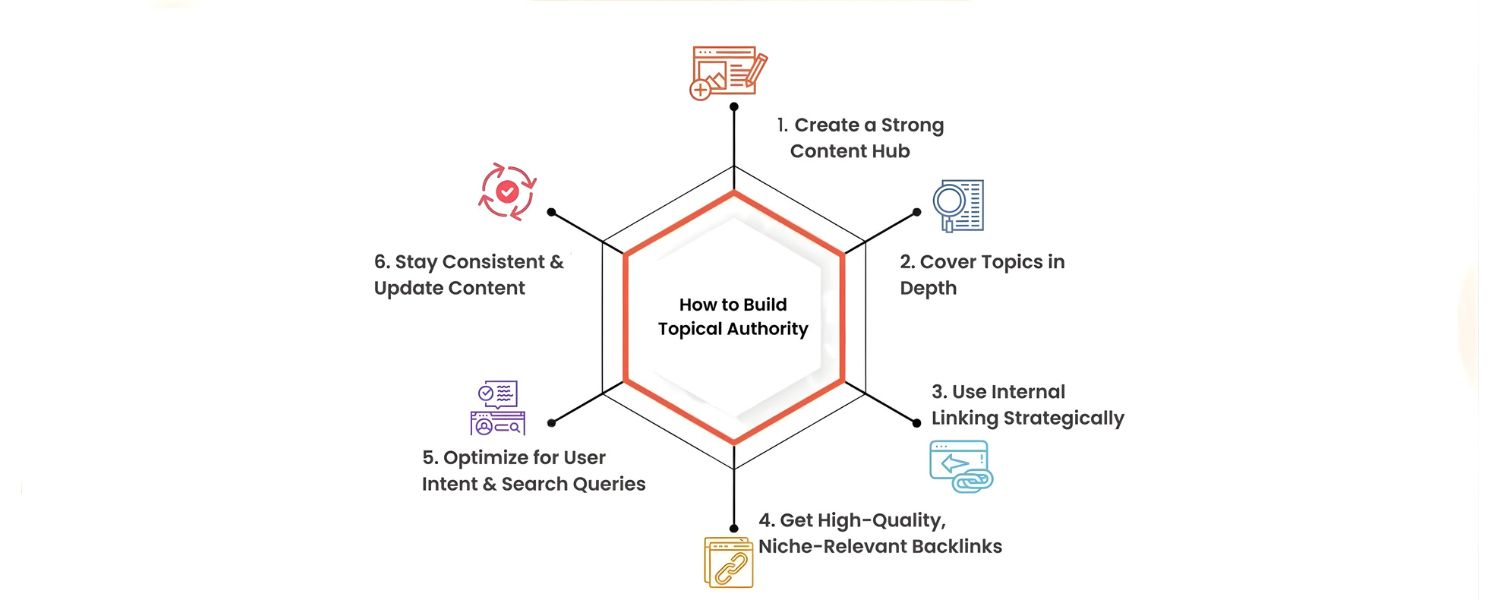
Topical authority refers to a website’s demonstrated expertise, depth of knowledge, and credibility in a specific subject area. In simpler terms, it’s how well your site covers a topic with thorough, high-quality content.
Search engines like Google favor sites that can comprehensively answer searchers’ questions in a niche, because it means better, more authoritative results for users.
Imagine your website as the ultimate handbook for a given topic. If you cover every angle,definitions, how-tos, FAQs, advanced tips, recent news, you’re signaling that you truly understand that subject.
For example, if your niche is organic gardening, a site with topical authority would have content on everything from soil types and seasonal planting guides to pest control and composting techniques. By covering all these subtopics in detail, you become a one-stop resource for organic gardening enthusiasts.
It’s important to note that topical authority is not the same as “domain authority.” Domain authority generally refers to the overall strength or reputation of a website (often measured by the quantity and quality of backlinks).
In contrast, topical authority is topic-specific. Your site might have a low overall backlink profile, but if you thoroughly cover your niche, you can still be seen as an authority in that topic.
In fact, sites with strong topical authority can often outrank larger sites on niche queries, because they offer more relevance and depth on that subject. (Think of a specialized bike blog outranking a huge general retailer like Amazon for a search like “mountain bike gift ideas” – the specialist site is simply more tuned to what bike enthusiasts want, and Google knows it.)
In summary, topical authority means being the expert in your field online. When your content demonstrates comprehensive knowledge and satisfies search intent across your topic’s breadth, search engines are much more likely to trust and elevate your pages.
Why Topical Authority Matters for SEO
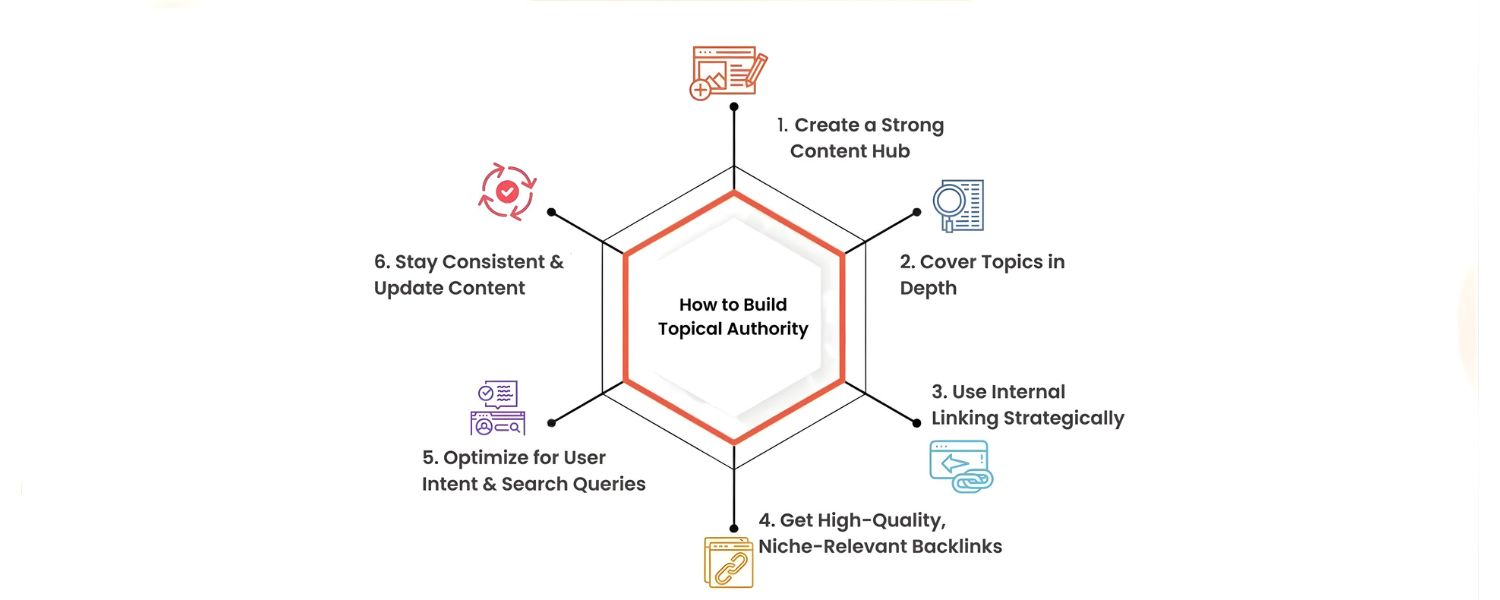
Establishing topical authority isn’t just an academic exercise – it has real, tangible benefits for your SEO and overall digital marketing success. Here’s why building topical authority is so important:
1. Higher Search Rankings and Visibility
Google’s algorithm is designed to deliver the most relevant and trustworthy results for any query. If your site is known for deep expertise on a topic, Google will generally rank your pages higher for searches in that realm.
Over the years, Google has gotten better at recognizing topical expertise. (For instance, Google’s 2013 Hummingbird update introduced semantic search, meaning the algorithm looks at context and topic relationships, not just keywords.
More recently, the Helpful Content updates in 2022–2023 doubled down on rewarding high-quality, people-first content from knowledgeable sources.)
All this translates to one thing: websites with topical authority have a big advantage in the rankings. They’re more likely to appear on page 1, capturing those precious clicks.
2. More Trust (and Clicks) from Users
Topical authority doesn’t just impress algorithms – it builds human trust too. When users consistently find helpful, in-depth answers on your site, they start seeing you as a trusted brand.
This can lead to higher click-through rates (people are likelier to click results from a source they recognize as authoritative) and more repeat visitors. Being known as “the [Your Topic] expert” increases your credibility, which can also boost conversion rates and customer loyalty in the long run.
3. Faster and Easier Rankings for New Content
As your topical authority grows, something magical happens – your new content starts ranking faster. Many SEO professionals observe a “tipping point” once a site has enough authoritative content on a subject.
Suddenly, each additional article you publish in that area indexes quickly and climbs the ranks with less effort. You’ve essentially “proven” yourself to Google for that topic, so you don’t have to fight as hard for visibility.
In fact, one recent industry study found that pages on sites with high topical authority gained organic traffic 57% faster than pages on sites with low authority. This means investing in comprehensive content can accelerate your results over time, creating a snowball effect for growth.
4. Better Alignment with Search Intent
When you cover a topic in depth, you naturally answer a wide array of user queries, basic definitions, how-to questions, comparisons, and so on. This broad coverage helps you match different search intents.
Some users want a quick answer, others want a step-by-step tutorial, yet others might look for an in-depth analysis. By providing content for all these needs, you increase the chances of your site appearing for a variety of related searches.
Topical authority thus expands your keyword footprint and makes your site visible across the whole spectrum of your niche.
5. Natural Backlinks and Mentions
Another SEO perk of topical authority is that it tends to attract natural backlinks. When your content is truly informative and expert-level, other websites and bloggers will start referring to it as a source.
(Think about how often authoritative sites like Wikipedia or government health sites get cited by others – it’s because they’re trusted information hubs.) If you’ve written the ultimate guide on a subject, people will link to it.
These organic backlinks further enhance your site’s credibility in Google’s eyes. In essence, topical authority can create a virtuous cycle: great content → higher rankings → more traffic → more people see and cite your content → even higher rankings.
6. Alignment with E-E-A-T (Quality Guidelines)
Google’s quality standards (often summarised as E-E-A-T: Experience, Expertise, Authoritativeness, Trustworthiness) explicitly value content that demonstrates depth of knowledge and firsthand experience.
By building topical authority, you’re inherently ticking these boxes – you’re showcasing expertise and authority. For example, Google’s own Search Central blog in 2023 discussed a “topic authority” system used for news content, which rewards publications that are highly experienced in their specific news beats.
While that system is specific to Google News, the takeaway is universal: content produced by those who deeply know the subject tends to be favored. All your efforts to become a subject expert (from publishing unique research to sharing personal case studies) reinforce these quality signals that Google looks for.
7. Reduced Reliance on Ads and Easier Marketing
From a business perspective, ranking well thanks to topical authority can save you money and effort. Instead of pouring budget into endless PPC ads or fighting for every visitor, your authoritative content brings in steady organic traffic.
For instance, if your small e-commerce site outranks a giant competitor for valuable keywords because you’ve built an authoritative blog in that niche, you’ll reap traffic and sales without paying for each click.
Topical authority is an investment that keeps paying off, making your marketing more cost-effective in the long term. Additionally, being recognised as an industry authority can open doors – from speaking opportunities to partnerships – further boosting your brand without huge ad spends.
In short, topical authority is a power multiplier for your SEO. It helps search engines and users alike recognise you as the best answer for queries in your niche. That means higher rankings, more traffic, and greater trust – all of which ultimately contribute to business success. Now that we know the what and why, let’s get into the how.
How to Build Topical Authority (Step-by-Step)
Building topical authority doesn’t happen overnight – it’s a strategic, long-term process. The good news is any site can do it with the right approach and persistence. Here are the key steps and strategies to establish and grow your topical authority:
1. Choose a Focused Niche (and Know Your Audience)

To become an authority, first define the specific area in which you want to be authoritative. This means choosing a focused niche instead of trying to cover everything under the sun.
Sites that attempt to write about dozens of unrelated topics rarely build authority, they’re too scattered for Google (and users) to recognise what it is they’re truly expert in. Instead, pick a niche and stick to it.
Start by identifying the core topic that aligns with your expertise, your business goals, and your audience’s needs. Ideally, it’s a subject you are passionate about or have real experience in (because that makes it much easier to produce insightful, authentic content).
For example, rather than a broad “health and wellness” site, you might focus specifically on plant-based nutrition for athletes, or instead of a generic tech blog, you narrow down to cybersecurity for small businesses. The more clearly defined your niche, the easier it is to become the go-to resource in that space.
Knowing your audience goes hand-in-hand with this. Ask yourself: Who are you trying to help, and what exactly are they looking for? Understanding your target readers’ intent and pain points will guide your content planning.
A focused niche doesn’t mean a tiny audience – it means the right audience. You can always expand later, but you’ll gain authority faster by dominating one niche at a time. Remember, Google tends to favor specialists over generalists.
By zeroing in on a specific domain, you signal to Google, “This is what we’re really good at.” Over time, you can earn the right to broaden out, but in the beginning, depth beats breadth.
2. Perform In-Depth Topic & Keyword Research
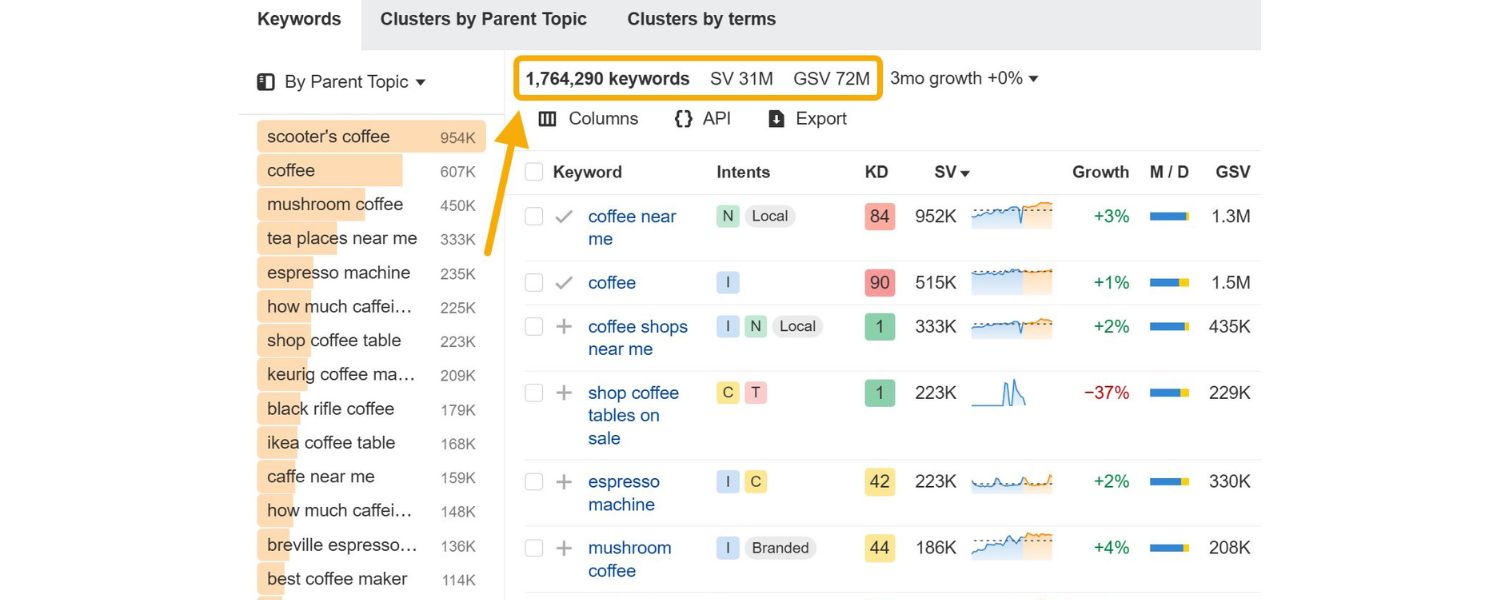
Once your general niche is set, it’s time to map out what topics to cover – comprehensively. Topical authority comes from covering all the subtopics and questions related to your niche, so thorough research is crucial here.
Start by brainstorming the broad categories within your niche. Then, for each category, dig into specific topics, questions, and keywords. There are a few ways to do this effectively:
A. Keyword Research Tools
Use SEO tools to find keywords relevant to your niche. Look for not just high-volume head terms, but also long-tail keywords (specific, longer phrases) that represent common questions or subtopics.
For example, if your niche is “digital marketing,” broad keywords might be “content marketing” or “SEO tips,” while long-tails could be “how to do keyword research for a new blog” or “content marketing strategy for B2B startups.” Compile a list of these terms; they’re basically clues to what your audience wants to know.
B. Google’s Suggestions and People Also Ask
Simply Googling your main topics can reveal a wealth of subtopics. Check the “People Also Ask” box in search results and the auto-complete suggestions. These are real user queries that can spark content ideas.
For instance, under a search for “email marketing,” you might see questions like “How do I improve email open rates?” or “What is a good email marketing frequency?”. Each of those could be an article on your site.
C. Community Forums and Social Media
Places like Reddit, Quora, or niche-specific forums are gold mines for understanding what real people in your niche are curious or concerned about. If there’s a subreddit where your audience hangs out (e.g., a forum for organic gardeners, or a Q&A thread for fitness enthusiasts), pay attention to recurring questions and topics. These indicate content opportunities where you can fill a gap with authoritative answers.
D. Competitive Gap Analysis
Look at other leading sites in your niche (your competitors in content). What topics have they covered extensively? Are there important subtopics they haven’t touched or haven’t covered well? Identifying those gaps allows you to create content that one-ups the competition.
Your goal is to cover everything important that others have covered – and then go further and cover the things they missed. Originality counts, too: if you can address a topic that few others have, you can become the authority on it by default.
During this research phase, organize your findings. It often helps to create a content spreadsheet or mind map clustering related topics. You’ll likely end up with a big list of article ideas, which is exactly what you want.
Topical authority is achieved piece by piece, so you need that holistic view of the topic’s landscape. Prioritize the content ideas by relevance and demand (e.g., core topics and frequently asked questions first, fringe subtopics later).
The outcome of this step should be a blueprint of your niche’s content universe. It’s essentially your roadmap for building authority: a clear list of the articles, guides, and resources you need to create to comprehensively cover your subject.
3. Organize Content into Topic Clusters and Pillar Pages
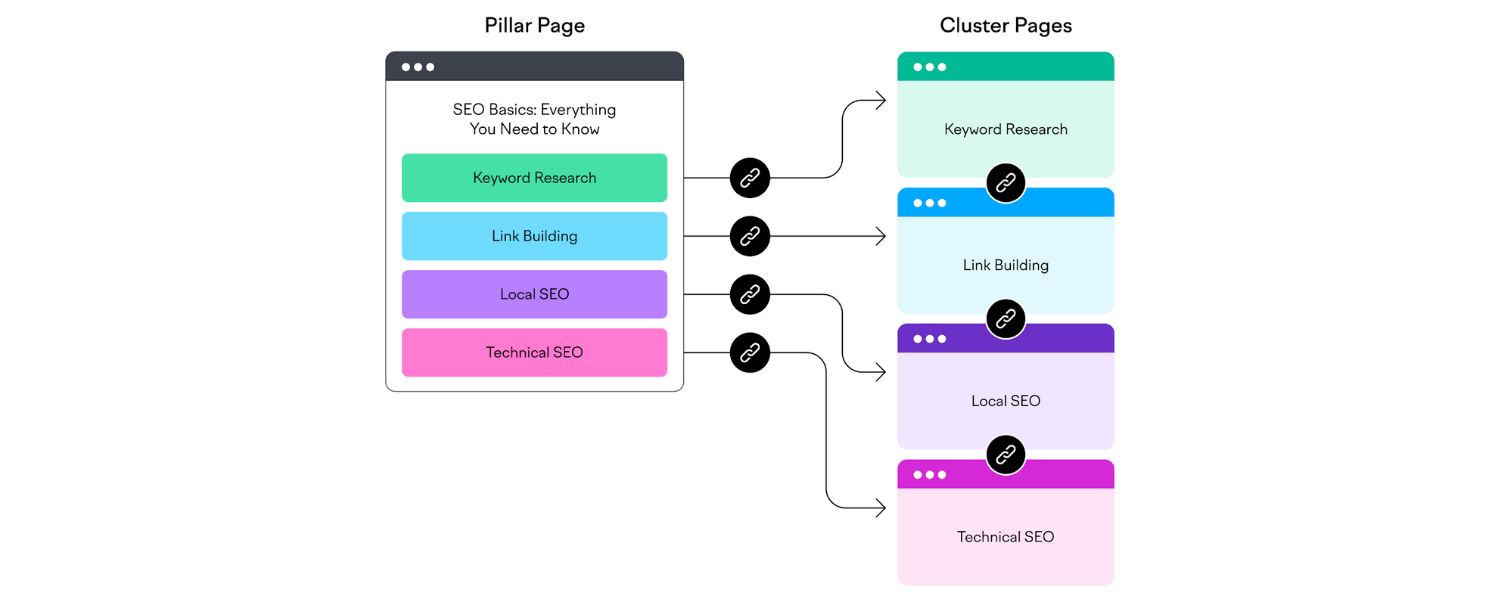
With your list of subtopics in hand, you can’t just write dozens of articles in isolation, you need a strategic structure. The best way to demonstrate topical depth (to both users and search engines) is by using topic clusters. This content strategy involves creating a network of interrelated pieces, usually with a pillar page as the hub and cluster pages as the spokes.
Here’s how it works: a pillar page is a broad, comprehensive overview of your main topic or a major category in your niche. It tends to target a high-level keyword (for example, “Complete Guide to Digital Marketing” or “All About Organic Gardening”). Pillar pages are usually longer-form and cover the key subtopics at a surface level, with sections that briefly explain each aspect. They serve as a content hub.
Then, each of those sections or subtopics gets its own cluster content (sometimes called satellite content or supporting articles). These cluster pages drill much deeper into one aspect. For instance, if your pillar is “Digital Marketing Guide,” you’d have cluster articles like “SEO Basics for Digital Marketing,” “Content Marketing Strategies,” “Social Media Marketing 101,” “Email Marketing Best Practices,” etc. Each cluster piece is focused on one specific keyword or question, and it links back to the pillar page (and ideally, the pillar links out to each cluster piece as well).
This internal linking structure is critical. By interlinking the cluster content with the pillar, you accomplish a few things:
A. You help readers navigate your site easily, moving from a general overview to detailed information seamlessly.
B. You help search engine crawlers understand the relationship between pages. When Google sees a tightly knit group of pages all related to one topic and cross-linked, it reinforces the idea that your site has a wealth of content about that topic.
C. You distribute “link equity” or authority among the pages. Often your pillar page might earn external backlinks (because it’s a great comprehensive resource), and your internal links pass some of that authority to the more specific pages (and vice versa). The whole cluster rises together.
Think of topic clusters as creating a library section. If your website is a library, you’re essentially building the entire shelf for your niche topic, with a clear catalog system. Anyone looking for information in that section (topic) will find a rich collection all in one place – your site.
When planning your clusters, ensure there’s minimal overlap between cluster pages. Each piece should tackle a unique question or angle, to avoid cannibalizing each other. However, they should be related enough that linking them makes sense.
To give a concrete example: A site about home brewing might have a pillar page “Beginner’s Guide to Home Brewing”. Its clusters could include articles on “How to Brew IPA Beer at Home,” “Essential Equipment for Home Brewing,” “Troubleshooting Common Brewing Problems,” and “Home Brewing Sanitation 101.” Each of those clusters is distinct, but all tie back to the central pillar topic.
By implementing topic clusters and pillar pages, you effectively build a web of relevance. Over time, this signals to Google that your site doesn’t just have one-off articles, but a whole ecosystem of content around your niche. That’s a hallmark of topical authority.
4. Create High-Quality, Comprehensive Content (Depth over Breadth)
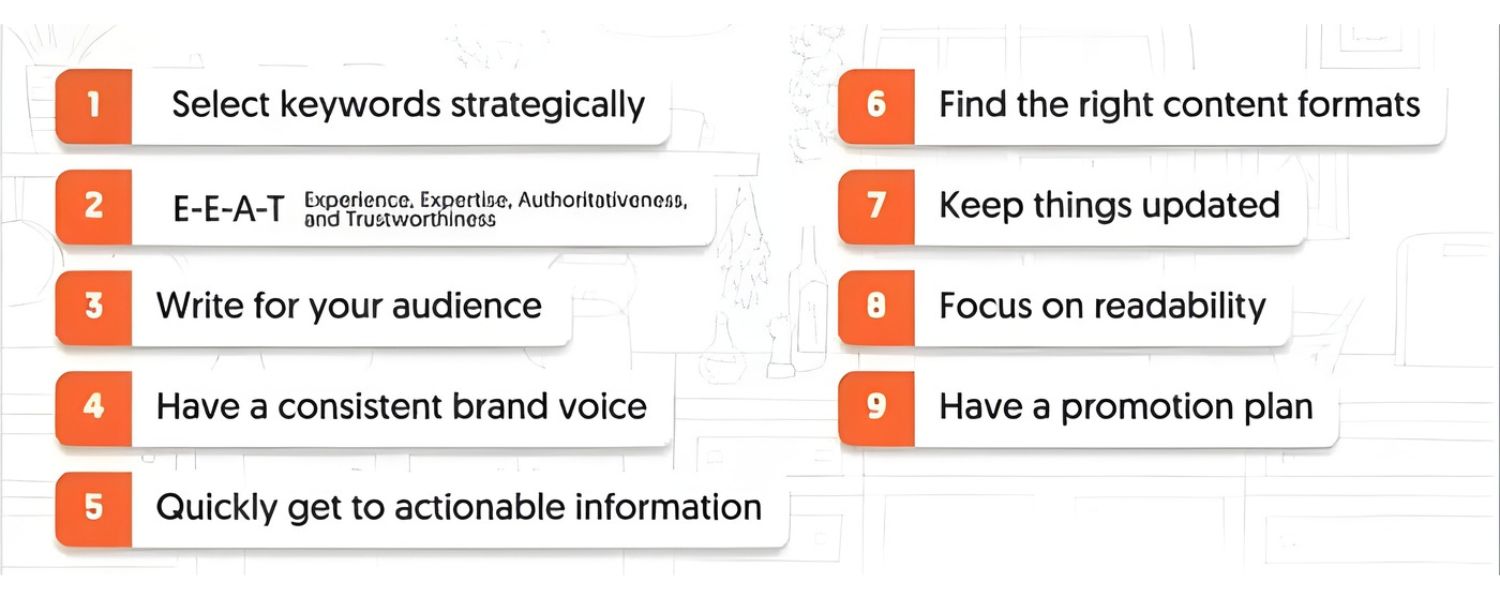
We’ve talked about what to write; now let’s talk about how to write it. The content itself needs to be excellent. Building topical authority isn’t just about covering every subtopic – it’s about covering them well. Every article or page you publish should aim to be the best answer on the internet for its given topic or query. Here’s how to achieve that:
A. Be Thorough and In-Depth
When a user lands on your page, they should get everything they need. That means addressing all the relevant sub-questions and details within the scope of that piece. Shallow or surface-level content won’t cut it.
If the article is “How to Grow Tomatoes at Home,” don’t stop at a few general tips – delve into soil preparation, sunlight needs, watering schedule, common pests and diseases, pruning techniques, etc., all in one guide.
Essentially, anticipate the reader’s follow-up questions and answer them proactively in your content. The goal is to leave no stone unturned for that topic.
B. Ensure Accuracy and Freshness
High-quality content is factual and up-to-date. Cite credible sources for any data, use recent statistics if available, and double-check your information. If there have been recent developments or trends in your field, incorporate them.
(For example, an SEO blog post in 2025 should probably mention the impact of AI on search or the latest Google updates, rather than feel stuck in 2018 knowledge.) Updating content periodically is a great practice – it signals that your site provides current expertise, not outdated info.
C. Provide Unique Insights (Information Gain)
One common mistake is simply rehashing what everyone else has already said. While you do need to cover the fundamental points others will also cover, try hard to add unique value. This is sometimes called “information gain” – offering something new or original that searchers haven’t seen in the other top results.
It could be original research you’ve done, personal experience or case studies, expert quotes, a fresh example or analogy, or even a clearer way of explaining a concept. Adding your own perspective or proprietary knowledge makes your content stand out.
Remember, Google rewards content that brings new information to the table. If your page is just a carbon copy of ten other articles, it won’t impress either Google or readers. So ask yourself: What can I contribute that’s different or better?
D. Use Engaging, Reader-Friendly Writing
Being comprehensive doesn’t mean you should write like a textbook. Keep your tone and style accessible and engaging. Break up the text with clear headings (as we’re doing here), bullet points, and illustrations or examples where possible – this makes it easier to digest complex info.
Also, consider visual elements (images, infographics, charts) if they help explain the content. For instance, a diagram of a “topic cluster” model or a flowchart of a process can enrich the content and improve understanding.
Even though we’re not adding external links, you can certainly include images or graphics in your actual blog to illustrate key points (just ensure they’re relevant and well-captioned).
A well-formatted, easy-to-read article will keep people on the page longer and reduce bounce rate – signals that indicate your content is satisfying users.
E. Avoid Filler and Fluff
Depth is not the same as length for its own sake. Don’t add paragraphs of fluff just to seem comprehensive. Respect the reader’s time by staying on-topic and making every sentence valuable.
Quality over quantity. That said, longer content does tend to rank well when it’s packed with value. Many authoritative pages are 2,000+ words because the topic genuinely needs that much detail.
So, make it as long as it needs to be, but no longer. A good practice is to answer the primary question early (so even skimmers get value), then use the rest of the content to go into deeper detail and related sub-questions for those who want the full picture.
In essence, every piece of content should reflect expertise. By consistently publishing comprehensive, high-quality articles, you are sending a strong message: “We know this topic inside and out.”
Over time, this consistency is what convinces search engines that your entire site is authoritative. Each great piece is like another brick in the fortress of your topical authority.
5. Demonstrate E-E-A-T (Experience, Expertise, Authoritativeness, Trustworthiness)
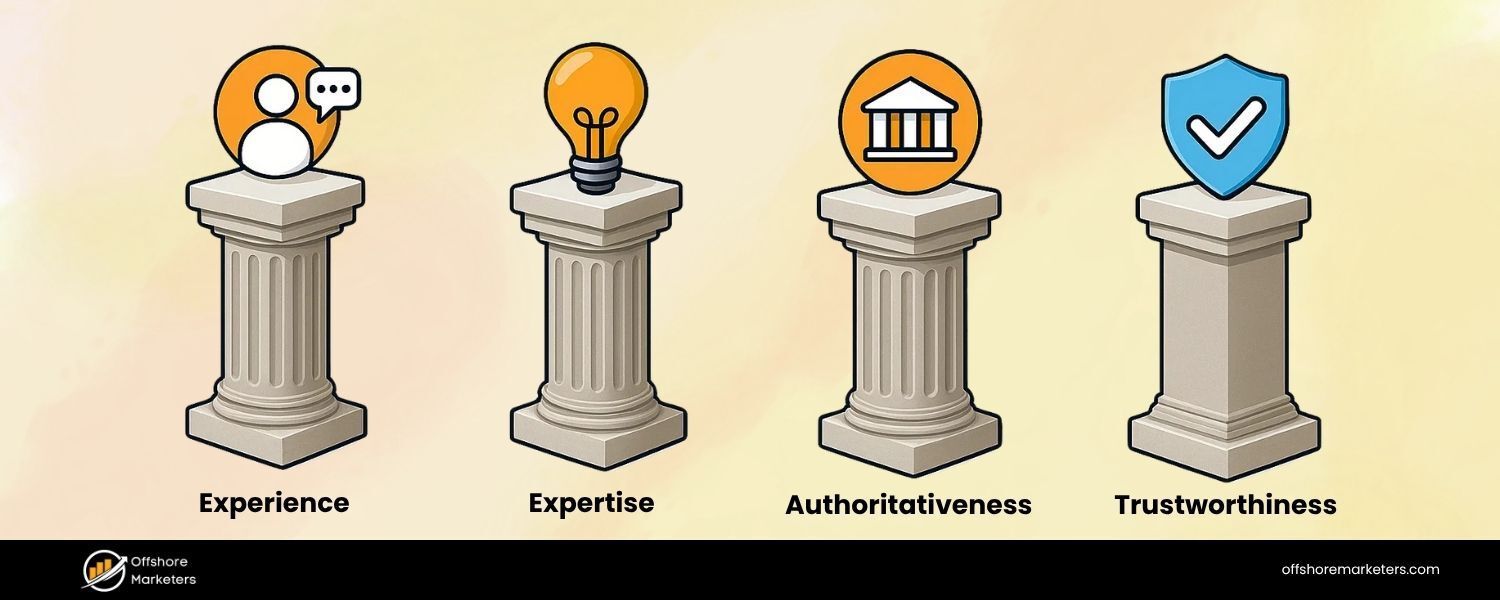
Google’s concept of E-E-A-T is a critical part of building topical authority. We’ve already been touching on some of these elements (expertise and authoritativeness) by virtue of creating in-depth content. But it’s worth explicitly ensuring that you showcase experience and trust signals throughout your site and content. It’s not just what you say, but who is saying it and how you back it up.
Here are some ways to infuse E-E-A-T into your content strategy:
A. Show Your Credentials
Make it clear why you (or your writers) are qualified to talk about the topic. Include author bios on your posts that highlight relevant experience or qualifications. If an article about personal finance is written by someone with a finance degree or a CFP certification, mention that.
If you run a cooking blog and you’re a professional chef, let readers know. This builds trust with both users and Google’s evaluators. It’s part of demonstrating that real, knowledgeable people are behind the content.
B. Leverage First-Hand Experience
The first “E” in E-E-A-T is Experience – and Google added this to the guidelines because content written from personal experience can be more insightful and trustworthy (think product reviews by someone who actually used the product, or travel advice from someone who visited the location).
So whenever possible, incorporate first-hand insights. Did you actually apply the tips you’re sharing? Can you include a brief case study or anecdote from your own journey? For example, if you’re writing “How to start a dropshipping business,” and you’ve done it yourself, share a short story of a challenge you overcame or a result you achieved. This kind of content resonates strongly with readers (“they’ve walked the walk”) and signals to Google that you have real-world authority.
C. Cite Reputable Sources
While your blog shouldn’t link out excessively (and you may choose not to include hyperlinks in the published version), doing proper research and referencing facts from authoritative sources adds to trustworthiness.
You can mention data and attribute it to the source (e.g., “According to the FDA…” or “A Harvard study from 2022 found…”). This shows you’re not just making claims out of thin air.
If you include statistics or claims, make sure they are up-to-date and come from reliable entities (universities, industry reports, official organizations). Well-sourced content tends to be viewed as more trustworthy.
(In this blog context, you might include those references in-text rather than as links, since we’re avoiding hyperlinks. The key is to demonstrate that claims are backed by evidence.)
D. Encourage Reviews and Testimonials
If applicable, having user reviews or testimonials on your site (for your products, services, or even just comments praising your informative articles) can bolster E-E-A-T. It shows a community trusts you.
Engagement can be a trust signal. So consider enabling comments or showcasing success stories from readers who followed your advice (moderate them to keep quality high). Active community interaction can indirectly tell Google that people find your site authoritative enough to engage with.
E. Maintain a Professional Site Design
This is more of a general trust tip – an authoritative site typically looks the part. Ensure your site is well-designed, mobile-friendly, and free of spammy ads or annoying pop-ups.
An easy-to-use site with clear navigation and a secure connection (HTTPS) helps users trust you and stay longer, which can improve your SEO performance. While design isn’t “content,” it does contribute to the overall perception of quality.
The bottom line is to be transparent and credible. If you’re an expert, don’t be shy about it, highlight your expertise. If you’re not a well-known expert, focus on demonstrating your knowledge through quality content and by borrowing credibility (via citing others or using guest experts).
Over time, as your topical authority grows, your brand authority will grow too, meaning your name or site itself becomes associated with trust in the niche.
6. Optimize Internal Linking and Site Structure
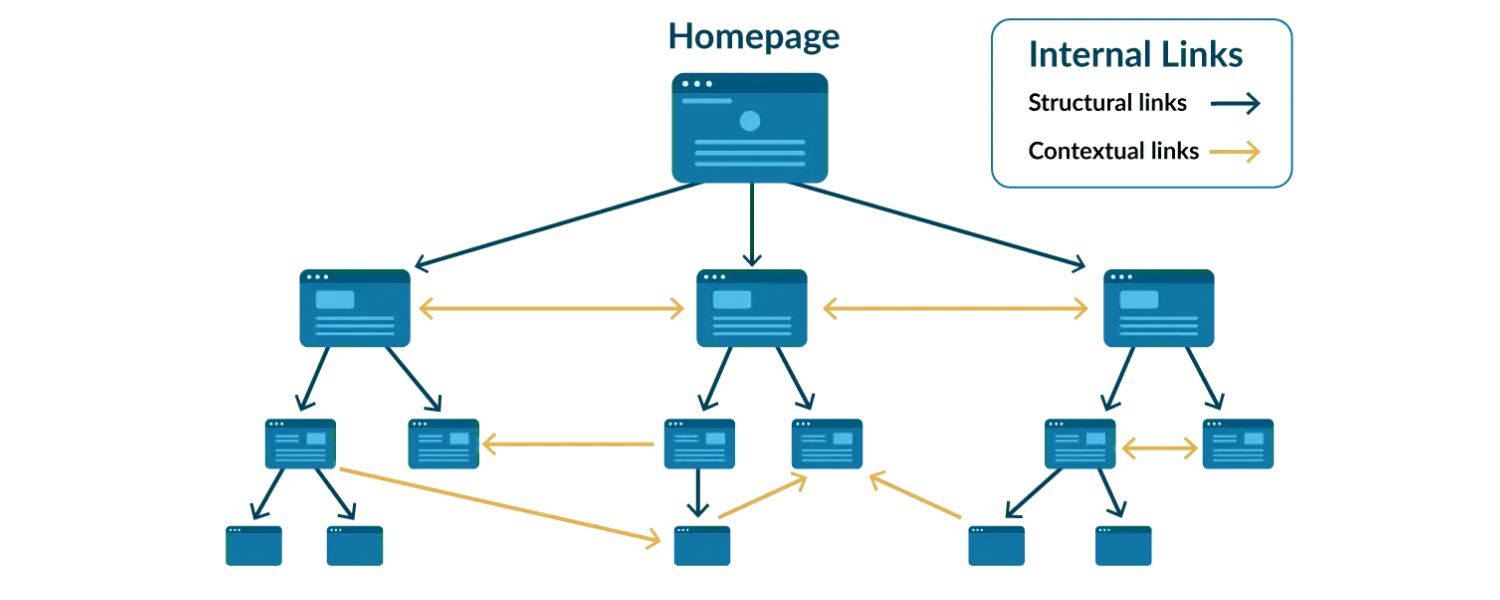
We touched on internal linking with topic clusters, but let’s expand on site structure as a whole. How you organize and connect your content can significantly impact how effectively you build topical authority.
A. Use a Logical Site Architecture
Arrange your site’s pages in a way that makes hierarchical sense. This often means having high-level category pages or your pillar pages accessible from the main menu or relevant section pages, with subtopics nested or linked underneath.
A clear silo or section for your niche content helps concentrate topical relevance. For example, if your site covers two broad areas (say, “Digital Marketing” and “Web Design”), you might separate content under those categories, rather than intermixing them.
Each “silo” then builds its own topical authority. In your case, if you’re focusing on one niche, your whole site architecture might revolve around that, which is even better.
B. Implement Strategic Internal Links
Beyond the cluster hub-spoke linking, consider other internal linking opportunities. Whenever you mention a concept that you have a full article on, make that a clickable internal link.
For instance, within a blog post on “email marketing tips,” if you reference “landing page design” and you have a separate article about landing page best practices, link to it.
These contextual links do two things: they keep readers on your site by pointing them to more relevant info, and they signal to Google that those two topics are related in your content network. Over time, a richly interlinked site starts to look like a web of knowledge on your topic.
C. Use Descriptive Anchor Text
When adding internal links, the anchor text (the clickable text) should clearly indicate the topic of the page you’re linking to. Instead of saying “click here” or linking random words, use keyword-rich anchors naturally.
For example, “our guide to beginner knitting patterns” as an anchor is better than “our guide here.” Descriptive anchors help search engines understand the relevance between pages, reinforcing topical connections.
D. Create Supporting Content like Glossaries or FAQs
Consider building some resource pages that bolster your topical depth. A glossary of terms for your niche, for instance, can be a great internally linked resource (each term defined, possibly linking out to fuller articles where applicable).
Or an FAQ page covering common questions in your industry (with answers that link to detailed posts for more info). These not only serve users but also act as internal link hubs around specific subtopics and keywords.
E. Ensure Navigation Aids Topical Discovery
On each content page, you might include suggestions for “Related Articles” or “Next Steps to Learn More About X.” Many sites implement plugins or manual related-post links at the end of an article.
If someone finishes reading about one aspect of your niche, make it easy for them to click into another closely related piece. This increases dwell time and signals engagement, plus it further solidifies the interconnections of your content in Google’s view.
Remember, a user-friendly site structure is an SEO-friendly structure. When visitors can easily find what they need and navigate between topics on your site, it generally means search crawlers can do the same.
By weaving an internal web of content, you effectively shout to Google, “Look, we cover all these things about [Topic], and they all connect!” – which is exactly the impression you want to give.
7. Earn Relevant Backlinks and Mentions (External Authority)
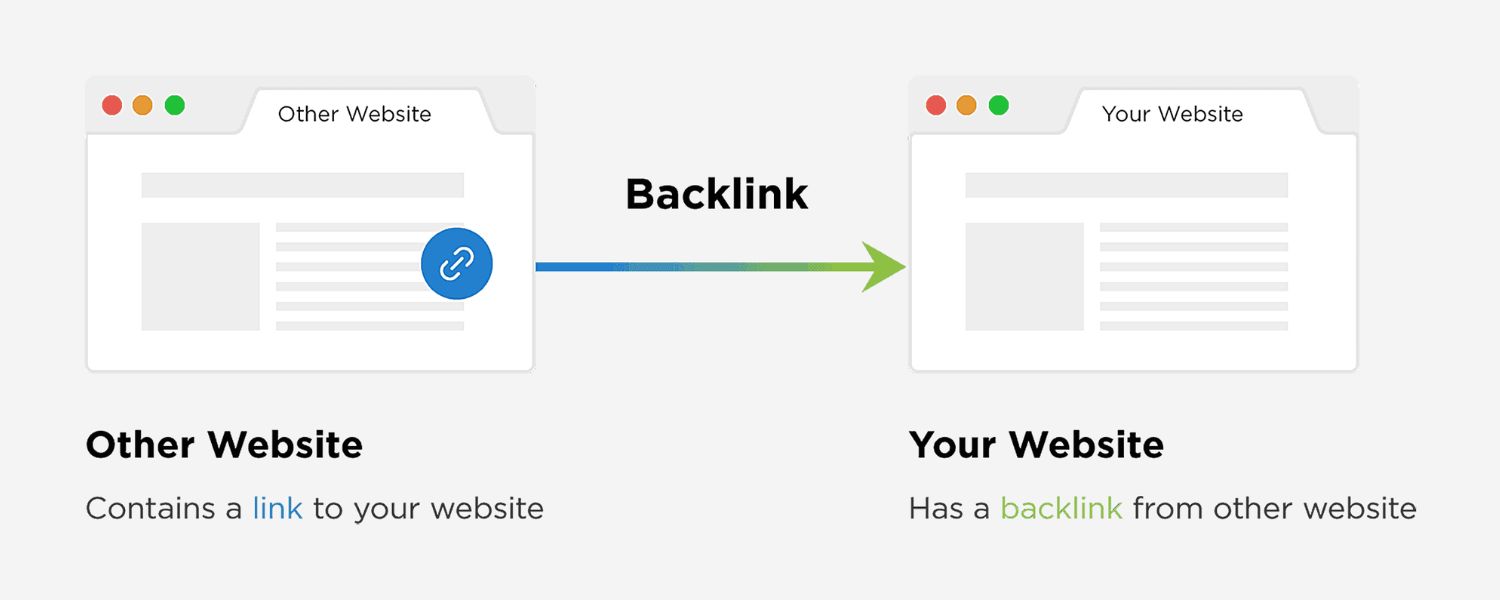
While we’ve stressed that topical authority can let a smaller site punch above its weight, backlinks from other sites are still a vital part of SEO. In Google’s eyes, backlinks act like “votes of confidence.” When reputable sites link to you, it reinforces that your content is trustworthy and authoritative. So, building topical authority also involves an external component: getting your content referenced by others.
Here are some strategies to boost your external authority signals:
A. Create Link-Worthy Content
First and foremost, make content that others want to link to. Often, this means producing assets like original research, data studies, infographics, comprehensive guides, or unique tools.
These tend to attract citations. For example, if you publish a groundbreaking study (“Graphite found X about topical authority” style insights, but for your industry), other bloggers and news sites might cite your findings. Even something like a well-designed infographic or a useful checklist can earn links if you share it around.
B. Outreach and Relationship Building
Don’t just wait for links to come – sometimes a little promotion goes a long way. Share your best content pieces with other content creators in your niche. This could mean reaching out to bloggers, podcasters, or journalists who cover your topic.
Offer your content as a resource (“Hey, I noticed you wrote about [topic]. I put together an in-depth guide on [related topic] – it might be useful to your readers, feel free to check it out.”). The key is to be genuine and not spammy. If your content truly adds value, some people will be happy to reference or share it.
C. Guest Posting and Expert Contributions
Writing guest articles on other reputable websites can both build your brand and often earn you a backlink (usually in your author bio or within the content if allowed). Aim to contribute to sites that are relevant to your niche and have good authority themselves.
When you guest post, you can subtly showcase your expertise and mention your own authoritative content. Similarly, participating in expert roundup posts or interviews can get your name and site featured (with a link back).
The more your expertise is seen across the web, the more your topical authority grows in the eyes of the community (and by extension, search engines).
D. Leverage Social Proof and Sharing
While social media signals aren’t direct ranking factors in Google, a strong social presence can indirectly lead to more visibility and links. Share your content on channels where your audience hangs out.
A piece that gets widely shared on LinkedIn or Twitter might catch the attention of a blogger who then links to it. Also, engaging with your niche community (like answering questions on forums, or commenting thoughtfully on other blogs) can establish your reputation and sometimes give opportunities to drop a link to your content when genuinely relevant.
E. Monitor Mentions and Unlinked References
Sometimes people will mention your brand or quote your content without linking to you. There are tools and tactics to find these unlinked mentions. A polite outreach to say “Thank you for mentioning our study – by the way, could you link to the source so readers can find the full info?” can convert some of those into backlinks. It’s an easy win because the hard part (getting mentioned) is already done; you’re just firming up the connection.
Keep in mind, the quality of links matters far more than quantity. A few links from high-authority, topically relevant sites outweigh dozens of low-quality links. It’s better to be cited by the respected players in your industry or by news outlets than to spam random directories or low-tier blogs. Google is very adept at filtering out “spammy” link building. So focus on earning links through merit and outreach, not on any sketchy shortcuts.
Finally, note that external authority feeds back into topical authority in a virtuous cycle. As you get more backlinks, your overall site authority (and maybe your “domain authority” in SEO tool terms) rises, which helps all your content rank better.
That wider recognition also likely increases Google’s confidence that your site is a trusted source on the topic (because others vouch for you). So, while you shouldn’t rely on backlinks alone to carry you (content is still king), you shouldn’t ignore this piece of the puzzle either. Topical authority plus link authority together are a formidable combination.
Bonus: Be Patient and Consistent (The “Authority Tipping Point”)
It’s worth ending the how-to section with a reality check: building true topical authority takes time and consistency. You might create ten amazing articles and still not see huge results next week – and that’s normal. In many cases, you’ll need to publish dozens of quality pieces and continuously refine your SEO before Google really starts to recognize your site as an authority. There is often a “topical authority tipping point,” after which your traffic and rankings shoot up dramatically – but reaching that point requires a runway of effort.
Don’t be discouraged by early slow progress. Each piece of content is an investment in your authority. Over a span of months, as your library of content grows and your site gains some age and backlinks, you’ll likely notice increasing momentum. Many site owners report that suddenly their new posts start ranking on page 1 almost instantly once they’ve established a solid foundation – that’s the payoff for all your upfront work. So, keep a long-term mindset.
Track your progress: monitor how your rankings improve across a cluster of keywords, see if your overall organic traffic for your topic is trending up, and watch for that point when Google starts treating you as a trusted source. It will come if you execute diligently on the steps above. And once it does, maintaining that authority just means continuing to do what you’re doing – publishing great content, keeping it up-to-date, and expanding into new subtopics as your niche evolves.
FAQs about Topical Authority
Q1: How is topical authority different from domain authority?
Domain authority (DA) generally refers to the overall SEO strength or credibility of an entire website, largely based on its backlink profile. It’s a broad measure: a site with many high-quality links will have a high DA, which can help anything on that domain rank easier.
In contrast, topical authority is narrower – it’s about how authoritative your site is on a specific topic or niche. You might have a high DA due to links, but if you only have a few articles about, say, “gardening,” you won’t be seen as topically authoritative on gardening.
Conversely, even a lower-DA site can achieve topical authority by covering a subject in great depth. In practice, you want to develop both: topical authority to dominate your niche, and a strong backlink profile (domain authority) to boost your overall site strength.
But remember, topical authority is earned mostly through content quality and coverage, whereas domain authority is earned through external links. They complement each other, but they’re not the same thing.
Q2: How long does it take to build topical authority?
There’s no fixed timetable, it depends on several factors like your niche competitiveness, the current strength of your site, and how much quality content you can produce. Generally, you should expect it to be a gradual process measured in months or years, not days.
For a new website starting from scratch, it might take 6 months, 12 months, or longer of consistent content creation to reach that “tipping point” where search engines clearly recognize your authority.
If you’re in a less competitive niche and you publish a lot of excellent content quickly, you could see significant improvements in a few months. Established sites (with some authority already) can usually gain topical authority faster when they expand into a new area, sometimes within a couple of months, especially if they leverage existing trust and maybe have industry experts writing for them.
The key is consistency: publish new content regularly, update older content, and keep signaling to Google that you’re active and continually covering your topic. Be patient but persistent; when that payoff comes, it’s like compound interest, your prior work will make all future work perform better.
Q3: If I have strong topical authority, can I stop worrying about backlinks and other SEO factors?
Not really – topical authority is just one piece of the SEO puzzle (albeit a very important one). While having comprehensive content in your niche will give you a big advantage, core SEO factors still apply.
High-quality backlinks from other sites will further boost your credibility (and may even be necessary to rank for the most competitive keywords). You also need solid on-page SEO (good titles, meta descriptions, clean site code, fast page speed, mobile-friendly design, etc.) and technical SEO (proper indexing, no major site errors).
Think of it this way: topical authority might get you to rank well for many long-tail and moderate competition terms on content merit alone, but for very competitive head terms, you’ll likely still need the extra “juice” that comes from a robust backlink profile and top-notch overall SEO health.
Moreover, backlinks often flow naturally when you have topical authority, since people will reference your great content. So don’t ignore them – encourage and nurture them as part of your strategy.
In summary, topical authority isn’t a free pass to ignore other SEO best practices; it works best in tandem with a well-rounded SEO approach.
(Feel free to ask further questions in the comments – building authority is a journey, and new queries will arise. We’re here to help you succeed.)
Conclusion: Start Building Your Topical Authority Today
Topical authority is one of the most powerful assets you can cultivate for your website. By becoming the definitive expert in your niche online, you’ll reap the rewards of higher search rankings, increased traffic, and greater trust from your audience.
It’s a strategy that requires effort and dedication, choosing your focus, crafting exceptional content, and continually expanding your knowledge base – but the payoff is a durable competitive advantage that others will find hard to beat.
The sooner you start, the sooner you’ll establish your presence as the go-to resource in your field. So, take the insights from this guide and put them into action: plan your content roadmap, start filling those knowledge gaps, and showcase your expertise at every turn.
Remember, every informative article, every answered question, and every link earned is a building block in your authority. Stick with it, and over time you’ll watch your site transform into a heavyweight in your niche, outranking competitors, capturing readers, and driving your business forward.
Ready to dominate your niche? It all begins with that first piece of outstanding content. Start building your topical authority today, and let your expertise shine. Your future self (and your future rankings) will thank you!

Google Search Issues Affecting Results in Some Regions
Google has confirmed a problem with one of its data...

Keyword Counts Dropped After Google’s num=100 Change
In September 2025, Google stopped supporting the &num=100 parameter. This...

Image SEO: Optimize Images for Higher Rankings & Traffic
Introduction Images make your website more engaging, but they can...

Share of Voice: Definition, Measurement & Boosting Brand
Share of Voice (SOV) is a key marketing metric that...

Programmatic SEO: Ultimate Guide to Scaling Organic Traffic
Programmatic SEO is an automated SEO technique that uses templates...


.png)
.png)
.png)
.png)
.png)

2024 ALL RIGHTS RESERVED MADE IN INDIA
.png)