
What Is PPC? A Practical Guide to Pay‑Per‑Click Advertising
March 11, 2026
Pay‑per‑click (PPC) is the “pay only when someone clicks” branch of digital advertising—most commonly associated with paid search, but also used across shopping ads, social ads, display, and retargeting. At its best, PPC is a controllable, measurable way to buy targeted visits and turn them into leads, sales, or revenue—fast.
Most competitor pages explain PPC correctly, but their depth varies: some focus on definition and benefits; others add auction dynamics, Quality Score, or campaign structure; a few mention management and measurement.
This article synthesizes the strongest parts of those sources and fills common gaps—especially around:
(1) how the auction actually decides visibility and cost,
(2) Which metrics matter for business outcomes (not just clicks).
(3) A concrete setup walkthrough with numbers.
Primary competitor references reviewed include Wikipedia, WordStream, Google Ads resources, Bidnamic, Corporate Finance Institute, Indeed, Sesame Communications, YouTube, Forbes Advisor, and Semrush.
Featured‑snippet definition:
Pay‑per‑click (PPC) is an online advertising model where you bid to show ads on search engines or platforms and pay only when someone clicks. You set targeting and budgets, then optimize for clicks, leads, sales, or revenue with measurable results.
PPC fundamentals and where it fits
What PPC is
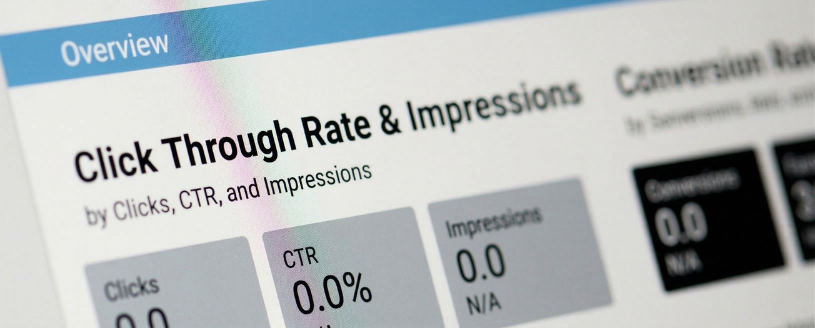
At its core, PPC is an online advertising model in which an advertiser pays a publisher (commonly a search engine, website, or platform) when a user clicks an ad.
Two practical implications show up across the best competitor explanations:
First, PPC is designed for measurable interaction. Unlike paying for exposure regardless of engagement, PPC ties spend to a click event you can measure and optimize.
Second, PPC does not automatically mean “profitable.” Paying for clicks can be highly efficient when the value per click (or per conversion) exceeds the cost. WordStream illustrates this with a simple example: paying a few dollars per click can be rational if the click converts into a much larger sale.
Where PPC ads appear
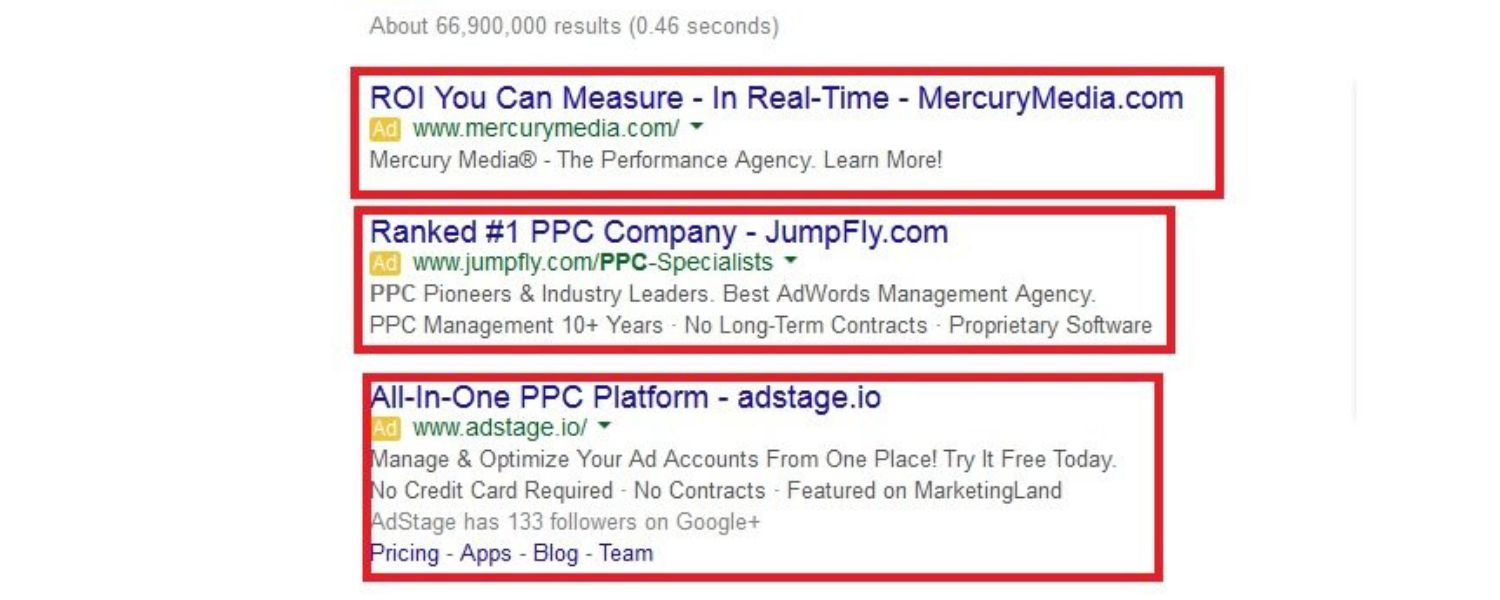
Competitors converge on a useful mental model: PPC is a pricing method that shows up across multiple ad placements and formats—not just one “type of ad.”
PPC ads can appear on search engines, websites, and social platforms, using text, images, video, or combinations, depending on the placement.
A few “where you’ll see them” examples that matter for a beginner:
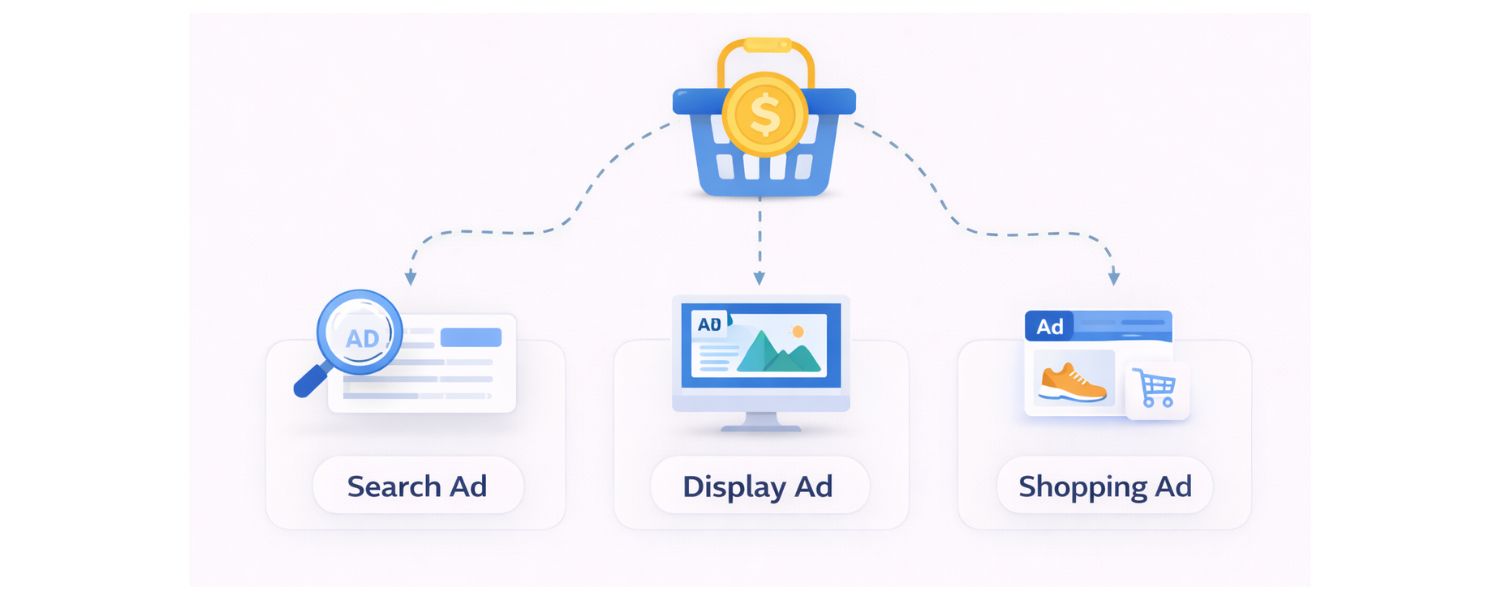
Search ads often appear on search engine results pages (SERPs) and are typically triggered by keyword intent; they are frequently labeled as ads/sponsored content.
Shopping ads are product‑oriented placements tied to product searches and are commonly used by ecommerce brands.
Paid social appears inside social feeds; unlike keyword‑triggered search ads, it commonly targets audiences (interests, demographics, behaviors) and creative formats.
Retargeting (remarketing) ads follow users who previously interacted with a website or content but didn’t convert, aiming to bring them back with a relevant reminder or offer.
PPC vs SEO vs SEM
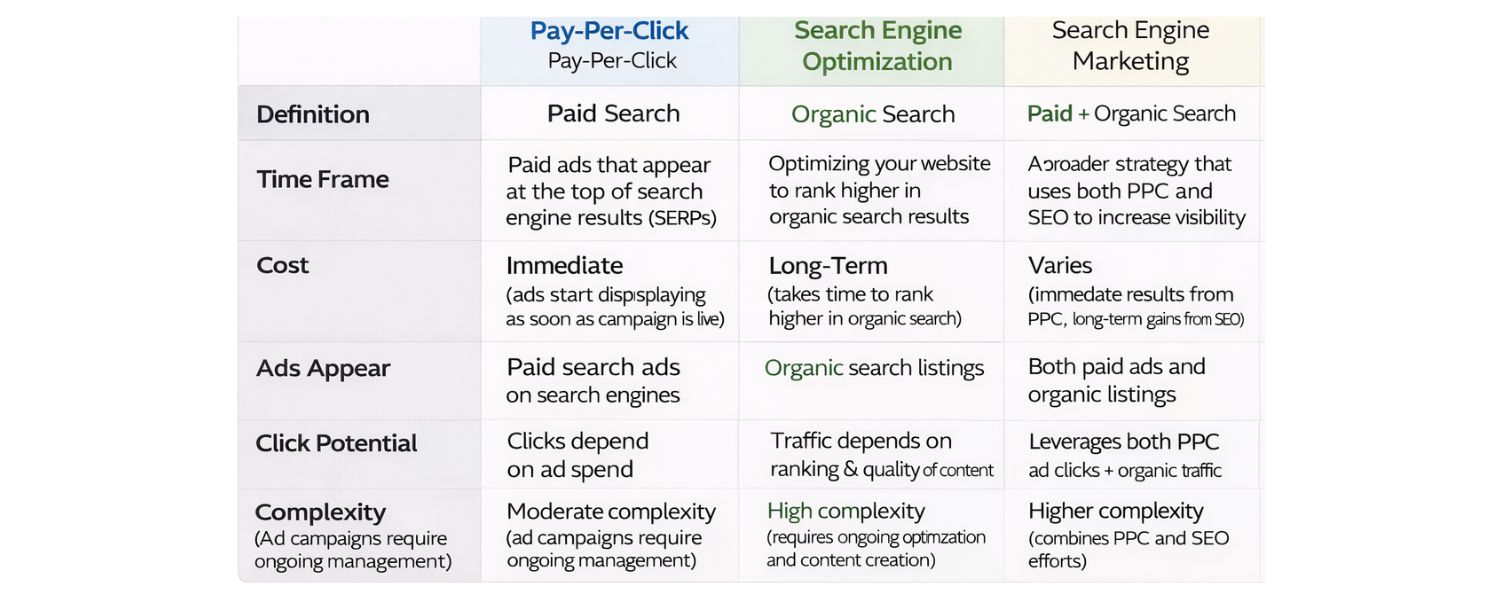
Competitors frequently clarify the overlap and the confusion:
SEO focuses on improving visibility in organic (unpaid) search results, while PPC is paid placement driven by bids/targeting and auction outcomes.
SEM is the umbrella term that can include PPC (and, depending on who’s speaking, other search marketing activities). Forbes Advisor explicitly notes PPC sits under SEM, but SEM isn’t identical to PPC.
The most actionable takeaway is temporal: PPC can produce traffic soon after launch (once approved and live), while SEO is typically slower to compound and more durable over time.
Why businesses use PPC
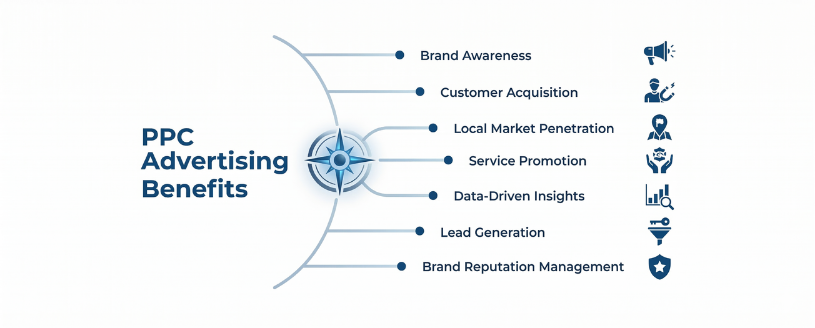
The “why” is where competitors start to differ, but the common thread is control and measurability:
PPC lets you control budgets, targeting, and bids, and measure outcomes like clicks and what happens after the click.
Several competitors describe PPC as “cost‑effective” in principle because you’re paying only for clicks; however, cost‑effectiveness depends on targeting quality, ad relevance, landing page experience, and whether clicks lead to valuable actions.
What competitors cover well—and what they often skip
The strongest overlap across the competitor set includes: a clear PPC definition; the idea of keyword bidding and auctions; and a high‑level campaign setup process.
Common gaps (and what this article adds) are less about missing “sections” and more about missing operational detail:
Many pieces say “PPC is measurable,” but don’t connect measurement to conversion definitions, conversion rate math, CPA math, and how to interpret “good” versus “bad” based on campaign goals.
“Quality Score” is frequently mentioned, but fewer competitors emphasize Google’s framing of it as a diagnostic tool and explain how to use its components (expected CTR, ad relevance, landing page experience) to decide what to fix first.
“Set up a campaign” is often presented as a checklist; this report supplements that with a simple setup timeline and a realistic budget walkthrough that ties clicks → conversions → cost per action → revenue.
How PPC works under the hood
1) The ad auction
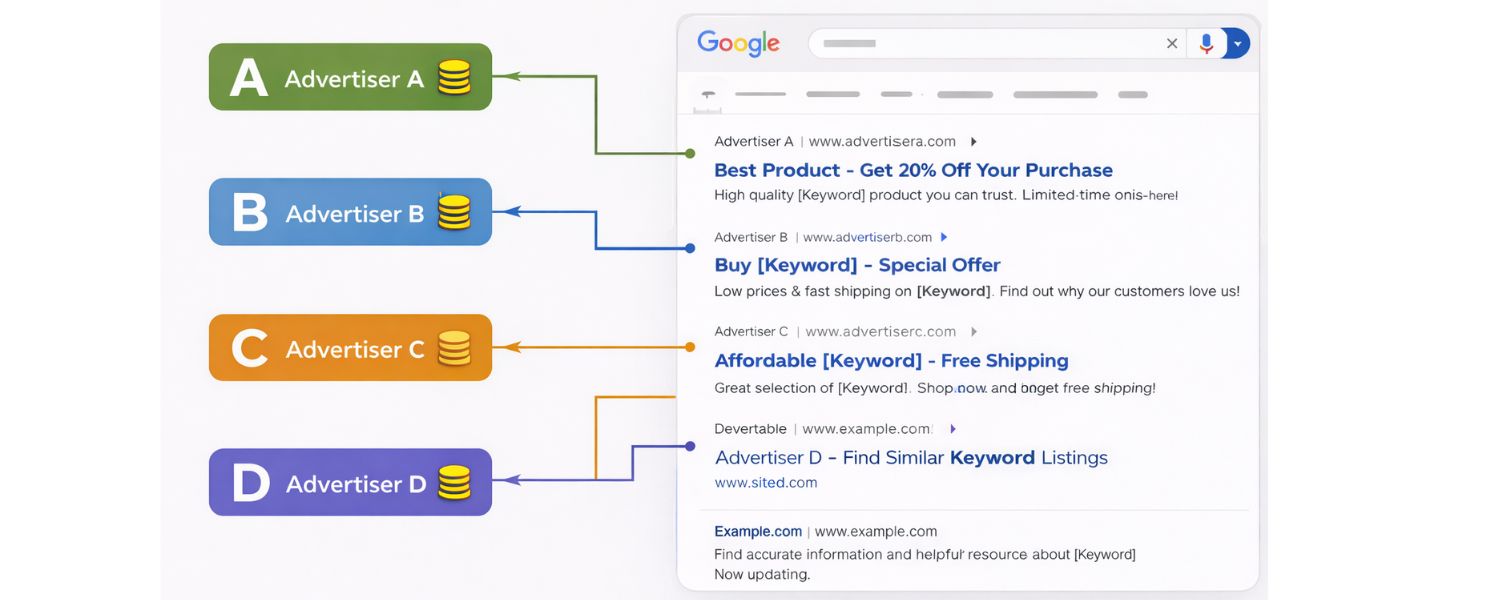
At a high level, PPC platforms run an auction to decide which ads show and where. In the paid search context, you bid on keywords, and when a user searches, the platform runs an auction in real time.
Google’s auction explanation is especially important because it clarifies that outcomes depend on more than “who bids the most.” The auction evaluates multiple factors to determine “when and if” an ad appears, including context signals (like search terms, location, device, time) and competitiveness.
2) Bids, budgets, and cost‑per‑click
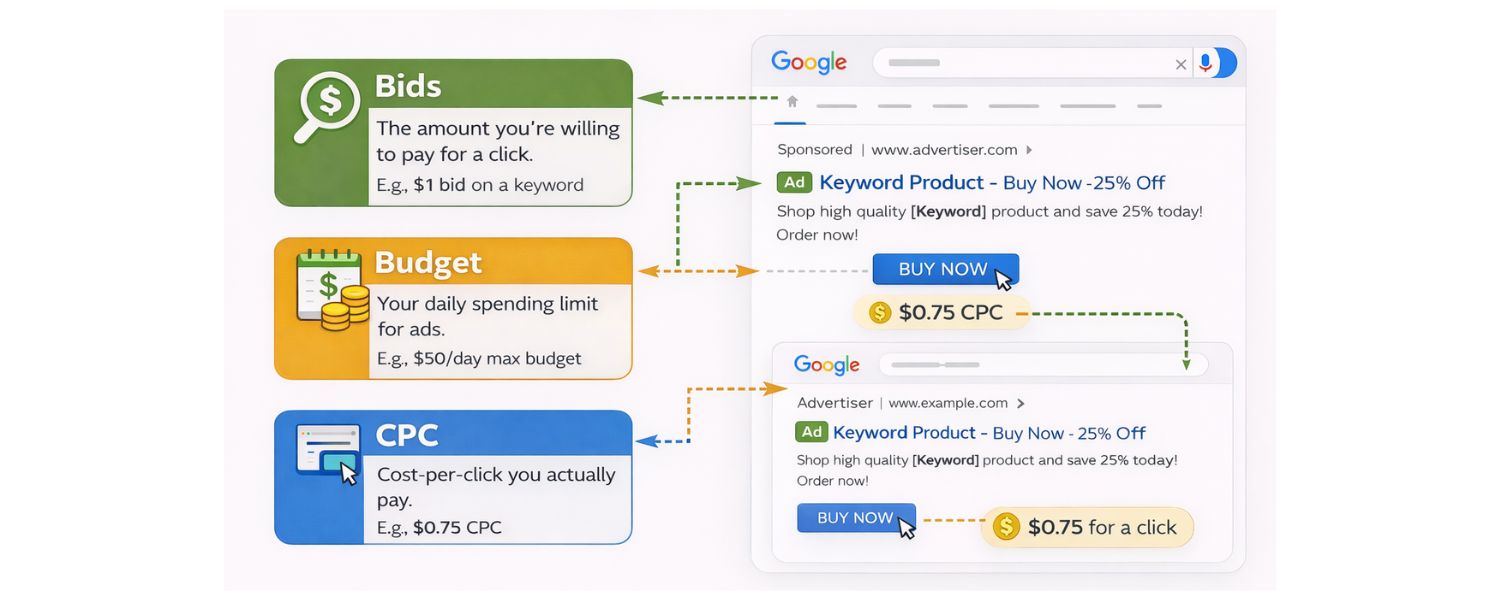
In CPC bidding, you set a maximum cost‑per‑click (max CPC), which is the most you’re typically willing to pay for a click; the actual amount charged can be lower depending on auction dynamics.
This is the simplest way to connect PPC mechanics to a business question:
If a click is likely to produce value (a lead, sale, or downstream revenue), paying for that click might be justified. WordStream makes this “value of a click” point explicitly, using an example where a low CPC is trivial if it leads to a high‑value sale.
3) Ad Rank and why relevance changes cost and position
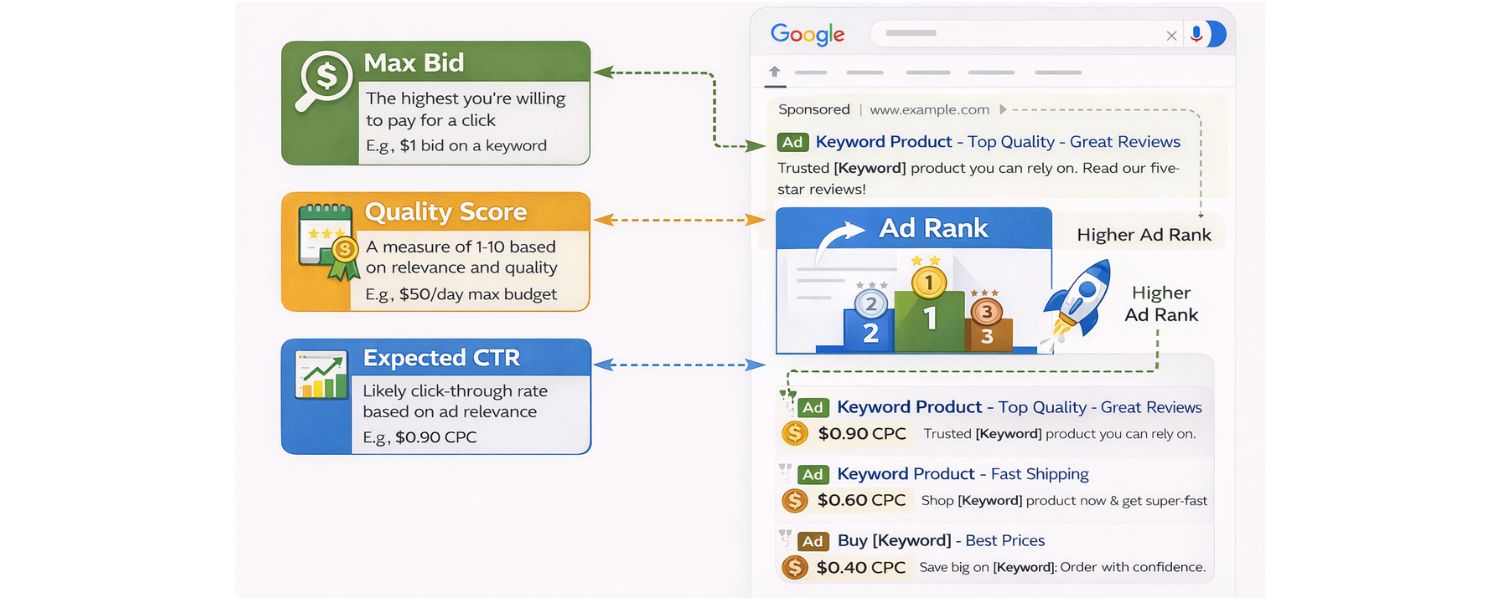
In Google Ads, Ad Rank is a set of values used to determine whether ads are eligible to show and where they show relative to others. It is calculated using multiple factors, including bid amount, ad and landing page quality, auction competitiveness, search context, and the expected impact of assets/ad formats.
Two practical consequences follow from Google’s definition:
You can sometimes beat a higher bidder by improving relevance and user experience—because Ad Rank isn’t purely bid‑driven.
Your position can fluctuate auction‑to‑auction as context and competition change, which is why day‑to‑day volatility isn’t automatically a “mistake.”
4) Quality Score and how to use it without obsessing over it
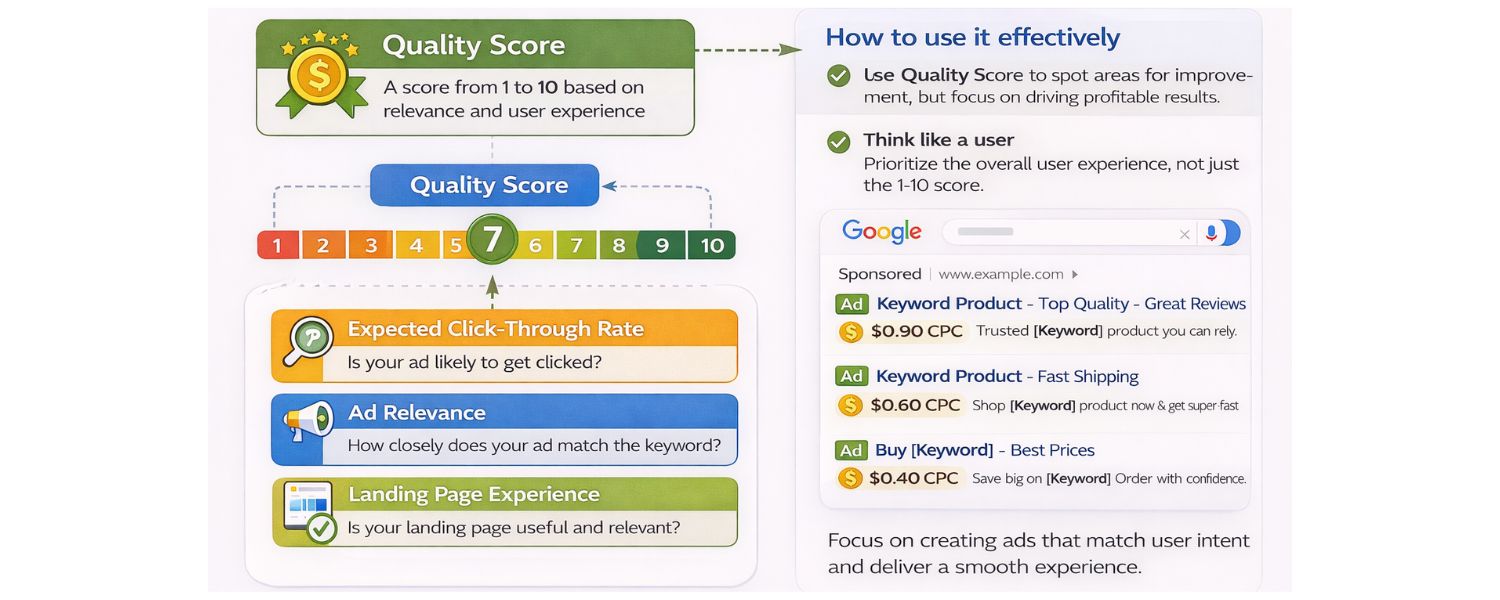
In Google Ads, Quality Score is presented as a diagnostic tool that helps you understand how your ad quality compares to others; it is measured on a 1–10 scale at the keyword level.
Google breaks Quality Score into three components:
Expected CTR: the likelihood your ad will be clicked when shown.
Ad relevance: how closely your ad aligns with the intent behind the user’s search.
Landing page experience: how relevant and useful the landing page is to people who click.
A competitor nuance worth handling carefully: Forbes Advisor describes Quality Score as Google’s rating of relevance/quality and suggests high scores can improve rank and lower CPC.
That direction aligns with the idea that better relevance improves auction outcomes, but the most reliable operational takeaway is to use the three components to guide fixes—not to chase a perfect number in isolation.
5) Keyword match types and negative keywords
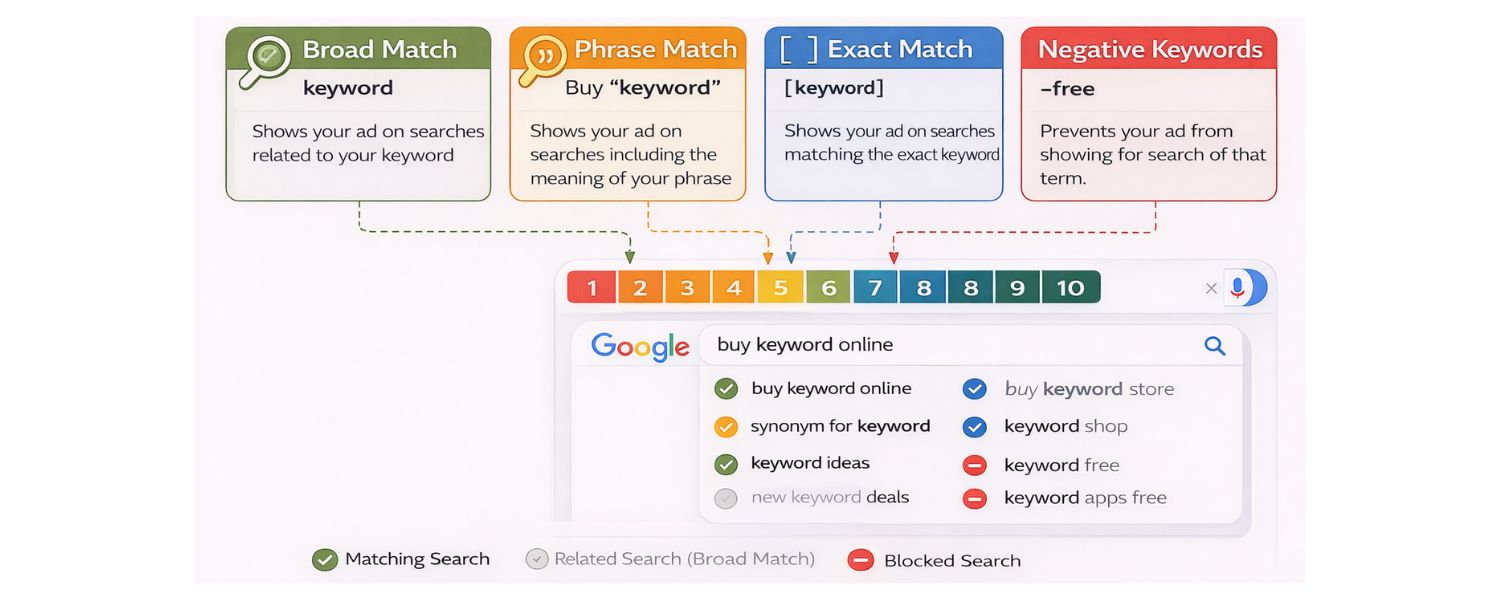
For search PPC, keyword matching controls how closely a user query must align with your keyword to trigger your ad.
Google’s keyword matching options explain that phrase match can show for searches including the meaning of your keyword, while exact match shows for searches with the same meaning or intent; phrase match generally reaches more queries than exact and fewer than broad.
Negative keywords are the “budget protection” tool: they exclude your ads from showing on searches containing that term (for example, excluding “baseball hats” if you sell only fashion hats).
This is a common competitor gap: many “what is PPC” pages mention keywords and bidding, but fewer explain that excluding irrelevant queries is just as important as targeting relevant ones—because PPC waste often comes from mismatched intent rather than “PPC being expensive.”
6) Invalid clicks and click‑fraud reality check
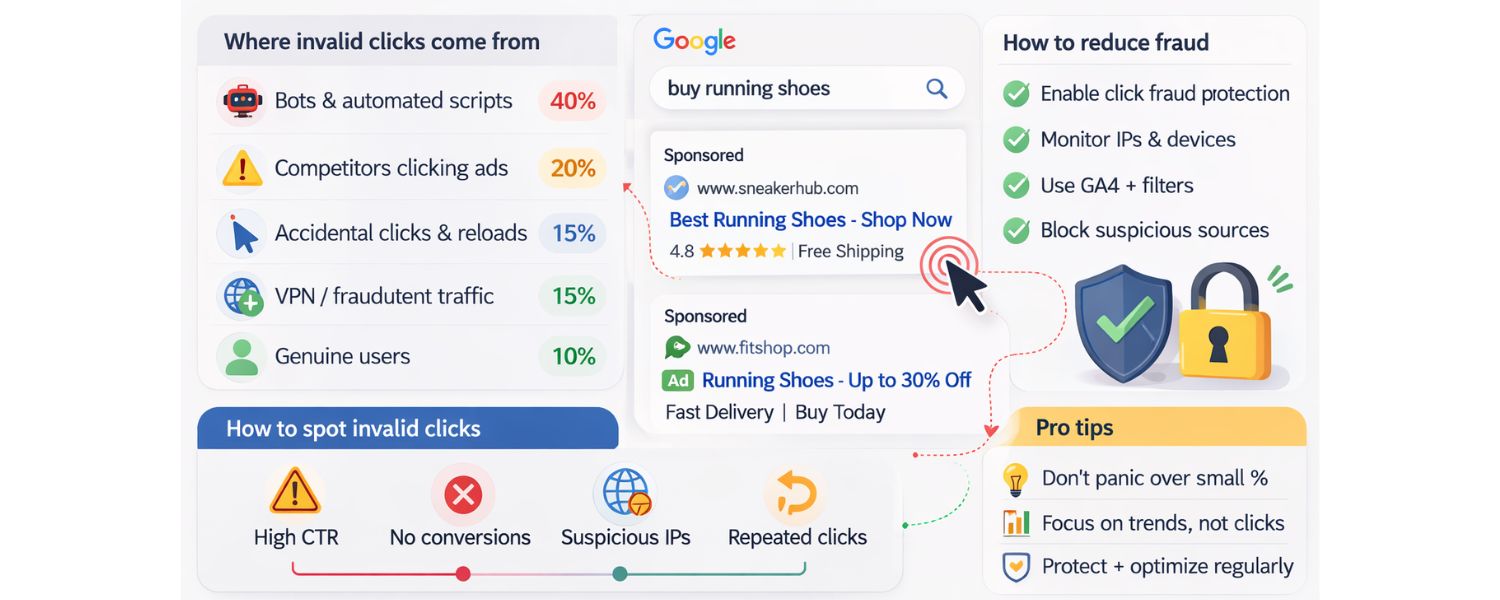
PPC is open to abuse via click fraud/invalid activity; reputable platforms invest in automated protection.
Google Ads explicitly states you won’t be charged for invalid clicks or impressions that provide little/no value, and that Google attempts to automatically filter invalid clicks from reports and payments; advertisers can monitor invalid click activity.
The practical guidance for a beginner is not “panic,” but “instrument and monitor.” If you see abnormal click spikes with no conversions, you treat it like an investigation: placements, geos, devices, and search terms matter.
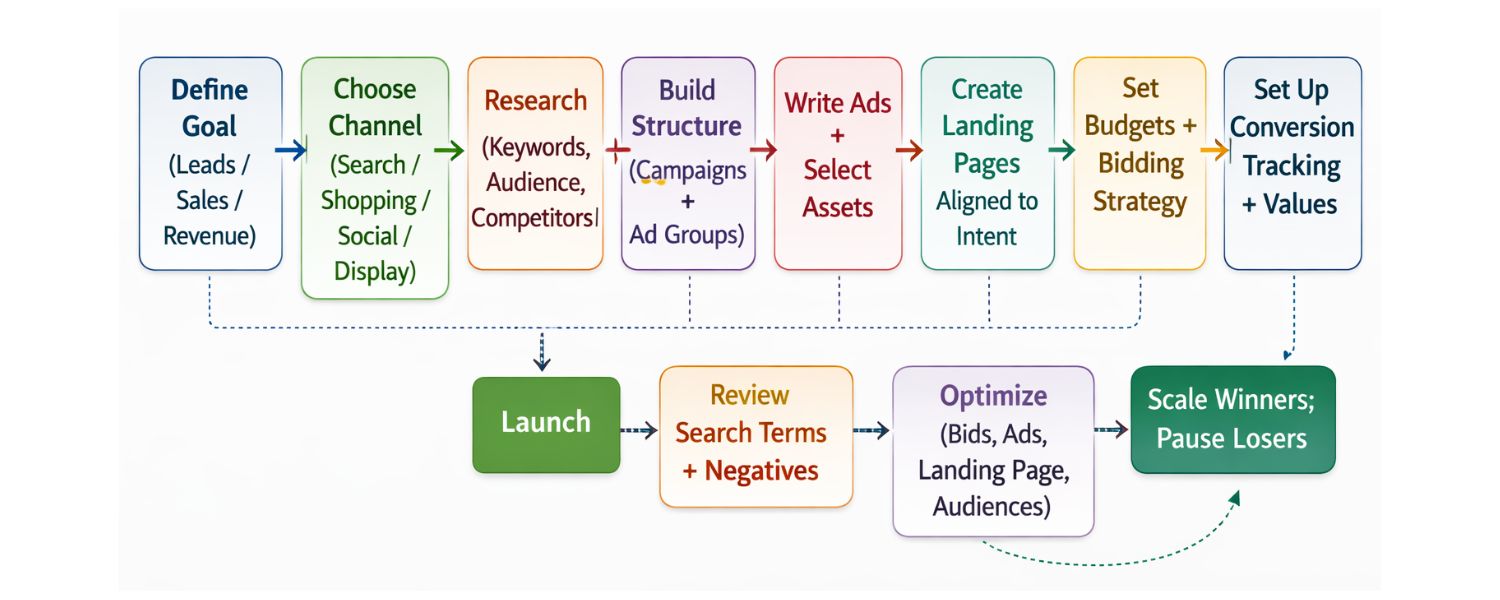
How to set up a PPC campaign that’s built to improve
This section follows the best, repeatable setup patterns reflected in major competitor guides—then adds measurement rigor so that “traffic” becomes “outcomes.”
a) Start with one decision: what are you buying?
“Clicks” are rarely the real goal.
If your business needs leads, your meaningful action might be a form submission or phone call. Google defines a conversion as a valuable behavior that happens after an ad interaction, such as a purchase, sign‑up, phone call, or download.
If your business is ecommerce, your meaningful action is likely “purchase” and “purchase value,” because revenue and margin (not just order count) drive profitability. Google’s “conversion value per cost” metric is one standardized way to estimate return on investment by dividing total conversion value by cost.
b) Build a basic campaign structure before you write ads
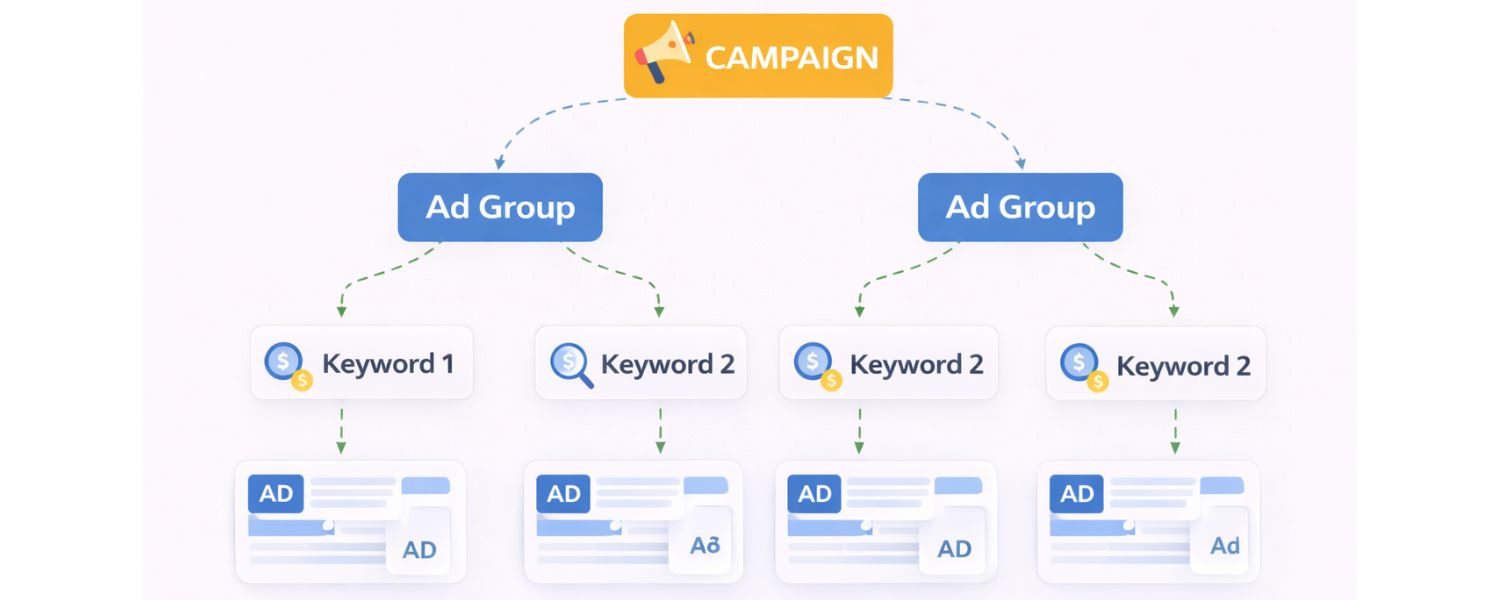
You don’t “run PPC”—you run campaigns inside an account, and structure influences relevance.
Forbes Advisor describes the need for ad groups that house related keywords, landing pages, and ads, so that the messaging aligns with intent (their example: a query like “sushi new york” should land on a relevant page for a nearby sushi restaurant).
WordStream’s setup sequence (campaign type → targeting → budget/bidding → landing page URL → ad) is a useful beginner template because it prevents the most common first‑time mistake: writing ads before you decide on targeting and the landing page.
c) Do keyword research with intent in mind
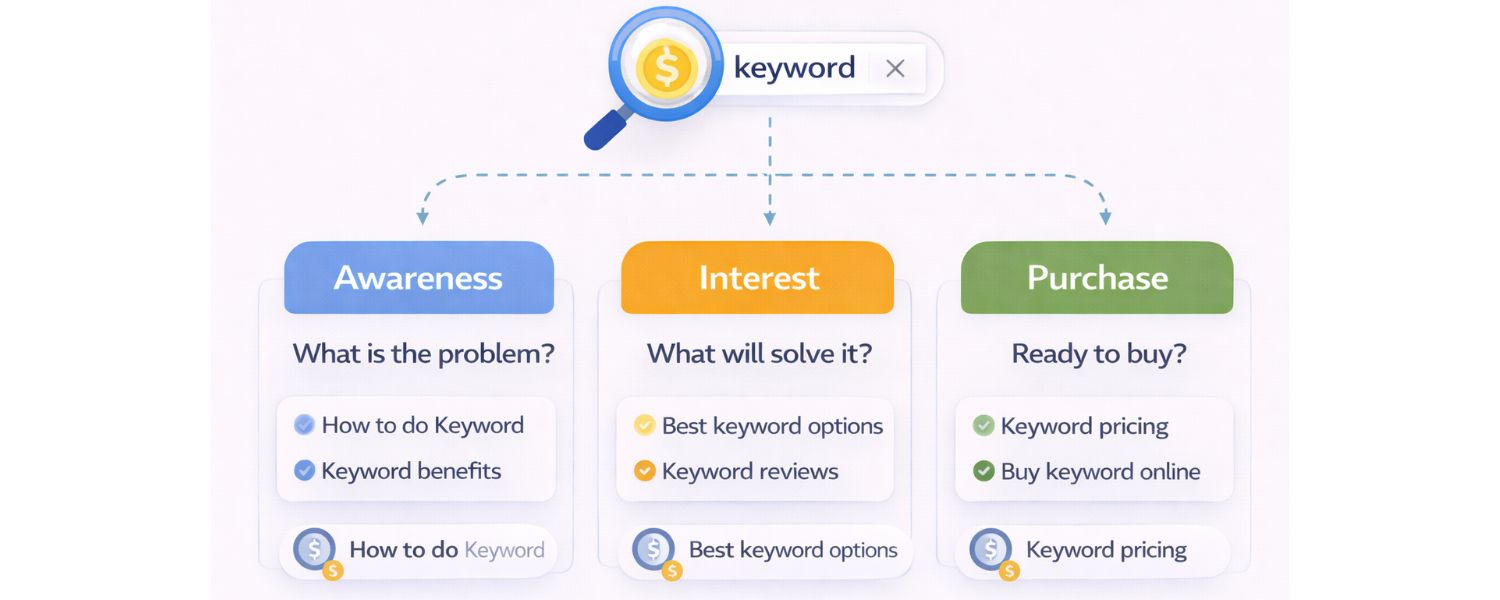
Google’s paid search article points beginners to Keyword Planner as a tool to identify keywords and estimates (searches and cost to target).
A practical “intent filter” that improves early results:
Commercial/transactional queries (“buy,” “price,” “near me,” “best,” “hire,” “book”) often produce lower‑funnel traffic than purely informational “what is…” queries. Semrush’s PPC workflow explicitly recommends narrowing keyword lists toward commercial/transactional intent when the goal is purchases.
Match types and negative keywords matter from day one. Phrases and exact help you control intent; negative keywords prevent spending on irrelevant meanings.
d) Write ads that match the searcher’s intent and the landing page promise
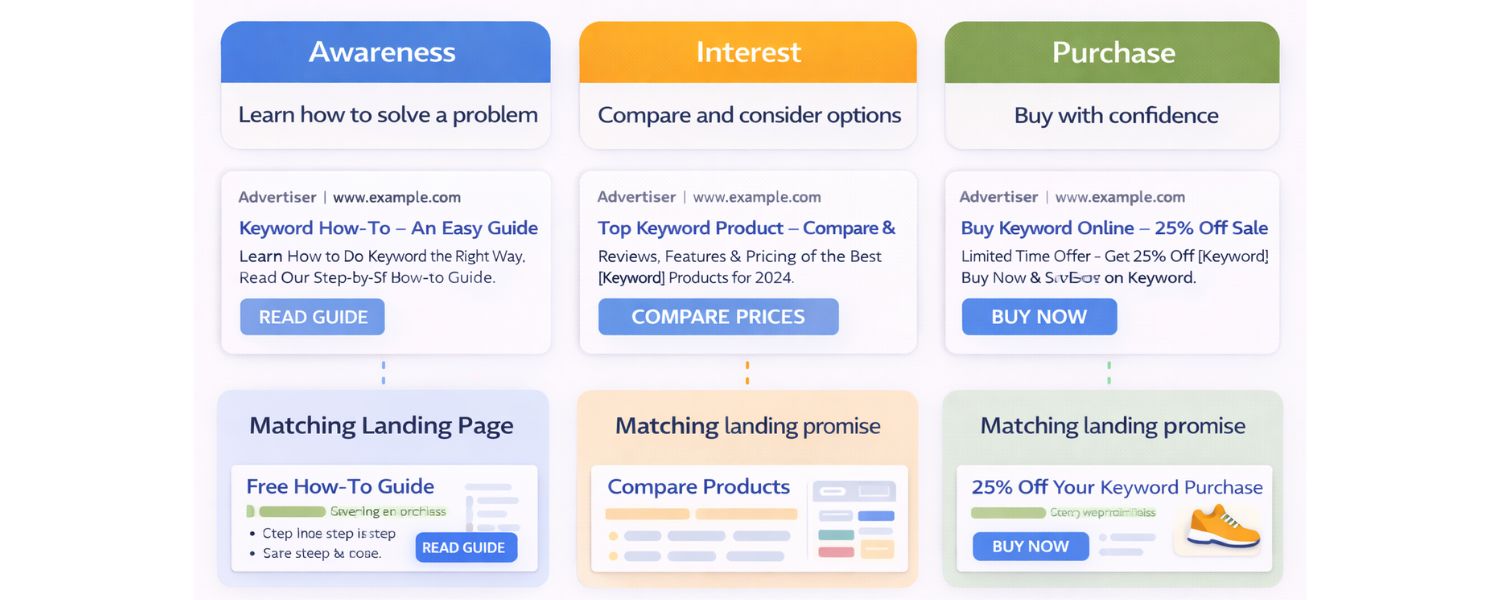
Semrush’s PPC process highlights that you write ad copy and add platform-specific assets, and then your ad enters an auction against other advertisers targeting the same criteria.
WordStream and Google’s Quality Score guidance converge on the same practical rule: relevance isn’t a vague concept—your keywords, ad text, and landing page should line up tightly.
If you want a one‑sentence test that catches most ad problems:
If a user reads only your headline, would they correctly predict the page they’ll land on?
e) Set budgets and bids with a “learning period” mindset
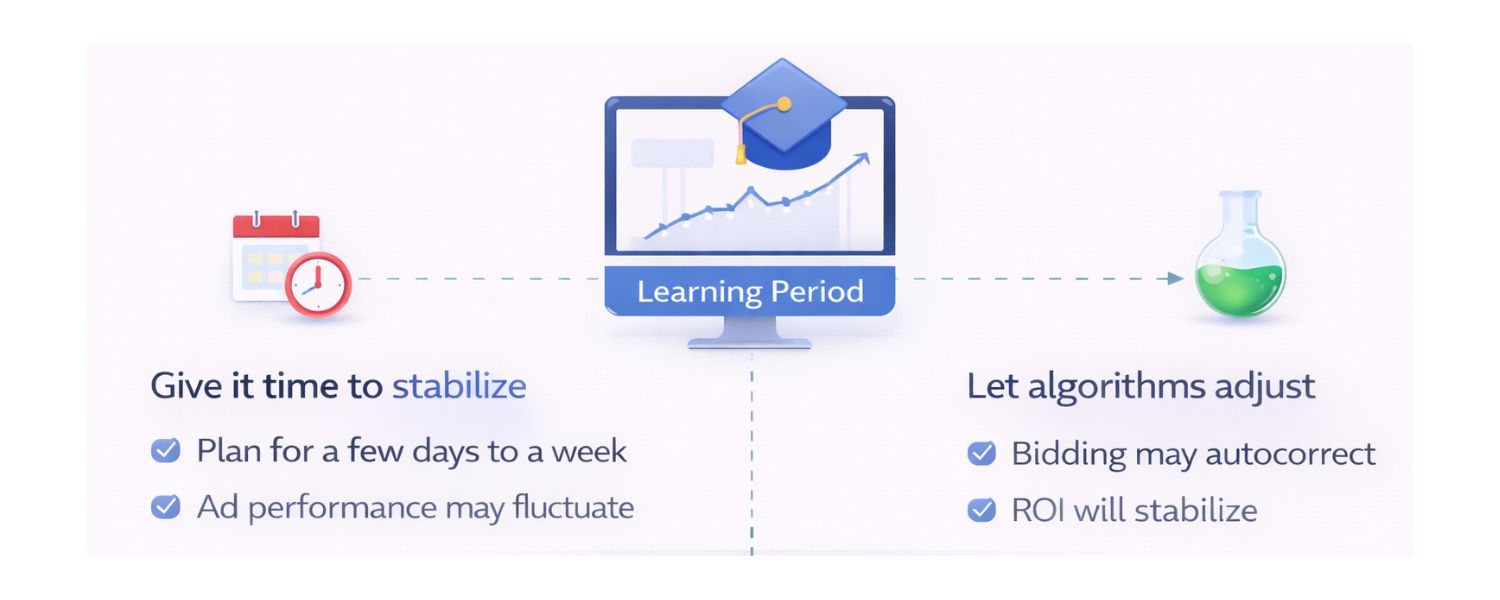
Budgeting is not just “how much can I spend?”; it’s “how quickly can I gather enough data to make a decision?”
Semrush describes setting an overall budget and how much you’re willing to pay per click as part of the core PPC process.
Google’s CPC definition is the cleanest anchor: you choose a max CPC, and the actual CPC is often less; you can bid manually or let automated bidding optimize toward outcomes.
f) Configure conversion tracking before you judge performance
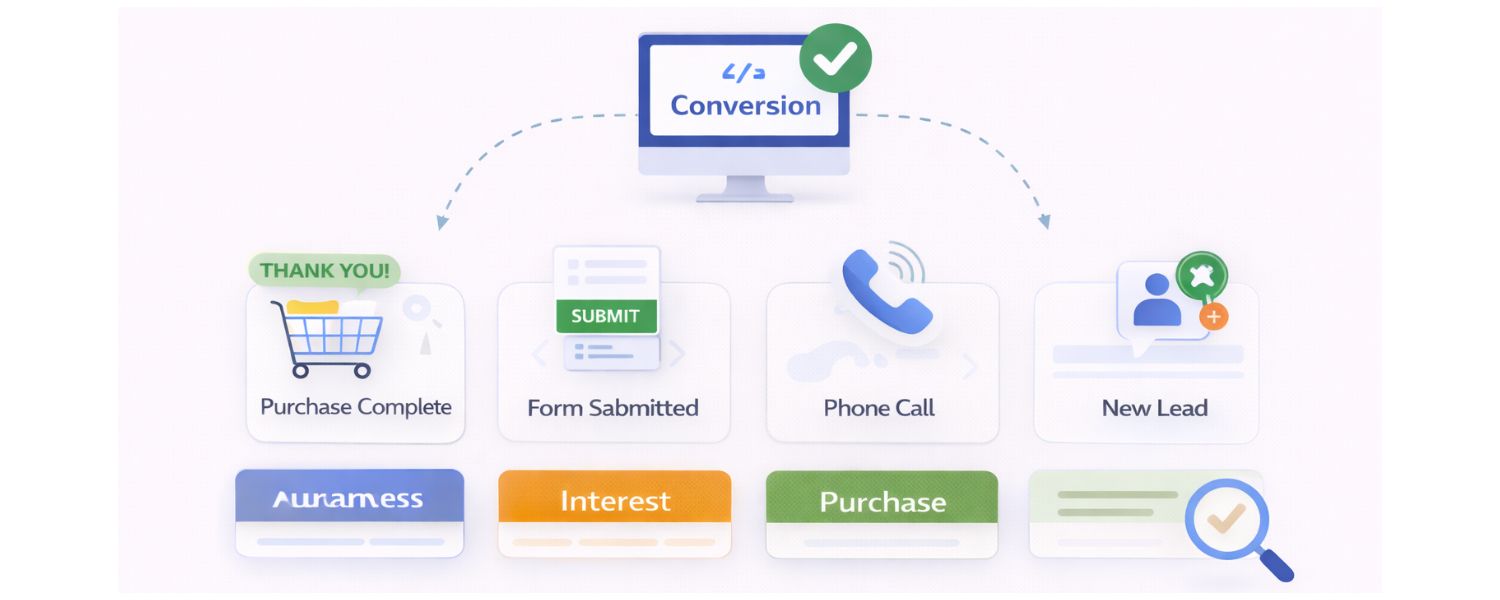
If you track only clicks, you will optimize for “cheap traffic” and often lose money convincingly.
Google defines conversion tracking as a free tool that measures how ad clicks/interactions lead to meaningful actions (sales or leads) and notes it helps identify which ads, listings, and keywords are most successful.
Google’s conversion rate definition is: conversions divided by eligible interactions, expressed as a percentage.
And if you’re optimizing for a cost per lead/sale, CPA is the total marketing cost divided by the number of actions.
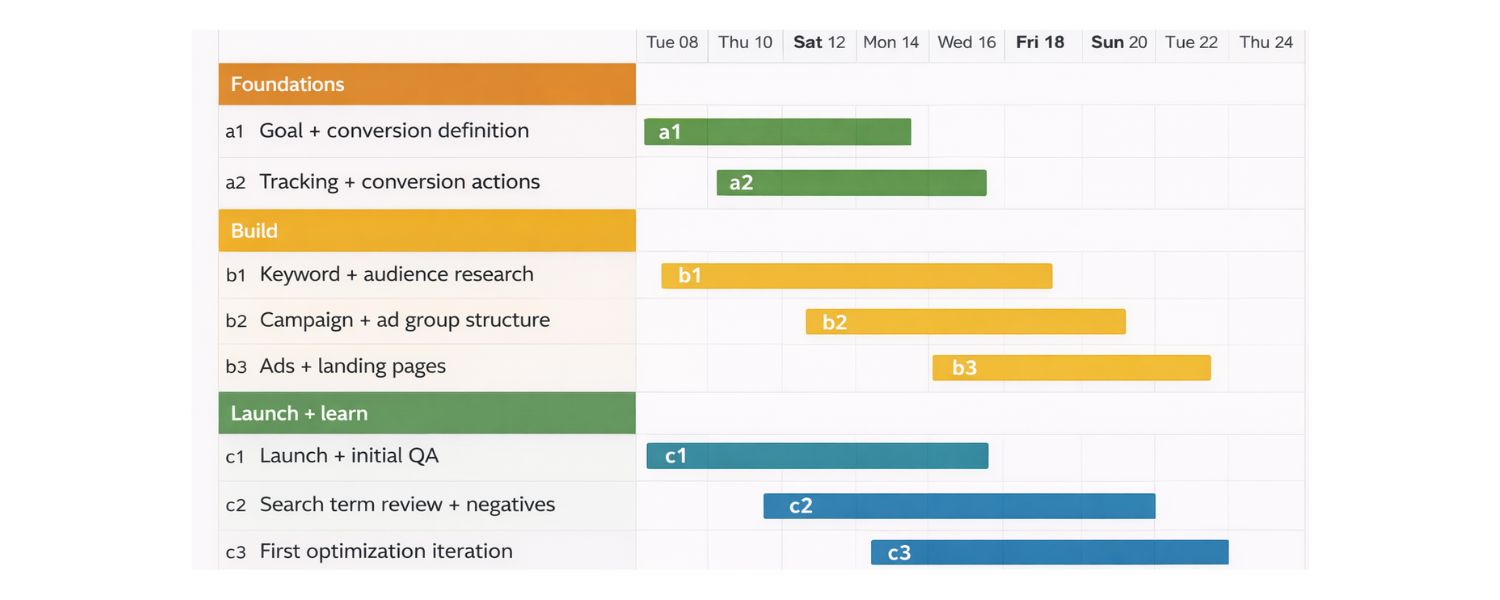
A simple two‑week setup timeline
Metrics, tools, and optimization
The metrics that actually matter
Google’s paid search article encourages tracking visibility, clicks, and revenue from ads—an important reminder that the click itself is not the finish line.
Below is a representative “starter dashboard” of PPC metrics, with definitions grounded in official Google Ads documentation where possible.
| Metric | What it measures | Simple formula | Why you care |
|---|---|---|---|
| Click‑through rate (CTR) | How often an impression becomes a click | clicks ÷ impressions | Quick signal of relevance and message‑match; also tied to expected CTR concepts. |
| Cost‑per‑click (CPC) | What you pay per click in CPC bidding | (platform‑calculated) | Core cost input; you control max CPC and are often charged less than max. |
| Conversion | A valuable action after an ad interaction | (defined by you) | The event that connects PPC to business outcomes (purchase, lead, call, download). |
| Conversion rate | How often interactions produce conversions | conversions ÷ interactions | Tells you if traffic is qualified and the landing experience works. |
| Cost per action (CPA) | Average cost to get one conversion action | marketing cost ÷ actions | Most direct “efficiency” metric for lead gen and many ecommerce setups. |
| Conversion value per cost | Estimated return on investment | conv. value ÷ cost | A revenue‑oriented efficiency metric (often treated like ROAS conceptually). |
| Ad Rank | Eligibility + position logic in auctions | (platform‑calculated) | Explains why “higher bid” doesn’t always win; relevance and assets matter. |
| Impression share | Your impressions vs total eligible impressions | impressions ÷ total eligible impressions | Helps diagnose whether you’re limited by bid/budget/quality in a market. |
| Invalid clicks | Clicks determined invalid and filtered | (platform‑reported) | Important for trust in results; Google states you aren’t charged for invalid clicks/impressions. |
Recommended tools mapped to a beginner workflow
Competitors often recommend tools, but rarely map them to when you should use them. Here’s a practical, non‑overwhelming toolkit linked to specific PPC tasks.
| Tool | Best for | Why it’s useful |
|---|---|---|
| Google Keyword Planner | Search keyword discovery and estimates | Google positions it as a way to discover new keywords and see estimates of searches/cost, and it’s referenced directly in Google’s paid search guide. |
| Google Ads Editor | Bulk edits and offline workflow | Google describes it as a free, downloadable app to manage campaigns by downloading accounts, editing offline, and uploading changes. |
| Semrush Keyword Magic Tool | Expanding and filtering keyword ideas | Semrush frames it as a keyword research resource to build profitable SEO or PPC campaigns. |
| Semrush Advertising Research | Competitor ad copy inspiration | Semrush’s PPC setup process recommends reviewing competitor ad copy via its Advertising Research tool before building ads. |
| WordStream Google Ads Performance Grader | Quick account diagnostics | WordStream describes a report that grades accounts across multiple areas (including Quality Score and CTR), useful for catching structural issues. |
The optimization loop
Most “PPC 101” guides mention optimization; the best ones make it concrete:
WordStream links Quality Score improvement to better ad clicks at lower costs, and suggests tactics like tighter keyword groups, landing page quality improvements, and splitting ad groups into smaller, more relevant clusters.
Google’s Quality Score guidance turns that into a diagnostic routine: check components, then choose actions (update ad text, split ad groups, improve landing pages) based on whether expected CTR, ad relevance, or landing page experience is lagging.
Forbes Advisor adds a very practical management habit: keep adding and testing keywords, but pause underperformers and use negative keywords to prevent wasting budget.
PPC management: what it is and when it matters
Indeed frames PPC management as an essential digital marketing function that helps organizations rank highly in search results or social platforms and control budget/ROI through cost‑per‑click advertising.
In real operations, “PPC management” typically means:
Maintaining structure (campaigns/ad groups), reviewing search terms (especially for negatives), continuous ad testing, landing page iteration, bid/budget adjustment, and report interpretation tied to business outcomes.
A credible note about benchmarks
Benchmarks can help you sanity‑check performance, but they are not a strategy.
WordStream publishes industry benchmarks and explicitly warns that what’s “good” differs by industry; their benchmark post (last updated May 20, 2025) includes averages for CTR, CPC, conversion rate, and CPA, and describes its dataset as US‑based client accounts advertising on Google Search and Display networks in a historical window (August 2017 to January 2018) with medians used to reduce outlier skew.
Use benchmark numbers as a directional reference, then optimize to your business economics (margin, LTV, close rate), not someone else’s average.
Examples and a simple campaign walkthrough
Numbers make PPC “click” (no pun intended) because they connect mechanics to business decisions. The examples below are intentionally simple; they’re meant to show how to think, not promise results.
Example grounded in competitor logic: the “value per click” idea
WordStream’s illustrative scenario is the cleanest conceptual anchor: if you pay $3 for a click and it produces a $300 sale, the click was worth far more than its cost. The exact numbers are hypothetical, but the decision logic is right: focus on value, not just CPC.
Walkthrough: local service lead generation with break‑even math
Scenario: A local clinic runs paid search ads to generate appointment requests.
Assumptions (illustrative):
Daily budget: $50
Average CPC: $2.50
Impressions per day: 1,000
CTR: 4%
Landing page conversion rate (form submissions): 10%
Lead‑to‑customer close rate: 30%
Profit per new customer: $250
Step by step:
Clicks/day = impressions × CTR = 1,000 × 0.04 = 40 clicks (CTR math aligns with Google’s CTR definition: clicks ÷ impressions.)
Spend/day = clicks × CPC = 40 × $2.50 = $100. If you truly cap at $50/day, you’d likely see fewer clicks; the point here is to show the relationship between variables.
Conversions (leads)/day = clicks × conversion rate = 40 × 0.10 = 4 leads (Conversion rate aligns with Google’s conversion rate definition.)
CPA (cost per lead) = spend ÷ leads = $100 ÷ 4 = $25 per lead (CPA is defined as cost ÷ actions in Google’s CPA definition.)
Customers/day = leads × close rate = 4 × 0.30 = 1.2 customers
Profit/day = customers × profit/customer = 1.2 × $250 = $300
In this simplified model, PPC is profitable because the value of outcomes exceeds cost—exactly the “value per click” principle competitors highlight.
What would you optimize first?
If CTR is low, you test ad messaging and tighten keyword intent.
If CTR is fine but conversion rate is low, you fix the landing page experience and offer clarity—directly aligned to Quality Score components.
Walkthrough: ecommerce Shopping + retargeting as a two‑layer system
Scenario: An ecommerce store uses Shopping ads for high intent and retargeting for recovery.
Assumptions (illustrative):
Shopping campaign spend/day: $120
Shopping CPC: $1.20 → 100 clicks/day
Shopping conversion rate: 2.5% → 2.5 orders/day
Average order value (AOV): $80 → $200 revenue/day
Retargeting spend/day: $30
Retargeting CPA: $15 → 2 extra orders/day
AOV: $80 → $160 revenue/day
Combined:
Total spend/day = $150
Total revenue/day = $360
Conversion value per cost (revenue ÷ cost) = $360 ÷ $150 = 2.4 (or 240%)
This uses the same structure as Google’s “conversion value per cost” metric definition.
Why this setup mirrors competitor guidance:
Google Ads explicitly describes shopping ads as effective for ecommerce because they reach users actively looking for products.
Google Ads also explains retargeting as ads delivered to users who previously visited but didn’t convert, which fits the “recovery” role in this two‑layer model.
FAQ with featured‑snippet style answers
What does PPC mean?
PPC means pay‑per‑click: you run ads on a platform and pay when someone clicks your ad. In CPC bidding you typically set a maximum CPC, and your actual cost per click can be lower depending on the auction.
How does PPC actually work?
You create ads, choose targeting (keywords or audiences), set bids and budgets, and your ad enters an auction against other advertisers. The platform decides whether your ad shows and where; you pay when a click occurs.
Is PPC only for Google?
No. PPC is used across major platforms and ad formats (search, shopping, social, retargeting). PPC refers to the pricing model (pay per click), not a single channel.
What is a good CTR in PPC?
CTR is clicks divided by impressions, and “good” depends on what you advertise and where the ad runs. Google explicitly notes a good CTR is relative to network and offering; use CTR primarily as a relevance signal and compare against your own history and goals.
What is Quality Score and should I worry about it?
Quality Score is a keyword‑level diagnostic (1–10) to compare ad quality; Google highlights three components: expected CTR, ad relevance, and landing page experience. Use it to identify what to improve, not as a vanity KPI.
What is PPC management?
PPC management is the ongoing work of planning, launching, monitoring, and optimizing PPC campaigns—budgeting, keyword research, ad structure, and performance tracking. It’s often treated as a core digital marketing function because it influences visibility and ROI.
What should I track if I’m new to PPC?
Start with impressions, clicks, CPC, conversions, conversion rate, and CPA. If you sell products, add conversion value and conversion value per cost so you judge performance by revenue relative to spend.
How do I reduce wasted PPC spend quickly?
Use negative keywords to block irrelevant searches, tighten ad groups so ads match intent, and improve landing pages so clicks convert. This aligns with Google’s Quality Score components and competitor best practices around campaign hygiene.

Why Roseville Startups are Choosing Offshore Marketers to Scale Smarter
Roseville is no longer just a quiet suburb of Sacramento;...
What Is PPC? A Practical Guide to Pay‑Per‑Click Advertising
Pay‑per‑click (PPC) is the “pay only when someone clicks” branch...

Google Search Issues Affecting Results in Some Regions
Google has confirmed a problem with one of its data...

Keyword Counts Dropped After Google’s num=100 Change
In September 2025, Google stopped supporting the &num=100 parameter. This...

Image SEO: Optimize Images for Higher Rankings & Traffic
Introduction Images make your website more engaging, but they can...


.png)
.png)
.png)
.png)
.png)

2024 ALL RIGHTS RESERVED MADE IN INDIA
.png)