
How to Find and Use Competitor Keywords to Boost Your SEO
July 8, 2025
Are you tired of seeing your competitors outrank you on Google? A key secret weapon many successful businesses utilize is competitor keyword research.
By analyzing the keywords your rivals rank for in search results, you can uncover new opportunities to drive high-quality traffic to your own site.
Instead of guessing which search terms will bring customers, you can spy on competitor keywords to see what’s already working in your industry.
In this comprehensive guide, we’ll show you how to find your competitors’ keywords and leverage them to boost your SEO strategy in 2025.
From essential tools to step-by-step techniques (and common mistakes to avoid), you’ll learn everything needed to outrank the competition and capture more search traffic. Let’s dive in!
What Are Competitor Keywords?

Competitor keywords are the search terms that your competitors’ websites are ranking for on search engines.
In other words, these are keywords (both organic and paid) that send traffic to your rivals’ sites. For example, if you run a flower delivery business, a major competitor like 1-800-Flowers might rank highly for the search term “flower delivery.”
That search term is a competitor keyword for you because people searching it could end up on your competitor’s site instead of yours.
By identifying such keywords, you gain insight into which topics and queries are driving traffic in your niche.
Competitor keywords can encompass both organic SEO keywords (unpaid search results) and PPC keywords (paid search ads).
Both are valuable: organic competitor keywords reveal which topics earn your rivals top positions on Google, while paid keywords show where competitors allocate their ad budget.
Ultimately, these keywords represent opportunities – if those terms are relevant to your business, you could target them with better content or campaigns and capture some of that traffic for yourself.
Why Competitor Keyword Research Matters
Conducting competitor keyword research isn’t about copying your rivals – it’s about gaining strategic insights to strengthen your own SEO and marketing plan.
Here are a few key reasons why analyzing competitor keywords is so important in 2025:
A. Refine Your SEO Strategy:
Seeing which keywords drive traffic to competitors can help you fine-tune your SEO focus.You’ll discover high-performing keywords to prioritize and avoid wasting time on terms that aren’t working. This data-driven approach ensures you focus on keywords with proven results.
B. Uncover Content Gaps:
Your competitors might be ranking for topics you haven’t covered yet. By identifying those content gaps, you can create new, high-quality content to fill the void and capture underserved search queries. Competitor keywords essentially hand you a list of content ideas that have demand.
C. Stay Ahead of Trends:
Tracking competitor keywords over time can reveal emerging industry trends and shifting customer interests.If multiple competitors start ranking for a new buzzword or question, that’s a signal to create content around it. Early adoption of trending keywords can help you lead the pack rather than play catch-up.
D. Optimize PPC Campaigns:
For advertisers, knowing which keywords competitors bid on in Google Ads can inform their own PPC strategy. You might discover high-value keywords you weren’t targeting or identify expensive terms that aren’t worth chasing. Using competitor keyword insights, you can allocate your ad budget more effectively to improve ROI.
In short, competitor keyword research helps you work smarter, not harder. It shines a light on what’s working in your niche so you can reverse-engineer success and avoid pitfalls. Next, we’ll explore how to identify the right competitors to analyze.
Step 1: Identify Your Top Competitors

Not all competitors are created equal. In keyword analysis, you want to focus on the most relevant rivals – the ones competing for the same audience and search terms.
These typically include your direct competitors (businesses offering similar products or services) and, to a lesser extent, indirect competitors (businesses offering different products but targeting a similar audience).
For example, a direct competitor to a local coffee shop might be another nearby cafe. In contrast, an indirect competitor could be a teahouse or smoothie bar that attracts a similar crowd.
Start by making a list of your known direct competitors. If you’re unsure, search for some of your target keywords in Google and note which companies appear in the top results or ads.
Those sites consistently ranking for your important keywords are your key SEO competitors. “Look at which pages and topics are driving the highest amount of non-brand traffic to your competitors,” advises one SEO strategist. This can reveal emerging trends and help you prioritize content on your site.
In practice, the businesses dominating the search results (paid or organic) for your product/category terms are the ones to watch.
You can also use specialized SEO tools to identify competitors you might not have considered.
Tools like Semrush and SpyFu allow you to enter your website and get a report of other domains that frequently rank for the exact keywords as you.
This can surface online competitors that aren’t immediately obvious. Additionally, keep an eye on industry publications, directories, or even social media groups in your niche – who gets mentioned frequently?
These could also be valuable competitors to analyze. Aim to pick a handful (3-5) of top competitors for detailed keyword analysis.
Focusing on just the top few is often most efficient, as those are likely the “bane of your existence” in search rankings and will yield the most valuable insights.
Pro Tip: It’s usually wise to prioritize direct competitors for keyword research. Indirect competitors might rank for some overlapping terms, but if their business model or audience is very different, the keywords driving their traffic may not be as relevant to you. Start with those who offer a similar solution to the same audience – you’ll get the best keyword ideas to target.
Step 2: Find Your Competitors’ Keywords
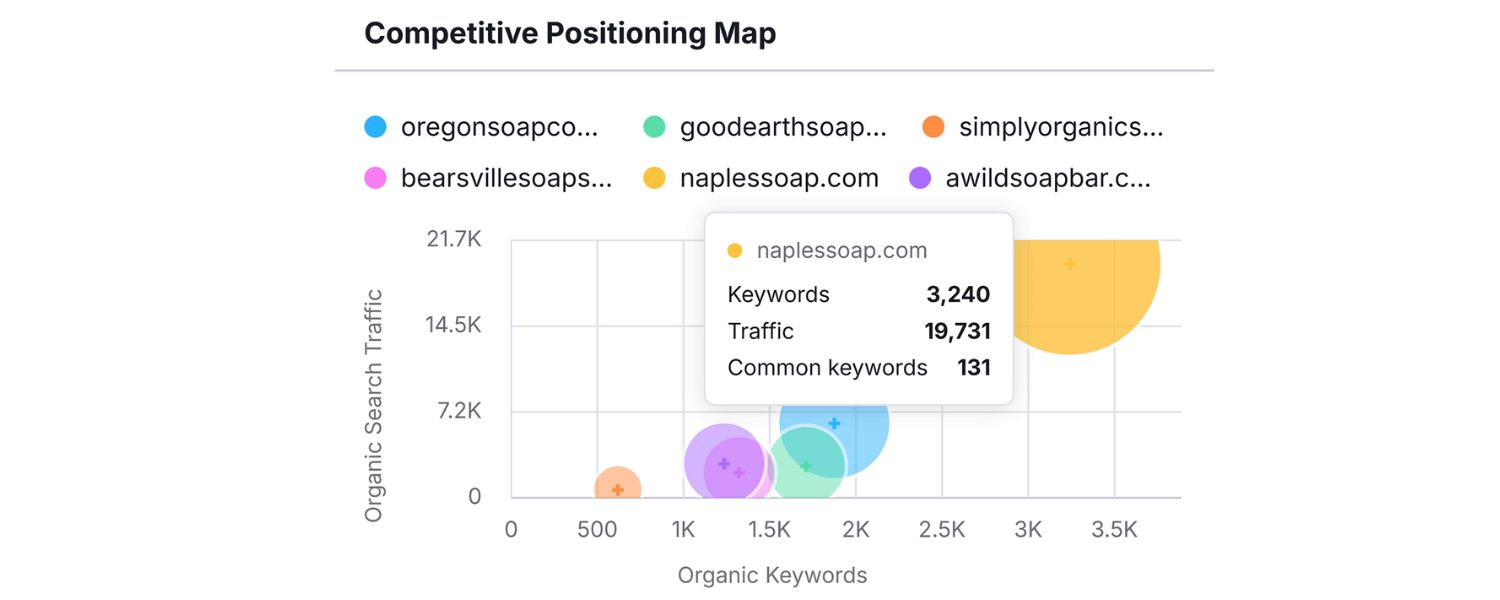
Once you’ve identified who to analyze, the next step is to find out which keywords those competitor sites are ranking for.
There are two general approaches here: using SEO tools and doing some manual sleuthing. Ideally, you’ll combine both for the most comprehensive results.
1. Use SEO Tools for Keyword Research:
 The fastest way to uncover competitor keywords is by using dedicated keyword research and competitor analysis tools.Industry-leading SEO tools, such as Semrush, Ahrefs, SpyFu, and Moz, enable you to input a competitor’s domain and generate a list of keywords for which the domain ranks.
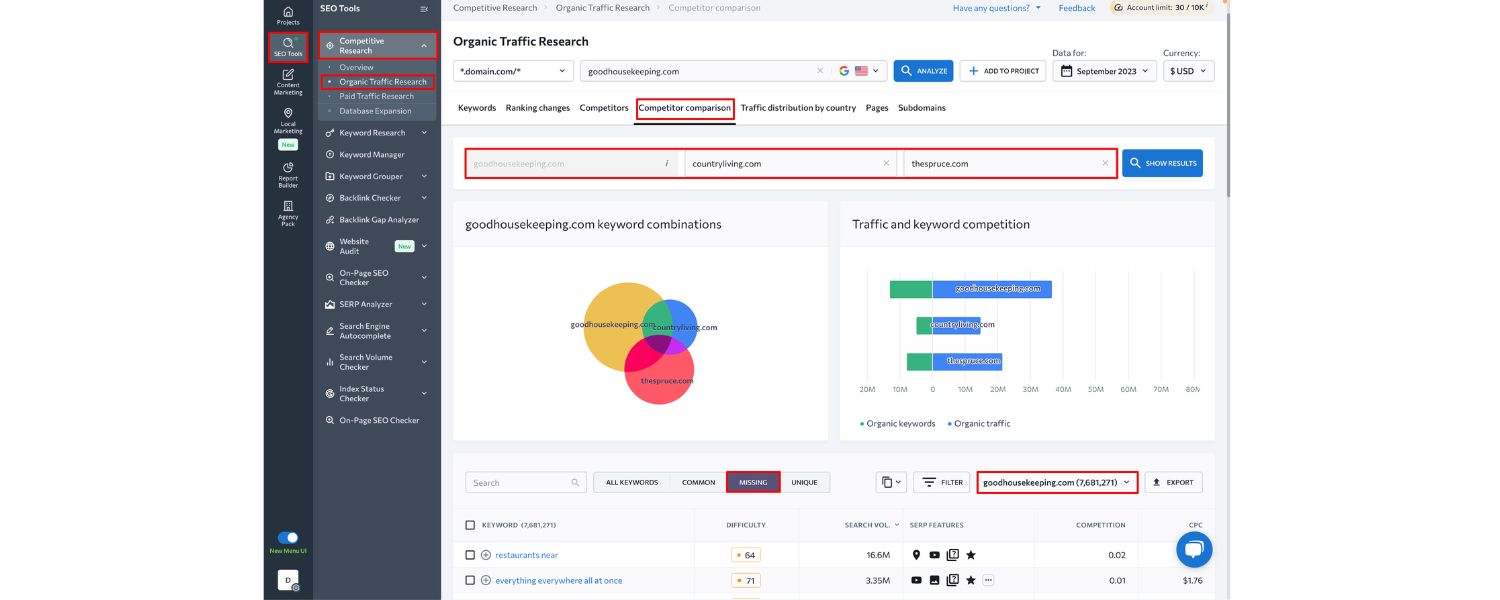
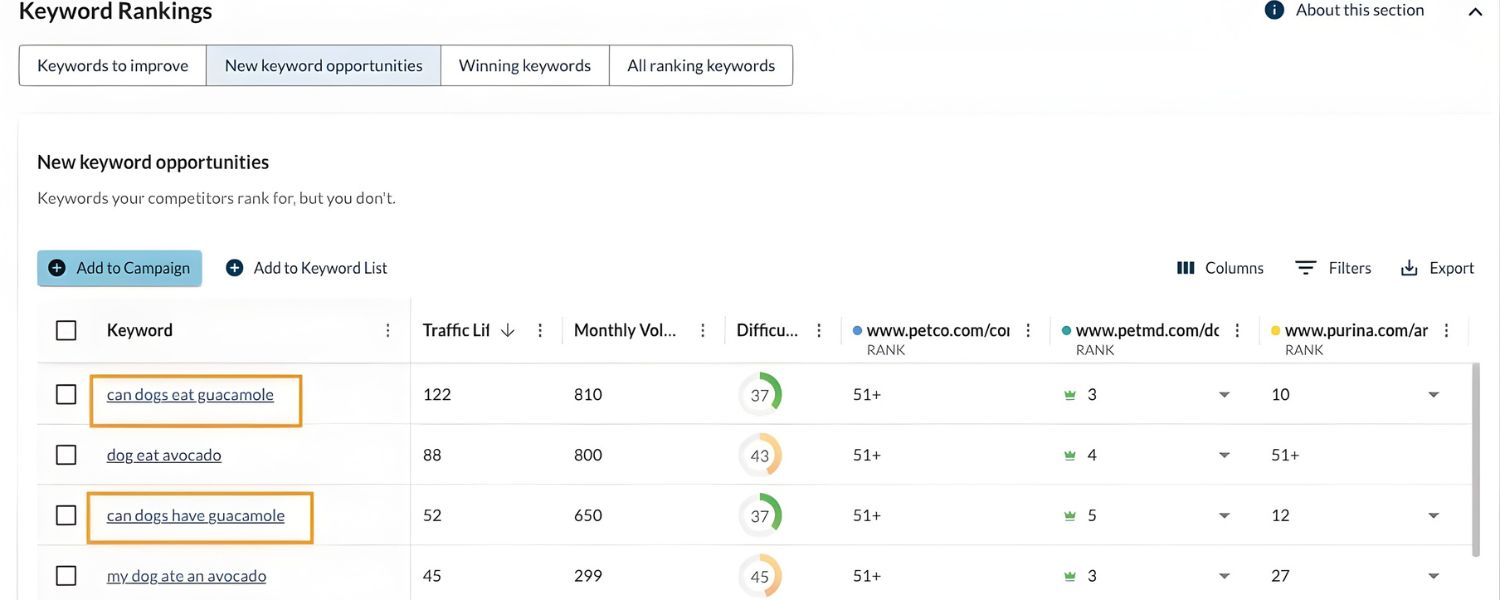
For example, with Semrush’s Organic Research or Keyword Gap tool, you can see a competitor’s top organic keywords, their Google rankings for each, search volumes, and even filters like “missing” or “untapped” keywords (terms your competitors rank for that you don’t).
SpyFu specializes in competitor keywords as well – you can easily download a competitor’s SEO and PPC keyword list with their tool.Similarly, Ahrefs offers a “Site Explorer” feature, which allows you to view any site’s organic keywords, as well as a Content Gap feature that enables you to compare multiple competitors simultaneously.
If you prefer free tools, you have a few options, although they may have limited data. Neil Patel’s Ubersuggest provides free competitor keyword information – simply enter a competitor’s URL to view their top keywords and estimated traffic.
Another option is the Google Keyword Planner (within Google Ads), where you can enter a competitor’s website under the “Discover new keywords” section to generate keyword ideas based on their content.
Some newer AI-powered tools, such as SEO. ai’s Competitor Keywords tool, even utilize AI to identify a competitor’s ranking keywords and provide metrics without requiring a login.
Keep in mind that free tools often have limits; paid tools tend to offer more comprehensive and accurate data.
When using tools, try the following steps for each competitor:
Plug in the competitor’s domain and pull their list of ranking keywords. Export this list, if possible, for further analysis.
- Look at filters like keywords where the competitor ranks in the top 10 (to see their strongest terms), and keywords they rank poorly for (which might be your chance to overtake them).
- Use keyword gap analysis features by comparing your site and your competitors’ side by side. This will highlight keywords your rivals rank for that your site is missing – these are prime opportunities to add to your strategy.
- Also, check competitors’ paid keywords if you do PPC. Tools can show you which search terms they’re bidding on. For instance, Semrush’s Keyword Gap tool can be toggled to view “Paid keywords” and identify terms where competitors run ads.
2. Leverage Google Search (Manual Methods):
 In addition to tools, don’t underestimate the power of a good old-fashioned Google search for finding competitor keywords.Start by searching a broad topic or head term in your niche (for example, search “best home workouts” if you have a fitness site).
Scan the titles and snippets of the top-ranking pages – your competitors’ page titles and meta descriptions will often highlight important keywords they’re targeting. Take note of recurring phrases you see across multiple competitor sites on the results page.
Scroll down to the “People Also Ask” questions and the Related Searches at the bottom of Google results.
These can help you identify related keywords that competitors might be targeting in their content. If a competitor appears as an answer to a ‘People Also Ask’ question, it indicates that they have content addressing that specific query, which means that query (keyword) is worth adding to your list.
Another trick: Use Google’s site: search operator. For example, search site:yourcompetitor.com “keyword” to see if a specific term appears on their site, or site:yourcompetitor.com with no keyword to see the competitor’s indexed pages.
Scanning a competitor’s blog or sitemap can reveal the topics (and by extension, keywords) they focus on. Look at their blog categories, article headlines, and product page titles for keyword ideas.
If you notice specific phrases showing up repeatedly in a competitor’s content, there’s a good chance those are essential keywords for them.
Finally, check if your competitors publish content on social media or YouTube that might hint at keywords.
For instance, a competitor’s YouTube video titles or the hashtags they use on posts might reflect keywords they consider essential.
This isn’t as direct as SEO tools, but it can round out your understanding of their content strategy.
By the end of this discovery phase, you should have a hefty list of potential competitor keywords. Don’t worry if it’s hundreds or even thousands of terms long – next, we’ll refine that list to the most valuable targets.
Step 3: Analyze and Choose the Best Keywords

With a raw list of competitor-derived keywords in hand, the real work begins: figuring out which keywords are worth pursuing for your own SEO and content strategy.
It’s unlikely (and unnecessary) for you to target every keyword your competitor ranks for.
Instead, you’ll want to filter and prioritize the list based on relevance and potential value. Here’s how to analyze the keywords and zero in on the golden opportunities:
1. Filter Out Irrelevant or Branded Terms:
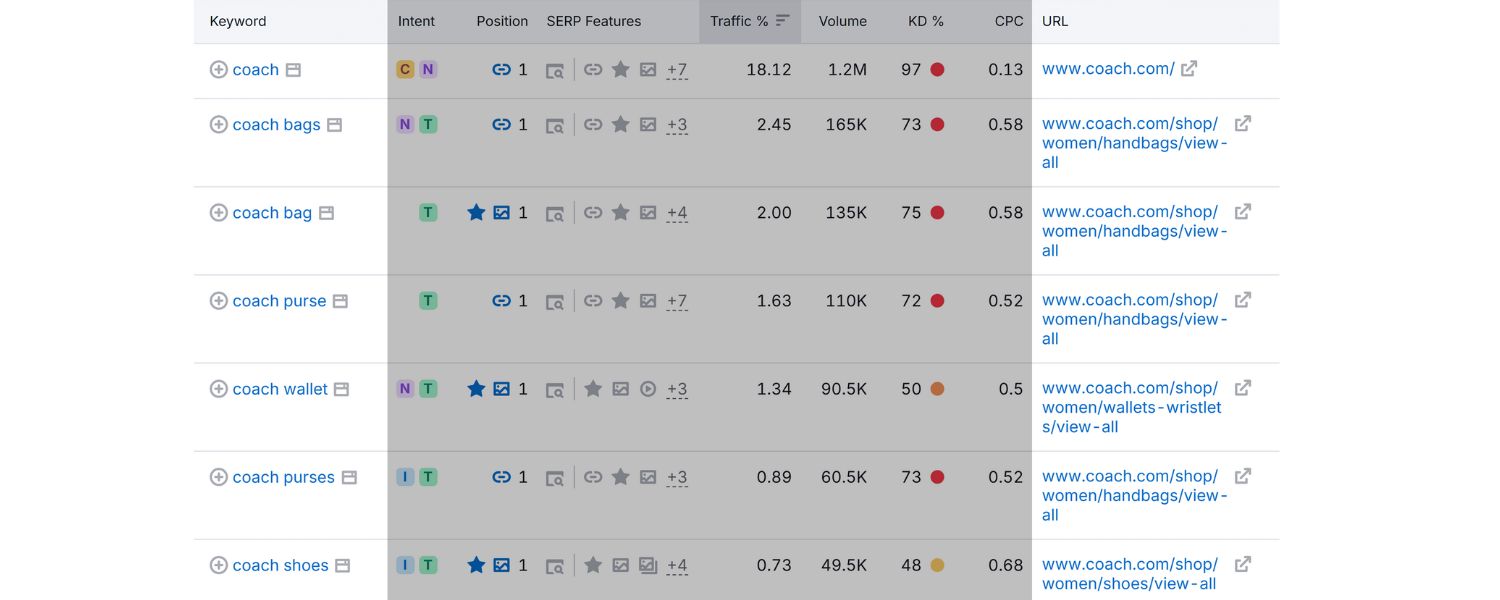
First, remove any keywords that aren’t a good fit for your business. This includes your competitor’s brand names or product names (you typically don’t want to target those directly in your content). Also, eliminate keywords that relate to offerings you don’t have or audiences you don’t serve.
The goal is to focus on terms that can attract your potential customers. A good practice is to begin with a keyword research checklist to organize and filter properly.
2. Check Search Volume and User Intent:
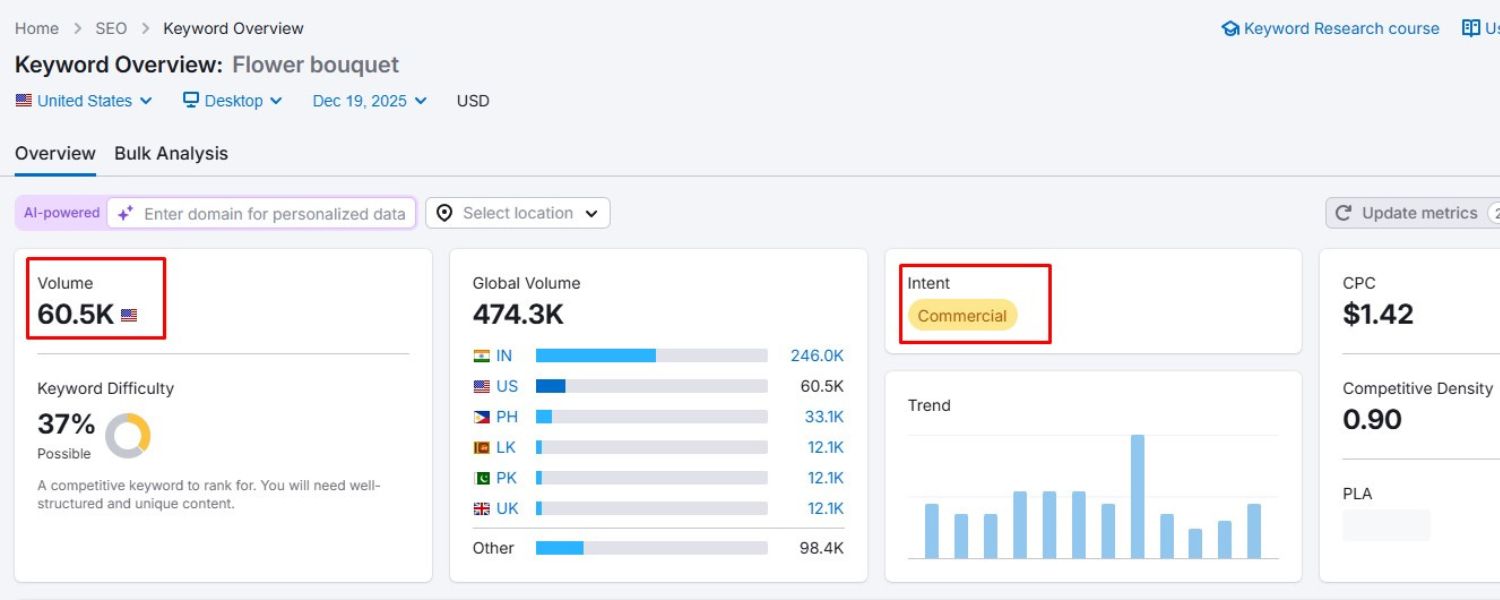
For each keyword, look at the search volume (how many people search it monthly) and consider what the searcher is likely looking for. High search volume is attractive, but it needs to align with the user intent that you can satisfy.
Ask yourself: does the keyword indicate someone is researching (“best project management software”), looking to buy (“buy project management tool price”), or just curious (“what is project management”)? Prioritize keywords with clear intent that match your content or product.
Often, competitor keywords with commercial or transactional intent (like “best X for [use case]” or “[product] vs [product]”) can be very valuable if you have something to offer those searchers.
3. Assess Keyword Difficulty and Competition:

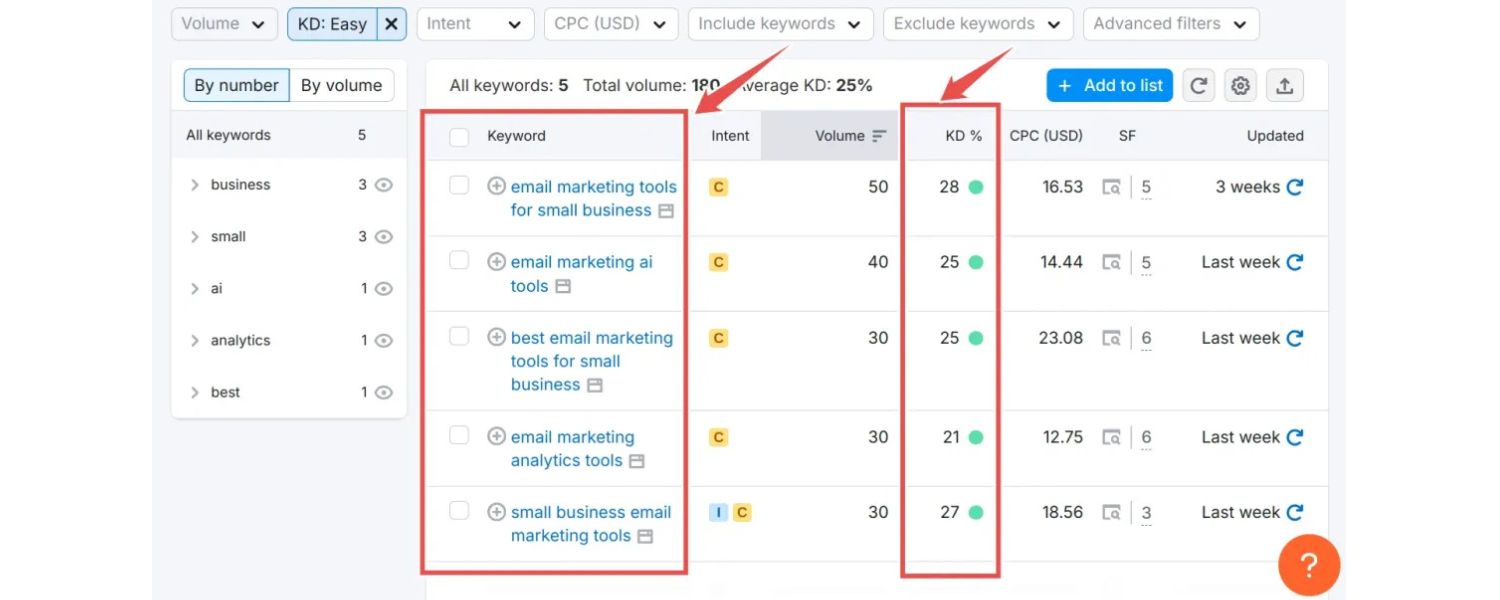
Most tools assign a keyword difficulty score, indicating how challenging it may be to rank for that term based on the level of competition. Use this as a rough guide – for a newer or smaller site, you’ll want to cherry-pick more low-to-medium difficulty keywords at first.
As Neil Patel recommends, if your site isn’t very authoritative yet, avoid ultra-competitive head terms initially. Instead, target longer-tail keywords or niche phrases where you have a realistic shot at ranking.
Keep the very competitive keywords on your radar for the long term, but focus now on the “quick wins” that your competitor might be overlooking. For deeper guidance, check this mastering keyword research resource
4. Identify the “Goldilocks” Keywords:
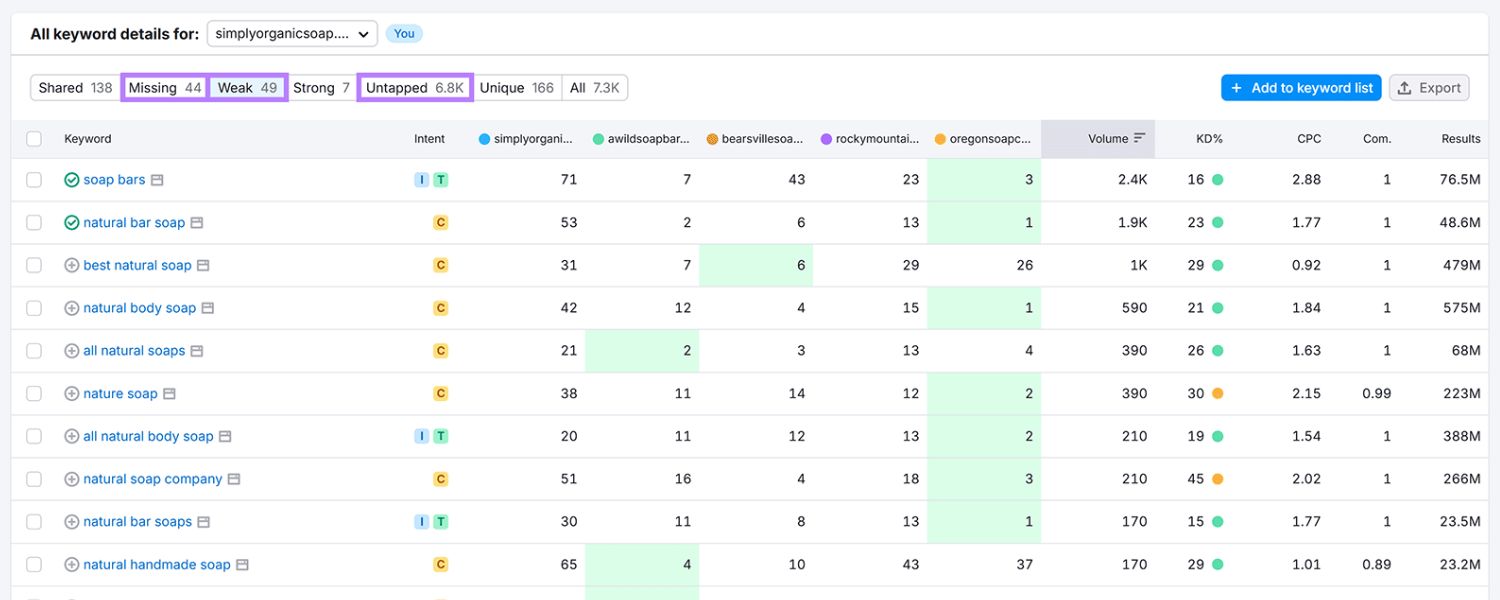
The ideal competitor keywords to target are those that hit the sweet spot of reasonable search volume, high relevance, and attainable competition level.These are sometimes called “golden keywords” – high-intent terms your site could rank for relatively quickly.
One way to find them is to look at keywords where your competitor ranks, but perhaps not in the top position, or where giant brands don’t dominate the overall SERP. If your competitor can rank on page 1, you might too, especially if you create something even better (more on that in the next step). For example, the on-page SEO checklist can help optimize your chances.
5. Examine the Current Search Results:

Before targeting a competitor’s keyword, perform a quick Google search for that term. See what content currently ranks in the top 5 positions. This will tell you what you’re up against and what searchers expect. Sometimes, you might discover that a keyword is dominated by unrelated results or a different intent than you thought, in which case, you might drop it.
At other times, you’ll find that the top results are outdated, low-quality, or missing key information, which is an excellent sign that you can swoop in with superior content. Always take a few minutes to review the SERP manually; it’s the easiest way to gauge how hard it might be to crack and whether you can offer something better.
For SERP-focused strategies, see this guide to link building and technical SEO audit guide.
6. Look at Competitors’ Content Quality:
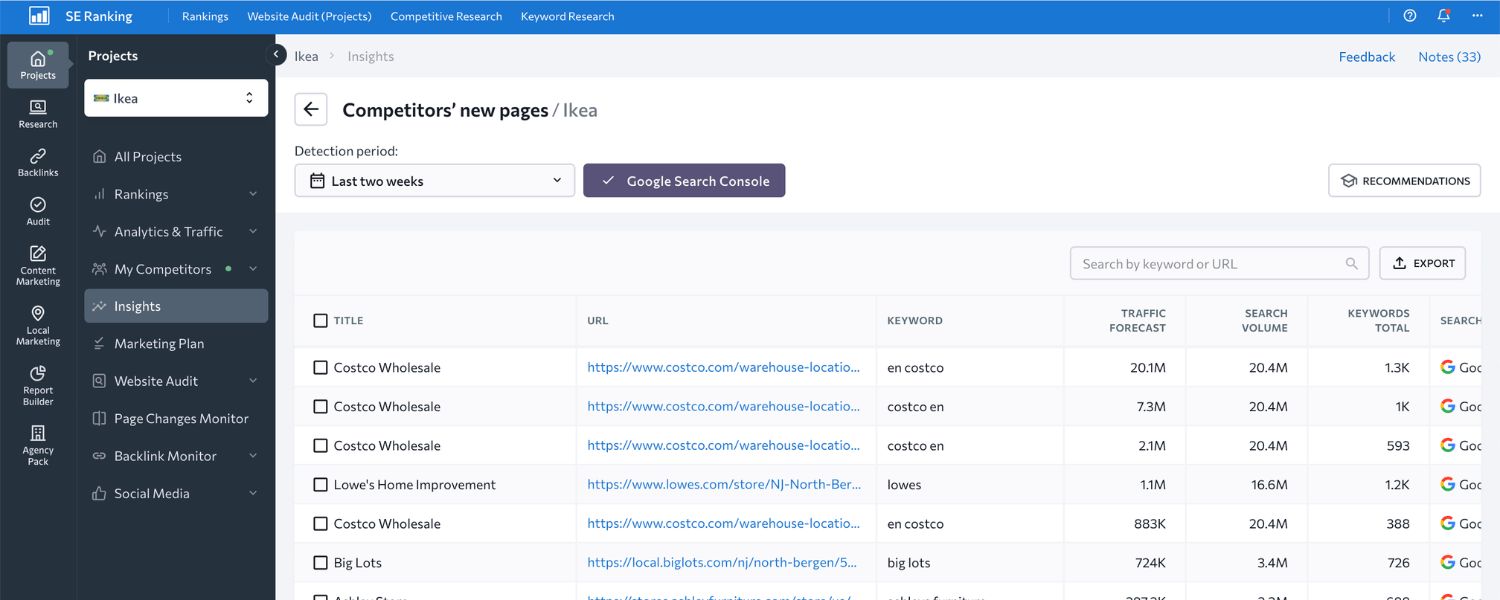
For each promising keyword, click through to your competitor’s ranking page. Analyze what they’ve done: Is the content comprehensive and up-to-date? What subtopics do they cover?Do they have engaging media, a good user experience, and fast load times?
If you notice gaps – for example, the competitor’s article is thin, lacks recent information, or fails to address specific related questions – that’s your opportunity. You’ll want to create a page that fills those gaps and outshines the competitor’s content on that keyword. Mastering SEO rankings often comes down to this kind of content gap strategy.
As you evaluate keywords with these criteria, start building a refined list of target keywords. You might categorize them by priority (high, medium, low) or by funnel stage (informational vs commercial intent).
For each keyword, jot down notes on what kind of content might be needed (e.g., a blog post, a product page, a comparison page) based on what you saw in the search results. This will be handy when you move to implementation.
Remember: Don’t rely solely on one metric, such as search volume or a tool’s difficulty score. Use a combination of factors and your best judgment.
For instance, a keyword tool might label a term “hard,” but if the current top results are weak and you have a strong site, you could still rank with effort.
Conversely, an “easy” keyword in a tool might be more challenging if the top results are all from very authoritative sites. Always cross-check with the real SERP and consider the context.
Step 4: Take Action – Optimize and Outrank Your Competition
Identifying great competitor keywords is only half the battle – now you need to act on those insights.
The ultimate goal is to leverage competitor keywords to improve your own site’s performance, either by creating new content or optimizing existing pages.
Here’s how to put your research into action and start outranking your rivals:
1. Create High-Quality Content Targeting the New Keywords:

For each valuable keyword you identified, plan to create a piece of content (or update an existing one) that targets that term. Ensure your content surpasses that of your competitors. This could mean it’s more in-depth, more up-to-date, better organized, or includes helpful visuals and examples. Aim to fulfill the search intent better than anyone else.
For example, if the keyword is a question, provide a more straightforward, more thorough answer. If it’s a “best X tools” query and your competitor’s list is from 2022, create a fresher 2025 list with more insightful reviews. Your content should not only match the keyword but also offer unique value or a fresh perspective so that both Google and users see it as an improvement over existing results.
2. Optimize On-Page SEO:
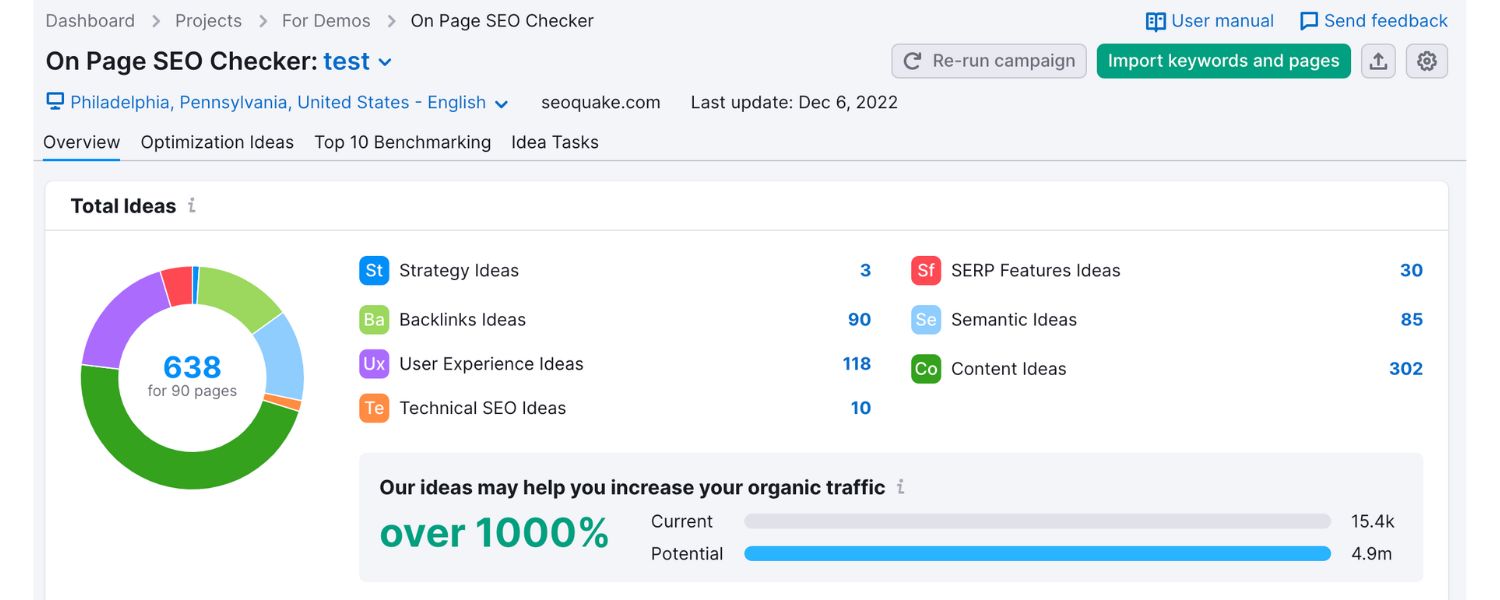
Incorporate the target keyword (and related synonyms) naturally into your page’s title, headings, meta description, and body content. Also, use semantic SEO – cover related subtopics and questions that searchers might have (often revealed by those ‘People Also Ask’ questions or associated searches).
Structure your content clearly with headings and bullet points (just like this blog does) for easy readability. If appropriate, include images, charts, or videos to enhance the content.
Essentially, roll out the red carpet for both users and search engine bots. On-page optimization signals to Google that your page is highly relevant for the keyword, thereby increasing your chances of ranking.
3. Leverage Internal and External Links:

If you have other pages on your site related to the topic, link to them (internal links). This not only helps readers find more info, but also distributes SEO value throughout your site. For external credibility, consider linking to authoritative sources that support facts or provide additional depth (like connecting to a study, a definition on Moz, or a relevant statistic).
Strategic external links can enhance your page’s authority in Google’s eyes, provided they are directed to trustworthy sites. (For example, citing an industry statistic or a definition from Wikipedia/Moz can be helpful.)
Avoid linking out to direct competitors in a way that could send readers away; instead, reference neutral or high-authority resources when necessary.
4. Monitor Your Results:

SEO improvements don’t happen overnight. After publishing or updating content for these competitor keywords, monitor how those pages start to perform.Use Google Search Console to see if your pages begin ranking for the new terms and track their average positions.
Tools like Semrush or Ahrefs can also show you when your pages start ranking for those keywords. Be patient – it may take several weeks or months to see significant progress. If a competitor keyword is highly competitive, you may need to inch up gradually.
Keep an eye on whether your content is gaining traction. If not, evaluate why: Do you need more backlinks to that page? Is the content truly meeting its intended purpose? Continuous improvement is key.
5. Adjust and Expand:
Competitor keyword targeting is an ongoing process. As you gain rankings, your competitors aren’t standing still either – they may update content or target new keywords.
Periodically (say, quarterly) repeat your competitor keyword analysis to catch any new essential terms. You can also expand to analyze new competitors if the landscape changes. Each time, feed those insights back into your content strategy.
Over time, you’ll build a robust presence across many of the keywords that once only your rivals ranked for.
Remember also to track your wins – if you overtake a competitor for a high-value keyword, celebrate the achievement and then set your sights on the next goal.
By systematically creating high-quality content and optimizing it for competitor keywords, you gain a competitive edge over your competitors.
You’re not copying their strategy; you’re learning from it and then executing an even stronger strategy.
When you consistently do this, the rewards are enormous: more organic traffic, more leads or sales, and the satisfaction of seeing your site climb above competitors in the search results.
Common Mistakes to Avoid

As powerful as competitor keyword research is, there are a few pitfalls that can undermine your efforts. Make sure to avoid these common mistakes that even seasoned SEO pros can stumble on:
1. Overlooking Long-Tail Keywords:
Don’t get obsessed with only the big, high-volume keywords your competitors rank for.Long-tail keywords (longer, specific phrases) often have lower search volume, but far less competition and highly targeted intent.
They can drive very qualified traffic. If you ignore these, you miss out on easier wins.Always include relevant long-tail queries found in competitor research – they might convert better than the broad terms.
2. Ignoring Content Quality and Intent:
It’s not enough to find competitor keywords and plop them into mediocre content. If your page doesn’t satisfy the search intent behind a keyword better than the competitor’s page, ranking will be an uphill battle.
Avoid the mistake of focusing on keywords over quality. Take the time to analyze why your competitor is ranking – often it’s because their content is genuinely helpful. Your content needs to be at least as good, preferably better.
Consider factors such as depth, accuracy, freshness, multimedia content, and user experience. Also, ensure the content format matches the intent (e.g., don’t try to rank a product page if all the top results are informational blog posts).
3. Chasing Only High-Competition Terms:
While it’s great to know the top keywords competitors rank for, be realistic about which battles to fight. If you go after only the ultra-competitive head terms where competitors have a decade-long head start, you might burn through resources with little to show.
Balance your strategy by including low-hanging fruit – those moderate or low-competition keywords that competitors rank for but aren’t dominated by industry giants. Win a series of minor battles and build up your authority; over time, you can challenge the more prominent keywords. In short, don’t focus solely on the most challenging keywords and overlook the attainable ones.
4. Copying Without Adding Value:
This is a subtle but essential point: competitor research should inform your strategy, not replace it. Avoid the trap of simply duplicating a competitor’s content or keywords without bringing anything new to the table.
If you copy, you’ll always be one step behind. Instead, use competitor insights as a springboard to create something unique and more valuable.Google rewards originality and usefulness.
So, for each keyword, think _“How can I approach this topic in a way that’s better or different?”_Perhaps you have more recent data, a different perspective, or a better product – make sure that shines through.
The goal isn’t just to match competitors, but to outdo them in a way that serves the reader better.By steering clear of these mistakes, you’ll maximize the impact of your competitor keyword strategy. It ensures you stay focused on quality and realistic opportunities, which ultimately leads to better results.
Conclusion: Outrank Your Rivals with Smarter Keyword Strategy
In the battle for search engine visibility, knowledge is power, and competitor keywords give you a wealth of knowledge.
By now, you’ve learned how to identify your actual competitors and uncover the search terms driving their success.
More importantly, you know how to apply those insights to your SEO strategy, from creating superior content around high-value keywords to avoiding common missteps, such as ignoring long-tail opportunities or blindly chasing big terms.
The key takeaway is that competitor keyword research should become a regular part of your SEO and content planning. The search landscape is constantly evolving, and keeping an eye on your rivals’ keywords helps you stay proactive and agile.
Use the tools and techniques we discussed to find new keywords and content ideas continually. Then, focus on outclassing the competition by delivering more value to the searcher, whether that’s through more comprehensive guides, fresher information, or a better user experience.
As SpyFu’s experts put it, the goal isn’t to copy competitors, but to understand the landscape and then create an even better SEO strategy from that knowledge.
Are you ready to put this into action? Don’t let your competitors hog the traffic that could be yours. Please start by selecting one competitor and analyzing their keywords using one or two tools.
Find a couple of juicy keywords they rank for, create a plan to publish improved content for those topics, and watch the results.
With consistent effort, you’ll begin to see your site climb higher in the rankings – and those competitor spots will slowly become yours.

.png)
Shopify SEO: Guide to Ranking Your Store and Driving Sales
Most Shopify store owners set up their store, list their...

Content Marketing : Definitive Guide to Strategy, Content Types, and Measurable ROI
Content marketing generates 3x more leads than outbound marketing at...

Above the Fold: Guide to Conversions, Rankings and Faster Pages
Above the Fold in 2026: The Complete Guide to Conversions,...

Off-Page SEO Checklist: Guide to Building Real Authority
Most websites spend months creating great content, only to wonder...

What Is Keyword Bidding? The Complete Strategy Guide for Smarter Ad Spend
Most advertisers believe the highest bid wins the auction. It...

What Is Google Trends? The 2026 Marketer’s Complete Guide
If you are not already pulling weekly insights from Google...
If you want a growth partner who will get to know every aspect of your business and treat your budget like their own — we are the right fit.
.png)


.png)
.png)
.png)
.png)
.png)
.png)
2026 ALL RIGHTS RESERVED MADE IN INDIA
