
The ROI of SEO: How to Measure SEO ROI (with Formulas)
August 12, 2025
Introduction
Search engine optimization (SEO) is often called a long-term investment, and for good reason. When done right, SEO can deliver one of the highest returns on investment (ROI) of any marketing channel.
In fact, some industries achieve over 1,000% ROI from SEO (for example, real estate at ~1,389% and financial services ~1,031% ROI). If you’ve ever struggled to justify your SEO budget or wondered how to improve your SEO ROI, this comprehensive guide will show you how to measure, prove, and boost the returns from your SEO efforts.
What Is SEO ROI?
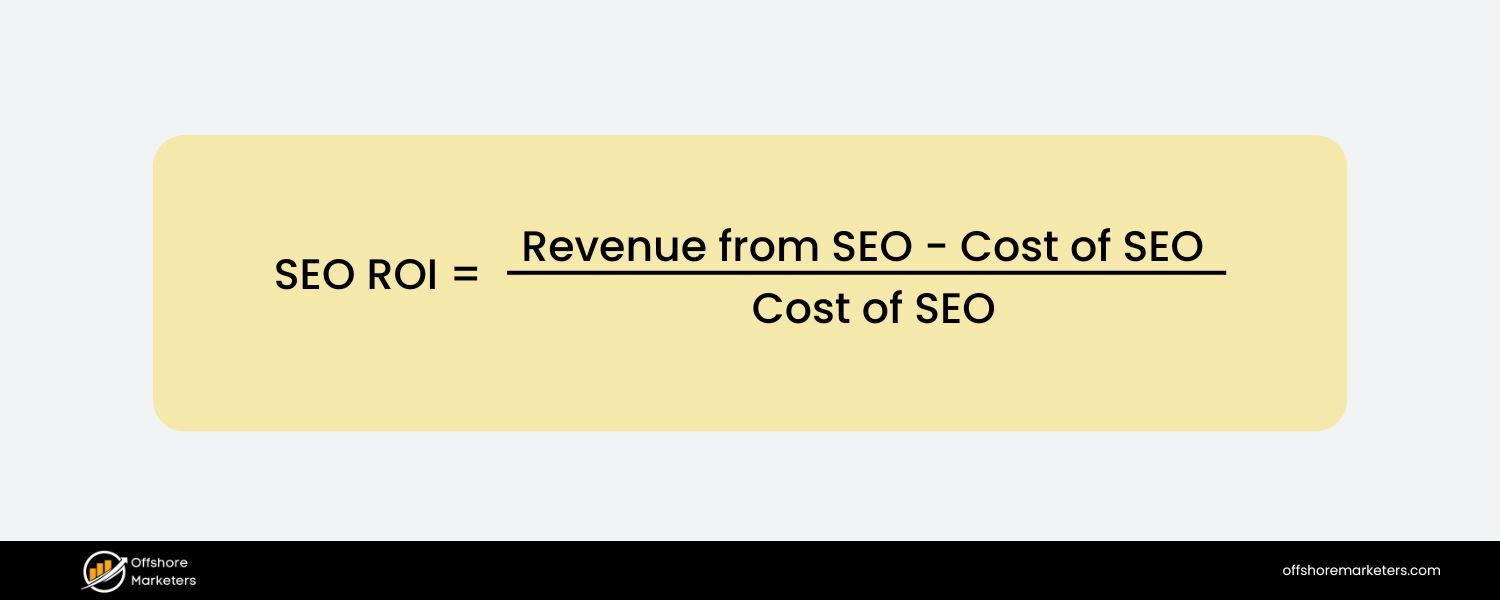
SEO ROI (Return on Investment) measures how much profit or value is generated from your SEO activities relative to what you spend.
In simple terms, it answers the question: “For every dollar I put into SEO, how many dollars do I get back?” If your SEO campaign generates more revenue than it costs, you have a positive ROI; if it generates less, ROI is negative. The basic formula for ROI is similar to any other business investment:
SEO ROI = (Revenue from SEO – Cost of SEO) / Cost of SEO × 100%
For example, if you spent $500 on SEO in a month and earned $2,000 in revenue from organic search, the ROI would be ($2,000 – $500) / $500 = 300%.
In other words, every $1 invested netted $4 back (a $3 profit). A positive ROI means SEO is paying off, whereas a negative ROI suggests your SEO strategy might need adjustment.
It’s important to note that “good” ROI for SEO can vary widely. Factors like your industry, competition level, sales cycle, and website history all influence ROI. For instance, highly competitive niches may see a slower or lower ROI initially because they require more investment to rank well.
On the other hand, effective SEO in a less competitive space or with strong execution can yield dramatically high returns over time. Case studies show companies averaging anywhere from 275% ROI (2.75x return) up to 550–1200% ROI from SEO, depending on their strategies and market. In short, SEO ROI is context-dependent, but the potential upside is significant when SEO is done right.
Finally, remember that SEO is a long-term strategy. Unlike pay-per-click (PPC) ads that can generate traffic instantly (but only as long as you pay), SEO involves building organic visibility that can continue to attract visitors for months and years.
This means ROI from SEO often starts slower but can compound greatly over time. It’s not unusual for an SEO campaign to be unprofitable in the first few months yet yield exponential returns in later months once higher rankings kick in. Next, we’ll explore why measuring this ROI is so crucial.
Why Measuring SEO ROI Matters
Investing in SEO without measuring ROI is like dieting without a scale, you won’t know if you’re making progress. Here are several reasons why tracking the ROI of SEO is essential:
A. Justify Budget and Resources
SEO often requires significant content creation, technical work, and time. Demonstrating a positive ROI helps prove the value of SEO to stakeholders (executives, clients, etc.) in concrete financial terms.
If you can show that “Last quarter’s SEO efforts generated a 150% ROI,” it becomes much easier to secure budget and buy-in for continuing or expanding SEO initiatives.
B. Align with Business Goals
ROI ties SEO metrics to business outcomes. It’s not just about rankings or traffic, it’s about how those translate into revenue and profit.
Measuring ROI keeps your SEO strategy focused on results that impact the bottom line, ensuring that your work supports overall business growth.
C. Optimize and Allocate Resources
By tracking ROI, you can identify which SEO activities are most profitable. Perhaps your blog content is driving most organic sales while certain technical fixes had less impact.
Knowing this allows you to allocate time and money to the highest-return SEO tactics and cut back on underperforming efforts. In short, ROI measurement brings a data-driven, efficiency mindset to your SEO strategy.
D. Competitive Benchmarking
ROI is a useful benchmark for comparing your performance against competitors or industry averages. If competitors are achieving higher organic ROI, it might signal the need to adjust strategy.
On the other hand, if your ROI is above industry benchmarks, that’s a strong indicator your SEO program is giving you a competitive edge.
E. Accountability and Improvement
Regularly measuring ROI forces you to track outcomes (conversions, revenue) rather than vanity metrics. It provides accountability for SEO efforts. If ROI is low, it’s a prompt to investigate why – maybe conversion rates are an issue, or you’re targeting the wrong keywords, and then improve your approach.
As one marketing survey noted, over one-third of companies still rarely or never measure marketing ROI, which means they’re flying blind. By focusing on ROI, you’ll be ahead of many, using tangible data to steer your SEO program.
In summary, measuring SEO ROI is important because it validates SEO’s value to the business and guides smarter decision-making. It shifts the conversation from “we increased organic traffic by 50%” to “our SEO investment brought in $X in revenue, which is Y% ROI”, a much more powerful narrative when demonstrating success.
How to Calculate SEO ROI
Calculating SEO ROI involves two main components: the investment (cost) you put into SEO and the return (revenue or value) generated from SEO. In formula form, as shown earlier, ROI = (SEO Revenue – SEO Cost) / SEO Cost. Let’s break down how to determine each piece step by step.
1. Calculate Your Total SEO Investment (Costs)
Start by tallying up everything you spend on SEO. This can include:
A. In-House SEO Labor
Account for salaries or the portion of salaries for anyone on your team who works on SEO. If you have dedicated SEO specialists, use their fully loaded cost. For team members who do SEO as part of their role (content writers, web developers, marketers), estimate the percentage of their time spent on SEO tasks and pro-rate their cost accordingly.
For example, if a content writer spends 50% of their time creating SEO-focused content, include 50% of their salary in SEO costs. It may help to track hours spent on SEO activities to get a precise figure.
B. Agency or Freelance Fees
If you outsource SEO work to an SEO agency or consultants, include those fees in your costs. Most agencies work on a retainer or monthly fee model, which makes this straightforward – e.g. an agency charging $2,000 per month would be $24k annually in your SEO investment.
Freelancers (for link building, copywriting, etc.) should also be counted. Essentially, any external SEO service costs are part of your investment.
C. SEO Tools and Software
Consider the cost of any SEO software subscriptions or tools your team uses, for example, paid plans for tools like Semrush, Ahrefs, Moz, SEO crawlers, rank trackers, etc.
If tools are shared across departments, you can prorate the portion used for SEO. For instance, if your company pays $500/month for a tool that is used 50% by the SEO team and 50% by other teams, you might allocate $250/month to SEO cost.
D. Content Creation and Distribution
SEO often involves creating high-quality content (blog posts, landing pages, infographics) to rank for target keywords. Content production costs, whether that’s writer salaries, freelance writing fees, graphic design for visuals, or video production, should be included in SEO investment.
Also include content distribution or promotion costs specifically aimed at boosting SEO performance. This might encompass outreach to earn backlinks, content marketing efforts, social media promotion for your SEO content, or even paid promotion if used to seed initial visibility.
For example, if you spend on an outreach service or sponsor some content for link-building purposes, count that as well.
E. Technical and Website Costs
Sometimes improving SEO requires website development work (e.g., improving site speed, mobile-friendliness, or fixing crawl issues). If you incur development costs specifically for SEO improvements, include a fair share of those.Similarly, any costs for technical SEO audits or fixes (maybe you hired a consultant to do a one-time SEO audit) should be counted.
When you add up all these expenses for a given period (say, monthly or annually), you get your total SEO investment. This is the “cost” part of the ROI equation. Keep this number handy.
2. Calculate the Revenue Attributable to SEO
Next comes the return side: how much revenue is SEO bringing in. This can be a bit more involved, especially for non-e-commerce businesses, but it boils down to attributing value to the traffic and conversions driven by your SEO efforts.
Here are common approaches to determine SEO revenue:
A. Direct e-Commerce Revenue from Organic Search
If you run an online store or any e-commerce tracking, this is relatively straightforward. Use web analytics (e.g., Google Analytics) to find the total revenue from organic search traffic.
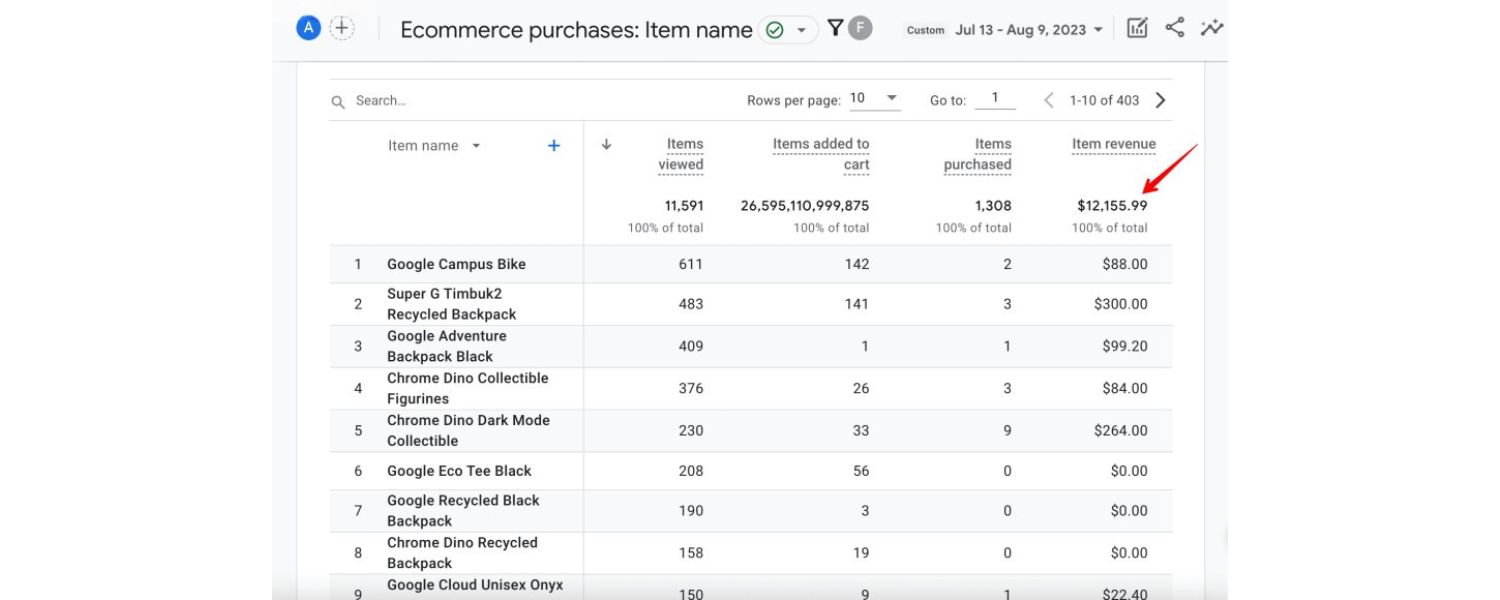
Tools like GA4 can show you the sum of all purchase value that came from users who originated via organic search. For example, you might find that last month “Organic Search” channel contributed $100,000 in sales on your website.
That figure (for the period you’re analyzing) is the gross revenue driven by SEO. Be sure to use the same time frame for revenue as you did for costs (e.g., if costs are per month, look at monthly organic revenue).
B. Lead Conversions (for B2B or Service Businesses)
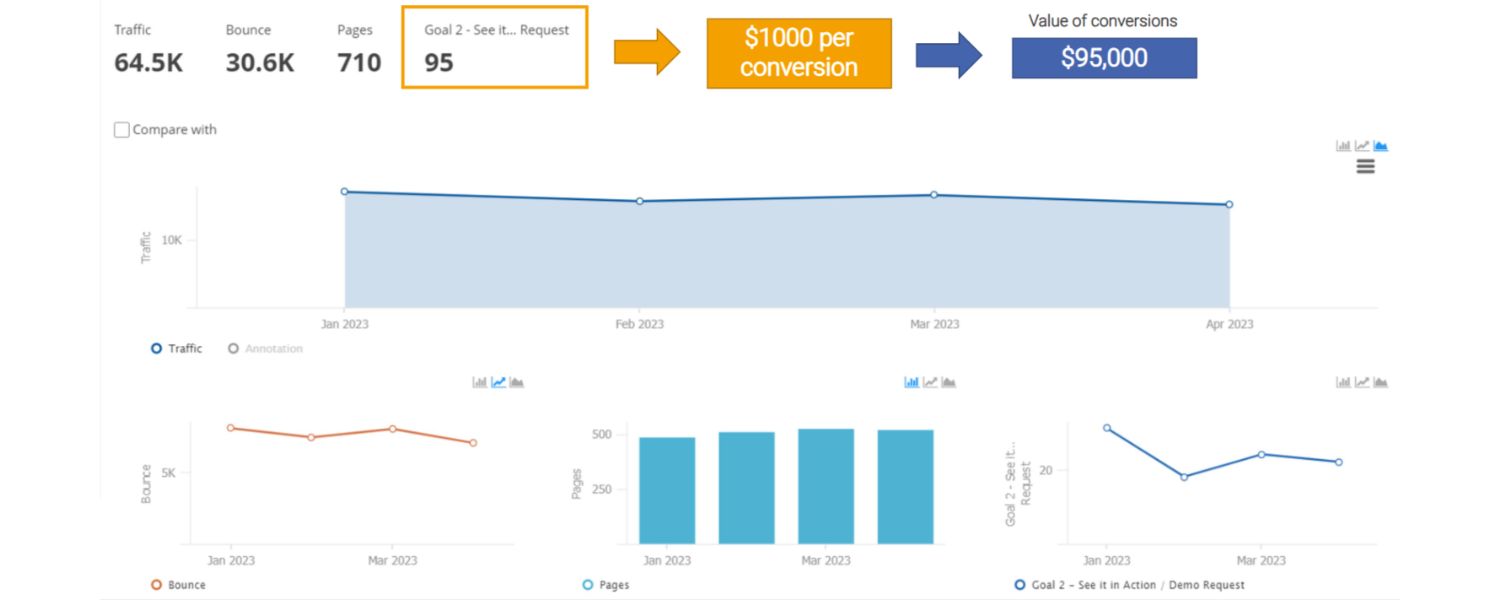
If your website’s goals are leads (form fills, demo requests, phone calls, etc.) rather than direct online sales, you’ll need to take an extra step.First, track how many leads are generated from organic search. This could be done via analytics (setting up goals for form submissions and filtering by organic traffic, for instance).
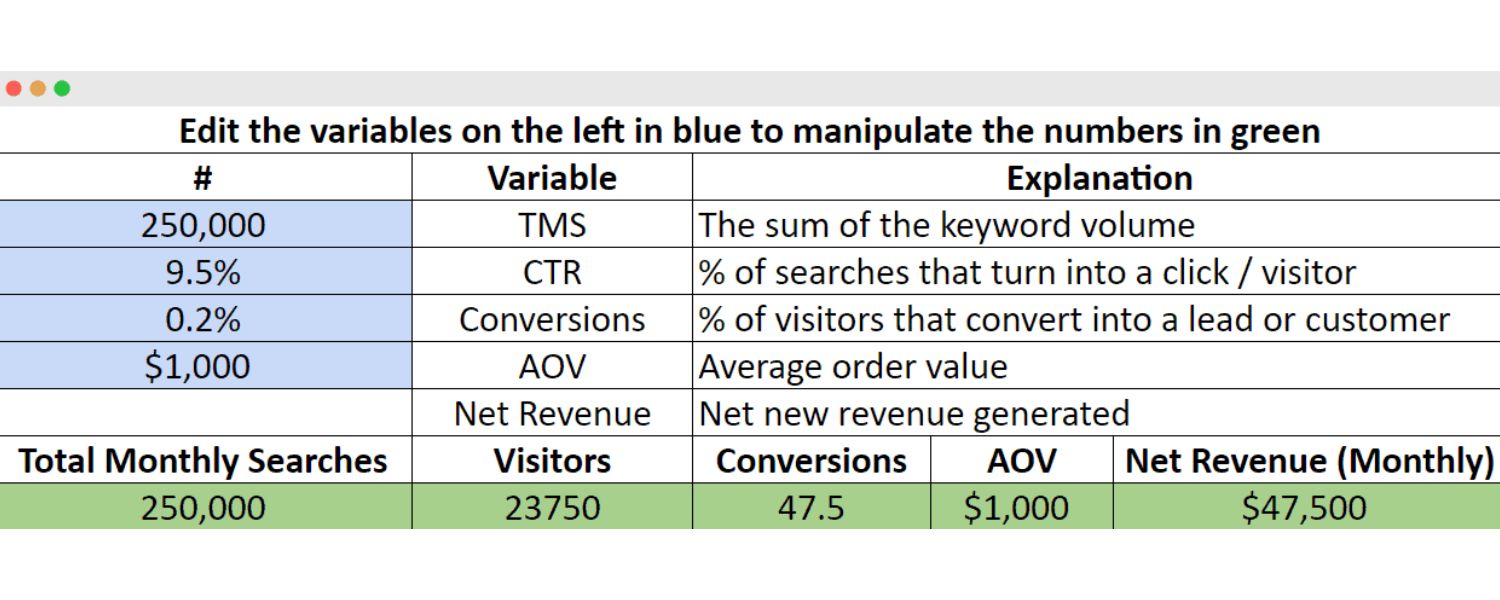
Then, you must assign a monetary value to those leads to estimate revenue. One common method is to use your lead conversion rate and customer value. For example, say you got 500 lead form submissions from organic search last month and on average 10% of leads convert into paying customers (this is your sales team’s close rate).
That yields 50 customers. If your average revenue per customer is $2,400, then the organic leads correspond to about $120,000 in revenue (50 customers × $2,400 each).
You can adjust this approach based on your business model – e.g., use customer lifetime value (LTV) if your customers have repeat purchases or multi-year value. The key is translating SEO-driven leads into an estimated revenue figure.
C. Supporting Conversions and Multi-Touch Attribution
One challenge in measuring SEO’s revenue impact is that customers might find you in multiple ways. For instance, someone might discover your site via a Google search (SEO), then a week later return directly and purchase.
Strict “last-click” attribution would credit that sale to “Direct” traffic, not SEO, even though SEO played an early role. To account for this, you can use multi-touch attribution models in analytics or at least track assisted conversions.
Google Analytics offers reports for assisted conversions by channel – you may find that organic search assisted a significant number of conversions that weren’t directly last-click organic. While you don’t want to double-count, being aware of SEO’s role in the customer journey is important for a full picture.
At a minimum, you might choose to exclude purely branded searches when measuring SEO impact to be conservative (since a lot of branded organic traffic might be driven by offline marketing or existing brand awareness).
For example, if half of your organic traffic is from people searching your company name, one could argue those should be partially credited to brand marketing, not SEO. Some analysts will remove branded search revenue to get a “non-branded SEO revenue” figure for ROI calculations.
The true impact lies somewhere in between. It’s good to be aware of these nuances, but if you’re just starting, attributing all organic revenue as SEO’s return is the simplest high-end estimate, while stripping out brand traffic gives a low-end estimate.
D. Estimated Organic Traffic Value (Alternate Method)
Another way to gauge SEO’s monetary impact is by estimating how much it would have cost to get the same traffic from paid ads.SEO tools like Ahrefs and Semrush provide a metric called “organic traffic value,” which calculates, based on current cost-per-click (CPC) prices, how much you’d pay in Google Ads to acquire your organic visits.
This isn’t actual revenue, but rather cost savings. For instance, if Ahrefs estimates your monthly organic traffic is worth $50,000 in ad spend, that means SEO is delivering $50k worth of clicks for “free” (beyond your SEO costs).
Many marketers use this to demonstrate ROI, especially if direct revenue numbers are hard to pin down. It highlights how investing in SEO reduces the need for equivalently expensive PPC campaigns. You can incorporate this by saying, “Our organic traffic would cost $X via PPC – that’s value we gain from SEO,” and compare $X to your SEO investment.
Once you have your SEO revenue figure for the period, whether it’s direct sales or an equivalent value, calculating ROI is straightforward: plug into the formula.
For example, suppose in one quarter you spent $30,000 on SEO (content, links, staff, etc.) and your tracked organic revenue was $120,000. Then ROI = (120,000 – 30,000) / 30,000 = 3.0, or 300%. In other words, you earned back your investment plus 3X more.
Another scenario: you spend $10k/month on an SEO agency and get $100k/month in organic sales, that’s a 900% monthly ROI. A lead-gen example: $10k spend yields $110k in customer value from organic leads, ROI = 1,100%. These calculations can be done for any timeframe (just keep revenue and cost periods consistent).
Pro Tip:
Consider the long-term value of SEO-driven customers. If you have subscription clients or repeat purchasers, the true ROI of SEO might be even higher than initial calculations.
For instance, if an average customer makes 4 repeat purchases over their lifetime, the revenue from an SEO-acquired customer could be 4× the initial purchase.
Similarly, factor in profit margins: a 900% ROI with slim profit margins might require more cashflow patience, but over time those customers can become very profitable.
Now that we know how to calculate SEO ROI, let’s look at what kind of ROI numbers are common, and how SEO stacks up against other marketing investments.
SEO ROI Benchmarks and Key Statistics
How well does SEO perform in practice? Several recent studies and surveys shed light on SEO’s ROI compared to other channels, the timeframe for returns, and differences across industries. Here are some eye-opening SEO ROI statistics every marketer should know:
A. SEO Outperforms Most Channels
Nearly 49% of marketers say organic search delivers the best ROI of any digital channel. In one survey, almost 60% of marketers reported that SEO’s ROI has increased in recent years – showing growing confidence in organic marketing.
Additionally, 60% of marketers note that inbound strategies (like SEO-driven content marketing) produce the highest quality leads of all their tactics. Simply put, SEO is seen as a top driver of revenue and high-quality prospects for many businesses today.
B. B2B Loves SEO
About 57% of B2B marketers consider SEO the most effective digital marketing channel for their needs. B2B companies often have longer sales cycles, where building trust through content and organic visibility pays off.
In fact, BrightEdge research found B2B companies generate twice as much revenue from organic search than from any other channel on average. B2B brands also tend to see better ROI from inbound marketing/SEO than B2C brands, likely because organic content can pre-qualify and educate leads in complex industries.
C. Higher Conversion Rates and Lead Quality
Traffic from SEO doesn’t just drive quantity – it drives quality. SEO leads have a ~14.6% close rate, whereas outbound leads (like cold calls or direct mail) close at only 1.7%.
This famous statistic highlights that visitors coming through organic search are often further along the buying process or better targeted (they were actively searching for something relevant), making them much more likely to convert than interruptive outbound prospects.
Moreover, the average conversion rate of SEO traffic is around 2.4% across industries, which is on par or better than many other channels. Some industries see even higher conversion rates from SEO – for example, local service businesses like HVAC average ~3.3% conversion, and legal services see about 7.5% conversion rate from organic traffic (reflecting the high intent of people searching for attorneys).
D. SEO vs PPC (Paid Search) ROI
A common question is how SEO’s ROI compares to pay-per-click advertising. While results can vary, studies indicate that SEO often delivers higher long-term ROI than PPC.
70% of marketers state that SEO produces more sales than PPC in their experience. Poll data from Neil Patel’s team (NP Digital) found that SEO yields an ~8× return on investment, compared to ~4× from PPC on average.
Even Google’s own research shows organic search has about 5.3× ROI, versus ~2× for paid search ads. Why the difference? With PPC, you pay for each click and costs can escalate, whereas SEO’s costs are mostly upfront (content, optimization) and clicks thereafter are “free,” allowing profit to compound.
Without SEO, you’d likely spend significantly more on ads – one analysis noted that lacking a strong organic presence can increase customer acquisition costs by up to 4× (400% higher ad spend) to get the same results via ads.
E. ROI by Industry
SEO ROI can vary by industry, but most sectors see substantial gains. According to a FirstPageSage 2025 study (3-year averages), industries like Real Estate enjoy an average ROI of 1389% from SEO, and Financial Services around 1031% – the highest among those studied.
Other strong sectors include B2B SaaS (702% ROI) and Manufacturing (813%). Even on the lower end, industries like e-commerce retail (which is very competitive) saw about 317% ROI on average – still a tripling of investment.
Notably, the time to break even on SEO also ranged by industry: some hit break-even in ~5-6 months (e.g. construction, HVAC), while others took closer to a year (legal services ~14 months). But across the board, within 1–1.5 years most industries were seeing net positive returns, which then kept growing.
The highest ROI campaigns often correspond to higher-margin industries (e.g. real estate, finance) or those with high customer lifetime values, where organic leads and sales provide outsized revenue.
F. SEO Strategy Matters for ROI
Not all SEO efforts are equal. The depth and quality of your SEO strategy can dramatically affect ROI.For example, a study by FirstPageSage compared different approaches: a “thought leadership” content-driven SEO campaign (high-quality content ~6–8 pieces/month, strategic targeting) delivered about 748% ROI with break-even in 9 months, whereas a “basic” SEO campaign (minimal content ~4 posts/month of average quality) returned only 16% ROI over a similar period.
In other words, simply doing SEO haphazardly may barely break even, but investing in expert strategy and quality content can multiply your returns. Even technical SEO fixes alone yielded ~117% ROI – proving their value – but the big wins came from combining technical best practices with robust content and link-building to drive growth.
The takeaway: to maximize ROI, businesses should treat SEO as a comprehensive, quality-driven effort, not a half-hearted checkbox exercise.
G. Positive ROI Timeline
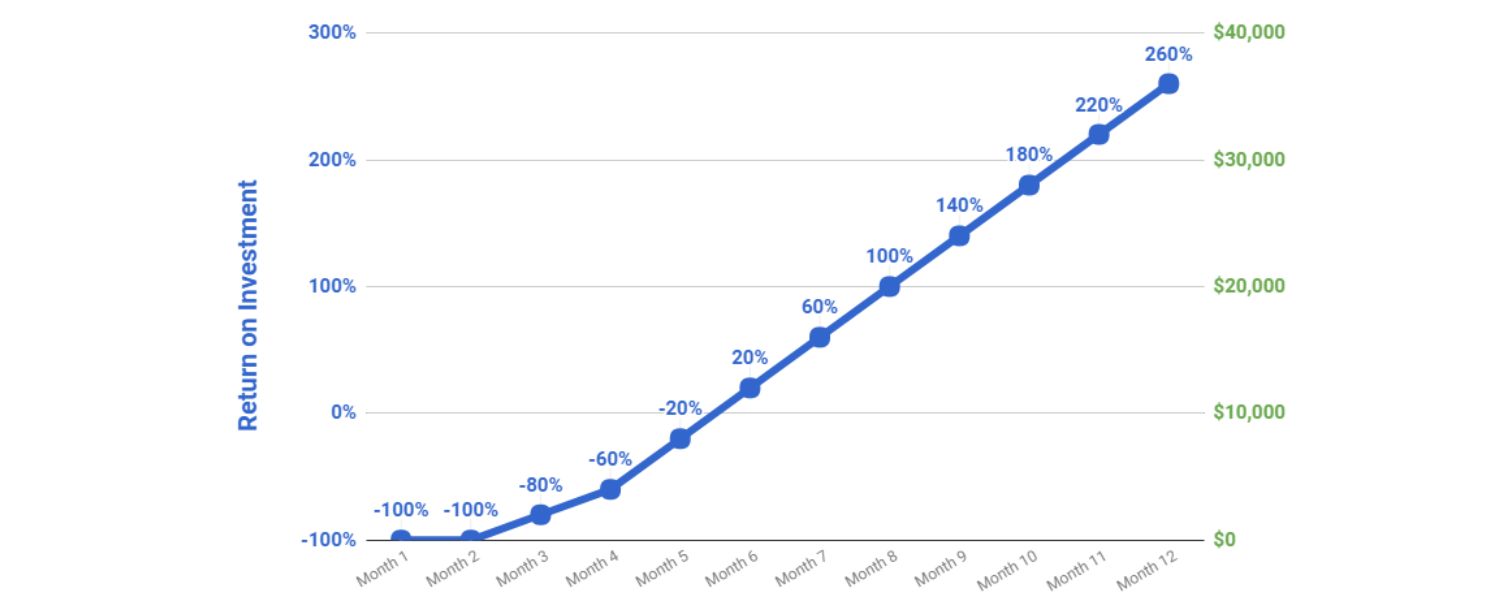
One common question is how soon will SEO pay off? Most sources agree SEO is not an overnight payoff – it generally takes a few months to a year to see strong ROI.Positive ROI for SEO campaigns is often achieved in ~6 to 12 months after starting. This accounts for the time it takes to create content, have it indexed, build rankings, and start getting significant organic traffic.
Many businesses see modest results in the early months (3–6 months) and hit break-even somewhere in the 6–9 month range. Peak results tend to occur in the second or third year of continuous SEO investment.
This aligns with how SEO builds on itself – content that’s 1-2 years old (if kept updated) accumulates authority, backlink profiles grow, and your site’s domain reputation strengthens, leading to even better rankings and more traffic in year 2, 3 and beyond.In essence, SEO is a snowball rolling downhill: it may start small, but given time, it can turn into an avalanche of ROI.
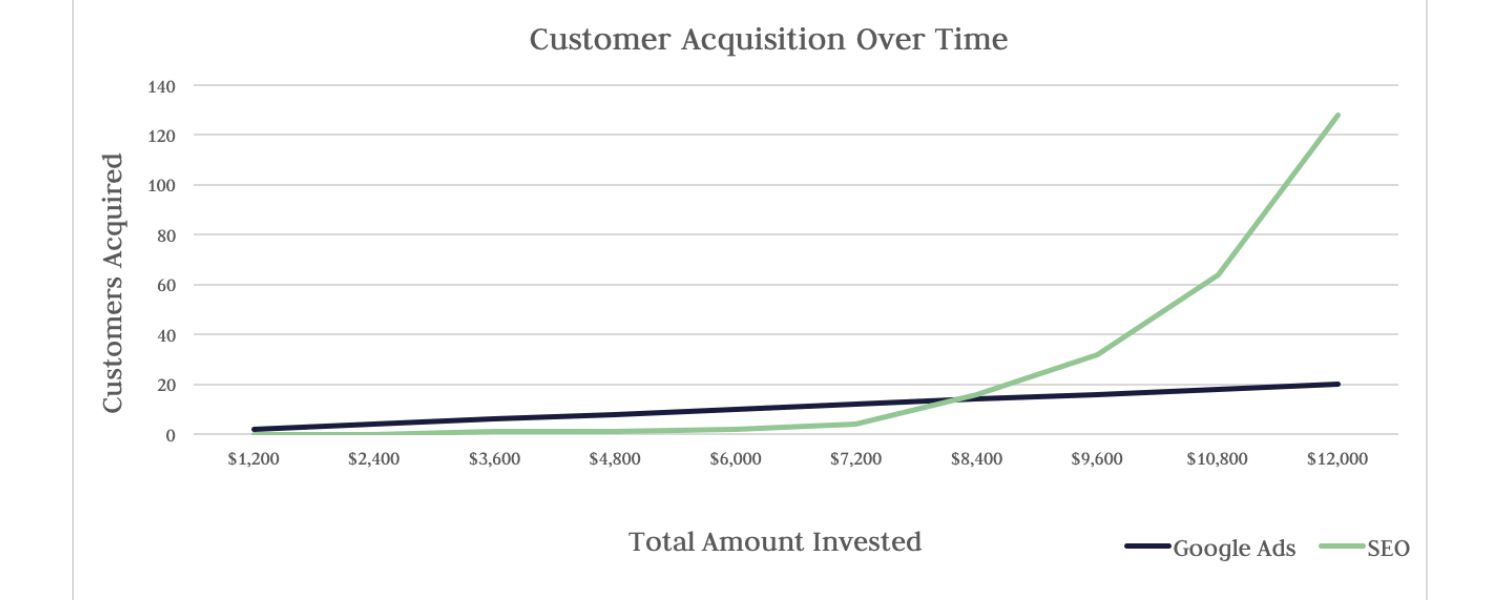
To put this in perspective, paid search (PPC) often shows immediate results but flat ROI – you generally get a return only as long as you keep spending. SEO, by contrast, often shows exponential growth in returns over time.
A visual from one study illustrates this well: a company investing the same amount per month in SEO vs. PPC would see SEO start slower, but after 6+ months, the SEO-driven customer acquisitions skyrocket, far surpassing the paid ads in cumulative results.
The chart below conceptualizes this, with the green line (SEO) eventually vaulting above the black line (PPC):
Illustration
SEO vs. PPC ROI projections over time. SEO (green line) starts slower but compounds rapidly, yielding far greater customer growth per dollar invested in the long run than a steady investment in PPC (black line).
As you can see, SEO’s ROI tends to accelerate with time and momentum. This doesn’t mean PPC is bad – paid ads can be very useful, especially for immediate needs and for keywords where you aren’t ranking yet.
However, the strategic insight is that investing in SEO yields compounding returns and lower cost-per-acquisition in the long term. Many companies wisely use PPC to supplement SEO (or cover gaps early on), but over time shift more budget to SEO as its ROI eclipses that of paid media.
How Long Does It Take to See ROI from SEO?
As mentioned above, SEO requires patience. Let’s break down the typical timeline for SEO ROI and what to expect:
Months 1–3
Laying the Groundwork (Initial Investment Period). In the first few months of an SEO campaign, you’re often investing heavily in research, content creation, site improvements, and technical fixes.
During this phase, you might see little to no uptick in organic traffic or revenue, it’s normal for ROI to be negative in the early months because costs come upfront while results lag.
Don’t be discouraged: think of this as planting seeds. It takes search engines time to discover new content or recognize site changes. Many campaigns see minimal growth initially.Use this period to build a strong foundation: publish high-quality content, optimize existing pages, fix technical issues, and ensure your analytics tracking is capturing all the right conversion data.
Months 4–6
Initial Results and Rising Traffic. After a few months, you should begin to notice gradual improvements. Some of your target keywords may start ranking on page 2 or creeping onto page 1.
Organic traffic might slowly increase.Correspondingly, you may get your first conversions or sales attributable to SEO if you weren’t getting any before. ROI often approaches breakeven somewhere around this point, especially if a couple of content pieces start performing well.
It’s still early for a full ROI assessment, but you can at least confirm things are moving in the right direction (higher rankings, more clicks, maybe a few leads or sales).
Tracking KPIs like non-branded organic traffic and conversion counts is crucial here to show progress beyond just dollars.
Months 7–12
Significant Growth and Break-Even. In many cases, between the 6-month and 12-month mark is where SEO really kicks into gear.Content published earlier has now aged and gained authority, more keywords hit the coveted top positions, and Google trusts your site more. It’s common to see exponential growth around months 7–9+ – for example, one e-commerce client saw over 535% growth in organic traffic by month 12 after a slow start in the first 6 months.
With that traffic surge comes a surge in leads or sales. By the end of year one, many SEO programs have not only broken even but are delivering strong positive ROI (remember, an average campaign might achieve ~6-12 month breakeven).
For instance, if you invested steadily all year, month 12’s revenue might be several times the monthly SEO cost, pulling the cumulative ROI into positive territory. It’s a great feeling when you see that inflection point where SEO goes from cost center to profit generator.
Year 2 and Beyond
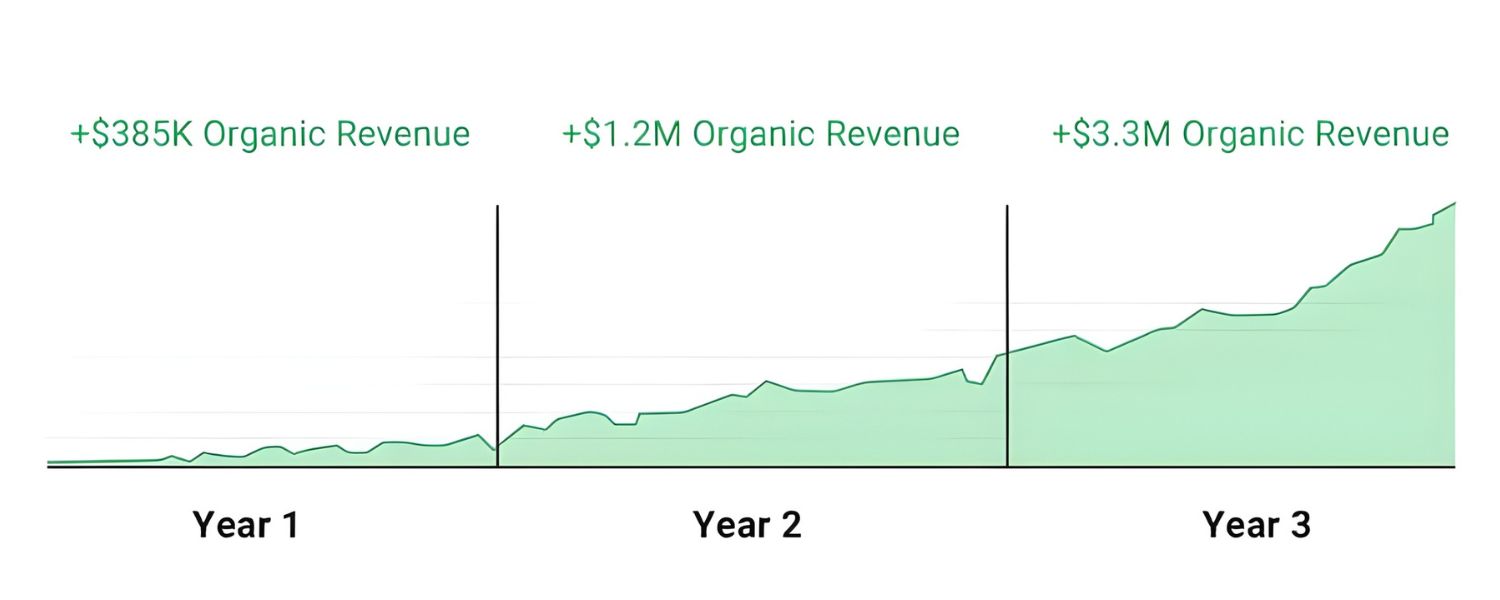
Compounding Returns. Going into the second year, SEO can become a major revenue engine. Studies indicate the best results tend to occur in years 2-3 of continuous SEO.At this stage, you have a large content base, strong backlink profile, and a well-optimized site – essentially a moat that competitors will find hard to overcome quickly. Your older content might now rank #1 for many keywords, and new content you publish climbs faster because your site is authoritative.
It’s not unusual to see ROI figures in the hundreds of percent during year 2. For example, a business might find that in year 2 they spent $50k on SEO and generated $500k in organic revenue – a 10× ROI. Each additional dollar invested in SEO at this point often returns multiples more, because you’re building on a strong foundation. SEO ROI snowballs with consistent effort.
Of course, these timelines can vary. Highly competitive niches might take longer to see strong ROI (maybe 12+ months to breakeven), whereas a niche with easy wins might start seeing ROI in just 3-4 months. The key is to set expectations that SEO is a marathon, not a sprint.
It requires an upfront investment of time and money, but as the data shows, those who stay the course are rewarded. As one SEO expert quips, “The best time to start SEO was yesterday; the second best time is today.” The sooner you start, the sooner you’ll hit that payoff period.
Tips to Maximize Your SEO ROI
Every marketing leader wants to get the most bang for their buck. When it comes to SEO, maximizing ROI isn’t just about doing SEO, it’s about doing it right. Drawing on 25+ years of marketing experience, here are some proven strategies to increase the return on your SEO investment:
1. Target High-Intent, High-Value Keywords
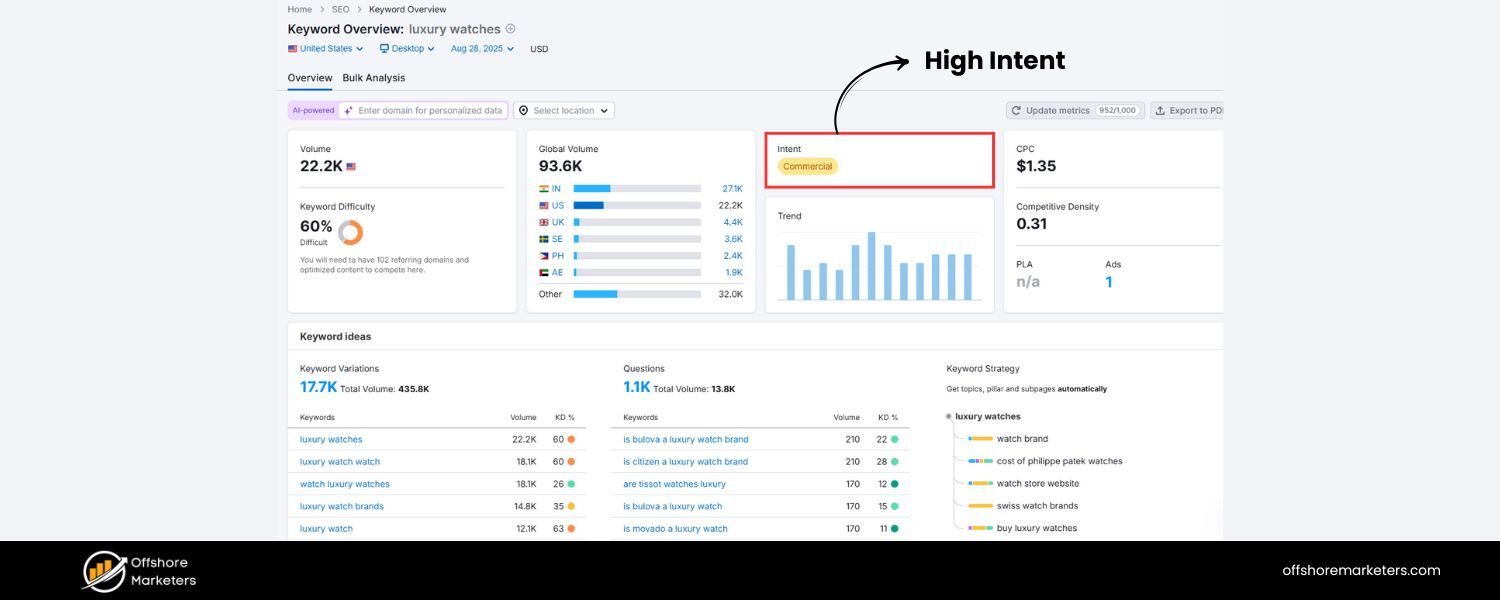
All traffic is not equal. Focus your SEO efforts on keywords that indicate strong commercial intent or align with your business’s unique value. Keywords that potential customers search right before making a decision (for example, “best CRM software for small business” if you sell B2B software) are more likely to convert.
Use keyword research tools to find terms with healthy search volume and relevance to your offerings. Prioritize pages and content around those terms. High-intent organic traffic will yield higher conversion rates, directly boosting ROI.
Additionally, consider the potential revenue from ranking for a keyword. For instance, an apartment rental company estimating the ROI of ranking #1 for “luxury apartments [City]” found it could bring in dozens of new customers worth hundreds of thousands in revenue. In short, go after keywords that can drive revenue, not just traffic.
2. Invest in Quality Content (Thought Leadership)

Content is the heart of SEO ROI. Rather than churning out generic blog posts, aim to produce high-quality, authoritative content that truly addresses your audience’s needs.
This might mean publishing slightly less often but making each piece truly remarkable, in-depth guides, original research, insightful tutorials, etc. Quality content is more likely to rank well, attract backlinks, and convert readers.
We saw earlier how a thought leadership approach (strategic topics, expert writing, consistent output) massively outperformed a basic content strategy in ROI. Make your content link-worthy and share-worthy – that content will continue to pull in organic traffic (and leads) for years, increasing ROI long after it’s published.
Keep content up-to-date as well; refreshing a high-ranking page can further boost traffic and ROI over time.
3. On-Page Optimization and UX Matter
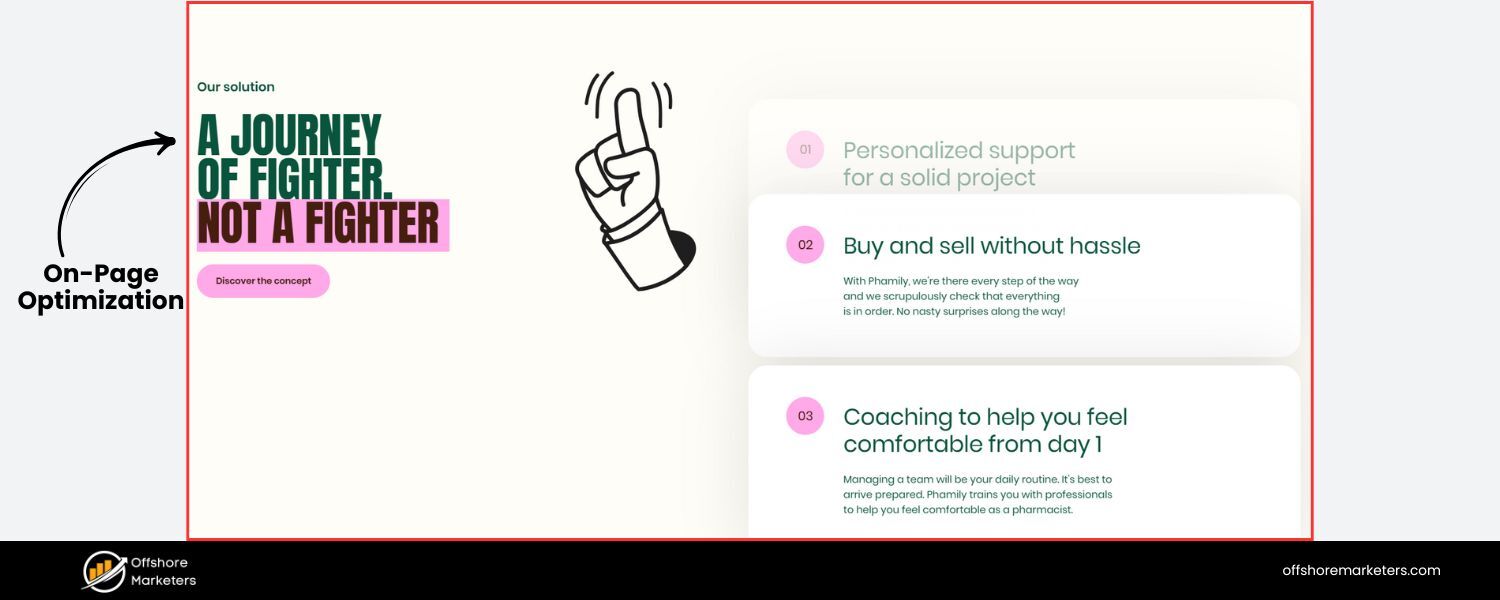
Even the best content won’t drive results if your site is hard to use or doesn’t guide visitors to convert. Pay attention to on-page SEO fundamentals and user experience.
This includes writing compelling title tags and meta descriptions (to improve organic click-through rates), using clear headings, and ensuring your pages load fast and look good on mobile devices.
Google uses factors like page speed and mobile friendliness as ranking signals, so technical SEO fixes can directly impact your traffic and ROI. Moreover, a faster, user-friendly site keeps visitors engaged, reducing bounce rates and improving conversion chances.
Think of technical and on-page SEO as optimizing the funnel: more of your hard-won organic visitors will stick around and convert, lifting your ROI.Even small tweaks – like improving site navigation or adding clear calls-to-action on pages – can boost the percentage of visitors who become customers.
4. Track the Right Metrics and Attribute
Correctly
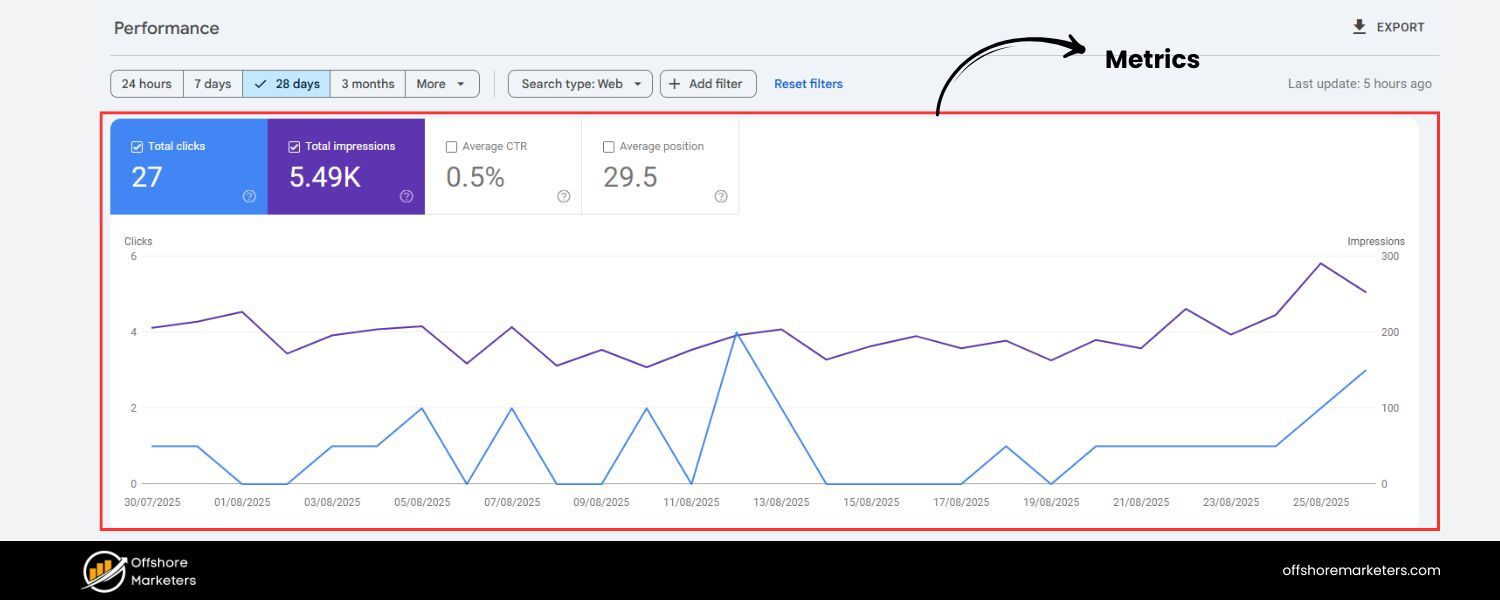
To improve ROI, you need to measure it properly. Ensure you have analytics goals set up for all key conversions (sales, form fills, downloads, phone calls, etc.) and that you can segment those by organic traffic.
Use tools like Google Search Console to monitor your search performance (impressions, clicks, ranking positions). Pay attention to conversion rate from organic visits, if it’s low, you might have a conversion issue rather than an SEO traffic issue. Implementing A/B tests or improving landing pages could dramatically increase how many organic visitors turn into customers.
Also, consider tracking assisted conversions and the lifetime value (LTV) of SEO-acquired customers, as mentioned. If you find that organic leads have higher LTV (not uncommon, since they often come in via content and may be better educated on your product), that’s another argument to invest more in SEO.
In essence, data-driven optimization – regularly reviewing what content or keywords are driving revenue and doubling down on those, will continuously amplify ROI.
5. Reduce Costs Where Feasible (But Not at Quality’s Expense)
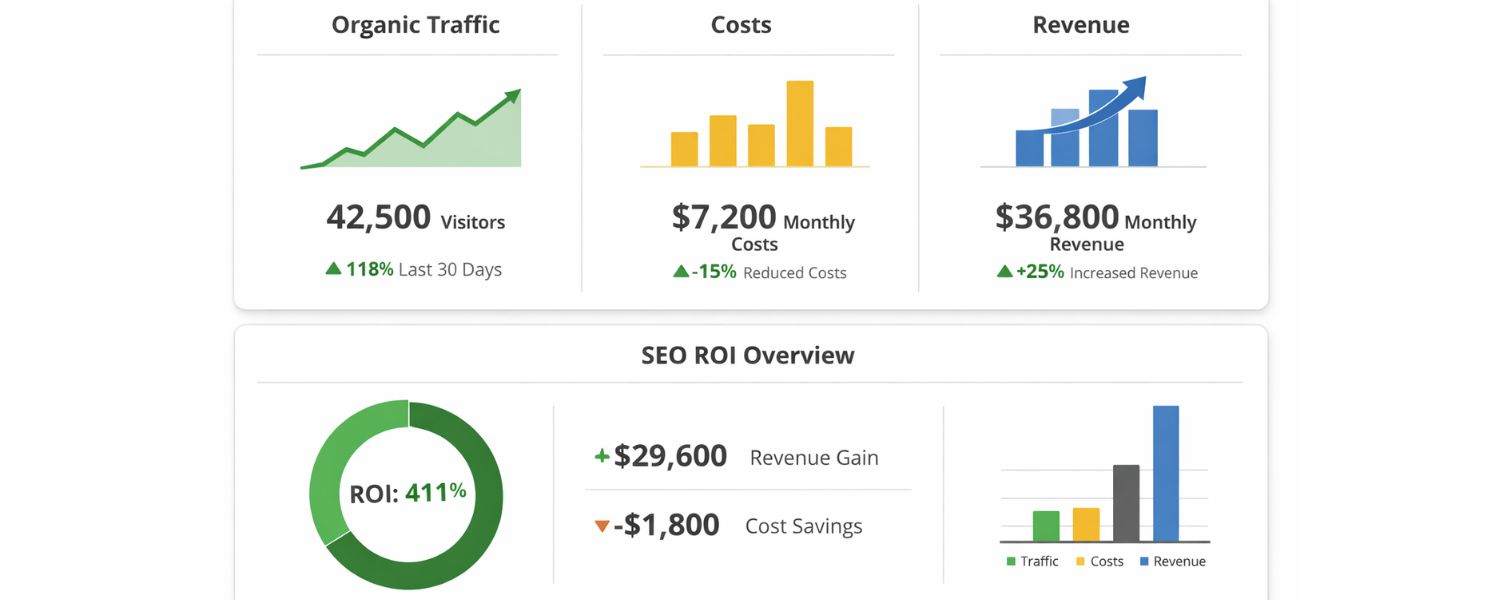
ROI can be improved by either increasing returns or lowering costs. Look for efficiencies in your SEO process.For example, if you’re using a very expensive tool but only utilizing a fraction of its features, see if a cheaper tool could suffice for your needs. If you have old content that’s not performing, updating it (instead of writing a brand new article) might save time and yield big gains.
Outsourcing vs. in-house: find the right balance. Sometimes using a specialist agency might seem costly, but if they deliver results faster, it could lead to higher ROI than trying to do everything in-house with limited expertise.
Conversely, if you have capacity internally, you might save money doing some content creation or tech fixes yourself under guidance. Just be careful not to cut costs in ways that undermine quality – shipping lots of $20 articles from content mills might save money upfront but won’t drive the results that quality content does, thus hurting ROI. Always weigh the cost against the likely return.
6. Leverage Tools and Automation
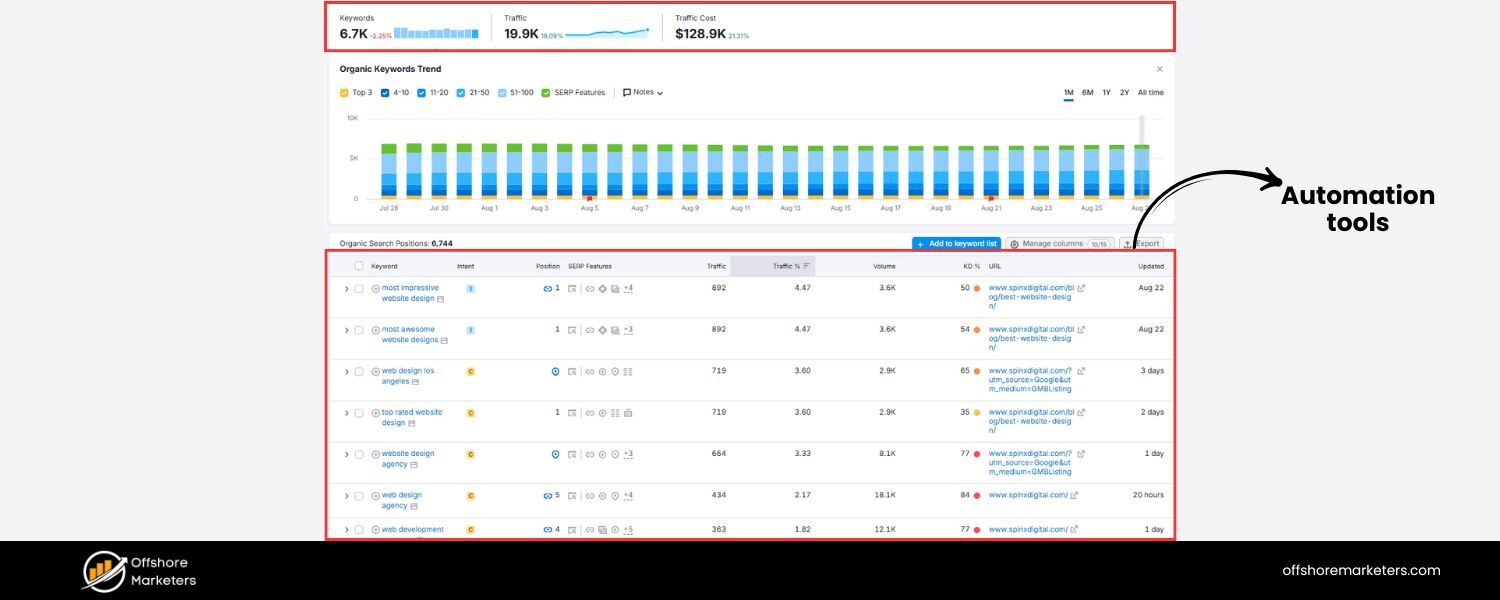
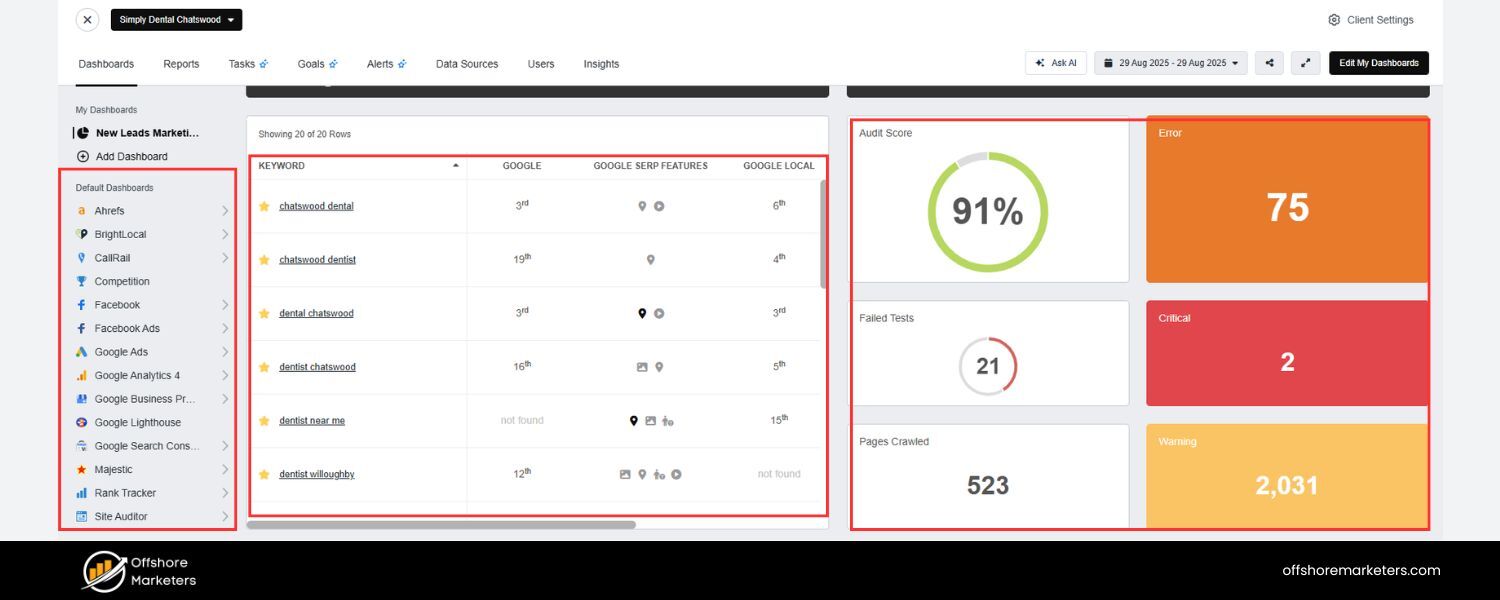
There are many SEO tools (some free, some paid) that can help you work more efficiently and effectively. Tools for keyword research, rank tracking, site auditing, and data analysis can help you identify SEO opportunities and problems much faster than manual methods.
For instance, using an SEO ROI calculator (like the one from UpGrowth) can help forecast potential returns from improving your rankings or traffic. While tools have a cost, they often pay for themselves by revealing insights that lead to big ROI gains (e.g., finding a technical issue that’s been hurting your rankings, or identifying an underserved high-value keyword to create content for). Embrace tools – just choose them wisely and use what you pay for.
7. Integrate SEO with Other Channels
SEO doesn’t operate in a vacuum. You can amplify SEO ROI by combining efforts with other marketing channels. One example is using your content in email marketing: if SEO content brings in new leads, put those leads into an email nurture sequence to increase the chance they convert (improving the overall ROI of that SEO content).
Or vice versa – use your email list or social media to share new blog posts and give them a traffic boost (which can indirectly help SEO by driving user engagement and potential backlinks).
Another indirect benefit: content created for SEO can reduce customer support costs or improve retention – for example, publishing help articles that rank in Google can deflect support queries, saving time (which is a form of cost saving from SEO).
If you leverage SEO content to serve multiple purposes (sales, marketing, support), you get more value from the same investment. Think holistically about how SEO contributes to the business beyond just last-click revenue.
8. Continuously Improve and Adapt
SEO is not a “set and forget” tactic. Algorithms change, competitors publish new content, and user search behavior evolves. To maintain and grow ROI, continual improvement is key.
This involves updating content to keep it fresh and accurate, expanding or merging pages when it makes sense, and pruning truly underperforming content if needed. Stay up-to-date with SEO trends (e.g., the rise of AI search or changes in how Google displays results) and be ready to adjust strategy.
For instance, if certain informational keywords start showing a lot of instant answers on Google (reducing clicks), you might pivot to other keywords or ensure your content is optimized for those answer boxes.
The more agile and proactive you are, the more you’ll stay ahead of the curve, protecting that hard-earned ROI.Remember, your competitors are likely trying to improve their SEO as well; don’t give them an opening to overtake you.
Finally, a mindset tip: focus on your customers and quality, and ROI will follow. Google’s algorithm updates over the years have consistently trended toward rewarding helpful, user-centric content and penalizing manipulative tactics.
By deeply understanding your audience’s needs and delivering the best answers/products for their searches, you build trust and authority that not only boosts SEO rankings but also conversion rates.
As SEO guru Neil Patel advises, chasing quick wins or obsessing over vanity metrics can lead you astray, instead, keep the customer’s experience and intent front and center. Satisfied users become customers, and that’s ultimately what drives ROI.
Challenges in Measuring SEO ROI (and How to Overcome Them)
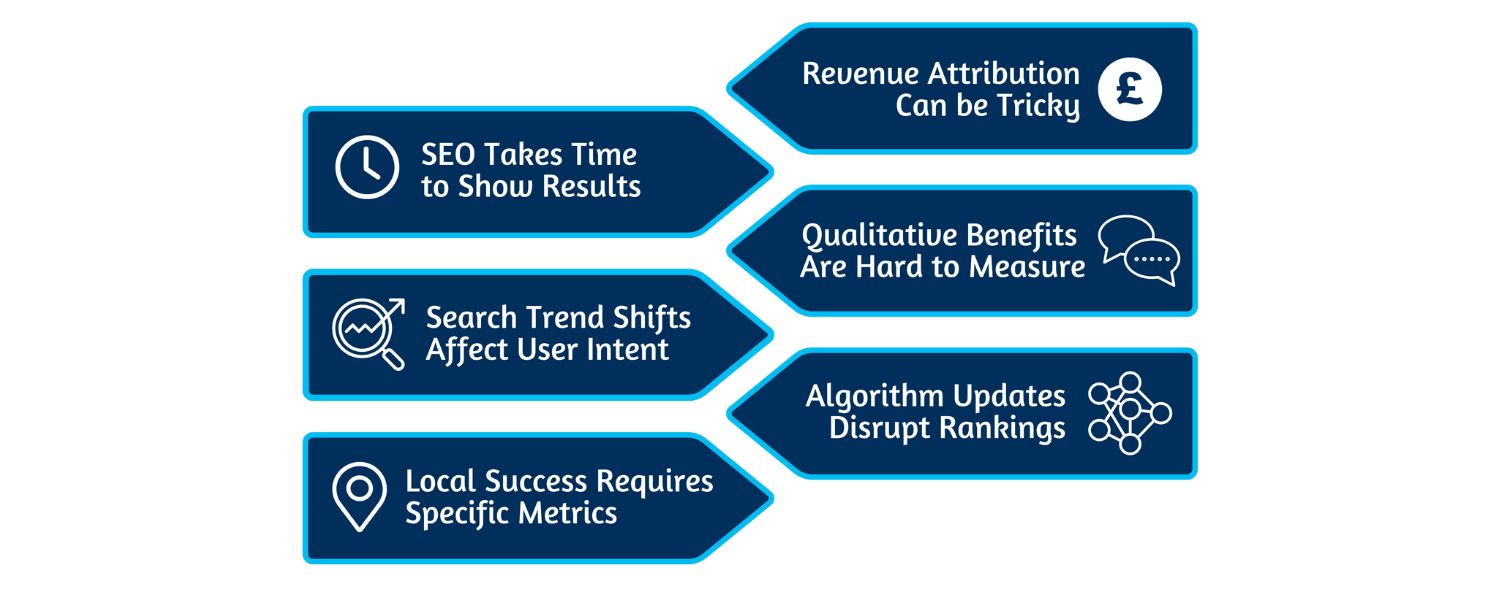
Measuring the return on SEO isn’t always straightforward. It’s worth acknowledging some common challenges and pitfalls that marketers encounter:
1. Attribution Complexity
As mentioned, attributing revenue to SEO can be tricky in multi-channel customer journeys. SEO often assists other channels (someone finds you via Google, later comes through an email campaign to buy, etc.).
If you rely only on last-click attribution, you might undervalue SEO’s impact. This challenge can be overcome by looking at multi-touch attribution reports or at least tracking how often organic search is the first-touch that eventually leads to a sale.
Many marketing teams use a blended attribution model or give some fractional credit to SEO for brand-search conversions that originate from other efforts. The solution is to use your analytics tools to their fullest, examine paths to conversion and see where SEO comes into play, not just last-click.
2. Time Lag and Patience
SEO’s delayed gratification means you might not see positive ROI during initial reporting periods, and this can cause pressure from stakeholders (“we spent all this on SEO for six months, what’s the payoff?”).
It’s important to set expectations upfront that SEO is a long-term play. Use leading indicators to show progress in the interim (for example, rising organic traffic, more top 10 keyword rankings, growing impression counts in Search Console) to demonstrate that the campaign is on track.
Educate stakeholders with data: show case studies or industry benchmarks that it typically takes 6-12 months for ROI, reinforcing that patience will be rewarded. Consider presenting both short-term and projected long-term ROI, so they see the potential value in sticking with it.
3. Variable Costs and Ongoing Investment
Unlike an ad campaign where costs are directly tied to clicks, SEO has more fixed upfront costs (content, site work) that then pay off over time. This accounting can make ROI appear low initially.
One pitfall is when companies cut off or reduce SEO efforts too soon (“we spent a lot on content for 3 months and didn’t see much, so we stopped”), they end up not reaping the rewards that might have come in month 6 or 9.
To avoid this, plan your SEO budget in a way that’s sustainable for at least 6+ months of solid implementation. Track ROI on a rolling basis, for example, look at a full year ROI rather than just month-to-month in isolation. You might see that Month 12 ROI is huge, compensating for the negative ROI of earlier months.
Internally, frame SEO as an investment akin to an asset (like building a store) rather than a month-to-month expense like ads. This helps stakeholders understand the spending pattern and payoff timeline.
4. Measuring “Soft” Benefits
Not all benefits of SEO directly show up as revenue in an ROI calculation. For instance, SEO often increases your brand visibility and credibility (people trust organic results).
It can also improve your website in ways that help other marketing efforts (better content, faster site). These are indirect benefits that are real but hard to quantify. One way to handle this is to supplement ROI reports with other SEO KPIs and anecdotes. You could report on metrics like overall share of traffic from organic (if that’s rising, it’s a good sign), improvements in customer acquisition cost (CAC), or increases in brand search volume (indicating SEO/content are raising brand awareness).
While the CFO might only care about dollars, adding context about these other wins can paint a fuller picture of SEO’s value. Over time, many of these soft benefits do translate into hard dollars (e.g., improved brand credibility leads to higher conversion rates, thus more ROI). It’s just a matter of connecting the dots.
5. SEO Is Ever-Changing
The moving target of search engine algorithms means your ROI today might dip tomorrow if a major algorithm update hits and you lose rankings. This uncertainty is a challenge – however, it can be mitigated by following best practices and diversifying your SEO efforts. Don’t rely on one or two tactics or a single page for all your organic traffic.
Ensure your SEO strategy is holistic (technical, content, links, user experience) and aligned with Google’s quality guidelines. If you do so, you’re far less likely to be negatively impacted by updates.
In fact, sites that provide great content and experiences often benefit from algorithm improvements over time. Still, it’s wise to continuously monitor your performance and be ready to adapt if needed (e.g., if new types of search results or features change click-through dynamics, like Google adding more AI answers in the future). Agility will help you preserve and grow ROI in the face of change.
In short, measuring SEO ROI has challenges, but none are insurmountable. With careful tracking, realistic expectations, and a willingness to adjust your measurement approach, you can get a very accurate picture of SEO’s value. And as the old adage goes, “What gets measured, gets managed.” By diligently measuring ROI, you’ll be in a strong position to manage and improve your SEO outcomes continuously.
Conclusion and Next Steps
In the digital era, SEO has proven itself as one of the most effective and profitable marketing investments a business can make.
From the statistics and strategies we’ve covered, a clear theme emerges: SEO done right delivers sustainable, compounding returns. It may require patience and upfront work, but the payoff can be enormous – in higher traffic, higher sales, and lower customer acquisition costs over the long run.
To recap, measuring SEO ROI involves tracking your costs (from staff to tools to content) and attributing revenue to organic search. By keeping a close eye on these numbers, you can demonstrate the value of SEO in concrete terms and make informed decisions to amplify that value.
Use ROI data to focus on what works (and drop what doesn’t), justify your SEO budget, and unite your team around revenue-oriented goals.
Also remember that SEO is a dynamic, ongoing process. Achieving a positive ROI is not the finish line, it’s a signal to keep investing intelligently for even greater returns.
Continually optimize your site and content, publish new resources that meet your audience’s needs, and stay abreast of search trends. If you commit to this cycle of improvement, your SEO ROI can go from good to great to outstanding.
Now, it’s your turn. Evaluate your own SEO ROI using the methods outlined in this guide. See where you stand. Are there quick wins to capture? Perhaps a set of existing pages could be better optimized to convert more traffic (instantly boosting ROI), or maybe there’s an opportunity in your niche to create a piece of content that dominates the rankings. Every insight is an opportunity to improve.
If you’re looking for guidance or want to accelerate your results, don’t hesitate to seek expert help. SEO can get complex, especially for competitive industries – but you don’t have to navigate it alone.
Ready to maximize your SEO ROI?
Feel free to reach out to our SEO team for a consultation on how to unlock more organic growth and profit. We’ve helped numerous businesses achieve multi-fold returns through smart SEO strategies, and we’d be excited to help you do the same.
Ultimately, investing in SEO is investing in the future revenue of your business. With careful measurement, strategic focus, and persistence, SEO can become a powerhouse channel that drives consistent growth. The returns are out there, it’s time to capture them.

Why Roseville Startups are Choosing Offshore Marketers to Scale Smarter
Roseville is no longer just a quiet suburb of Sacramento;...
What Is PPC? A Practical Guide to Pay‑Per‑Click Advertising
Pay‑per‑click (PPC) is the “pay only when someone clicks” branch...

Google Search Issues Affecting Results in Some Regions
Google has confirmed a problem with one of its data...

Keyword Counts Dropped After Google’s num=100 Change
In September 2025, Google stopped supporting the &num=100 parameter. This...

Image SEO: Optimize Images for Higher Rankings & Traffic
Introduction Images make your website more engaging, but they can...


.png)
.png)
.png)
.png)
.png)

2024 ALL RIGHTS RESERVED MADE IN INDIA
.png)