
SEO Strategies and Services: The Ultimate Guide for Beginners and Business Owners
July 1, 2025
Understanding SEO and Why It Matters
If you want people to find your business online, you need to appear prominently on search engines like Google. That’s where Search Engine Optimization (SEO) comes in.
SEO is the practice of optimizing your website to improve its rankings on search engine results pages (SERPs) and attract organic (unpaid) traffic. In simpler terms, SEO helps make your website more visible to people searching for the products or services you offer.
In today’s digital landscape, online visibility is a game-changer for businesses – if your site is buried in search results or “invisible,” potential customers won’t even know you exist. On the other hand, an obvious site can drive high web traffic, generate more conversions, and ultimately grow your business.
Why is SEO so important? Consider your behavior: when you search for something on Google, how often do you go beyond the first page of results? For most people, the answer is rarely.
Websites that rank at the top of relevant search results get the lion’s share of clicks and trust. Users tend to click the websites that appear at the top because they perceive them as more credible and relevant.
People naturally gravitate toward websites that rank higher on search engines, which means those top-ranking sites enjoy significantly more traffic. If your site isn’t on page one for important keywords, you’re missing out on a huge segment of your audience.
By investing time in SEO, you can put your brand in front of the right eyes at the right time – when they’re actively searching for solutions you offer.
SEO is also a cost-effective marketing strategy in the long run. Unlike pay-per-click (PPC) advertising, where you pay for each visitor, organic traffic from SEO is essentially free once you’ve achieved rankings.
Core SEO Strategies: The Four Pillars of Optimization
Successful SEO boils down to excelling in several key areas. We can think of these as the four main pillars of SEO strategy:
- On-Page SEO – Optimizing the content and HTML elements on your site for target keywords and user experience.
- Technical SEO – Ensuring your website’s infrastructure allows search engines to discover, crawl, and index your content easily.
- Off-Page SEO – Building your site’s authority and reputation through backlinks and external signals.
- Local SEO – Enhancing visibility for location-based searches (critical for businesses serving specific regions).
Each pillar plays a role in how search engines rank your site. Let’s break down each one and discuss strategies to master them.
On-Page SEO: Optimizing Your Content and Keywords
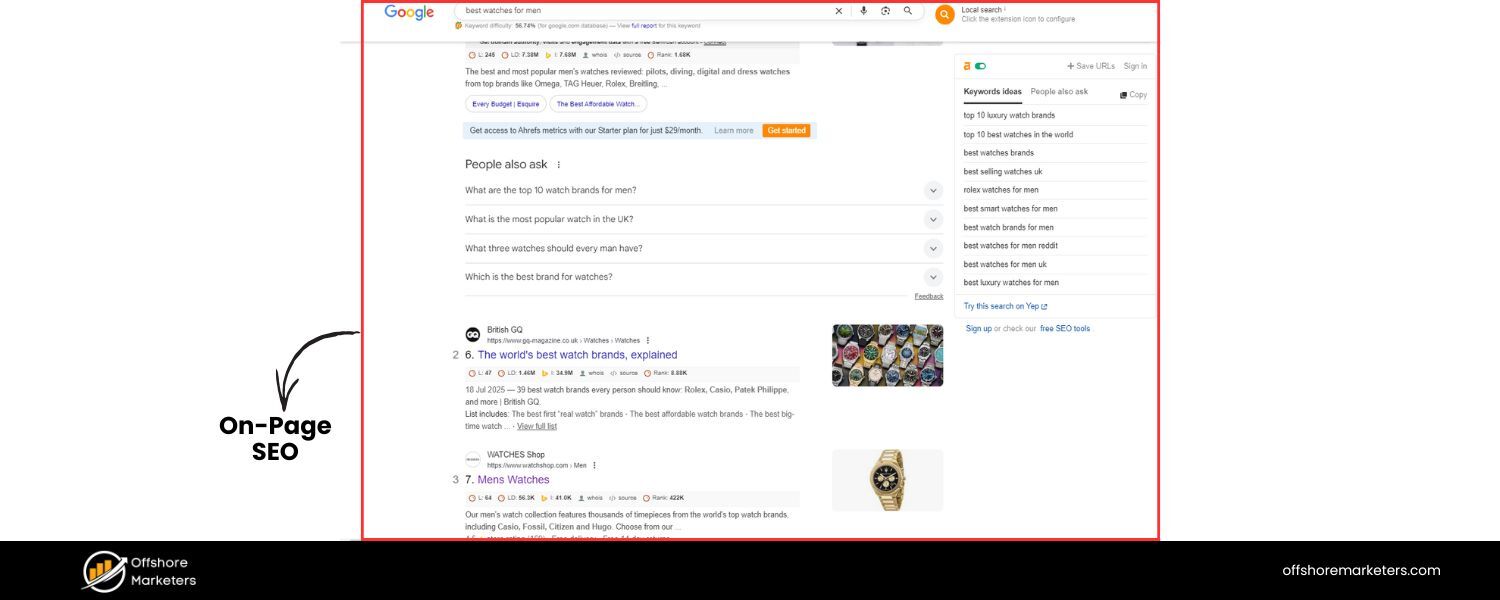
On-page SEO is all about crafting your website’s pages in a way that search engines and users find valuable. This process begins with keyword research, which involves identifying the search terms (keywords) that your potential customers use and then optimizing your content around those terms. However, on-page optimization extends far beyond simply adding keywords to your text.
Key on-page elements to focus on include:
- High-Quality Content: Content is king in SEO. Create informative, original content that answers the searcher’s intent. Your text should be well-written and provide real value to readers. Google’s algorithms favor content that demonstrates expertise and satisfies the user’s search query.
- Title Tags and Meta Descriptions:
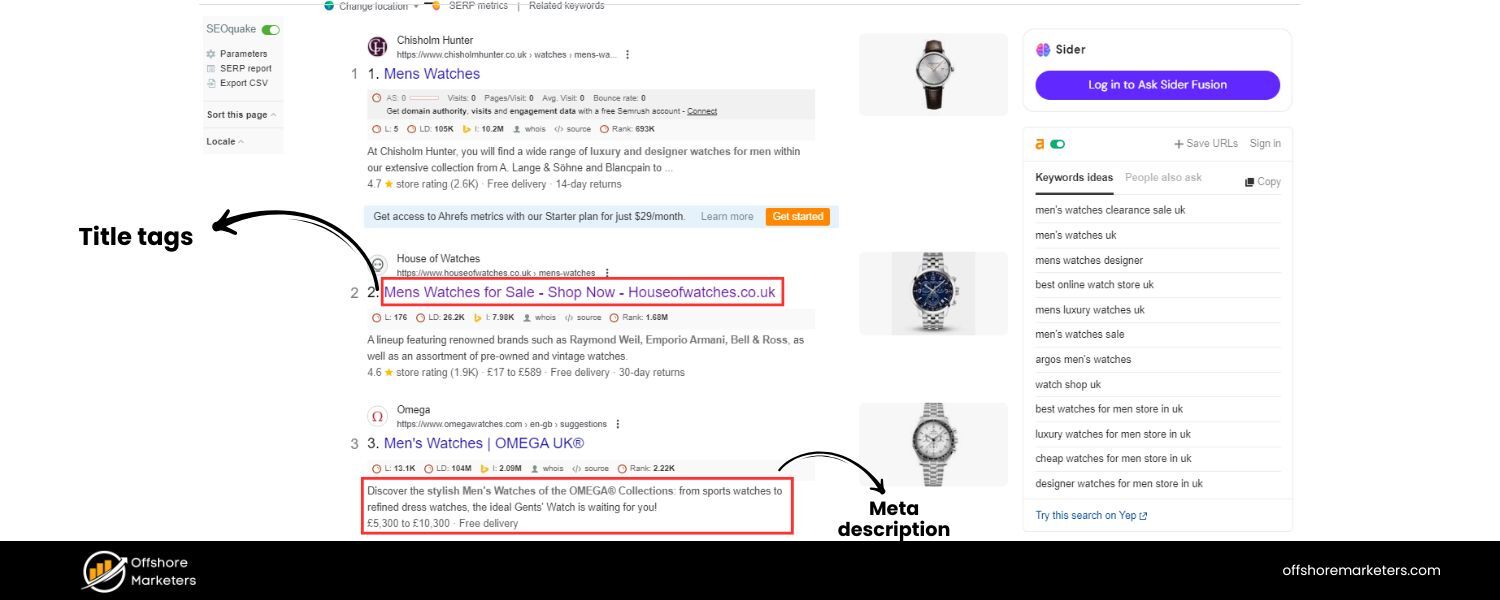 These HTML tags define your page’s title and summary in search results. Include your primary keyword in the title tag and craft a compelling meta description that encourages users to click. For example, an e-commerce page selling running shoes might have a title like “Running Shoes – Lightweight & Comfortable.
 - Headings (H1, H2, H3 tags):
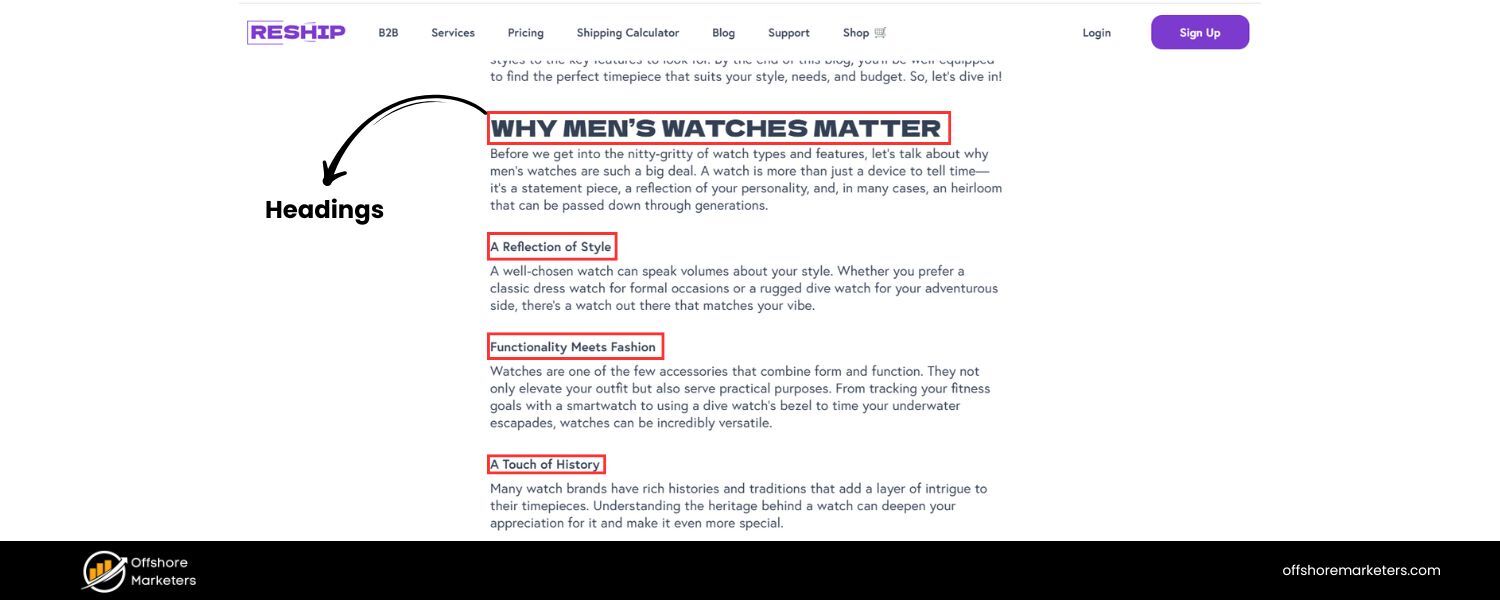 Use headings to structure your content. Typically, the H1 is your page title, and H2s and H3s are subheadings. Search engines pay special attention to headings, so include relevant keywords there, but keep them descriptive and natural. A good heading structure also makes it easier for readers to scan your page.
 - Keyword Usage: Naturally incorporate your target keywords and related terms throughout the content. Aim to use the primary keyword in the first paragraph or two and in one or more subheadings, but avoid “keyword stuffing” (overusing keywords to the point it sounds unnatural). Modern SEO is about context and relevance, rather than forcing exact keywords into every sentence.
- Image Alt Tags: If your page contains images or graphics, use the alt text attribute to describe each image. This not only helps visually impaired users with screen readers, but it also gives search engines additional clues about your content. For instance, an image of a running shoe could have alt text like “blue men’s running shoe”.
- Internal Linking:
 Link to other relevant pages on your website using descriptive anchor text. Internal links help spread link authority (SEO “juice”) around your site and help visitors discover more of your content. For example, if you have a blog post about running shoe sizing, link to it from your running shoe product page with anchor text such as “choosing the right size.”
 - URL Structure:
 Keep your URLs concise, readable, and keyword-rich when possible. “yourbrand.com/running-shoes” is preferable to “yourbrand.com/category?id=12345”. Simple URLs that include the page’s topic can slightly improve SEO and make URLs more user-friendly.
 - On-Page SEO Audits: Utilizing tools or services to audit your on-page SEO can be helpful. They will check elements such as whether your pages have a single H1 tag, if title tags are the correct length, if any images are missing alt text, and other similar aspects.
Remember, on-page SEO isn’t a one-time task. Whenever you publish new content or update your site, apply these optimization principles to ensure optimal performance. Continuously monitoring and improving on-page factors ensures that each page on your site provides search engines with clear signals about its topic and relevance.
Technical SEO: Building a Solid Site Foundation
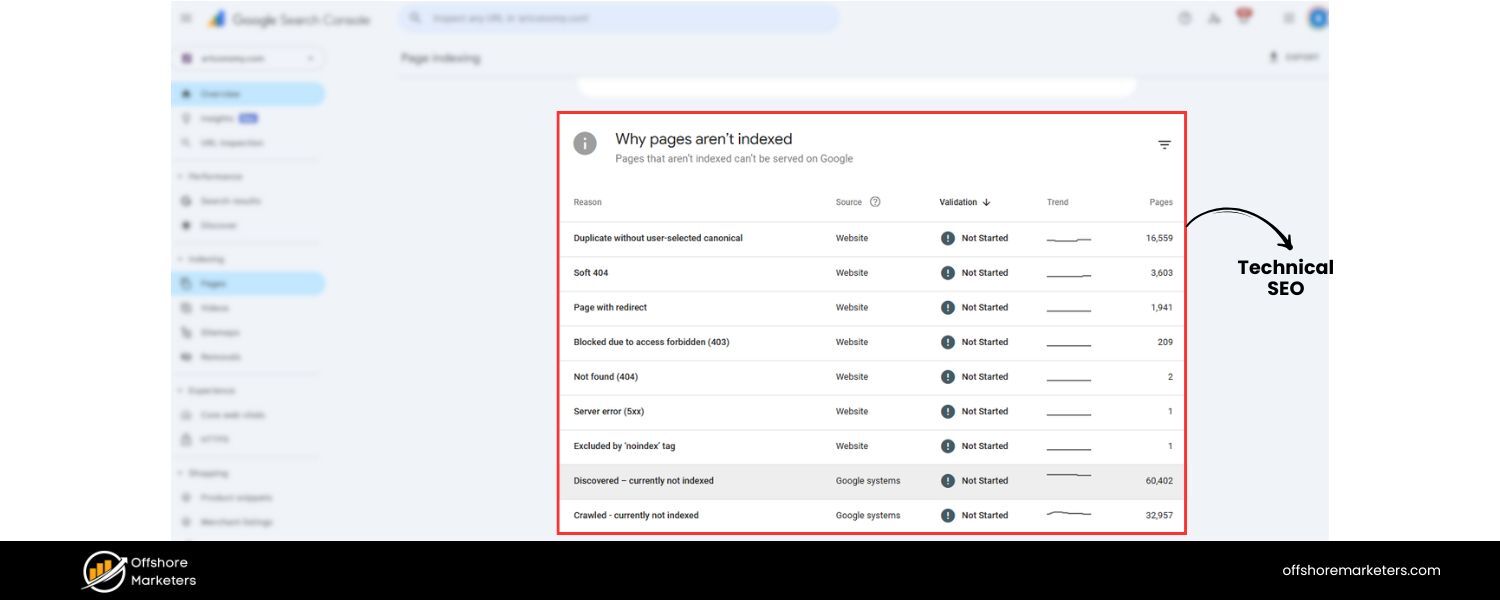
Technical SEO addresses the behind-the-scenes aspects of your website – the site infrastructure and settings that help search engine bots crawl and index your site effectively. Think of technical SEO as the foundation of a house.
Important technical SEO factors include:
- Website Crawlability: Search engines use automated programs called “crawlers” (or spiders) to explore the web and find content. Your site must be crawlable, meaning the bots can navigate your pages via links. Ensure you have a logical site architecture with clear navigation menus and internal links so that no important pages are orphaned.
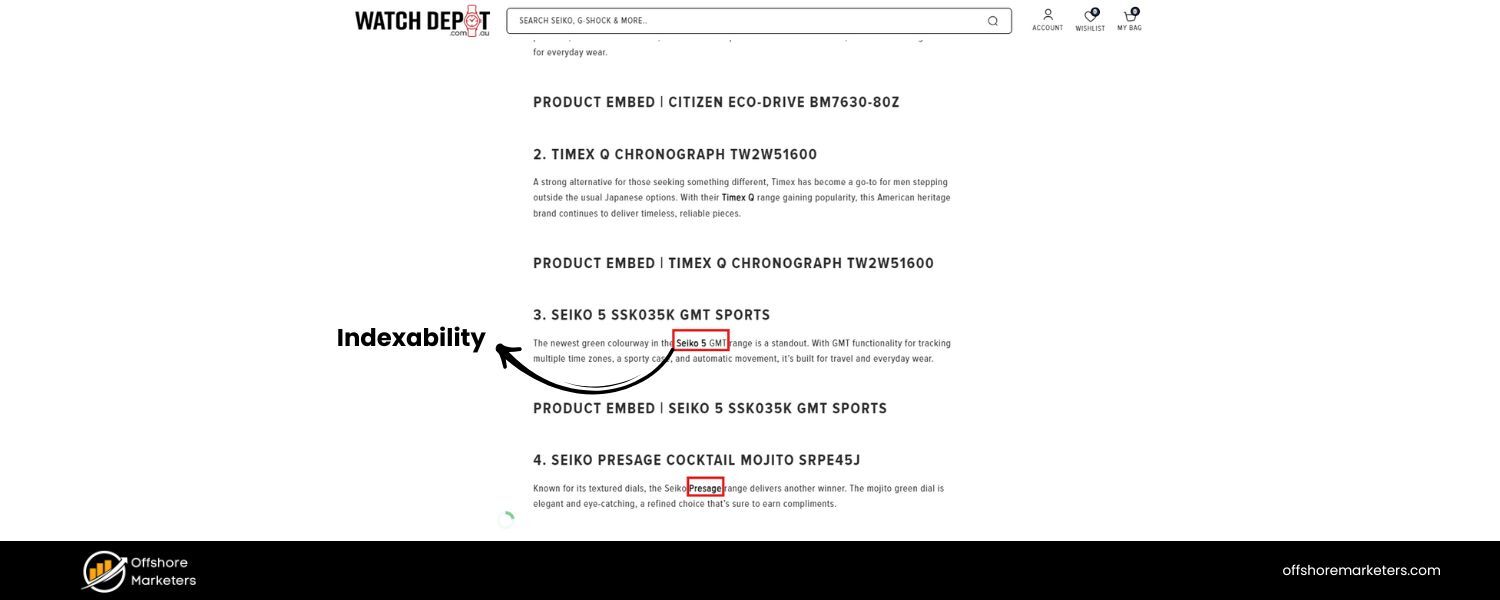
- Indexability:
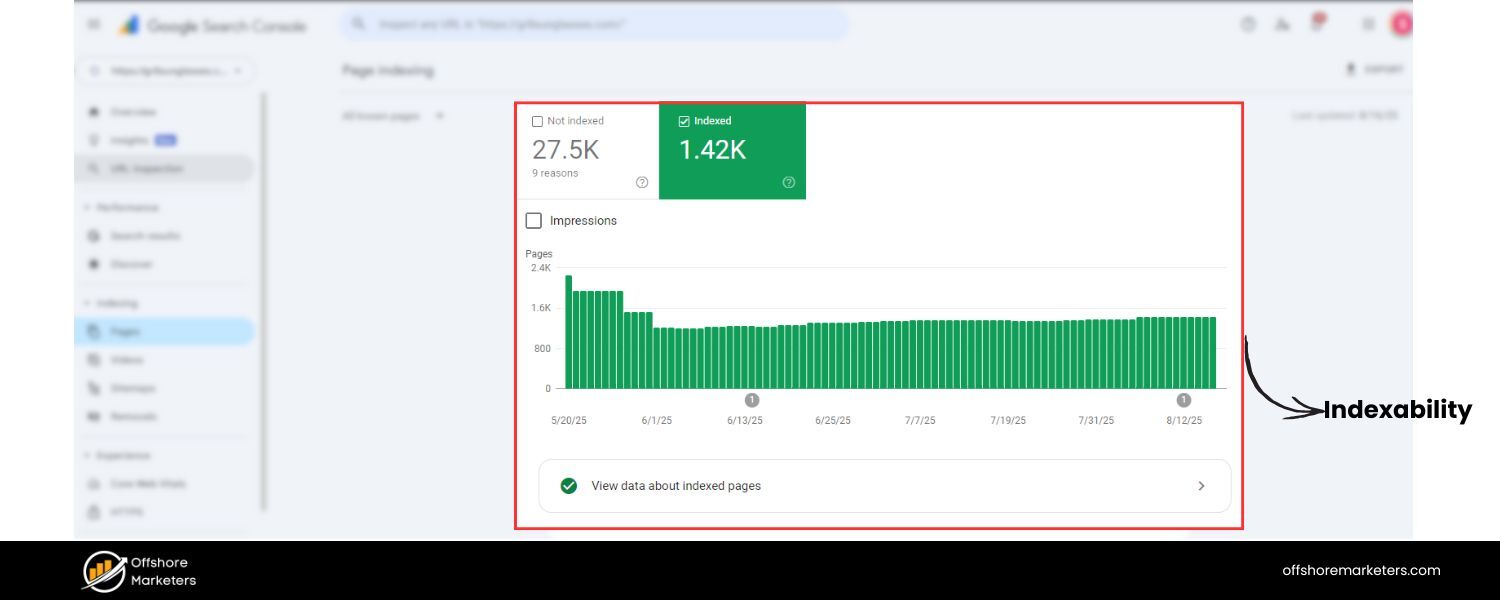 Just because a bot can crawl a page doesn’t guarantee it will be indexed (included in the search engine’s database of results). If your site has pages blocked by robots.txt or marked “noindex”, or if there are technical errors, those pages won’t appear in search results. It’s crucial to address any issues that might prevent indexing.
 - Site Speed and Performance:
 Fast-loading websites provide a better user experience and are favored by search engines. Google’s algorithms consider page speed as a ranking factor, particularly for mobile searches. Optimize your images, enable browser caching, use a content delivery network (CDN), and minimize heavy scripts to improve load times.
 - Mobile-Friendliness: With the majority of searches happening on mobile devices, having a mobile-friendly (responsive) website is non-negotiable. A responsive design that adapts to different screen sizes will not only please your users but is also prioritized by Google’s mobile-first indexing.
- Secure Website (HTTPS):
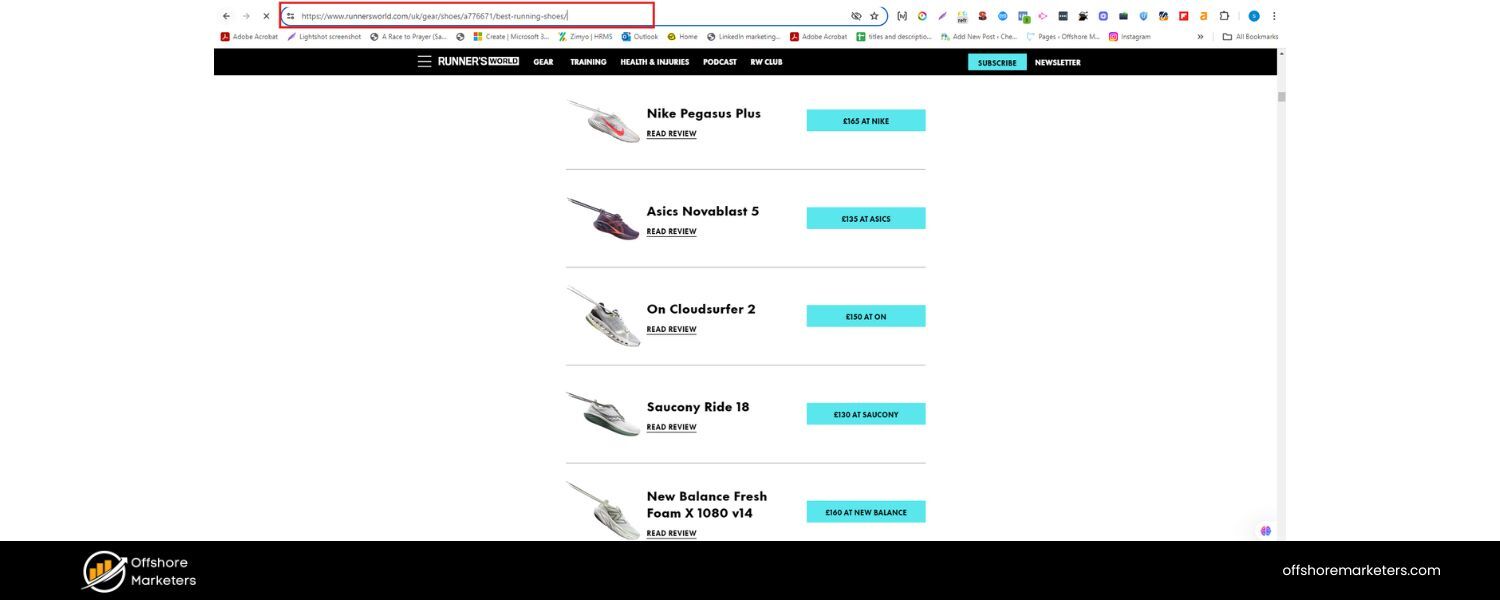 Security is another ranking factor. Make sure your site is served over HTTPS (with a valid SSL certificate). Users and search engines both prefer secure websites, as indicated by the browser “lock” icon. If your URL still starts with http://, talk to your web host or use services like Let’s Encrypt to migrate to HTTPS.
 - Structured Data & Schema Markup: This is an advanced aspect of technical SEO, where you add special code (using schema.org vocabulary) to your pages to help search engines better understand the content. For instance, a recipe site can markup ingredients, cook time, etc., and a local business can markup its name, address, and phone number.
- Fixing Technical Errors: Routinely check for and resolve errors such as broken links (404 pages), redirect loops, or server errors. A broken link or missing page can hurt both user experience and SEO – if a bot hits a dead end, it might stop crawling essential parts of your site. Tools that run site audits can help identify these issues. SEO audit tools like Semrush’s Site Audit can scan for over 140 technical SEO issues on your website, giving you a to-do list of fixes.
The goal of technical SEO is to make your site as accessible and understandable to search engines as possible. If your website isn’t accessible from a search engine’s perspective, then it won’t matter how good your on-page SEO is or how many backlinks you have – technical roadblocks could keep your site from ranking at all.
Off-Page SEO: Building Authority with Backlinks
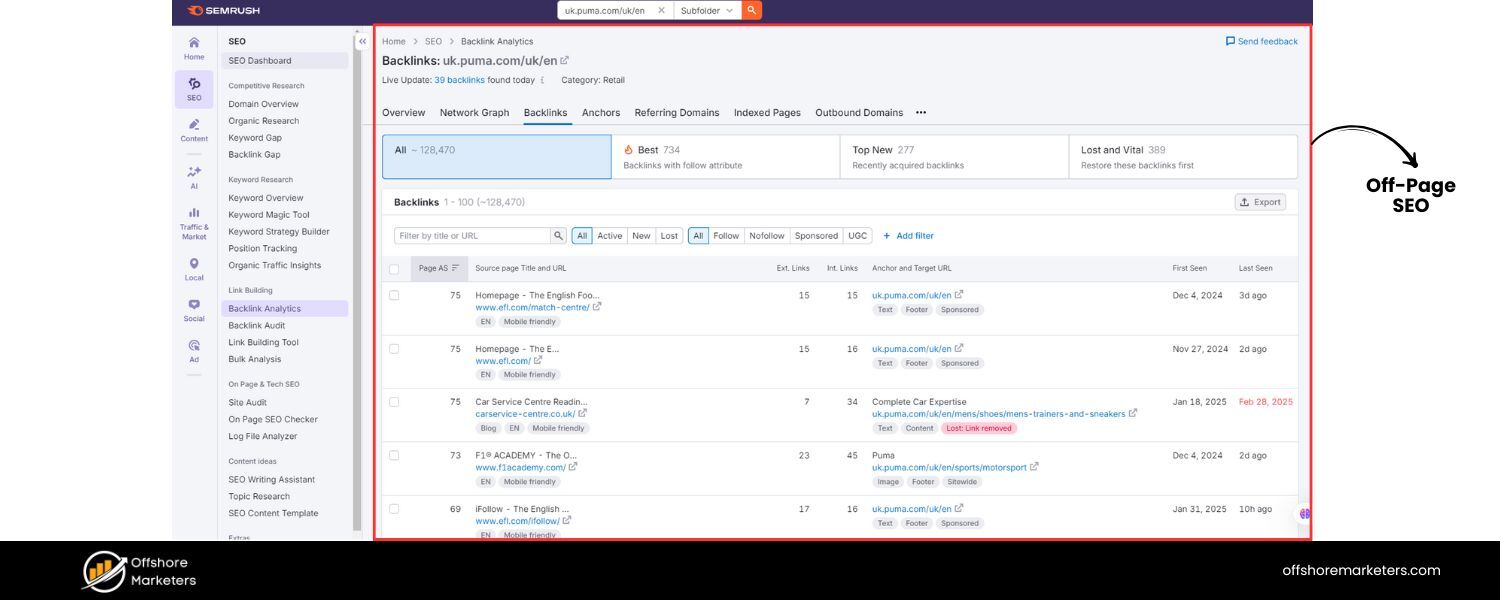
While on-page and technical SEO help optimize your site itself, off-page SEO focuses on improving your website’s authority and reputation across the wider internet. The primary way this is achieved is through backlinks – links from other websites that point to your site.
Key off-page SEO strategies include:
- Earning Quality Backlinks:
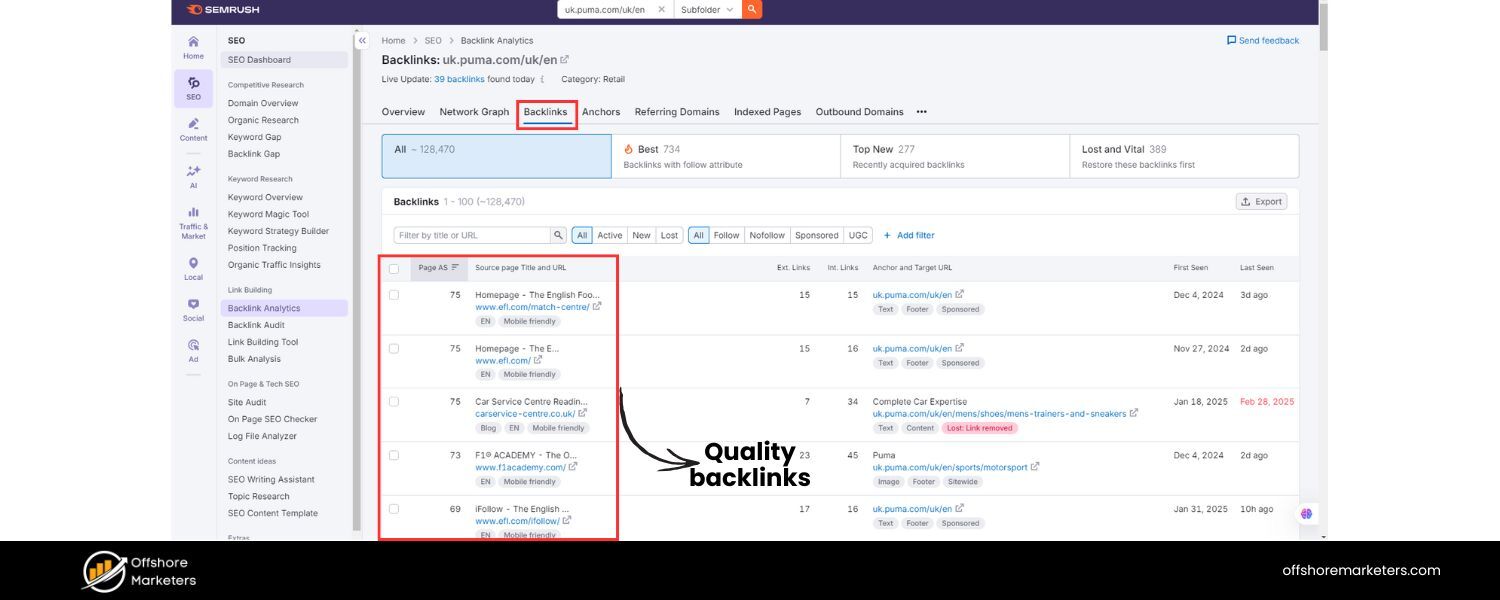 Not all backlinks are created equal. A single link from a high-authority, trusted website (think a major news outlet or a respected industry blog) is far more impactful than dozens of links from low-quality sites. Focus on quality over quantity. There are many ways to earn backlinks organically: create share-worthy content that others naturally want to link to.
 - Content Marketing and Linkable Assets: A proven method for attracting backlinks is through content marketing – producing valuable resources that people reference and share. For example, original research, whitepapers, case studies, or even entertaining content, such as top-10 lists, can become “linkable assets.”
- Social Signals and Online Presence:
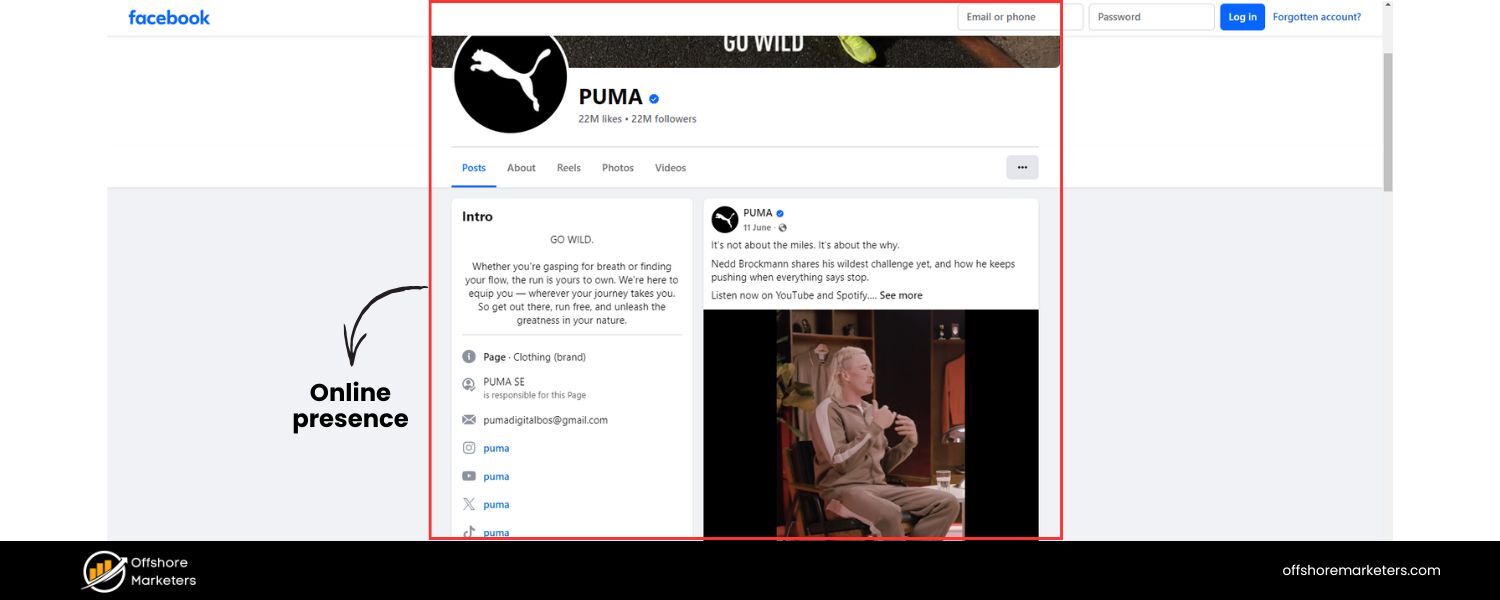 Although social media links don’t directly boost SEO in the same way backlinks do (most social links are “nofollow”), having an active social presence can indirectly support your SEO. When you share your content on platforms like Facebook, Twitter, or LinkedIn, it can gain visibility and potentially attract backlinks from those who discover it through these channels.
 - Backlink Analysis:
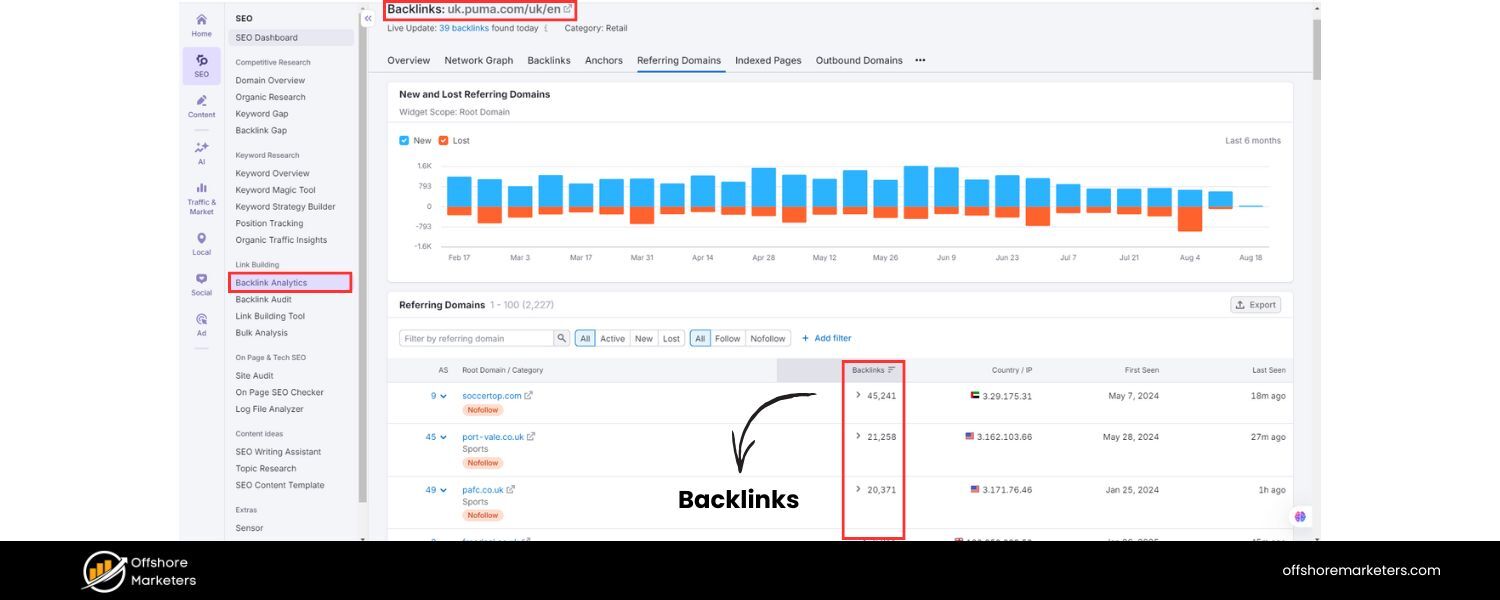 Regularly review your backlink profile using SEO tools to ensure optimal performance. This helps you understand which sites are linking to you and the quality of those links. It’s also crucial for spotting any toxic links – for instance, links from spammy sites that you didn’t solicit. While Google is pretty good at ignoring low-quality links, a pattern of unnatural links could harm your rankings.
 - Off-Page Metrics: SEO professionals often examine metrics such as Domain Authority (a score ranging from 0 to 100, as determined by Moz), Domain Rating (as calculated by Ahrefs), or the number of referring domains to assess a site’s backlink strength. For example, an SEO audit or grading tool might reveal that your site has 50 referring domains and a Domain Authority of 30, and it could compare this to your competitors.
It’s worth noting that trying to manipulate off-page SEO through shady tactics (known as “black hat” techniques) – like buying links or joining private link networks – is dangerous and can lead to penalties. Google’s algorithms, especially Penguin, target link spam and can demote your site if it detects such practices.
Local SEO: Getting Found by Local Customers
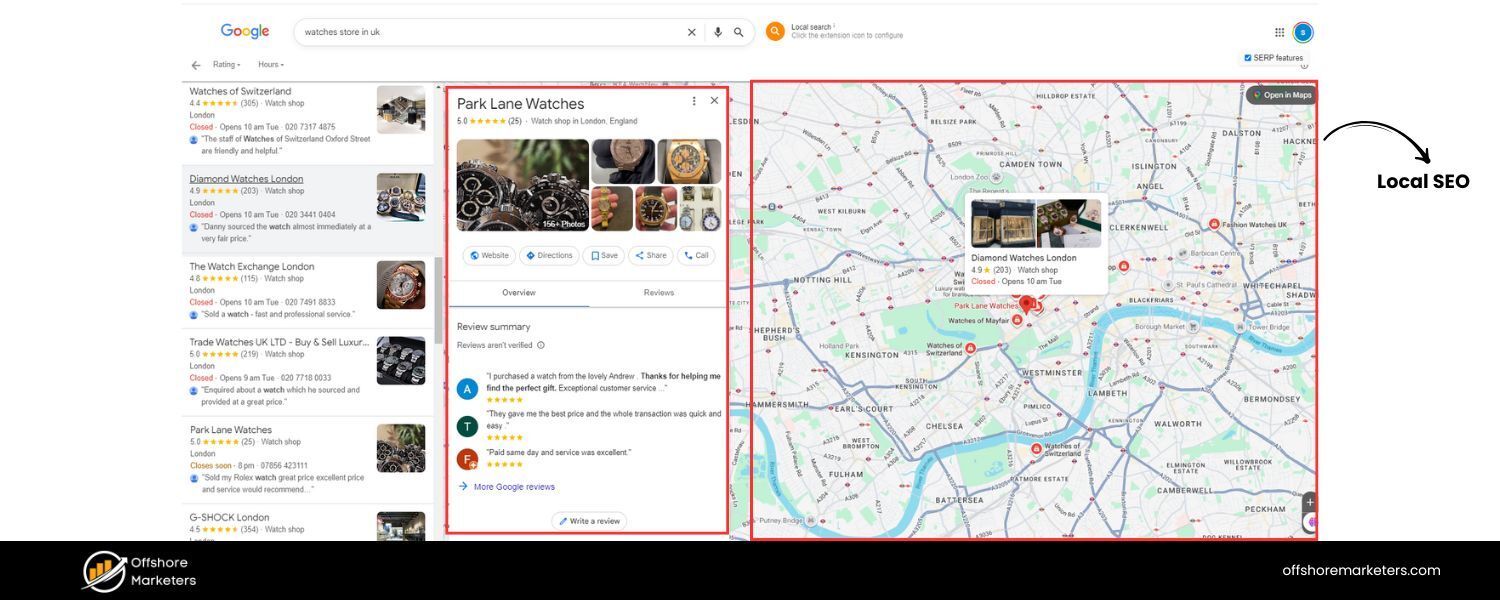
If your business serves customers in specific geographic areas (like a local store, restaurant, or service provider), Local SEO is crucial. Local SEO strategies ensure that your business appears in local search results, for example, when someone searches for “near me” or “in [location]”.
Key components of local SEO include:
- Google Business Profile Optimization: Claim and optimize your Google Business Profile (GBP) (formerly Google My Business) listing. This is the listing that appears in Google Maps and the Local Pack. Please fill out all relevant details: business name (exact as it is known in the real world), address, phone number, website, business hours, and category.
- Name, Address, Phone (NAP) Consistency: Ensure that your business name, address, and phone number (NAP) are consistent everywhere they appear on the web. This means that your website’s contact page, Google listing, Facebook page, directory listings, and other relevant platforms should all use the same phrasing for your name, the same address format, and phone number.
- Local Citations and Directories: Apart from Google’s listing, make sure your business is listed on other popular directories and review sites like Yelp, Apple Maps, Bing Places, Yellow Pages, TripAdvisor (if relevant), industry-specific directories, and local business chamber websites. The more legitimate references to your business across the web, the better your local prominence.
- Reviews and Ratings: Customer reviews are a decisive factor for local SEO. Encourage happy customers to leave positive reviews on your Google profile and other platforms. High-rated businesses tend to rank better, and humans are more likely to choose a well-reviewed business as well. Respond to reviews – both positive and negative – professionally and promptly. Active engagement shows you value customers.
- Localized Website Content: Include your location in your website content where appropriate. For instance, if you have a home page or landing page for each area or city you serve, mention that city’s name in the title, headings, and body content. A dentist might have pages targeting “Dentist in [City, State]” to cater to local searches specifically.
- Local Structured Data Markup: Utilizing schema markup for local businesses (such as the LocalBusiness schema) on your website can help search engines better comprehend your business details. This markup can include your NAP, business type, hours of operation, geographic coordinates, and other relevant information.
- Check Your Site’s Local SEO Signals: A comprehensive SEO analysis may also examine local SEO elements on your site, such as the presence of a Google Map or accurate contact information. For example, an SEO grader tool will verify if your site displays essential local elements such as the presence of a Google Business Profile listing and accurate contact details.
With local SEO, the goal is to maintain high visibility to searchers in your target service area. When done right, local SEO can be incredibly effective: your business could appear right at the moment someone nearby searches for the service you offer, making it easy for them to contact you or visit your location.
Essential SEO Tools and Services
SEO can seem overwhelming, but fortunately, there are numerous tools and professional services available to help simplify and supercharge your efforts.
In this section, we’ll cover some essential SEO tools that every marketer or site owner should know about, and also discuss what to expect from SEO services or agencies if you choose to get external help.
A. Tools of the Trade: Enhancing Your SEO Workflow
SEO Tools are software (often online platforms) that provide data and insights to improve your optimization efforts. Here are several categories of tools and how they help:
- Keyword Research Tools:
 These tools help you find relevant keywords and estimate their search volume and competition. Examples include the Google Keyword Planner (free) and third-party platforms such as Semrush, Ahrefs, or Moz. By using keyword tools, you can discover what terms people use to search for your products, how often those terms are searched, and how difficult it might be to rank for them.
 - SEO Audit and Site Analysis Tools: We previously discussed site audit tools, which scan your website for any SEO issues (technical or on-page) and report their findings. Semrush’s Site Audit, for example, can run a free SEO audit that checks for 140+ technical and SEO issues on your site. Similarly, HigherVisibility’s free SEO Website Grader examines over 100 different components of a site’s SEO performance.
- Analytics Tools:
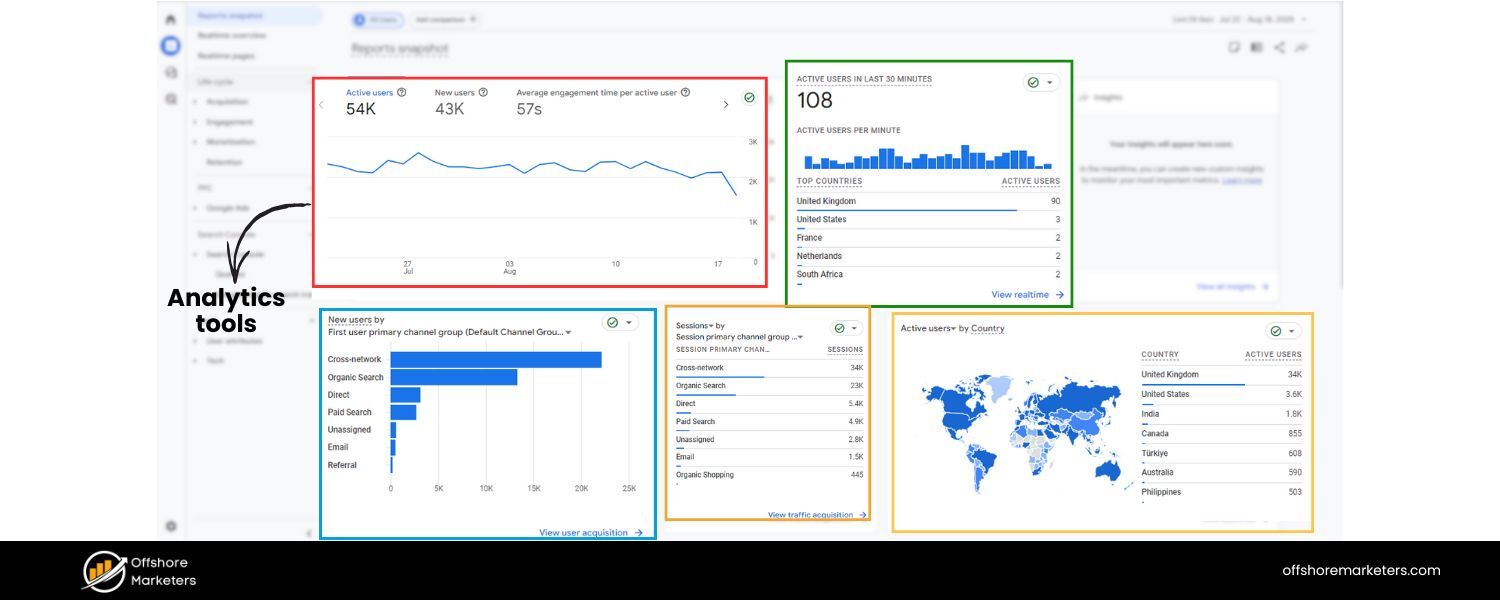 To measure the effectiveness of your SEO, you need analytics tools. Google Analytics (especially the newer GA4) is a must-have – it shows how much traffic you’re getting, where it comes from (e.g., “Organic Search” vs others), what users do on your site, and conversion data. Google Search Console is another free tool that specifically shows how your site is performing in Google Search.
- Backlink Checkers: Since backlinks are so important, tools like Ahrefs, Majestic, or Semrush’s backlink analysis allow you to see which sites link to you. You can also plug in competitor websites to find their backlink sources. If you notice your competitor got a link from a popular industry blog, you might reach out to that blog as well.
- Rank Tracking Software: It can be useful to track your key rankings over time. Rank trackers allow you to input a set of keywords and then regularly check where your site ranks for them in search engines. This helps you measure progress. There are dedicated tools for this, and many SEO platforms include rank tracking as a feature.
- Specialized SEO Utilities: There are many other handy tools – for instance, SERP snippet optimizers that show how your title and meta description will appear in Google results (useful for crafting meta tags of the right length), page speed testing tools like Google PageSpeed Insights or GTmetrix to pinpoint speed issues, and schema markup generators to help create structured data code for your pages.
- AI and SEO: An emerging area is the use of artificial intelligence in SEO. Some tools now use AI to suggest optimizations or even generate content briefs based on ranking content. While AI can save time, it is essential to always review AI-generated suggestions or content for accuracy and quality; human judgment remains crucial in SEO.
Many of these tools offer free versions or trials, but paid subscriptions unlock more data or features. If you’re serious about SEO for a business, investing in a good SEO toolset can be well worth it for the insight it provides.
And if you’re using an SEO agency, ask them what tools they use – reputable agencies typically use multiple tools to cover all bases, from technical audits to content optimization.
B. What Professional SEO Services Include
SEO is a multifaceted effort, and if it feels like a lot to tackle, you’re not alone. That’s why there are numerous SEO agencies and consultants available to help businesses enhance their search visibility.
But what exactly do professional SEO services include? While services vary by provider, most comprehensive SEO campaigns will involve:
- Initial Website Audit & SEO Roadmap: Agencies typically start by auditing your site (like the technical and on-page audits we discussed). They identify issues and opportunities, then create an SEO strategy or roadmap. This roadmap will outline what needs to be done – for example, fixing technical errors, targeting specific keywords with new content, improving existing pages, etc., along with a timeline.
- Keyword Research and Competitor Analysis: Professionals will research the best keywords to target for your goals, often uncovering opportunities you might not think of. They also analyze your competitors (those ranking above you) to see what they’re doing right – what keywords they rank for, how their content is structured, how many backlinks they have, etc.
- On-Page Optimization: Expect the SEO service to optimize various on-page elements across your site. This can include creating or tweaking title tags and meta descriptions for each page, ensuring each page has a clear H1 and relevant subheadings, optimizing or adding keyword-rich content where needed, and fixing on-page issues (like duplicate or missing tags).
- Technical Fixes and Improvements: Your SEO partner should address the technical SEO issues discovered. This might involve working with your web developer or utilizing their team to, for example, enhance page speed, establish proper redirects for broken URLs, incorporate schema markup, or ensure your site is mobile-friendly. Many agencies have web developers or technical specialists who handle behind-the-scenes improvements.
- Link Building Campaigns: Almost every full-service SEO package includes some form of off-page SEO work, typically link building. Agencies often have outreach specialists who contact bloggers, publishers, or influencers to secure backlinks. They might create guest posts, infographics, or other link-worthy content as part of this process.
- Local SEO Focus (if applicable): If you are a local business, the agency will optimize your Google Business Profile, help you get more reviews, build local citations, and perhaps create locally optimized content. They understand the nuances of local search ranking factors and will ensure your NAP information is consistent, among other things.
- Regular Reporting and Analytics: A hallmark of a good SEO service is transparent reporting and analytics. Typically, you should receive monthly (or sometimes weekly) reports that show key metrics, including changes in keyword rankings, organic traffic growth, conversions from organic sources, new backlinks acquired, and work completed during that period. Some agencies provide a dashboard for clients to log in and view real-time stats.
- Consultation and Strategy Adjustments: SEO is not static; strategies may need to be tweaked as results emerge or as search engines update their algorithms. Good SEO providers will periodically review progress with you, discuss what’s working, and adjust the plan. For example, if a set of keywords isn’t moving up after a few months, they might try a different approach.
- Ethical Practices: Reputable SEO services commit to ethical “white hat” practices, as mentioned earlier. This means no spamming, no buying links in bulk, no cloaking, or other forbidden tactics that might provide a short-term boost but ultimately lead to long-term penalties. Instead, they focus on sustainable tactics, such as creating high-quality content, engaging in legitimate link outreach, and achieving technical excellence.
When choosing an SEO service, it’s wise to do some research and due diligence. Look at case studies or testimonials: have they succeeded with other clients? Check reviews on independent sites like Clutch.co, where clients often leave detailed feedback on agencies.
You’ll find that top-rated marketing firms, like offshore marketers, are often praised for effective strategies and delivering measurable improvements. Also consider the communication style and transparency – you want a team that explains what they’re doing and why, rather than operating like a black box.
C.Finding the Right SEO Partner
If you decide to enlist professional help, choosing the right SEO partner is critical. With thousands of agencies and consultants out there, how do you pick one that’s a good fit for your business?
Here are some tips:
- Check Their Track Record: Look for an agency with a proven track record of results. Do they have case studies showing they’ve helped other clients rank higher or grow traffic? Have they won any industry awards or recognition? For instance, some agencies highlight that their strategies have boosted clients’ search rankings and even earned industry accolades.
- Read Client Reviews: Websites like Clutch.co compile reviews of SEO firms. These reviews often reveal what it’s like to work with the agency, including its strengths and any weaknesses. You might find comments about the agency being communicative, delivering on promises, or conversely, any red flags. Also, ask the agency if you can speak with a reference – a past or current client.
- Services and Specialties: Ensure the agency offers the services you need. If you’re a local business, do they have local SEO expertise? If you’re an e-commerce site, have they worked with online retailers before? Some agencies specialize (e.g., focusing on technical SEO or link building), while others offer full-service solutions. A full-service digital marketing agency, like offshore marketers, can often support other areas, such as PPC or social media, if you need them in the future.
- Transparency and Communication: A good SEO partner will be transparent about their methods and keep you informed throughout the process. During initial consultations, notice if they freely discuss their strategies and answer your questions. Be wary of anyone who guarantees #1 rankings overnight or refuses to explain their approach (“secret sauce” claims can hide shady tactics). SEO professionals recognize that educating clients is a crucial part of their role.
- Alignment with Your Goals: The agency should ask about your business goals and tailor their strategy accordingly. SEO for a small local clinic is different from SEO for a national software company. The right partner will discuss KPIs (Key Performance Indicators) that matter to you – whether that’s increased sales, lead form submissions, or simply more traffic. They should articulate how their efforts will support those outcomes.
- Pricing and Value: Finally, ensure their services align with your budget and that you feel you’ll receive good value. The cheapest option is not always best – SEO is one area where you often “get what you pay for”. It’s better to invest in quality expertise for a few months than to spend a smaller amount on someone who does generic or minimal work. That said, expensive doesn’t guarantee quality either, so weigh cost against all the factors above.
Remember that hiring an SEO service is like hiring a long-term partner for your business growth. The best relationships are collaborative: you provide industry insight and customer knowledge, while they offer SEO expertise; together, you craft a strategy that enhances your online presence.
As one resource put it, finding the right SEO firm can help your business “elevate your search engine rankings and achieve your digital marketing goals”, whether you’re a startup or an enterprise.
Implementing SEO: Tips for Long-Term Success
Whether you choose to work with professionals or take a do-it-yourself approach, implementing SEO is an ongoing process. Here’s a simple blueprint for how to get started and sustain success:
- Start with an SEO Audit: Begin by evaluating your website’s current search engine optimization (SEO) standing. Use one of the aforementioned tools or engage an expert to audit your site. Identify critical issues (e.g., broken pages, missing meta tags, slow loading speed) and address them first. An audit will also provide a baseline – for example, knowing your current organic traffic and keyword rankings will help you measure improvements later.
- Conduct Thorough Keyword Research: Take the time to research the keywords your target audience uses. Aim to understand the topics and questions they have. Use the keyword tools to compile a list of primary keywords and related variations. Look for a mix of “head” terms (broad, high-volume keywords) and “long-tail” terms (more specific, 3-5 word phrases that might have lower volume but often higher conversion intent).
- Optimize Existing Content: Apply on-page SEO best practices to the existing pages. Ensure each important page has a unique, keyword-optimized title tag and meta description. Check that your headings are descriptive and include relevant terms. Improve any thin or outdated content – could you expand a 300-word page into a more comprehensive 800-word resource? Remove any duplicate content.
- Create New High-Quality Content: Based on your keyword research, plan out new content that can attract organic traffic. This might be a blog on your site where you regularly publish articles or new pages to target specific services or address common questions. Content marketing is an engine for SEO – each new page is another opportunity to rank. Aim to become a resource in your niche.
- Promote Your Content and Build Links: Simply publishing great content is not always enough – you need to promote it. Share your new content on social media, send it to your email subscribers, and consider reaching out personally to anyone who might find it valuable (e.g., if you mentioned a tool or person in your blog post, let them know – they might share it).
- Monitor Your Results: Continuously track your SEO performance to stay informed about your progress. Check your analytics monthly (if not weekly). Are organic visits increasing? Which pages are getting the most search traffic, and for what queries? Google Search Console’s “Performance” report is very handy – it shows the exact search queries that led people to click on your site.
- Adapt and Refine: SEO isn’t a set-and-forget deal. Search algorithms update (Google makes minor changes weekly and major core updates a few times a year), competitors will be doing their SEO, and your business priorities might evolve. So be ready to adjust. If a certain tactic isn’t yielding results, try another. For example, if after 6 months you’re not seeing improvement in a high-competition keyword, consider focusing on a different, more niche keyword that you can dominate.
- Be Patient and Persistent: Ultimately, understand that SEO is a time-consuming process. Especially if your site is new or you’re in a competitive market, you generally won’t jump to the top of Google in just a few weeks. It can take several months to start seeing significant movement, and SEO is cumulative – it builds on itself. The efforts you invest now might reap their biggest rewards a year down the line.
To stay motivated, celebrate small wins along the way. Perhaps your site moved from page 5 to page 2 for a target keyword – that’s progress.
Or you earned a handful of great backlinks this quarter – give yourself credit. Each improvement is a step toward the ultimate goal of sustainable organic growth.
Conclusion
SEO might seem complex at first, but at its core, it’s about helping people find what they need on the internet (and specifically, helping them find your business when your offerings match their needs).
By focusing on the main pillars – creating valuable content, optimizing your website’s structure, building credibility through backlinks, and, if applicable, honing your local presence – you set the stage for higher search engine rankings.
The beauty of SEO is that it can level the playing field: a small business with a smart, consistent SEO strategy can outrank larger competitors in the digital space.
We’ve covered how on-page tweaks and high-quality content make your site relevant, how technical improvements make it accessible, and how off-page efforts establish its authority.
It’s this synergy of relevance, accessibility, and authority that propels you up the search rankings.
And whether you tackle it in-house using the plethora of SEO tools available or partner with an expert SEO agency, the key is to stay strategic and user-focused.
Search engines are continually improving their ability to understand what searchers truly want, so the best approach is always to strive to provide the best answer or experience for the user’s query.
One final piece of advice: keep learning and stay adaptable. The world of SEO is dynamic. Google might introduce a new feature (like featured snippets or a tweak to how it displays local results), or a new technology might change search behavior (like the growing use of voice assistants or AI chatbots). By staying curious and agile, you can turn these changes into opportunities.
For example, if voice searches become more common in your industry, you might incorporate more natural language and Q&A-style content to capture those queries.
In summary, investing in SEO is a strategic move that enhances the long-term success of your online presence. It might not produce instant gratification like a paid ad can, but over time, the compounding benefits of SEO – steady traffic, brand credibility, and lower customer acquisition costs – are unparalleled.
Businesses that rank well aren’t just lucky; they’ve earned that position through consistent effort and smart strategy.
With the knowledge from this guide, you are well-equipped to join their ranks by developing your comprehensive SEO strategy or by wisely leveraging SEO services to help you.
Remember, every big victory in SEO starts with a small step – perhaps today that’s as simple as fixing a title tag, brainstorming blog topics, or reaching out to a local blogger.
Over time, those steps turn into the pathways that lead customers straight to your (digital) door.
So start now, be patient, and watch as better search visibility translates into real growth for your business. Success starts with search, and now you have the strategies and tools to succeed in SEO.

Why Roseville Startups are Choosing Offshore Marketers to Scale Smarter
Roseville is no longer just a quiet suburb of Sacramento;...

What Is PPC? A Practical Guide to Pay‑Per‑Click Advertising
Pay‑per‑click (PPC) is the “pay only when someone clicks” branch...

Google Search Issues Affecting Results in Some Regions
Google has confirmed a problem with one of its data...

Keyword Counts Dropped After Google’s num=100 Change
In September 2025, Google stopped supporting the &num=100 parameter. This...

Image SEO: Optimize Images for Higher Rankings & Traffic
Introduction Images make your website more engaging, but they can...


.png)
.png)
.png)
.png)
.png)

2024 ALL RIGHTS RESERVED MADE IN INDIA
.png)