
Keyword Phrases: How Search Terms Can Boost Your SEO
September 8, 2025
Introduction
If you’re still focusing on single-word keywords, you might be missing out on a huge SEO opportunity. The reality is that most people search using keyword phrases – multi-word queries that reveal exactly what they want.
In fact, over two-thirds of all clicks go to the top three Google results, and targeting the right keyword phrases can help you earn one of those top spots. In this guide, we’ll explore what keyword phrases are, why they’re so important for SEO, and how to research and optimize for them to skyrocket your rankings and traffic.
What Are Keyword Phrases in SEO?
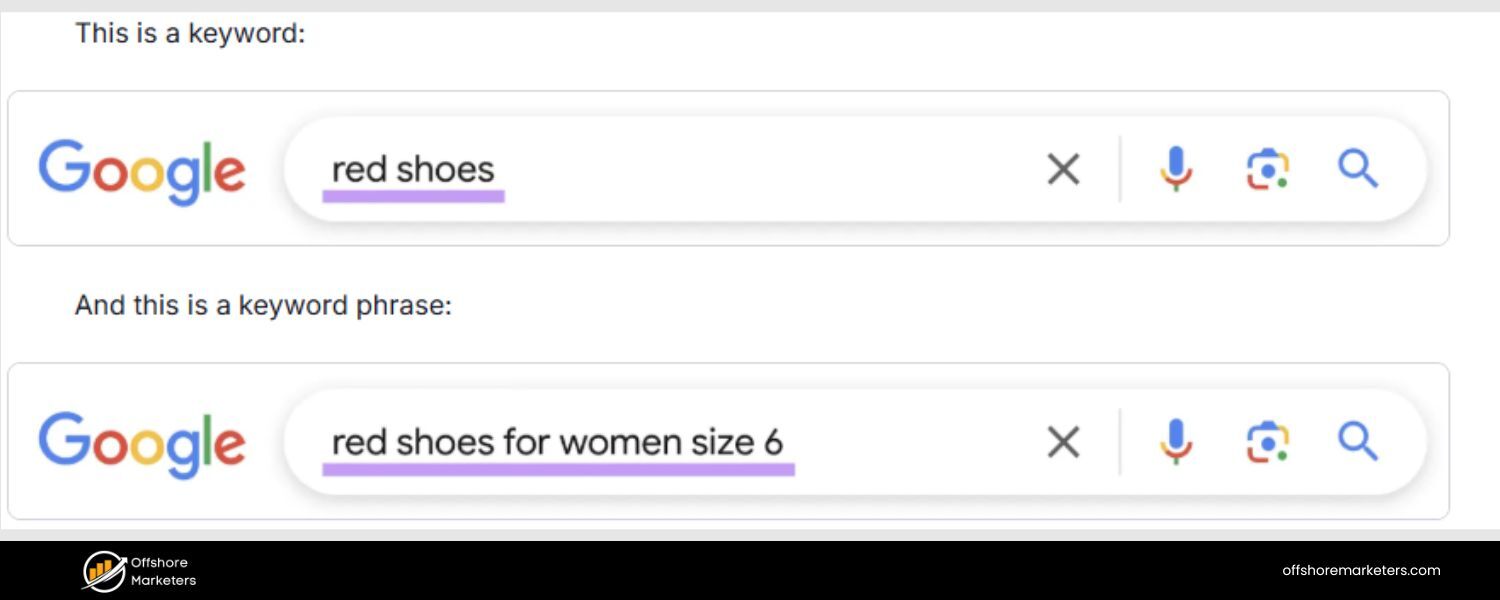
Keyword phrases (also called keyphrases or search queries) are simply search keywords composed of multiple words rather than a single term. For example, “best coffee shops” is a keyword phrase, whereas “coffee” by itself is just a single keyword.
SEO professionals often use “keyword” to refer to both single terms and phrases, but it’s important to understand the difference. Keywords tend to be short (one or two words), while keyword phrases are longer and more specific searches.
Why does that matter? Because a phrase provides more context about user intent. If someone searches “red shoes for women size 6”, you have a very clear idea of what they want. Compare that to just “shoes” – the single word is so broad that it’s hard to guess the intent.
In essence, a keyword phrase is a targeted, multi-word term that you want to build your page around so it ranks highly for that precise query. Modern SEO places heavy emphasis on these specific phrases, often calling them long-tail keywords.
Quick fact: Yes, SEO keywords can absolutely be phrases – and often should be. Multi-word phrases are often more effective than single words at matching search intent. For instance, a search for “best hiking trails in Colorado” signals a clear intent (finding hiking trails in Colorado), whereas “hiking” alone is too ambiguous. This is why savvy marketers focus on key phrases that mirror how people actually search.
Why Keyword Phrases Matter for SEO
Using keyword phrases in your content helps you reach your audience more precisely and address their needs. Here are the key benefits of targeting well-chosen key phrases:
1. Match User Intent Better
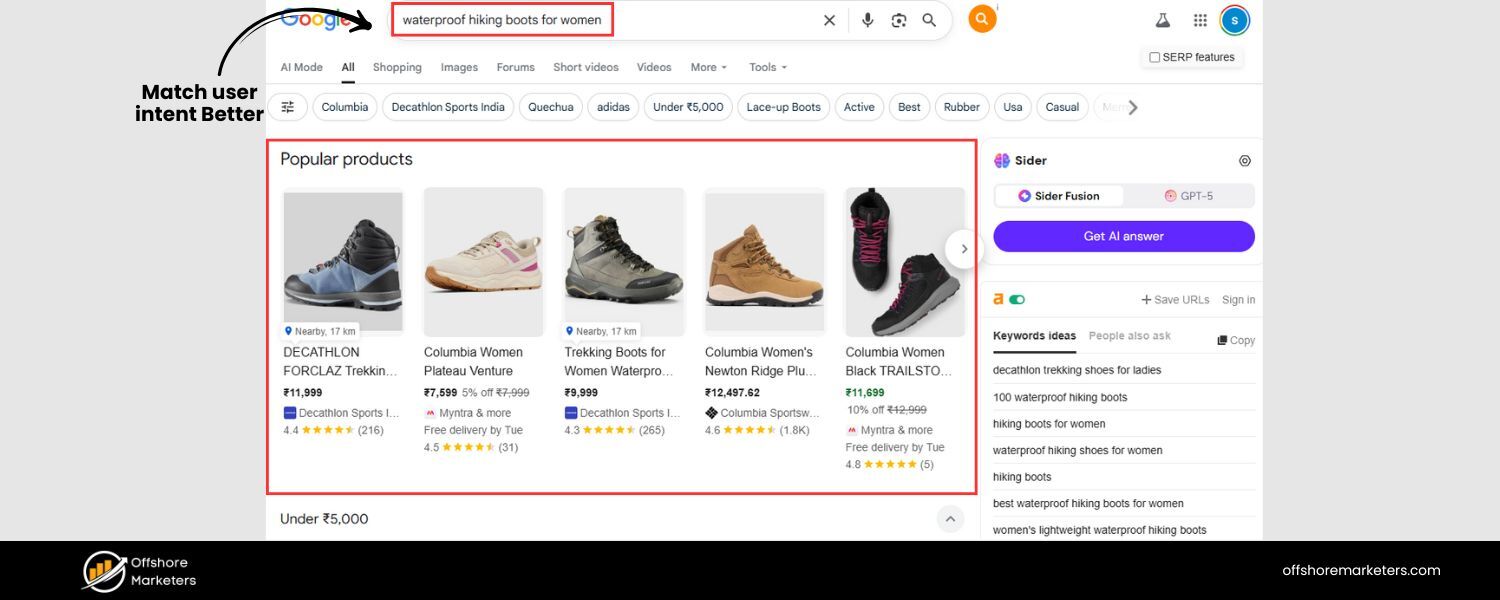
Keyword phrases are usually very specific, which means they align closely with what a searcher is looking for. For example, it’s hard to know what someone wants from the keyword “boots.” Do they need fashion boots, hiking boots, or a definition of the word?
But someone searching “waterproof hiking boots for women” clearly wants to buy waterproof hiking boots. By targeting specific phrases, your content can directly answer the query, making it more relevant to the user.
In fact, 91.8% of all search queries are long-tail (multi-word) searches, which shows that users typically type full phrases or questions to get exactly what they need.
2. Less Competition, Easier to Rank
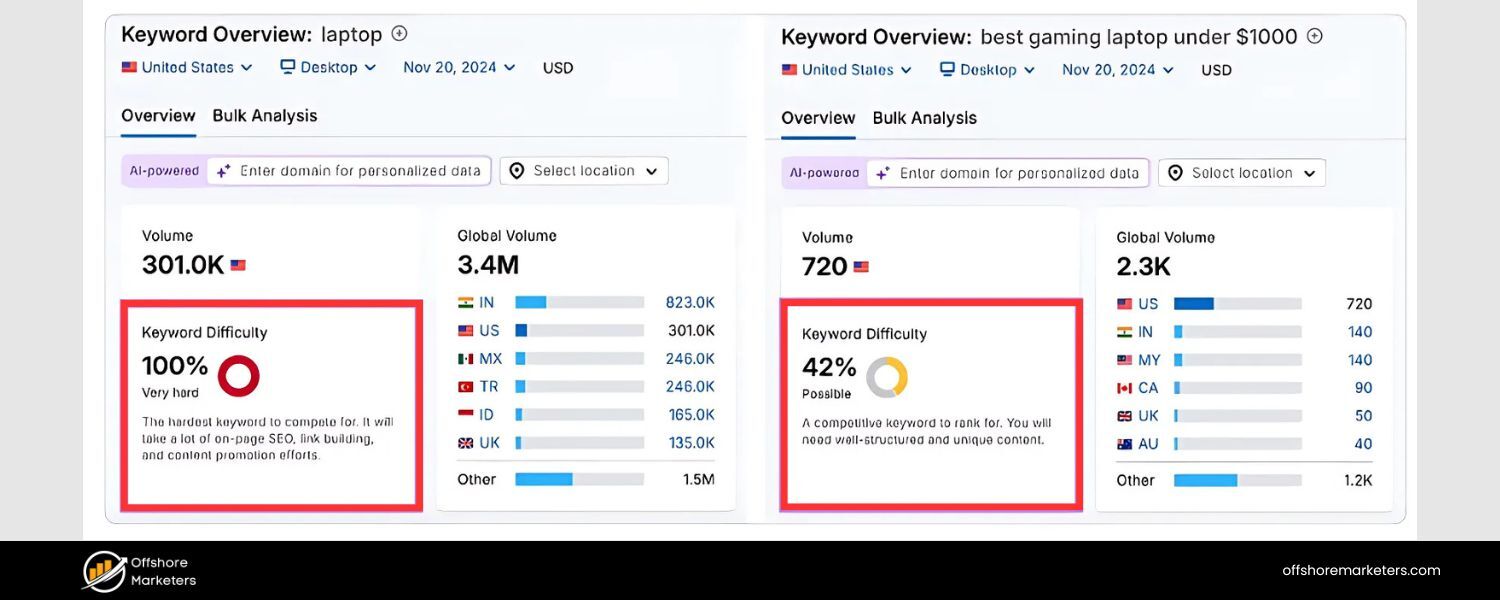
Broad one-word keywords tend to be extremely competitive. A term like “laptop” or “coffee” is so general that hundreds of high-authority sites compete for it. Keyword phrases, being more specific, usually have lower competition.
For instance, the generic keyword “laptop” might have a 100% difficulty score (nearly impossible to rank for as a new site), whereas a niche phrase like “best gaming laptop under $1000” could have a much lower difficulty around 42%.
Targeting the phrase gives you a fighting chance to rank even if your site is smaller or newer. In short, it’s often better to be a big fish in a small pond by ranking for a specific phrase than invisible on page 10 for a broad term.
As one SEO study found, moving from a broad term to a targeted long-tail phrase dramatically lowers the competition and improves ranking chances.
3. Higher-Quality Traffic & Conversions
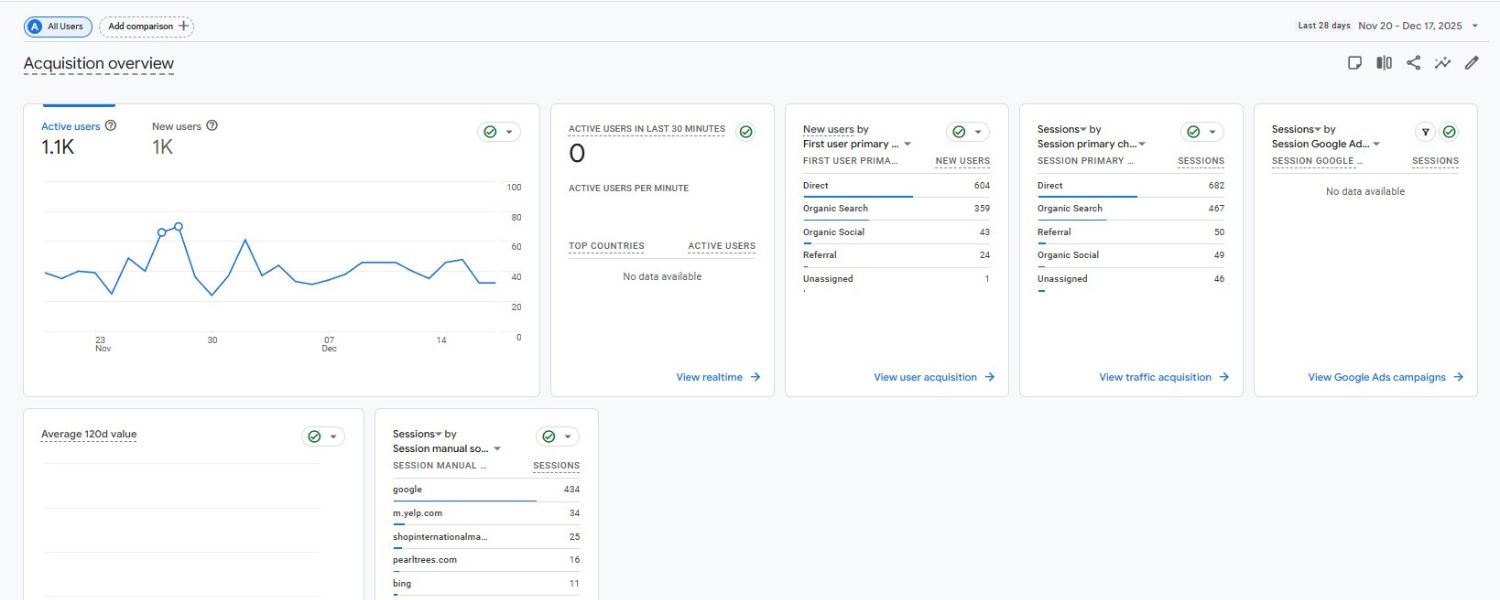
Visitors who arrive via specific keyword phrases tend to be more qualified prospects. They know what they’re searching for, so they’re often further along in the buying or decision process.
This means they’re more likely to engage, convert, or make a purchase on your site. Data supports this: long-tail keyword phrases deliver about 2.5× higher conversion rates compared to short, broad keywords.
Likewise, 56% of online buyers use search queries of 3 words or more, while only 7% use one-word searches – indicating that people ready to take action tend to search in detailed phrases.
By capturing these high-intent visitors, you can improve metrics like time on site, lead conversions, and sales. Targeted traffic is better than just more traffic.
4. Improved Engagement
Because keyword phrases narrow in on what the user wants, they often lead to better engagement signals. Someone who finds exactly what they searched for (e.g. an article titled “How to clean leather shoes” when they searched that very phrase) is likely to stay longer, read more, or interact with your page.
This user satisfaction can indirectly boost SEO, as search engines notice when users stick around on a page that perfectly answers their query. Phrases help set that expectation and fulfill it.
They also increase your chances of earning featured snippets or voice search results (for example, a question-based phrase might get picked up as a quick answer by Google).
In summary, keyword phrases allow you to tailor your SEO to what people are truly searching for. They provide clarity for both the user and the search engine, making your content more relevant, easier to rank, and more effective at driving outcomes.
Given that the vast majority of searches are multi-word and specific, focusing on keyword phrases is one of the smartest moves you can make in your SEO strategy.
Types of Keyword Phrases (By Length & Intent)
Not all keyword phrases are alike. It’s useful to understand the different types of key phrases you might target, categorized by their length and the searcher’s intent behind them:
1. Short-Tail Phrases (Broad Keywords)
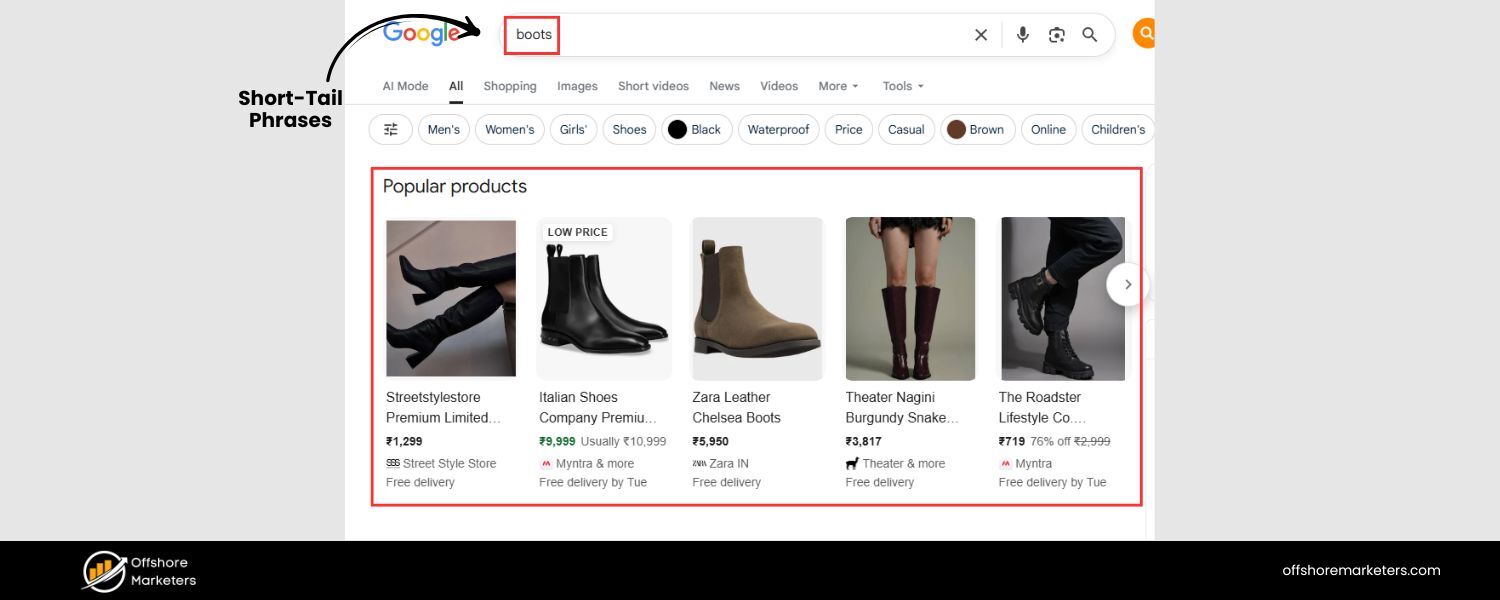
These are very short search terms, often one to two words or so (though some consider up to 2–3 words “short” tail). Examples: “shoes”, “digital marketing”. Short-tail terms have high search volume but are extremely broad in meaning and highly competitive.
The search intent is vague – a user typing “shoes” could be looking for pictures of shoes, places to buy shoes, shoe repair tips, etc. Short-tail keywords drive lots of searches but are too general to easily convert and too difficult for a small site to rank for. They’re often better used as general topics rather than precise targets.
2. Long-Tail Phrases (Specific Keywords)
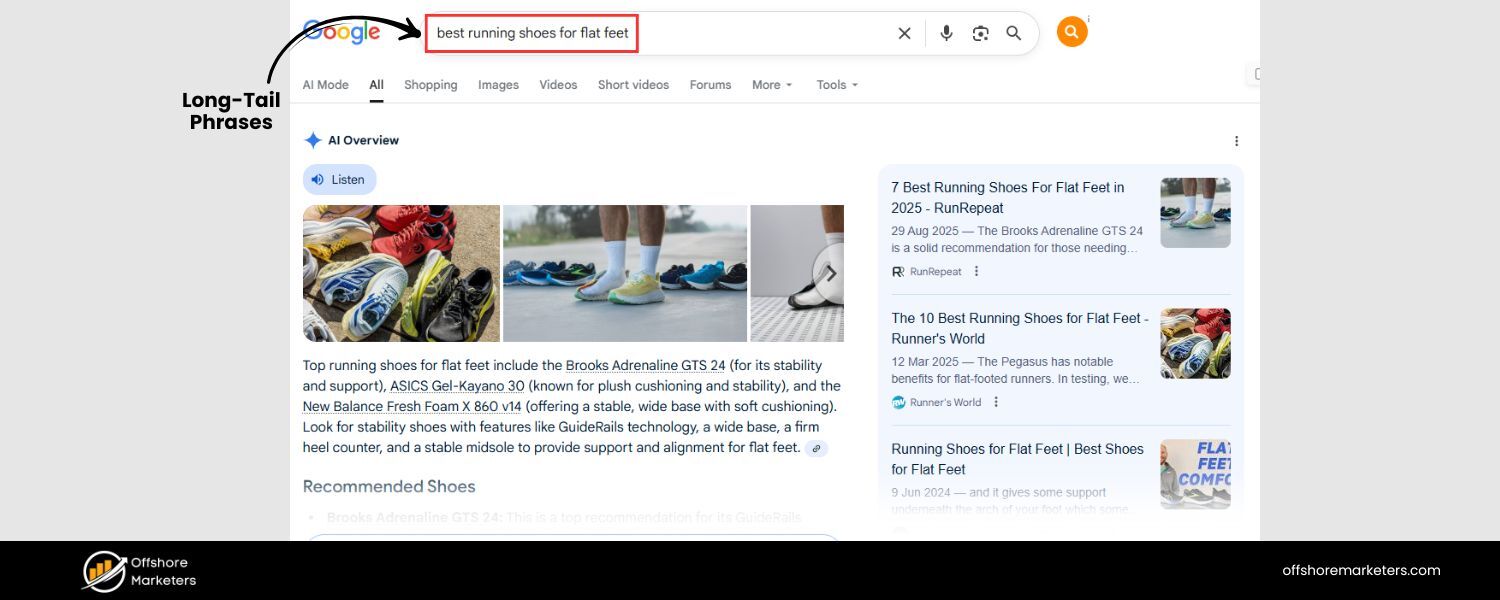
These are longer, more detailed queries, typically 3, 4, or more words long. Examples: “best running shoes for flat feet”, “digital marketing strategy for startups”. Long-tail phrases have lower search volume individually, but they represent the bulk of searches in aggregate (remember, ~92% of queries are long-tail!).
They convey a clear, narrow intent – e.g. “best running shoes for flat feet” is likely a shopper with a specific need, and “digital marketing strategy for startups” is likely someone seeking how-to guidance. Long-tail phrases face less competition and often attract a niche audience, making them easier to rank for and highly valuable.
For example, “backyard chickens” (a specific niche term) has much lower competition than just “chicken,” and targets users interested in raising chickens at home. Long-tail keywords might get fewer searches per month, but the users who do search them are often more engaged and ready to act.
3. Informational Keyword Phrases (Know Intent)
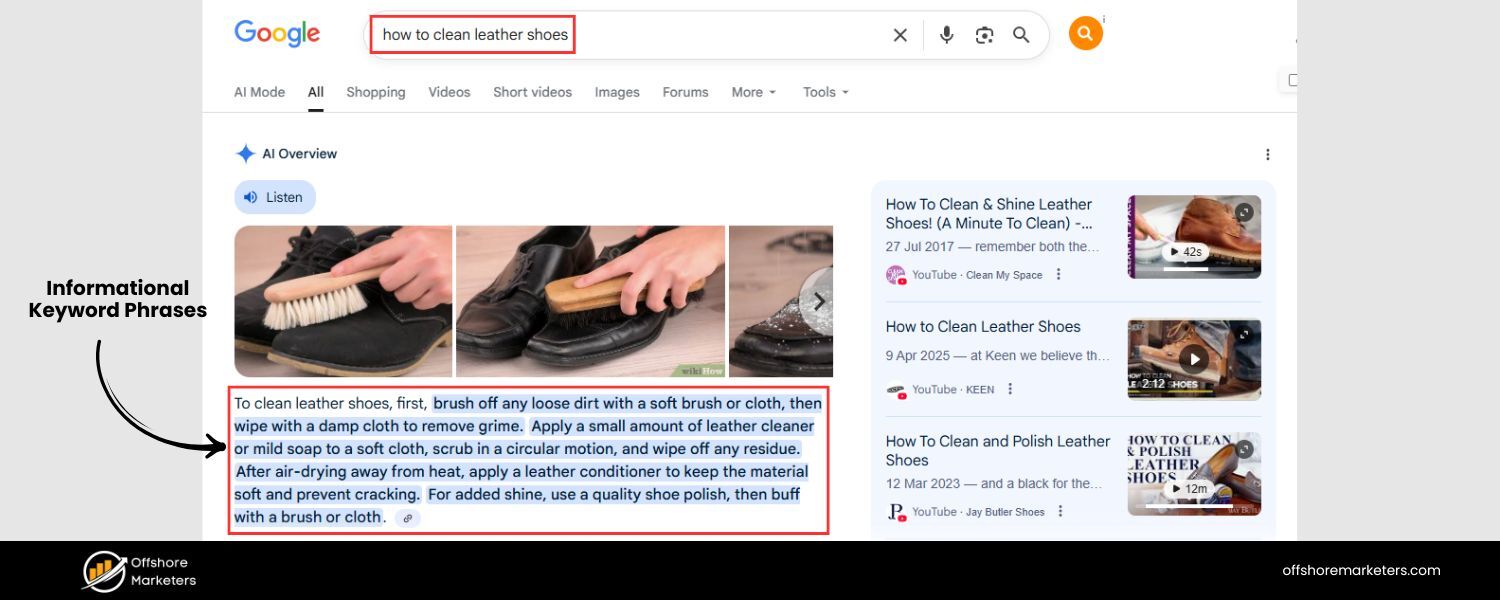
These are queries where the user is looking for information, answers or how-tos. They often start with question words or verbs: “how to __”, “what is __”, “tips for __”, “best way to __”. Example: “how to clean leather shoes”.
The intent here is learning or problem-solving, not immediately buying. Informational phrases are great for content like blog posts, guides, and FAQs. Optimizing for these can establish you as an authority and even earn featured snippets (quick answer boxes), especially if phrased as a common question.
About 8% of all search queries are phrased as explicit questions (who, what, where, why, how), but many more imply a question. Target these to capture people in research mode – it’s an opportunity to fill their need and introduce them to your brand early in the journey.
4. Transactional Keyword Phrases (Do Intent)
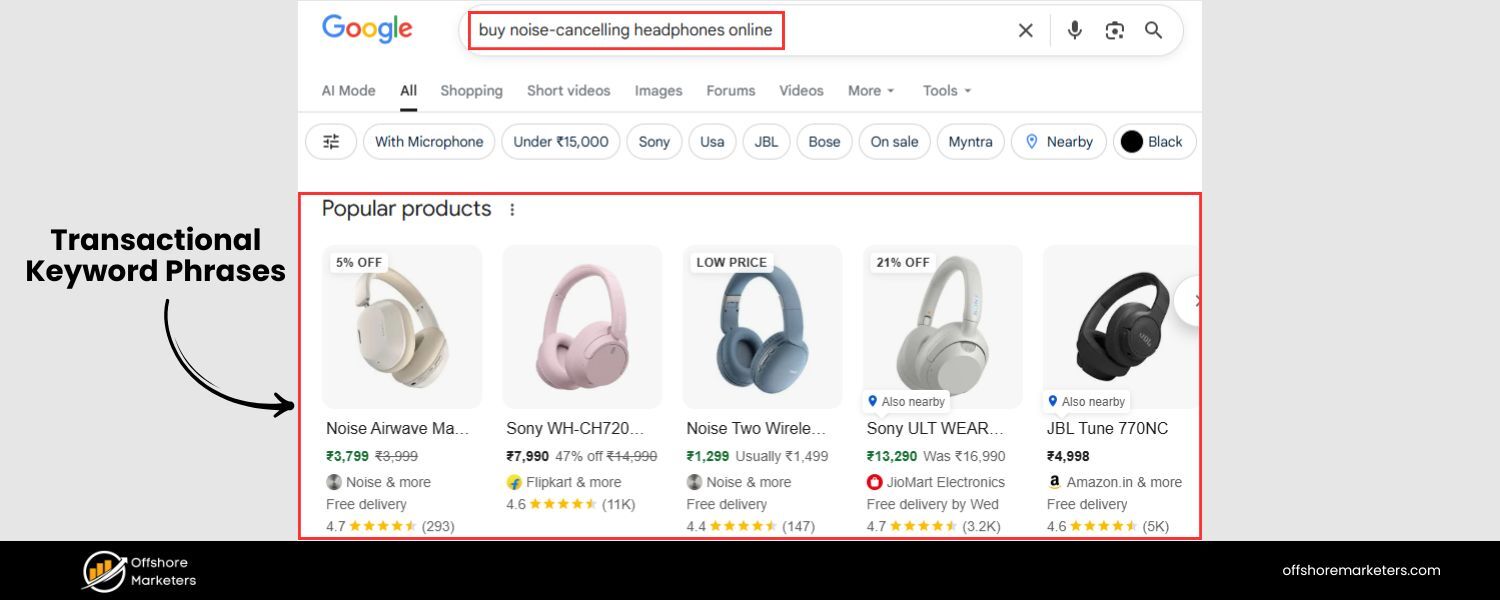
These phrases indicate commercial intent – the searcher is looking to take an action like making a purchase, signing up, or otherwise converting. They often include words like “buy”, “order”, “for sale”, “subscribe”, or specific product names and models.
Examples: “buy noise-cancelling headphones online”, “Nike Air Max 90 review”. A user typing these is likely ready to do something (buy now or soon). Transactional phrases are extremely valuable because they can drive revenue directly.
While their search volume may not be huge compared to broad terms, the conversion potential is high – these users are at the bottom of the funnel. Make sure your product pages or landing pages target the appropriate transactional phrases (including long-tails with product specifications, pricing, etc.) to capture these ready-to-buy visitors.
5. Navigational/Branded Phrases
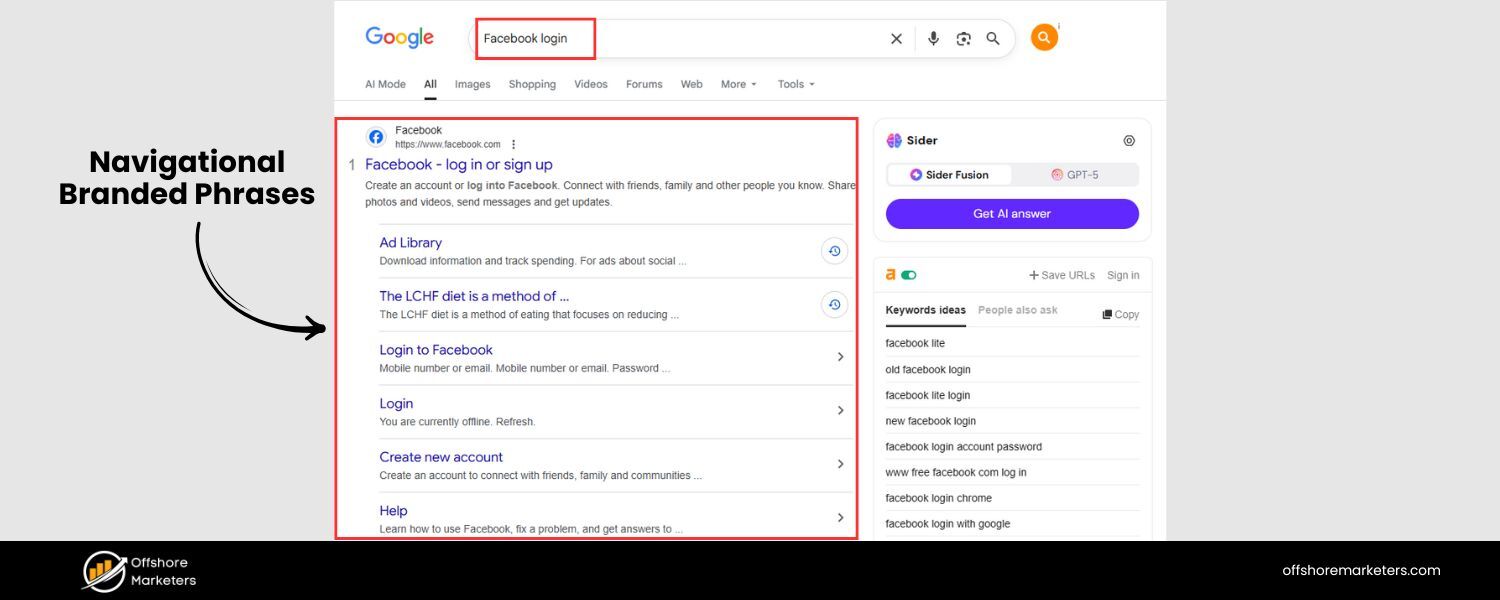
These are searches where the user is looking for a particular website, brand, or known entity. They might include a brand name or website name intentionally. Examples: “Facebook login”, “Yoast SEO plugin WordPress”, “Starbucks New York hours”.
In SEO terms, if someone searches your brand or product name, that’s a navigational query – they want to go to your site or learn specifically about your brand. It’s important to rank #1 for your own branded phrases (and you usually will, unless competitors bid on them in ads).
Navigational phrases often indicate an existing awareness or preference. They can also include generic terms that have become synonymous with a brand (e.g. searching “Photoshop online editor” implies looking for Adobe’s site).
These phrases are usually easier to rank for if they’re unique to you, but ensure your site is optimized for your brand name and common queries around it. Also, consider local navigational phrases like “[Your Business] + [City]”.
6. Local Keyword Phrases
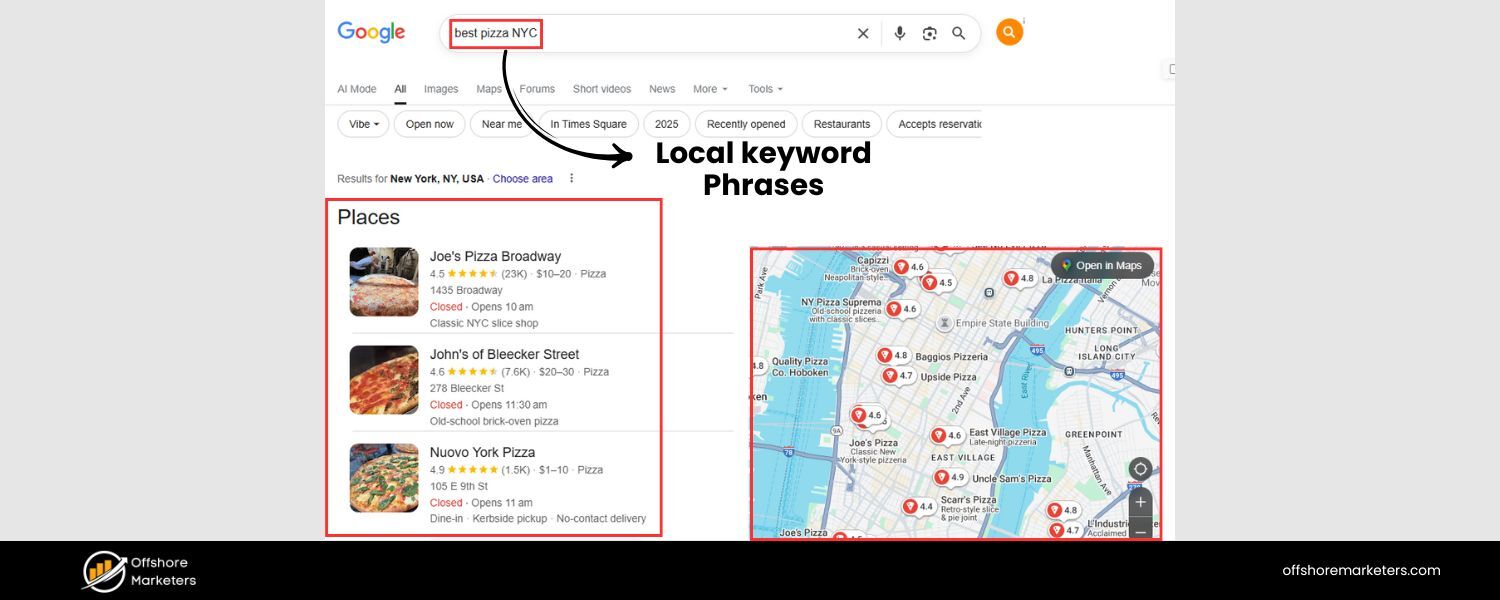
These include a location or area name as part of the query, and are critical for local businesses. Examples: “affordable dentist in Denver”, “best pizza NYC”, “grocery store near me”.
The intent is to find something in a specific geographic area. Local phrases typically trigger search engine results like Google Maps listings or local business results. If you have a local presence, optimize your pages for relevant city/neighborhood terms and use Google My Business.
Local key phrases often have high intent (someone searching “near me” is likely to visit or contact a business soon). They might not have huge global search volume, but they are extremely important on a local level for driving foot traffic and local leads.
7. Question-Based Phrases
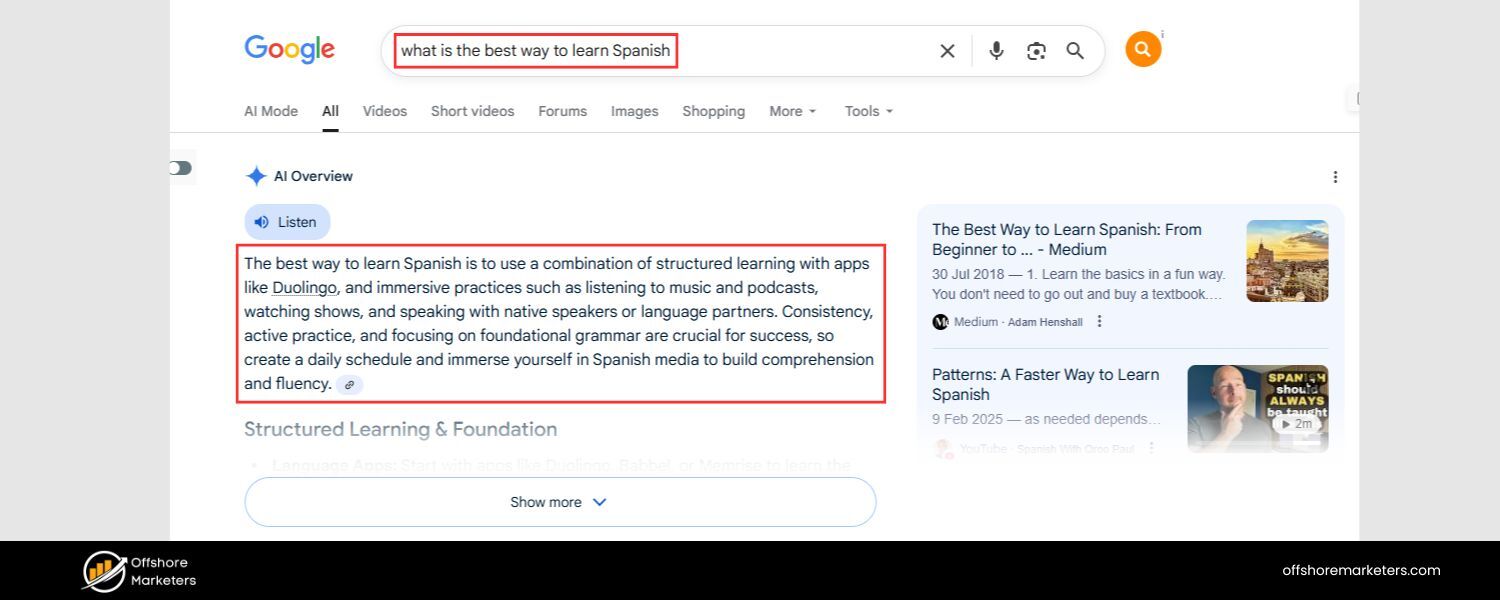
This overlaps with informational, but it’s worth highlighting because of the growing impact of voice search and featured snippets. These are full-sentence questions: “what is the best way to learn Spanish?”, “why is the sky blue?”, “how much water should I drink a day?”.
With voice assistants (Siri, Alexa, etc.), people tend to speak in questions. Optimizing content to directly answer common questions can land your site in the coveted “Position Zero” – the featured snippet – which voice assistants often read aloud.
Question-based key phrases often start with those 5 Ws + H (who, what, when, where, why, how). Target them by including an FAQ section or Q&A-style headings in your content.
When you provide a concise answer, you increase your chances of Google picking your site to answer that question. This boosts visibility and credibility.
Understanding these types of keyword phrases helps you craft a well-rounded SEO strategy. You’ll want a mix: some long-tail transactional phrases for conversions, plenty of informational phrases for content marketing and traffic, relevant local phrases if applicable, etc.
The key is to align the type of phrase with the content and goals of the page. For example, a blog post might target an informational question, while a product page targets a transactional phrase and a local service page targets local phrases. By covering different types, you capture users at every stage of their search journey.
How to Find the Right Keyword Phrases (Research Tips)
Finding effective keyword phrases for your SEO strategy starts with good research. Here is a step-by-step approach to discover the best key phrases for your website:
1. Brainstorm “Seed” Topics and Phrases
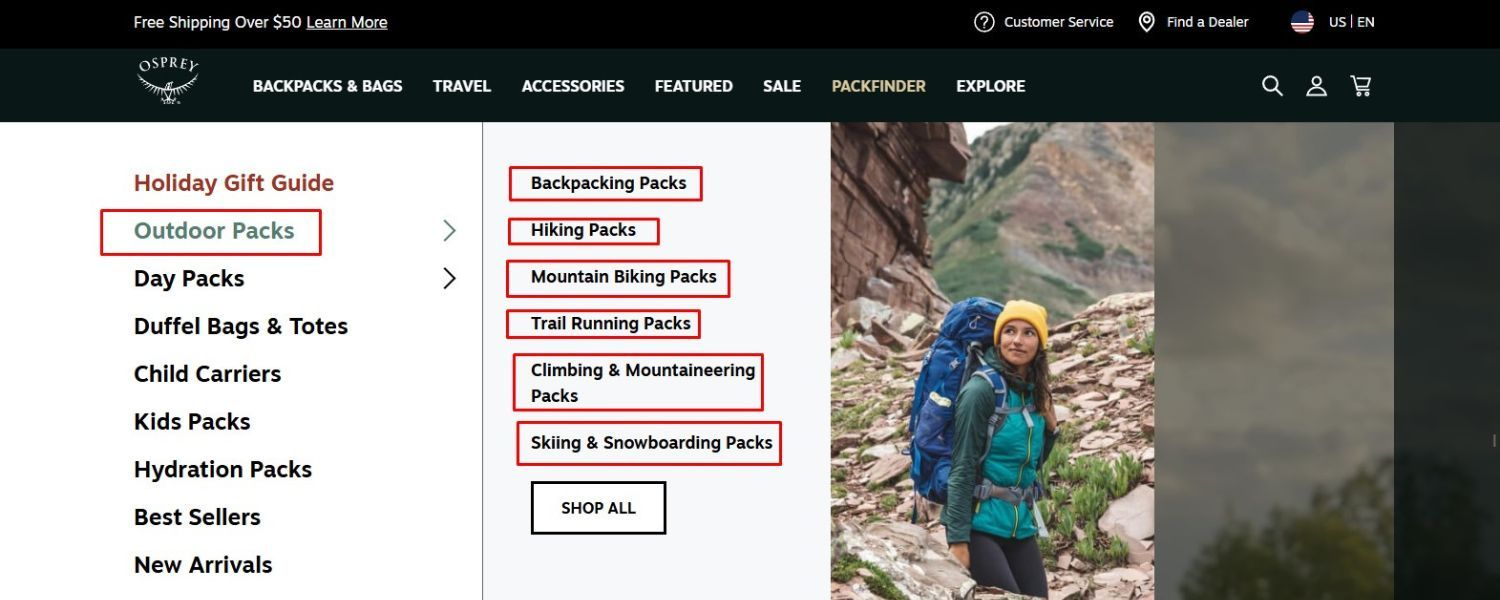
Begin by thinking about the core topics related to your business, product, or content. Put yourself in your audience’s shoes and ask: “What would someone search for if they were looking for ___?” Consider who your audience is, what problems or questions they have, and how they might phrase those queries.
Jot down all relevant ideas – both broad terms and specific phrases. For example, if you run a landscaping business, seeds might be “landscape design,” “garden maintenance,” or “patio ideas.” Think of synonyms and variations, too.
Don’t be afraid to go specific – as mentioned earlier, a broad term like “chicken” is too general, but “backyard chicken coop design” zeroes in on a niche interest. Brainstorming should yield a basic list of potential keywords and key phrases that reflect what your site offers and what your target users might search for.
The goal is to capture those phrases that sum up what you do and match your audience’s intent. (If you have colleagues or customers, ask them how they’d search – it can reveal phrases you might not think of!)
2. Use Keyword Research Tools and Google Suggestions
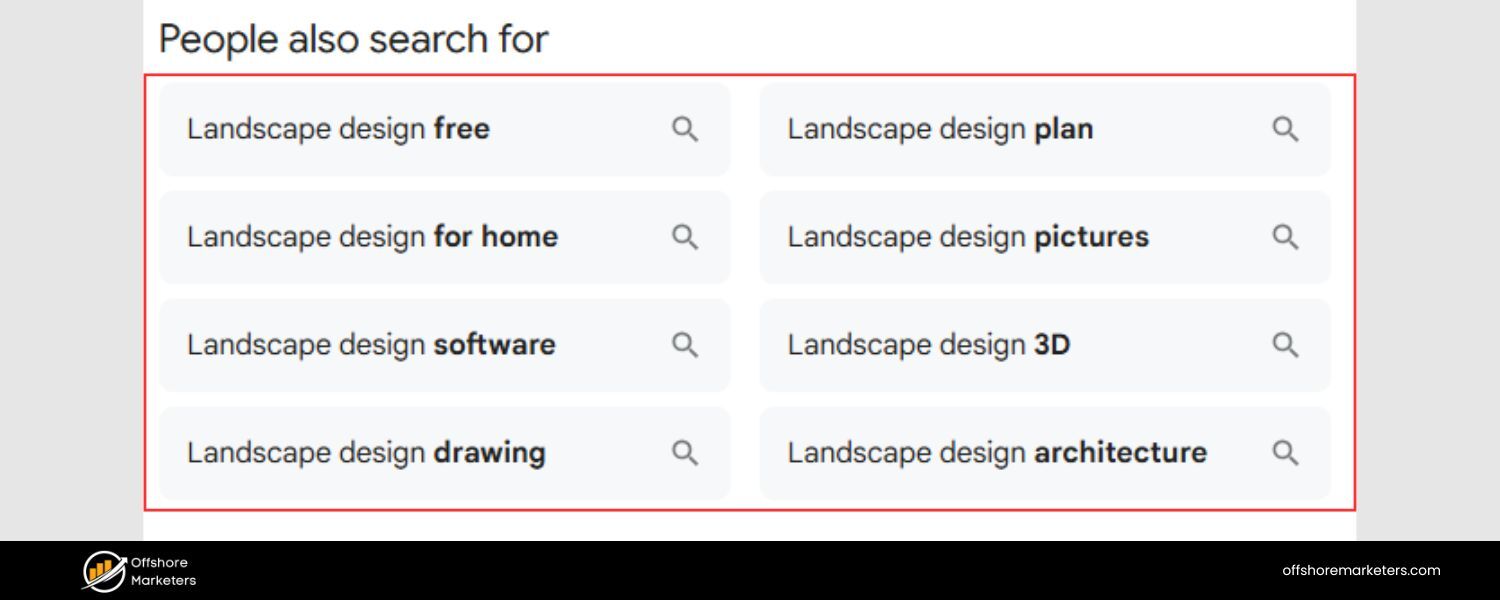
Once you have seed ideas, it’s time to expand and validate them with data. Start with free tools right in Google’s search results: type your seed keyword into Google and look at the Autocomplete suggestions that drop down – these are real queries people frequently search.
Also scroll to the bottom of the results page to see “Related searches” for more ideas. The “People Also Ask” box (common for many queries) can show questions related to your topic – each of those is a key phrase you might target with content. These Google features are goldmines for understanding how users phrase their searches.
Next, leverage keyword research tools. There are many options:
A. Google Keyword Planner
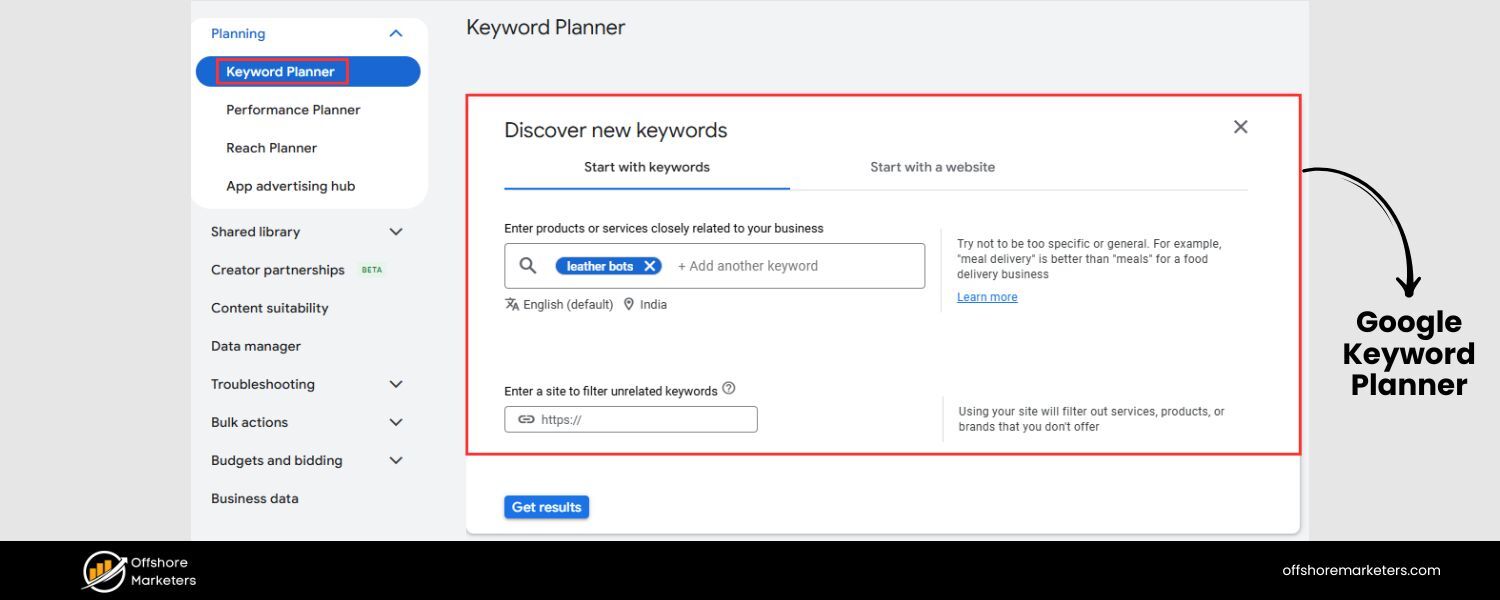
A free tool (via Google Ads account) that shows search volume and competition for keywords. You can input your seed terms and see related keyword phrase ideas, along with how often they’re searched each month.
For example, if you enter a term and a location, Keyword Planner might suggest a longer phrase like “best backyard chicken breeds” with decent volume and low competition – a hint that it could be worth targeting it. (Note: The data is geared towards advertisers, but it’s still very useful for SEO brainstorming.)
B. SEO Tools (SEMrush, Ahrefs, Moz, Ubersuggest, etc.)
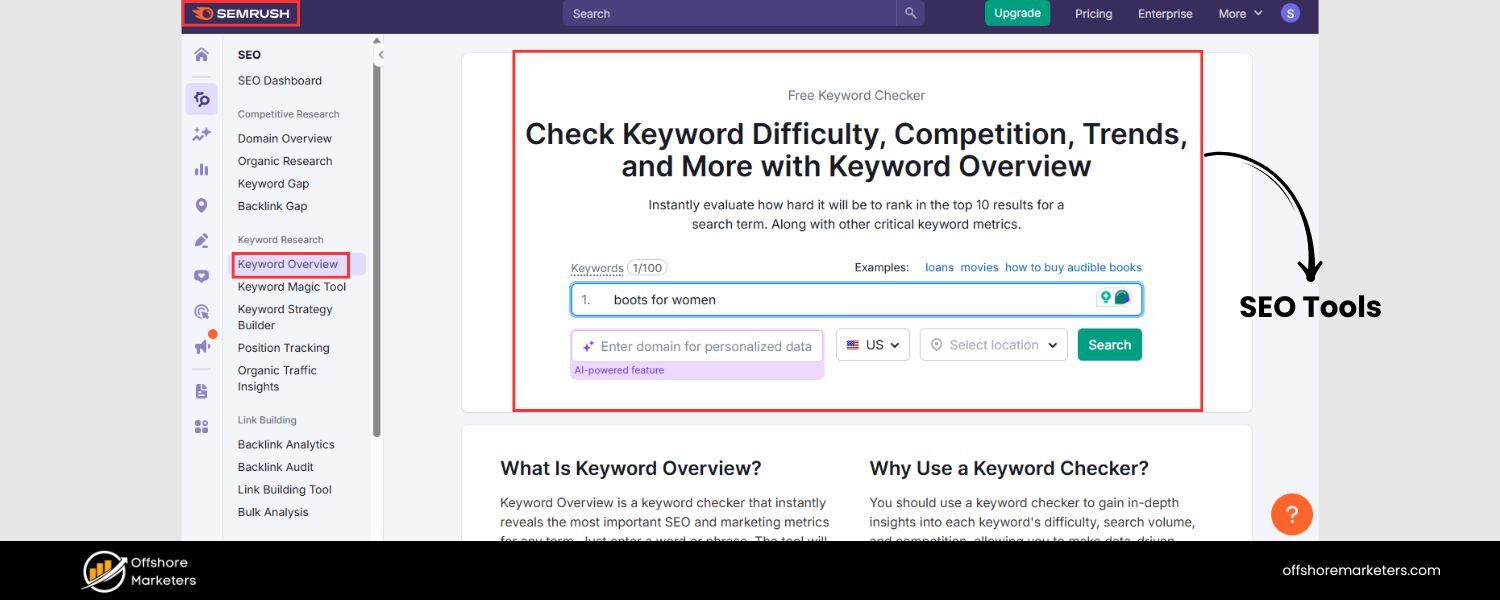
These platforms have robust keyword finders. They can generate hundreds of suggestions and provide metrics like monthly search volume, keyword difficulty (how hard it is to rank), and even an intent categorization.
For instance, Semrush’s Keyword Magic Tool lets you input a broad topic and then filters out long-tail phrases, questions, and even groups by subtopic. Many tools show search intent labels or categories, which help you identify whether a phrase is informational, navigational, or transactional.
Using these tools, look for keyword phrases that have a balance of reasonable search volume and moderate or low competition – those are often your “sweet spot” targets. (Tip: If you’re a newer site, prioritize phrases with lower difficulty scores or fewer competing pages.
Even if their search volume is smaller, you have a better chance to rank and get traffic.)
C. Question Discovery Tools
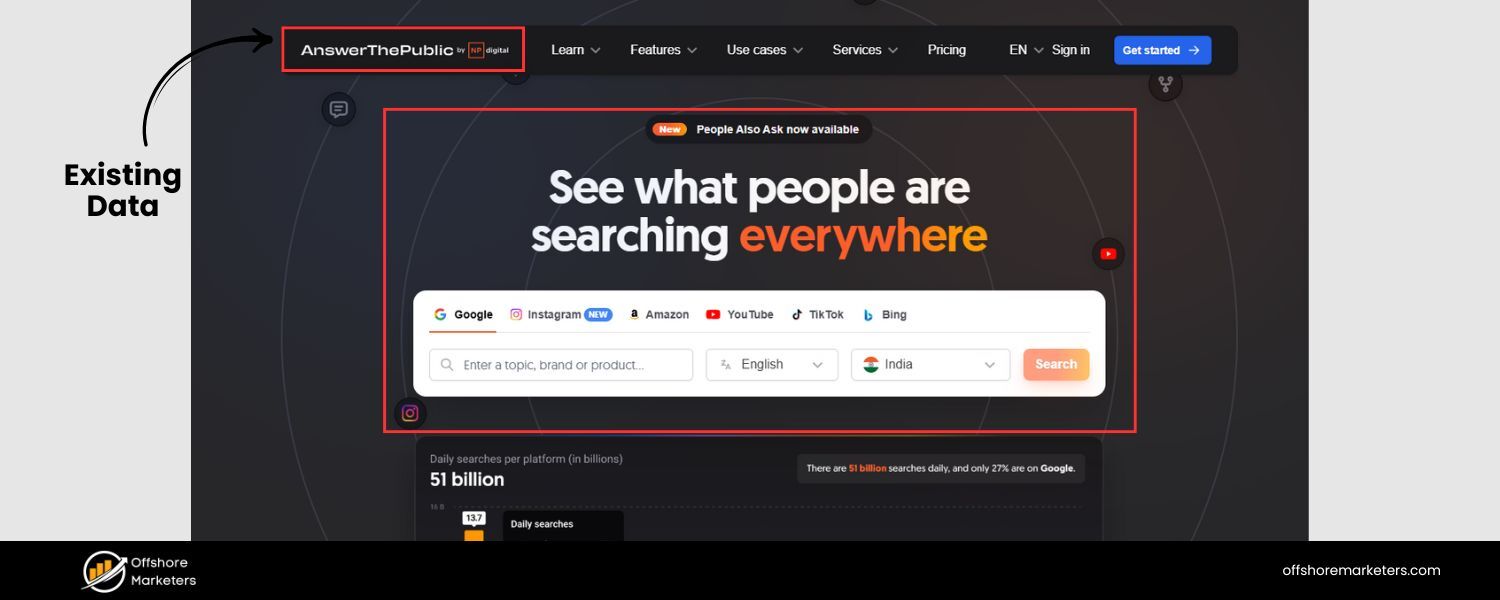
Websites like AnswerThePublic, AlsoAsked, or even the Socratic method on forums/Reddit can reveal common questions people ask about your topic. These questions can be turned into key phrases to target with FAQs or blog posts.
As you gather ideas, document your findings. Create a spreadsheet to list potential keyword phrases along with their search volumes, difficulty/competition level, and any notes (like “high intent” or “seasonal”, etc.).
This will help you compare and prioritize which phrases are worth pursuing. Remember, it’s often advantageous to target highly specific, lower-competition phrases rather than chasing ultra-competitive single words.
A keyword tool might show that “landscape ideas for small backyard” has only 500 searches a month, but low competition – that could be more valuable to you than “landscaping” with 50,000 searches but dominated by big websites.
3. Research Your Competitors’ Keywords
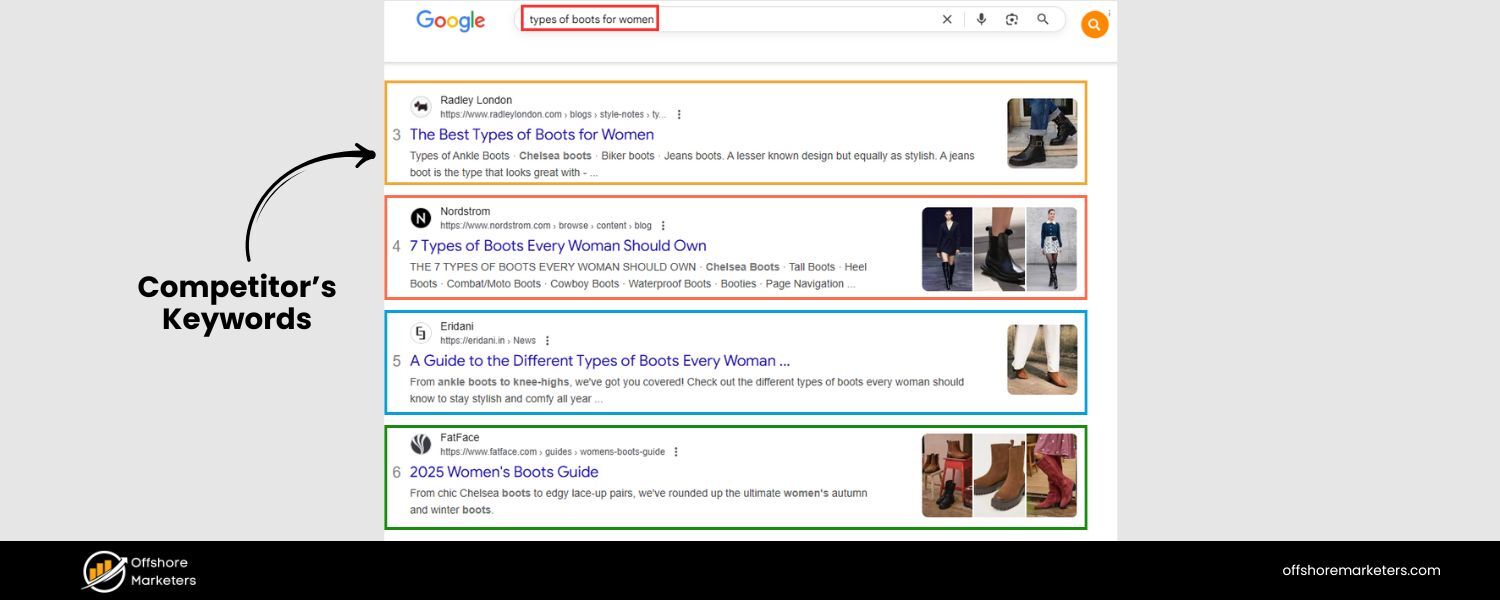
Sometimes the best clues come from seeing what’s already working for others in your industry. Perform a few Google searches for your main topics and note who ranks on the first page – these are your content competitors.
Analyze their pages: what phrases do they seem to be targeting? (Look at their title tags and headings for hints.) You can also use competitor analysis tools: for example, tools like Ahrefs’ Site Explorer or Semrush’s Keyword Gap feature allow you to input your website and a competitor’s, then identify keywords your competitor ranks for that you do not.
This kind of keyword gap analysis reveals “low-hanging fruit” – relevant phrases you might have overlooked. If a competitor is getting traffic from a phrase that you haven’t covered, and it’s relevant to your business, consider creating content around that topic.
Ranking for these phrases can help you reach a ready audience already interested in your niche. Also, pay attention to any content gaps – subtopics or questions that the top results haven’t answered in depth.
Those represent opportunities where you can create a better, more comprehensive page (and possibly outrank them by filling the gap). Essentially, don’t reinvent the wheel – leverage competitive research to expand your keyword list with proven terms.
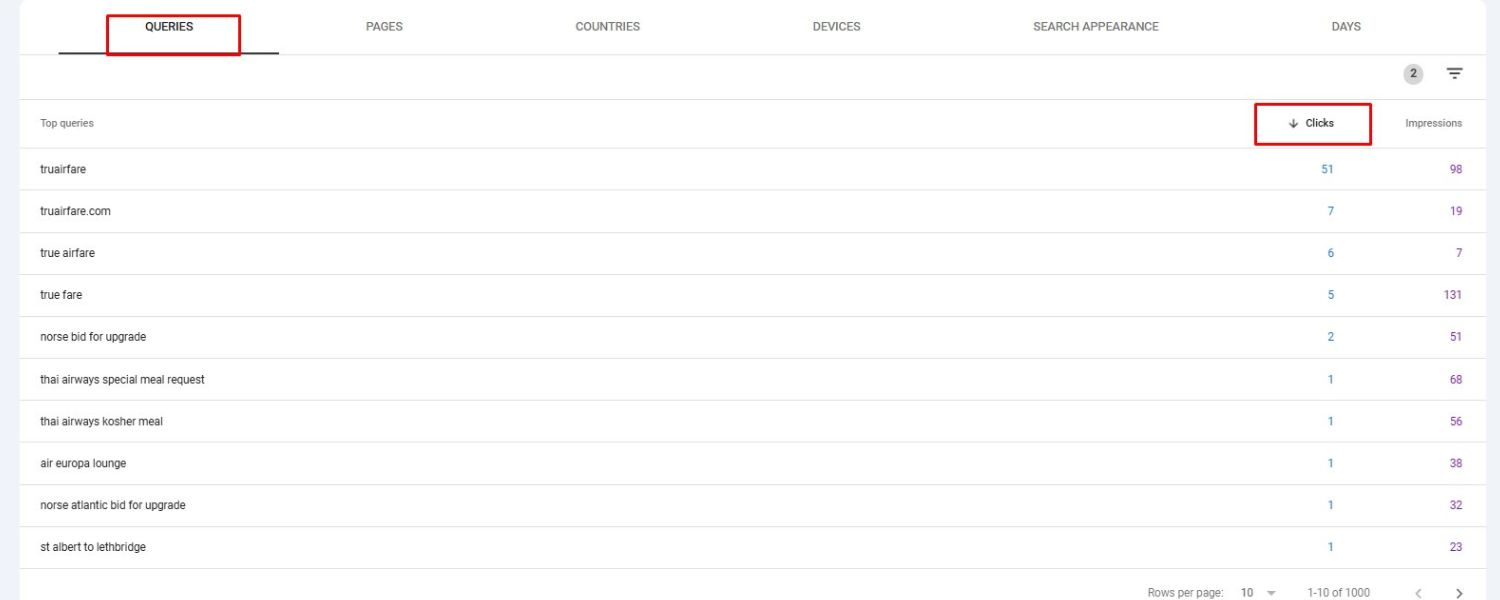
4. Leverage Search Console and Existing Data
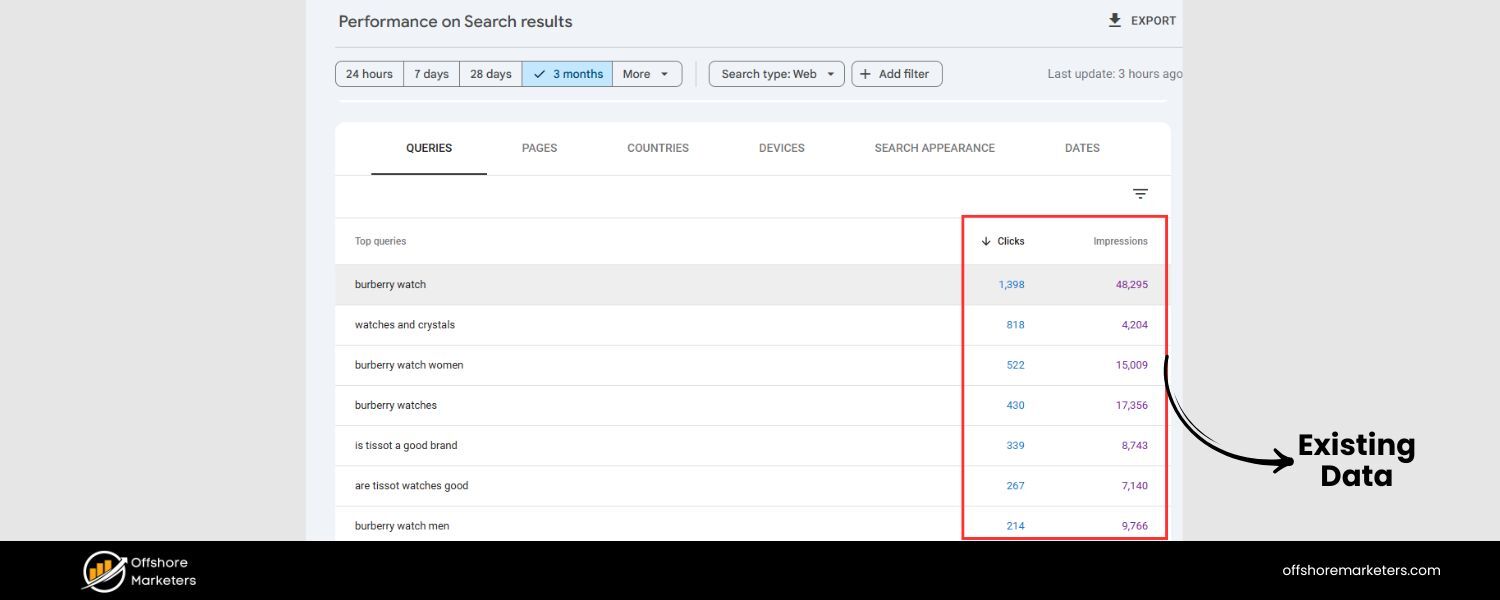
If your site has been live for a while, you may have a hidden treasure trove of keyword data already. Google Search Console is a free tool that shows the search queries that are leading people to your site currently.
Check the Performance report and look at the “Queries” – you might discover some unexpected keyword phrases you rank for on page 2 or 3 of results. For example, maybe your blog post about “garden design” is getting impressions for the query “modern small garden design ideas.”
That’s a phrase you didn’t explicitly target, but Google associated your page with it. If you find queries where your average position is, say, #5–#15 (bottom of page 1 or on page 2), those are great candidates to optimize – a little extra effort could bump you to the top 3 and significantly increase clicks.
Filter Search Console queries for positions 4–10 as well (since top 3 get most clicks, you want to push those up). You can click on a specific query in the report to see which page is ranking for it, then go to that page and incorporate the query more prominently (e.g., add it to the heading or title, or expand your content to answer it better).
This is a quick win strategy: improving what you already rank for. Additionally, check any site search data (if you have a search box on your site) or analytics – these can reveal keywords people use internally or which pages are getting search traffic, informing new keyword ideas.
After following these steps, you should have a robust list of keyword phrases segmented by topic and intent. The final part of the research is prioritization: select a mix of high-priority phrases (relevant to your main business goals) and some quick wins (long-tails you can rank for easily) to start optimizing for.
Also, consider grouping related phrases into clusters – for instance, “best hiking boots for winter” and “warm waterproof hiking boots” are similar enough that you might target them in one comprehensive article.
Grouping helps ensure your content isn’t too fragmented and that you cover a topic thoroughly rather than making dozens of thin pages. Now that you’ve identified your target keyword phrases, let’s move on to using them effectively on your site.
How to Optimize Your Content for Keyword Phrases
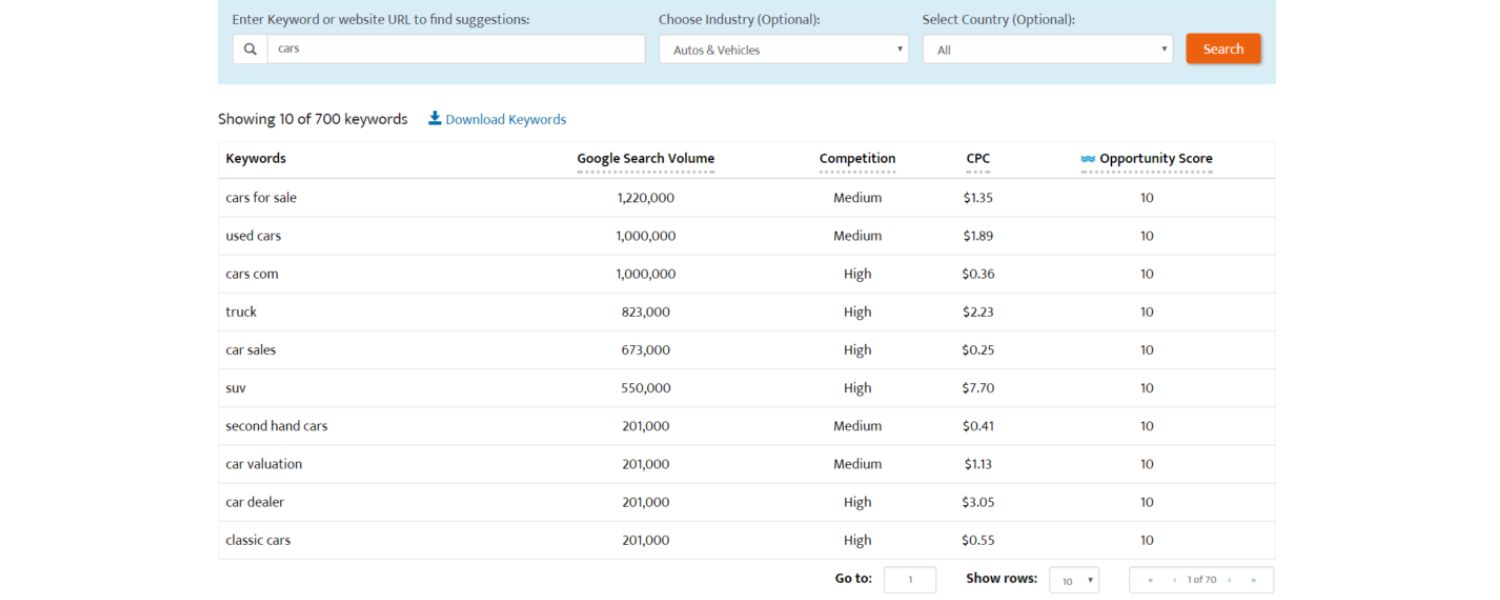
Finding great keyword phrases is only half the battle – you also need to strategically weave those phrases into your website so that search engines (and users) recognize your content is a perfect match. Here are the best practices for optimizing your pages with keyword phrases:
1. Use the Primary Phrase in Key On-Page Elements
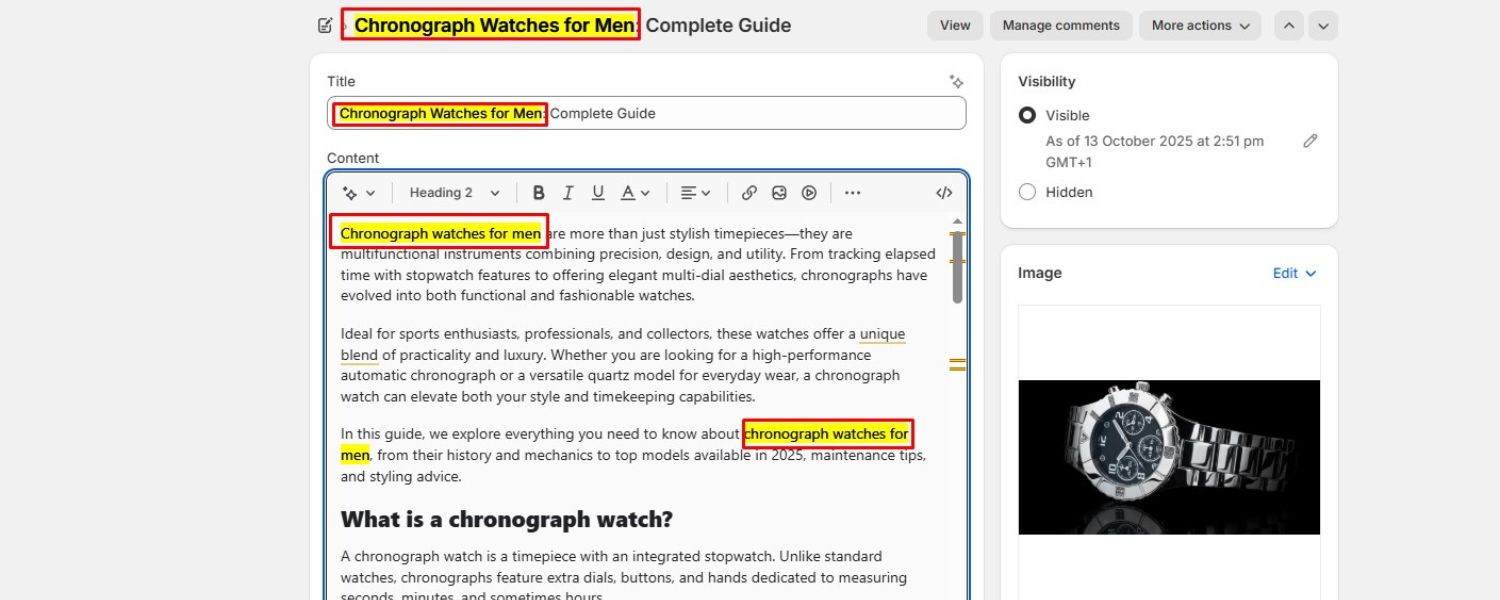
Take the main keyword phrase you’ve chosen for a page (often called the focus keyphrase) and include it in critical spots:
A. Title Tag (Meta Title)
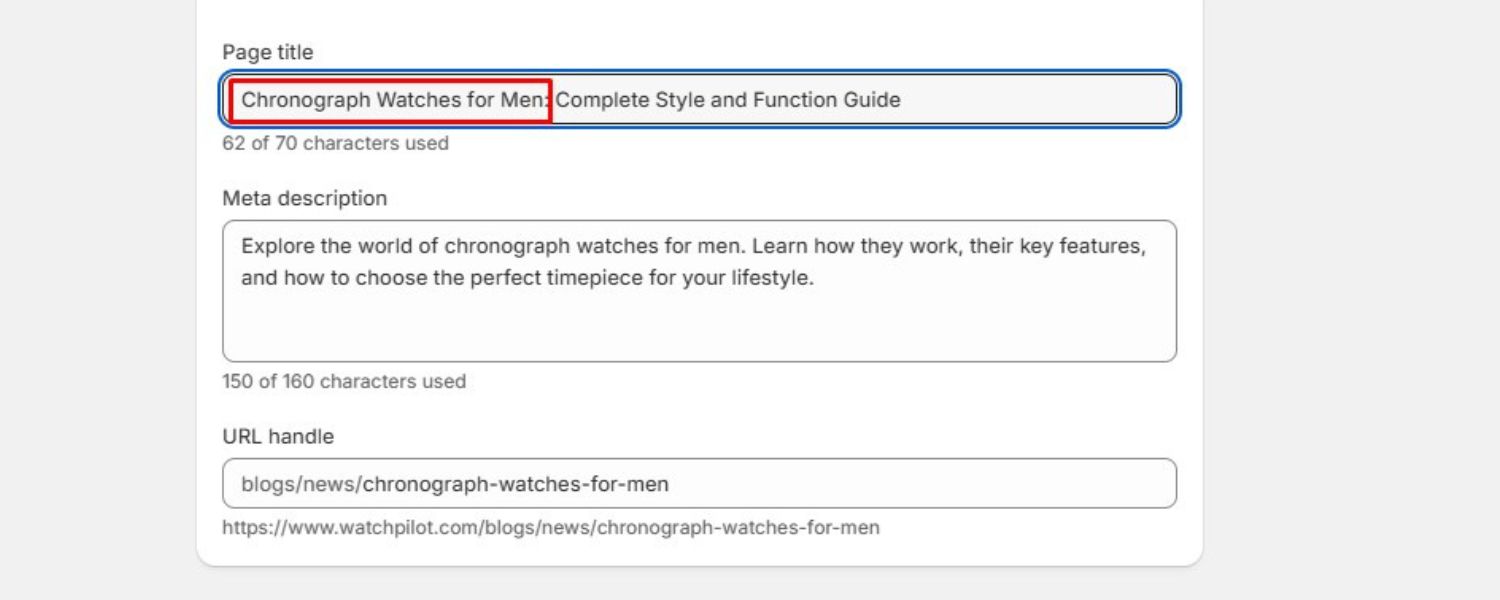
This is the title that appears in Google’s results. Make sure your page title contains the keyword phrase, ideally towards the beginning, and reads naturally. For example: “What Is Content Marketing? A Beginner’s Guide to Content Strategy” – if “what is content marketing” is the target phrase, it’s right up front. A compelling, keyword-rich title helps both SEO and click-through rate.
B. URL Slug
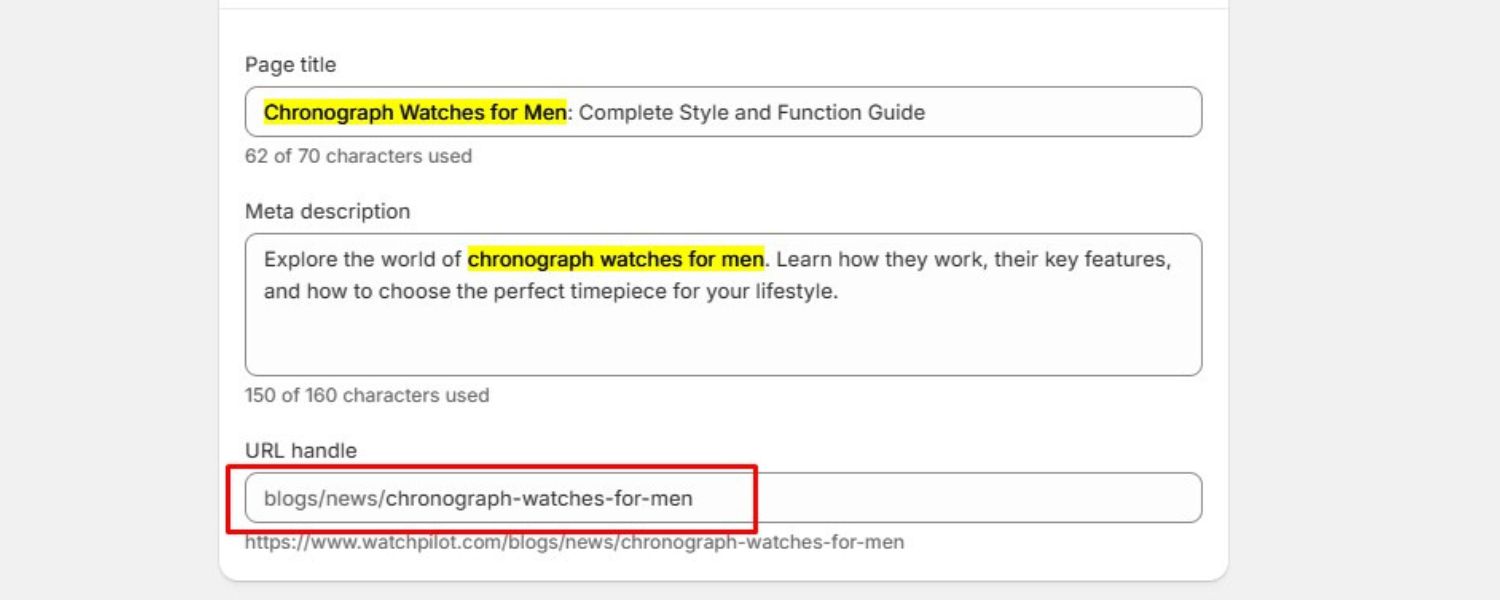
Incorporate the phrase or a clear variation in the page’s URL. Short, descriptive URLs work best (e.g., …/content-marketing-guide includes the keyword “content marketing”). If you need to change a live URL, remember to set up a 301 redirect from the old to the new URL.
C. Header Tags (H1, H2, etc.)
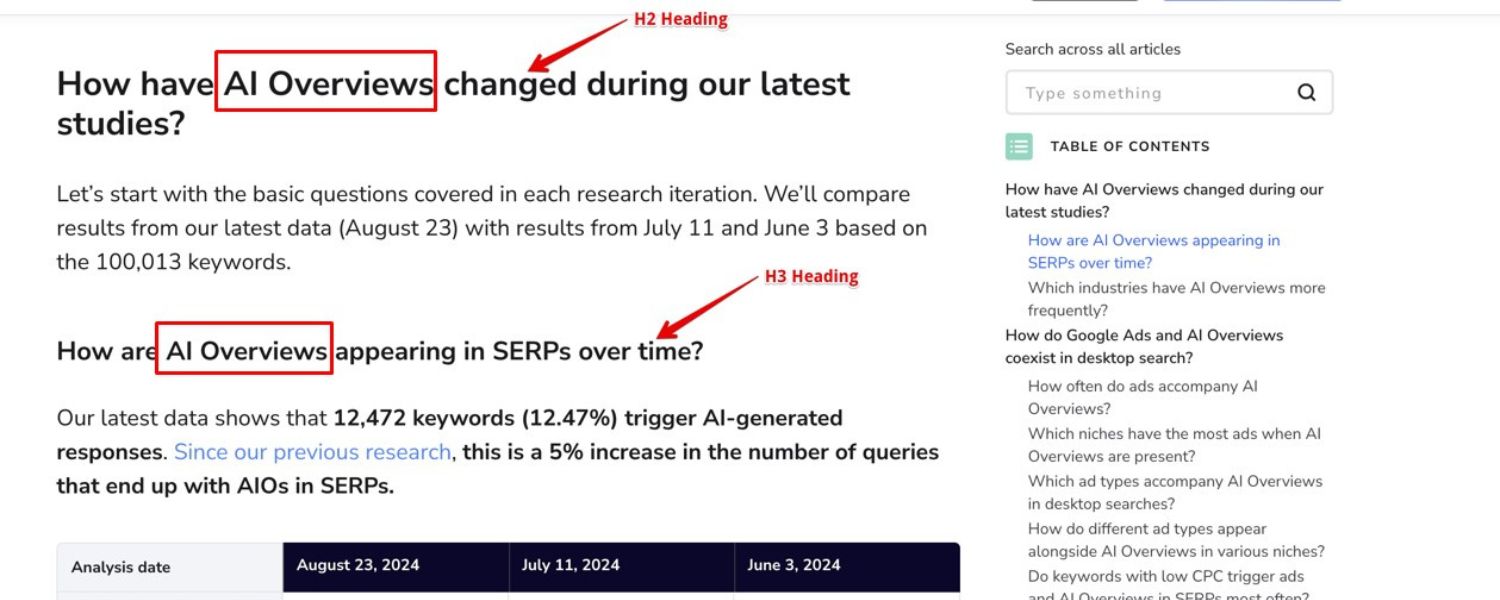
Your main heading (H1) should usually include the primary keyword phrase – it signals the page’s topic. Subheadings (H2, H3) can include variations or related phrases as appropriate. This not only reinforces relevance for SEO but also helps readers by clearly indicating what each section is about.
D. Body Content
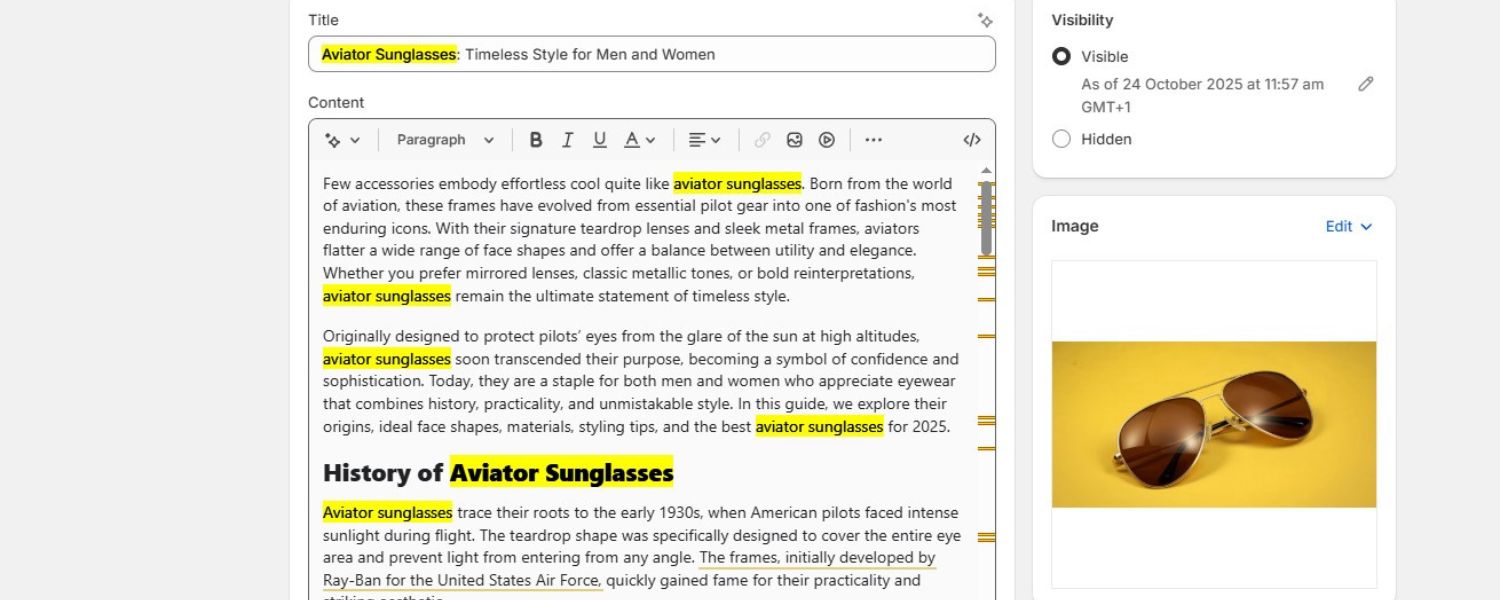
Naturally mention your keyword phrase throughout the text, especially in the opening paragraph if possible (early placement can signal relevance). But do so in a readable, organic way – it should feel like part of a normal sentence, not forced. Also, use synonyms and related terms.
For example, if your keyword is “dog-friendly hiking trails,” you might also talk about “hiking with dogs” or “trails that allow pets” – this covers semantic variations and makes your content richer.
Modern search algorithms understand context, so you don’t have to repeat the exact phrase excessively; a few mentions in a long article is plenty, as long as the content as a whole is on-topic.
E. Meta Description
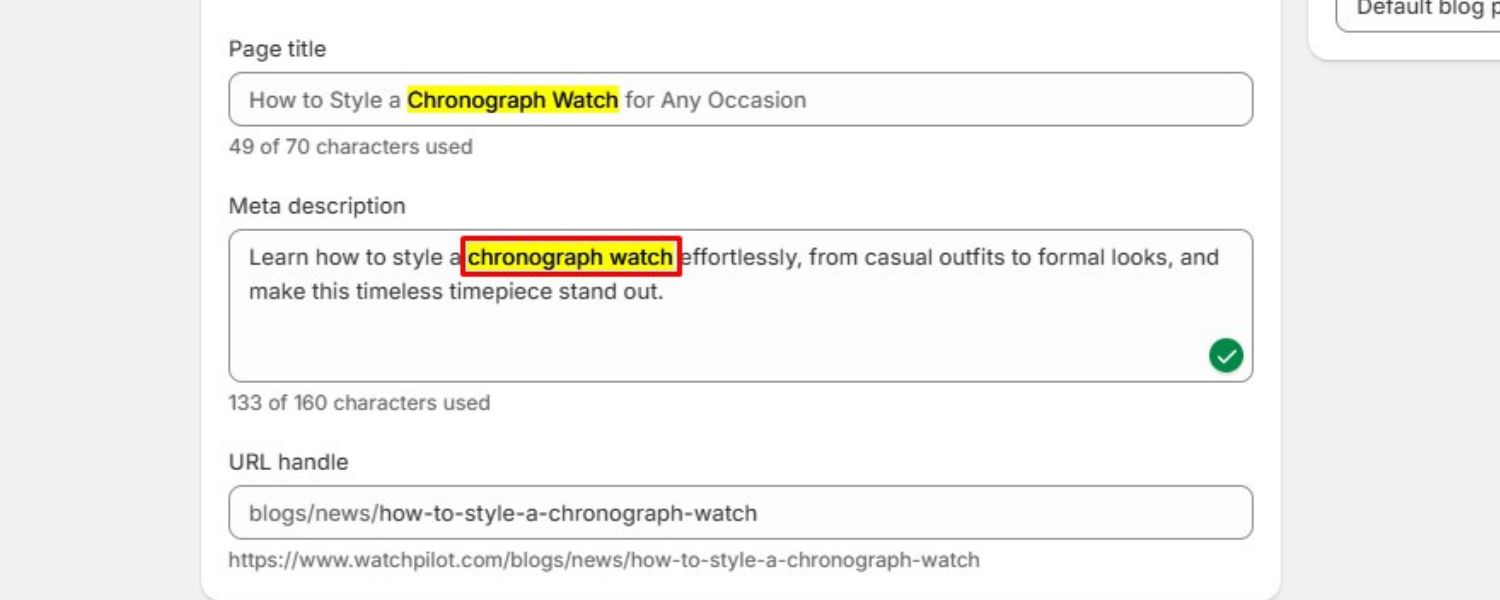
While not a direct ranking factor, a good meta description that includes your keyword phrase can improve click-throughs. Write a concise summary (about 1–2 sentences, 150 characters) that contains the phrase and entices users: e.g., “Learn how to clean leather shoes properly with our step-by-step guide.
Discover the best products and techniques for stain removal and leather care.” If someone searched “how to clean leather shoes,” those words will bold in the results, drawing attention. Avoid duplicate meta descriptions across pages – each page’s description should be unique to its specific key phrase.
F. Image Alt Text
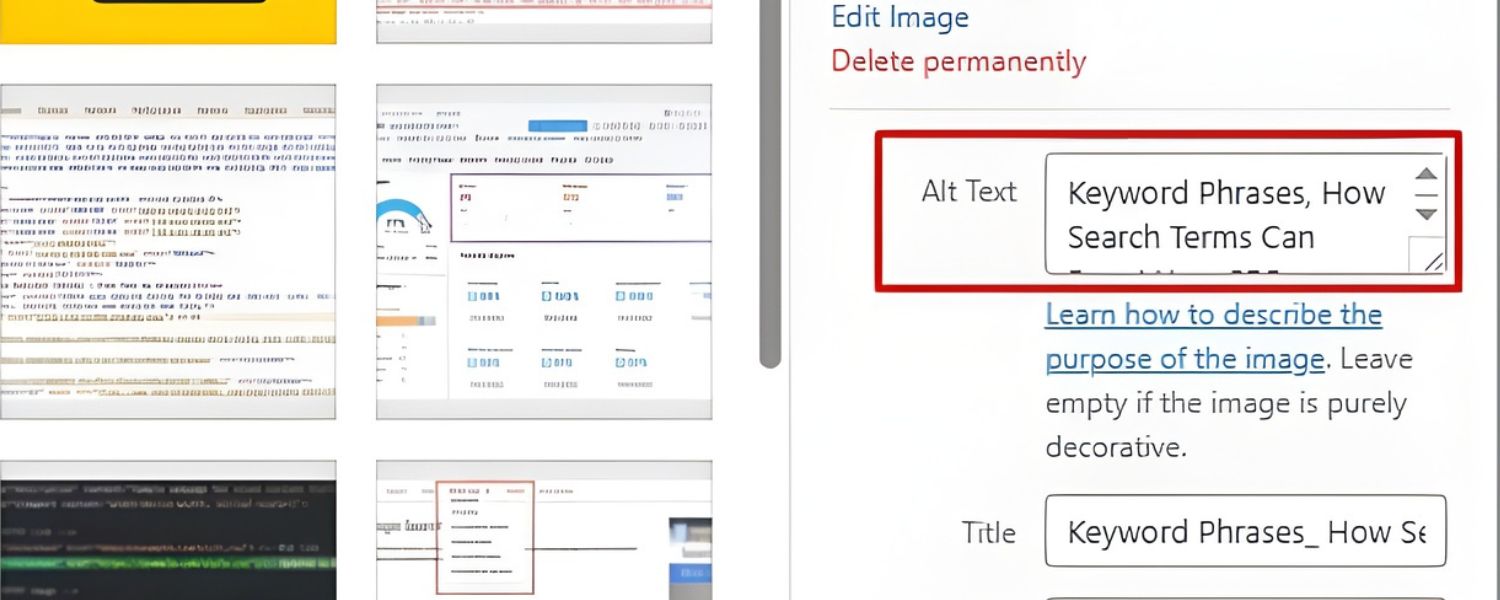
For any images on the page, use descriptive alt attributes that include relevant keywords where appropriate. For instance, an image file for a blog on content marketing might have alt text like “Content marketing strategy infographic.”
This not only helps with SEO (images can rank in Google Images and contribute to page relevance) but also improves accessibility for visually impaired users. However, ensure alt text truly describes the image – don’t stuff keywords arbitrarily.
G. Internal Links Anchor Text
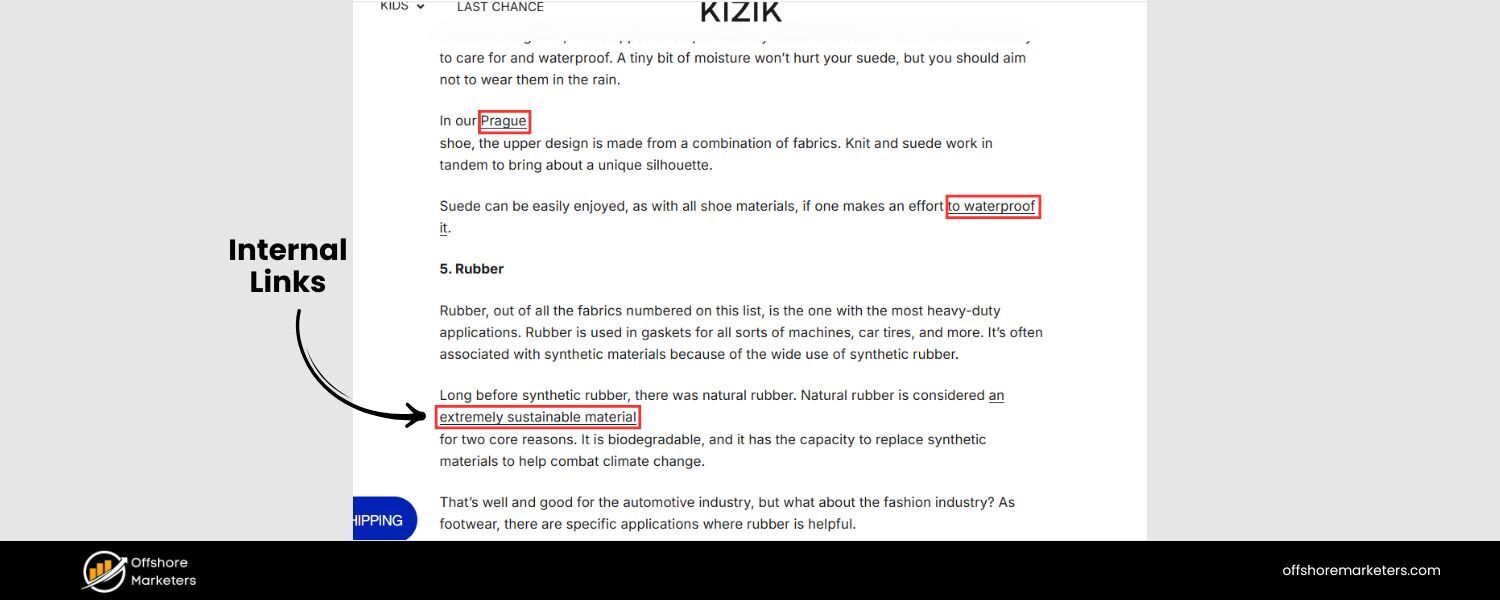
If you link to this page from elsewhere on your site, use the keyword phrase in the anchor text when it makes sense (e.g., a link that says “learn more about digital marketing strategy” pointing to your digital marketing guide page).
This helps signal to search engines what the linked page is about. Just keep it natural and varied across different links to avoid looking spammy.
2. Focus on One Primary Phrase per Page
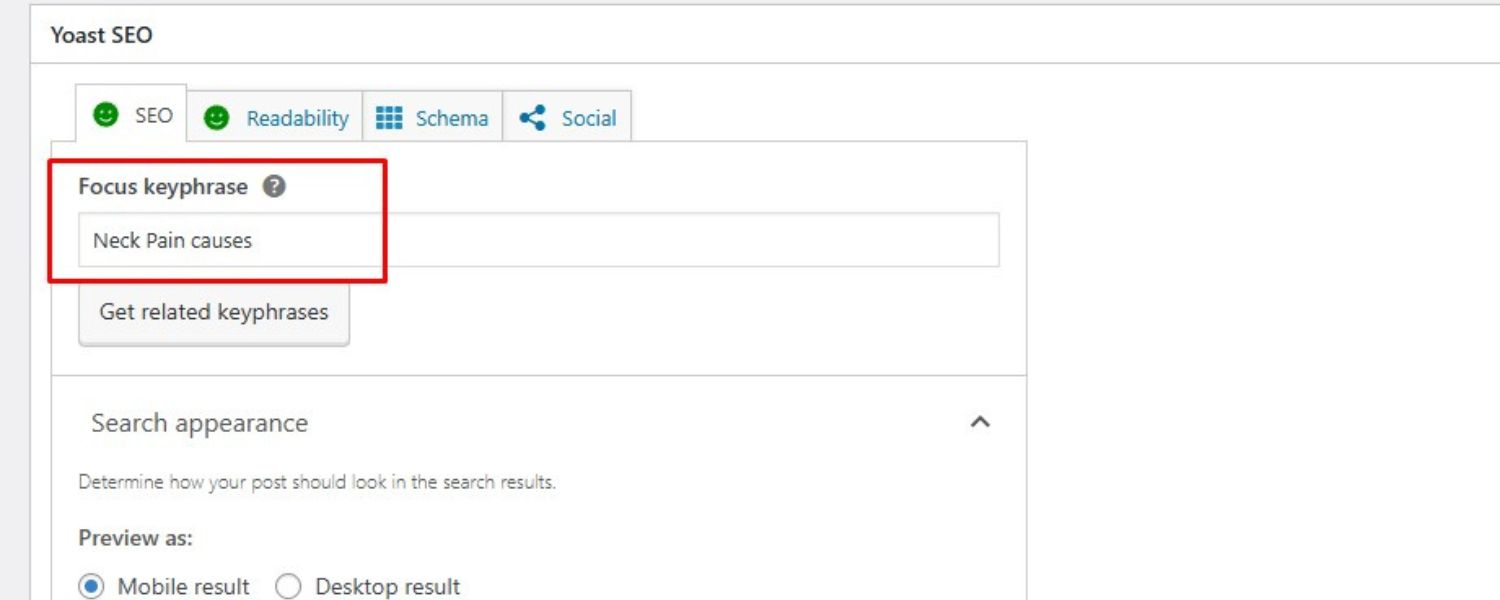
It’s generally best to assign one main keyword phrase to each page (along with a handful of closely related secondary phrases). This keeps the page focused and avoids your own pages competing against each other for the same term.
As an expert SEO tip: “Ideally, each page on your site should target a unique primary keyword,” rather than overlapping. For example, your homepage might target a broad industry term, your category pages target slightly more specific topics, and individual blog posts or product pages drill down into very specific phrases.
This way, every page has its own keyword focus and purpose. Using a “content-to-keyword map” can help plan this out – list all your important pages and note their target key phrase, ensuring each is distinct.
If two pages end up targeting the same term, consider merging or differentiating them. Many SEO plugins (like Yoast for WordPress) encourage setting a focus keyphrase for each post, which is a great practice to keep you on track.
3. Write for Humans, Optimize for Search Engines
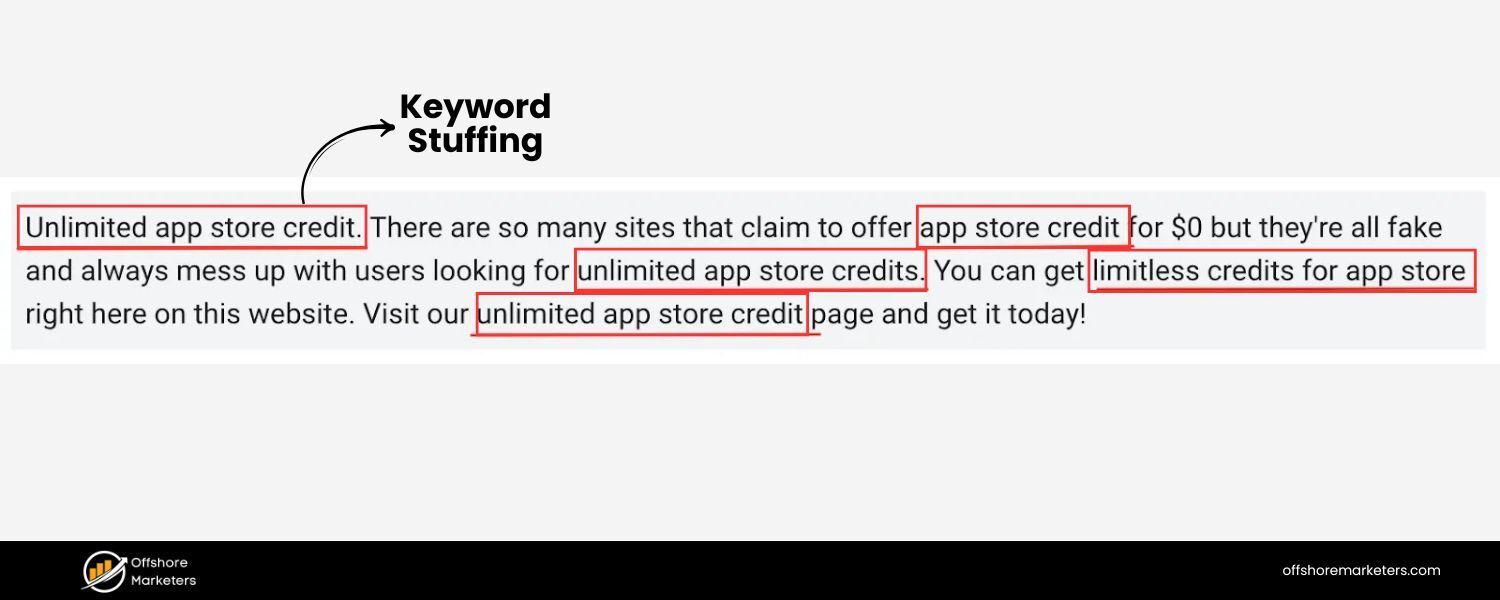
Always remember that quality content comes first. While you want your keyword phrases in the text, they should never compromise readability or value. Avoid keyword stuffing (repeating a phrase too many times or in an unnatural context) – this can hurt your rankings and certainly annoy readers.
A good rule of thumb is if you read the page aloud, it should sound like a human wrote it, not a list of search terms. Google’s own quality guidelines emphasize helpful, authoritative, and user-friendly content.
So ensure your page fully answers the query behind the keyword phrase. If you target “how to train a puppy,” your content should thoroughly cover that topic – perhaps including step-by-step instructions, common mistakes, and answers to related questions (e.g., potty training, biting, etc.).
By satisfying the user, you inherently satisfy the search engine. Use your keyword phrases as a guide, but don’t be afraid to use variations, pronouns, and natural language. Remember, Google’s algorithms can understand plurals, synonyms, and context now, so you don’t need an exact-match keyword in every sentence.
For example, if your key phrase is “best budget smartphone 2025,” it’s fine to also say “best affordable phone” or “top inexpensive smartphones this year” in your copy – this actually broadens the page’s relevance and avoids monotony.
4. Ensure Content Depth and Relevance
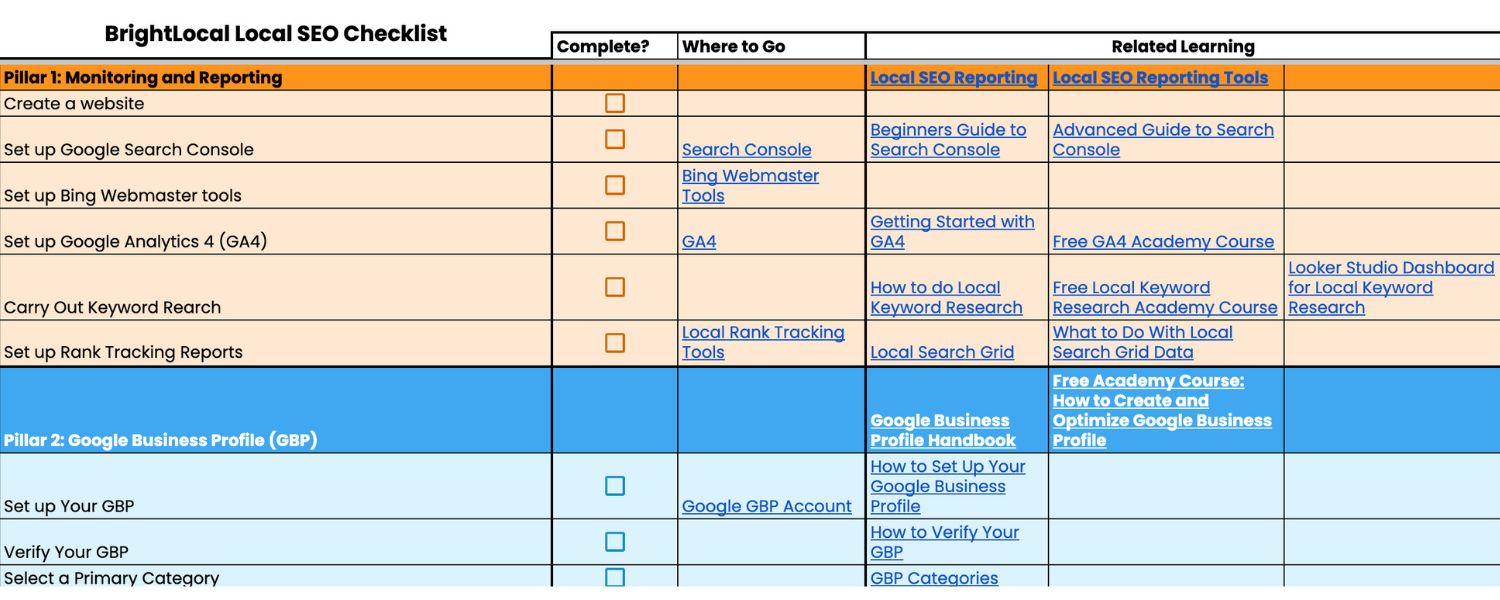
Beyond placing keywords, think about the overall comprehensiveness of your page. Does it fully address what someone searching that phrase would want? Pages that thoroughly cover a topic tend to rank better, as they’re seen as more authoritative.
This might mean including additional elements: a quick definition for beginners, an FAQ section (to capture question-based sub-phrases), images or diagrams if helpful, even videos or charts if they add value.
For instance, for a keyword phrase “SEO audit checklist,” a top-performing page might include a bullet list of checklist items, explanations for each item, a downloadable PDF, and perhaps a short video – covering multiple aspects of that query.
By going the extra mile, you increase the chances that users are satisfied (they don’t bounce back to Google for another result) and that you might rank for multiple related phrases. Search engines notice when one page is serving many relevant queries well.
5. Optimize for Featured Snippets & Voice (Where Applicable)
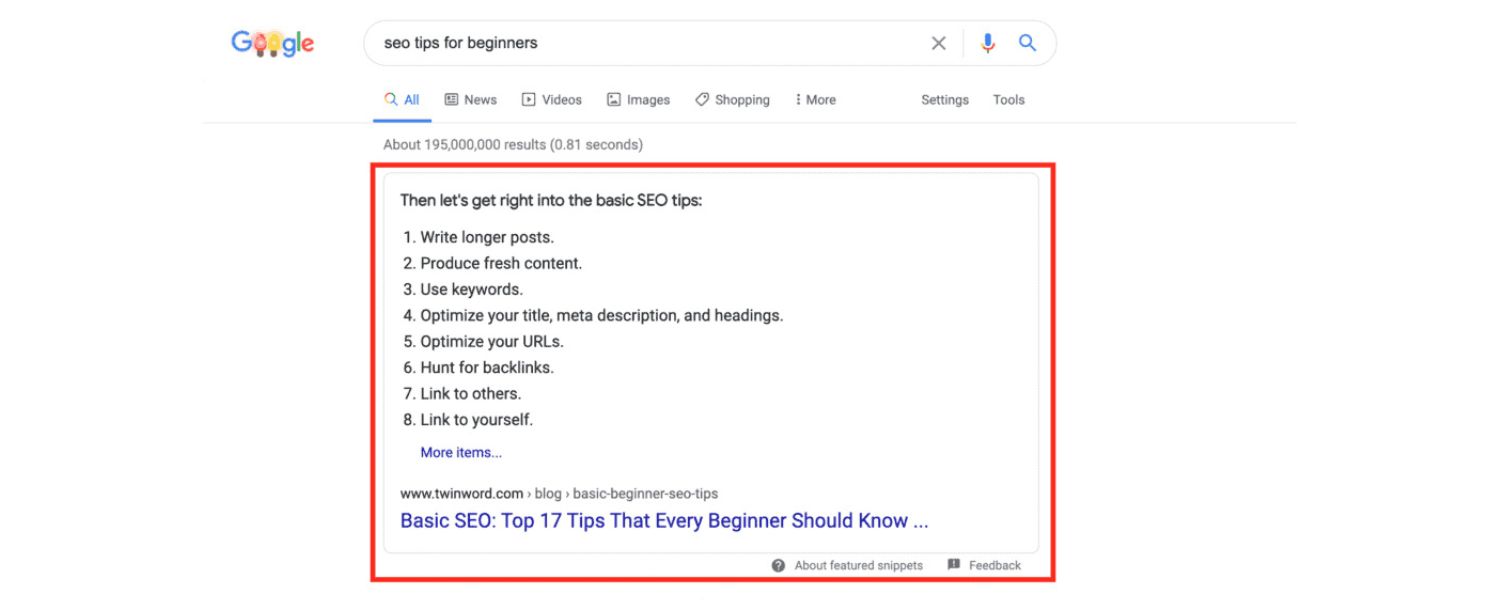
As mentioned, phrasing some of your headings as questions and then answering them clearly can put you in the running for featured snippets. When you do this, try to answer in brief, 1-3 sentence paragraphs right below the question – basically a concise definition or direct answer.
For example: “What is a meta description? A meta description is a short snippet of text (about 150 characters) that summarizes a page’s content in search results.” This format helps Google easily grab that text as a snippet.
Structuring content in a Q&A style or a well-formatted list (for “list” type queries) can improve snippet odds. Also, consider adding an FAQ section at the end of articles covering common questions around your topic.
This not only targets more long-tail phrases but also appeals to voice search, where the assistant might pull an FAQ answer to respond to the user. (We’ll include a short FAQ at the end of this blog as an example!)
6. Improve Page Experience and Readability
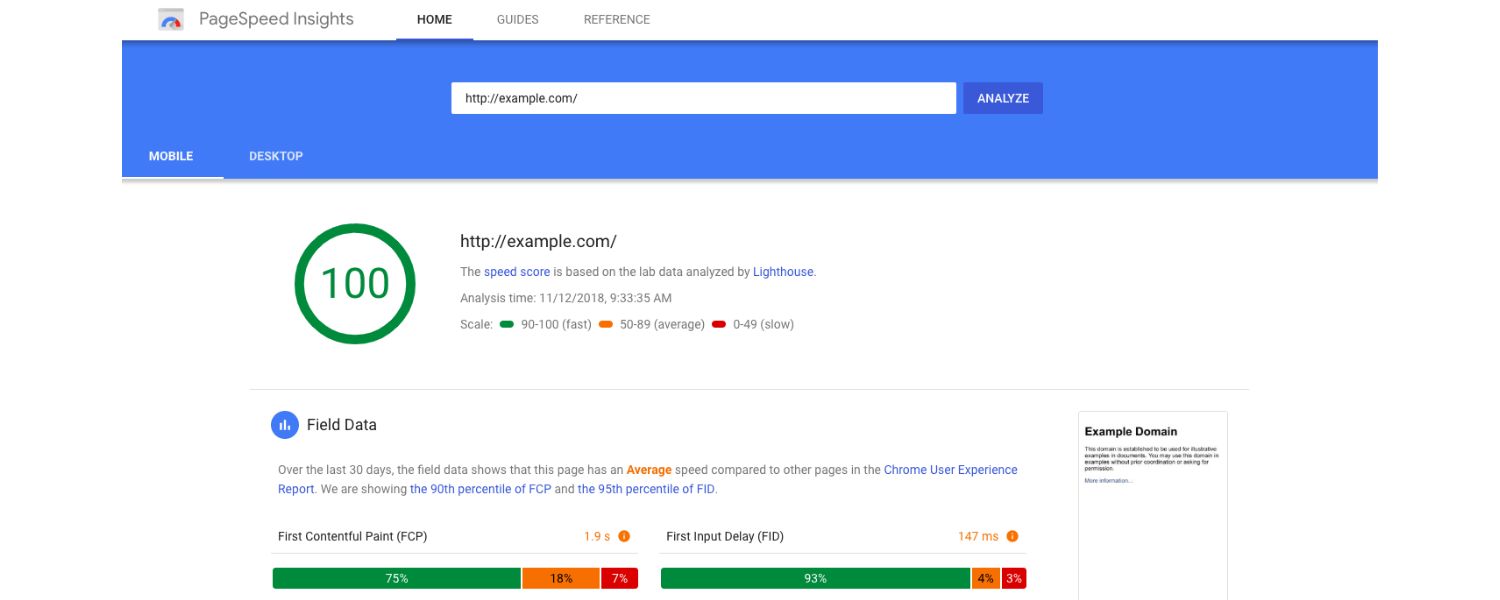
User experience is an often-overlooked part of optimization. Break up your content with the very techniques used in this article – headings, subheadings, bullet points, and short paragraphs – to make it scannable.
Most users skim before they commit to reading, especially for informational queries. By clearly signaling sections and key points (and yes, using keyword phrases in those section titles), you cater to both scanning readers and algorithmic parsing.
Use images or diagrams if they help illustrate a point (with proper alt text as noted). Fast loading speed, mobile-friendly layout, and not bombarding users with pop-ups all contribute to a better experience, which can indirectly boost SEO through lower bounce rates and higher engagement.
Think about “time to value” – how quickly does your page give the user what they came for? Optimize that, and you’ll likely see better performance in search.
7. Monitor and Refine
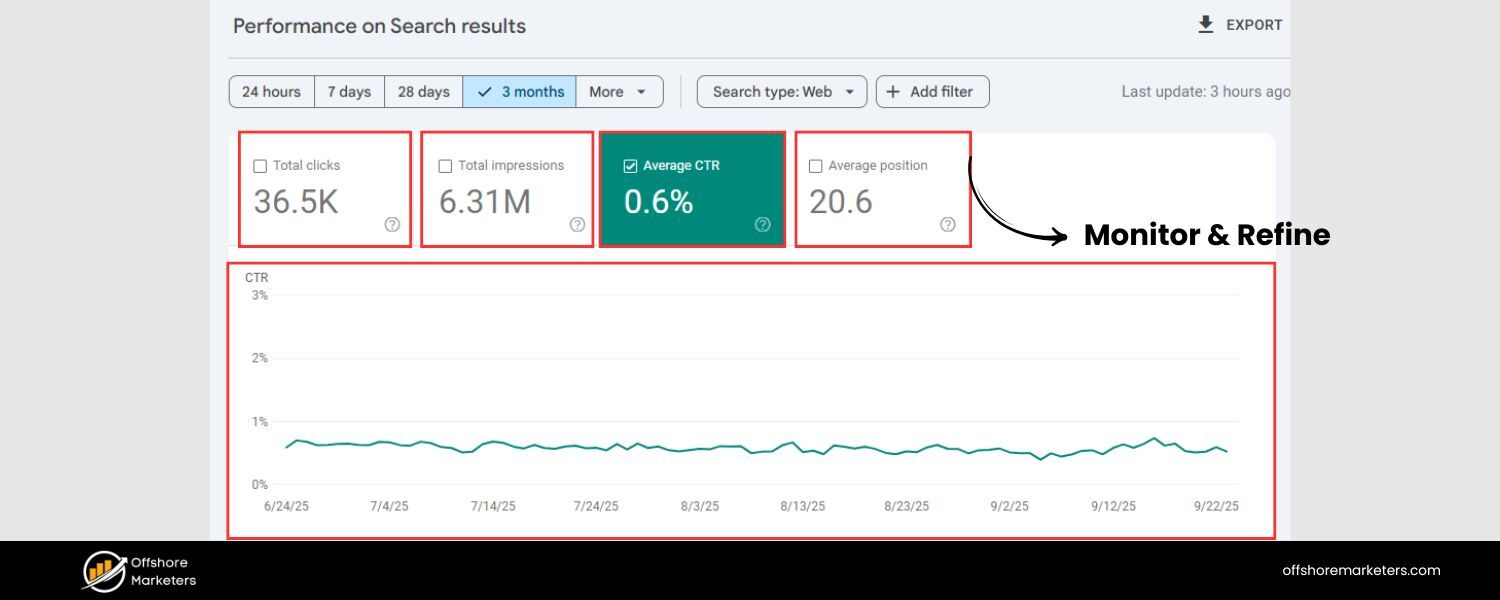
After optimizing, keep an eye on how your pages are doing. SEO isn’t a one-and-done task – it’s iterative. Use Google Search Console to see if your click-through rate from search improves after adding better titles/descriptions, or if your average ranking for the target phrase goes up over time.
If a page still isn’t ranking as expected, you might tweak your on-page optimization: maybe the keyword is too competitive and you need to target a more long-tail variation, or perhaps your content could be expanded or made more unique.
Also, look at what competitors have added – SEO is a moving target, and continuous improvement is key. The great thing about keyword phrase optimization is that even small changes (like adjusting a title or adding a relevant section) can have noticeable effects on ranking.
By following these optimization practices, you’ll help search engines clearly understand what each page on your site is about and which queries it should rank for. At the same time, you’ll be crafting pages that genuinely serve the needs of your visitors, which is the ultimate win-win for SEO. High rankings are valuable, but high conversions and satisfied users are the real prize – and optimizing for well-chosen keyword phrases achieves both.
FAQ
1. Can SEO keywords really be phrases?
Yes – SEO “keywords” can absolutely be multi-word phrases. In fact, most SEO experts use the term “keyword” to include phrases of two, three, or more words. Targeting a phrase (like “affordable wedding venues in Dallas”) often works better than a single word (“venues”), because phrases carry more context and specific intent.
Search engines understand natural language queries, so using keyword phrases helps your content match what people actually search for. In short, any search query – no matter how many words – can be a keyword for SEO purposes, and optimizing for longer phrases is often the key to higher rankings.
2. Is it better to use short keywords or longer keyword phrases?
Longer keyword phrases are usually more effective for SEO in today’s environment. Short, one-word keywords have very broad meaning and extremely high competition, making them hard to rank for (and even if you do, they might not convert well because the intent is unclear).
Long-tail phrases (typically 3-5+ words) are more specific – they tell you exactly what the user is looking for, which means you can create highly relevant content and offerings.
They also face less competition in search results. For example, it’s easier to rank for “best running shoes for flat feet” than just “shoes”. While short keywords shouldn’t be ignored entirely (they can be useful for understanding general demand), focusing on descriptive, intent-driven phrases will likely yield better SEO results, including more qualified traffic and higher conversion rates. Studies show that the majority of searches are long-tail queries, and those longer searches often lead to more engaged visitors.
3. How can I find good keyword phrases for my website?
Start by researching your audience and topics, then use tools to expand your ideas. Begin with brainstorming: list terms related to your business, and think of questions or problems your target customers might type into Google.
Then, use free tools like Google’s Autocomplete and “People also ask” suggestions – type in your base words and see what phrases are suggested. Next, try dedicated keyword research tools (such as Google Keyword Planner, Semrush, Ahrefs, or Ubersuggest) to get data on search volumes and discover related phrases you hadn’t thought of.
These tools can show you popular queries and how competitive they are. Don’t forget to check on your competitors: find out what keywords their sites rank for (many SEO tools let you do a competitor keyword analysis) and look for gaps or opportunities.
Finally, if your site has been up for a while, consult Google Search Console – it will list queries that already bring you impressions or clicks. You might find some surprisingly good phrases there that you can double down on.
By combining these methods, you’ll gather a solid list of keyword phrases. From there, choose ones that are highly relevant to your content, have a decent search frequency (even if niche), and aren’t dominated by insurmountable competition. Those will be your “good” keyword phrases to target.
Conclusion: Embrace Keyword Phrases for SEO Success
In the world of SEO, keyword phrases are truly the unsung heroes. By zeroing in on the exact words your audience uses – whether it’s a question they’re asking or a product they’re hunting for – you position your content to deliver precisely what they need.
This alignment with user intent is rewarded by search engines with better rankings and by users with higher engagement. The bottom line is that optimizing for well-chosen key phrases can help your website rise in the rankings, attract more qualified visitors, and ultimately drive more conversions.
It’s about working smarter: rather than competing head-on with big players for one-word keywords, you’re carving out your own space in the search results for the queries that matter most to your business.
Now it’s time to put this into action. Go through your site and identify opportunities to apply the tips we covered – refine your titles and headings, expand content to cover those long-tail questions, and add that missing section or FAQ that could push a page from good to great.
SEO is an ongoing journey of tweaking and improving. Monitor your progress, stay updated on what your audience is searching for, and keep adjusting your keyword strategy as needed. Before long, you should start seeing the benefits in the form of higher rankings or more search traffic for those targeted phrases.
Ready to boost your SEO with keyword phrases? Start implementing these techniques today and watch how your search visibility improves. If you find the process overwhelming or want expert guidance, don’t hesitate to seek help.
With over 25 years of marketing experience, our team has seen firsthand how transformative a solid keyword strategy can be. We’re here to help you research the perfect key phrases, craft compelling content around them, and optimize your site for long-term success.
Remember: when you focus on what your audience is truly searching for, you’re not just doing SEO – you’re building a bridge between your business and the people looking for it. That’s the real power of keyword phrases. Now, go harness it and happy optimizing!

.png)
Shopify SEO: Guide to Ranking Your Store and Driving Sales
Most Shopify store owners set up their store, list their...

Content Marketing : Definitive Guide to Strategy, Content Types, and Measurable ROI
Content marketing generates 3x more leads than outbound marketing at...

Above the Fold: Guide to Conversions, Rankings and Faster Pages
Above the Fold in 2026: The Complete Guide to Conversions,...

Off-Page SEO Checklist: Guide to Building Real Authority
Most websites spend months creating great content, only to wonder...

What Is Keyword Bidding? The Complete Strategy Guide for Smarter Ad Spend
Most advertisers believe the highest bid wins the auction. It...
What Is Google Trends? The 2026 Marketer’s Complete Guide
If you are not already pulling weekly insights from Google...
If you want a growth partner who will get to know every aspect of your business and treat your budget like their own — we are the right fit.
.png)


.png)
.png)
.png)
.png)
.png)
.png)
2026 ALL RIGHTS RESERVED MADE IN INDIA
