
The Marketing Funnel: What It Is & How It Works
June 27, 2025
Introduction
Every marketer has heard of the marketing funnel, but not everyone knows how to leverage it fully. Simply put, a marketing funnel maps out the journey a customer takes from first discovering your brand to eventually becoming a loyal advocate.
It’s a visual model that helps businesses understand and influence each step of the customer journey – from the initial awareness stage where potential customers learn about your business, to the conversion stage where they make a purchase, and even beyond into loyalty and advocacy.
Why is this important? Because not all your prospects will travel the same path or move at the same pace. Many will drop off at various points along the funnel, and only a fraction will reach the end. By understanding the funnel, you can pinpoint where you lose potential customers and adjust your marketing funnel strategy accordingly.
A well-optimized funnel lets you deliver the right message at the right time, guiding more prospects toward conversion and repeat business.
In this comprehensive guide, we’ll break down each stage of the marketing funnel – Awareness, Consideration, Conversion, and Post-Purchase (Loyalty & Advocacy) – and show how they work together.
You’ll learn proven strategies for each stage, from building brand awareness at the top to cultivating brand advocates at the bottom. We’ll also cover what a full marketing funnel strategy is and why it’s crucial in today’s non-linear customer journey.
Along the way, we’ll highlight real-world examples, common mistakes to avoid, and tools you can use to build and optimize your funnels. Whether you’re an SEO beginner trying to attract more traffic, a marketing professional aiming to improve campaign ROI, or a business owner looking to boost sales, this guide will help you turn more leads into loyal customers.
Let’s dive in and demystify the marketing funnel, one stage at a time.
What Is a Marketing Funnel?

A marketing funnel is a model of the customer journey that illustrates how people progress from initially discovering your brand or product to eventually taking action (like making a purchase) and, ideally, becoming loyal advocates.
It’s often depicted as a funnel-shaped diagram (wide at the top, narrow at the bottom) to represent the large number of prospects entering at the top and the smaller number who convert at the bottom. As potential customers move through each stage of the funnel, some will drop off, while the ones remaining become more qualified and are more likely to make a purchase.
Figure: A typical marketing funnel visualizes the stages from Awareness at the top through Consideration and Conversion, and extends into Loyalty and Advocacy at the bottom (post-purchase). The pool of potential customers narrows at each stage.
In essence, the marketing funnel simplifies complex customer paths into a clear framework. This helps marketers and business owners plan their strategies for each phase of the buyer’s journey and tailor their tactics to meet customers’ needs at that point. By mapping out the funnel, you can:
1. Understand your audience’s journey: See what your prospects need at each stage and how to engage them appropriately.
2. Identify weaknesses or drop-off points: Determine where potential customers lose interest or drop out of the process so you can address those gaps.
3. Improve marketing ROI: Allocate resources and craft messages that guide more people toward conversion, boosting overall effectiveness.
Alternate names: You may also hear the marketing funnel referred to by other names, such as the purchase funnel, buyer’s funnel, customer funnel, conversion funnel, or sales funnel. These terms are closely related.
Traditionally, a sales funnel focuses on the sales process of turning leads into customers. In contrast, the marketing funnel encompasses a broader scope of activities to generate and nurture those leads before they’re sales-ready.
No one-size-fits-all: It’s essential to note that there’s no universally accepted, one-size-fits-all funnel model. Different businesses might define the stages slightly differently depending on their industry, audience, or sales cycle length. For example, one company might use a basic three-stage funnel – Top, Middle, Bottom – focusing on awareness, consideration, and conversion.
The good news is that the core concept remains the same regardless of how many stages you include: a marketing funnel is about attracting a broad audience at the top, engaging and nurturing them through the middle, and converting a portion of them at the bottom, then continuing to delight and retain those customers so they come back and bring others along.
Next, let’s explore each significant stage of the funnel in detail and discuss what you should do at each step to maximize your results.
3 Types of Marketing Funnels & Their Stages
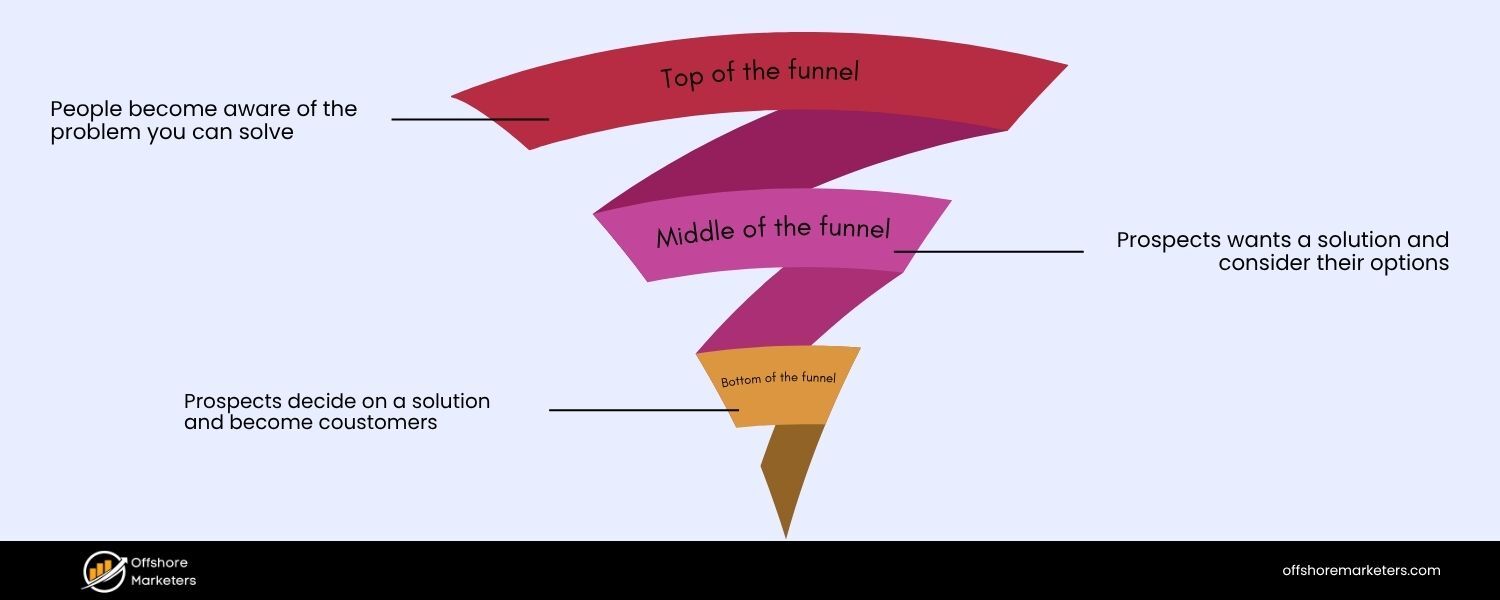
Marketing funnels vary by industry and target audience. Businesses build funnels that suit their specific customers.
A simple marketing funnel often has three stages:
1. Top of funnel: People become aware of the problem you can solve
2. Middle of funnel: Prospects want a solution and consider their options
3. Bottom of funnel: Prospects decide on a solution and become customers
1. Awareness Stage (Top of Funnel)
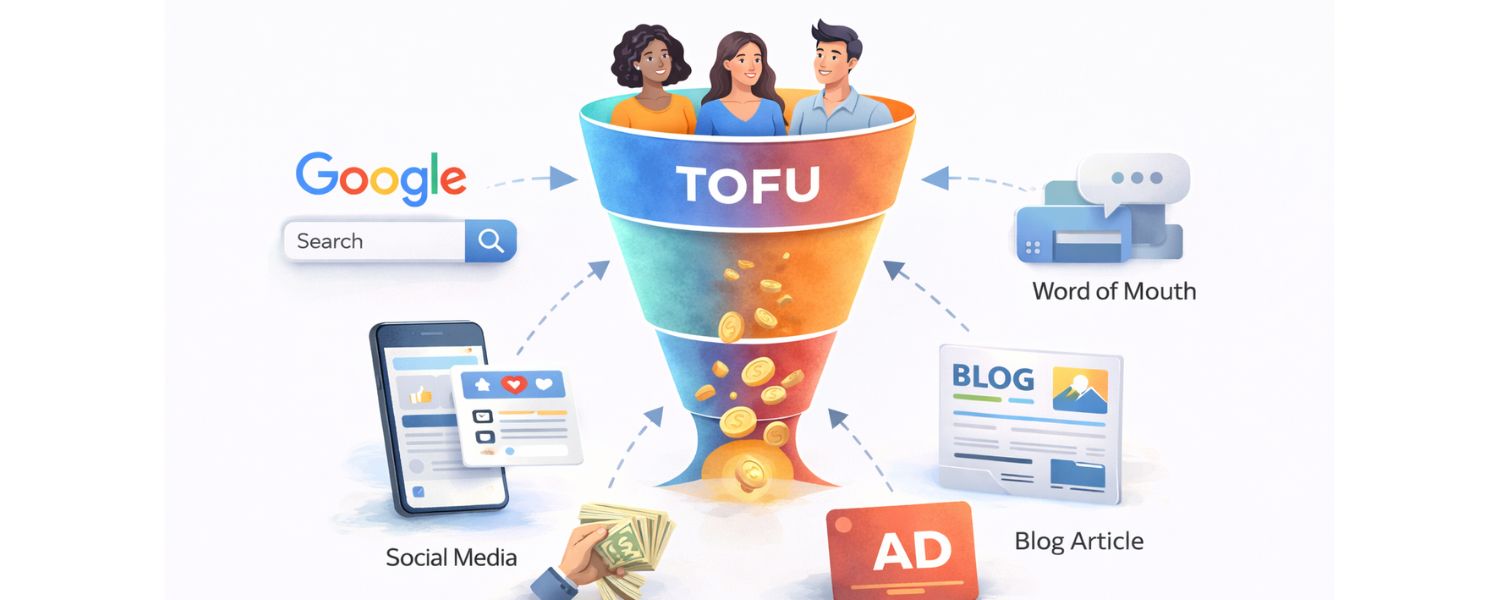
The Awareness stage is the top of the marketing funnel (often called TOFU for “Top of Funnel”). This is where potential customers first become aware of your brand, product, or service.
They may encounter your business through a Google search, a social media post, a blog article, an ad, or word of mouth. Your goal in the awareness stage is simple: attract as many relevant prospects as possible and make a positive first impression.
A. What happens in Awareness
Prospects at the awareness stage are typically identifying or defining their problem. For example, someone might realize “my website isn’t getting traffic” or “I need a better way to manage my finances.” They start looking for high-level information and options.
This is your chance to position your brand as a helpful resource or a potential solution to their problem. Keep in mind that at this stage, the audience is cold – they are not ready for a sales pitch or detailed product specs. They’re just becoming aware of potential solutions.
B. Key strategies for Awareness
Since the aim is to cast a wide net and generate interest, focus on tactics that increase your visibility and provide value without heavy sales pressure. Here are some effective strategies:
1. Content Marketing & SEO:
Create educational and informative content that addresses common questions or pain points frequently experienced by your target audience. Blog posts, how-to guides, infographics, and videos related to your expertise can attract people through search engines and social shares.
2. Social Media & Virality:
Use social platforms to increase brand visibility. Regular posts that resonate with your audience’s interests, challenges, or aspirations can build awareness and engagement. Campaigns, such as contests or hashtag challenges, can also spark viral sharing. Remember, the goal is to get on prospects’ radar, so the content should focus more on them (their interests and problems) than on you.
3. Paid Advertising for Reach:
Online ads can rapidly expand awareness by putting your brand in front of targeted audiences. Consider pay-per-click (PPC) search ads for keywords related to your product category, social media ads targeted by demographics or interests, and display ads on relevant websites.
The idea is to “get in front of consumers where they are”, whether that’s on Google, Facebook, YouTube, or even streaming services.
4. Branded Campaigns & PR:
Traditional brand-building tactics, such as press releases, feature articles, event sponsorships, or influencer partnerships, can also boost awareness. Anything that spreads the word about your brand’s existence and values can be valuable at this stage. The key is to educate and intrigue your audience, not to hard-sell.
5. Top-of-Funnel Offers:
Sometimes, offering something of value for free at the awareness stage can both attract and start converting a visitor into a lead. Free resources, such as e-books, checklists, or webinars (offered in exchange for an email), straddle the line between awareness and consideration by providing helpful information. Ensure the offer is highly relevant to an early-stage prospect’s needs (e.g., a “Beginner’s Guide” to a specific topic).
At the awareness stage, measure success using metrics such as website traffic, content views, social reach, and engagement (likes, shares, comments), as well as the volume of new leads (email sign-ups, etc.) entering your funnel.
The absolute number of people reached is high here, but remember that it’s normal for only a fraction to move onward. The ones who do engage further are now entering the next phase – the Consideration stage.
2. Consideration Stage (Middle of Funnel)
Once a prospect becomes aware of your brand and shows some interest, they progress to the marketing funnel’s Consideration stage, which is located in the middle of the funnel (often referred to as MOFU, or “Middle of Funnel”).
Here, potential customers are actively evaluating their options. They understand their problem or need and are now researching specific solutions to address it. In other words, they’re considering you and your competitors, trying to determine which product or service might best solve their problem within the marketing funnel.
At this stage, leads are warmer – they’ve had some interaction with your brand (read a blog, followed you on social media, signed up for a newsletter, etc.) and are open to learning more. Your goal in the consideration phase of the marketing funnel is to further engage these prospects, build trust, and provide information that helps them take your offering seriously.
A. What happens in Consideration
Prospects dig deeper into details. They might compare features, read reviews, seek answers to more specific questions, or gauge the credibility of your business. They might not be ready to buy just yet, but they’re interested enough to spend time evaluating solutions.
It’s a critical point where you need to nurture the relationship: too little engagement and they could forget about you; too much aggressive selling and you might scare them off.
B. Key strategies for Consideration
The consideration stage is all about education, differentiation, and relationship-building. Here’s how to nurture leads in MOFU:
1. In-depth Content & Resources: Provide content that showcases your expertise and helps prospects make an informed decision. This includes items such as whitepapers, e-books, webinars, case studies, in-depth blog articles, and comparison guides. Whereas top-of-funnel content is broad, middle-funnel content should be more targeted and specific to the solutions you offer.
2. Email Nurturing & Drip Campaigns: Often, a prospect enters the consideration stage after providing their email address (for example, by downloading a guide or subscribing to updates). Use email marketing to stay in touch and nurture them.
3. Social Proof and Testimonials: At this juncture, prospects are wondering, “Will this work for me? Can I trust this company?” Social proof can powerfully nudge them forward. Highlight customer testimonials, reviews, ratings, or case studies that show how others have succeeded with your product/service.
4. Interactive Tools & Personalized Content: The Middle of the funnel is a great place to use interactive or tailored content that speaks directly to a lead’s needs. This could be a product recommendation quiz, a calculator (e.g., ROI calculator, or “see how much time our solution can save you”), or segment-specific landing pages. By personalizing the experience, you address the prospect’s specific situation.
5. Retargeting Ads: Given that prospects at this stage have engaged with you (visited your site, etc.), you can use retargeting ads to stay on their radar. For instance, if someone visited your product page but didn’t sign up, a retargeting ad could show them an offer or remind them of a benefit, nudging them to return. These ads (on Google Display Network, Facebook, etc.) are effective because they target people who already know you.
6. Engage & Educate Directly: Not all consideration happens passively; some prospects will have direct questions. Be prepared to engage via live chat on your website, provide prompt email responses, or even conduct sales calls for high-value leads. A strong support or sales team that can quickly answer product questions or clarify doubts can move prospects along faster. Even on social media, if users ask questions, respond helpfully.
A great real-world example of effective mid-funnel content is Casper’s mattress size comparison guide. Casper realized people researching mattresses often wonder about sizes and dimensions, so they created a detailed comparison guide.
The result? It attracts around 472,000 organic visits per month from Google – that’s hundreds of thousands of potential customers in the consideration phase, reading Casper’s content and learning about their brand every month.
C. Key goals & metrics in Consideration
Your goal is to deepen engagement and move prospects closer to a decision in your favor within the marketing funnel. Metrics to watch include content engagement (e.g., downloads of whitepapers, webinar attendance, time spent on site, or pages per visit for research-oriented content), lead magnet conversion rates, email open and click-through rates, and lead qualification scores.
Also, track the lead-to-customer conversion rate eventually – i.e., what percentage of leads nurtured through the marketing funnel’s consideration stage convert, to gauge the effectiveness of your mid-funnel strategy.
By successfully educating and building trust in the marketing funnel’s consideration stage, you prime your prospects for the next big step: the Conversion stage, where they decide to become your customer.
3. Conversion Stage (Bottom of Funnel)
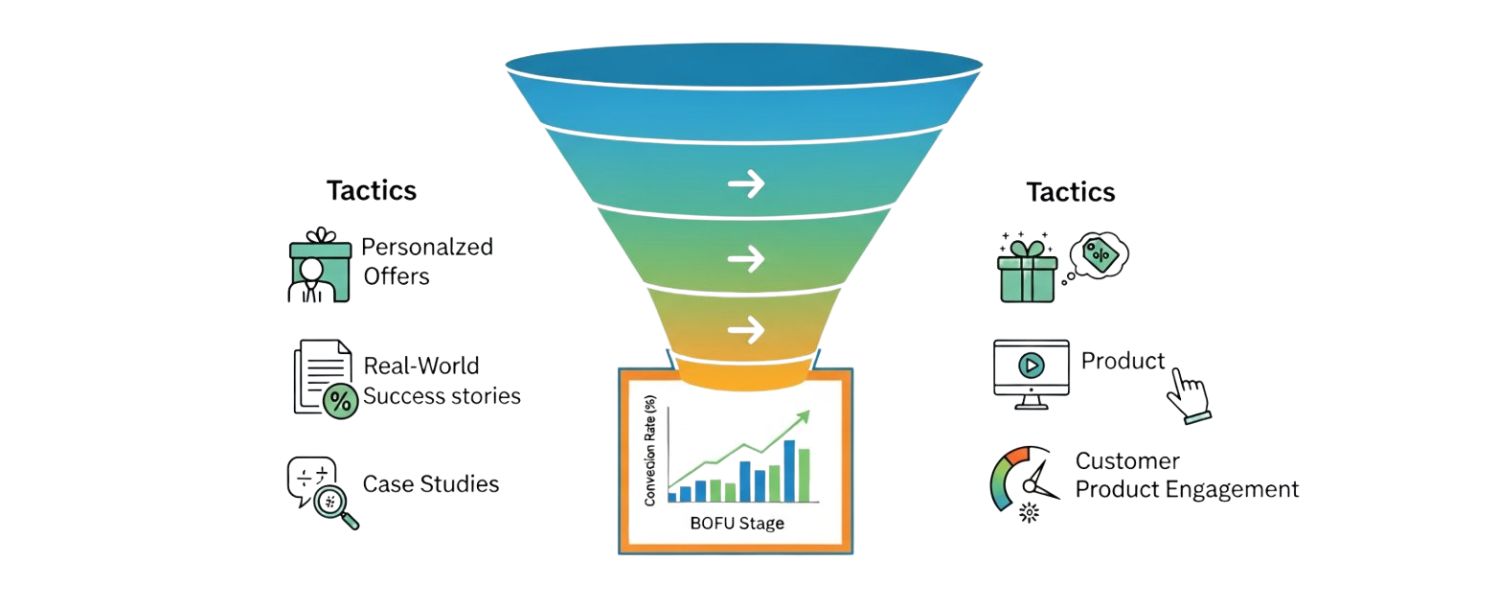
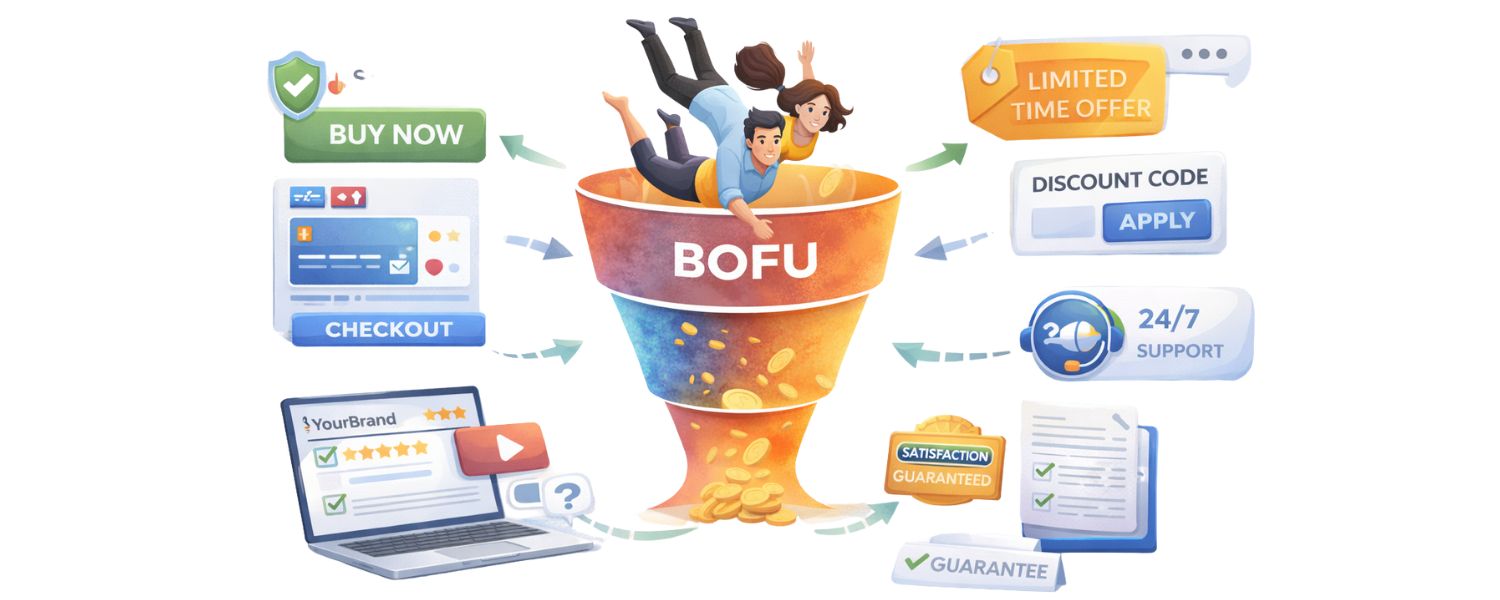
The Conversion stage is the bottom of the marketing funnel (known as BOFU or “Bottom of Funnel”). This is the pivotal point where a prospect is on the verge of becoming a customer. They have identified their problem, researched possible solutions (including yours), and now it’s time to make a decision.
The conversion stage is often also called the Decision or Action stage – it’s where the prospect decides whether to buy from you (or otherwise convert, such as signing up for a service or requesting a quote).
At this stage, your audience is hot – they are highly interested and need that final push or reassurance to take action. Your goal in the conversion stage is to remove any remaining friction or doubt and make it as easy and compelling as possible for the prospect to say “yes”.
A. What happens in Conversion
Prospects have essentially narrowed their options, and you’re hopefully one of the top contenders (if not the top choice). They might be conducting final comparisons, seeking the best deal, or seeking one last validation that they’re making the right choice. This is where small details make a significant difference.
A confusing checkout process, missing information, or lack of trust signals can still derail the conversion. Conversely, a smooth experience and the right incentive can seal the deal.
B. Key strategies for Conversion
At the bottom of the funnel, focus on conversion rate optimization and buyer assurances. You want to prompt action and eliminate barriers. Here are strategies to win conversions:
1. Clear Calls-to-Action (CTAs) & UX: Ensure that on your website or landing pages, the call-to-action (e.g., “Sign Up,” “Buy Now,” “Request a Quote”) is prominent, clear, and compelling. The page layout should naturally guide a ready prospect to complete the action without confusion. Simplify forms – ask for only essential information – and streamline navigation so nothing distracts or confuses them at the finish line.
2. Offer Free Trials or Demos: If it fits your business, offering a free trial, demo, or sample can significantly increase the likelihood of conversion. When prospects have a hands-on experience with your product or a risk-free trial of your service, it builds confidence that this works for them. For SaaS or software, free trials (often 14 or 30 days) are standard BOFU tactics.
3. Limited-Time Offers & Incentives: Sometimes, prospects need a little nudge of urgency or extra value to prompt immediate action. Limited-time promotions, discounts, or bonuses work well here – for example, “10% off if you purchase by Friday” or “Sign up now and get two bonus months free.”
4. Social Proof (Again) & Risk Reversal: Reinforce trust one more time at the point of conversion. Prominently display customer reviews, star ratings, or trust badges (such as security seals or money-back guarantee icons) on checkout or sign-up pages. These act as reassurance: “Others have bought this and loved it, and this is a secure/good decision.”
5. Comparison and FAQ content: Provide easy access to any information that might be holding someone back. For example, if prospects might still be comparing you to competitors on price or features, have a comparison chart or page that lays it out honestly. If there are technical specifications or details they might be searching for, ensure those are available.
6. Smooth Checkout & Speed: This might seem obvious, but many conversions are lost due to clunky checkout processes (on ecommerce sites, for example). Optimize your checkout flow by allowing guest checkout if possible (forcing account creation can cause drop-offs). Support multiple payment options and ensure the site loads quickly and functions smoothly on mobile devices.
7. Follow-up on Abandoned Carts or Trials: If someone almost converted (e.g., started a checkout or signed up for a trial but didn’t upgrade), don’t give up on them. Use follow-up strategies, such as an email reminding them to complete the purchase, perhaps highlighting a benefit they haven’t yet enjoyed, or offering assistance.
By implementing conversion-focused tactics, you can often see quick improvements in your conversion rates. Remember, this stage is usually the easiest to measure because you can directly track how many people clicked “Buy” or became paying customers, but don’t forget that their decision heavily depends on all the prior interactions. A user might convert today because of a positive impression you made weeks ago at the awareness stage.
C. Key goals & metrics in Conversion
The obvious metric is your conversion rate – the percentage of leads or site visitors who take the desired action (such as making a purchase or signing up). Also, monitor the cost per conversion (especially if you’re running ads) and the absolute number of conversions relative to your goals within the marketing funnel.
If you’re an online business, track the cart abandonment rate and try to improve it as part of your marketing funnel strategy. For B2B or longer sales cycles, track the lead-to-customer conversion rate and the sales cycle length (how long it takes from first contact to closed sale).
At this point, you’ve turned a prospect into a customer – congratulations! But the marketing funnel journey doesn’t stop here. Some of the most essential marketing work happens post-purchase. Next, we’ll discuss how to keep those new customers engaged, turn them into repeat buyers, and eventually, enthusiastic advocates for your brand.
Post-Purchase: Loyalty and Advocacy
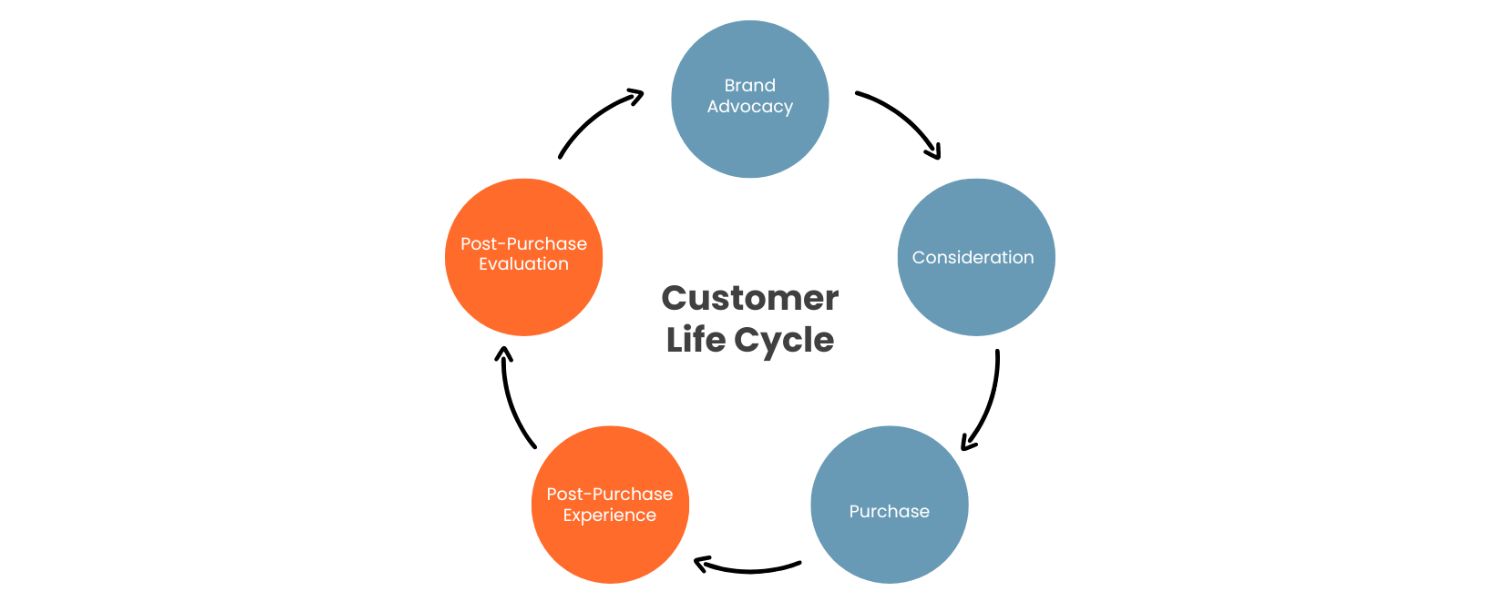
Marketing doesn’t end when a customer clicks “purchase.” The post-purchase stage of the marketing funnel focuses on cultivating loyalty and advocacy. Loyal customers not only provide repeat business (increasing their lifetime value to you), but they can also become brand advocates who refer others and strengthen your reputation, all within the context of your marketing funnel.
This stage is sometimes visualized as occurring after the narrow end of the marketing funnel, or even as a new loop (think of the funnel morphing into a flywheel, where existing customers feed new ones through referrals and word of mouth).
It’s crucial to pay attention to loyalty and advocacy for a simple reason: retaining and nurturing existing customers within the marketing funnel is extremely valuable. Studies have shown that it costs five times more to acquire a new customer than to keep an existing one.
Moreover, happy customers can become a powerful (and free) marketing channel. This is why modern marketing funnel models often append loyalty and advocacy stages – the goal is not just one sale, but an ongoing relationship.
Let’s break this into two sub-stages:
1. Loyalty Stage (Retention & Repeat Business)
Loyalty refers to turning one-time buyers into repeat customers. A loyal customer will choose your brand again when they have a need you can fulfill, rather than going through the whole evaluation process with competitors.
They are also more forgiving of the occasional mistake and more receptive to your new offerings. Cultivating loyalty means continuing to engage and satisfy customers after the initial sale.
Key strategies for Loyalty
A. Outstanding Customer Experience: This starts from the moment of purchase. Ensure your product or service delivers on its promises and that the customer experience is smooth. Provide straightforward onboarding for new customers (especially for software, digital marketing services, or any other services) so they can get value quickly. Make sure your shipping is timely and your product quality is top-notch.
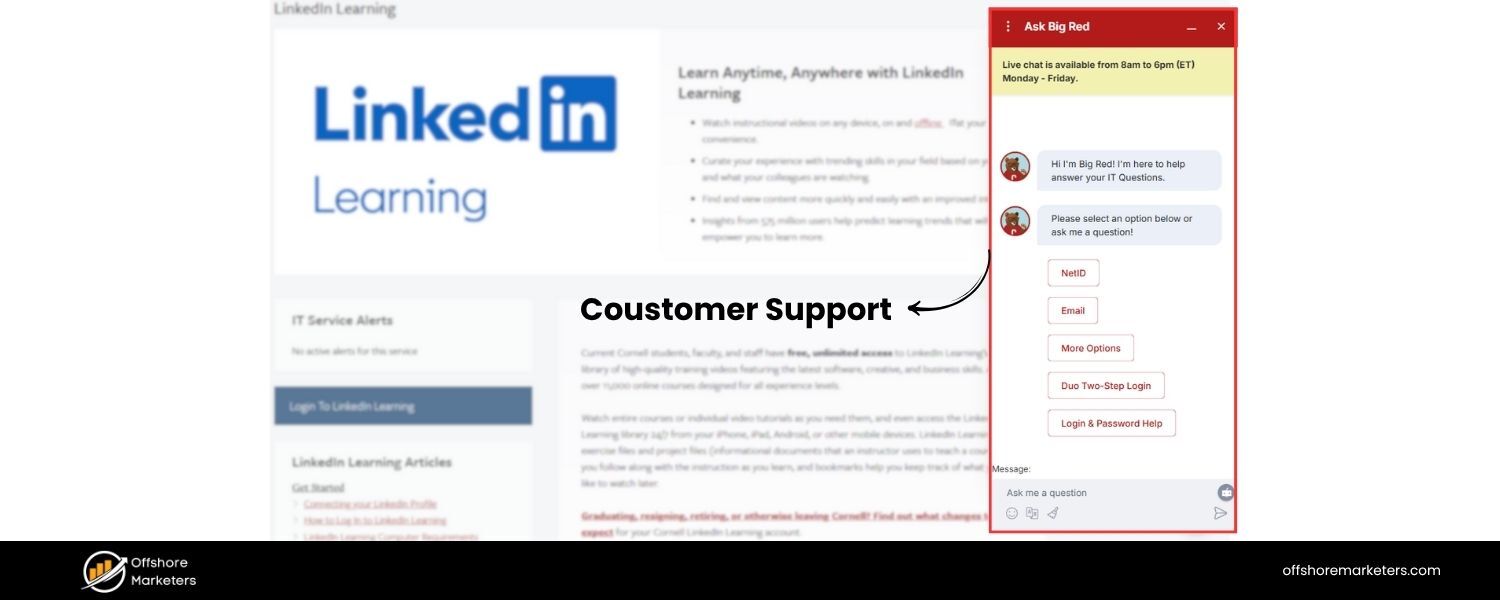
B. Customer Support & Communication: Proactively support your customers. Offer multiple channels (email, chat, phone, and knowledge base) for customer service, ensuring queries and issues are resolved quickly and helpfully.
After someone makes a purchase, follow up with them – for example, send a “Thank you for your purchase” email, and consider a follow-up to check if everything is going well or if they need any assistance.
3. Loyalty Programs: Implementing a loyalty or rewards program can incentivize repeat business and foster customer loyalty. This could be as simple as a point system (e.g., earning points for every purchase that can be redeemed for discounts or free items) or a tiered VIP program (the more you buy, the higher your member status and the better the perks you receive).
4. Personalized Engagement: Utilize customer data to tailor your ongoing marketing efforts. Send personalized recommendations (“Since you bought X, you might like Y”), exclusive offers on relevant products, or content that matches their interests. Personalization shows customers that you understand them and increases the chances they’ll return.
5. Stay Top-of-Mind (Re-Engagement): Keep in touch regularly (but not annoyingly). This could be through a useful email newsletter, social media engagement, or retargeting ads for customers. The idea is to remind them of your brand and products over time. However, make sure you continue providing value – share tips, how-to guides, or industry news that your customers find valuable.
6. Upselling & Cross-Selling: Introduce customers to other products or services you offer that complement what they’ve already bought. If they had a positive experience the first time, they’ll be more open to other solutions from you. For instance, a customer who purchased a camera might also need lenses or editing software – recommend those.
Loyalty can be measured through metrics such as customer retention rate, repeat purchase rate, and customer lifetime value (CLTV). Aim to increase these over time, as they are strong indicators of sustainable growth.
Also, monitor engagement metrics among your customer base, such as email open rates from customers versus prospects, and active usage of your product (if applicable). High engagement means you’re staying relevant to them.
2. Advocacy Stage (Referral & Advocacy)
If you consistently delight your customers, some will naturally become advocates for your brand. Advocacy is when customers are not just loyal, but actively champion your business – they recommend you to others, leave positive reviews, and perhaps create content or buzz around your brand.
These are your superfans or promoters. The advocacy stage is like turning your funnel upside down: your existing happy customers feed new prospects into the top of your funnel through referrals and word of mouth.
A. Key strategies for Advocacy
1. Referral Programs: One of the most direct ways to spur advocacy (and acquire new customers) is to set up a referral program. This means rewarding customers for referring friends or colleagues. The reward could be a discount, credit, free month of service, gift, or even cash – whatever fits your model.
2. Encourage Reviews & Testimonials: Happy customers are often willing to leave a review if asked. Send follow-up emails sometime after the purchase, asking for feedback or a review on platforms that matter for your business (e.g., Google, Yelp, G2 Crowd, Capterra, App Store). High ratings and positive reviews will, in turn, feed back into the consideration stage for new customers who research you.
3. Build a Community: Creating a community around your brand can transform customers into advocates. This could be a user forum, a Facebook group, a subreddit, or offline meetups and events. Communities allow your customers to interact not just with you, but with each other – sharing tips, excitement, and yes, occasionally frustrations (which is good, because you get to address them transparently).
4. Exclusive Advocacy Perks: Treat your advocates like VIPs. You might have an “insider club” or ambassador program for top referrers or most active community members. Give them early access to new products, special discounts, or branded swag. This not only rewards them for their advocacy but also encourages continued engagement.
5. Listen and Iterate: Effective advocacy also stems from feeling heard. Solicit customer feedback regularly (surveys, feedback forms, etc.) and act on it. When customers see their suggestions or concerns addressed in new updates or policies, they know you genuinely care. This turns them into stronger supporters.
When customers reach advocacy, your marketing funnel enters a powerful state of self-replenishment – advocates bring in new aware prospects through their efforts (whether through referrals, reviews, or positive buzz).
The ultimate measure of advocacy is often the Net Promoter Score (NPS), which essentially measures how likely customers are to recommend a brand. High NPS or a large share of business coming from referrals are signs of strong advocacy.
To sum up this stage: don’t overlook your existing customers. By engaging them through loyalty and advocacy initiatives, you create a virtuous cycle. Satisfied customers keep buying (boosting revenue) and actively bring in more customers for you, starting the funnel anew.
This is the foundation of sustainable, long-term growth – every business benefits from repeat business and word-of-mouth, which are often cheaper and more effective than constant cold acquisition.
Having explored all the stages of the marketing funnel individually, let’s now examine how to develop a comprehensive full-funnel strategy that aligns all these stages and why taking a holistic view of the funnel can significantly enhance your marketing results.
Full-Funnel Marketing Strategy
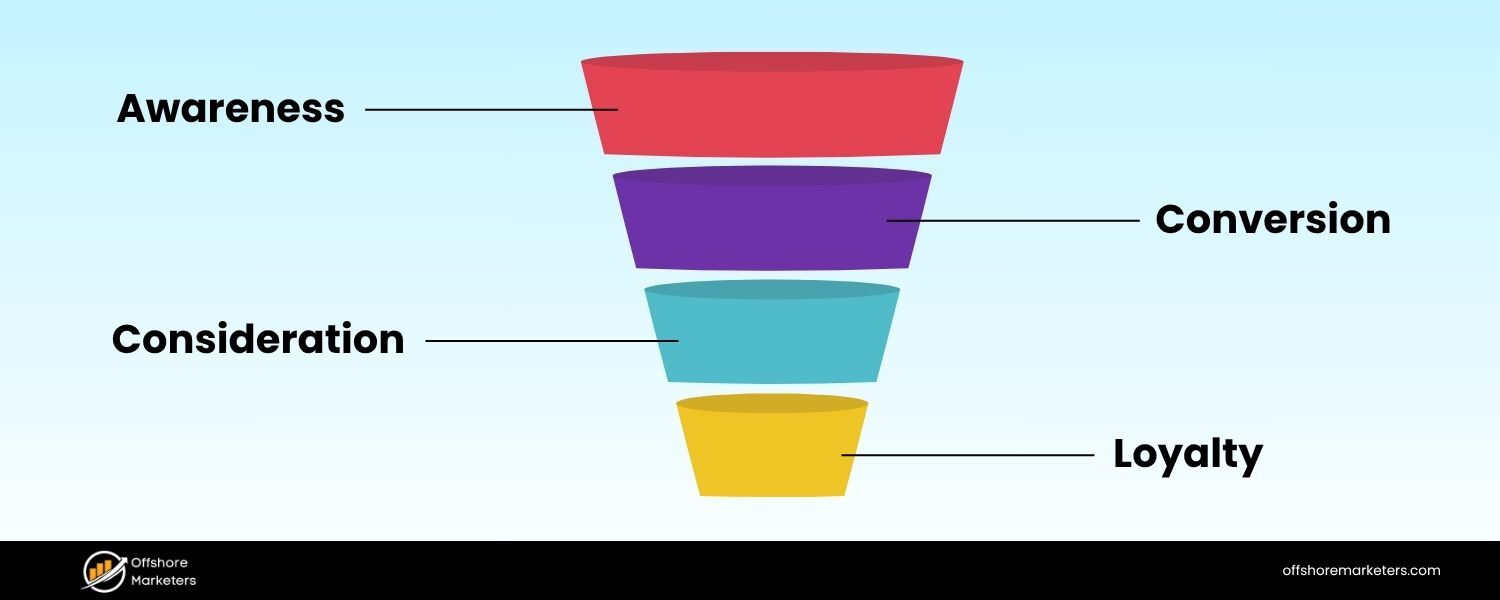
By now, it’s clear that each stage of the funnel – awareness, consideration, conversion, and post-purchase – plays a unique role in the customer journey. A full-funnel marketing strategy means you intentionally plan and execute marketing initiatives across all stages in a cohesive way.
Instead of focusing on just one part (for example, some companies only invest in bottom-funnel Google Ads and neglect awareness; others focus on branding but lack follow-through for conversion), a full-funnel approach ensures you’re engaging customers at every step, from initial touch to loyal advocacy.
Why adopt a full-funnel strategy? Because customers today often zigzag through the journey. The path to purchase is rarely a straight line; people might enter your funnel at different points or move back and forth (someone might hear of you, then not engage until weeks later when they see a second piece of content, etc.).
A full-funnel strategy ensures you have the right presence and message, regardless of how the customer journey unfolds. It also aligns your marketing team to think beyond immediate sales, balancing short-term conversions with long-term brand building.
A. Benefits of a full-funnel approach
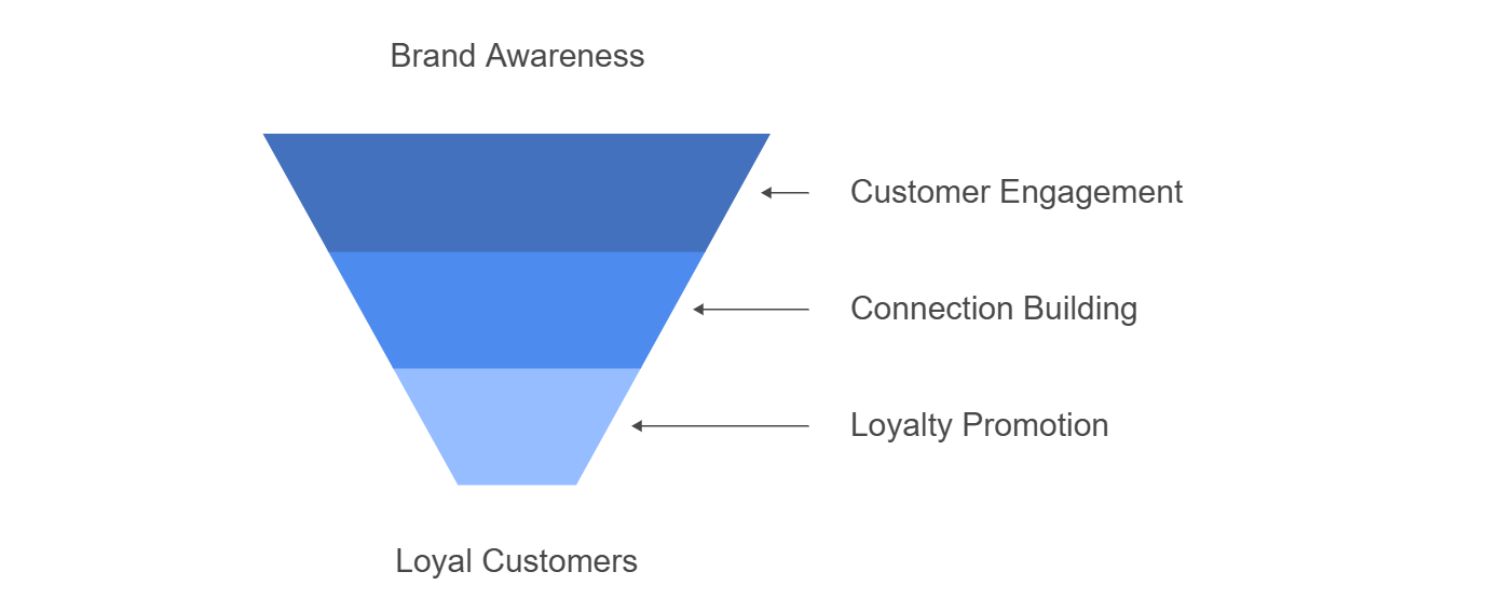
Companies that do full-funnel marketing tend to see better overall results. They build brand equity at the top of the marketing funnel (which makes all mid- and bottom-funnel efforts work better because people trust/remember the brand), and they drive performance/conversions at the bottom of the marketing funnel (which ultimately is needed for ROI).
According to research by McKinsey, shifting to a thoughtful full-marketing funnel strategy – balancing upper-funnel brand-building with lower-funnel performance marketing – can increase marketing ROI by 15-20%. Moreover, campaigns that integrate both brand and direct-response elements often yield a higher overall return on ad spend than those that focus solely on performance ads.
In a practical sense, a full-marketing funnel strategy might look like this: you allocate budget and effort across different tactics mapped to funnel stages – e.g., 40% to awareness (content, social, broad ads), 30% to consideration (nurture campaigns, webinars, etc.), 20% to conversion (retargeting ads, sales enablement, CRO), and 10% to loyalty/advocacy (loyalty program, referral incentives).
B. How to incorporate a full-funnel approach
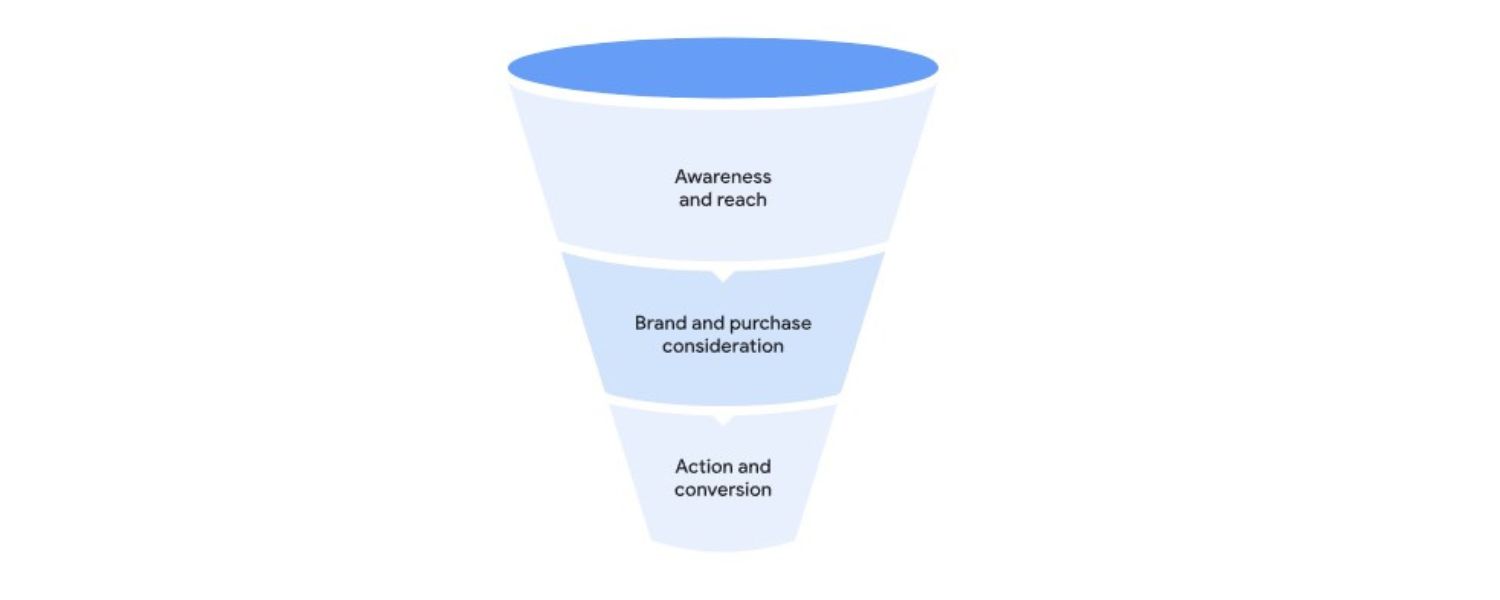
1. Integrated Campaign Planning: When you plan a marketing campaign or quarter’s strategy, outline tactics for each funnel stage.
2. Align Marketing and Sales: A full-funnel approach naturally bridges the gap between marketing and sales, especially for B2B or higher-priced B2C products. Marketing should generate awareness and nurture leads until they’re qualified, then sales takes over to close deals, and then perhaps marketing kicks back in for retention efforts. Ensure your marketing and sales teams work in sync and understand each other’s funnel.
3. Consistent Tracking and Attribution: One challenge of full-funnel marketing is measuring the impact of upper-funnel activities on conversions. It’s easier to attribute a clicked Google Ad to a sale than to attribute a vague brand impression from a billboard or YouTube ad. But it’s essential to try to track and connect these dots.
4. Avoiding Siloed Thinking: A full-funnel mindset also means you avoid internal silos. Suppose your brand team, performance ad team, content team, and CRM team all operate separately with distinct goals (e.g., the brand team only cares about impressions, while the performance team focuses on immediate ROAS). In that case, you might optimize each piece locally but sub-optimally optimize the whole. Encourage a culture where each team understands the stages that precede and follow them.
5. Adapt to Non-Linear Journeys: As mentioned, modern customer journeys can be complex and non-linear. People may skip stages or enter in the middle. A full-funnel approach prepares you for this by having a presence at all major touchpoints.
In summary, a full-marketing funnel strategy is about holistic marketing – balancing short-term and long-term goals, combining the art of brand building with the science of performance marketing. Companies that master this balance often outperform those that fixate on one extreme or the other.
The marketing funnel gives you a checklist of sorts: Are we doing enough to attract new audiences? Are we effectively turning interest into desire? Are we converting efficiently within the funnel? And are we retaining and leveraging our customers after the sale? If you can answer affirmatively at each stage of the marketing funnel, you likely have a robust full-marketing funnel strategy in place.
Next, let’s ground all this theory in reality by looking at some real-world examples of marketing funnels in action. Observing how actual businesses implement funnel strategies will help solidify these concepts and perhaps spark ideas for your marketing efforts.
Real-World Examples of Marketing Funnels
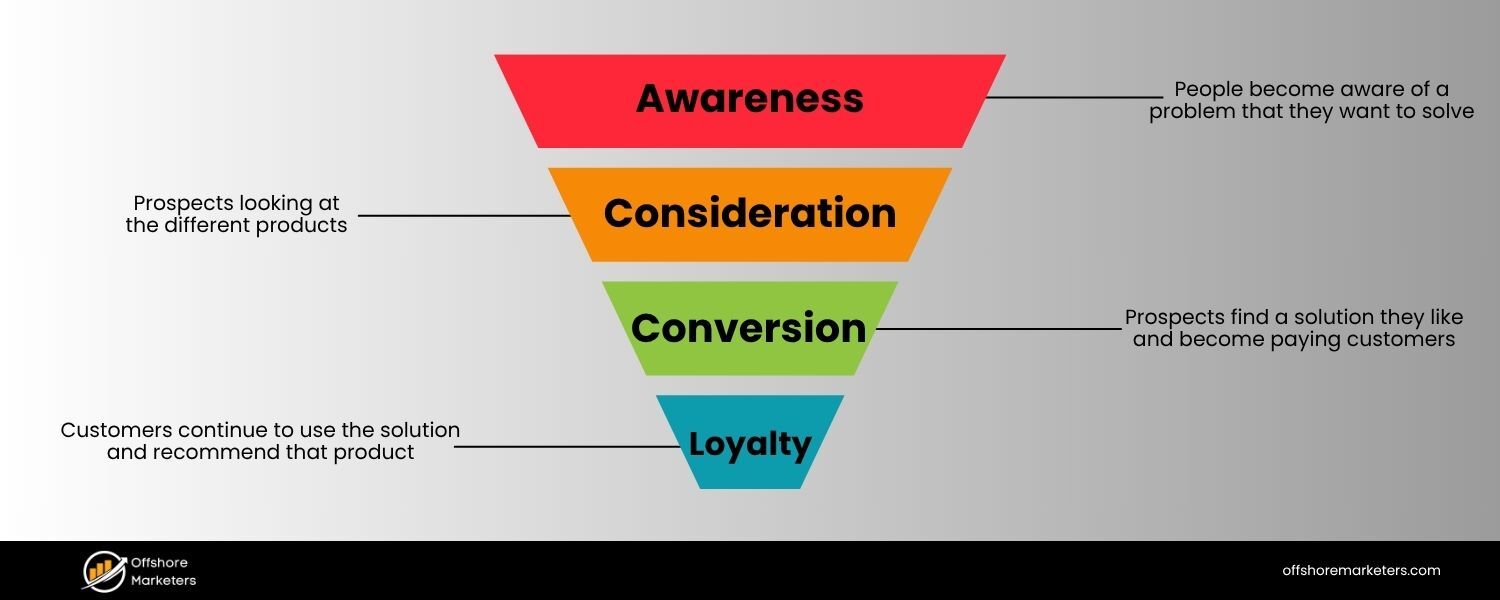
Studying how other companies guide customers through their marketing funnels can provide valuable insights.
Below are several real-world examples (across different industries and business sizes) that demonstrate effective funnel strategies from top to bottom.
These examples highlight how the principles we’ve discussed come together in practice.
1. Dropbox – Leveraging Advocacy for Explosive Growth
Dropbox, the cloud storage company, is a textbook case of turning customers into advocates to fuel the funnel. In its early days, Dropbox’s awareness was primarily driven by word of mouth and a brilliant referral program.
Awareness:
Instead of spending big on ads, Dropbox offered users extra storage space for referring friends. People eagerly shared Dropbox with others to get more space, effectively doing awareness marketing for Dropbox via personal invitations.
Consideration:
The product itself was simple and solved a common problem (file syncing), and the free plan allowed people to try it risk-free – this was essentially a perpetual free trial that hooked users.
Conversion:
As users hit storage limits, many converted to paid plans to get more space. The referral program also seamlessly converted referred friends into users by rewarding them as well.
Loyalty & Advocacy:
By continually improving the product and keeping it easy to use, Dropbox maintained high user satisfaction. Those happy users kept referring more friends. The result? Dropbox’s user base grew from 100k to 4 million in 15 months, with referrals accounting for a 60% permanent increase in sign-ups. This flywheel of advocacy drove growth at a fraction of the cost it would have taken via traditional advertising.
2. Starbucks – Nurturing Loyalty with a Rewards App
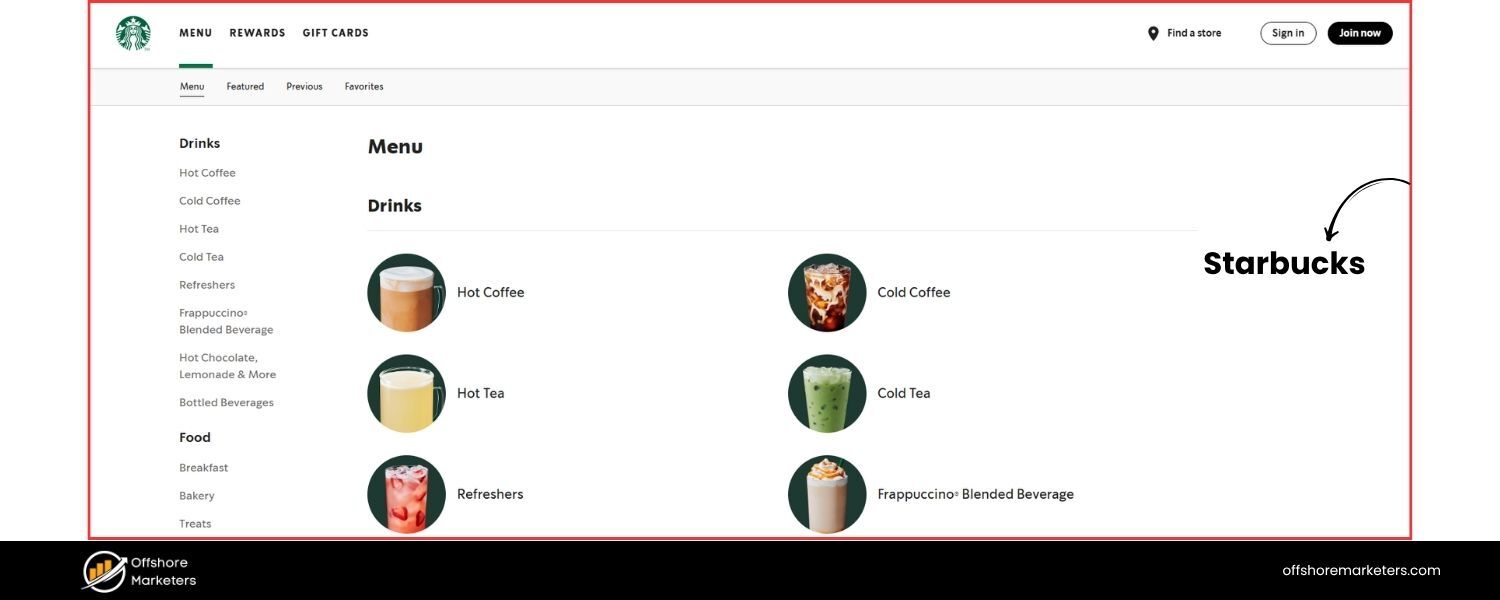
Starbucks, the global coffee chain, has mastered the art of customer loyalty.
Awareness:
Starbucks invests in omnipresent branding – from ubiquitous storefronts to social media campaigns and seasonal product buzz (think Pumpkin Spice Latte hype) – ensuring they’re always on consumers’ minds when the thought of coffee arises.
Consideration:
When a new customer walks into a Starbucks, they are enticed not just by coffee but by the Starbucks experience (the ambiance, the consistency, the customizations). The baristas, the menu, and even limited-time offerings all serve to differentiate Starbucks from other options.
Conversion:
Making a purchase is straightforward at Starbucks, and they often upsell at the counter (“Would you like to try our new sandwich with that?”). But where Starbucks really shines is post-purchase.
Loyalty:
The Starbucks Rewards mobile app is a sophisticated loyalty funnel. Customers are incentivized to download the app (awareness of the program is promoted in-store and in marketing). They start earning stars for each purchase (a consideration for using the app), which can be redeemed for free drinks or food.
Advocacy:
Satisfied caffeine aficionados often introduce friends to Starbucks (sometimes by gifting Starbucks cards, which in turn encourage recipients to try the brand), and the app’s and rewards’ sheer visibility creates buzz. Starbucks has built a community (people even share their customized drink orders online, effectively promoting the brand).
3. HubSpot – Full-Funnel Content Strategy
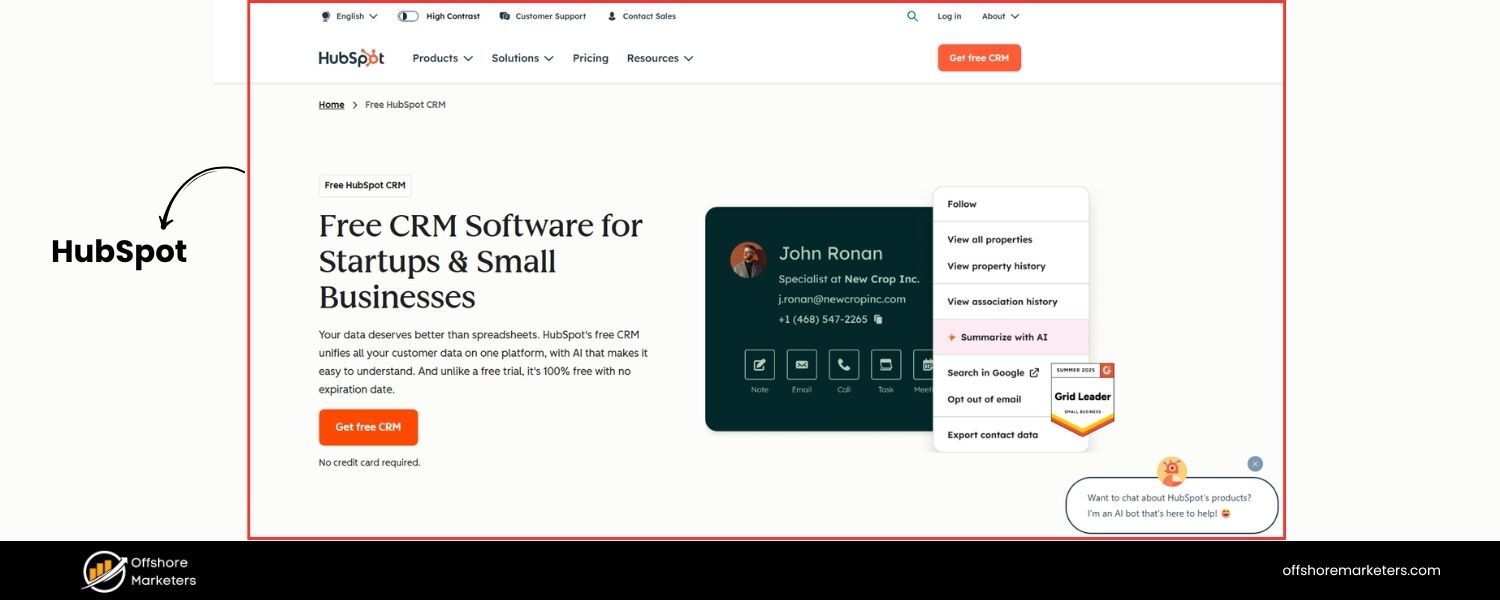
HubSpot, a marketing software company, exemplifies using content at every funnel stage to draw in and convert customers (a very inbound marketing approach).
Awareness:
HubSpot casts an enormous net with its blog and resources. They have thousands of blog posts on topics ranging from social media tips to email marketing best practices, attracting marketing professionals seeking advice. Their SEO strategy is strong, enabling them to rank for numerous marketing-related queries and generate a significant amount of traffic at the top of the funnel.
Consideration:
Once readers are on the blog, HubSpot encourages deeper engagement with content upgrades – e.g., a free e-book or template (“Download our Social Media Calendar Template”, which social media agencies usually do in exchange for their email address. They also host free webinars and have an academy with free certification courses.
Conversion:
HubSpot offers free versions of its products (CRM, some marketing tools) – this free trial/freemium approach is a bottom-funnel strategy to get prospects to experience the product with low friction. Their sales team also reaches out to qualified leads (for example, if someone attended a webinar about marketing automation, a rep might call to discuss how HubSpot can help their business).
Loyalty:
HubSpot retains customers with a combination of excellent customer support, a robust user community, and continuous education (they keep adding free courses, blog updates, etc., which customers also benefit from). They even have an annual conference, INBOUND, which feels like a community event for users and prospects alike, fostering that sense of belonging.
Advocacy:
HubSpot’s customers often become advocates – the company highlights them in case studies and encourages them to leave reviews on software review sites. They also benefit from user-generated content: marketers who learned through HubSpot’s resources frequently mention HubSpot in blogs or social posts, essentially acting as brand ambassadors.
4. Amazon – The Ultimate Full-Funnel Ecosystem

Amazon provides an interesting example because it serves as a funnel for many sellers, but Amazon’s services also follow funnel principles. Think of Amazon Prime as a loyalty strategy on steroids.
Awareness:
Amazon’s brand is everywhere, and they invest heavily in advertising (TV commercials, online ads) to ensure you think of Amazon for anything you need. For individual products on Amazon, they achieve awareness through SEO (as many product searches directly land on Amazon listings) and advertising on and off Amazon.
Consideration:
Amazon’s product pages are rich with information – descriptions, specs, customer Q&A, and especially reviews. The robust review system ensures that by the time a customer considers a product, they have access to social proof and answers to likely questions. The Prime badge itself is a consideration nudge (“I want free quick shipping, I’ll choose a Prime item”).
Conversion:
One-click purchasing, a smooth checkout, and saved payment information – Amazon has optimized conversion to be almost frictionless. The fact that millions of customers have a Prime subscription also encourages conversion, as they want to make the most of that free shipping, a sunk cost fallacy that favors the customer.
Loyalty:
Amazon Prime is essentially a giant loyalty program. By paying an annual fee, customers receive free shipping, streaming media, and additional benefits. This encourages customers to default to Amazon for future purchases, as they want to “get their money’s worth” from Prime. Amazon continually adds value to Prime (including music, videos, exclusive deals, etc.) to keep members loyal.
Advocacy:
While people might not think of “advocacy” for Amazon in the same emotional sense as for a beloved brand, Amazon does have strong word-of-mouth – Prime members often encourage friends/family to join Prime (“It’s so worth it, I buy everything on Amazon now”).
And with programs like Amazon Associates (affiliate marketing), Amazon incentivizes bloggers and content creators to advocate and refer customers (they earn a commission for linking people to Amazon products).
5. A Niche E-commerce Example – Beardbrand
Beardbrand is a smaller company that sells grooming products for men (beard oils, etc.), and they exemplify how even a niche brand can execute a smart funnel on a budget.
Awareness:
Beardbrand grew initially through content marketing and community building. They started by engaging with the online beardsman community, sharing grooming tips, style inspiration, and leveraging YouTube. Founder Eric Bandholz created YouTube videos about beard care that drew viewers interested in the topic – many discovered the brand through these videos.
Consideration:
On their website and social channels, Beardbrand offers a wealth of educational content, including guidance on using their products, selecting the proper grooming routine, and more. They also foster user engagement (encouraging customers to share their before/after pics or beard stories). By focusing on education and lifestyle, they differentiate from generic products; customers feel part of a “beard care movement.”
Conversion:
Beardbrand’s site makes it easy to shop, and they offer bundles (which is a smart way to increase average order value). They sometimes use limited edition product drops to create urgency among their audience. They highlight customer reviews on product pages to reassure buyers.
As a smaller brand, they might not rely on discounts heavily (to maintain a premium feel), but they do use free shipping thresholds and occasional promos to encourage the first purchase.
Loyalty:
Once someone makes a purchase, Beardbrand continues to engage with them. They have a strong presence on email and YouTube, constantly giving grooming tips – this keeps customers using the products correctly and appreciating the results (meaning they’ll reorder).
They also upsell by introducing new products to existing customers (like new scents or entirely new product lines like hair care).
Advocacy:
Beardbrand has managed to cultivate genuine advocates; customers often post about their products unprompted because the brand tapped into personal identity (pride in one’s beard). Beardbrand encourages user-generated content and testimonials, which further spread the word. By nurturing a community via social media groups and content, they have fans who recommend them in grooming forums or to friends.
These examples, ranging from tech startups to coffee giants to niche e-commerce businesses, all illustrate that while the tactics may differ, the principles of the marketing funnel remain consistent.
Each successful business guides its audience step-by-step through the marketing funnel: first attracting attention, then educating and building trust, then making the sale easy and compelling, and finally continuing to nurture the relationship after the sale is made. You can apply these same principles to your marketing funnel, scaling the techniques to your budget and context.
Now that we’ve seen what to do, it’s also essential to understand what not to do in the marketing funnel. In the next section, we’ll look at some common mistakes marketers make with funnels, so you can avoid those pitfalls and keep your marketing funnel running smoothly.
Common Marketing Funnel Mistakes to Avoid
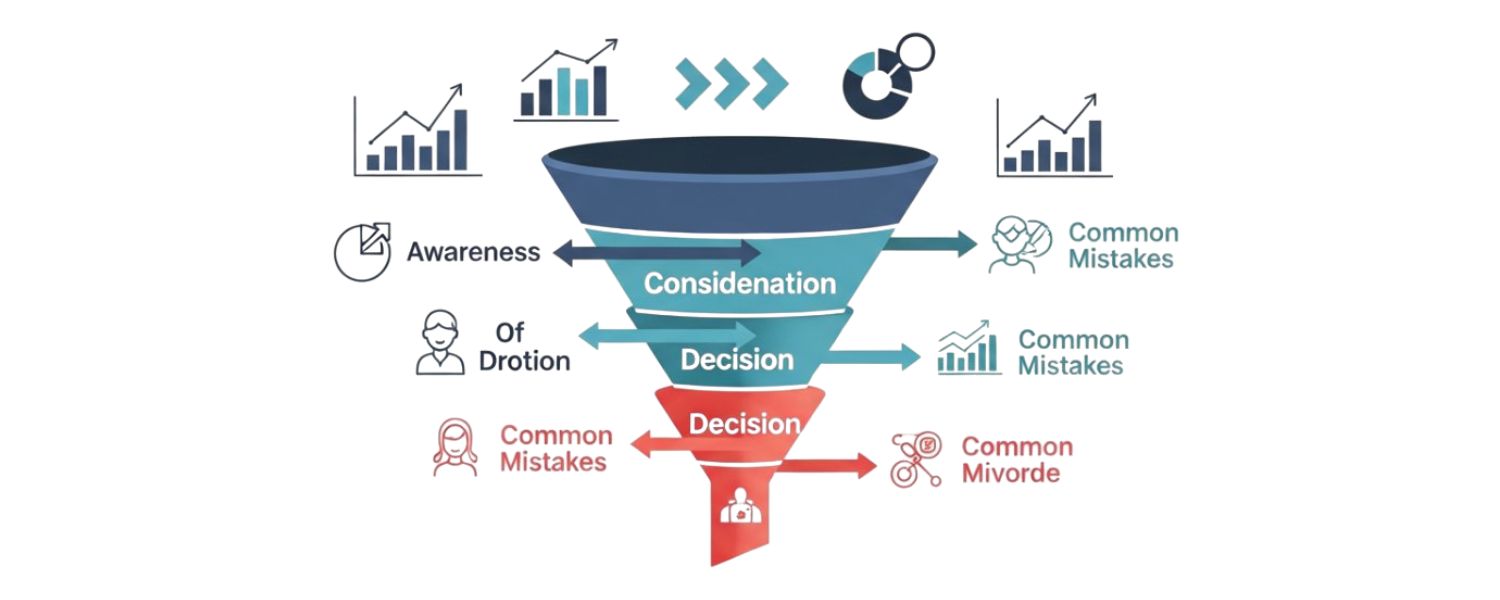
Even with a solid understanding of marketing funnels, it’s easy to make missteps when executing your strategy. Here are some common marketing funnel mistakes – along with tips on how to avoid them – to ensure your funnel performs at its best:
A. Focusing Too Much on One Stage
One of the biggest pitfalls is to over-emphasize a single funnel stage while neglecting the others. For instance, some companies pour all their energy and budget into top-of-funnel awareness (such as flashy ads and massive social media followings), but then have no robust plan to nurture those leads or close sales, resulting in a lot of buzz but little revenue.
The opposite is also common: companies fixate on bottom-of-funnel conversion (e.g., heavy discounts, “Buy Now!” messaging) but haven’t invested in awareness or consideration, meaning they’re only converting the tiny audience that stumbles upon them. A balanced approach is key.
B. Not Defining the Funnel Stages for Your Business
As we discussed, funnel stages can vary depending on the business. A mistake is to blindly apply a generic funnel model without thoroughly considering it.
For example, a B2B SaaS company might need an additional stage (such as “Demo/Trial”) between consideration and conversion.
In contrast, a small e-commerce store might have a simpler funnel (awareness directly to purchase for low-cost items). If you don’t define what each stage means for your context, you might misclassify leads or use the wrong tactics.
C. Ignoring the Non-Linear Nature of Modern Journeys
While the marketing funnel is a helpful model, real customer journeys can take unexpected turns. A mistake is to assume customers will follow a perfect linear progression that you set within the marketing funnel.
In reality, people might discover you and jump straight to reading reviews (skipping what you thought was your consideration content), or they might convert once and then return to researching (perhaps for a subsequent purchase within the marketing funnel).
Be prepared for entry and re-entry at various stages of the marketing funnel. One way to achieve this is to create content and ads tailored to different intent levels and use targeting effectively (for instance, show introductory content ads to cold audiences and more product-focused ads to those who have visited your pricing page).
Also, offer multiple paths through the marketing funnel – not everyone wants to download an e-book; some may prefer watching a video or jumping on a call.
D. Inconsistent Messaging or Branding Across Stages
Another common mistake is having disjointed messaging as prospects move through the funnel. Perhaps your awareness ads are fun and light-hearted, but when someone clicks through to consideration content, the tone is suddenly very formal and technical – that can jar the prospect.
Or your sales team on the phone uses a different pitch than what the prospect has been hearing from marketing emails. Consistency builds trust.
Ensure your brand voice and value proposition are consistent throughout the stages. While you might highlight different aspects (e.g., early on, you discuss big-picture benefits, and later, you focus on specific features), it should all feel like one coherent story.
A consistent narrative helps reinforce why the prospect was interested in the first place and prevents confusion. Ensure that your teams share style guides and campaign plans so everyone stays on message.
E. Overwhelming Prospects with Too Much, Too Soon
This is a funnel pacing issue. It’s a mistake to ask for a big commitment too early. For example, trying to get a new website visitor (awareness stage) to “Book a Demo” or “Call for a Quote” right off the bat is likely asking too much; that CTA is better saved for the consideration or conversion stage once they know you better.
Tailor the content depth and ask according to the stage. Early on, provide value and quick wins (such as a helpful blog post or a free tool) with a low barrier to entry.
Gradually increase the level of commitment – e.g., awareness stage ask: subscribe to our newsletter for more tips (small ask), consideration stage ask: attend a webinar or start a free trial (bigger time commitment, but by now they’re more interested), conversion stage ask: talk to sales or purchase (big commitment, but they’re warmed up).
F. Failing to Nurture Leads (“Leakage” in the Middle)
Many marketing funnels leak in the middle because companies don’t have a strong lead-nurturing process. They either expect that someone who becomes aware will magically convert without additional touches, or they forget to follow up within the marketing funnel.
A classic example: capturing email leads from a campaign and then hardly emailing them, so they cool off and forget you. Or a sales team that gets a list of leads and only contacts each once – any non-responder is dropped from the marketing funnel.
To avoid this, implement a systematic approach to nurturing within the marketing funnel. Set up email workflows, retargeting sequences, or call schedules to keep leads engaged and informed in a gentle manner.
It often takes several touchpoints within the marketing funnel before a prospect is ready to act; don’t interpret initial silence as rejection. On the flip side, avoid spamming – nurturing in the marketing funnel should be value-driven and respectful (e.g., send useful info, not daily “Are you ready to buy now??” emails).
G. Neglecting Existing Customers
We’ve stressed this already, but it’s worth repeating as a common mistake: many businesses treat the funnel as ending at the purchase. They then move on to chasing new customers, while ignoring those they already have.
This results in poor retention, lack of advocacy, and lost revenue. Don’t have a “one-night stand” approach to customers; have a “long-term relationship” approach. Provide support, continue marketing to customers (with relevant, non-annoying content), and solicit feedback.
If you find your churn rate (for subscription businesses) or one-time purchase rate is high (customers buy once and never return), it’s a red flag that you’re neglecting post-purchase.
A well-run loyalty loop not only brings repeat revenue but can also generate new referrals. Make sure some of your campaigns and budget are dedicated to customer marketing, not just prospect marketing.
H. Not Measuring or Analyzing Funnel Performance
Some marketers make changes or push efforts in the funnel without actually measuring how it impacts each stage. Without tracking, you might not realize, for example, that lots of people drop off on a particular form, or that your consideration webinar has a low attendance rate because the topic isn’t resonating. Use analytics to track the performance of each stage.
Track metrics like click-through rates on awareness ads, lead conversion rates on landing pages, open/click rates on nurture emails, free trial to paid conversion rate, repeat purchase rate, etc.
Funnel analysis tools or even a simple spreadsheet can help identify where prospects are falling off the most. Once you know your weakest stage (maybe many are aware but few convert, or few are aware to begin with), you can take targeted action.
Also, pay attention to the quality of what’s moving through the funnel – for instance, if you bring in a large number of unqualified leads at the awareness stage, your conversion rate will be low.
I. Changing Tactics Too Quickly or Too Slowly
This is a balance issue. If something in your funnel isn’t working immediately, don’t panic and scrap it overnight – some tactics take time (SEO content, for example, needs time to rank; drip campaigns need time to nurture).
Rapidly changing messages or channels can confuse prospects who were in the middle of their journey with you. Give initiatives a fair chance and gather data. Conversely, don’t be so slow to change that you continue to push a broken strategy.
If, after sufficient time and testing, a funnel stage is underperforming, be agile in optimizing it.
For example, if a webinar series consistently has low attendance, consider whether the format or topic is incorrect – tweak it or try an alternative approach (such as short video tutorials or live Q&As).
Adopt a test-and-learn mindset: continually experiment, A/B test elements of your funnel (such as email subject lines, ad creatives, and landing page designs), and iterate based on the results.
J. Treating the Funnel as Separate from the Customer Experience
Remember that from the customer’s perspective, they’re not thinking “I’m in the consideration stage of this company’s marketing funnel.” They’re just experiencing various interactions with your brand.
Sometimes, marketers become so focused on the funnel that they optimize metrics at the expense of the overall experience.
For instance, bombarding someone with upsell pop-ups after purchase might increase the upsell rate slightly (conversion metric) but annoy the customer (experience hit, could hurt loyalty).
By being aware of these common mistakes, you can audit your marketing funnel strategy and operations to ensure you’re on the right track. If you’ve already made some of these mistakes, don’t worry – many are easily correctable with a bit of refocusing and adjustment.
The key is to stay attentive: regularly review your funnel data, gather feedback from leads/customers, and be willing to refine your approach.
Finally, let’s look at some tools that can help you build, manage, and optimize your marketing funnel effectively. Using the right tools can automate processes, provide crucial insights, and ultimately free you up to focus on strategy and creativity.
Tools to Build and Optimize Your Marketing Funnel

Implementing a marketing funnel strategy is much easier when you leverage tools and software designed for each stage of the funnel. Today, there’s a rich ecosystem of marketing technology (MarTech) available – from analytics platforms that track user behavior to automation software that nurtures leads at scale.
Below, we’ll cover essential categories of tools for funnel marketing and give examples of popular solutions in each category.
These tools can help you attract, engage, convert, and retain customers more efficiently:
1. Analytics Platforms:
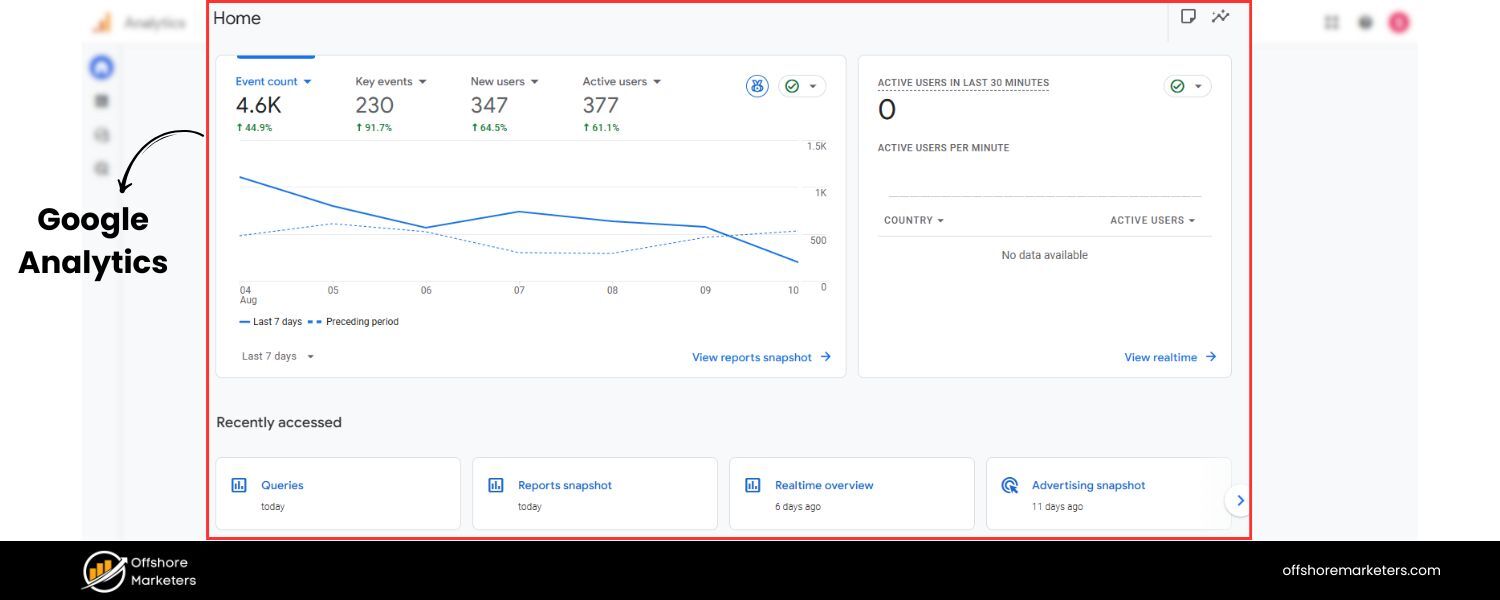 To manage a funnel, you need to measure it. Analytics tools like Google Analytics (a free, widely used platform) or Funnel.io (a specialized marketing analytics platform) provide a comprehensive view of your marketing performance across the entire funnel.
They help track website traffic, conversion rates per stage, and attribution (i.e., which channels or touchpoints contribute to conversions).
2. Behavior Tracking & User Feedback Tools:
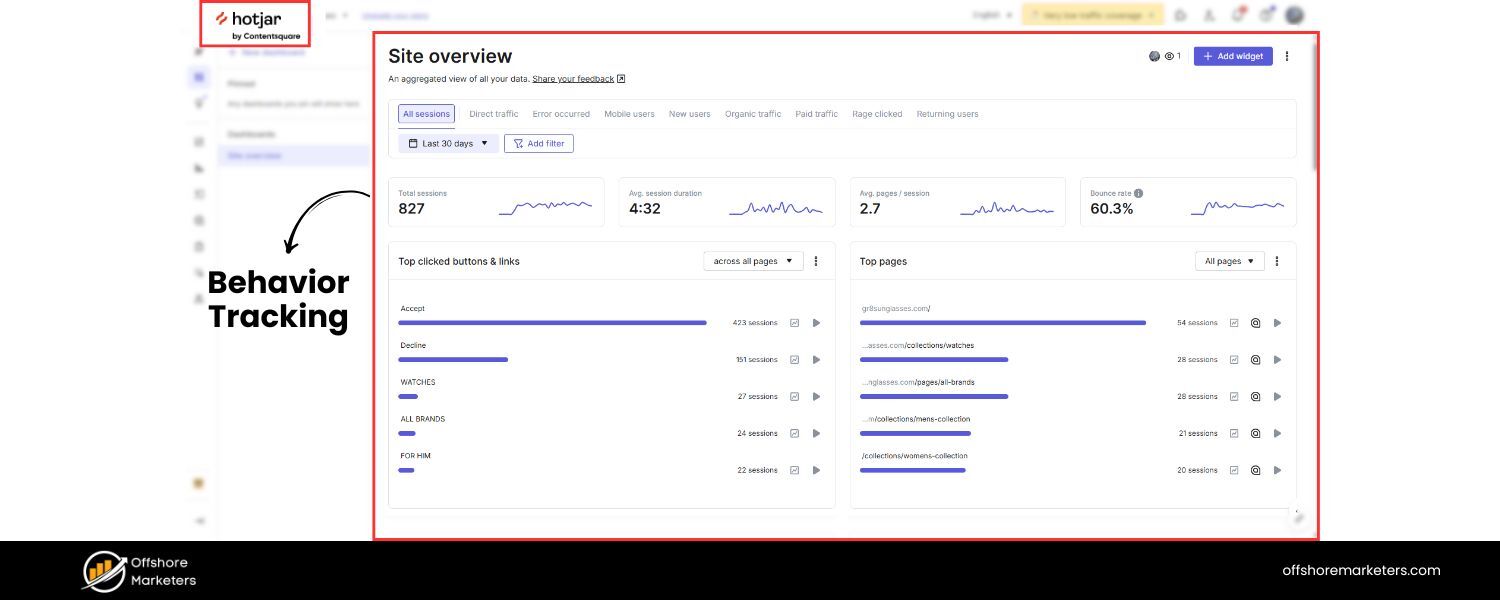 Knowing the numbers is good; knowing why users behave a certain way is even better. Tools like Hotjar or Contentsquare allow you to see how people navigate your site or app through heatmaps, session recordings, and funnel analysis features.
3. Customer Relationship Management (CRM) Systems:
A CRM, such as HubSpot, Salesforce, or Zendesk Sell, helps you manage leads and customers throughout their journey. CRMs act as a central database where you can track every interaction a lead has with your business – emails opened, pages visited, calls made, etc.
4. Marketing Automation & Email Marketing:
Tools like Mailchimp, ActiveCampaign, or the automation features in HubSpot or Marketo allow you to automate lead nurturing at scale. These tools can send out scheduled sequences of emails based on triggers (e.g., time since sign-up or actions taken, such as clicking a link).
5. Content Management and Creation Tools:
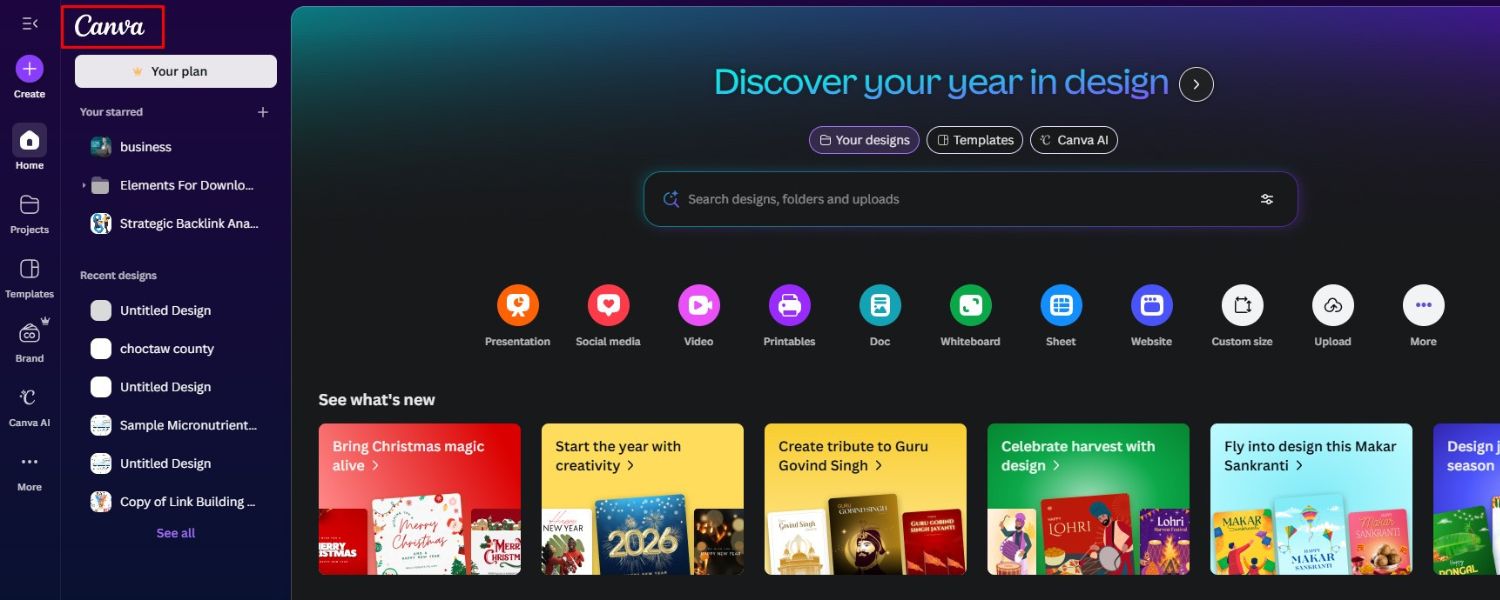
Given the content-heavy nature of funnel marketing, having tools to create and manage content is crucial. This includes your Content Management System (CMS) for your website or blog (e.g., WordPress, Webflow), as well as design tools like Canva or Adobe Creative Suite, to create visuals, infographics, or social media posts for awareness.
6. Landing Page and Funnel Builders:
Sometimes you need dedicated landing pages or even micro-sites for campaigns. Tools like ClickFunnels, Leadpages, or Systeme.io are designed to build marketing funnels and pages without coding quickly.
7. Social Media and Ad Platforms:
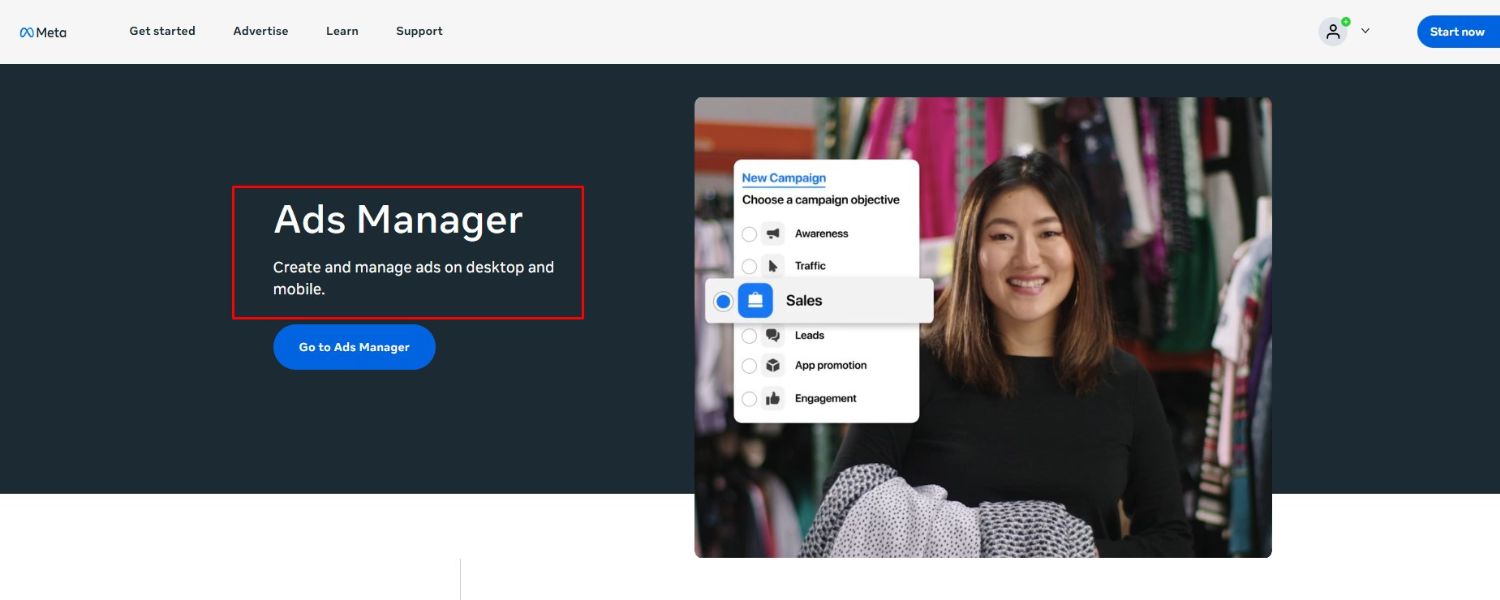
While not “funnel tools” per se, your presence on social media and ability to advertise are facilitated by various platforms. Using tools like Hootsuite or Buffer can help manage and schedule your social media content (to handle awareness and engagement systematically). On the paid side, become familiar with Facebook Ads Manager, Google Ads, LinkedIn Campaign Manager, and other relevant platforms, depending on where your audience is located.
8. Conversion Rate Optimization (CRO) Tools:
To continually improve the conversion stage (and even micro-conversions at other stages), consider tools for A/B testing and optimization, such as Optimizely, VWO, or Google Optimize (which is free, although slated to retire in 2023; new alternatives are emerging). These let you experiment with different page designs, headlines, or user flows to see what yields better results.
9. Customer Engagement & Support Tools:
For post-purchase (loyalty) and sometimes consideration, tools like Intercom, Drift, or Zendesk can be particularly helpful. Intercom and Drift offer on-site chatbots and live chat that can engage visitors in real-time. For example, a Drift bot can qualify a site visitor and book a sales meeting right in the consideration stage, thereby accelerating the sales funnel.
When selecting tools for your marketing funnel, consider your budget, company size, and the integrations between tools (you’ll save headaches if your email software, CRM, and analytics can talk to each other or are part of one platform).
Many all-in-one solutions exist for marketing funnels (HubSpot, for example, offers CMS, email, CRM, and analytics in one, albeit at a higher cost). Alternatively, you can select the best-of-breed solutions for each function and integrate them into your marketing funnel strategy.
To illustrate, a small business might use: Google Analytics for analytics, Hotjar for behavior, Mailchimp for email, WordPress for CMS with an SEO plugin, Unbounce for landing pages, Hootsuite for social scheduling, and Shopify’s built-in tools for e-commerce conversion and loyalty (like its email marketing and discount features, all crucial for an effective marketing funnel).
A larger business might utilize Salesforce CRM, Marketo for automation, Adobe Analytics, custom landing pages, and more, with a dedicated operations team to manage these tools within their marketing funnel strategy.
The right tools will streamline your funnel operations, provide clarity through data, and automate repetitive tasks. This empowers you to focus on strategy, content, and creativity – the human elements that tools can’t replace.
As you implement tools, always tie their use back to your funnel goals (e.g., “We’re adopting Tool X to improve our conversion rate by doing Y”). Regularly review if a tool is meeting its purpose, and don’t hesitate to adjust your stack as your needs evolve.
With the strategies, examples, and tools covered, you should now have a 360° view of how to craft and optimize a marketing funnel that guides your audience from that first spark of awareness through to enthusiastic advocacy.
Conclusion
The marketing funnel is more than just a buzzword – it’s a fundamental framework for understanding and influencing how customers interact with your business from start to finish. By breaking down the journey into stages (Awareness, Consideration, Conversion, and Loyalty/Advocacy), you can meet your prospects where they are with the right content and engagement at the right time.
This guide has walked you through each stage in detail, providing strategies to attract attention at the top, nurture trust in the middle, and drive actions at the bottom, all while not forgetting the importance of keeping customers happy after the purchase.
For SEO beginners, the funnel highlights why tactics like content marketing and SEO are so valuable at the top of the funnel – they generate the traffic that converts into leads. For marketing professionals, the funnel provides a blueprint for planning integrated campaigns and diagnosing where a campaign might be falling short.
For business owners, the funnel serves as a reminder to strike a balance between short-term sales tactics and long-term brand building and customer relationship management. No matter your role, funnel thinking helps ensure you’re creating a cohesive experience that turns strangers into loyal, repeat customers.
A few parting tips as you apply this knowledge:
1. Always be customer-centric: Put yourself in your target audience’s shoes at each stage. What are they thinking, feeling, or needing? Let that guide your marketing actions more than what you internally want to push. A customer-centric funnel is an effective funnel.
2. Keep it cohesive: Ensure your messaging, design, and tone remain consistent and supportive throughout the entire funnel. Each stage should feel like a natural progression in a relationship, not a disjointed series of sales pitches.
3. Measure and refine continuously: Build in the analytics and feedback loops from the start. Watch your metrics, run experiments, and iterate. Small improvements at each stage can yield significant gains in overall conversions and ROI.
4. Don’t ignore the “beyond”: The funnel concept traditionally ends at conversion, but as we emphasized, extending your efforts to loyalty and advocacy pays dividends. In the age of social media and online reviews, advocacy can be a game-changer for growth.
5. Use the right tools, but remember the human touch: Automation and tools will save you time and give you data, but human creativity and empathy are what craft compelling content and genuine connections. Use technology to empower your marketing, not to replace its elements.
By implementing a well-structured marketing funnel strategy, you’ll not only boost conversions and sales but you’ll also build a stronger brand and customer base. Your marketing will feel less like guesswork and more like a guided process that you can tweak and optimize.
Over time, you’ll see the effects compound: more efficient marketing spend, higher customer lifetime values, and a community of customers who champion your business.
Now it’s your turn: take these insights and apply them to your marketing efforts. Map out your funnel, pinpoint the gaps, brainstorm creative tactics for each stage, and put the plan into action. With careful analysis and a bit of persistence, you’ll transform your marketing funnel into a well-oiled machine that drives sustainable growth for your business.
Happy funneling! Here’s to turning more strangers into loyal customers and advocates, one stage at a time.
Why Roseville Startups are Choosing Offshore Marketers to Scale Smarter
Roseville is no longer just a quiet suburb of Sacramento;...
What Is PPC? A Practical Guide to Pay‑Per‑Click Advertising
Pay‑per‑click (PPC) is the “pay only when someone clicks” branch...
Google Search Issues Affecting Results in Some Regions
Google has confirmed a problem with one of its data...
Keyword Counts Dropped After Google’s num=100 Change
In September 2025, Google stopped supporting the &num=100 parameter. This...

Image SEO: Optimize Images for Higher Rankings & Traffic
Introduction Images make your website more engaging, but they can...


.png)
.png)
.png)
.png)
.png)

2024 ALL RIGHTS RESERVED MADE IN INDIA
.png)