
Broken Link Building: Turn Dead Links into SEO Gold
September 8, 2025
Introduction
Imagine turning 404 errors into valuable backlinks for your website. Broken link building is an SEO strategy that does exactly that, it finds dead links on other sites and replaces them with your relevant content.
As an SEO veteran with 25 years in marketing, I’ve seen tactics come and go, but broken link building remains a clever, white-hat way to boost rankings. In this guide, you’ll learn what broken link building is, why it works, and how to use it step-by-step to strengthen your backlink profile.
What Is Broken Link Building (and Why It Matters in 2025)?
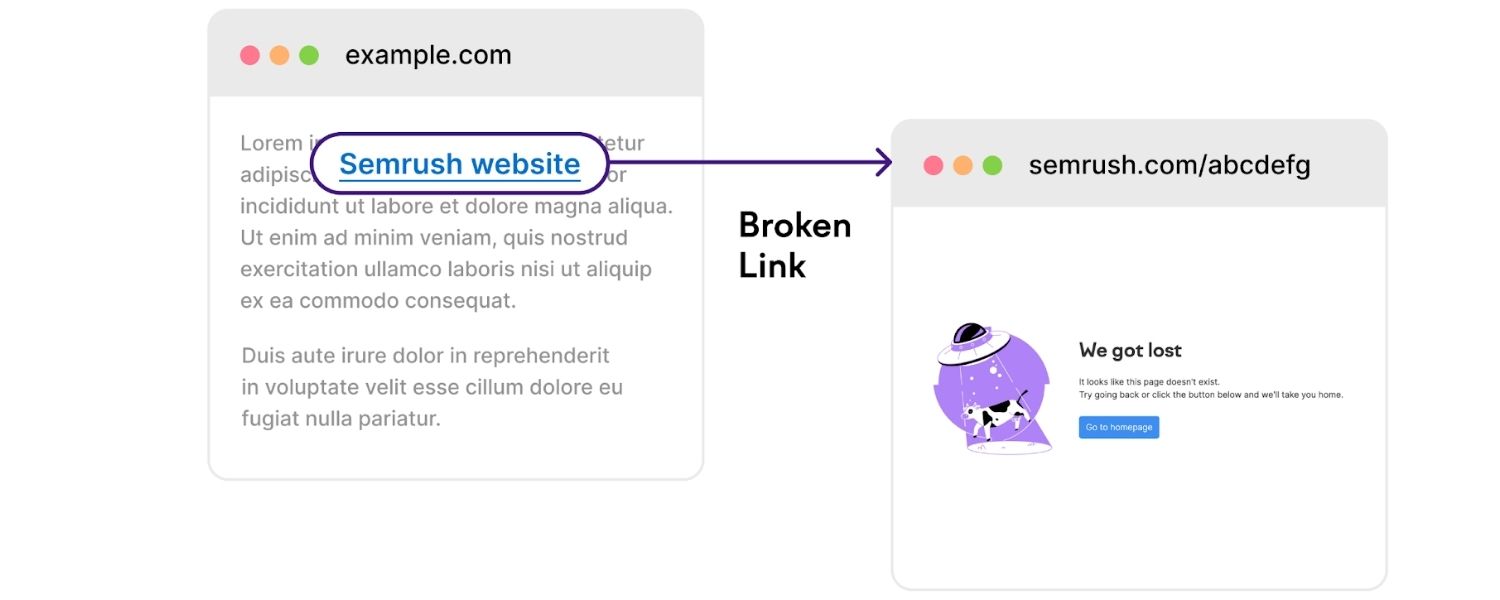
Broken link building is the process of finding broken outbound links on other websites (links that lead to non-existent pages) and convincing the site owner to swap them with a link to your content.
In simple terms, you locate a “dead” link on a relevant site, provide a “living” replacement from your site, and both parties benefit. It’s a win-win: the webmaster fixes a bad link (improving user experience and SEO health of their page), and you gain a quality backlink without any shady tactics.
This method has been used by SEOs since the early 2000s and is still effective in 2025, but only when done right. Broken link building is considered a white hat technique because you’re genuinely helping webmasters improve their site.
Unlike black-hat schemes, this approach aligns with Google’s guidelines (you’re not buying links or spamming forums, for example). In an era of Google’s Helpful Content and E-E-A-T emphasis, offering a helpful fix to another site’s broken link can be a refreshing outreach angle.
Why does broken link building matter today? For one, the web is full of broken links, pages get removed or moved all the time. An analysis by Ahrefs found that over 60% of backlinks on the web eventually “rot” (return errors) over a span of several years.
That means there are countless high-authority pages out there with outbound links pointing to nothing. Each of those is an opportunity for you to step in with something valuable to link to instead.
Moreover, not all marketers leverage this tactic well – a recent industry survey showed only about 1 in 5 SEO professionals find broken link building highly effective, often because many give up after a shallow attempt. This represents a gap you can exploit by approaching broken link building more strategically than your competitors.
Why Broken Link Building Works: Benefits and ROI
Broken link building can yield impressive results when executed properly. Here are the key benefits that make this strategy worth the effort:
1. Higher Success Rate than Cold Outreach
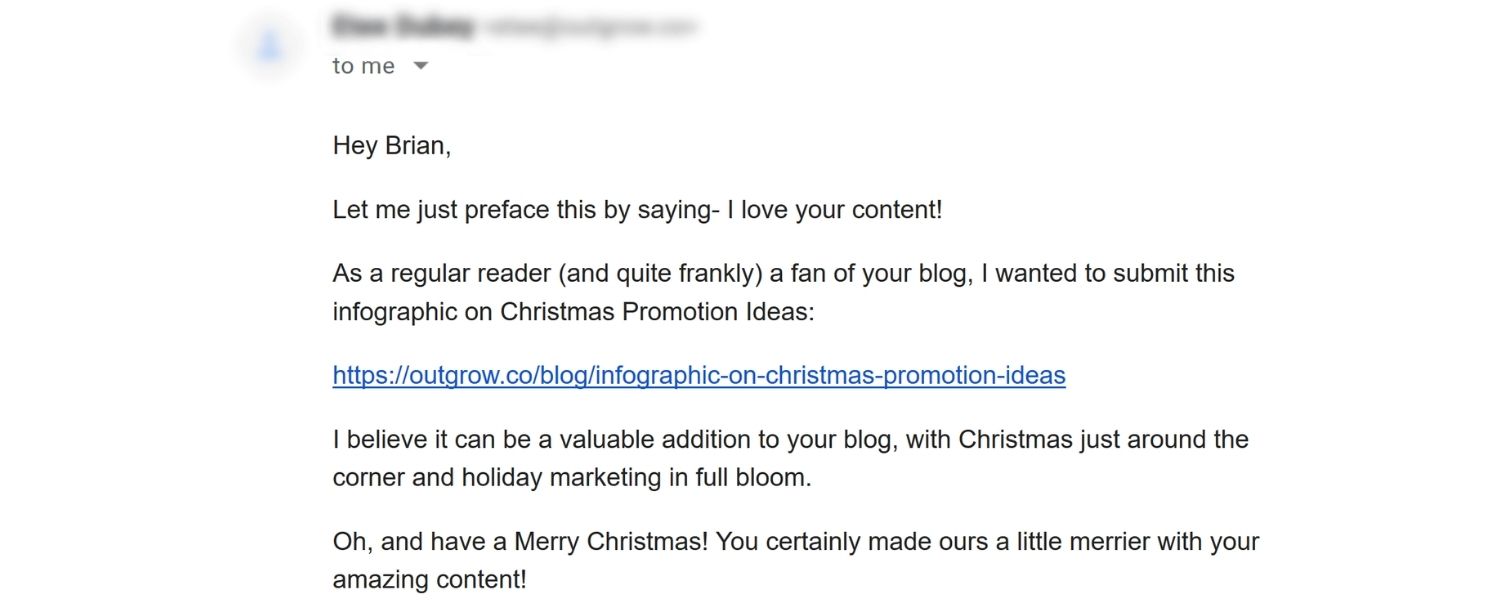
Outreach emails asking for a link can often be ignored, but broken link building flips the script, you’re leading with value. By informing a webmaster of a broken link on their site and offering a solution, you’re helping them first.
This goodwill can translate into a higher response and conversion rate. Many SEO practitioners report that webmasters are far more receptive when you point out a flaw on their site (like a dead link) and kindly suggest a fix. Essentially, you’re not just asking for a favor; you’re doing them a favor too.
2. Quality Backlinks from Authority Sites
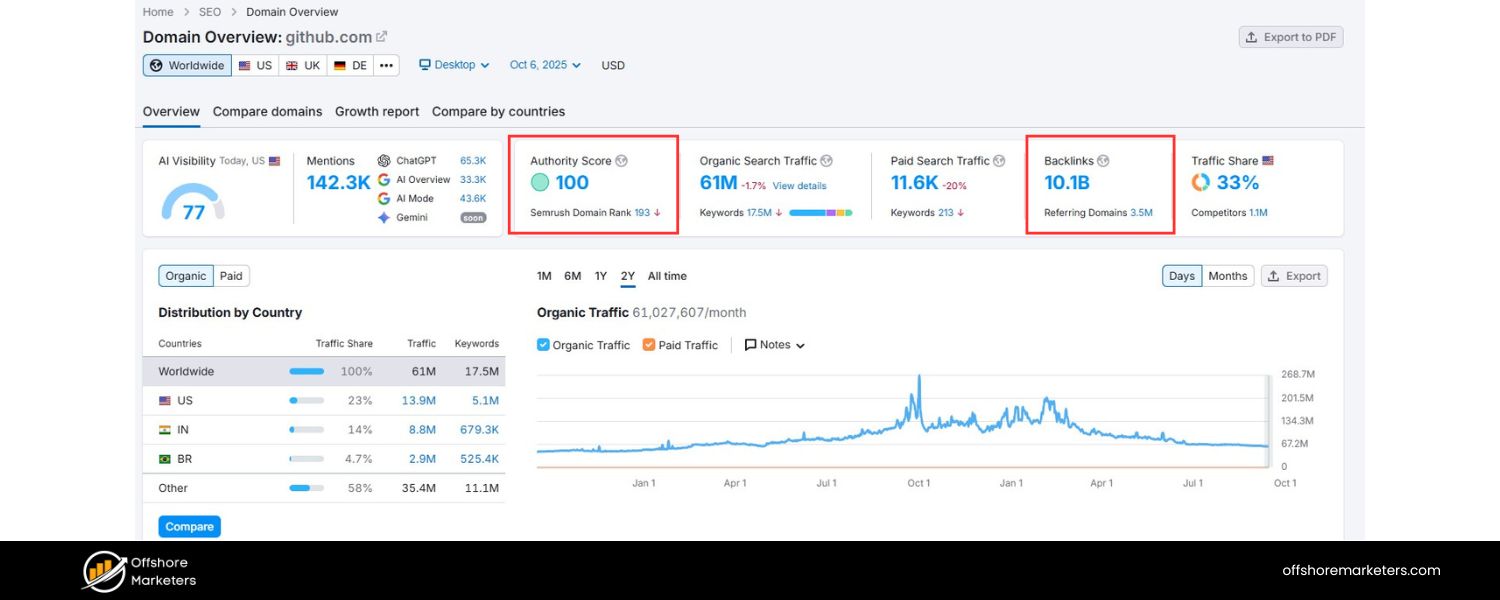
This tactic gives you a shot at earning backlinks from high-authority pages that you might otherwise never acquire. For example, if an influential industry blog or a news site has a broken link to a resource, and you can provide a relevant replacement, you could land a link on a DR80+ site without writing a guest post or spending a dime. Broken link building can open doors to rare linking domains that are “out of reach” through other methods. These high-quality backlinks can significantly boost your site’s authority and search rankings.
3. Inherits Competitors’ Link Equity
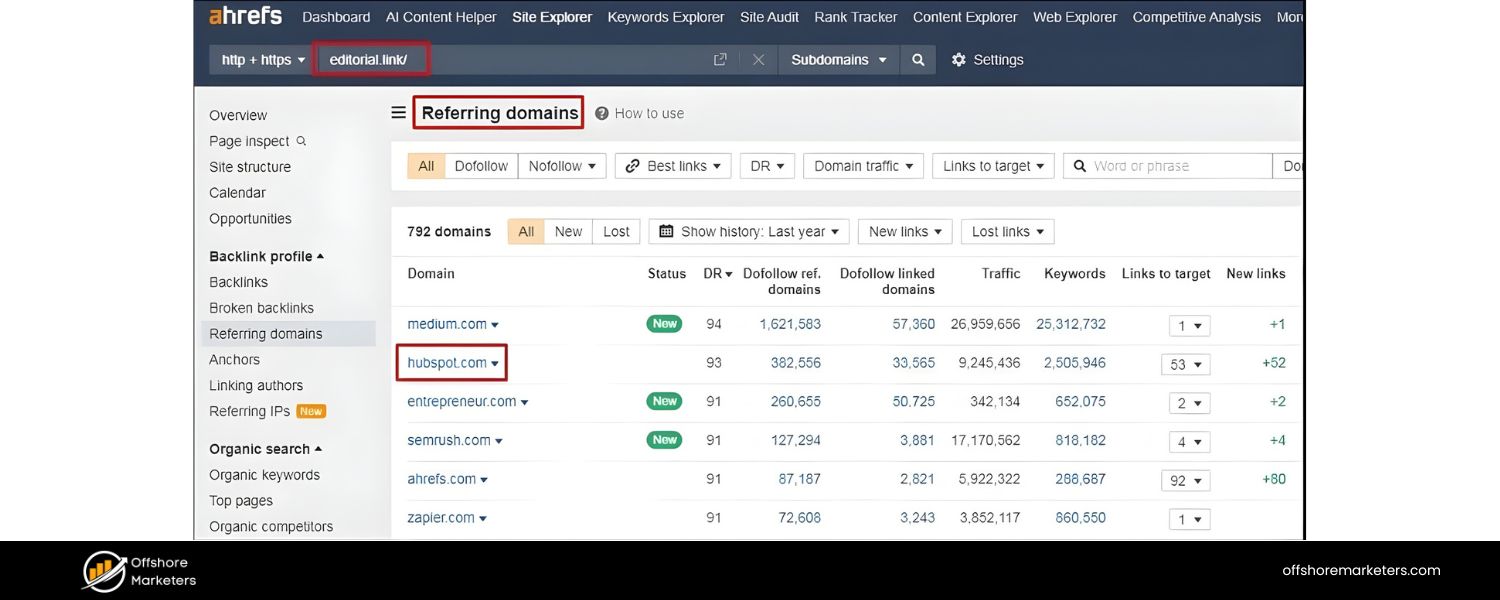
Often, the broken links you find were originally pointing to content from a competitor or a now-defunct site. By replacing those links with yours, you effectively “steal” your competitor’s lost backlinks.
This turns their loss into your gain. It’s a smart way to capitalize on link opportunities that already proved their value (after all, if dozens of sites linked to that old page, it must have had something worthy).
4. White-Hat and Client-Friendly
If you work with clients or stakeholders, broken link building is an easy sell because it’s ethical and transparent. You’re not manipulating anything or risking penalties, you’re improving the web.
Many clients love the idea that an SEO tactic can build links and fix broken stuff online. This means you can scale it without compliance worries, and it helps build relationships with other site owners (since you come across as helpful, not just self-serving).
5. Potential for Link Bait Ideas
In the process of hunting broken links, you’ll stumble upon content ideas that were highly link-worthy (because lots of sites linked to them before they broke). This can inspire you to create similar or better content.
In essence, broken link building doubles as content research, it shows you what topics earned links in the past, highlighting gaps you can fill with improved, updated content on your site.
Bottom line:
Broken link building offers a strong ROI in terms of link quality. Yes, it can be labor-intensive, but each success can bring a powerful backlink that might otherwise cost significant time or money to obtain. By helping someone clean up their site, you earn equity in the form of SEO value, a true win-win scenario.
The Broken Link Building Process (Step-by-Step)
Ready to dive in? Let’s walk through a step-by-step broken link building campaign. This structured approach will ensure you cover all the bases for maximum success:
1. Find Relevant Broken Link Opportunities
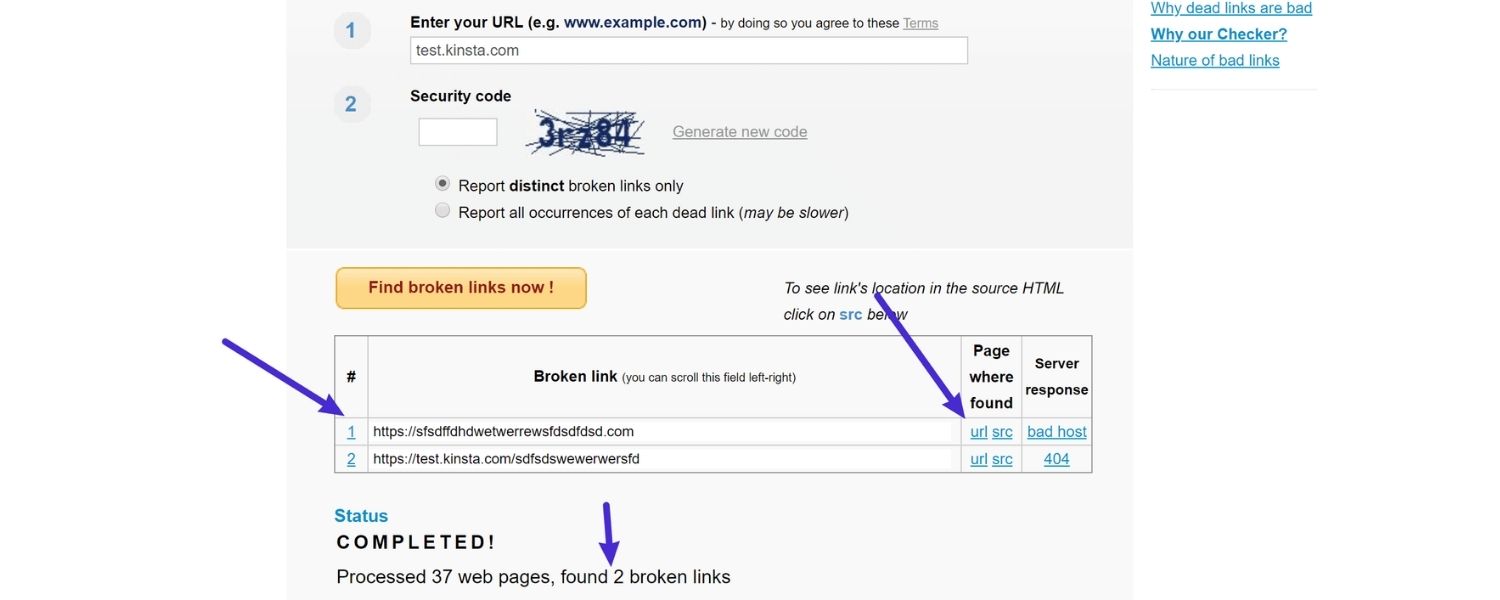
Everything starts with research. You need to find pages in your niche that have broken outbound links (usually pointing to 404 error pages). There are several effective ways to do this:
A. Use SEO Tools to Scan for Broken Backlinks
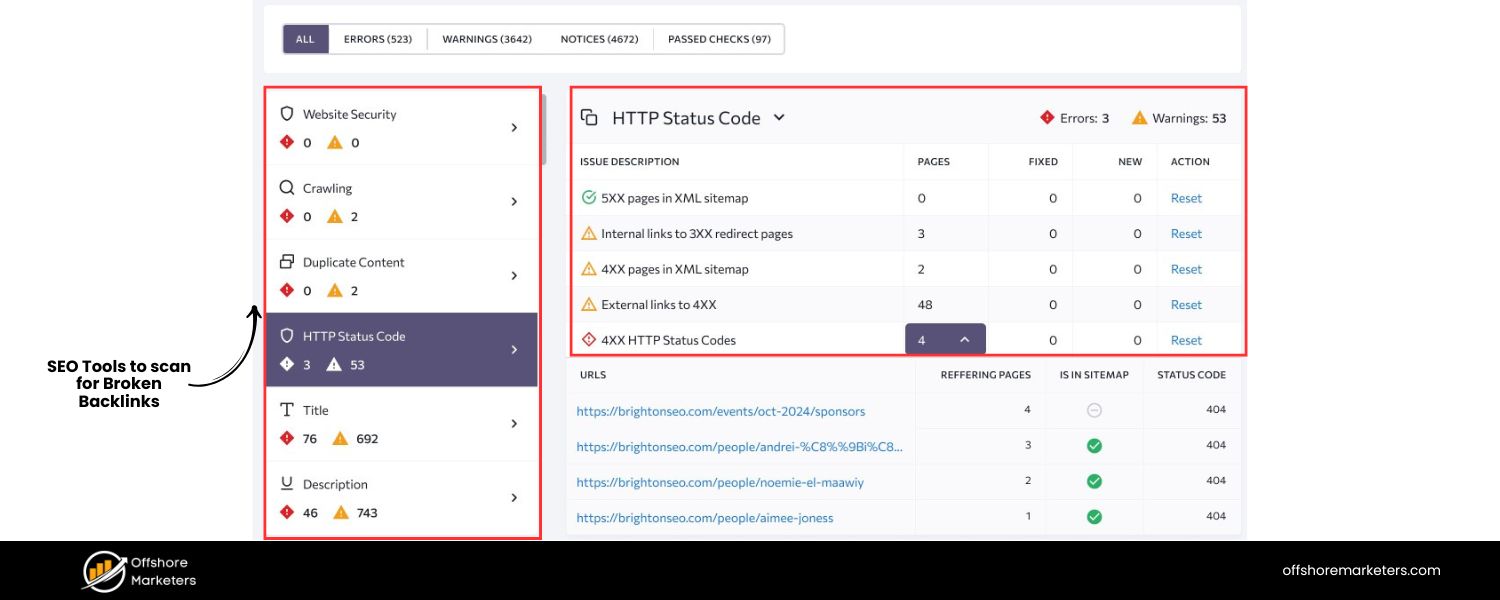
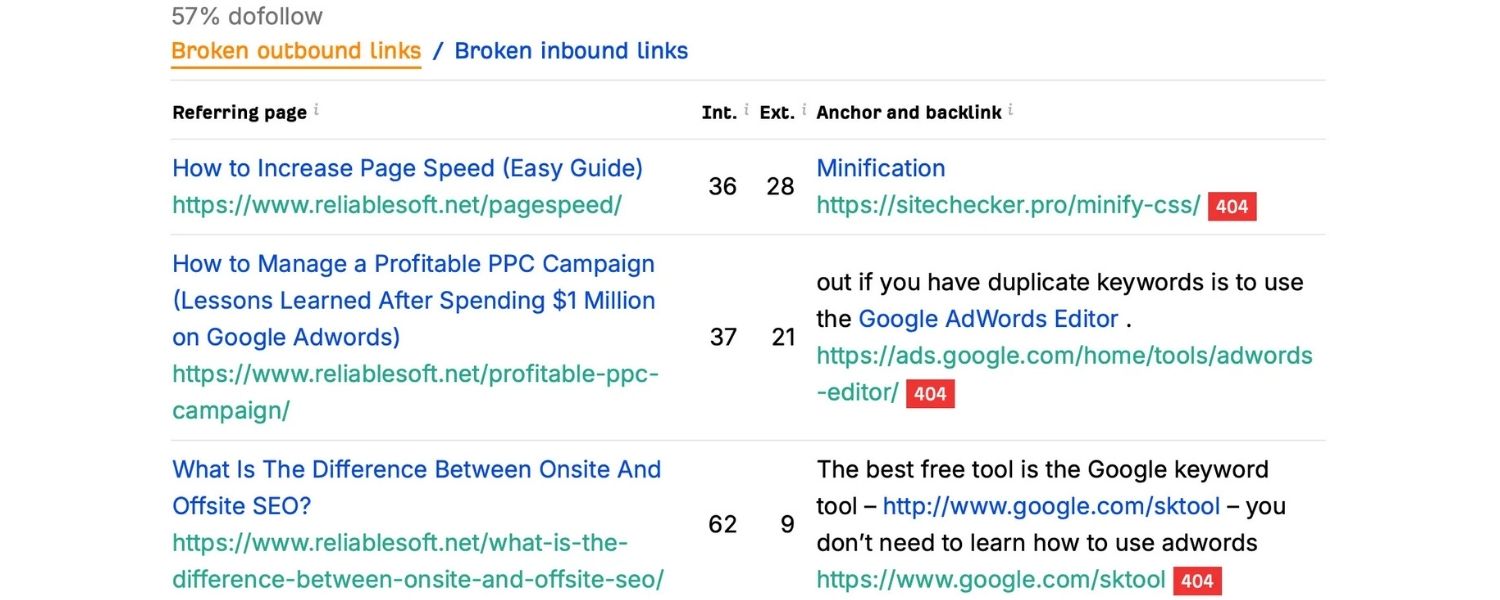
Tools like Ahrefs, Semrush, or Moz can identify broken pages on other websites that have backlinks. For example, Ahrefs’ Content Explorer has a filter for “Only broken” pages – you can enter a keyword related to your industry and see a list of popular content that’s now returning 404 errors.
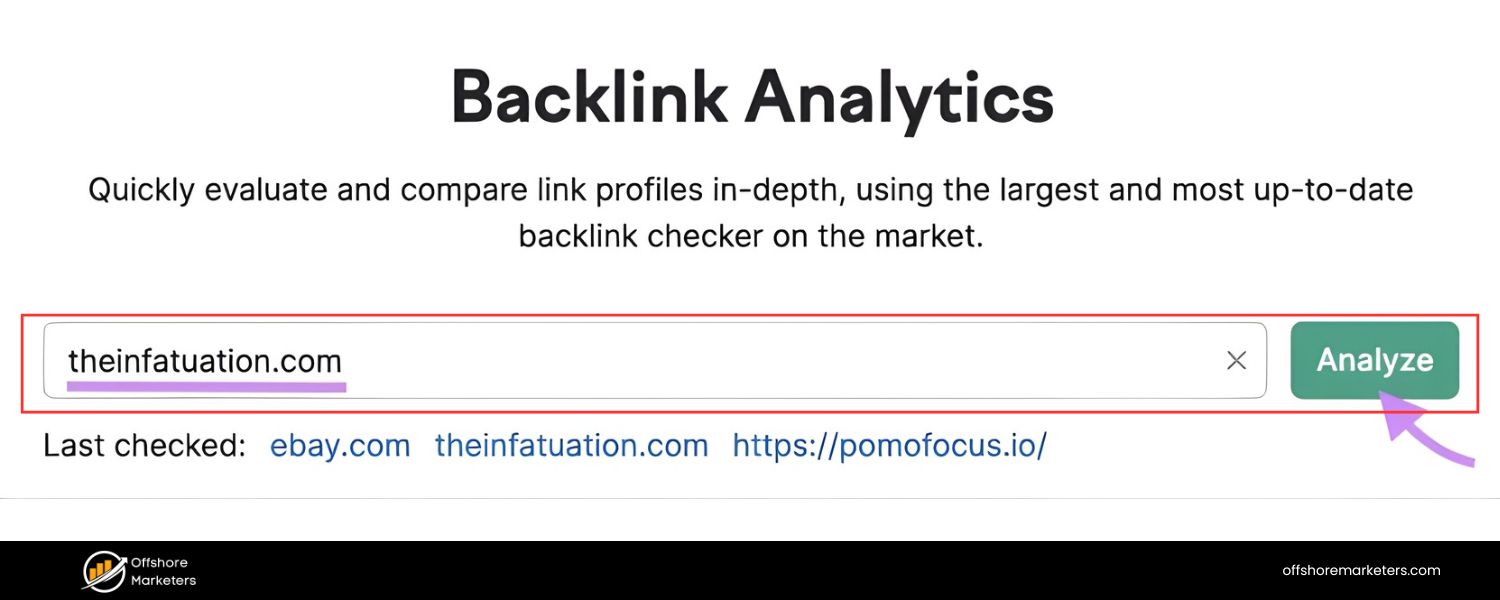
This helps you discover high-value broken pages that lots of sites are linking to. Similarly, Semrush’s Backlink Analytics can filter a competitor’s site for broken pages (4xx errors) and show you which external sites link to them.
These tools basically reveal “link graveyards” – once-great content pieces that have died, leaving behind orphaned backlinks.
B. Search Resource Pages in Your Niche
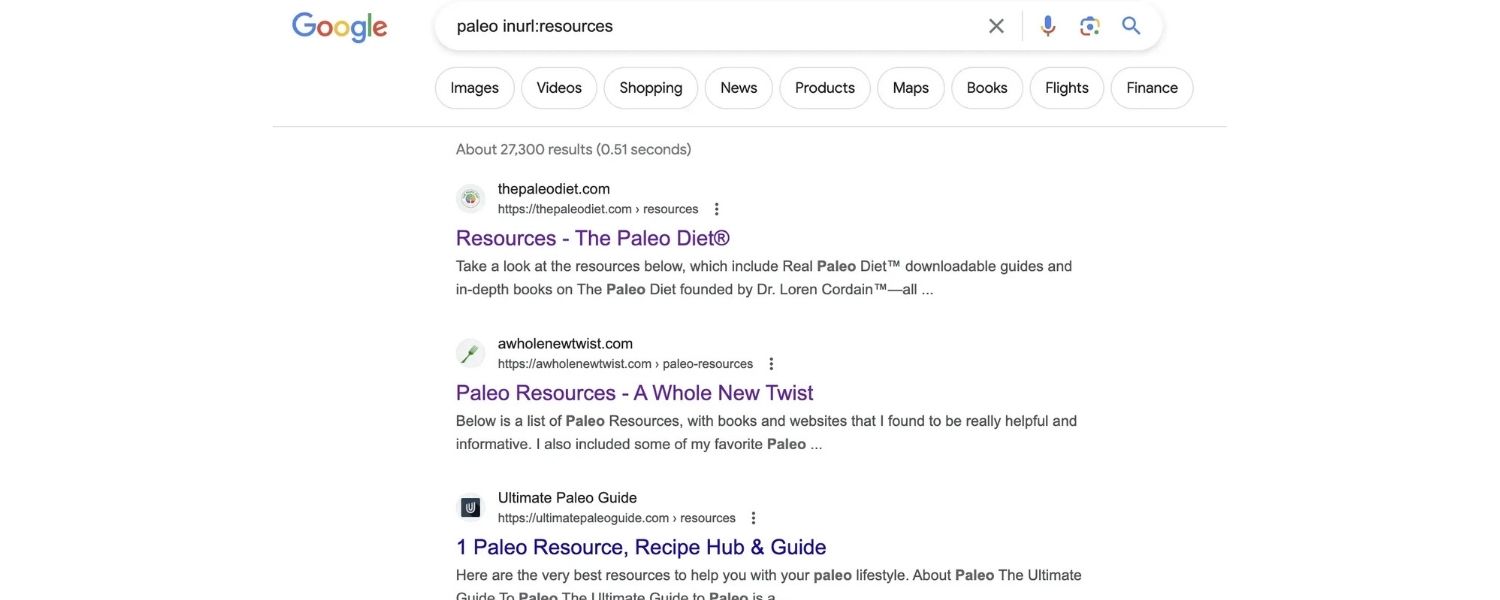
Resource pages are goldmines for broken link building. These are pages that list lots of links on a topic (e.g., “Top [Niche] Resources” or “[Topic] useful links”). Use Google search operators to find them, such as:
“[your topic] resources”, “[keyword] intitle:resources”, or “[keyword] inurl:links.html”.
Once you find relevant resource lists, use a browser extension like Check My Links or LinkMiner. These handy Chrome plugins will scan any page and highlight broken links in red.
By scanning resource pages, you can quickly spot broken outbound links related to your field. If, say, a “Photography Tips Resources” page has a broken link to a “Beginner’s Guide to DSLR” article, and you have (or can create) content on that topic – bingo, you have a prospect.
C. Analyze Competitors’ Broken Pages
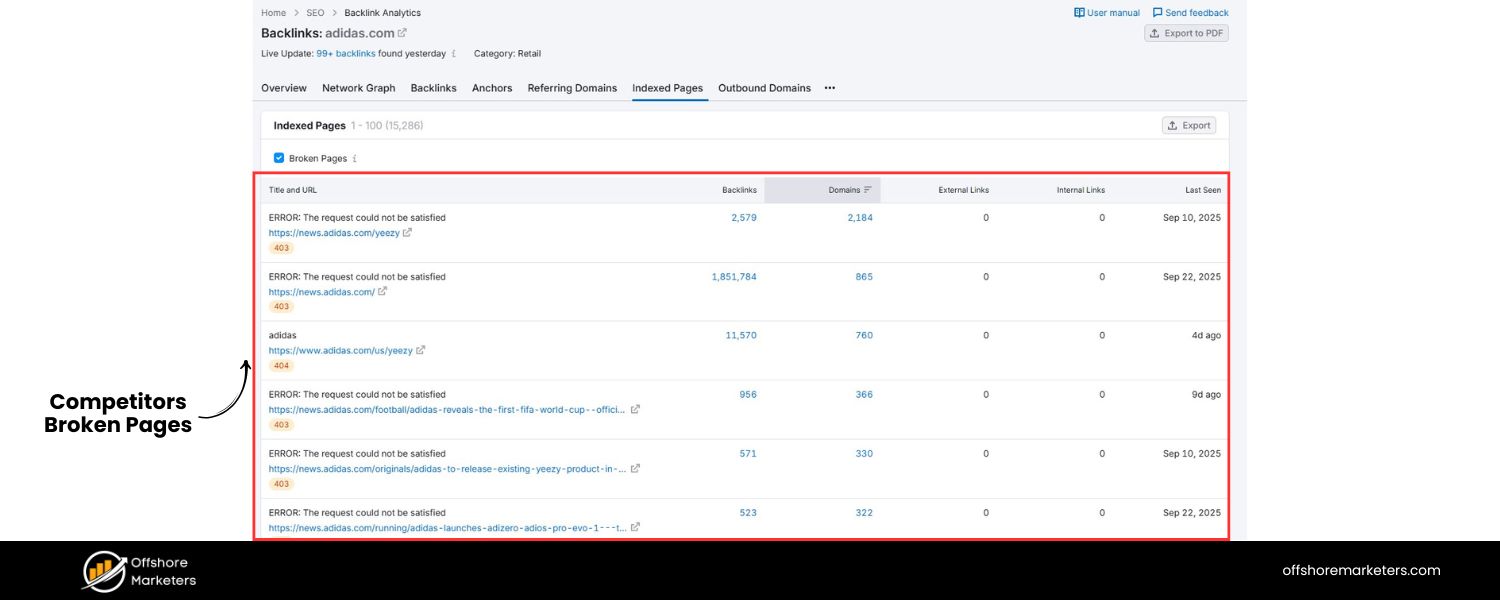
Make a list of your top competitors (or simply high-authority sites in your industry). Run each of these domains through a backlink tool to find their pages that return 404 errors.
Many modern SEO tools have a feature for this, for instance, in Ahrefs you can check a competitor’s “Best by links” report and filter for HTTP 404 status. This will show which of their most linked-to pages are now broken.
If those pages’ topics align with content you have (or can develop), you’ve found a strong opportunity. Essentially, you’re piggybacking on your competitors’ link building history – every backlink that once pointed to them is one you could potentially reclaim.
D. Manual Site Audits (targeted)
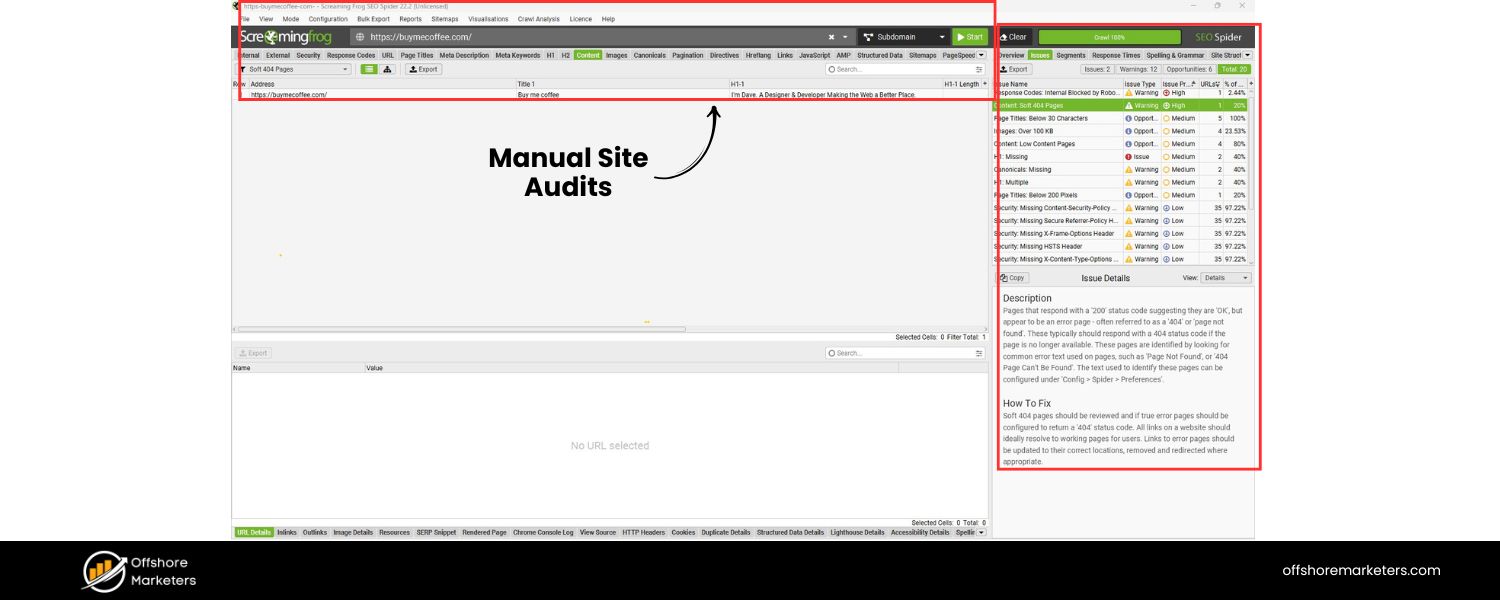
If you have specific “dream websites” you wish could link to you (maybe an industry association, a .edu site, etc.), do a manual broken link check on them. Some webmasters use tools like Screaming Frog to crawl a target website for any 404 links.
Alternatively, if the site isn’t huge, you might click through relevant pages or use Check My Links on key pages. This method is more time-consuming and hit-or-miss, but sometimes you’ll catch a highly relevant broken link on a site you really care about. It’s like finding a needle in a haystack, effortful but potentially very rewarding if that site has big authority.
Pro Tip:
Whichever method you use, focus on relevance and authority. A broken link on an unrelated topic or a low-quality site isn’t worth your time. Prioritize broken links on pages that 1) are closely related to your niche, 2) have decent traffic or SEO metrics (e.g., the page has a good number of referring domains or ranks well for some keywords), and 3) come from reputable websites.
Quality matters far more than quantity here. One strong backlink from a highly relevant authority site beats ten links from random, low-tier sites.
2. Evaluate the Broken Page and Its Backlinks
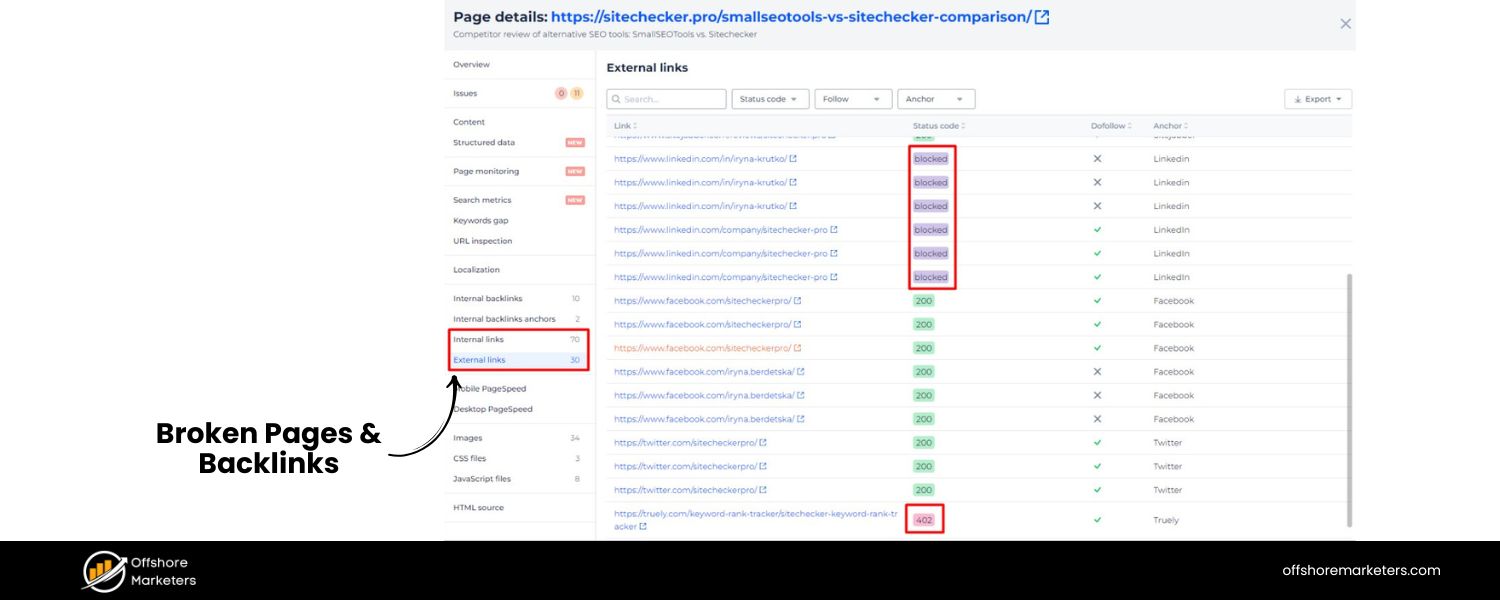
Not every broken link you find is worth pursuing. Before you rush to craft content or emails, evaluate the opportunity critically:
A. Check the Backlink Profile of the Dead Page
Use your SEO tool to see who is linking to that broken page. Are there many referring domains? Are those links coming from strong websites? For example, if you find a broken page that has 100+ sites linking to it, including some .edu or .gov sites or big industry blogs, that’s a very juicy target.
On the other hand, if only 3 small websites ever linked to it, the impact of “replacing” that link is minimal. Focus on broken pages that have significant link equity up for grabs.
B. Assess Link Quality and Context
Not all backlinks are equal. Check a few of the sites linking to the dead resource. Are they legitimate, quality sites or spammy directories? Also, see how the link was used in context. For instance, if a high-quality blog cited that broken page as a source, that’s a context you’d want your link to appear in.
If the broken link was one among dozens in a footer somewhere, it might not move the needle much even if you get it. Look for broken links that were editorially placed in content (like recommended reading, citations, or resource lists in articles) on solid websites.
C. Gauge the Topic Fit
Make sure you clearly understand what the broken content was about. Often, the URL or anchor text gives clues (e.g., “/guide-to-link-building” or anchor text “Beginner’s DSLR guide”).
You might also use the Wayback Machine (Archive.org) to see an archived copy of the page. This helps verify that you can create an appropriate replacement. The closer your content matches the intent of the original, the more seamless the replacement.
If the fit is only partial, you may need to adjust your angle or decide if it’s truly relevant.
D. Metrics to Consider
Many SEO professionals set some quality criteria before chasing a broken link. For example, you might decide to only pursue broken pages that have at least DA/DR 40+ and 50+ referring domains, or that the linking sites have at least 1,000 organic visitors a month (to ensure the page gets traffic).
Criteria like these (Domain Authority, Referring Domains count, link “dofollow” vs “nofollow”, etc.) help filter out low-value targets. A common rule: don’t spend time creating content for a broken link opportunity unless it meets a minimum threshold of potential value.
High authority + many links = worth the effort. Low authority + few links = skip it.
By carefully evaluating, you’ll end up with a refined list of prime broken link prospects, pages that have strong backlinks and align with your subject matter. These are the opportunities where investing your time will pay off.
3. Create (or Refine) Your Replacement Content
Now that you’ve identified a broken page worth pursuing, it’s time to either create or tailor your content to replace it. Remember, the goal is to fill the void left by that dead page with something equal or better. Here’s how to go about it:
A. Check What the Dead Content Was
If possible, find out what was on the broken page. The anchor texts of incoming links or an Archive.org snapshot can reveal if it was, say, a how-to article, a list of tools, an infographic, a research study, etc.
Understanding this will guide your content creation. For example, if the broken page was “10 Email Marketing Tips (2019)” that amassed links, you could create “15 Up-to-Date Email Marketing Tips for 2025” – more comprehensive and current.
B. Match the Intent and Improve Upon It
Your content should cover the same topic or purpose as the old resource, otherwise the site owner won’t see it as a valid replacement. If the broken link was a definition of a term, your content needs to define that term (perhaps with added insights).
If it was a data study, you might need to include fresh data. Aim to one-up the original: more depth, more recent information, better design or media, etc. This not only justifies the replacement but also makes your pitch stronger (“I noticed you linked to X from 2015 which is now gone – I have a newly published, comprehensive 2025 version that could be a perfect substitute.”)
C. Leverage Existing Content if Possible
Sometimes you might already have a piece on your site that fits the bill or could fit with some tweaks. This is ideal because you can move faster. Audit your own content inventory: do you have an article that is similar in topic to the broken page? If yes, ensure it’s up-to-date and addresses the key points the target might need.
You can even add a section or update your content to better align with what the broken resource offered. For instance, if you find a broken “Beginner’s Guide” and you have an advanced guide, you might add a beginner-friendly overview at the top of yours so it caters to the same audience.
D. Create New Content if Needed
If no existing content fits, you’ll have to create a new piece. This is extra work, but consider it an investment – you’re crafting content with guaranteed link interest (those sites linking to the old page are essentially your target list).
When creating new, focus on quality and relevance: use a clear structure, include examples or visuals, and make it genuinely useful. High-quality content not only persuades the linking webmasters but also benefits your site visitors in the long run. It’s a permanent asset you’re building.
E. Optimize and Polish
Treat this content like any important piece on your site. Optimize it for SEO (use the target keyword in the title, headings, etc., if applicable). Ensure it’s well-written and professionally presented.
Remember, you might be asking authoritative sites to link to it – so it should reflect well on them too. If appropriate, add elements that increase its link-worthiness: for example, an original statistic or a unique graphic can be a hook. Webmasters love to link to data or visual assets because it enriches their own content.
By the end of this step, you should have a replacement page on your website that you’re proud of, something that truly can stand in for the defunct content you found. Now you’re armed with the ammunition needed for outreach.
4. Outreach: Contacting Webmasters with a Helpful Pitch
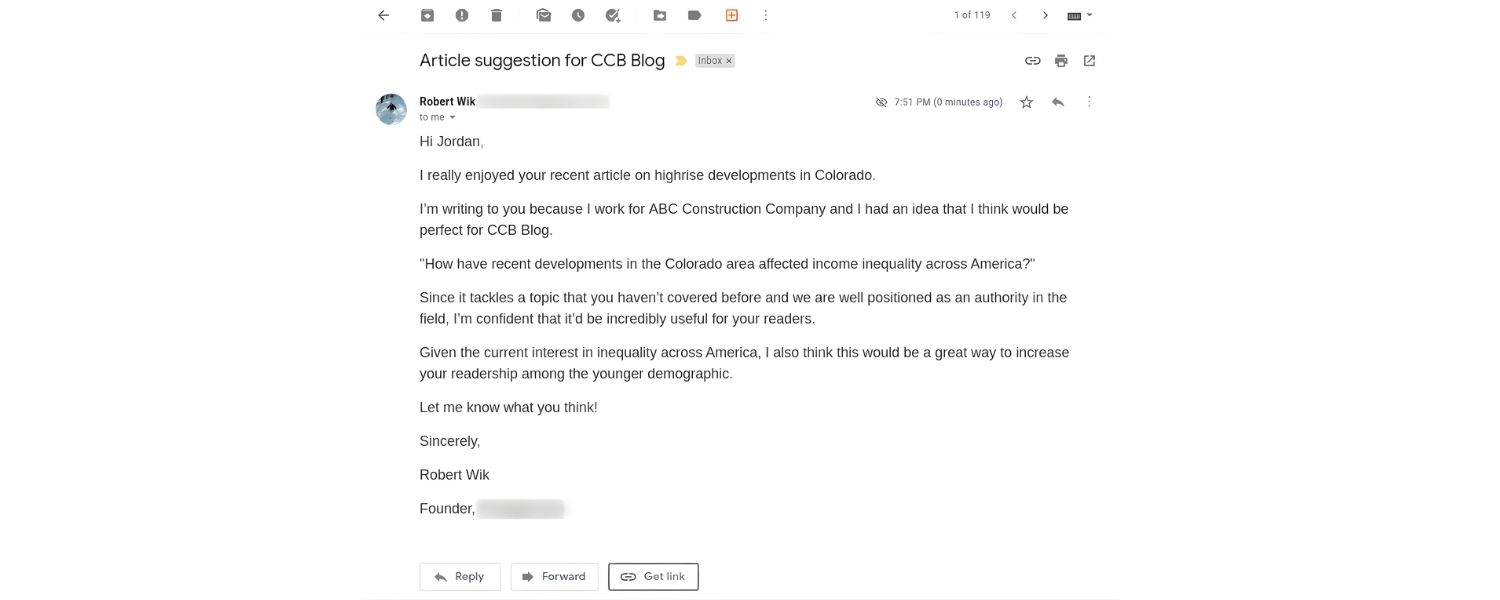
This is the make-or-break step: convincing the site owner or editor to actually swap the broken link for yours. Effective outreach is all about personalization, clarity, and respect. Here’s how to increase your odds:
A. Find the Right Contact
Identify who you need to reach out to. Often, this is the webmaster, site owner, or the author of the article containing the broken link. Check the page for bylines or contact info. Look for a “Contact Us” page or an email listed for editorial inquiries.
You can also use email lookup tools (like Hunter.io or VoilaNorbert) by inputting the domain. LinkedIn or Twitter can sometimes be channels to reach the content creator if email isn’t available.
Getting the email of a real person (e.g., the content manager or author) is far better than using a generic form or info@ address.
B. Craft a Personalized Email
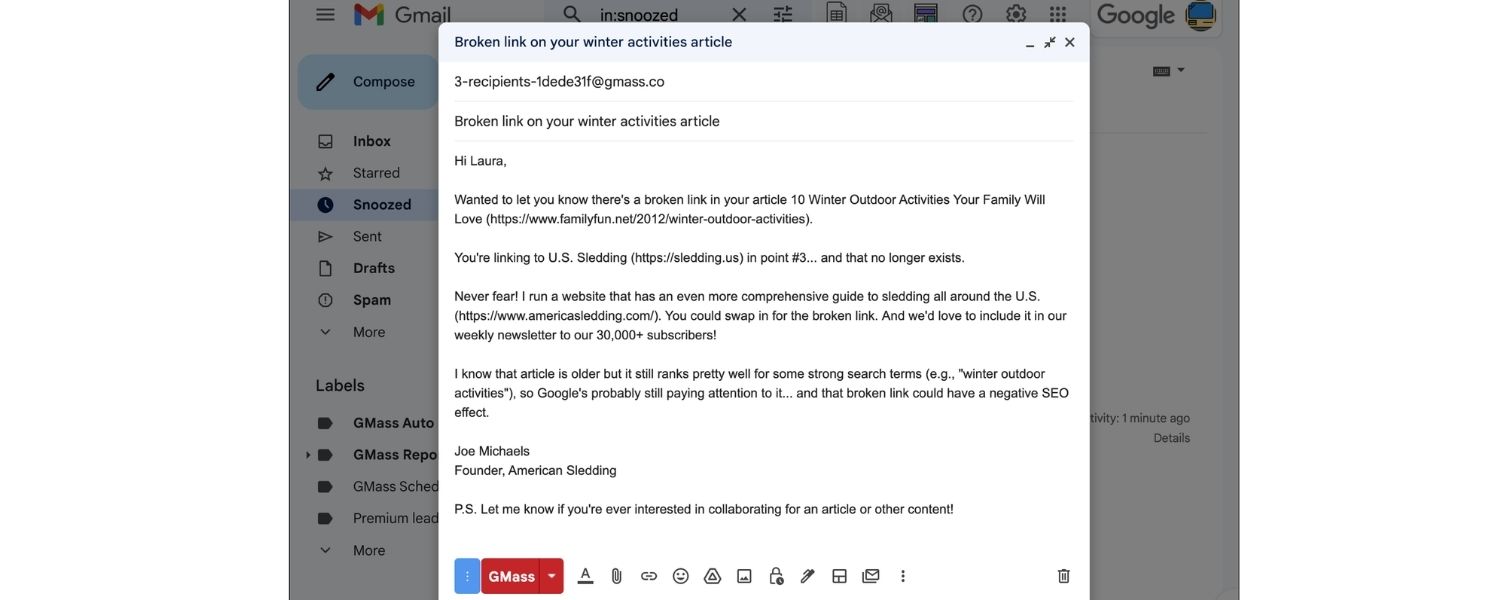
Avoid templates that sound like spam. Write a short, friendly email that shows you genuinely visited their site. Start by mentioning the page title or something specific (e.g., “I was reading your article on [Topic] and noticed you referenced a resource about XYZ.”).
Compliment something you found useful or relevant in their article – authenticity goes a long way. Then get to the point politely: point out that one of the links in the article appears to be broken (provide the title or context of that link so they can find it easily, like “the link to Example Guide currently leads to a 404 page”).
C. Offer Your Content as a Solution
After identifying the issue, suggest that you have a suitable replacement resource. Emphasize how your content fills the gap. For example: “I actually recently published an updated guide on that exact topic, which might make a good replacement for the dead link.
It covers [brief highlight of what’s in your content].” Keep this concise – a couple of sentences to pique interest. The tone should be helpful and humble, not demanding. You’re essentially saying “hey, I think I can help you fix this issue on your page, and here’s how.”
D. Include the Link (and Nothing More)
Provide the direct URL to your content so they can easily check it out. Don’t attach large files or over-explain. A simple hyperlink (fully written out, if you want to avoid spam filters) to your article with a note like “In case you’re curious, here’s my guide: [URL].” is enough.
Avoid the temptation to ask for a link outright in a pushy way, you’ve already implied it by suggesting it as a replacement. Most webmasters will understand that you’d like them to link it; you don’t need to say “please link to me”. Keeping the ask subtle often comes across as more professional.
E. Mind Your Tone
Write as a fellow human, not a robot or an aggressive marketer. Be polite, brief, and appreciative of their time. Something like: “Thanks for the great content you share on [Site Name] – I always find useful insights there.
Hope this tip about the broken link is helpful to you. Keep up the awesome work!” can be a nice sign-off. Even if they choose not to link to you, you’ve left a positive impression (which could lead them to remember you in the future).
F. Send and Track
Once your email is ready, send it off individually. If you have many prospects, you might use an outreach tool or at least a spreadsheet to track who you contacted, on what date, and what the outcome was.
Personalize each email’s intro at minimum (don’t just mail-merge names without checking that everything fits naturally). Tracking helps you manage follow-ups and avoid duplicating efforts.
G. Follow Up (Gently)
It’s common that busy site owners might miss or forget your first email. A polite follow-up after about a week can significantly increase response rates. Simply reply to your original email, keeping the thread, and write something friendly like: “Hi [Name], just following up in case my last email slipped through.
I noticed that broken link on your [Article] is still there – totally understand if you haven’t had time. If you’re interested, my team’s resource is ready to go as a replacement.
Let me know if I can help. Thanks!” Keep it even shorter than the first email. Sometimes that second nudge is what gets you a reply like, “Oh thanks for the reminder, just updated it and added your link.” Two emails per prospect is usually enough – if they don’t respond after a follow-up, move on graciously.
One outreach campaign might involve contacting dozens of sites (every site that was linking to that broken page you targeted). Each deserves a customized touch. Yes, this takes time, but the payoff of a 10-20% success rate could mean a handful of excellent backlinks.
In my experience, I’ve had campaigns where 50 emails resulted in 15-20 quality links, and others where 100 emails yielded only 2 links. Results vary, but thoughtful, value-first outreach consistently performs best.
5. Follow Through and Build Relationships
When a webmaster agrees to replace the link with yours, celebrate that win! Then make sure to follow through professionally:
A. Verify the Link
After they say they’ve added your link, visit the page and confirm that the link is indeed updated and working correctly. If it is, great. If not (perhaps they linked the wrong URL or made a typo), politely thank them and gently note if something needs correction.
B. Express Gratitude
Always send a thank-you note. Something as simple as “Thanks so much for adding our resource to your page. I’m glad it could be helpful!” reinforces the good relationship. Remember, this person might be a contact for future outreach or collaborations. Being courteous is not just good manners, it’s good business.
C. Keep the Door Open
You’ve now established a connection with another site in your niche. Don’t just disappear. You might occasionally share their content on social media, leave a thoughtful comment on another post of theirs, or even loop back months later with another mutually beneficial idea.
Building a relationship can turn one backlink into a partnership. Some webmasters, after a successful broken link exchange, will even ask if you have any other content they should know about – an invitation to share other relevant links (just be careful to stay helpful, not turn into a spammer).
D. Maintain Your Content
Over time, your content that replaced the broken link can itself become outdated or (gasp) broken. Ensure you keep it updated and live, especially if it’s earning good backlinks now.
The last thing you want is to score a great link and a year later that page on your site is removed and returns a 404, that would undo your hard work. Treat these acquired-link pages as important evergreen content: refresh them periodically so they continue to deserve the links they’ve got.
Following through closes the loop on your broken link building process. Each successful replacement not only boosts your SEO but also often earns goodwill with another content creator out there. That reputation can be priceless in the long run.
Best Practices for Successful Broken Link Building
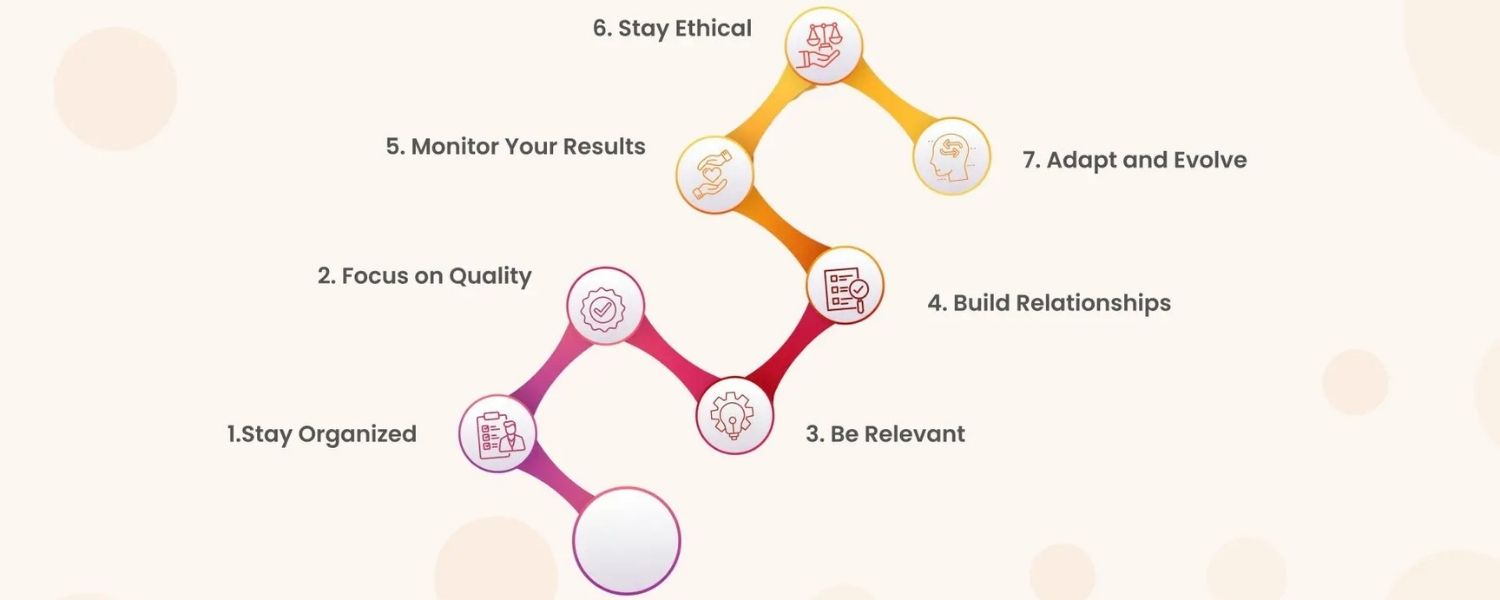
Broken link building has many moving parts. To maximize your effectiveness, keep these best practices and tips in mind, drawn from decades of collective experience:
1. Quality Over Quantity
It’s been said before but can’t be stressed enough, focus on quality opportunities. It’s usually better to spend time on 10 solid prospects than 100 mediocre ones. High-authority, relevant sites with real traffic should top your list.
Avoid the trap of pursuing tons of insignificant links; Google values a single link from an authoritative relevant site far more.
2. Don’t Spam – Be Genuine
Webmasters can sniff out mass email templates a mile away. Personalize every outreach email with something specific about the recipient’s site or content. Use their name, mention the page title, maybe point out one small thing you liked.
This shows you’re not a spam-bot blasting everyone. Being genuine and not overly salesy sets you apart from the generic “Dear Webmaster, your link is broken, replace it with mine” emails that clutter inboxes.
3. Offer Real Value in Outreach
Frame your outreach around helping them, not helping yourself. The broken link is your foot in the door, but ensure your content truly is a good fit and an upgrade.
When you confidently know that your article will improve their page (by replacing a dead link with a high-quality resource), that confidence comes through in your communication.
Conversely, if you try to force an unrelated link just because you want a backlink, it will likely fail and could burn a bridge.
4. Leverage Tools but Avoid Over-Automation
Use tools for what they’re good at – finding broken links, finding contacts, maybe sending emails in bulk with personalization tokens. But don’t fully automate the human touch.
For instance, tools can help manage follow-ups or track opens, which is fine. Just ensure each email still reads as if crafted by a person (because it was). Also, double-check mail-merge fields if you use them – nothing kills trust like “Hi {Name}, I enjoyed your article [Article_Title]”.
5. Mind the Timing and Volume
If you find the perfect broken link opportunity, note that others might find it too. There are SEO agencies and other marketers also on the lookout. This means: try to reach out sooner than later (being the first to alert the webmaster of a broken link can increase your chance of getting the placement before someone else does).
However, don’t rush out half-baked content just to be first; balance speed with quality. As for volume, conduct outreach in reasonable batches (a sudden influx of dozens of link suggestions to a single webmaster community might raise eyebrows). Steady and targeted wins the race.
6. Keep Organized Records
Maintain a spreadsheet or use a CRM to track your broken link building efforts. Log the broken URL, target site, contact info, date contacted, status, and outcome. This prevents you from accidentally contacting the same person twice or forgetting which opportunities you’ve worked on.
It also helps you analyze what’s working – maybe you notice that outreach on a certain topic gets better response, or a certain email subject line performs well. Treat it like a mini sales pipeline for link acquisition.
7. Be Patient and Persistent
Not everyone will respond. Some will say no. That’s normal. Don’t be discouraged by a low response rate. Even with great personalization, people are busy or uninterested. If you believe in the value of your content, keep at it with other prospects.
Also, keep hunting for new broken link opportunities periodically. Set aside time maybe each month or quarter to refresh your list, as new pages will break over time. Consistency is key – a single campaign is great, but making broken link hunting a routine can continually uncover new backlink gems.
8. Avoid Being Perceived as “Link Begging”
One subtlety: you’re essentially asking for a link, but if the entire interaction feels like just a link request, some webmasters might ignore it. This is why framing it as a heads-up about their site’s issue works so well – it shifts the focus.
Even in your language, avoid phrases like “add a link to my site” or “link to me.” Instead, it’s “here’s a resource that could replace that missing one.” It’s a psychological difference that can influence how your email is received. You want to come across as a collaborator, not a link beggar.
By following these best practices, you’ll conduct broken link building campaigns in a professional, efficient, and ethical manner. Over time, you’ll likely develop your own outreach style and instinct for what works best in your niche – that’s great! Now, let’s address some common questions and challenges around broken link building.
Frequently Asked Questions (FAQs) about Broken Link Building
Q1. Is broken link building still effective in 2025?
Yes – when done correctly. While the tactic has been around for a long time, it’s far from obsolete. Many SEOs still use broken link building to earn high-quality backlinks. The key is focusing on high-value opportunities and providing genuinely useful replacement content.
In 2025, most webmasters are aware of the strategy (and might receive multiple “you have a broken link” emails). This means you need to up your game with personalization and quality.
If you do, broken link building can be a highly effective supportive strategy in your link building arsenal. It might not single-handedly revolutionize your SEO, but it can definitely give you an edge, especially for acquiring links that competitors lost or never thought to reclaim.
Q2. How do I find broken links on a website or in my niche?
Use a mix of tools and search techniques. SEO tools like Ahrefs, Semrush, and Moz can scan the web for broken pages with backlinks – these are ideal for finding big opportunities (e.g., a popular article that went offline).
Google searches with advanced queries can find resource lists or directories in your niche that likely contain some outdated links. Browser extensions such as Check My Links can quickly highlight broken links on any page you visit.
Additionally, if there are a few websites you’d love links from, try crawling them with Screaming Frog or a similar site auditor to catch any 404 outbound links they haven’t noticed. Starting with broad tools to gather targets, then zeroing in with manual checking on relevant pages, is a powerful combination.
Q3. What should I say in a broken link outreach email?
Keep it polite, concise, and focused on helping the recipient. Here’s a simple formula that works well:
1. Greeting & Introduction: “Hi [Name], I hope you’re doing well. I’m [Your Name], and I was reading your excellent post on [Article Title]…”
2. Compliment or context: Briefly mention something you liked or found useful in their article to show it’s not a mass email.
3. Problem statement: “I noticed one of the references/links on that page no longer works – the [Describe the broken link]. When I clicked it I got a 404 error.”
4. Solution offer: “Just thought I’d mention it in case you want to update it. By the way, I recently published a [describe your content] that covers that same topic. Here’s the link: [URL]. It might be a great replacement since it’s updated and [mention a unique value – e.g., based on new data, includes a infographic, etc].”
5. Close courteously: “Either way, I hope this tip was helpful. Thanks for the great content on [Site Name]!”
This structure highlights the broken link (value to them) and presents your content as a helpful fix, without sounding pushy.
Adjust the tone to fit your personality and the recipient (more formal for a .edu site, more casual for a personal blog, for instance).
Q4. Do I need to create new content for every broken link opportunity?
Not always – you can often leverage existing content, but it depends. If you already have a high-quality page that closely matches what the broken link was about, by all means use it.
You might tweak or update your content a bit to ensure it fills the shoes of the dead page. However, in many cases, you’ll discover topics that none of your current pages cover sufficiently.
For those, creating new content is the way to go if the opportunity is valuable enough. While creating content solely for link building might seem labor-intensive, think of it as creating a magnet for a known set of links.
You’re essentially reverse-engineering content that you know people wanted (because they linked to it before). Over time, having a robust content library on your site will also make future broken link campaigns easier (since you might have something ready to pitch).
Q5. What are common mistakes to avoid in broken link building?
Some pitfalls can hamper your success:
1. Targeting Irrelevant Links: Replacing a broken link with something off-topic just because you want a backlink will likely be ignored. Always ensure thematic relevance.
2. Not verifying the link is broken: It sounds obvious, but double-check that the link is truly dead. Occasionally, a tool might flag a slow-loading page as broken when it’s not, or the site might have been temporarily down. You don’t want to email someone about a “broken” link that actually works, that undermines your credibility.
3. Poor outreach etiquette: Sending a generic blast, addressing people as “Webmaster” or failing to BCC a mass email will destroy trust. Also, being too pushy or not respecting a “No” can burn bridges. Remember there’s a human on the other side; approach with respect.
4. Giving up too early: If you try broken link building on one or two prospects and get no results, don’t conclude “it doesn’t work.” It’s a numbers game with a quality filter. Assess if your approach can be improved and try again with a fresh list. Sometimes tweaking your email copy or subject line, or improving your content, can make a big difference on the next round.
5. Ignoring other SEO fundamentals: Broken link building should complement a well-rounded SEO strategy, not replace it. Don’t neglect creating great content, on-page optimization, technical SEO, or other link tactics (like guest posting or digital PR) in favor of broken links alone. This tactic shines brightest as part of a diverse approach.
Q6. How many emails should I send, and what response rate is “good”?
There’s no magic number, but be prepared to send a fair amount of outreach. If you identified, say, 50 websites linking to a broken page, you should attempt to contact as many of them as you can (excluding any that are clearly low-quality or irrelevant).
Response and success rates in broken link building can widely vary. A good success rate for cold outreach in link building is often in the 5-15% range. But broken link emails, done really well, can sometimes see higher, maybe 20-30% reply rates, because your email stands out as helpful.
Out of those replies, not all will convert to links; some may thank you for the note but not update the link, others might have various policies. If you ultimately convert even 5-10% of your initial send into actual backlinks, that’s a success.
For example, if you reach out to 100 sites and get 5-10 solid backlinks, you’ve done well given the high quality of those links. The key is to keep your expectations realistic: not every email yields a link, and that’s normal. It’s about hitting those few home runs.
Q7. Is broken link building scalable?
Yes and no. It’s scalable in the sense that you can use tools to find hundreds of broken link opportunities and send lots of emails. Large agencies even build broken link building into their processes, utilizing outreach platforms to handle volume.
However, it inherently requires a human touch and each “campaign” is unique (because content creation and personalization take time). Also, you are limited by the existence of broken pages in your niche – if you operate in a small or very new niche, there may simply not be many broken link opportunities yet.
As you try to scale, watch out for diminishing returns; blasting out semi-personalized emails to thousands of sites might get some results, but also could hurt your sender reputation or brand image.
Many experts say broken link building doesn’t scale infinitely, instead, use it in moderation, focusing on the best opportunities. It’s an excellent technique to use periodically, but probably not the sole method you’d use every month on repeat, unless your industry is full of constantly breaking pages.
Conclusion and Next Steps
Broken link building is a classic SEO strategy that continues to deliver value when executed with care. By turning others’ 404 errors into your 200 OK pages, you not only gain backlinks but also help improve the web one fixed link at a time.
In an age where everyone is vying for attention, this approach allows you to start a conversation on a helpful note, and that often makes all the difference.
Remember, the heart of broken link building is about being resourceful and empathetic: you’re finding opportunities hidden in plain sight and offering a solution that benefits both you and the site owner.
It’s a tactic that rewards research, creativity, and perseverance. Not every broken link will pan out, but those that do can significantly bolster your SEO efforts with authoritative backlinks that truly move the needle.
As an expert who’s navigated the SEO landscape for decades, my advice is to incorporate broken link building as one component of your broader marketing strategy. Use it to supplement your content marketing and digital PR initiatives.
For instance, if you publish a stellar guide or have a product page, periodically check if any older similar resources have gone offline, that’s your cue to step in. Over time, these wins add up, giving you a competitive edge.

.png)
Shopify SEO: Guide to Ranking Your Store and Driving Sales
Most Shopify store owners set up their store, list their...

Content Marketing : Definitive Guide to Strategy, Content Types, and Measurable ROI
Content marketing generates 3x more leads than outbound marketing at...

Above the Fold: Guide to Conversions, Rankings and Faster Pages
Above the Fold in 2026: The Complete Guide to Conversions,...

Off-Page SEO Checklist: Guide to Building Real Authority
Most websites spend months creating great content, only to wonder...

What Is Keyword Bidding? The Complete Strategy Guide for Smarter Ad Spend
Most advertisers believe the highest bid wins the auction. It...

What Is Google Trends? The 2026 Marketer’s Complete Guide
If you are not already pulling weekly insights from Google...
If you want a growth partner who will get to know every aspect of your business and treat your budget like their own — we are the right fit.
.png)


.png)
.png)
.png)
.png)
.png)
.png)
2026 ALL RIGHTS RESERVED MADE IN INDIA
